

OBD-II Code P0089: Fuel Pressure Regulator Performance
What P0089 means, why it triggers, and how to fix it
- Code P0089 triggers when actual fuel rail pressure deviates from the engine computer's commanded target by more than a specified threshold (often 100-200 PSI).
- Expect severe drivability issues, including a 15-25% drop in fuel economy, sudden engine stalling at idle, and limp mode activation.
- Replacing the High-Pressure Fuel Pump (HPFP) is the most common fix, costing between $600 and $1,700 for parts and labor.
- Stop driving immediately; continuing to drive with erratic fuel pressure destroys catalytic converters, adding up to $2,500 in secondary repair costs.
What Does P0089 Mean?

Your Powertrain Control Module (PCM) detects a fuel pressure performance problem. It commands the fuel pressure regulator to set a specific target pressure, but the actual pressure in the fuel rail—measured by the fuel pressure sensor—does not match. The engine receives too much, too little, or unstable fuel pressure, causing poor performance and potential internal damage.
🎬 Watch: A complete guide to diagnosing and fixing P0089Technical definition: The SAE/OBD-II definition is "Fuel Pressure Regulator 1 Performance". The PCM detects that actual fuel pressure differs from the commanded fuel pressure for a specified duration. The PCM relies on the fuel pressure sensor to monitor the pressure maintained by the regulator in the common rail fuel system.
Can I Drive With P0089?
No — Do Not Drive. Driving is not recommended. The engine stalls in traffic without warning, creating a severe safety hazard. Continuing to drive with improper fuel pressure destroys the catalytic converter, adding $800 to $2,500 to the total repair cost. Tow the vehicle to a repair shop immediately.
Common Causes

- Failing High-Pressure Fuel Pump (HPFP) (Very Common) — On vehicles with gasoline direct injection (GDI) or common-rail diesel, the pump that creates high pressure for the injectors wears out or suffers an internal regulator failure, preventing it from meeting engine demands.
- Clogged Fuel Filter (Common) — A dirty fuel filter restricts flow from the tank. This starves the high-pressure fuel pump, preventing it from building the pressure the computer requests. This is the most frequently overlooked simple fix.
- Faulty Fuel Pressure Regulator (Solenoid) (Common) — The electronic regulator—often called a Fuel Metering Valve or Suction Control Valve (SCV)—fails mechanically or electrically. It gets stuck, clogs, or shorts out, preventing accurate fuel pressure control.
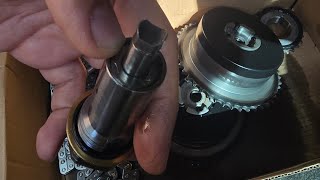
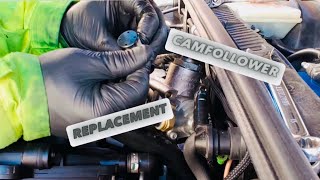
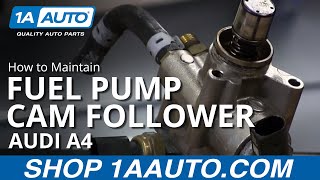
- Worn Camshaft Lobe / Cam Follower (Common) — On specific engines (notably VW/Audi 2.0T FSI), the HPFP is driven by a camshaft lobe via a metal follower. This follower erodes, preventing the pump from generating sufficient pressure and destroying the camshaft. 🎬 See this DIY walkthrough for replacing the VW/Audi cam follower
- Weak Low-Pressure Fuel Pump (Less Common) — The in-tank lift pump fails to supply enough volume to the engine. If the low-pressure side cannot supply adequate base fuel, the high-pressure pump cannot function, triggering the code.
- Faulty Fuel Rail Pressure Sensor (Less Common) — The sensor reading the fuel pressure sends incorrect data to the computer. The physical pressure is fine, but false sensor data forces the computer to set the code.
- Faulty Fuel Pump Driver Module (FPDM) (Less Common) — This module controls voltage to the in-tank fuel pump. Corrosion or internal faults prevent it from sending enough power to the pump, starving the high-pressure system. This is a known issue on Ford trucks.
- Leaking Fuel Injector(s) (Rare) — An injector stuck open or leaking excessively causes a massive drop in rail pressure that the pump cannot overcome. This is typically diagnosed via an injector leak-off test on diesel engines.
- Wiring or Electrical Issues (Rare) — Damaged wires, poor grounds, or corroded connectors for the fuel pump, regulator, or sensor interrupt signals and power, causing the computer to register a performance problem.
Symptoms

- Engine Stalling — The engine stalls unexpectedly at idle or under load, creating a severe safety hazard in traffic.
- Poor Acceleration and Hesitation — The vehicle feels sluggish, stumbles, or hesitates during acceleration due to inadequate fuel delivery.
- Hard Starting or Extended Cranking — The engine requires extended cranking times before firing up due to incorrect initial starting fuel pressure.
- Rough Idle — The engine runs unevenly, surges, or shakes while idling due to inconsistent fuel delivery.
- Reduced Fuel Economy — Gas mileage drops significantly as the engine's air/fuel mixture loses efficiency.
- Black Smoke from Exhaust — If the regulator fails in a 'too high' pressure state, the engine runs rich, emitting black smoke from the tailpipe.
- Check Engine Light On — The Malfunction Indicator Lamp (MIL) illuminates immediately upon the PCM detecting the pressure variance.
- Reduced Engine Power / Limp Mode — The vehicle enters a protective 'limp mode', severely limiting speed, RPMs, and acceleration to prevent engine damage.
Diagnostic Flowchart
Tap your situation to follow the diagnostic path that matches what you're seeing on this code.
Common Fixes & Costs

- Replace High-Pressure Fuel Pump (HPFP) — Parts: $300-$900, Labor: $300-$800, ~2.5 hr book time (Professional)
- Replace Fuel Filter — Parts: $20-$80, Labor: $50-$150, ~1 hr book time (DIY)
- Replace Low-Pressure Fuel Pump (In-Tank) — Parts: $200-$500, Labor: $350-$700, ~3.5 hr book time (Intermediate)
- Replace Fuel Rail Pressure Sensor — Parts: $50-$150, Labor: $75-$200, ~1 hr book time (DIY)
- Replace Cam Follower (VW/Audi) — Parts: $30-$60, Labor: $150-$300, ~2 hr book time (DIY)
- Replace Fuel Pump Driver Module (FPDM) — Parts: $65-$250, Labor: $100-$200, ~0.8 hr book time (Intermediate)
- Complete Fuel System Replacement (Duramax CP4 Failure) — Parts: $4000-$7000, Labor: $4000-$8000, ~30 hr book time (Professional)
Used vs. New Parts: Buying Guide
When a used part is worth it: Buying a used high-pressure fuel pump (HPFP) is a high-risk strategy reserved for tight budgets on older vehicles. It only makes sense if sourced from a verified low-mileage vehicle wrecked for non-engine reasons.
Donor-vehicle mileage cap: roughly under 60000 miles for the part to have meaningful remaining life.
Donor quality checklist:
- Verify the donor vehicle's mileage and salvage reason.
- Match the part number exactly; superseded parts have different software requirements.
- Avoid parts from rust-belt states to prevent corroded electrical connectors.
Decision logic:
- If The vehicle is under warranty or part of a warranty extension program (e.g., BMW N54 HPFP) → Use the dealer for a free OEM replacement.
- If The part is known for a high failure rate (e.g., HPFPs on GDI engines) → Buy a new OEM or high-quality aftermarket part to avoid repeating the repair.
- If The vehicle is over 150,000 miles and budget is the primary concern → A used part is a viable risk, but expect a significantly shorter lifespan.
Warranty tradeoff: Used salvage parts carry a 30-90 day part-only warranty, meaning you pay labor costs again if it fails. New aftermarket parts carry 1-year to limited lifetime warranties.
Worst-case if a used part fails: $500-$1200 if a used HPFP fails after installation, requiring repeat labor and a second pump purchase.
What Happens If You Wait — Timeline
- 0-1 month: Check Engine Light illuminates. Vehicle exhibits subtle hesitation or slightly longer crank times. Stalling is infrequent. Fails emissions tests. (MPG impact: 0-5%% · Added cost: $0-$50 in wasted fuel)
- 1-3 months: Hesitation and poor acceleration become pronounced. Engine stalls at idle or under load, creating a safety hazard. Rough idle is obvious. (MPG impact: 5-15%% · Added cost: $50-$150 in wasted fuel)
- 3-6 months: Consistently incorrect air/fuel mixtures overheat and destroy the catalytic converter and oxygen sensors. The vehicle becomes highly unreliable. (MPG impact: 15-25%% · Added cost: $1000-$2800 (catalytic converter and O2 sensor replacement))
- 6+ months: Catastrophic failure. GDI engines leak fuel into the crankcase, destroying internal bearings. CP4 diesels disintegrate, contaminating the entire fuel system. (MPG impact: 25%+% · Added cost: $4000-$15000+ (engine rebuild or complete fuel system replacement))
Cost of Not Fixing It
- Immediate (0-1 month): Noticeable drop in fuel economy, poor acceleration, and risk of stalling in traffic. Automatic failure of any emissions test. (Added cost: Negligible, other than increased fuel costs.)
- Short Term (1-6 months): Running a lean or rich fuel mixture overheats and degrades the catalytic converter, leading to total failure and damaged oxygen sensors. (Added cost: $1200-$2800)
- Long Term (6+ months): Catastrophic HPFP failure sends metal debris throughout the fuel system or leaks raw fuel into the crankcase, destroying the engine block. (Added cost: $4000-$15000+)
Diagnosis Steps

- Check for Other Codes
Read all stored codes. P0089 rarely appears alone. Accompanying codes like P0087 (Too Low), P228D (Too High), or P0016 (Timing) dictate the entire diagnostic direction.
Tools: OBD-II Scanner (Beginner) - Monitor Live Fuel Pressure Data
Graph 'Commanded Fuel Rail Pressure' and 'Actual Fuel Rail Pressure' PIDs. At idle, they must be identical. During a snap throttle test, actual pressure must track commanded pressure closely without significant lag or drop-off.
Tools: Advanced OBD-II Scanner (Intermediate) - Check Engine Oil for Fuel Smell
Pull the oil dipstick on direct-injection engines. A strong raw gasoline odor confirms the high-pressure fuel pump's internal seal has ruptured, leaking fuel into the crankcase. The HPFP requires immediate replacement.
Tools: Shop Towel (Beginner) - Visual Inspection
Inspect the fuel system for damaged wiring, corroded connectors at the HPFP and pressure sensor, and visible fuel leaks along the rails and lines.
Tools: Flashlight (Beginner) - Test Low-Pressure Fuel System
Connect a mechanical gauge to the low-pressure line. At Key On, Engine Off (KOEO), pressure must prime to 50-60 PSI on GDI systems and hold. A weak lift pump starves the high-pressure side.
Tools: Fuel Pressure Gauge (Intermediate) - Replace the Fuel Filter
If the fuel filter is overdue for service, replace it. A clogged filter is the most common, inexpensive cause of low fuel pressure, particularly on diesel vehicles.
Tools: Basic hand tools, new fuel filter (DIY) - Test Regulator/Sensor Voltage and Resistance
Back-probe the fuel rail pressure sensor. Verify a stable 5V reference, a good ground, and a signal wire reading between 0.5V and 4.5V. For the regulator solenoid, verify a stable 12V supply.
Tools: Digital Multimeter, Wiring Diagram (Professional) - Analyze Fuel Pump Driver Module (FPDM) Signals
On Ford trucks, back-probe the FPDM ground circuit with a multimeter set to duty cycle. Grounding this circuit directly forces the low-pressure pump to run at 100%, verifying pump health.
Tools: Digital Multimeter (with Duty Cycle), Jumper Wire (Professional) - Test Fuel Pressure Regulator Solenoid
Measure resistance across the regulator solenoid terminals. A reading of infinity (OL) indicates an open circuit; near zero indicates a short. Both require regulator replacement.
Tools: Digital Multimeter, Service Manual (Advanced) - Diesel Common Rail Leak-Off Test
Disconnect low-pressure return lines from each injector and connect measuring tubes. Run the engine at idle. An injector returning significantly more fuel than others is leaking internally, causing rail pressure loss.
Tools: Injector Leak-Off Test Kit (Advanced)
When This Code Triggers (Freeze-Frame Conditions)
- Engine Coolant Temp: 180-210°F (The engine is fully warmed up to normal operating temperature.)
- RPM: 1500-3000 RPM (The code sets during steady-state cruising or moderate acceleration, rarely at idle.)
- Engine Load: 30-70% (The fault appears under moderate engine demand, highlighting the fuel system's inability to keep up.)
- Vehicle Speed: 40-65 mph (Highway or arterial road speeds are common conditions recorded when the code triggers.)
Related Codes
- P0087 — Indicates 'Fuel Rail Pressure Too Low'. Having both P0089 and P0087 strongly confirms a mechanical supply issue, such as a weak in-tank pump, major leak, or clogged filter.
- P0088 — Indicates 'Fuel Rail Pressure Too High'. If present with P0089, the fuel pressure regulator is stuck closed or failing, causing excessive pressure buildup.
- P228D — Indicates 'Fuel Pressure Regulator 1 Exceeded Control Limits - Pressure Too High'. Extremely common alongside P0089 on GM vehicles, pointing directly to a stuck-closed regulator or internal HPFP fault.
- P0191 — Indicates 'Fuel Rail Pressure Sensor Circuit Range/Performance'. Points directly to a faulty sensor or wiring. If live data shows erratic or impossible pressure readings, diagnose the sensor circuit first.
Climate & Environmental Factors
- Cold Weather: Freezing temperatures exacerbate weak low-pressure fuel pumps and cause diesel fuel gelling, leading to fuel starvation and triggering P0089.
- High Humidity / Road Salt: Salty environments corrode electrical components like the Fuel Pump Driver Module (FPDM) on Ford trucks and degrade sensor wiring connectors, causing intermittent signal drops.
- High Altitude: Borderline weak fuel pumps fail at high altitudes where the system undergoes greater stress to maintain the required air/fuel mixture.
How to Talk to a Mechanic About This Code
Say this: "I have an active P0089 code and need a diagnostic. Please verify the low-pressure system is working and compare commanded versus actual fuel rail pressure with a scan tool before recommending a high-pressure pump replacement."
This signals you want a logical diagnosis, not a reflexive replacement of the most expensive part. It directs the mechanic to catch simpler issues like a clogged filter or a bad sensor.
Avoid saying:
- 'Just fix whatever's wrong'
- 'My check engine light is on, can you look at it?'
- 'My car is hesitating, I think it's the fuel pump'
- 'I read online it's the high-pressure fuel pump, give me a quote to replace it'
Questions to ask before authorizing the repair:
- What were the pressure readings from the low-pressure pump?
- Can you show me the live data graph of commanded vs. actual rail pressure under load?
- Did you inspect for vehicle-specific issues, like the cam follower or metal shavings in the filter?
- If you recommend a high-pressure fuel pump, did you check the engine oil for fuel contamination?
- What is the warranty on the parts and labor for this repair?
Where to Take It: Dealer vs Independent vs Chain
- Dealer:
Best for: Vehicles under powertrain warranty or a specific warranty extension., Complex issues requiring proprietary software (e.g., ECU reflashing, Nissan pump relearn)., Very new models where independent shops lack experience.
Downsides: Highest labor rates., Quick to replace large, expensive assemblies rather than smaller components. (Typical cost: +50% vs. baseline) - Independent Shop:
Best overall fit for most P0089 repairs, provided you choose a reputable shop with ASE-certified technicians experienced with your vehicle's brand.
Best for: Out-of-warranty vehicles where cost is a major factor., Diagnosing common P0089 causes like fuel filters, sensors, and high-pressure fuel pumps.
Downsides: Diagnostic capability varies widely. Must vet the shop's experience with modern direct-injection fuel systems., May lack expensive, manufacturer-specific diagnostic tools. (Typical cost: +0% vs. baseline) - Chain Shop:
AVOID for diagnosis. The risk of misdiagnosis and being sold unnecessary parts is very high.
Best for: Simple, confirmed fixes like replacing an accessible fuel filter.
Downsides: High pressure to upsell useless 'fuel system cleanings'., Technicians are generally not equipped for the complex live-data diagnosis P0089 requires. (Typical cost: -10% vs. baseline)
When to Walk Away From the Repair
If the estimated repair cost exceeds 40-50% of the car's private-party value, seriously consider selling or trading it in.
- Car worth $4000, fix is $1800: Walk away. The repair cost is 45% of the car's value, and other expensive repairs are likely looming.
- Car worth $18000, fix is $1500: Fix it. The repair is less than 10% of the vehicle's value and is a worthwhile investment.
- Car worth $20000, fix is $12000: Walk away immediately. Typical of a Duramax CP4 pump failure, the repair cost is 60% of the truck's value, making it economically unsound.
What Scan Tool You Need for This Code
Minimum: A scanner that reads and graphs live data PIDs, specifically 'Commanded Fuel Rail Pressure' and 'Actual Fuel Rail Pressure'.
A basic $20 code reader only confirms the P0089 code exists. You MUST see live data to determine if the pressure is too low, too high, or erratic compared to the computer's request.
Budget: BlueDriver Pro / MUCAR BT200 Max (~$99) — Connects to a smartphone app to read codes, view freeze-frame data, and graph the live fuel pressure PIDs needed for initial diagnosis.
Mid-range: Foxwell NT510 Elite / NT530 (~$180) — Adds manufacturer-specific diagnostics and bidirectional controls, allowing you to activate the fuel pump independently to test its function.
Professional: Autel MaxiCOM MK808 / Innova 5610 (~$450-600) — Offers full bidirectional control to command the fuel pressure regulator directly and performs special functions like the 'Fuel Pump Relearn' required after repairs.
Rent vs buy: Auto parts store rental scanners lack live data capability. If you plan to diagnose P0089 yourself, buying a budget or midrange scanner is mandatory.
How to Clear the Code After You Fix It
- Use an OBD-II scan tool to clear all diagnostic trouble codes.
- Ensure the fuel tank is between 30% and 70% full.
- Perform a complete OBD-II drive cycle to allow the system's readiness monitors to run.
Drive cycle (~30 minutes): Cold start after sitting for 8 hours. Idle for 3 minutes with A/C and defroster on. Drive 15 minutes in stop-and-go city traffic. Drive 10 minutes at a steady 55-60 mph. Allow the vehicle to cool down.
Readiness monitors affected: Catalyst Monitor, Evaporative System Monitor, Oxygen (O2) Sensor Monitor
Before emissions retest: drive at least 100 miles to fully set monitors.
Watch out for:
- Disconnecting the battery clears the code but resets all emissions monitors to 'Not Ready', causing an automatic emissions failure.
- The code returns immediately if the underlying mechanical fault or required software relearn was ignored.
Will This Fail Emissions / State Inspection?
Yes — this code typically fails an OBD-II emissions inspection.
- California: Fails smog check immediately if the Check Engine Light is on. A full drive cycle must set all readiness monitors to 'Ready' before a retest.
- New York: An active P0089 code is an automatic failure during the NYS DMV OBD-II scan.
- Texas: In emissions-testing counties, an illuminated MIL for P0089 causes an automatic inspection failure.
Most Commonly Affected Vehicles
- GMC / Chevrolet Terrain / Equinox (2010-2017) — The 2.4L Ecotec engine frequently triggers P0089 alongside P228D. A stretched timing chain is the most common root cause, as the HPFP is driven by the camshaft. Always check for timing code P0016.
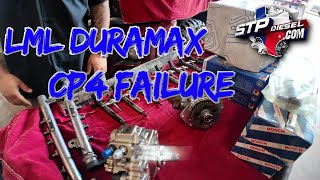
- GMC / Chevrolet Silverado HD / Sierra HD (2011-2016) — Duramax diesels with the Bosch CP4.2 pump suffer catastrophic failures. The pump disintegrates, sending metal debris through the entire fuel system, requiring an $8,000-$15,000 complete system replacement.
- Ford F-150 (EcoBoost & V8) (2009-2024) — On 2009-2014 models, inspect the #27 fuel pump fuse for melting (TSB 15-0137) before suspecting the Fuel Pump Driver Module (FPDM) or HPFP.
- Volkswagen / Audi Various (GTI, A4 with 2.0T FSI/TFSI) (2006-2014) — A worn cam follower driving the HPFP is the primary root cause. Inspect this $40 maintenance item immediately to prevent destroying the HPFP and camshaft.
- Hyundai / Kia Sonata, Tucson, Optima, Santa Fe (2011-2020) — Widespread HPFP failures led to recalls and warranty extensions. Check for gasoline odor in the engine oil as a definitive sign of internal HPFP seal failure.
- Nissan Navara, Pathfinder (Diesel) (2007-2020) — Frequently caused by a faulty Suction Control Valve (SCV). After replacing the SCV, a mandatory 'Fuel Pump Relearn' procedure must be performed using a scan tool to clear the code.
- BMW Various with N54/N55 Engines (2007-2016) — The HPFP is a notoriously common failure item. BMW extended the warranty on the HPFP for many N54-equipped vehicles to 10 years or 120,000 miles.
- Subaru WRX, Forester XT, Ascent (2008-2021) — Direct-injection turbocharged (DIT) models frequently trigger this code due to a failing high-pressure fuel pump or fuel pressure sensor.
Manufacturer-Specific Notes
- General Motors (GM): On 2.4L Ecotec engines, P0089 is frequently caused by a stretched timing chain. If timing codes like P0016 are present, diagnose the timing system before replacing the HPFP.
- General Motors (Duramax): On 2011-2016 Duramax diesels, diagnosing P0089 requires checking the fuel filter for metal shavings. If metal is found, the Bosch CP4.2 pump has disintegrated, requiring a complete $10,000+ fuel system replacement.
- Ford: For 2009-2014 F-150s, inspect fuse F27 in the under-hood fuse box for melting. TSB 15-0137 outlines relocating this fuse to position 70 using kit EL3Z-14293-A to permanently fix stalling issues.
- Volkswagen / Audi: On 2.0T FSI engines, the HPFP cam follower is a wear item requiring inspection every 20,000 miles. Failure to replace it destroys the HPFP and camshaft.
- Nissan: On diesel models, replacing the Suction Control Valve (SCV) will not clear P0089 until a 'Fuel Pump Relearn' procedure is performed via scan tool or specific pedal sequence.
Real Owner Stories
2015 Chevy Equinox 2.4L with P0089 & P228D
Owner experienced Reduced Engine Power warnings with codes P0089, P228D, and an intermittent P0016 timing code.
What they tried:
- Mechanics initially suspected and replaced the high-pressure fuel pump (HPFP), but the codes returned immediately.
Outcome: Diagnosis revealed a failed aftermarket timing chain tensioner causing erratic camshaft timing. Because the camshaft drives the HPFP, the erratic timing triggered the fuel pressure codes. Installing an OEM timing chain kit permanently resolved all codes.
Lesson: On GM 2.4L engines, always diagnose timing codes (P0016) before replacing the HPFP. A stretched chain is the true root cause of the fuel pressure variance.
2012 GMC Sierra 2500HD Duramax with P0089 & P0087
Truck entered limp mode with severe hesitation and stored codes P0089 and P0087.
What they tried:
- The owner opened the fuel filter housing to check for contamination.
Outcome: The owner found fine, glitter-like metal shavings in the fuel filter. The Bosch CP4.2 high-pressure pump had catastrophically failed, sending metal debris through the entire system. The repair required replacing the HPFP, all 8 injectors, fuel rails, and lines, costing over $10,000.
Lesson: On CP4-equipped diesels, always check the fuel filter for metal shavings first. If metal is present, replacing just the pump guarantees repeat failure; the entire system must be replaced.
2010 Nissan Navara YD25 with P0089
Vehicle suffered poor acceleration and intermittent stalling with a standalone P0089 code.
What they tried:
- The owner replaced the Suction Control Valve (SCV) on the high-pressure fuel pump, but the code and symptoms remained.
Outcome: The owner discovered a 'Fuel Pump Relearn' procedure is mandatory after SCV replacement. After performing the relearn sequence to reset the ECU's learned values, the code cleared and performance was restored.
Lesson: Part replacement does not finish the job on modern vehicles. Always check service manuals for required software resets or relearn procedures after replacing electronic fuel components.
How to Prevent This Code From Triggering
- Change fuel filters at or before the recommended interval (Every 20,000-40,000 miles) — A clean filter ensures fuel pumps are not starved for fuel, preventing premature strain and failure. This is the single most important preventative step.
- Use high-quality, Top Tier rated gasoline (Every fill-up) — Top Tier fuels contain detergents that prevent carbon deposits on injectors and within the high-pressure pump, ensuring precise operation.
- Use a quality diesel fuel additive with lubricity enhancers (Every fill-up (for diesel engines)) — Ultra-Low Sulfur Diesel (ULSD) lacks lubricity. Additives restore lubrication, preventing catastrophic wear in high-pressure pumps like the CP4.
- Inspect/replace the HPFP cam follower on VW/Audi 2.0T engines (Every 20,000-30,000 miles) — Proactively replacing this inexpensive wear item prevents it from shattering and destroying the HPFP and camshaft.
- Install a CP4 'Disaster Prevention Kit' on susceptible diesel trucks (Once, as a proactive upgrade) — Reroutes fuel flow so that if the CP4 pump fails, metal debris returns to the tank instead of destroying the injectors, saving a $10,000 repair.
- Avoid running the fuel tank below 1/4 full (Daily habit) — Fuel cools the in-tank low-pressure pump. Running low causes the pump to overheat and fail prematurely while increasing the risk of sucking up tank sediment.
Frequently Asked Questions
Can I drive my car with a P0089 code?
No. The engine stalls unexpectedly in traffic, creating a severe safety hazard. Continued driving destroys the catalytic converter, adding up to $2,500 in secondary repair costs. Tow the vehicle to a repair shop.
Will a P0089 code clear itself?
No, P0089 indicates a hard mechanical or electrical fault requiring repair. The Check Engine Light remains illuminated until the underlying problem is fixed and the code is cleared with a scan tool.
Why did the P0089 code come back after I replaced a part?
The root cause was misdiagnosed. Mechanics often mistakenly replace the high-pressure fuel pump when the actual failure is a clogged fuel filter, a weak in-tank pump, or a worn camshaft follower. Some vehicles also require a software relearn procedure after part replacement.
What are the most common mistakes when diagnosing P0089?
The biggest mistake is replacing the expensive high-pressure fuel pump without checking the low-pressure supply first. Always verify the in-tank pump pressure, inspect for clogged filters, and analyze live data before condemning high-dollar components.
Will P0089 cause my car to fail an emissions test?
Yes. An active P0089 code and illuminated Check Engine Light trigger an automatic failure during any state emissions or smog inspection.
Can a bad ECU tune or software issue cause P0089?
Yes. Aggressive aftermarket engine tunes demand fuel pressures that stock fuel systems cannot sustain, triggering the code. Reverting to the factory tune or updating the factory software often resolves false triggers.
What is the difference between P0089 and P0087?
P0089 indicates erratic fuel pressure that fails to match the computer's target, whether too high or too low. P0087 specifically means the fuel rail pressure is consistently too low. Having both codes simultaneously strongly points to a mechanical supply failure like a weak pump or clogged filter.
Key Takeaways
- Code P0089 triggers when actual fuel rail pressure deviates from the engine computer's commanded target by more than a specified threshold (often 100-200 PSI).
- Expect severe drivability issues, including a 15-25% drop in fuel economy, sudden engine stalling at idle, and limp mode activation.
- Replacing the High-Pressure Fuel Pump (HPFP) is the most common fix, costing between $600 and $1,700 for parts and labor.
- Stop driving immediately; continuing to drive with erratic fuel pressure destroys catalytic converters, adding up to $2,500 in secondary repair costs.
Helpful Videos

The information in this article is provided for general reference and educational purposes only. Vehicle specifications, procedures, and part compatibility can vary by production date, trim level, and region. Always consult your vehicle's factory service manual and verify part numbers before purchasing or performing repairs. Safety-critical components such as airbags, seat belts, and braking systems should be installed by a qualified professional.
- 🎬 Helpful Videos
- What Does P0089 Mean?
- Can I Drive With P0089?
- Common Causes
- Symptoms
- Diagnostic Flowchart
- Common Fixes & Costs
- Used vs. New Parts: Buying Guide
- What Happens If You Wait — Timeline
- Cost of Not Fixing It
- Diagnosis Steps
- When This Code Triggers (Freeze-Frame Conditions)
- Related Codes
- Climate & Environmental Factors
- How to Talk to a Mechanic About This Code
- Where to Take It: Dealer vs Independent vs Chain
- When to Walk Away From the Repair
- What Scan Tool You Need for This Code
- How to Clear the Code After You Fix It
- Will This Fail Emissions / State Inspection?
- Most Commonly Affected Vehicles
- Manufacturer-Specific Notes
- Real Owner Stories
- 2015 Chevy Equinox 2.4L with P0089 & P228D
- 2012 GMC Sierra 2500HD Duramax with P0089 & P0087
- 2010 Nissan Navara YD25 with P0089
- How to Prevent This Code From Triggering
- Frequently Asked Questions
- Can I drive my car with a P0089 code?
- Will a P0089 code clear itself?
- Why did the P0089 code come back after I replaced a part?
- What are the most common mistakes when diagnosing P0089?
- Will P0089 cause my car to fail an emissions test?
- Can a bad ECU tune or software issue cause P0089?
- What is the difference between P0089 and P0087?
- Key Takeaways
- 🎟️ Get 5% Off