

P0245 on 2014-2016 Ford Fiesta ST: Causes and Fixes for Turbo Wastegate Solenoid 'A' Low
On a 2014-2016 Fiesta ST, code P0245 is almost always caused by a failed turbocharger wastegate regulating valve solenoid. This is a known issue documented in Ford's Technical Service Bulletin TSB150162. Replacing the solenoid, OEM part number CJ5Z-9K378-A, is the common fix, costing around $50-$100 for the part.
- P0245 on a 2014-2016 Fiesta ST almost always points to a bad turbo wastegate solenoid, part number CJ5Z-9K378-A.
- Ford has acknowledged this issue in TSB 15-0162, making diagnosis highly certain.
- Symptoms are a Check Engine Light and a major loss of power, as the turbo is effectively disabled and boost is limited to ~4-6 PSI.
- The fix is typically replacing the solenoid, which is an accessible and affordable part for DIY or professional repair. Using a genuine OEM part is highly recommended.
- Always check the wiring harness for chafing/damage and fuse F24 before replacing parts, as these can also cause the code.
What's Unique About the 2014-2016 Ford Fiesta ST
The 1.6L GTDI (EcoBoost) engine in the Fiesta ST relies on precise turbocharger control for its performance. Ford has explicitly acknowledged a pattern of failure for the wastegate control solenoid on this platform and its platform mates (Escape, Fusion with the same engine). A specific Technical Service Bulletin (TSB 15-0162) was issued that covers the 2014-2016 Fiesta ST, pointing directly to this solenoid as the cause for P0245 and related codes, making diagnosis more straightforward than on many other vehicles.
Symptoms You May Notice
- Check Engine Light (MIL) is on
- Significant lack of engine power and acceleration
- Sluggish performance, car feels 'lazy'
- Turbo boost is erratic or disabled, often limited to a maximum of 4-6 PSI
- Inability to build boost past wastegate spring pressure
- Replacing the entire turbocharger assembly when only the external, serviceable wastegate solenoid is faulty.
- Replacing the PCM before thoroughly testing the solenoid and its wiring circuit.
- Assuming a boost leak is the primary cause, when the lack of boost is a symptom of the PCM disabling the turbo.
Most Likely Causes
- Faulty Turbocharger Wastegate Regulating Valve Solenoid 🔴 High Probability This is a known failure point acknowledged by Ford in TSB 15-0162 for the 1.6L GTDI engine. The solenoid can fail internally, causing an electrical short or high resistance. Forum users report that using cheap, non-OEM solenoids often fails to fix the problem or leads to premature failure.
How to confirm: After checking wiring, this is the most likely component. It can be tested with a multimeter for resistance against factory specifications. A scan tool may also be used to command the solenoid and check for a response. The solenoid's coil resistance should be between 3.42 and 4.18 Ω.
Typical fix: Replace the turbocharger wastegate regulating valve solenoid with a genuine OEM part.
Est. part cost: $70-$150 - Wiring or Connector Issue 🟡 Medium Probability The wiring harness in the engine bay is exposed to heat and vibration, which can lead to chafing, breaks, or corrosion over time. One owner on fiestastforum.com found the issue was nicked and shorting wiring near the solenoid after a replacement part didn't solve the code.
How to confirm: Visually inspect the wiring harness and connector going to the wastegate solenoid for any signs of damage, corrosion, or loose pins. Use a multimeter to check for proper voltage and ground at the connector with the ignition on.
Typical fix: Repair the damaged section of wiring or clean/replace the connector.
Est. part cost: $5-$50 - Blown Fuse ⚪ Low Probability While more documented on other Ford models, a shorted solenoid or wire can blow the fuse that powers the circuit. A user on fiestastforum.com identified fuse F24 as being related to this system.
How to confirm: Check the fuse box for any blown fuses related to the powertrain or emissions components. The owner's manual will have a diagram of the fuse layout. Specifically check fuse F24.
Typical fix: Replace the blown fuse. If it blows again immediately, a short circuit is present and must be found.
Est. part cost: $1-$5
Rare But Worth Checking
- Powertrain Control Module (PCM) Fault: This is very rare. A fault in the PCM's internal driver circuit can cause it to send an incorrect signal or falsely report a low voltage condition. This should only be considered after all other possibilities have been exhaustively ruled out.
Diagnosis Steps
- Read all diagnostic trouble codes (DTCs) with an OBD-II scanner. Note P0245 and any other related codes like P0299, P0234, or P0246.
- Visually inspect the turbocharger wastegate solenoid and its electrical connector for obvious damage, corrosion, or loose connections.
- Carefully inspect the wiring harness leading to the solenoid for any signs of chafing, melting, or breaks, especially where it might rub against other engine components. This was the root cause for at least one owner after a solenoid replacement did not fix the issue.
- Check fuse F24 in the engine compartment fuse box to ensure it is not blown.
- With the ignition on and engine off, use a multimeter to check for reference voltage at the solenoid's electrical connector. A reading significantly below 12V could confirm the 'low circuit' condition.
- Test the internal resistance of the solenoid itself using a multimeter. Disconnect the solenoid and measure across the two pins. The reading should be between 3.42 and 4.18 Ohms. An out-of-spec reading (or an open/short circuit) indicates a faulty solenoid.
- Per TSB 15-0162, if no obvious damage to vacuum lines or charge air cooler tubes is found, the recommended action is to replace the turbocharger wastegate regulating valve solenoid.
- If a new, quality OEM solenoid does not resolve the code, re-investigate the wiring harness for intermittent shorts before suspecting a rare PCM fault.
Parts You'll Likely Need
- Turbocharger Wastegate Regulating Valve Solenoid
(OEM #CJ5Z-9K378-A (also seen as CJ5Z9K378A). This part may supersede older numbers like BL3Z-9K378-A or AA5Z-9K378-A. The latest revision is CJ5Z-9K378-B.)— This is the most common failure part for code P0245 on this vehicle, as confirmed by Ford's own Technical Service Bulletin TSB 15-0162.
Trusted brands: Motorcraft (OEM), Pierburg, Dorman
OEM price range: $130-$150
Aftermarket price range: $40-$120
Related Codes That Often Appear With This One
- P0299 — Turbo/Supercharger Underboost. This code often appears with P0245 because if the wastegate solenoid is not working correctly, the wastegate may not close properly, preventing the turbo from building sufficient boost.
- P0234 — Turbo/Supercharger Overboost Condition. This can occur if the solenoid fails in a way that causes the wastegate to remain shut, leading to excessive boost pressure.
- P0246 — Turbocharger Wastegate Solenoid 'A' High. This code indicates the opposite electrical fault (high voltage) but points to the same component or circuit. Seeing it can point to an intermittent wiring short or a failing solenoid.
Technical Service Bulletins (TSBs) & Recalls
- TSB 15-0162: 1.6L GTDI - Lack of power with MIL Illuminated - DTCS P0234, P0245, P0246 And/Or P0299.
Platform-Specific Known Issues
- Ford issued Technical Service Bulletin TSB 15-0162 specifically for 2014-2016 Fiesta ST models (among others with the 1.6L GTDI engine) that exhibit a lack of power with DTCs P0234, P0245, P0246, and/or P0299. The bulletin's service procedure directs technicians to inspect vacuum lines and charge air cooler tubes, and if no damage is found, to replace the turbocharger wastegate regulating valve solenoid.
Mechanic-Grade Diagnostic Values
- Turbocharger Wastegate Regulating Valve Solenoid Coil Resistance — expected: 3.42 - 4.18 Ω (Ohms) at 73° F (23° C). Failure: A reading outside this range, or an open/short circuit, indicates a faulty solenoid.
- Wastegate Solenoid Connector Voltage (Key On, Engine Off) — expected: ~12V (Battery Voltage). Failure: A voltage reading significantly below 11V confirms a low voltage condition in the circuit, pointing to a wiring issue, fuse, or PCM fault.
Scan Tool Commands That Help
- Ford IDS (Integrated Diagnostic Software): Turbocharger Wastegate — This is a bidirectional control that allows a technician to command the wastegate solenoid on and off. It is used to verify if the solenoid is physically working (an audible click should be heard) and if the PCM is capable of controlling it, which helps isolate the problem between the solenoid, wiring, and PCM.
Wiring & Ground Locations
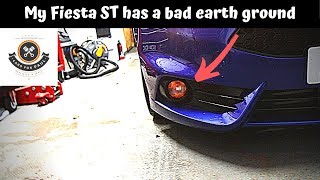
- G104 — Left front of the engine compartment.. This is a primary engine compartment ground. A poor connection at this point can cause a variety of electrical issues and incorrect sensor readings for components controlled by the PCM, including the wastegate solenoid. Bad grounds are a known issue on Fiestas.
- PCM Ground — On the frame rail below the air box.. This is the direct ground for the Powertrain Control Module. A fault here can cause the PCM to misinterpret sensor data or fail to properly drive actuators like the wastegate solenoid, potentially triggering a 'low circuit' code.
- Wastegate Solenoid Connector — On the wastegate solenoid itself, near the turbocharger assembly.. This 2-pin connector is where voltage and resistance tests are performed. The pins can become corroded or the wiring can chafe near the connector due to engine heat and vibration, causing the 'low circuit' fault.
OEM Part Supersession History
CJ5Z-9K378-A→CJ5Z-9K378-B— Standard part revision and improvement by the manufacturer.
Heads up: The parts are interchangeable. CJ5Z-9K378-B is the recommended replacement for a failed CJ5Z-9K378-A.CJ5Z-9K378-B→SOL-1 (Motorcraft Service Part Number)— This is the Motorcraft service part number which may be packaged differently but is the same OEM component.
Model Year Variations Within This Range
- 2016: The 2016 model year Fiesta ST introduced a redesigned air intake system and a different ECU strategy. While the P0245 code and its primary cause (the solenoid) remain the same, aftermarket intakes from 2014-2015 models are not directly compatible with the 2016 model. The ECU change was addressed by tuning companies like Cobb.
- 2014-2015: Fiesta STs produced between September 2012 and December 2014 were part of a safety recall for potential engine overheating due to insufficient coolant circulation, which could lead to a cracked cylinder head. While not directly causing P0245, severe overheating can damage various engine bay components and wiring, making it a relevant factor for older models in this range.
Diagnostic Flowchart
Other Known Issues on This Vehicle
Issues unrelated to this code that are worth knowing about as an owner of this generation:
- HVAC Blend Door Actuator Failure 🟡 Low — Extremely common. Owners report a repetitive clicking or knocking sound from the dashboard on startup. Often fails multiple times.
- Engine Overheating/Cracked Cylinder Head 🔴 High — Affects earlier models (primarily 2014-2015). A lack of coolant circulation can cause the cylinder head to crack, leading to oil leaks and potential fire risk. (Ref: Safety Recall 17S09)
- Clutch Pedal Sticking / Master or Slave Cylinder Failure 🟠 Medium — A known issue where the clutch pedal sticks to the floor intermittently. Often caused by a failing slave cylinder (requiring transmission removal) or master cylinder.
- Purge Valve Failure / Fuel Tank Deformation 🟠 Medium — A faulty canister purge valve can cause a vacuum in the fuel tank, leading to deformation of the tank and inaccurate fuel gauge readings. (Ref: TSB 16-0062)
Used vs. New Parts: Buying Guide for This Vehicle
When a used part is the smart pick: A used part is generally not recommended for this repair. The wastegate solenoid is a known failure point, and a used part from a junkyard carries a high risk of having the same internal fault or a very limited remaining service life. Given the relatively low cost of a new aftermarket or OEM part, buying new is the smarter choice.
Donor-vehicle mileage cap: roughly under 30000 miles for the part to have meaningful remaining life.
What to inspect on the donor part:
- If considering a used part, source it from a vehicle with the lowest possible mileage.
- Visually inspect the plastic housing for any cracks, melting, or signs of extreme heat exposure.
- Check the electrical connector pins for any corrosion or damage.
- Test the resistance with a multimeter before purchase; it must be within the 3.42 - 4.18 Ω range.
OEM-only on this vehicle (don't cheap out):
- Turbocharger Wastegate Regulating Valve Solenoid: Forum consensus strongly suggests that cheap, unbranded aftermarket solenoids (e.g., from Amazon or eBay) often fail quickly or don't resolve the code. Sticking with the OEM Motorcraft part or a reputable OEM-supplier brand like Pierburg is highly recommended for a lasting repair.
Aftermarket brands forum-validated for this vehicle:
- Pierburg
Brands owners have reported issues with on this vehicle:
- Unbranded, low-cost solenoids from online marketplaces are frequently reported by owners to be unreliable.
Real Owner Stories
Aggregated from forums and TSBs cited above. Mileages and costs reflect what owners reported in those sources.
2014-2016 Ford Fiesta ST 1.6L GTDI
Symptoms: The car was throwing code P0246 and was unable to make more than 4.x lbs of boost.
What fixed it: Replacing the solenoid with a genuine OE Ford solenoid after a cheap Amazon version failed to fix it.
Source hint: Reddit /r/FiestaST: 'Wastegate or Wastegate Solenoid?'
2014-2016 Ford Fiesta ST 1.6L GTDI
Symptoms: Chasing a P0246 code; replaced the solenoid but the issue persisted.
What fixed it: Discovered a nicked wire in the harness that was shorting out; also recommended checking fuse F24.
Source hint: fiestastforum.com: 'Chasing P0246'
2014-2016 Ford Fiesta ST 1.6L GTDI
Symptoms: Low boost/no-boost issue and a high-voltage code (P0246).
What fixed it: Replacing the solenoid with a genuine Ford part.
Source hint: fiestastforum.com: 'Low Boost?'
Related OBD-II Codes
Frequently Asked Questions
Does TSB 15-0162 apply to my 2015 Ford Fiesta ST with the 1.6L GTDI engine?
What is the correct resistance for the wastegate solenoid on a Fiesta ST?
Can I use a cheaper aftermarket wastegate solenoid from Amazon to fix P0245?
Which fuse should I check if my wastegate solenoid has no power?
My Fiesta ST is stuck at 4 PSI of boost; is this related to P0245?
Are there other Ford models that share this wastegate solenoid issue?
Helpful Videos
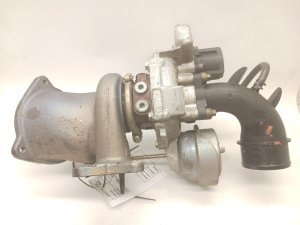
Used OEM Parts in Stock

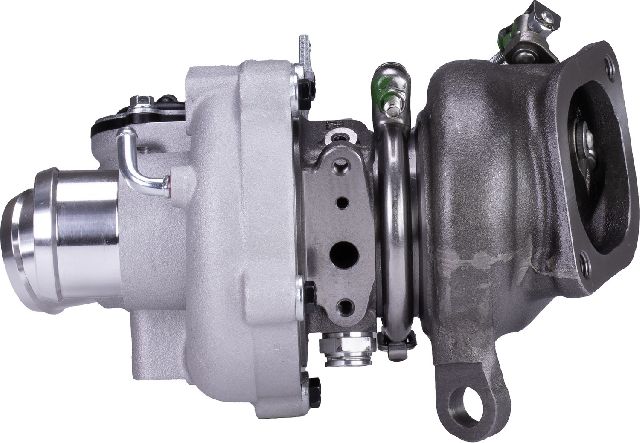
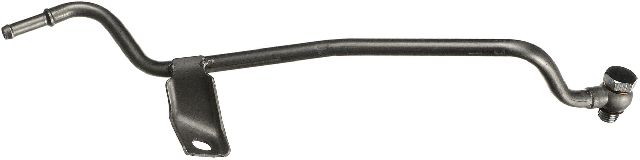
New Aftermarket Parts Available


The information in this article is provided for general reference and educational purposes only. Vehicle specifications, procedures, and part compatibility can vary by production date, trim level, and region. Always consult your vehicle's factory service manual and verify part numbers before purchasing or performing repairs. Safety-critical components such as airbags, seat belts, and braking systems should be installed by a qualified professional.
- Ford Fiesta ST:
- 🎬 Helpful Videos
- 🛍️ Shop This Part
- What's Unique About the 2014-2016 Ford Fiesta ST
- Symptoms You May Notice
- Most Likely Causes
- Rare But Worth Checking
- Diagnosis Steps
- Parts You'll Likely Need
- Related Codes That Often Appear With This One
- Technical Service Bulletins (TSBs) & Recalls
- Platform-Specific Known Issues
- Mechanic-Grade Diagnostic Values
- Scan Tool Commands That Help
- Wiring & Ground Locations
- OEM Part Supersession History
- Model Year Variations Within This Range
- Diagnostic Flowchart
- Other Known Issues on This Vehicle
- Used vs. New Parts: Buying Guide for This Vehicle
- Real Owner Stories
- 2014-2016 Ford Fiesta ST 1.6L GTDI
- 2014-2016 Ford Fiesta ST 1.6L GTDI
- 2014-2016 Ford Fiesta ST 1.6L GTDI
- Related OBD-II Codes
- Frequently Asked Questions
- 🎟️ Get 5% Off