

P0244 on 2012-2020 Chevrolet Sonic 1.4L Turbo: Wastegate Performance Causes and Fixes
On the 1.4L Turbo Sonic, code P0244 is most often caused by a faulty Turbocharger Wastegate Solenoid Valve or a weak/failed Wastegate Actuator. Replacing the solenoid is a common, inexpensive DIY fix costing around $30-$60 for the part. This code indicates a performance or range issue, meaning the solenoid's actual operation doesn't match what the ECM expects.
- P0244 on your Sonic 1.4L Turbo almost always points to a problem with the external boost control parts, not the turbo itself.
- The most likely fix is replacing the Turbocharger Wastegate Solenoid Valve, a cheap and accessible part.
- Before buying any parts, inspect all vacuum hoses for cracks and manually check the wastegate actuator arm for looseness.
- Do not replace the entire turbocharger unless you have confirmed the internal wastegate arm is seized or the turbine is damaged.
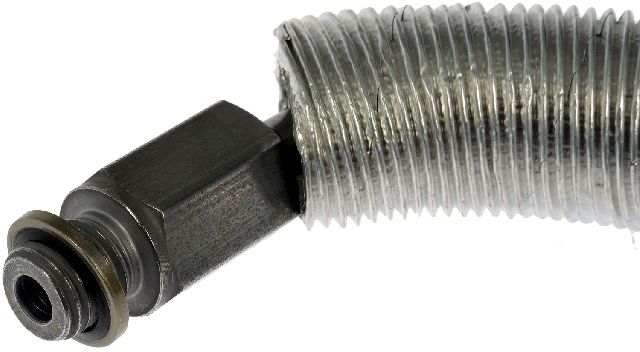
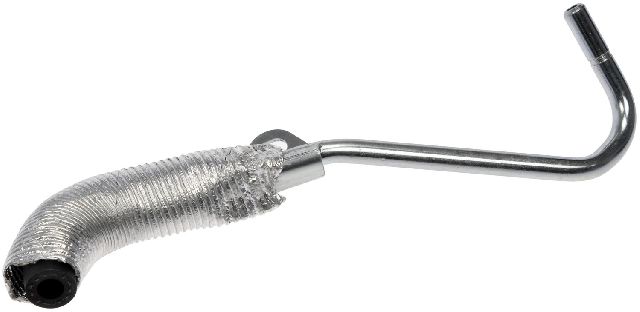
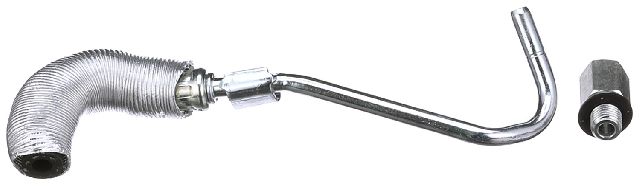
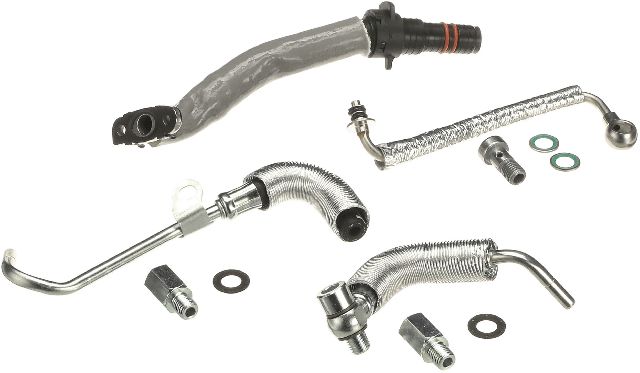
- Consider preventative replacement of the turbo oil feed line to avoid catastrophic turbo failure, a known weak point on this engine.
What's Unique About the 2012-2020 Chevrolet Sonic
The 1.4L (LUJ/LUV) turbo engine used in the Sonic, Cruze, Trax, and Buick Encore is well-known for issues related to its boost control system. Unlike many turbos where the entire unit must be replaced, GM has made the external wastegate solenoid and actuator available as separate service parts because they fail so frequently. Failures are often linked to vacuum leaks from brittle hoses, internal diaphragm ruptures in the actuator, or electrical failure of the solenoid itself, making these the first places to check before suspecting the expensive turbocharger.
Symptoms You May Notice
- Check Engine Light illuminated
- Significant loss of engine power and sluggish acceleration
- Inability to build boost, or boost pressure is limited (e.g., stuck at 5 PSI)
- Engine running rough or stalling at idle
- Audible whistling, hissing, or rattling sounds from the engine bay, especially under acceleration
- Hesitation or jerky acceleration
- Clicking noise from the solenoid with the key in the 'ON' position (engine off), which may indicate a failing solenoid
- Replacing the entire turbocharger assembly when only the external solenoid or actuator has failed. GM specifically advises against this in service bulletin PIP5495L.
- Assuming the turbo is bad without first performing a boost leak (smoke) test to check for cracked hoses or a failed intake manifold check valve.
Most Likely Causes
- Faulty Turbocharger Wastegate Solenoid Valve 🔴 High Probability This solenoid is exposed to significant heat and can fail electrically or become clogged with oil vapor. It's a very common failure point on the 1.4L turbo engine, sometimes causing an audible, continuous clicking sound when it fails.
How to confirm: Test the solenoid with a multimeter for correct resistance. Use a handheld vacuum pump and a 12V power source to see if it properly opens and closes, directing vacuum. Swapping with a known good part is a quick and effective diagnostic step due to its low cost and accessibility.
Typical fix: Replace the wastegate solenoid valve. It is recommended to also inspect and replace any brittle associated vacuum hoses at the same time.
Est. part cost: $30-$60 - Failed Turbocharger Wastegate Actuator 🟡 Medium Probability The rubber diaphragm inside the actuator is prone to tearing from heat and pressure cycles, creating a vacuum leak. The internal spring can also weaken, failing to hold the wastegate shut against exhaust pressure.
How to confirm: With the engine off, try to move the actuator arm by hand. If it moves with very little resistance or feels completely loose, the actuator has likely failed. A more definitive test is to use a handheld vacuum pump on the actuator's vacuum port; if it fails to hold vacuum, the diaphragm is ruptured.
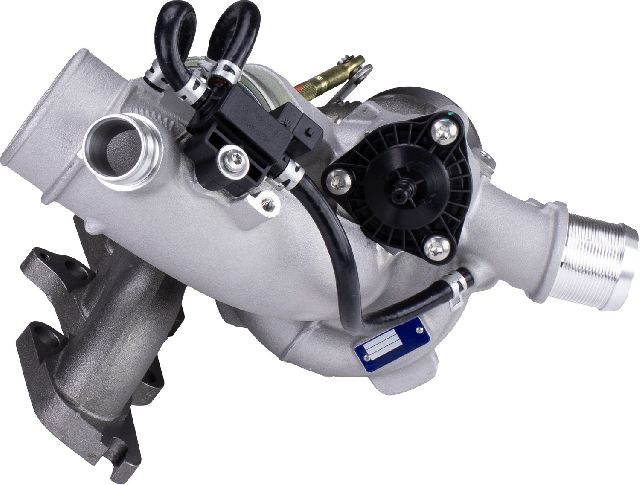
Typical fix: Replace the wastegate actuator. This part is available separately from the turbocharger from OEM and aftermarket suppliers like Dorman or ZZP.
Est. part cost: $40-$100 - Cracked or Disconnected Vacuum Hoses 🟡 Medium Probability The vacuum lines that control the wastegate system become brittle and crack from constant exposure to engine heat, a common issue on the 1.4L platform.
How to confirm: Visually inspect all vacuum lines running from the solenoid to the actuator and to the vacuum source. Pay close attention to the connections and any lines under the intake manifold. A smoke test is the most effective way to pinpoint hard-to-see leaks.
Typical fix: Replace the damaged section of vacuum hose or the entire harness. Upgraded silicone hoses are available from aftermarket suppliers.
Est. part cost: $10-$30 - Sticking Internal Wastegate Arm ⚪ Low Probability Carbon buildup or rust within the turbo's exhaust housing can cause the mechanical wastegate arm to bind, seize, or move with a gritty feeling, preventing the actuator from moving it correctly.
How to confirm: Disconnect the actuator rod from the wastegate arm on the turbo. Attempt to move the arm by hand through its full range of motion. It should pivot smoothly without binding. If it is stuck or gritty, the turbocharger itself is the problem.
Typical fix: In most cases, this requires replacement of the entire turbocharger assembly. Some owners have had temporary success freeing the arm with penetrating oil, but this is not a permanent solution.
Est. part cost: $400-$1200
Rare But Worth Checking
- Failed PCV Check Valve in Intake Manifold: A known defect on the 1.4L engine. The internal, non-serviceable check valve fails, creating a massive boost leak from the intake manifold back to the turbo inlet. While this usually sets a P0299 (underboost) or P0171 (lean) code, it creates general boost performance issues that can contribute to or be misdiagnosed as a P0244 fault.
Diagnosis Steps
- Read all fault codes with an OBD-II scanner. Note if P0299 or P0171 are also present.
- Visually inspect all vacuum lines connected to the turbo wastegate solenoid and actuator for cracks, brittleness, or disconnection. Pay special attention to hidden hoses under the intake manifold.
- With the engine off, remove the heat shield for access. Check the wastegate actuator arm for movement. It should be firm but movable by hand, not completely loose or seized.
- Use a handheld vacuum pump to test if the wastegate actuator holds vacuum. Connect the pump to the actuator's nipple and apply vacuum. If it doesn't hold at least 15-20 inHg, the internal diaphragm is ruptured and the actuator must be replaced.
- Test the wastegate solenoid's function. Check for a clicking sound with the key on, engine off; continuous clicking indicates failure. For a more thorough test, apply 12V to its pins and use a vacuum gauge to confirm it correctly switches vacuum flow.
- If the external components are good, disconnect the actuator rod from the turbo's wastegate arm and check if the arm moves freely through its range. If it's stuck, gritty, or seized, the turbocharger is faulty.
- If no obvious fault is found, perform a boost leak test (smoke test) on the entire intake and PCV system to check for hidden leaks. This is critical for finding a failed intake manifold check valve, a very common issue on this engine.
Parts You'll Likely Need
- Turbocharger Wastegate Solenoid Valve
(OEM #55574902 (Superseded by 55597954))— This is the most frequent failure point for code P0244 on this engine. It's an external part that is relatively easy to replace.
Trusted brands: ACDelco, Dorman
OEM price range: $50-$70
Aftermarket price range: $25-$50 - Turbocharger Wastegate Actuator
(OEM #Not sold separately by GM, but available aftermarket.)— The second most common failure. The internal diaphragm ruptures or the spring weakens, causing a loss of boost control.
Trusted brands: Dorman (e.g., 917-279), ZZP Performance, BNR Supercars
OEM price range: N/A
Aftermarket price range: $40-$100 - Turbocharger Assembly
(OEM #55565353 (Example, verify by VIN))— Needed only if the internal wastegate arm is seized, the turbine is damaged, or there are significant cracks in the housing causing a leak.
Trusted brands: ACDelco (Remanufactured), Garrett
OEM price range: $800-$1200
Aftermarket price range: $350-$600
Related Codes That Often Appear With This One
- P0299 — Turbocharger Underboost. This code is very common on the 1.4L engine and often appears alongside P0244. A malfunctioning wastegate system (stuck open actuator, bad solenoid, vacuum leak) directly causes a lack of boost pressure.
- P0171 — System Too Lean. Often triggered by unmetered air entering the engine through a vacuum leak. On this platform, a ruptured wastegate actuator diaphragm or a failed PCV system are common sources of such leaks.
- P1101 — MAF Sensor Out of Self-Test Range. This code is frequently caused by vacuum leaks or PCV system issues on the 1.4L engine, which are also root causes for P0244.
Technical Service Bulletins (TSBs) & Recalls
- N232395330: Special Coverage for turbocharger failure on certain 2017-2018 models.
- PIP5495L: Preliminary information for dealers on properly diagnosing boost-related codes (P0299/P0234) and avoiding unnecessary turbo replacement.
Platform-Specific Known Issues
- GM issued Special Coverage N232395330 for potential turbocharger failure on some 2017-2018 models, extending the warranty to 10 years/120,000 miles. This typically requires an active P0299 code for coverage.
- Service bulletin PIP5495L specifically warns technicians not to replace the entire turbo for boost codes (P0299/P0234)
Mechanic-Grade Diagnostic Values
- Turbocharger Wastegate Solenoid Coil Resistance — expected: 8 - 30 Ohms (Varies by manufacturer, but this is a typical range). Failure: A reading of infinity (open circuit) or near zero (short circuit).
- Wastegate Solenoid Commanded Duty Cycle (Scan Tool) — expected: 0-100%. Failure: Actual boost pressure does not respond correctly to changes in the commanded duty cycle.
- Wastegate Solenoid Connector Voltage (Key On, Engine Off) — expected: One pin should have battery voltage (approx. 12V), the other is the ECM control (ground).. Failure: No voltage on the supply pin indicates a fuse or wiring issue.
- Wastegate Actuator Pivot Pin Clearance — expected: 0.3 - 0.4 mm (0.012 - 0.016 inches) or less.. Failure: Excessive clearance in the linkage between the actuator and the wastegate arm, which can cause underboost (P0299) and other control issues.
Scan Tool Commands That Help
- GDS2 (GM Dealer Software): Turbocharger Wastegate Solenoid Valve Control — This bidirectional command allows a technician to manually cycle the solenoid on and off while monitoring vacuum/pressure with a gauge. It directly tests the solenoid's electrical and mechanical function without having to remove it from the vehicle.
- GDS2 (GM Dealer Software): Engine Data Display — To monitor live data parameters like 'Desired Boost Pressure' vs. 'Actual Boost Pressure' and 'Wastegate Solenoid Duty Cycle' during a test drive. A significant deviation between desired and actual values points to a control system problem.
Wiring & Ground Locations
- K20 ECM Connector X1 — The Engine Control Module, typically located in the engine bay near the battery.. This is where the signals for the boost control system originate and terminate. Testing at these pins can confirm signal integrity from the ECM. Key pins include: Pin 18 (Turbo Boost Pressure Sensor Signal), Pin 27 (Turbo Boost Pressure Sensor 5V Reference), and Pin 12 (Barometric Pressure Sensor Signal).
- Wastegate Solenoid Connector — On the wastegate solenoid itself, which is typically mounted near the turbocharger, often under the intake manifold.. This is the primary point for testing voltage supply and control signals to the solenoid. Wires are susceptible to heat damage or rodent damage in this location. On a 2015 model, the wires were identified as purple and green.
Real Owner Repair Stories
- Sonic Owners Forum user 'tabkey' (2015 Sonic LTZ) — Check Engine Light with code P0033 (Turbocharger Wastegate Control Circuit).
❌ Tried (didn't work) Initial visual inspection of the main solenoid connector did not reveal the problem.
✅ What actually fixed it A rodent had chewed through two wires (one purple, one green) going to the bypass/wastegate solenoid. The sensor was located at the rear of the engine, on the bottom side of the intake manifold, above the alternator. Repairing the chewed wires by soldering them resolved the code. - CruzeTalk forum user experience (Chevy Cruze 1.4L Turbo (shared engine)) — Persistent P0299 (Underboost) code even after checking external components.
❌ Tried (didn't work) Replacing external vacuum lines., Testing the wastegate actuator and solenoid.
✅ What actually fixed it The internal wastegate pivot pin inside the turbocharger exhaust housing was excessively worn. This caused the wastegate flapper to not seal properly, creating a constant boost leak. The only permanent fix was to replace the entire turbocharger assembly.
When the Usual Fixes Don't Work
- While the most common fixes for P0244 are the inexpensive external solenoid and actuator, a significant number of owners, particularly those also seeing a P0299 code, find that these repairs do not solve the problem. The underlying cause is often mechanical wear of the internal wastegate pivot pin inside the turbocharger's exhaust housing. This creates excessive 'slop' in the linkage, preventing the wastegate from sealing correctly. In these cases, replacing the external components is futile, and the only correct, long-term repair is the replacement of the entire turbocharger assembly.
OEM Part Supersession History
55574902→55597954— Part revision/update by GM.55589100→N/A— This is the GM part number for the wastegate actuator.
Heads up: GM does not sell this actuator as a separate, standalone service part. It is officially listed as 'Included with turbocharger'. Aftermarket replacements are the only option without buying a full turbo assembly.
Model Year Variations Within This Range
- 2012-2020: The Chevrolet Sonic consistently used the Gen 1 family 1.4L Turbo engine (LUJ/LUV) for its entire production run. This is important because the contemporary Chevrolet Cruze switched to a completely different, non-compatible LE2 1.4L Turbo engine in 2016. The LE2 features an integrated cylinder head/exhaust manifold and different turbo components. Technicians and owners should be aware that parts and some procedures for a 2016+ Cruze 1.4L will NOT apply to a 2016+ Sonic 1.4L.
- 2012-2020: Aftermarket wastegate actuators often require setting the 'preload' on the actuator rod upon installation. This involves adjusting the rod length so it requires a slight stretch to fit onto the wastegate arm, typically involving 1.5 full turns after the rod end slips on freely. This procedure is critical for ensuring the wastegate stays closed and the turbo can build boost correctly, but is not required for the non-adjustable factory part.
Diagnostic Flowchart
Other Known Issues on This Vehicle
Issues unrelated to this code that are worth knowing about as an owner of this generation:
- PCV System Failure (Valve Cover & Intake Manifold) 🔴 High — Very common, often occurs between 60,000 and 120,000 miles. Failure of the intake manifold check valve often causes the valve cover diaphragm to rupture. (Ref: Special Coverage N192210230 and N202299080 extend warranty on the valve cover PCV diaphragm for certain model years.)
- Cooling System Leaks (Water Pump, Thermostat Housing, Hoses) 🔴 High — Widespread. Water pumps often fail before 100,000 miles. Plastic thermostat housings and various hoses are prone to cracking and leaking. (Ref: GM Service Bulletin 14371A extended warranty coverage for leaking water pumps on 2012-2014 models to 10 years/150,000 miles.)
- Cracked/Leaking Valve Cover 🟠 Medium — Common due to heat and pressure from PCV failures. Can cause oil leaks and vacuum leaks. (Ref: Covered under Special Coverage N192210230/N202299080 if the PCV diaphragm fails.)
- Failing Coil Pack 🟠 Medium — Common failure item, typically between 50,000 and 100,000 miles, causing misfires. The rubber boots are known to degrade from heat.
- Leaking Turbo Oil Feed/Return Lines 🔴 High — Common failure point due to heat degrading the seals. Can lead to oil starvation and catastrophic turbo failure if not addressed.
Used vs. New Parts: Buying Guide for This Vehicle
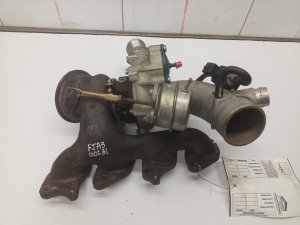
When a used part is the smart pick: For a seized internal wastegate arm or a cracked turbo housing, a complete, low-mileage used turbocharger assembly from a junkyard can be a very cost-effective option compared to a new OEM unit.
Donor-vehicle mileage cap: roughly under 60000 miles for the part to have meaningful remaining life.
What to inspect on the donor part:
- Check for zero in-and-out (axial) shaft play.
- Confirm minimal side-to-side (radial) shaft play.
- Manually move the wastegate arm through its full range of motion; it must be smooth with no binding or grittiness.
- Thoroughly inspect the cast iron exhaust housing for any hairline cracks, especially around the wastegate port.
Aftermarket brands forum-validated for this vehicle:
- Dorman (Solenoid and Actuator)
- ZZP Performance (Upgraded Actuator)
- BNR Supercars (Upgraded Actuator)
- MAMBA (Upgraded Actuator)
Real Owner Stories
Aggregated from forums and TSBs cited above. Mileages and costs reflect what owners reported in those sources.
2012-2020 Chevrolet Sonic 1.4L Turbo
Symptoms: Owner experienced a continuous clicking noise from the wastegate solenoid when the key was in the 'ON' position with the engine off.
What fixed it: Replacement of the wastegate solenoid valve.
Source hint: https://www.sonicownersforum.com/threads/bad-wastegate-solenoid.17153/
2012-2020 Chevrolet Sonic 1.4L Turbo
Symptoms: Intermittent loss of boost where the vehicle was stuck at 5 PSI, leading to a Check Engine Light.
What fixed it: Diagnosis of the wastegate control system; owner discussed the solenoid and vacuum lines as primary suspects.
Source hint: https://www.sonicownersforum.com/threads/p0299-underboost-cel-and-questions.16937/
2012-2020 Chevrolet Sonic 1.4L Turbo
Symptoms: Underboost and wastegate-related codes caused by vacuum issues.
What fixed it: Repairing a broken vacuum line located under the intake manifold.
Source hint: https://www.reddit.com/r/ChevySonic/comments/w873qj/need_guidance_with_my_turbo_code_p0299/
2011-2016 Chevrolet Cruze 1.4L Turbo — ~90000 miles
Symptoms: Boost-related codes and PCV system failure symptoms; common between 60,000 and 120,000 miles.
What fixed it: Replacement of the intake manifold and valve cover due to a failed PCV check valve.
Source hint: https://www.cruzetalk.com/threads/2011-2016-cruze-1-4-pcv-valve-cover-intake-manifold-issues.192442/
Related OBD-II Codes
Frequently Asked Questions
Is there a special warranty extension for turbocharger issues on my 2017 Chevrolet Sonic?
My wastegate solenoid is making a continuous clicking sound when the key is on but the engine is off. Is this normal?
The dealership wants to replace my entire turbocharger for a boost code. Is this always necessary?
Can a failure in the PCV system cause boost-related codes on the Sonic?
Is the water pump on my 2013 Sonic covered if it starts leaking while I'm fixing the P0244 code?
What is the most common low-cost fix for P0244 on the 1.4L turbo engine?
Used OEM Parts in Stock
New Aftermarket Parts Available


The information in this article is provided for general reference and educational purposes only. Vehicle specifications, procedures, and part compatibility can vary by production date, trim level, and region. Always consult your vehicle's factory service manual and verify part numbers before purchasing or performing repairs. Safety-critical components such as airbags, seat belts, and braking systems should be installed by a qualified professional.
- Chevrolet Sonic:
- 🛍️ Shop This Part
- What's Unique About the 2012-2020 Chevrolet Sonic
- Symptoms You May Notice
- Most Likely Causes
- Rare But Worth Checking
- Diagnosis Steps
- Parts You'll Likely Need
- Related Codes That Often Appear With This One
- Technical Service Bulletins (TSBs) & Recalls
- Platform-Specific Known Issues
- Mechanic-Grade Diagnostic Values
- Scan Tool Commands That Help
- Wiring & Ground Locations
- Real Owner Repair Stories
- When the Usual Fixes Don't Work
- OEM Part Supersession History
- Model Year Variations Within This Range
- Diagnostic Flowchart
- Other Known Issues on This Vehicle
- Used vs. New Parts: Buying Guide for This Vehicle
- Real Owner Stories
- 2012-2020 Chevrolet Sonic 1.4L Turbo
- 2012-2020 Chevrolet Sonic 1.4L Turbo
- 2012-2020 Chevrolet Sonic 1.4L Turbo
- 2011-2016 Chevrolet Cruze 1.4L Turbo — ~90000 miles
- Related OBD-II Codes
- Frequently Asked Questions
- 🎟️ Get 5% Off