

P0236 on 2017-2020 Lincoln MKZ 3.0L EcoBoost: Boost Sensor 'A' Performance Issues and Fixes
On a 2017-2020 Lincoln MKZ with the 3.0L EcoBoost engine, code P0236 is most often caused by a faulty boost pressure sensor (MAP sensor), a boost leak from a cracked charge pipe or loose clamp, or a wiring issue near the sensor. A sensor replacement costs around $60-$150 for the part, and it's a manageable DIY job for many owners. A smoke test is the best way to confirm or rule out boost leaks.
- P0236 means the boost sensor's reading is illogical, not necessarily that the sensor is completely dead.
- Before buying any parts, perform a thorough visual inspection of all charge pipes and connections between the turbos, intercooler, and throttle body.
- A smoke test is the most effective way to find hard-to-see boost leaks, which are a very common cause.
- Carefully inspect the wiring and connector at the boost pressure sensor for damage, as this is a known failure point on Ford's EcoBoost engines.
- If no leaks or wiring issues are found, the boost pressure sensor itself is the most likely component to have failed.
What's Unique About the 2017-2020 Lincoln MKZ
The 3.0L EcoBoost is a sophisticated twin-turbo engine with extensive charge piping. While P0236 can occur on any turbocharged vehicle, on this platform it frequently points to a few specific weaknesses. Boost leaks are common due to the numerous connections in the system. Furthermore, other Ford EcoBoost engines have a documented history of wiring harness issues near the boost sensor causing this exact code, making a thorough wiring inspection critical. An Explorer ST owner with a similar engine reported P0236 and P0238 codes after driving in heavy rain, suggesting potential vulnerability of the sensor or wiring to moisture. The issue is most often the sensor, a leak, or the wiring, rather than a failure of the turbochargers themselves.
Symptoms You May Notice
- Check Engine Light is illuminated.
- Significant loss of engine power and acceleration.
- Engine may hesitate, stumble, or surge under load.
- Vehicle may enter 'limp mode,' limiting RPM and speed.
- Audible hissing or whistling sound from the engine bay during acceleration, indicating a boost leak.
- Rough or unstable idle.
- Poor fuel economy.
- Excessive black smoke from the exhaust if the sensor causes a rich fuel mixture.
- Replacing the turbocharger assembly when the fault is actually a simple boost leak, a bad sensor, or a wiring issue. A full diagnostic should always be performed before condemning an expensive component like a turbo.
Most Likely Causes
- Boost Leak in Charge Air System 🔴 High Probability The twin-turbo setup has extensive plumbing with many connection points. Over time, plastic components can become brittle and crack, or clamps can loosen, creating a path for pressurized air to escape.
How to confirm: Perform a smoke test on the intake and charge air system to make pressurized smoke reveal the leak's location. Listen for hissing noises under boost and visually inspect all hoses, pipes, and the intercooler for cracks or loose connections.
Typical fix: Tighten loose clamps or replace the cracked hose or damaged intercooler.
Est. part cost: $20-$400 - Faulty Boost Pressure Sensor (MAP/TMAP Sensor 'A') 🔴 High Probability The sensor can become contaminated with oil or simply fail electronically over time, causing it to send slow, intermittent, or incorrect readings. This is a common failure point across many turbocharged platforms.
How to confirm: Using a scan tool, monitor the MAP/Boost sensor PID. With the key on and engine off, it should read close to barometric pressure (BARO). The reading should change smoothly with engine load. If the reading is stuck, erratic, or doesn't change, the sensor is likely faulty.
Typical fix: Replace the boost pressure sensor. On the 3.0L EcoBoost, this sensor is typically located on the charge pipe leading to the throttle body.
Est. part cost: $60-$150 - Damaged Wiring or Connector 🟡 Medium Probability Ford has issued TSBs for other EcoBoost engines regarding damaged wiring insulation at the boost sensor connector, which can cause intermittent signals. Heat and vibration in the engine bay can lead to similar failures on the 3.0L. A cracked wire was found to be the cause of a P0236 code in one documented repair.
How to confirm: Visually inspect the wiring harness and connector for the boost pressure sensor. Look for chafed, cracked, or melted insulation. Wiggle the harness while monitoring the sensor data on a scan tool. Use a multimeter to check for 5V reference, proper ground, and signal integrity back to the PCM.
Typical fix: Repair the damaged section of the wiring harness or replace the connector pigtail.
Est. part cost: $15-$50
Rare But Worth Checking
- Sticking Turbocharger Wastegate: If the wastegate or its actuator sticks, it can cause an underboost or overboost condition that the sensor correctly reports as being out of the expected range. This is less common than sensor or leak issues but should be considered if those are ruled out.
- Clogged Air Filter or Intercooler: A severely restricted air filter or an intercooler that is clogged internally or externally can impede airflow and cause pressure readings that the PCM deems illogical.
- Faulty Powertrain Control Module (PCM): In very rare cases, the PCM itself may be defective, causing it to misinterpret a good sensor signal. This should only be considered after all other possibilities have been exhaustively ruled out.
Diagnosis Steps
- Read all stored and pending DTCs with an OBD-II scanner.
- Visually inspect the entire air intake tract, from the air filter box to the throttle body. Check that the air filter is clean. Pay close attention to all charge pipes, silicone couplers, and clamps for signs of cracks, oil residue (indicating a leak), or looseness.
- Use a scan tool to monitor the live data for 'MAP' or 'Boost Pressure' PIDs. With the Key On, Engine Off (KOEO), the reading should be close to the Barometric Pressure (BARO) PID. A significant difference indicates a sensor or wiring problem.
- Start the engine. The MAP reading should drop to show vacuum at idle. While driving, observe if the boost pressure builds smoothly and corresponds to the 'Desired Boost' PID.
- If a leak is suspected, perform a smoke test on the entire charge air system to pinpoint the source of the leak. This is the most effective method for finding small cracks or bad seals.
- If no leaks are found, inspect the boost pressure sensor's electrical connector for corrosion, moisture, or damage. Wiggle the harness while monitoring the sensor data on the scan tool to check for intermittent connections.
- Using a multimeter, backprobe the sensor connector to verify it is receiving a 5-volt reference signal from the PCM and has a solid ground connection. Check the signal wire for a consistent voltage that changes with pressure.
- If wiring and leaks are ruled out, the boost pressure sensor itself is the most likely culprit and should be replaced.
Parts You'll Likely Need
- Manifold Absolute Pressure (MAP) Sensor / Boost Pressure Sensor
(OEM #GV2Z-9F479-D)— This sensor is the most common part to fail, either by giving slow or inaccurate readings, directly causing the P0236 code. This part number also supersedes DV2Z-9F479-D, DV2Z-9F479-C, and CX-2494.
Trusted brands: Motorcraft, Bosch, Walker
OEM price range: $100-$150
Aftermarket price range: $60-$100 - Charge Air Cooler Pipe / Hose — The plastic and rubber components of the charge air system can crack or fail under pressure and heat, creating boost leaks that trigger this code.
Trusted brands: Motorcraft, Dorman
OEM price range: $150-$300
Aftermarket price range: $75-$200
Related Codes That Often Appear With This One
- P0299 — This code indicates a Turbocharger Underboost condition, which can be caused by the same boost leaks that trigger a P0236.
- P0234 — This code indicates a Turbocharger Overboost condition, which could be caused by a faulty wastegate or a skewed sensor reading related to P0236.
- P0237 / P0238 — These codes indicate a low or high circuit fault for the same sensor, pointing more directly to an electrical problem (short/open) rather than a performance issue. An Explorer ST owner reported getting P0236 and P0238 together.
Technical Service Bulletins (TSBs) & Recalls
- TSB 13-6-12: Noted for 3.5L GTDI engines, this TSB addresses P0236 caused by cracked wiring insulation at the Turbocharger Boost Sensor connector, highlighting a potential weak point relevant to the 3.0L engine.
- TSB 16-0161: For 1.6L GTDI engines, this bulletin points to a faulty VREF circuit splice (S129) as a cause for P0236, further establishing a history of wiring-related issues for this code on EcoBoost platforms.
Platform-Specific Known Issues
- While no TSB is specific to the 3.0L MKZ for P0236, Ford has issued bulletins for other EcoBoost engines (like the 3.5L and 1.6L) that identify damaged wiring insulation at the boost sensor connector as the root cause for this code. This indicates a known pattern of failure in the wiring harness design or materials used across the EcoBoost family, making a wiring check essential.
- On the related Ford Explorer ST platform with the same 3.0L engine, an owner reported throwing P0236 and P0238 codes after installing an aftermarket air intake, suggesting the system is sensitive to changes in airflow dynamics or sensor placement.
Mechanic-Grade Diagnostic Values
- MAP Sensor Reference Voltage — expected: ~5V. Failure: Voltage significantly lower or higher than 5V indicates a PCM or wiring issue.
- MAP Sensor Ground Circuit — expected: Continuity to chassis ground (beep on multimeter).. Failure: No continuity (open circuit) indicates a broken ground wire.
- MAP Sensor Signal Voltage (Key On, Engine Off) — expected: ~5V (should correlate with BARO sensor reading).. Failure: Voltage that does not match expected atmospheric pressure reading.
- MAP Sensor Signal Voltage (Engine Idling) — expected: Drops to 1V - 2V.. Failure: Voltage does not drop to indicate vacuum, or is erratic.
Scan Tool Commands That Help
- Ford IDS (Integrated Diagnostic System): Turbo Boost Test (Powertrain -> Air Management) — To actively command the turbocharger wastegate/vanes and monitor the MGP (Manifold Gauge Pressure) sensor's response. This helps verify if the turbo's mechanical actuation is working correctly, separate from sensor readings.
- Ford IDS (Integrated Diagnostic System): Sensor Rationality Test (KOEO) — To compare the MAP/TCBP sensor reading against the BARO sensor reading with the key on and engine off. The values should be nearly identical at the same altitude. A significant deviation points to a faulty sensor before the engine is even started.
Wiring & Ground Locations
- MAP Sensor Connector — Typically located on the charge pipe leading to the throttle body.. This connector and its wiring are exposed to engine heat and vibration. A small crack in the insulation or a corroded pin can cause an intermittent signal, triggering a P0236 'performance' code instead of a hard circuit fault.
- Engine Compartment Grounds (e.g., G101, G102) — General locations for similar platforms are on the strut towers and at the rear of the engine compartment. A specific wiring diagram for the 2017-2020 MKZ is required for exact locations.. The MAP sensor relies on a clean ground reference. A corroded or loose engine ground can cause the sensor's signal to float or become noisy, leading to implausible readings and a P0236 code.
Real Owner Repair Stories
- YouTube channel 'IG Garage' (Generic turbocharged car, symptoms and fix are directly applicable.) — Losing power on acceleration, hesitation, boost not kicking in.
❌ Tried (didn't work) Initial thought was a bad boost pressure sensor.
✅ What actually fixed it A thorough inspection revealed a small crack in one of the wires going to the boost pressure sensor, causing an intermittent connection. Repairing the damaged wire resolved the P0236 code and restored power. - YouTube channel 'Repairs & Reviews' (Ford Focus ST, which uses similar EcoBoost sensor technology.) — Check Engine Light with code P0236.
❌ Tried (didn't work) Inspecting for boost leaks and wiring issues.
✅ What actually fixed it The owner had replaced the MAP sensor with an aftermarket part from Autozone. The code persisted. The issue was only resolved after replacing the aftermarket sensor with a genuine OEM Ford sensor.
"I Checked Everything" — The Actual Cause
- In a related underboost (P0299) diagnosis, a smoke test revealed no leaks in the charge air system. The actual cause was a clogged catalytic converter. The restriction in the exhaust prevented the turbocharger from spooling up effectively, leading to a lack of boost that the PCM detected. This is a plausible, though less common, cause for P0236 if the boost pressure fails to build as expected.
OEM Part Supersession History
DV2Z-9F479-C→DV2Z-9F479-D, then GV2Z-9F479-D, then potentially PV4Z-9F479-A— Part revisions to improve reliability or sourcing.
Heads up: While multiple revisions exist, a key takeaway from forum/owner experiences is that using a genuine Ford/Motorcraft part, regardless of the latest revision number, is critical. Some aftermarket versions have been reported to cause persistent issues.
Model Year Variations Within This Range
- 2017-2020: The 3.0L EcoBoost V6 was introduced as part of the 2017 model year facelift, replacing the previous 3.7L V6. Within the 2017-2020 range, there are no documented major hardware changes to the engine or its sensors that would affect the diagnosis of P0236. The primary difference was the power output between FWD (350 hp) and AWD (400 hp) models, which is a software/tuning difference.
Diagnostic Flowchart
Other Known Issues on This Vehicle
Issues unrelated to this code that are worth knowing about as an owner of this generation:
- Power Transfer Unit (PTU) Fluid Breakdown/Leak 🔴 High — Common on AWD models. Fluid is considered 'lifetime' by Ford but is prone to overheating and breaking down, leading to seal leaks and eventual PTU failure if not serviced periodically (e.g., every 30,000 miles). (Ref: TSB 19-2017 mentions PTU intermediate shaft seal leaks for the 3.0L EcoBoost in Continentals and other models.)
- Engine Oil Pan Leak 🟠 Medium — The RTV seal on the two-piece oil pan is known to fail, causing oil leaks. This can be an expensive repair due to the labor involved. (Ref: TSB 19-2332 addresses this issue for the 3.0L EcoBoost engine.)
- Intake Valve Carbon Buildup 🟠 Medium — As a direct-injection-only engine, the 3.0L EcoBoost is susceptible to carbon buildup on the intake valves over time (typically noticeable after 80,000 miles), which can cause power loss, rough idle, and misfires.
- Early Cylinder Head Failure (2017 models) 🔴 High — Early production 2017 models (engines built from April 2016 to January 2017) were prone to cylinder head failures, causing excessive white smoke, rough idle, and oil consumption. (Ref: TSB 19-2203 (supersedes earlier versions) was issued to address this problem.)
- Internal Water Pump Failure (3.7L Engine) 🔴 High — While not an issue for the 3.0L EcoBoost, it's a critical problem for the related 3.7L V6 available in the MKZ. The water pump is internal and chain-driven; failure can cause coolant to mix with engine oil, leading to catastrophic engine damage. This is a well-known issue across many Ford/Lincoln platforms with the 3.5L/3.7L engines.
Used vs. New Parts: Buying Guide for This Vehicle
When a used part is the smart pick: For structural components like charge pipes or the intercooler, a used OEM part from a reputable salvage yard is a cost-effective and reliable option, provided it is inspected for cracks or damage.
Donor-vehicle mileage cap: roughly under 75000 miles for the part to have meaningful remaining life.
What to inspect on the donor part:
- For charge pipes, check for any hairline cracks, especially near mounting points and welds.
- Ensure all mounting tabs are intact.
- For an intercooler, inspect for physical damage to the fins and end tanks. Check internally for excessive oil residue, which might suggest the donor vehicle had other engine issues.
OEM-only on this vehicle (don't cheap out):
- Manifold Absolute Pressure (MAP) Sensor: Based on owner reports from similar EcoBoost engines, aftermarket sensors can be unreliable and may not resolve the P0236 code. It is strongly recommended to use a genuine Ford/Motorcraft part.
Aftermarket brands forum-validated for this vehicle:
- For a performance upgrade, Go Fast Bits (GFB) is a known brand for diverter valves, which can be a source of boost leaks.
Brands owners have reported issues with on this vehicle:
- Generic, unbranded, or 'white-box' parts store MAP sensors should be avoided as they have been documented to cause persistent issues.
Real Owner Stories
Aggregated from forums and TSBs cited above. Mileages and costs reflect what owners reported in those sources.
2020 Ford Explorer ST 3.0L EcoBoost V6
Symptoms: The vehicle threw P0236 and P0238 codes shortly after the installation of an aftermarket FenFab air intake.
What fixed it: The issue was linked to the aftermarket air intake system's impact on airflow dynamics or sensor placement.
Source hint: Explorer ST Forum: Fen fab intake and p0236-0238 codes
2017 Lincoln MKZ 3.0L EcoBoost V6
Symptoms: Check engine light with code P0236; the engine experienced a loss of power and intermittent signal issues.
What fixed it: A cracked wire in the boost pressure sensor wiring harness was identified and repaired.
Source hint: Article Context: Damaged Wiring or Connector
Related OBD-II Codes
Frequently Asked Questions
Does TSB 13-6-12 apply to my 3.0L Lincoln MKZ?
Where is the boost pressure sensor located on the 3.0L EcoBoost V6?
Could my aftermarket air intake be causing the P0236 code on my Lincoln?
Is there a TSB for oil leaks on the 3.0L MKZ that I should check while fixing the boost code?
What should the MAP sensor read on my scan tool when the engine is off?
Are there known wiring issues for EcoBoost engines that cause P0236?
Used OEM Parts in Stock

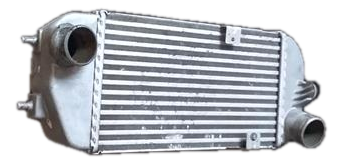
New Aftermarket Parts Available

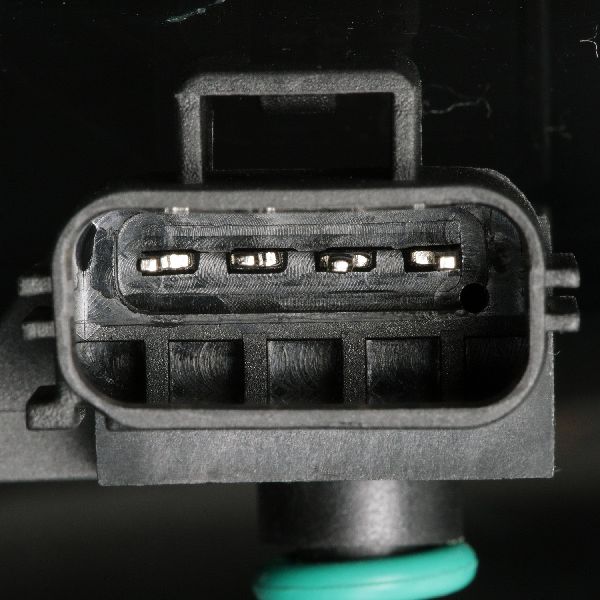

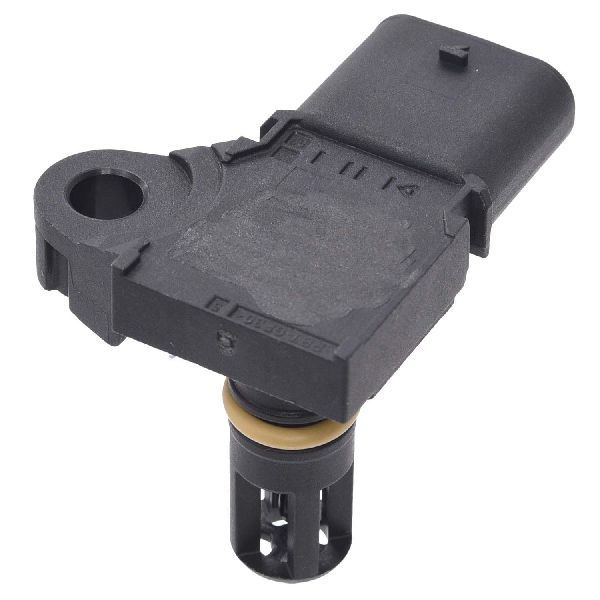
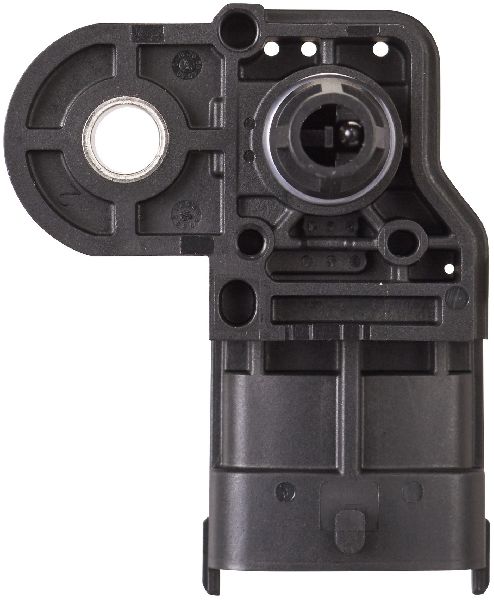

The information in this article is provided for general reference and educational purposes only. Vehicle specifications, procedures, and part compatibility can vary by production date, trim level, and region. Always consult your vehicle's factory service manual and verify part numbers before purchasing or performing repairs. Safety-critical components such as airbags, seat belts, and braking systems should be installed by a qualified professional.
- Lincoln MKZ:
- 🛍️ Shop This Part
- What's Unique About the 2017-2020 Lincoln MKZ
- Symptoms You May Notice
- Most Likely Causes
- Rare But Worth Checking
- Diagnosis Steps
- Parts You'll Likely Need
- Related Codes That Often Appear With This One
- Technical Service Bulletins (TSBs) & Recalls
- Platform-Specific Known Issues
- Mechanic-Grade Diagnostic Values
- Scan Tool Commands That Help
- Wiring & Ground Locations
- Real Owner Repair Stories
- "I Checked Everything" — The Actual Cause
- OEM Part Supersession History
- Model Year Variations Within This Range
- Diagnostic Flowchart
- Other Known Issues on This Vehicle
- Used vs. New Parts: Buying Guide for This Vehicle
- Real Owner Stories
- 2020 Ford Explorer ST 3.0L EcoBoost V6
- 2017 Lincoln MKZ 3.0L EcoBoost V6
- Related OBD-II Codes
- Frequently Asked Questions
- 🎟️ Get 5% Off