

P0236 on 2017-2020 Lincoln Continental 2.7L/3.0L V6: Boost Sensor Causes and Fixes
On the 2.7L/3.0L EcoBoost V6, code P0236 is most often caused by a faulty or oil-contaminated MAP/Boost sensor. The PCM compares readings from two identical sensors, one on the intake manifold and one on the charge pipe near the intercooler. Oil vapor from the PCV system often fouls the intake manifold sensor, causing a data mismatch that triggers the code. Cleaning may work temporarily, but replacement of the faulty sensor is the common fix. Expect to pay $40-$80 for an aftermarket sensor or $9
- P0236 on your Lincoln Continental most likely points to a problem with a MAP/Boost pressure sensor, not the turbo itself.
- Before buying parts, inspect the MAP sensor on the intake manifold for oil contamination. Cleaning it may be a temporary fix.
- Thoroughly check the sensor's wiring and connector for damage, as this is a common cause for 'range/performance' codes.
- The correct OEM replacement part is likely Motorcraft CX-2760, but always verify the part number for your specific vehicle.
- This is a DIY-friendly repair for those comfortable with basic tools; the sensors are generally accessible.
What's Unique About the 2017-2020 Lincoln Continental
The twin-turbocharged 2.7L and 3.0L EcoBoost engines in the Lincoln Continental use multiple, identical pressure sensors to manage the complex forced induction system. One sensor, often called the Turbocharger Inlet Pressure (TIP) or Boost Sensor, is located on the charge pipe leading from the intercooler to the throttle body. The second sensor is the Manifold Absolute Pressure (MAP) sensor, located directly on top of the intake manifold. Code P0236 is often set when the PCM sees a discrepancy between these two sensors. A very common issue on this platform and its mates (like the Ford Fusion Sport) is oil vapor from the PCV system contaminating the sensor located on the intake manifold, causing it to send slow or inaccurate signals. This discrepancy between the clean TIP sensor and the oil-fouled MAP sensor is a primary trigger for the code.
Symptoms You May Notice
- Check Engine Light is on
- Wrench light may illuminate, indicating a powertrain fault
- Noticeable loss of engine power and acceleration; feels like no turbo boost.
- Engine enters 'limp mode' with very little throttle response.
- Turbo lag or hesitation when pressing the throttle
- Rough or 'loping' idle, which may improve after replacing the faulty sensor.
- Reduced fuel economy.
- Hissing or whooshing sounds from the engine bay, indicating a possible boost leak
- Replacing the turbocharger without first diagnosing the sensors, wiring, and checking for boost leaks.
- Replacing only one MAP sensor when the other one is the actual cause of the fault, or when the issue is in the wiring.
- Using cheap aftermarket sensors that may be faulty out of the box or fail quickly.
Most Likely Causes
- Faulty or Contaminated MAP/Boost Sensor 🔴 High Probability The PCV (Positive Crankcase Ventilation) system can allow oil vapor into the intake tract, which coats the MAP sensor on the intake manifold, causing it to fail or send incorrect readings. This is a well-documented issue on the 2.7L and 3.0L EcoBoost engines.
How to confirm: Remove the MAP sensors (one on the charge pipe, one on the intake manifold) and inspect for oil residue. The intake manifold sensor is the most likely to be contaminated. A scan tool can also monitor the voltage/pressure readings from the sensors; a slow or non-responsive sensor is faulty. With the key on and engine off, both sensors should read nearly identical to the barometric pressure.
Typical fix: First, try cleaning the sensor tip with dedicated Mass Airflow (MAF) or electronics cleaner. If the problem persists or returns quickly, the sensor is likely internally faulty and requires replacement. Many owners on platform-mate forums (like the Fusion Sport) report that replacing the intake manifold sensor resolves the P0236 code and related idle issues. It is recommended to use an OEM Motorcraft sensor, as some owners have had issues with aftermarket parts.
Est. part cost: $40-$150 - Damaged Wiring or Electrical Connector 🟡 Medium Probability Engine bay heat and vibration can cause wiring insulation to become brittle and crack, or connectors to become loose or corroded over time, leading to intermittent signals. The lower sensor on the charge pipe is more exposed to road debris and moisture.
How to confirm: Visually inspect the wiring harness and connector for both MAP/Boost sensors. Look for chafing, melting, or corrosion on the pins. Wiggle the connector with the engine running while monitoring sensor data on a scan tool to see if the reading fluctuates.
Typical fix: Repair the damaged section of wire or replace the connector pigtail. Ensure the connection is secure and protected from heat.
Est. part cost: $15-$50 - Boost Leak ⚪ Low Probability Plastic and rubber components in the charge air system, including hoses, the intercooler, and intake gaskets, can crack or become loose with age and heat cycles.
How to confirm: Perform a smoke test on the intake and charge pipe system to reveal any leaks from hoses, clamps, the intercooler, or intake gaskets. Listen for audible hissing sounds during acceleration.
Typical fix: Tighten loose clamps or replace the cracked hose or failed gasket that is causing the leak.
Est. part cost: $20-$300
Rare But Worth Checking
- Faulty Turbocharger Wastegate: If the wastegate is sticking, it can cause the actual boost pressure to deviate from the target pressure, creating a conflict between sensor readings that triggers P0236. This can also trigger overboost (P0234) or underboost (P0299) codes.
- Failing Powertrain Control Module (PCM): In very rare cases, the fault can be internal to the PCM itself, causing it to misinterpret a valid sensor signal. This should only be considered after all other possibilities have been exhaustively ruled out.
Diagnosis Steps
- Connect an OBD-II scanner and confirm P0236 is the primary code. Note any other codes present, especially P0237, P0238, or P0106.
- Review freeze-frame data to understand the engine conditions (RPM, load, temperature) when the code was set.
- Use the scanner's live data function to monitor the PIDs for 'Boost' or 'TIP' sensor and the 'MAP' sensor. Compare their readings at key-on/engine-off. They should be very similar (within ~0.5 psi of each other and matching local atmospheric pressure).
- Start the engine and observe the live data at idle. The MAP sensor reading should be low (high vacuum), while the TIP sensor should be near atmospheric pressure.
- Visually inspect the MAP sensor on the intake manifold (top of the engine) and the TIP/Boost sensor on the charge pipe (lower down, near the intercooler outlet). Check for oil contamination, especially on the intake manifold sensor.
- Inspect the wiring harnesses and connectors for both sensors. Look for any signs of damage, melting, or corrosion. Gently wiggle the connectors to check for intermittent connections.
- If the intake manifold sensor is dirty, clean it with electronics or MAF sensor cleaner and re-test. If the issue persists or returns quickly, the sensor is likely internally faulty and requires replacement.
- If sensors and wiring appear fine, perform a smoke test on the entire intake tract from the air filter to the engine to check for any vacuum or boost leaks.
- If no leaks are found, further diagnosis may be needed to check the operation of the turbocharger wastegates using a vacuum pump or advanced scan tool functions.
Parts You'll Likely Need
- Manifold Absolute Pressure (MAP) Sensor
(OEM #CX-2760 (Motorcraft))— This is the most common failure point for P0236 on EcoBoost engines, often due to oil contamination or age. Both the intake manifold and charge pipe sensors are the same part number.
Trusted brands: Motorcraft, Bosch, NTK
OEM price range: $90-$150
Aftermarket price range: $40-$80
Related Codes That Often Appear With This One
- P0237 — This code indicates 'Boost Sensor A Circuit Low', which can appear if the wiring issue becomes a short to ground or the sensor fails completely.
- P0238 — This code indicates 'Boost Sensor A Circuit High', which can appear if there is a short to power in the wiring or the sensor fails in a high-voltage state.
- P0106 — This code for 'MAP/Barometric Pressure Circuit Range/Performance' is closely related, as the PCM compares the boost sensor readings to the MAP sensor to ensure they are logical. A fault in one can trigger a code for the other.
- P0234 — This code for 'Turbocharger Overboost Condition' can occur if the underlying cause (like a stuck wastegate) is causing boost to exceed commanded levels, which the sensors report.
Technical Service Bulletins (TSBs) & Recalls
- TSB-13-6-17 (for F-150): While not for the Continental, this TSB links P0236 on other Ford GTDI engines to potential wiring issues, highlighting a known pattern.
- TSB 19-2243: Directly applies to the 2017 Continental 3.0L and platform mates. It addresses an underlying engine issue (faulty valve guides causing oil consumption) that is a major contributing factor to the MAP sensor contamination that triggers P0236.
Platform-Specific Known Issues
- TSB 19-2243 was issued for some 2017 Continentals with the 2.7L/3.0L engines built between April 1, 2016, and January 1, 2017, for excessive oil consumption, rough idle, and smoke from the exhaust due to faulty valve guides. This condition can accelerate the oil contamination of the MAP sensor, leading to code P0236.
Mechanic-Grade Diagnostic Values
- MAP/Boost Sensor Reference Voltage (VREF) — expected: ~5.0 V with key on, engine off.. Failure: Voltage significantly lower than 5.0V indicates a wiring issue or a problem with the PCM's 5V reference circuit. No voltage indicates an open circuit.
- MAP/Boost Sensor Signal Voltage (KOEO) — expected: ~0.5 V to 1.5 V, depending on atmospheric pressure. Both sensors (intake manifold and charge pipe) should read nearly identically.. Failure: A reading near 0V or 5V, or a significant difference between the two sensors, points to a faulty sensor or wiring.
- MAP/Boost Sensor Signal Voltage (Idle) — expected: Intake Manifold MAP: Low voltage (e.g., ~1.0-1.5V) indicating vacuum. Charge Pipe TIP/Boost Sensor: Higher voltage (e.g., ~1.5-2.0V) near atmospheric pressure.. Failure: Manifold MAP sensor voltage not dropping at idle, or TIP sensor reading significantly different from atmospheric pressure.
- MAP/Boost Sensor Signal Voltage (Under Load/Boost) — expected: Voltage should rise proportionally with boost, typically towards 4.0-4.5 V at full boost.. Failure: Voltage that is slow to respond, erratic, or does not increase with boost indicates a failing sensor.
- Sensor Ground Circuit Resistance — expected: Near zero ohms when measured between the sensor's ground pin and a known good chassis ground.. Failure: High resistance indicates a poor ground connection, which can cause incorrect sensor readings.
Scan Tool Commands That Help
- Ford IDS (or equivalent like FORScan): Live Data PID Monitoring (MAP, TCBP, BARO) — This is the primary diagnostic step. Use it with Key On, Engine Off (KOEO) to compare the MAP (intake manifold) and TCBP (charge pipe) sensors against the BARO (Barometric Pressure) sensor. All three should be nearly identical. A discrepancy points to the faulty sensor.
- Ford IDS (or equivalent like FORScan): Wiggle Test with Live Data Graphing — While graphing the sensor voltage PIDs, physically wiggle the wiring harness and connectors for both the MAP and TCBP sensors. Any sharp spikes or dropouts on the graph indicate an intermittent wiring fault that needs to be located and repaired.
Wiring & Ground Locations
- MAP/Boost Sensor Connector — There are two identical sensors: one on the top of the plastic intake manifold and one on the charge pipe near the intercooler outlet, lower down in the engine bay.. These T-MAP sensors are 3-wire connectors. The typical pinout for Ford is: Pin 1: Signal Return (Ground), Pin 2: MAP Signal, Pin 3: 5V Reference (VREF). Verifying voltage and ground at these pins is critical for diagnosis. A wiring diagram for the specific vehicle is needed to confirm wire colors and pin numbers.
- PCM Ground — Main PCM and engine grounds are typically located on the engine block, firewall, or inner fender aprons. A factory service manual or wiring diagram is required for exact locations like 'G104'.. A poor PCM ground can cause a host of erratic sensor readings, including the ones that trigger P0236. If multiple sensor codes are present or readings are bizarre across the board, checking main grounds is essential.
Real Owner Repair Stories
- YouTube - FordTechMakuloco (2018 Ford F-150 with 2.7L EcoBoost (platform-mate engine)) — P0299 (Underboost), but the root cause is relevant to the boost control system and P0236.
❌ Tried (didn't work) Initial assumption might be a failed turbocharger.
✅ What actually fixed it The Turbocharger Bypass Valve (TCBY) was stuck open due to rust buildup on the actuator shaft. This caused boost to be bled off incorrectly. While this story is for a P0299, a malfunctioning bypass valve can create pressure readings that conflict with PCM expectations, potentially triggering a P0236 as well. The fix was to replace the bypass valve.
OEM Part Supersession History
AA5Z-9F479-B→AA5Z-9F479-D— Part revision and consolidation for various Ford/Lincoln models.
Heads up: The 'D' revision is the correct replacement for the 'B' version. Using older stock is not recommended.DV2A-9F479-BC→DV2Z-9F479-C, then DV2Z-9F479-D— Part revision for newer model years and engine applications.
Heads up: The base part number 9F479 is the key identifier for a MAP sensor in Ford's system. The prefix (e.g., AA5Z, DV2Z) and suffix (e.g., B, C, D) denote the vehicle line, revision, and design group. Always use the latest available revision for a given VIN.PV4Z-9F479-A→CX-2760 (Motorcraft Service Part Number)— Motorcraft service number assigned to the OEM part for aftermarket/service sales.
Heads up: CX-2760 is a valid service part number that replaces the original engineering number.
Model Year Variations Within This Range
- 2017-2020: While the P0236 code cause is consistent, there were no significant mechanical changes to the 2.7L or 3.0L engine's boost sensing system within this generation of the Continental. The primary change for 2018 was a lack of changes from the 2017 introductory year.
Diagnostic Flowchart
Other Known Issues on This Vehicle
Issues unrelated to this code that are worth knowing about as an owner of this generation:
- Internal Water Pump Failure (3.7L Engine Only) 🔴 High — A known design flaw on the base 3.7L engine (not the 2.7L/3.0L EcoBoost). Failure can cause coolant to mix with engine oil, leading to catastrophic engine damage. Repair is extremely labor-intensive and costly ($2000+).
- Cylinder Head Valve Guide Failure (Early 2017 Models) 🔴 High — Affects 2.7L/3.0L engines built from April 2016 to Jan 2017. Leads to excessive oil consumption, smoke, and rough idle. Can cause engine failure if not addressed. (Ref: TSB 19-2243)
- Power Transfer Unit (PTU) Failure (AWD Models) 🟠 Medium — The PTU (transfer case) fluid can overheat and break down due to its small capacity and proximity to the exhaust, leading to failure. Preventative fluid changes every 30,000 miles are recommended.
- Leaking Engine Oil Pan Seal 🟡 Low — The RTV sealant on the oil pan can fail to adhere properly, causing oil leaks. This has been noted on platform-mate MKZs and mentioned for the Continental.
- SYNC 3 / APIM Module Glitches 🟡 Low — The infotainment system can experience random black screens, freezing, or forgetting settings. Sometimes requires a battery disconnect to reset or APIM module replacement.
- 360-Degree Camera Fogging 🟡 Low — The anti-reflective coating on the camera lenses can degrade, causing a foggy or cloudy image. (Ref: NHTSA Recall 24V333000)
Used vs. New Parts: Buying Guide for This Vehicle
When a used part is the smart pick: For this specific P0236 repair, sourcing used parts is generally not recommended for the sensors themselves. However, if the cause is a cracked charge pipe or damaged intercooler (found via a smoke test), a used component from a low-mileage, non-collision donor vehicle can be a cost-effective option.
Donor-vehicle mileage cap: roughly under 50000 miles for the part to have meaningful remaining life.
What to inspect on the donor part:
- For hard parts like intercoolers or charge pipes, inspect for cracks, warping, or signs of previous repair.
- Ensure all mounting tabs and connection points are intact.
- Avoid parts from vehicles with front-end collision damage, even if the part looks okay.
- Check for excessive oil residue inside the pipes, which could indicate a donor vehicle with severe engine problems.
OEM-only on this vehicle (don't cheap out):
- Manifold Absolute Pressure (MAP) Sensor: Due to the high failure rate from oil contamination and the criticality of the sensor's accuracy for engine performance, using a new OEM Motorcraft sensor (CX-2760) is strongly advised. Forum and technician experience suggests aftermarket sensors can be unreliable or have a short lifespan for this specific application.
Aftermarket brands forum-validated for this vehicle:
- Bosch
- NTK/NGK
Brands owners have reported issues with on this vehicle:
- Unbranded, 'white-box' sensors from online marketplaces are a significant gamble and often lead to repeat failures or incorrect readings out of the box.
Real Owner Stories
Aggregated from forums and TSBs cited above. Mileages and costs reflect what owners reported in those sources.
2017 Ford Fusion Sport 2.7L EcoBoost
Symptoms: The vehicle threw a P0236 code and exhibited a specific failure mode involving an oil-fouled intake MAP sensor.
What fixed it: Replacing the intake manifold MAP sensor resolved the P0236 code and related idle issues.
Source hint: YouTube - Chris Costen
2017 Lincoln Continental 3.0L EcoBoost
Symptoms: Excessive oil consumption, rough idle, and smoke from the exhaust.
What fixed it: Address faulty valve guides as per TSB 19-2243 to prevent accelerated oil contamination of the MAP sensor.
Source hint: TSB 19-2243
Related OBD-II Codes
Frequently Asked Questions
Does TSB 19-2243 apply to my 2017 Lincoln Continental with the 3.0L engine?
Can I use an aftermarket MAP sensor to fix the P0236 code on my Continental?
Why does my Lincoln Continental feel like it has no power and a 'loping' idle?
Is the MAP sensor on the intake manifold the same as the one on the charge pipe?
Will cleaning the sensor always fix the P0236 code?
Are there any other Lincoln models that share this P0236 boost sensor issue?
Helpful Videos
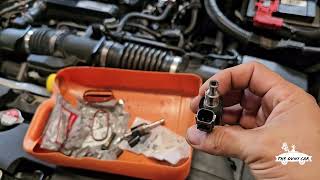

We Have This Part in Stock

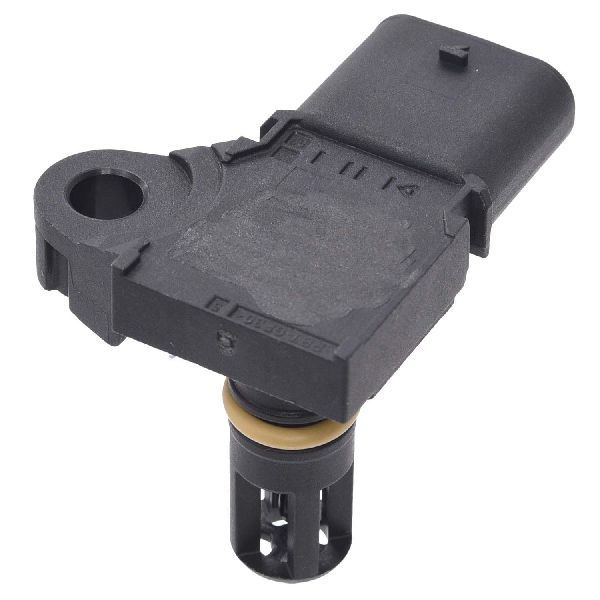

The information in this article is provided for general reference and educational purposes only. Vehicle specifications, procedures, and part compatibility can vary by production date, trim level, and region. Always consult your vehicle's factory service manual and verify part numbers before purchasing or performing repairs. Safety-critical components such as airbags, seat belts, and braking systems should be installed by a qualified professional.
- Lincoln Continental:
- 🎬 Helpful Videos
- 🛍️ Shop This Part
- What's Unique About the 2017-2020 Lincoln Continental
- Symptoms You May Notice
- Most Likely Causes
- Rare But Worth Checking
- Diagnosis Steps
- Parts You'll Likely Need
- Related Codes That Often Appear With This One
- Technical Service Bulletins (TSBs) & Recalls
- Platform-Specific Known Issues
- Mechanic-Grade Diagnostic Values
- Scan Tool Commands That Help
- Wiring & Ground Locations
- Real Owner Repair Stories
- OEM Part Supersession History
- Model Year Variations Within This Range
- Diagnostic Flowchart
- Other Known Issues on This Vehicle
- Used vs. New Parts: Buying Guide for This Vehicle
- Real Owner Stories
- 2017 Ford Fusion Sport 2.7L EcoBoost
- 2017 Lincoln Continental 3.0L EcoBoost
- Related OBD-II Codes
- Frequently Asked Questions
- 🎟️ Get 5% Off