

P0236 on 2015-2020 Ford F-150 3.5L EcoBoost: Turbo Boost Sensor Causes and Fixes
P0236 on a 3.5L EcoBoost F-150 most often means one of the three MAP/boost sensors is failing or dirty. The PCM flags this code when the sensor readings don't match each other or the barometric pressure. A replacement sensor is the most common fix, costing around $30-$70 for an aftermarket part and is a simple DIY job.
- P0236 is most often caused by a faulty or dirty MAP/boost sensor on the 3.5L EcoBoost.
- There are three such sensors; use a scanner's live data to identify which one is providing an incorrect reading before replacing parts.
- Cleaning the sensor with electronics cleaner is a good first step and may solve the problem without needing a new part.
- If sensors are good, check for air leaks in the intake system (cracked hoses, loose clamps) as the next most likely cause.
- The repair is generally inexpensive and DIY-friendly, usually involving cleaning or replacing a single sensor.
What's Unique About the 2015-2020 Ford F-150

The 3.5L EcoBoost engine uses multiple pressure sensors to manage its twin-turbo system. There are typically three T-MAP style sensors that can trigger this code: one on the intake manifold, one on the charge pipe before the throttle body (often called the TIP sensor or Boost Sensor 'A'), and one in the intake tube near the air filter. Due to the engine's positive crankcase ventilation (PCV) system, oil vapor can circulate through the intake and contaminate these sensors, causing them to fail or send slow/inaccurate readings. This makes sensor contamination and failure a more frequent issue compared to naturally aspirated engines.
Generation note: The 2015-2020 F-150 is all part of the 13th generation. However, the 3.5L EcoBoost engine itself was updated in 2017. The 2015-2016 models use the 1st generation 3.5L EcoBoost, while the 2017-2020 models use the 2nd generation, which features a different fuel injection system, redesigned turbos, and other updates. The location and function of the MAP/boost sensors are similar, but part numbers vary significantly between the two generations.
Symptoms You May Notice
- Check Engine Light is on
- Wrench light may appear on the dashboard, often intermittently on startup
- Noticeable loss of engine power and acceleration
- Engine may feel sluggish or hesitate
- Reduced fuel economy
- Abnormal whistling or whining sounds from the engine bay or turbos
- Truck enters 'limp mode' with limited power
- Replacing the turbochargers when the issue is just a simple sensor or boost leak.
- Replacing only one MAP sensor when another one is the actual cause, or replacing the wrong sensor due to confusion over the three locations.
Most Likely Causes

- Faulty or Dirty MAP/Boost Sensor 🔴 High Probability Oil vapor from the PCV system can contaminate the sensors over time, causing them to read incorrectly or respond slowly. The sensors are also exposed to extreme heat cycles in the engine bay, leading to electronic failure.
How to confirm: With the key on and engine off, use an OBD-II scanner to compare the live data PIDs for all three pressure sensors (TCBP/TIP_PRS_BOOST, MAP, BARO). They should all read very close to the Barometric Pressure reading (within 0.5 PSI). A sensor that is the outlier is likely faulty. Visually inspect the sensors for oil contamination.
Typical fix: First, try cleaning the suspect sensor with a dedicated Mass Airflow or electronics cleaner. 🎬 Watch: How to clean your EcoBoost MAP sensor If cleaning doesn't resolve the issue, replace the faulty sensor. The EcoBoost 3.5L has three of these sensors; the one on top of the intake manifold and the one on the charge pipe before the throttle body (Sensor 'A') are the most common culprits.
Est. part cost: $30-$80 - Boost/Vacuum Leak 🟡 Medium Probability The intake system has many connections, including plastic and rubber hoses for the charge pipes and intercooler, which can crack, split, or become loose over time, creating air leaks. The plastic charge pipes themselves are a known failure point.
How to confirm: Visually inspect all intake piping between the turbos, intercooler, and throttle body for cracks or loose clamps. A professional smoke test is the most effective 🎬 See this quick diagnostic guide for turbo underboost way to find small, hard-to-see leaks.
Typical fix: Tighten loose clamps or replace the cracked/split hose or pipe. A torn blow-off valve diaphragm can also cause a leak.
Est. part cost: $20-$300 - Damaged Wiring or Connector ⚪ Low Probability Engine bay heat and vibrations can cause wiring insulation to become brittle and crack or connector pins to corrode, leading to a poor signal. A TSB for older models points to this as a known issue, and owner forums confirm it can happen on newer models as well.
How to confirm: Visually inspect the wiring harness and connector for each MAP/boost sensor. Look for chafed wires, cracked insulation, or green/white corrosion on the connector pins. Check for a stable 5-volt reference signal, ground, and signal wire integrity at the connector with a multimeter.
Typical fix: Repair the damaged section of wiring or replace the connector pigtail.
Est. part cost: $15-$50
Rare But Worth Checking
- Faulty Turbocharger Wastegate or Actuator: If the wastegate is stuck open or closed, the actual boost pressure will not match what the PCM expects, which can sometimes trigger a P0236 code, though it more commonly sets overboost (P0234) or underboost (P0299) codes.
- Clogged Intercooler: In some cases, especially on earlier EcoBoost models, condensation and oil could build up and freeze or clog the intercooler, causing erratic pressure readings.
- Faulty PCM: In very rare instances, the Powertrain Control Module itself can fail, but this should only be considered after all other possibilities, including wiring faults, have been exhaustively ruled out.
Diagnosis Steps

- Read all stored DTCs with an OBD-II scanner. Note any other codes that are present, as they can help pinpoint the specific sensor or issue.
- With the key on but the engine off, view live data. Compare the readings for all MAP/boost sensors (Ford PIDs: TIP_PRS_BOOST, MAP) and the BARO sensor. They should all be nearly identical (within 0.5 PSI). If one sensor's reading is significantly different, it is the likely culprit.
- Visually inspect the intake system for obvious air leaks. Check all hoses, clamps, and the intercooler for cracks, damage, or loose connections.
- Locate the MAP/boost sensors. The 3.5L EcoBoost has three: one on the upper intake manifold, one on the charge pipe near the throttle body, and one in the intake tube near the air filter.
- Inspect the wiring and connectors for each sensor. Look for any signs of damage, corrosion, or loose pins. A user on an F-150 forum found a bad harness plug was the root cause after replacing sensors didn't work.
- If a sensor is suspected, remove it and inspect for oil contamination. Try cleaning it with MAF sensor cleaner. Reinstall and re-check live data.
- If cleaning does not work, replace the faulty sensor. Be sure to use the correct part number for your specific model year (Gen 1 vs. Gen 2).
- If sensors and wiring appear good, perform a smoke test to find any hidden air leaks in the intake or turbo system.
- If no leaks are found, further diagnosis of the turbocharger wastegate system or PCM may be required, which may necessitate professional help.
Parts You'll Likely Need

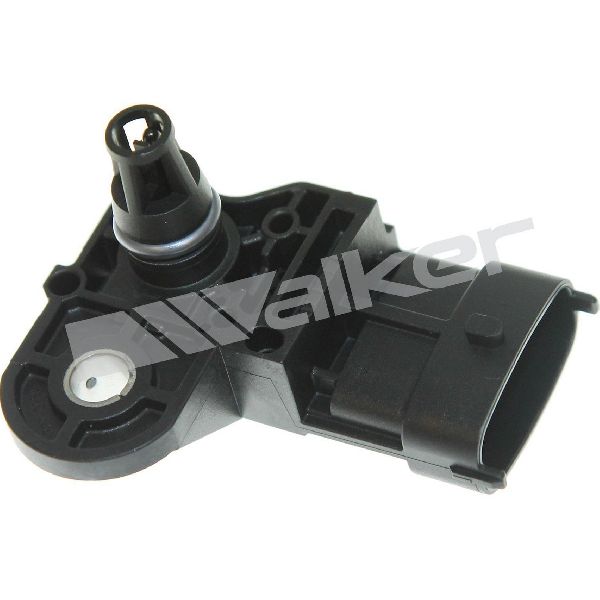
- Turbocharger Boost Pressure Sensor / MAP Sensor
(OEM #Gen 1 (2015-16): AA5Z-9F479-C / Motorcraft CX-2401. Gen 2 (2017-20): DV2Z-9F479-E / Motorcraft CX-2526 (Intake Manifold) or PV4Z-9F479-A / Motorcraft CX-2760 (Turbo Discharge).)— This is the most common failure point for code P0236 on this engine due to contamination and heat exposure. Part numbers differ between Gen 1 and Gen 2 engines, and also by location.
Trusted brands: Motorcraft, Bosch, Standard Motor Products (SMP)
OEM price range: $50-$90
Aftermarket price range: $25-$70
Related Codes That Often Appear With This One
- P0299 — Turbo/Supercharger Underboost. This can appear with P0236 if the root cause is a significant boost leak.
- P0234 — Turbo/Supercharger Overboost. This may appear if a faulty sensor is causing the wastegate to stay closed too long.
- P0106 — Manifold Absolute Pressure/Barometric Pressure Sensor Range/Performance. Since the PCM compares the boost sensor to the MAP sensor, a fault in one can sometimes trigger a fault code for the other.
- P012B — Turbocharger/Supercharger Inlet Pressure Sensor Circuit Range/Performance. This code can appear alongside P0236, pointing to a fault with the sensor located between the air filter and the turbo.
- P2227 — Barometric Pressure Circuit Range/Performance. A faulty BARO sensor provides a bad baseline reading, causing the PCM's rationality check against the boost sensor to fail.
Technical Service Bulletins (TSBs) & Recalls
- TSB 13-6-12: Addresses P0236 on 2013 3.5L GTDI engines due to damaged wiring insulation at the boost sensor connector.
Platform-Specific Known Issues
- A Technical Service Bulletin (TSB 13-6-12) was issued for 2013 F-150s with the 3.5L engine for P0236 caused by damaged wiring insulation at the Turbocharger Boost Sensor connector. While this TSB is for an older model year, it highlights a known potential weak point in the wiring harness that can still be relevant.
- Intermittent Fault: Many owners report the wrench light and P0236 code appearing only on startup, then disappearing after a restart. This 'soft code' behavior often points to a sensor that is beginning to fail or is on the edge of its performance range.
Mechanic-Grade Diagnostic Values
- KOEO Pressure PID Comparison (TCBP, MAP, BARO) — expected: All three pressure readings should be within 0.5 PSI of each other.. Failure: If the TCBP (TIP_PRS_BOOST) reading is an outlier compared to the other two, the 'A' sensor or its circuit is the primary suspect.
- Boost Sensor 'A' (TCBP) Signal Voltage — expected: 0.5V to 4.5V during normal operation.. Failure: A signal that drops below 0.4V during acceleration, is stuck at a fixed voltage, or reads outside the 0.5-4.5V range indicates a sensor or wiring fault.
- Boost Sensor 'A' (TCBP) Ground Wire to Chassis Ground Resistance — expected: Less than 0.5 Ohms.. Failure: A reading greater than 1.0 Ohm indicates a high-resistance ground connection, likely within the harness or at the PCM.
Hidden / Shadow Codes Worth Checking
- Ford-Specific PIDs: P0236 is a rationality code set by comparing multiple sensors. Accessing the manufacturer-specific PIDs is critical. The key parameters are 'TIP_PRS_BOOST' (Throttle Intake Pressure / Sensor 'A'), 'MAP' (Manifold Absolute Pressure), and 'BARO' (Barometric Pressure). (see via A professional scan tool like Ford's IDS or a high-end consumer tool like FORScan is required to view these specific PIDs. Basic OBD-II readers may not display them.)
Scan Tool Commands That Help
- Ford IDS, Autel, high-end scanners: Wastegate Solenoid Command / Actuator Test — If sensor values appear rational and no wiring faults or boost leaks are found, you can use a bidirectional scanner to command the turbo wastegate actuator. This helps determine if the mechanical components of the boost control system are functioning correctly, ruling them out as a cause for the performance code.
Wiring & Ground Locations

- G104 — At the rear of the right (passenger side) cylinder head.. This is a primary engine ground point. A loose or corroded connection here can cause erratic voltage and faulty readings from multiple engine sensors that share this ground path, including the MAP/boost sensors.
- G105 — On the left (driver's side) of the engine block.. Another major engine ground. Similar to G104, poor contact at this point can lead to intermittent and hard-to-diagnose sensor performance codes like P0236.
- Body-to-Frame Ground — Under the vehicle, typically below the driver-side door area, connecting the cab body to the frame.. This ground is notorious for corroding, especially in salt-belt regions. A poor connection here can cause a host of bizarre electrical issues and communication codes as modules lose their ground reference. While not a direct cause, it should be inspected during any electrical diagnosis.
Real Owner Repair Stories
- f150forum.com user 'Barry_Vee' (2011 Ford F-150 3.5L EcoBoost (story from 2015)) — Intermittent wrench light on startup, which became a hard fault at 60k miles. Also noted noisier blow-off valves and reduced fuel economy.
❌ Tried (didn't work) Initial dealer visit at 57k miles for the intermittent 'soft code' did not resolve the issue.
✅ What actually fixed it The dealer replaced both the turbo boost sensor and the wiring harness plug (pigtail). This resolved the code, quieted the turbos/BOV, smoothed the idle, and restored fuel economy.
"I Checked Everything" — The Actual Cause
- A common scenario for P0236 is performing a smoke test and finding no leaks, yet the code persists. This is because the code is for 'Circuit Range/Performance,' which often points to an electrical issue, not a physical leak. If the smoke test is clean, the root cause is very likely a failing sensor providing slow or incorrect data, or a fault in the sensor's wiring/connector, such as a corroded pigtail or a high-resistance ground.
When the Usual Fixes Don't Work
- While cleaning the MAP/boost sensors is a common first step, many owners find the fix is temporary. In a frequently cited forum repair, the final solution was not just replacing the sensor but also the wiring harness connector (pigtail), which had become faulty. This indicates that for an intermittent P0236, the electrical connection is as much of a suspect as the sensor itself.
OEM Part Supersession History
DV2Z-9F479-A→DV2Z-9F479-E (Motorcraft CX-2526)— Standard part revision and update by the manufacturer.DV2Z-9F479-E→PV4Z-9F479-C— Standard part revision and update by the manufacturer.
Heads up: This is the latest revision for the Gen 2 (2017-2020) MAP sensor.
Model Year Variations Within This Range
- 2015-2020: The wiring harness connector pigtail for the boost sensors is a known weak point across multiple model years. TSB 13-6-12 for the 2013 model year specifically called for replacing the connector if insulation was cracked, a problem that can persist on 2015+ models due to similar harness designs and engine bay heat.
- 2017-2020: The Gen 2 engine (2017+) uses different part numbers for its MAP/boost sensors compared to the Gen 1 (2015-2016). For example, the intake manifold MAP sensor is DV2Z-9F479-E for Gen 2, while the Gen 1 uses a different part. Using the wrong sensor can cause persistent codes even if it physically fits.
Diagnostic Flowchart
Other Known Issues on This Vehicle
Issues unrelated to this code that are worth knowing about as an owner of this generation:
- Cam Phaser Rattle on Cold Start 🔴 High — Very common on Gen 2 (2017-2020) engines, typically appearing between 60,000 and 100,000 miles. Less common on late 2020 models with updated parts. (Ref: TSB 23-2143 (supersedes 22-2200) and Customer Satisfaction Program 21N03 were issued to address this.)
- Timing Chain Stretch 🔴 High — More prevalent on the Gen 1 (2011-2016) engines, but can still occur on Gen 2. Often becomes apparent after 100,000 miles, sometimes indicated by code P0016.
- Intake Valve Carbon Buildup 🟠 Medium — A long-term issue for all direct-injection engines, including both generations of the 3.5L EcoBoost. Performance degradation is gradual and typically noticeable after 80,000-100,000 miles. The 2017+ Gen 2 engine added port injection to mitigate this.
- Cracked Plastic Cooling System Fittings 🟠 Medium — The plastic Y-pipe and other fittings in the cooling system can become brittle and crack, typically between 60,000 and 100,000 miles, leading to sudden coolant loss.
- Leaking Oil Pan Gasket 🟡 Low — The two-piece oil pan on earlier models had a higher tendency to leak. This is a common nuisance leak on higher mileage trucks.
- IWE System Failure (4x4 Models) 🟠 Medium — The vacuum-operated Integrated Wheel End (IWE) hubs used for 4WD engagement are a known weak point. Vacuum leaks cause the hubs to partially engage while driving, creating a grinding noise.
Used vs. New Parts: Buying Guide for This Vehicle
When a used part is the smart pick: For this specific code, using used parts is generally not recommended. The primary failure items are electronic sensors and wiring connectors, which are low-cost items where the age and condition are critical. A used sensor offers no guarantee of remaining life and may fail shortly after installation.
Donor-vehicle mileage cap: roughly under 50000 miles for the part to have meaningful remaining life.
What to inspect on the donor part:
- For a sensor, ensure there is no oil residue seeping from the housing.
- Check that the connector pins are clean, straight, and free of any green or white corrosion.
- For a wiring pigtail, ensure the insulation is flexible and not brittle or cracked.
OEM-only on this vehicle (don't cheap out):
- Turbocharger Boost Pressure Sensor / MAP Sensor: To avoid performance issues and repeat failures, it is strongly recommended to use OEM Motorcraft or a direct OEM supplier like Bosch. Aftermarket sensors have a high rate of being DOA (Dead on Arrival) or failing to meet the PCM's strict performance parameters.
Aftermarket brands forum-validated for this vehicle:
- Motorcraft (OEM)
- Bosch
Brands owners have reported issues with on this vehicle:
- Unbranded, low-cost sensors from online marketplaces are frequently cited as unreliable and a common cause of wasted diagnostic time.
Real Owner Stories
Aggregated from forums and TSBs cited above. Mileages and costs reflect what owners reported in those sources.
2014 Ford F-150 3.5L EcoBoost — 57000 miles
Symptoms: Intermittent wrench light and P0236 code that eventually became a hard fault at 60,000 miles; noisy blow-off valves and poor fuel economy.
What fixed it: The dealer replaced a boost sensor and the wire harness plug.
Source hint: f150forum.com Thread 'P0236 Ford Turbo/Boost Sensor Code'
2019 Ford Expedition 3.5L EcoBoost
Symptoms: Intermittent P0236 fault appearing on the dashboard.
What fixed it: Diagnostic steps involve comparing TIP_PRS_BOOST and MAP sensor PIDs against BARO readings to identify the outlier sensor.
Source hint: ScannerDanner YouTube diagnostic video
Related OBD-II Codes
Frequently Asked Questions
Does TSB 13-6-12 apply to my 2015-2020 Ford F-150 3.5L EcoBoost?
Why does my F-150 show a wrench light and P0236 only when I first start the truck?
I have a P0236 code; which of the three sensors on my 3.5L EcoBoost is likely bad?
Can I clean the boost sensor on my F-150 instead of replacing it?
How can I tell if my P0236 is a sensor failure or a physical boost leak?
Is the P0236 code related to the cam phaser rattle common on 2017-2020 models?
Helpful Videos
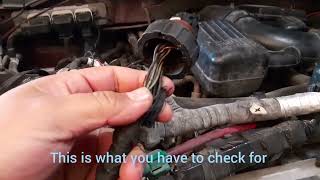
Used OEM Parts in Stock


New Aftermarket Parts Available


The information in this article is provided for general reference and educational purposes only. Vehicle specifications, procedures, and part compatibility can vary by production date, trim level, and region. Always consult your vehicle's factory service manual and verify part numbers before purchasing or performing repairs. Safety-critical components such as airbags, seat belts, and braking systems should be installed by a qualified professional.
- Ford F-150:
- 🎬 Helpful Videos
- 🛍️ Shop This Part
- What's Unique About the 2015-2020 Ford F-150
- Symptoms You May Notice
- Most Likely Causes
- Rare But Worth Checking
- Diagnosis Steps
- Parts You'll Likely Need
- Related Codes That Often Appear With This One
- Technical Service Bulletins (TSBs) & Recalls
- Platform-Specific Known Issues
- Mechanic-Grade Diagnostic Values
- Hidden / Shadow Codes Worth Checking
- Scan Tool Commands That Help
- Wiring & Ground Locations
- Real Owner Repair Stories
- "I Checked Everything" — The Actual Cause
- When the Usual Fixes Don't Work
- OEM Part Supersession History
- Model Year Variations Within This Range
- Diagnostic Flowchart
- Other Known Issues on This Vehicle
- Used vs. New Parts: Buying Guide for This Vehicle
- Real Owner Stories
- 2014 Ford F-150 3.5L EcoBoost — 57000 miles
- 2019 Ford Expedition 3.5L EcoBoost
- Related OBD-II Codes
- Frequently Asked Questions
- 🎟️ Get 5% Off