

P0236 on 2012-2020 Chevrolet Sonic 1.4L Turbo: Boost Sensor Performance Guide
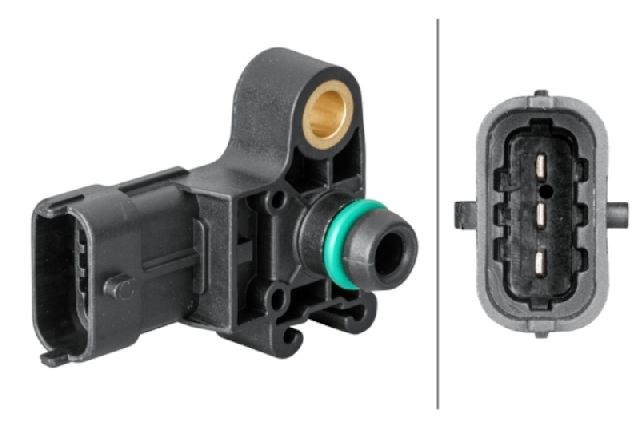
On a 2012-2020 Sonic 1.4L Turbo, P0236 is most often caused by a faulty boost pressure sensor (OEM Part #55567257) or a boost/vacuum leak from a failed PCV system component (valve cover or intake manifold). Expect to pay $30-$70 for a new sensor, which is a common DIY fix held by one T15 Torx screw.
- P0236 on your Sonic 1.4L Turbo points to a problem with the boost pressure measurement, not necessarily the turbo itself.
- The most likely causes are a faulty boost pressure sensor (on the charge pipe) or a vacuum leak from the well-known PCV system failure (valve cover).
- Before buying parts, use a scan tool to compare sensor readings with the engine off. They should all be nearly identical.
- Listen for a hissing noise at idle, which is a strong indicator of a ruptured PCV diaphragm in the valve cover, a very common issue.
- If the problem only occurs in very cold winter weather, it could be ice in the intercooler, a known issue on these GM engines.
What's Unique About the 2012-2020 Chevrolet Sonic
The 1.4L LUV Turbo engine, shared with the Cruze, Trax, and Buick Encore, is known for a specific PCV system failure cascade that can trigger this code. A small, integrated check valve in the plastic intake manifold frequently fails, allowing high-pressure boost to enter the crankcase. This pressure then ruptures the diaphragm in the valve cover, creating a massive vacuum leak and causing erratic sensor readings that set P0236. Additionally, as noted in GM TSBs #21-NA-293 and #22-NA-007, these engines are prone to charge air cooler (CAC) icing in extremely cold weather, which can create a blockage and cause this code.
Symptoms You May Notice
- Check Engine Light is on
- Reduced engine power and sluggish acceleration (limp mode)
- Message on dash: "Engine Power Is Reduced"
- Hesitation when trying to accelerate
- Rough or unstable idle
- Decreased fuel economy
- Loud whistling, hissing, or sucking noise from the engine bay, indicating a ruptured valve cover diaphragm.
- Engine oil leaks from seals due to high crankcase pressure from a failed PCV system.
- Replacing the wrong MAP sensor. The Sonic 1.4L has two: one on the intake manifold and one on the charge pipe (the boost sensor, 'Sensor A'). P0236 refers to the one on the charge pipe.
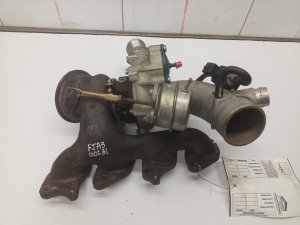
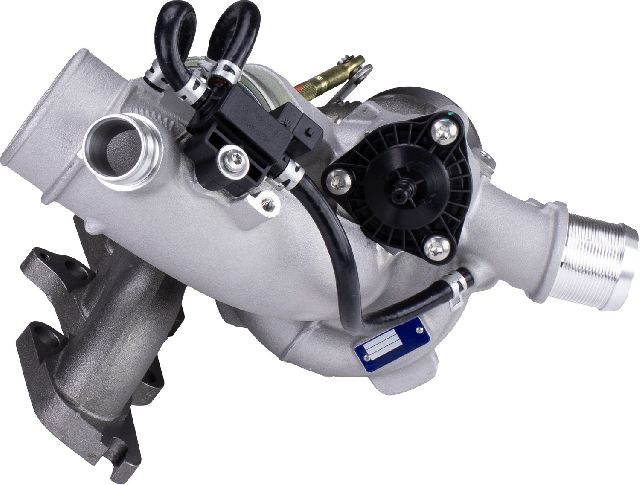
- Replacing the turbocharger assembly. This is an expensive repair and is rarely the cause of P0236. Simple boost leaks, PCV issues, or a bad sensor are far more likely culprits.
- Swapping the boost sensor and upstream O2 sensor connectors. On the 1.4L LUV engine, the connectors are physically identical and located near each other. It is a very common mistake to swap them during reassembly after a repair like a valve cover replacement, leading to multiple codes including P0236.
Most Likely Causes
- Faulty Turbocharger Boost Pressure Sensor 🔴 High Probability The 1.4L Turbo engine uses two T-MAP sensors. The one on the charge pipe before the throttle body acts as the boost sensor ('Sensor A') and is a common failure point. It can become oil-fouled from PCV blow-by, slow to respond, or send irrational signals. The OEM part number is 55567257.
How to confirm: With the engine off, use a scan tool to compare the live data readings from the 'Boost Pressure Sensor', 'Manifold Absolute Pressure Sensor', and 'Barometric Pressure'. They should be nearly identical (within 0.5 PSI). If the boost sensor reading is off, it's faulty. A user on Reddit confirmed their P0236 was fixed by replacing a physically broken sensor.
Typical fix: Replace the boost pressure sensor located on the charge pipe near the throttle body. It is held in by a single T15 Torx screw and is accessible from the top of the engine bay.
Est. part cost: $30-$70 - Boost or Vacuum Leak (PCV System Failure) 🔴 High Probability The PCV system is a well-documented weak point. A non-return check valve inside the intake manifold fails, allowing boost pressure into the crankcase. This pressure surge then ruptures the diaphragm in the valve cover, creating a significant unmetered vacuum leak.
How to confirm: Listen for a distinct hissing or whistling noise from the engine bay at idle. A definitive test is to place your finger over the small breather hole on top of the circular PCV diaphragm on the valve cover; if there is strong suction, the diaphragm is ruptured. This is often accompanied by code P1101 or P0171.
Typical fix: If the valve cover diaphragm is ruptured, the entire valve cover must be replaced (OEM Part #25198874 is common). If the intake manifold check valve has failed (the root cause), the intake manifold needs to be replaced. Some owners opt for aftermarket 'PCV fix kits' from vendors like CruzeKits.com or ZZPerformance as a more permanent solution than replacing the OEM manifold.
Est. part cost: $80-$250 for a valve cover, $150-$300 for an intake manifold. - Damaged Wiring or Connector 🟡 Medium Probability
How to confirm: Visually inspect the wiring harness and connector for the boost pressure sensor. Look for any signs of corrosion (green crust), damage from chafing, or loose pins. Check for 5V reference, ground, and signal voltage at the connector with a multimeter.
Typical fix: Repair the damaged section of wiring or replace the connector pigtail.
Est. part cost: $15-$40 - Charge Air Cooler (CAC) Icing ⚪ Low Probability In extremely cold weather (below 0°F / -18°C), moisture from the PCV system can freeze inside the intercooler (CAC), creating a blockage that causes erratic boost readings. This is a known issue documented in GM TSBs #21-NA-293 and #22-NA-007 for the 1.4L LUV engine.
How to confirm: This is difficult to confirm without disassembly. It should be suspected if P0236 appears only during very cold weather, especially on short trips, and may be accompanied by codes P0299, P2227, or P00C7. The issue may resolve itself once the vehicle warms up in a heated garage.
Typical fix: The official GM fix involves an ECM update and potentially a new charge air cooler design or a heated PCV bypass system for specific regions. Allowing the vehicle to thaw in a warm place is a temporary solution.
Est. part cost: $200-$400 for a new CAC
Rare But Worth Checking
- Sticking or Faulty Turbocharger Wastegate: The wastegate controls boost levels. If it sticks open or closed due to carbon buildup or actuator failure, it can cause boost pressure to be out of the expected range, triggering the code. This is less common than sensor or PCV issues and is often accompanied by P0299 (underboost) or P0234 (overboost).
- Faulty Engine Control Module (ECM): This is extremely rare. The ECM should only be considered as a cause after all other possibilities, including sensors, wiring, and mechanical faults, have been exhaustively ruled out. One owner on a forum suspected an ECM issue but found the problem was a bad sensor signal wire.
Diagnosis Steps
- Scan for any other stored trouble codes. Codes like P1101, P0171, or P0299 strongly point towards a PCV/vacuum leak failure.
- With the Ignition On, Engine Off (KOEO), use a scan tool to view live data. Compare the readings of the 'Boost Pressure Sensor', 'Manifold Absolute Pressure Sensor', and 'Barometric Pressure Sensor'. They should all read nearly the same (within 0.5 PSI). If the Boost Sensor is an outlier, it has failed.
- Start the engine and let it idle. Listen carefully for a loud hissing or whistling sound from the valve cover area.
- Perform the PCV diaphragm test: Carefully place your finger over the small rectangular breather hole on the valve cover's circular diaphragm cap. If you feel strong suction, the diaphragm is torn and the valve cover assembly must be replaced.
- Inspect all charge air cooler hoses and clamps between the turbo, intercooler, and throttle body for cracks, damage, or loose connections. A smoke test is the most effective way to find hidden leaks.
- If no leaks are found and sensors read correctly at KOEO, inspect the wiring and connector for the boost pressure sensor on the charge pipe. Check for damage, corrosion, or loose pins. Verify the connector has not been accidentally swapped with the nearby O2 sensor connector.
- If the code only appears in extreme cold (below 0°F / -18°C), suspect charge air cooler icing as described in GM TSBs #21-NA-293 and #22-NA-007.
Parts You'll Likely Need
- Turbocharger Boost Pressure Sensor (T-MAP Sensor)
Related Codes That Often Appear With This One
- P1101 — Intake Air Flow System Performance. This code is frequently triggered by the same massive vacuum leaks (especially from a ruptured PCV valve cover diaphragm) that cause P0236.
- P0171 — System Too Lean (Bank 1). Like P1101, this is a direct result of the unmetered air entering the engine from a failed PCV system.
- P0299 — Turbocharger Underboost. This code often appears with P0236 because the underlying cause (like a boost leak, CAC icing, or bad sensor) can lead to both irrational signals and lower-than-expected boost.
- P0106 — Manifold Absolute Pressure (MAP) Sensor Performance. Since the ECM compares the boost sensor and MAP sensor, a fault causing P0236 can also make the MAP sensor's readings seem irrational, or vice-versa.
- P2227 — Barometric Pressure Sensor Performance. Often set alongside P0236 in extremely cold weather due to CAC icing, as the blockage causes pressure readings that conflict with all atmospheric sensors.
Technical Service Bulletins (TSBs) & Recalls
- 22-NA-067: Poor Engine Performance in Extremely Cold Weather Conditions, PCV Bypass Hose and Charge Air Cooler Icing for LUV Engines, MIL Illuminated - DTC P0299, P0234, P0236, P2261, P2227, P00C7 Set.
- 16-NA-405: Poor Engine Performance in Extremely Cold Weather Conditions, PCV Bypass Hose and Charge Air Cooler Icing for LUV Engines, MIL Illuminated - DTC P0299, P0236, P2227, P00C7 Set.
- 22-NA-007: Poor Engine Performance in Extremely Cold Weather Conditions, Charge Air Cooler (CAC) Icing - Malfunction Indicator Lamp (MIL) Illuminated with DTCs P0299, P0234, P0236, P2227, P00C7 Set (for LE2 engine, but demonstrates pattern).
- 14371B: Special Coverage for leaking water pump on 2012-2014 Sonic 1.4L.
Platform-Specific Known Issues
- Charge Air Cooler Icing: In extremely cold weather, GM has acknowledged an issue on similar 1.4L Turbo platforms where ice can form in the charge air cooler, causing restricted airflow and setting codes P0236, P0299, and P0234. [⭐ MANUFACTURER TSB — highest authority, ⭐ MANUFACTURER TSB — highest authority]
- Intake Manifold Check Valve Failure: A non-return valve inside the intake manifold is prone to failing or dislodging. When this happens, boost pressure enters the crankcase and ruptures the PCV diaphragm in the valve cover, causing a massive leak.
Mechanic-Grade Diagnostic Values
- MAP/Boost Sensor Voltage (Key On, Engine Off) — expected: ~4.5V (should correlate with BARO sensor reading). Failure: Voltage is significantly different from the BARO sensor reading or outside the 0.5-4.5V range.
- MAP/Boost Sensor Voltage (Engine at Idle) — expected: 1.0 - 2.0V. Failure: Voltage is outside this range at a steady idle.
- Desired vs. Actual Boost Pressure (Scan Tool Live Data) — expected: Actual boost should closely track desired boost during acceleration.. Failure: A consistent difference of more than 14 kPa (2 PSI) between actual and desired boost pressure.
Scan Tool Commands That Help
- GDS2 (GM Dealer Tool): Turbocharger Boost Control Test — This is a guided diagnostic procedure involving wide-open throttle accelerations while graphing 'Desired Boost Pressure' vs. 'Actual Boost Pressure' to definitively confirm if the turbo system is underperforming or overperforming mechanically.
- GDS2 (GM Dealer Tool): Turbocharger Boost Control Solenoid Valve Test — This bidirectional control commands the wastegate solenoid's duty cycle from 5% to 95%. It is used to verify the solenoid is mechanically functioning (audible clicking) and helps isolate a faulty solenoid from a wiring or ECM issue.
- GDS2 / High-End Scan Tool: Turbocharger Learn / Intake System Learned Values Reset — This function should be performed after replacing the turbocharger, wastegate actuator, or boost control solenoid to clear adaptive values and allow the ECM to recalibrate control for the new component.
Wiring & Ground Locations
- G104 — On the rear of the cylinder bank for the 1.4L engine.. A poor ground here can affect various engine sensors and modules. A preliminary service bulletin (PIC5574A) noted that this ground location was a point of concern for loose connections or improper crimps causing electrical issues.
- G105 — Located at the left front of the engine compartment, under the battery tray, on the frame rail.. This ground is critical for the cooling fan and other front-end electrical components. A service bulletin warns that weld slag or paint on the grounding stud can cause poor connections.
- G106 — Located on the left rear of the engine block.. Provides a ground path for critical engine components. A poor connection can lead to erratic sensor behavior.
- Boost Pressure Sensor Connector — On the charge pipe leading to the throttle body.. This is the direct connection for the sensor ('A') related to P0236. The three pins are typically for a 5V reference, a ground, and the signal wire. Checking for voltage and continuity here is a primary diagnostic step.
Real Owner Repair Stories
- FIAT Forum user (FIAT Multipla (different vehicle, but same code principle)) — Engine light came on at 3000rpm under load.
❌ Tried (didn't work) Replacing the MAP sensor.
✅ What actually fixed it A small, 2-inch long piece of rubber vacuum hose connected to the MAP sensor had a tiny 1/4-inch split in it, causing a vacuum leak. Replacing the hose for 50p fixed the issue. - CruzeTalk forum user (Chevrolet Cruze 1.4L Turbo) — Recurring valve cover gasket leak after multiple replacements.
❌ Tried (didn't work) Replacing the valve cover and gasket three times., Replacing the intake manifold with a Dorman unit.
✅ What actually fixed it The user concluded the root cause was the recurring failure of the PCV check valve in the intake manifold, which in turn caused excessive crankcase pressure and repeatedly damaged the valve cover diaphragm/gasket. The final recommended solution was to install an external PCV fix kit (from CruzeKits.com) to bypass the faulty internal check valve design permanently.
OEM Part Supersession History
12592525→55567257— Part has been updated by the manufacturer. The original red sensor is discontinued and replaced by the blue sensor.
Heads up: The new part is a direct replacement, but some sources note that as a 3-bar sensor, it may require ECU tuning in certain high-performance applications, though for a stock replacement this is not typically an issue.25198874→25209141— Part has been updated by the manufacturer.
Heads up: The new part number is a direct replacement for the original valve cover assembly.55573746→25198874— This is another part number commonly associated with and replaced by 25198874 for the valve cover assembly.
Model Year Variations Within This Range
- 2012-2020: The Chevrolet Sonic exclusively used the 1.4L LUV engine (RPO code LUV, 138 hp, port-injection, cast iron block) for its entire production run. A newer 1.4L engine, the LE2 (153 hp, direct-injection, aluminum block), was introduced in the 2016+ Chevy Cruze but was never used in the Sonic. Therefore, parts specific to the LE2 engine (like its integrated exhaust manifold/cylinder head) are not compatible with the Sonic.
Diagnostic Flowchart
Other Known Issues on This Vehicle
Issues unrelated to this code that are worth knowing about as an owner of this generation:
- Leaking Water Pump 🔴 High — Very common, especially on 2012-2014 models. Can occur under 100,000 miles. GM issued Special Coverage 14371B extending the warranty to 10 years/150,000 miles for this part on early models. (Ref: 14371B)
- Cracked Plastic Thermostat Housing / Water Outlet 🔴 High — Extremely common across all model years. The OEM plastic becomes brittle and cracks, causing significant coolant leaks.
- PCV System Failure (Intake Manifold & Valve Cover) 🔴 High — A signature failure of the 1.4L LUV engine, often occurring between 60,000 and 120,000 miles. It is a primary cause of P0236 but is also a major standalone issue causing oil consumption and other codes like P0171.
- Oil Cooler/Filter Housing Gasket Leaks 🟠 Medium — The gaskets between the oil cooler and the engine block are known to degrade and cause significant oil and/or coolant leaks.
- Turbocharger Failure 🟠 Medium — Failures of the turbo unit itself, often due to coolant/oil line issues or bearing wear, are reported, typically between 60,000 and 100,000 miles.
Used vs. New Parts: Buying Guide for This Vehicle
When a used part is the smart pick: Used parts make sense for structural components like the intake manifold (if confirmed intact) or charge air cooler pipes. A complete used engine assembly can also be cost-effective given the known issues with the LUV engine.
Donor-vehicle mileage cap: roughly under 80000 miles for the part to have meaningful remaining life.
What to inspect on the donor part:
- For an intake manifold, ensure the plastic body has no cracks and all mounting points are intact. It's impossible to verify the internal check valve, so assume it has failed and plan to install an external PCV fix kit.
- For an engine, check for signs of major oil leaks around the crank seal or valve cover, which could indicate severe PCV system failure.
- Verify the engine code is LUV, not LE2, by checking the VIN or vehicle specs.
OEM-only on this vehicle (don't cheap out):
- Engine Control Module (ECM) - Requires specific programming to the vehicle's VIN.
- Sensors (Boost, MAP, O2) - Aftermarket sensors have a high rate of premature failure or incorrect readings on this platform; OEM or OEM-supplier (like ACDelco) is strongly recommended.
Aftermarket brands forum-validated for this vehicle:
- PCV Fix Kits: CruzeKits.com and ZZPerformance are two highly-regarded vendors providing permanent solutions for the failed intake manifold check valve. Forum users note CruzeKits is simpler and retains OEM functionality, while the ZZP kit is geared more towards modified vehicles.
- Valve Covers: Dorman is a widely available aftermarket option. Some owners upgrade to aluminum valve covers (e.g., from MaXpeedingRods) to prevent the cracking common with the OEM plastic cover, though gasket fitment can sometimes be an issue.
Brands owners have reported issues with on this vehicle:
- Unbranded, no-name electronic sensors from online marketplaces are frequently cited as being dead-on-arrival or failing shortly after installation.
Real Owner Stories
Aggregated from forums and TSBs cited above. Mileages and costs reflect what owners reported in those sources.
2017 Chevrolet Cruze 1.4L (Platform Mate)
Symptoms: The owner found a P0236 code specifically identifying Turbo boost sensor A.
What fixed it: Replacing a physically broken boost sensor located on the intercooler.
Source hint: Reddit r/cruze: P0236 Turbo boost sensor A
2012 Chevrolet Cruze LT 1.4L (Platform Mate)
Symptoms: Persistent P0236 code that remained even after replacing sensors and the intake manifold.
What fixed it: The owner installed a PCV bypass kit and continued troubleshooting, illustrating the diagnostic complexity of the LUV engine's boost system.
Source hint: Reddit r/cruze: 2012 lt 1.4 p0236
Chevrolet Sonic 1.4L Turbo
Symptoms: Owner reported P0236 and P2227 codes appearing simultaneously.
What fixed it: The owner was troubleshooting the codes following a turbo replacement and the installation of a PCV fix kit.
Source hint: Sonic Owners Forum: P0236 and P2227 codes popping up
Related OBD-II Codes
Frequently Asked Questions
Which TSBs cover the P0236 code on my Chevrolet Sonic during extreme cold weather?
Where is the Boost Pressure Sensor located on the 1.4L Turbo Sonic?
Can a failed valve cover cause a P0236 code on my Sonic?
Is there a permanent fix for the intake manifold check valve failure?
What part number should I look for if I need to replace the boost sensor?
How can I tell if my P0236 is caused by a ruptured PCV diaphragm without tools?
Used OEM Parts in Stock
New Aftermarket Parts Available


The information in this article is provided for general reference and educational purposes only. Vehicle specifications, procedures, and part compatibility can vary by production date, trim level, and region. Always consult your vehicle's factory service manual and verify part numbers before purchasing or performing repairs. Safety-critical components such as airbags, seat belts, and braking systems should be installed by a qualified professional.
- Chevrolet Sonic:
- 🛍️ Shop This Part
- What's Unique About the 2012-2020 Chevrolet Sonic
- Symptoms You May Notice
- Most Likely Causes
- Rare But Worth Checking
- Diagnosis Steps
- Parts You'll Likely Need
- Related Codes That Often Appear With This One
- Technical Service Bulletins (TSBs) & Recalls
- Platform-Specific Known Issues
- Mechanic-Grade Diagnostic Values
- Scan Tool Commands That Help
- Wiring & Ground Locations
- Real Owner Repair Stories
- OEM Part Supersession History
- Model Year Variations Within This Range
- Diagnostic Flowchart
- Other Known Issues on This Vehicle
- Used vs. New Parts: Buying Guide for This Vehicle
- Real Owner Stories
- 2017 Chevrolet Cruze 1.4L (Platform Mate)
- 2012 Chevrolet Cruze LT 1.4L (Platform Mate)
- Chevrolet Sonic 1.4L Turbo
- Related OBD-II Codes
- Frequently Asked Questions
- 🎟️ Get 5% Off