

P0234 on 2013-2020 Buick Encore 1.4L Turbo: Engine Overboost Causes and Fixes
On a 2013-2020 Buick Encore, code P0234 almost always points to a sticking Turbocharger Wastegate Regulator Solenoid Valve, especially in cold weather. This is an inexpensive part (around $40-$80) and a straightforward DIY replacement that can prevent unnecessary, costly turbocharger replacement. This issue is well-documented by GM and shared across platform mates like the Chevy Cruze, Sonic, and Trax.
- For P0234 on a 1.4L Encore, always suspect the Turbocharger Wastegate Regulator Solenoid Valve first, especially if the problem occurs in cold weather.
- Do not agree to a full turbocharger replacement until all cheaper external components—solenoid, actuator, and vacuum lines—have been thoroughly tested.
- This code indicates a serious condition that will put the car in 'limp mode' and can cause engine damage if ignored. Address the issue promptly.
- The repair is often inexpensive and accessible for a DIY mechanic, typically involving the replacement of a single solenoid valve.
What's Unique About the 2013-2020 Buick Encore
The 1.4L LUV turbo engine used in the Encore and its siblings (Chevy Cruze, Sonic, Trax) has a well-documented weakness that causes P0234. GM has issued multiple Technical Service Bulletins (TSBs) acknowledging that oil and moisture can collect inside the turbocharger's wastegate control solenoid. In cold weather, this mixture freezes, causing the valve to stick and leading to an overboost condition. This specific issue means that unlike many other turbocharged vehicles where P0234 might suggest a major turbo failure, the fix on an Encore is very often a simple and cheap solenoid replacement.
Symptoms You May Notice
- Check Engine Light is on
- Reduced engine power or 'limp mode' activation
- Sluggish or poor acceleration, especially at highway speeds
- Audible 'whoosh', whistling, or surging sound from the engine bay during acceleration
- Engine hesitation or misfiring under load
- Replacing the entire turbocharger assembly before testing the wastegate control solenoid and actuator. This is a very common and expensive mistake, as the solenoid is the most frequent point of failure and is a cheap, separate part. TSB PIP5495N was issued specifically to combat this trend.
Most Likely Causes
- Sticking/Failed Turbocharger Wastegate Regulator Solenoid Valve 🔴 High Probability A known design issue documented in GM TSB PIP5812C. Oil and moisture condensate can freeze inside the valve during cold weather, causing it to stick. Hot conditions can also cause hardened deposits to form, leading to the same problem.
How to confirm: The issue is most common after a cold start in freezing temperatures. To definitively test, remove the solenoid and perform the air test outlined in TSB PIP5812C: Using low-pressure air (15-20 PSI), blow through port #2. The air should not dead-head; a small amount of air should be felt at the other ports. If it dead-heads, the valve is stuck and must be replaced. A less definitive test is to apply 12V to its pins; a healthy solenoid will make an audible click, but this does not guarantee it isn't sticking internally.
Typical fix: Replace the Turbocharger Wastegate Regulator Solenoid Valve. Per the TSB, removing the valve, draining moisture, and cleaning it with compressed air may be a temporary fix, but replacement is recommended for a permanent solution.
Est. part cost: $40-$80 - Cracked, Leaking, or Blocked Vacuum Hoses 🟡 Medium Probability The rubber vacuum hoses that control the wastegate actuator are exposed to high engine bay temperatures, causing them to become brittle, crack, or collapse over time. This is a common point of failure mentioned in owner forums.
How to confirm: Visually inspect all vacuum lines connected to the turbocharger, wastegate actuator, and control solenoid. Look for obvious cracks, splits, or loose connections. A smoke test can be used to find less obvious leaks.
Typical fix: Replace the damaged sections of vacuum hose. It is often recommended to replace all associated hoses when replacing the solenoid.
Est. part cost: $10-$30 - Faulty or Sticking Turbocharger Wastegate Actuator ⚪ Low Probability The diaphragm inside the actuator can rupture, or the actuator rod can seize from heat and corrosion, preventing it from moving the wastegate flap correctly.
How to confirm: With the engine cool, try to move the actuator arm by hand; it should move smoothly without binding. Use a handheld vacuum pump to apply vacuum to the actuator's nipple; the rod should retract smoothly and hold vacuum. If it is stuck, moves erratically, or doesn't hold vacuum, it has failed.
Typical fix: Replace the wastegate actuator. On some turbo models, this is part of the complete turbocharger assembly, but aftermarket actuators are available for the 1.4L LUV engine.
Est. part cost: $50-$150
Rare But Worth Checking
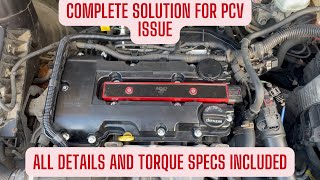
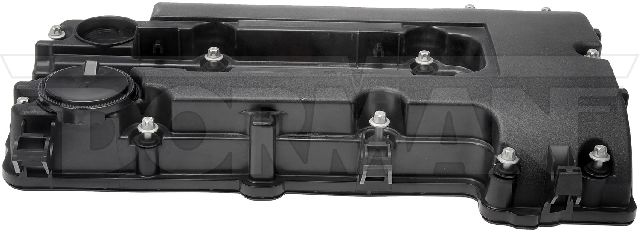
- Faulty PCV System: The 1.4L engine is known for PCV system failures, often via a ruptured diaphragm in the valve cover or a failed check valve in the intake manifold. A failed diaphragm often creates a distinct hissing or whistling sound from the engine cover at idle. You can test for this by placing a small piece of paper over the vent hole on the valve cover with the engine running; if the paper is sucked against the hole, the diaphragm is ruptured and the entire valve cover needs replacement. 🎬 See this step-by-step guide for replacing the valve cover This failure can cause abnormal crankcase pressures, forcing oil into the turbo and boost control components, potentially leading to P0234. 🎬 Watch: How to diagnose common 1.4L PCV system failures
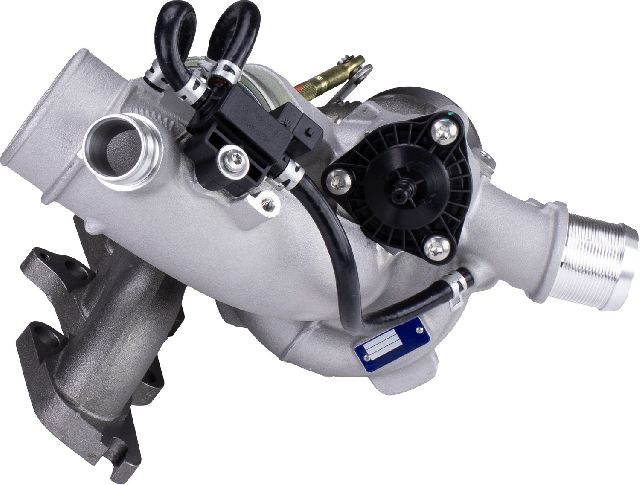
- Internal Turbocharger Failure: While possible, this is often a misdiagnosis. A seized wastegate flap inside the turbo housing can cause this code, but all external control components (solenoid, actuator, hoses) should be ruled out first. GM TSB PIP5495N specifically warns against replacing the turbocharger unnecessarily, as many are returned with no trouble found.
- Charge Air Cooler (CAC) Icing: In extremely cold climates (below 0°F / -18°C), moisture from the PCV system and ambient air can freeze within the charge air cooler (intercooler), creating a blockage. This can cause erratic boost pressure and trigger P0234, often along with P0299. TSB 17-NA-221 addresses this and may recommend an ECM calibration update for some models to alter transmission shift patterns to keep engine temperatures higher.
Diagnosis Steps
- Use an OBD-II scanner to confirm P0234 is the active code. Check for any other codes like P0299 or P1101.
- Note the weather conditions. If the issue started in freezing temperatures (below 0°F / -18°C), suspect the wastegate control solenoid or CAC icing first.
- Perform a thorough visual inspection of all vacuum hoses connected to the turbocharger, wastegate actuator, and control solenoid. Look for cracks, loose fittings, or blockages.
- Locate the wastegate control solenoid (typically on the back corner of the engine bay). Perform the TSB air test: remove it, and with 15-20 PSI of air, check that air does not dead-head when applied to port #2. If it does, replace the solenoid.
- Test the wastegate actuator rod for smooth movement using a handheld vacuum pump. It should retract smoothly and hold vacuum. Manually check that the arm isn't seized.
- Inspect the PCV system. Listen for hissing from the valve cover and perform the 'paper test' over the vent hole to check for a ruptured diaphragm.
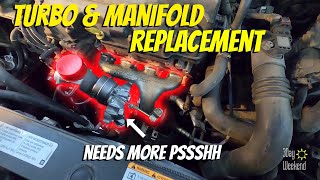
- If all external components test correctly, the final step is to inspect the turbocharger itself for a seized internal wastegate, but this should be the last resort. 🎬 Watch: Complete walkthrough for replacing the turbocharger assembly
Parts You'll Likely Need
- Turbocharger Wastegate Regulator Solenoid Valve
(OEM #55573362, 55587751)— This is the most common failure point for P0234 on this engine, often due to freezing or internal contamination as per GM service bulletins. Note that GM has used multiple part numbers for this component.
Trusted brands: ACDelco, Dorman, Standard Motor Products (SMP)
OEM price range: $60-$125
Aftermarket price range: $40-$80 - Engine Valve Cover with PCV Valve
(OEM #55573746, 25198498, 264-968)— The PCV valve diaphragm is integrated into the valve cover and is a known failure point on the 1.4L engine. A failure causes incorrect crankcase pressure, which can force oil into the boost control system and contribute to P0234.
Trusted brands: ACDelco, Dorman
OEM price range: $120-$180
Aftermarket price range: $70-$130
Related Codes That Often Appear With This One
- P0299 — This code for 'Turbocharger Underboost' can appear with P0234 if the wastegate control solenoid or actuator is sticking intermittently, causing both boost spikes and drops. The same TSBs often address both codes.
- P1101 — This code for 'Intake Air Flow System Performance' can be triggered by the same vacuum leaks or PCV system issues that contribute to improper boost control. A Reddit user with an Encore reported this code alongside P0234.
- P2227 — This code for 'Barometric Pressure Circuit Range/Performance' can be set due to the same charge air cooler icing issue described in TSB 17-NA-221, as the ice blockage affects pressure readings throughout the intake system.
Technical Service Bulletins (TSBs) & Recalls
- PIP5812C: DTC P0234/P0299 due to oil/moisture freezing in the wastegate regulator solenoid valve in cold weather.
- PIP5495N: Addresses misdiagnosis leading to unnecessary turbocharger replacements for P0234 or P0299.
- 17-NA-221: Discusses poor engine performance and codes P0234/P0299 in extreme cold due to charge air cooler icing, and recommends a potential ECM reflash.
Platform-Specific Known Issues
- TSB PIP5812C: Specifically identifies that oil/moisture can freeze in the Turbocharger Wastegate Regulator Solenoid Valve in cold weather, causing P0234 or P0299. It provides a specific air-flow test to confirm failure. One owner on a GM forum reported receiving multiple new aftermarket solenoids that failed this
Mechanic-Grade Diagnostic Values
- Turbocharger Wastegate Regulator Solenoid Resistance — expected: 28-31 Ohms. Failure: A reading of infinity (O.L.) indicates an open circuit, while a reading near zero indicates a short. A reading significantly outside the expected range suggests a faulty coil.
- Manifold Absolute Pressure (MAP) Sensor Voltage (Key On, Engine Off) — expected: ~0.5 V. Failure: Values outside the normal 0.4V - 2.0V operating range suggest a faulty sensor or wiring issue. A related code, P0238, can be set if the voltage exceeds 3.9V for more than 5 seconds.
- Live Data: Desired vs. Actual Boost Pressure — expected: Actual pressure should closely follow desired pressure under load.. Failure: Code P0234 is set when actual boost pressure exceeds desired boost by 4 PSI or more for over 5 seconds.
Scan Tool Commands That Help
- GDS2 (GM Tech Tool): Turbocharger Boost Control Solenoid Valve Test — This bidirectional control allows a technician to command the solenoid's duty cycle from 5% to 95% while listening for an audible click. It verifies if the solenoid is mechanically functioning, helping to isolate a faulty solenoid from a wiring or ECM driver issue.
- GDS2 (GM Tech Tool): Turbocharger Boost Control Test — This is a guided diagnostic procedure that involves a wide-open throttle acceleration while the scan tool graphs 'Desired Boost Pressure' vs. 'Actual Boost Pressure'. It's used to definitively confirm if the system is failing to regulate boost under load.
Wiring & Ground Locations
- Fuse F26UA — In the underhood fuse block (X50A).. This 10A fuse provides power to the Turbocharger Wastegate Solenoid Valve. A blown fuse will render the solenoid inoperative, leading to a loss of boost control.
- G100 Ground Stud — Located at the left front of the engine.. GM TSB 18-NA-114 identifies a condition where the engine wiring harness can chafe against this ground stud, causing shorts or open circuits. Depending on the wire damaged, this can cause various DTCs, including those related to engine controls.
- Main Engine Ground (Valve Cover) — A ground wire running from the main engine harness to a bolt on the top of the valve cover, near the ignition coil.. This is a critical ground for the ECM and many engine sensors. A loose or corroded connection here is a documented cause of numerous erratic electrical issues and codes. The bolt's tightness is sensitive and crucial for proper sensor readings.
- G103 — Located on the left front shock tower in the engine compartment.. This is a primary ground location for the Engine Control Module (ECM). A poor connection here can cause a wide range of erratic engine management issues and incorrect sensor readings.
Real Owner Repair Stories
- CruzeTalk Forum User (2015 Chevrolet Cruze 1.4L Turbo (same LUV engine)) — Intermittent low power, Check Engine Light.
❌ Tried (didn't work) Initial diagnosis focused on external boost control components like the solenoid and actuator.
✅ What actually fixed it The internal turbine of the turbocharger was not spinning freely. Replacing the entire turbocharger assembly resolved both P0299 (underboost) and P0234 (overboost) codes, indicating a mechanical failure within the turbo itself. - SEATCupra.net Forum User (SEAT Leon (different vehicle, but same code and N75/wastegate solenoid component)) — Engine hesitation, huge backfires, P0234 code.
❌ Tried (didn't work) Replacing the PCV system., Inspecting vacuum hoses to the N75 valve.
✅ What actually fixed it The user first performed a boost leak check and found two major leaks, which fixed other codes (P1297, P1093) but left P0234. The final fix that cleared the P0234 overboost code was replacing the N75 (wastegate control solenoid) valve.
"I Checked Everything" — The Actual Cause
- A common scenario where a smoke test for vacuum leaks comes back clean is when the root cause is Charge Air Cooler (CAC) icing. This occurs only in freezing temperatures (below 0°F / -18°C) when moisture freezes inside the intercooler, creating a physical blockage. This blockage causes erratic pressure, triggering P0234. By the time the vehicle is brought into a warm repair shop, the ice has melted, and the problem cannot be replicated with a smoke test or visual inspection.
When the Usual Fixes Don't Work
- While the vast majority of P0234 cases on this engine are caused by the inexpensive wastegate solenoid or related vacuum lines, there are confirmed repair stories where the fault was internal to the turbocharger itself. In one case involving a 2015 Cruze with the same 1.4L engine, both P0234 and P0299 were present, and the final fix was a complete turbocharger replacement because the internal turbine was seized and not spinning freely. This serves as a reminder that while external components should always be checked first per TSB PIP5495N, an actual turbo failure is not impossible.
OEM Part Supersession History
55573362→55587751— Part number consolidation and potential minor revisions over the production run.
Heads up: Part numbers 55573362, 55587751, and 55574902 are often listed for the same Turbocharger Wastegate Regulator Solenoid Valve on the 1.4L LUV engine. While 55587751 is the most commonly cited number for later US models, 55573362 is prevalent for earlier and European (Opel/Vauxhall) equivalents. They are generally considered interchangeable for this application, but it is always best to verify by VIN.
Model Year Variations Within This Range
- 2017-2020: Starting in 2017, Buick offered an optional, higher-output 1.4L engine (RPO: LE2) with direct injection, producing 153 hp. The standard engine remained the 138 hp port-injected LUV engine. The P0234 issues related to the freezing solenoid and PCV system are primarily documented for the base LUV engine, which was used across the entire 2013-2020 range.
Diagnostic Flowchart
Used vs. New Parts: Buying Guide for This Vehicle
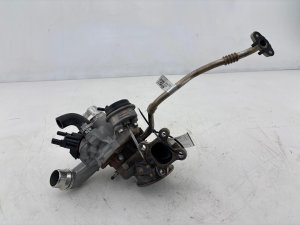
When a used part is the smart pick: For high-cost assemblies like the complete turbocharger, a used part from a low-mileage, verified-running donor vehicle can be a cost-effective option, but it carries significant risk. For all other common failure parts for this code (solenoid, valve cover, hoses), new parts are strongly recommended due to their low cost and high failure rate from age and heat.
Donor-vehicle mileage cap: roughly under 60000 miles for the part to have meaningful remaining life.
What to inspect on the donor part:
- For a used turbocharger, inspect the turbine wheel for any blade damage.
- Check for excessive shaft play (side-to-side and in-and-out).
- Ensure the wastegate actuator arm moves freely without binding.
- Look for signs of major oil leaks around the turbo housing or in the charge pipes.
OEM-only on this vehicle (don't cheap out):
- No parts for this specific repair are strictly 'OEM-only', but OEM (ACDelco) is often recommended for the Engine Valve Cover due to the critical nature of the integrated PCV system.
Aftermarket brands forum-validated for this vehicle:
- ACDelco (OEM)
- Dorman (Common aftermarket option for valve cover and solenoid; some forum users report success, while others prefer OEM)
- Standard Motor Products (SMP)
Brands owners have reported issues with on this vehicle:
- Unnamed, no-brand parts from online marketplaces should be avoided for critical components like the valve cover and wastegate solenoid, as their internal quality (diaphragms, coils) can be poor and lead to repeat failures.
Real Owner Stories
Aggregated from forums and TSBs cited above. Mileages and costs reflect what owners reported in those sources.
2016 Buick Encore 1.4L turbo
Symptoms: Check Engine Light came on with a P0234 (Overboost) code.
What fixed it: The owner traced the problem to a faulty 'Wastegate Solenoid'.
Source hint: BobIsTheOilGuy
2014 Chevrolet Cruze 1.4L
Symptoms: P0234 Overboost code appeared, was fixed, and then returned after about three months, indicating an intermittent fault.
What fixed it: Replacing the wastegate solenoid provided a temporary fix for the issue.
Source hint: Reddit - r/cruze - 'P0234 Overboost'
Chevrolet Cruze 1.4L
Symptoms: Car hesitates to accelerate and loses power at sustained highway speeds (over 65mph). The issue is temporarily resolved by restarting the car.
What fixed it: The owner's description points to a control component sticking under load, a classic symptom of a failing wastegate solenoid or actuator, though a final fix was not stated.
Source hint: Reddit - r/cruze - 'Help! Getting a code(P0234) for “overboost” and car hesitates to accelerate.'
Related OBD-II Codes
Frequently Asked Questions
My 2015 Encore threw a P0234 code right after a cold snap. What's the most likely cause?
Does a P0234 code mean I have to replace the entire turbocharger on my Buick Encore?
What is the 'air test' mentioned in TSB PIP5812C for the wastegate solenoid?
I'm losing power on the highway and the car hesitates, but it seems fine after I restart it. Is this a symptom of P0234?
Are other GM vehicles with the 1.4L turbo engine, like the Chevy Trax or Cruze, also affected by this issue?
How can I check the wastegate actuator on my Encore myself?
Helpful Videos

Used OEM Parts in Stock
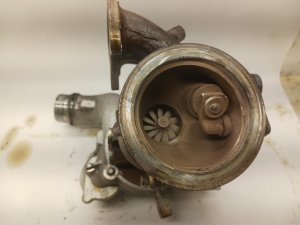
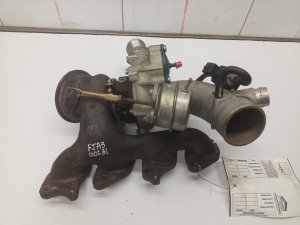
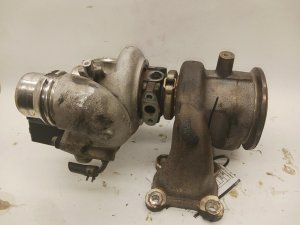
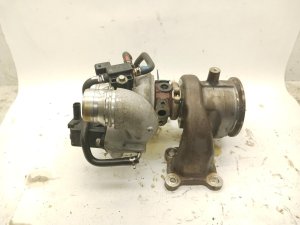
New Aftermarket Parts Available


The information in this article is provided for general reference and educational purposes only. Vehicle specifications, procedures, and part compatibility can vary by production date, trim level, and region. Always consult your vehicle's factory service manual and verify part numbers before purchasing or performing repairs. Safety-critical components such as airbags, seat belts, and braking systems should be installed by a qualified professional.
- Buick Encore:
- 🎬 Helpful Videos
- 🛍️ Shop This Part
- What's Unique About the 2013-2020 Buick Encore
- Symptoms You May Notice
- Most Likely Causes
- Rare But Worth Checking
- Diagnosis Steps
- Parts You'll Likely Need
- Related Codes That Often Appear With This One
- Technical Service Bulletins (TSBs) & Recalls
- Platform-Specific Known Issues
- Mechanic-Grade Diagnostic Values
- Scan Tool Commands That Help
- Wiring & Ground Locations
- Real Owner Repair Stories
- "I Checked Everything" — The Actual Cause
- When the Usual Fixes Don't Work
- OEM Part Supersession History
- Model Year Variations Within This Range
- Diagnostic Flowchart
- Used vs. New Parts: Buying Guide for This Vehicle
- Real Owner Stories
- 2016 Buick Encore 1.4L turbo
- 2014 Chevrolet Cruze 1.4L
- Chevrolet Cruze 1.4L
- Related OBD-II Codes
- Frequently Asked Questions
- 🎟️ Get 5% Off