

P0223 on 2003-2012 Saab 9-3: Throttle Position Sensor 'B' Circuit High Causes and Fixes
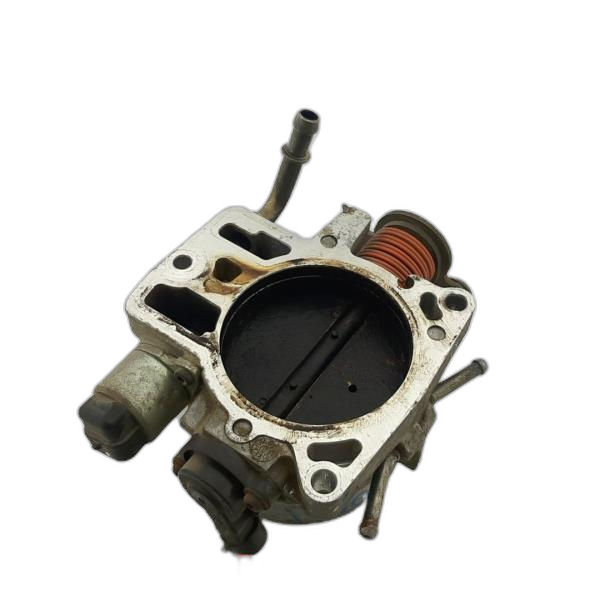
On a 2003-2012 Saab 9-3, code P0223 is almost always caused by a faulty electronic throttle body assembly or a wiring issue between the throttle body and the engine computer. The sensor is built into the throttle body, so the entire unit must be replaced. Expect to pay $250-$500 for a quality replacement part from brands like Bosch or Pierburg.
- P0223 on a Saab 9-3 points directly to a problem with the electronic throttle body or its wiring.
- The most likely fix is to replace the entire throttle body assembly, as the sensors are integrated.
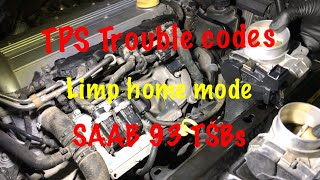
- Symptoms are severe and include 'Limp Home' mode, so driving should be minimized.
- Before buying a new throttle body, always inspect the wiring and connector for damage, as this can be a cheaper fix.
- After replacement, a throttle body 'relearn' or adaptation procedure may be needed.
What's Unique About the 2003-2012 Saab 9-3
The 2003-2012 Saab 9-3 uses a 'drive-by-wire' system where the throttle position sensors (TPS) are integrated directly into the electronic throttle body assembly. Unlike some vehicles where the sensor can be replaced separately, a TPS failure on this Saab model typically requires replacing the entire throttle body. These units, often supplied by Bosch for the V6 and Pierburg for the 4-cylinder engines, are a known failure point as the internal electronics and potentiometer contacts wear out over time, leading to codes like P0223.
Symptoms You May Notice
- Check Engine Light (Malfunction Indicator Lamp) is on
- Vehicle enters 'Limp Home' mode with drastically reduced power
- Poor or non-existent acceleration
- Cruise control is disabled
- Rough or unstable idle
- Engine may be hard to start or stalls
- Unresponsive throttle pedal
- Replacing the accelerator pedal assembly. While the pedal also has position sensors, P0223 specifically points to the sensor circuit at the throttle body ('B' sensor), not the pedal.
- Replacing the Mass Airflow (MAF) sensor. This code is unrelated to the MAF sensor, despite some incorrect information found on generic websites.
Most Likely Causes
- Faulty Electronic Throttle Body Assembly 🔴 High Probability The throttle position sensors are integrated into the throttle body and are not serviced separately. The internal electronic components, motor, and potentiometer contacts wear out over time, leading to signal failures and codes like P1230 or P0223.
How to confirm: Using a scan tool, monitor the live data for Throttle Position Sensor 2. If the voltage is stuck high (typically >4.5V) and does not change as the accelerator is pressed, and the wiring has been confirmed to be good, the throttle body is faulty. The sum of Sensor 1 and Sensor 2 voltages should equal approximately 5V; a deviation points to a fault. 🎬 Watch: How to test and replace the electronic throttle body.
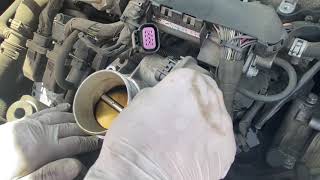
Typical fix: Replace the entire throttle body assembly and the corresponding gasket. A throttle body relearn procedure is often recommended after installation.
Est. part cost: $250-$500 - Wiring Harness or Connector Fault 🟡 Medium Probability The engine bay environment exposes the wiring to heat, vibration, and potential oil contamination, which can degrade the plastic sheathing and insulation or cause corrosion in the connectors over time. Wires near the throttle body are particularly susceptible to heat damage from the engine and turbocharger.
How to confirm: Visually inspect the wiring harness leading to the throttle body for any signs of damage, chafing, or melting. Unplug the connector at the throttle body and the ECM to check for corrosion, moisture, or bent/retracted pins. Test for a short to power on the signal wire for TPS 2 using a multimeter.
Typical fix: Repair the damaged section of the wiring harness using appropriate splices and heat shrink, or clean/replace the faulty connector.
Est. part cost: $10-$100 - Excessively Dirty or Sticking Throttle Body ⚪ Low Probability Carbon and oil vapor from the crankcase ventilation system can build up inside the throttle body, restricting the movement of the throttle plate.
How to confirm: Remove the intake ducting and visually inspect the throttle bore and plate for heavy carbon buildup. If the plate seems sticky or does not move smoothly, this could be a contributing factor, though less likely to cause a 'circuit high' fault than an internal electronic failure.
Typical fix: Clean the throttle body bore and plate thoroughly with a dedicated throttle body cleaner and a soft brush. While this is a good maintenance step, it often does not fix an underlying electronic fault that has already logged a P0223 code.
Est. part cost: $10-$20
Rare But Worth Checking
- Faulty Engine Control Module (ECM): While rare, the ECM itself can fail. On the 9-3, the ECM is mounted directly to the hot intake manifold, making it susceptible to heat-related failures over its lifespan. This should only be considered after the throttle body and wiring have been definitively ruled out.
Diagnosis Steps
- Connect an OBD-II scanner and confirm P0223 is present, noting any other codes like P0123 or P2135.
- Access live data on the scanner and observe the voltage for 'Throttle Position Sensor 1' and 'Throttle Position Sensor 2'.
- Confirm that Sensor 2 voltage is abnormally high (e.g., > 4.5V) and does not respond correctly to throttle input.
- Turn the ignition off and perform a thorough visual inspection of the throttle body connector and its wiring harness. Look for loose connections, corrosion, or damaged/melted wires.
- If the wiring looks okay, disconnect the throttle body and ECM connectors. Check for a short to voltage on the signal wire for TPS 2 using a digital multimeter.
- Check for continuity on the signal, reference, and ground wires between the ECM connector and the throttle body connector to rule out an open circuit.
- If the wiring and connectors are confirmed to be good, the fault lies within the electronic throttle body assembly.
- Replace the throttle body assembly and gasket. Clear the codes and perform a throttle relearn procedure.
- If the problem persists after replacing the throttle body, the ECM may be faulty, which requires advanced diagnostics or professional service.
Parts You'll Likely Need
- Fuel Injection Throttle Body Assembly
(OEM #93189207 / 93176028 (4-Cyl B207); 12574130 (V6 B284))— This is the most common failure. The internal throttle position sensor fails, and it is not sold as a separate component for this vehicle.
Trusted brands: Bosch, Pierburg, Hella, Standard Motor Products
OEM price range: $400-$550
Aftermarket price range: $250-$400 - Throttle Body Mounting Gasket
(OEM #Included with most new throttle bodies)— A new gasket is required to ensure a proper seal when replacing the throttle body.
Trusted brands: Fel-Pro, Victor Reinz, Elring
OEM price range: $10-$20
Aftermarket price range: $5-$15
Related Codes That Often Appear With This One
- P0123 — This code is for 'Throttle Position Sensor 'A' Circuit High Input'. Since both sensors are in the same throttle body housing, a component failure can often affect both sensor circuits simultaneously.
- P2135 — This code indicates 'Throttle/Pedal Position Sensor/Switch 'A'/'B' Voltage Correlation'. The ECM compares the signals from the two throttle position sensors; if they don't match, it sets this code. It's very common to see this alongside P0223.
- P0638 — This code for 'Throttle Actuator Control Range/Performance' is also very common when the electronic throttle body is failing.
Platform-Specific Known Issues
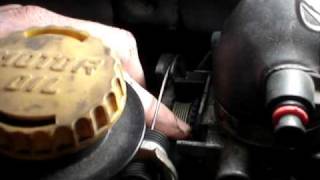
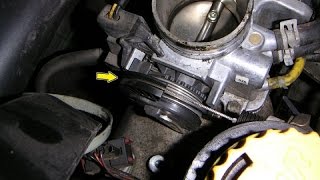
- Throttle Body Relearn Procedure: After replacing the throttle body or disconnecting the battery, a relearn procedure may be needed. A common method involves turning the key to 'ON' without starting, waiting 30 seconds, pressing and releasing the accelerator pedal 5 times quickly, waiting 10 seconds, then starting the engine and letting it idle. However, for some earlier models (Trionic 7), a manual reset of the limp-home mechanism on the side of the throttle body might be required. 🎬 Watch: How to manually reset the Trionic 7 limp home mechanism.
- Wiring Harness Degradation: The plastic conduit and insulation on the wiring harness in the engine bay, especially the section running over the valve cover to the throttle body, becomes brittle and flakes away over time due to heat cycles. This exposes the wires, making them vulnerable to shorting against each other or the engine block, which can cause a P0223 code. Inspecting and repairing this harness with high-temperature tape or new loom is a common preventative measure.
Mechanic-Grade Diagnostic Values
- Throttle Position Sensor 2 ('B') Signal Voltage — expected: Varies from ~4.0V at idle to ~0.5V at wide-open throttle (inverse of Sensor 1).. Failure: Voltage is stuck high, exceeding 4.6V or 4.7V for more than one second.
- Sum of Throttle Position Sensor 1 and Sensor 2 Voltages — expected: Approximately 5V at all times with ignition on.. Failure: The sum deviates significantly from 5V, indicating a fault in one of the sensor circuits.
- Continuity Check on Ground Wire — expected: Less than 5 Ω between the throttle control connector and a known good ground.. Failure: Resistance is greater than 5 Ω, indicating a poor ground connection.
Scan Tool Commands That Help
- Saab Tech 2: Read Live Data: 'Throttle Position Sensor 1' & 'Throttle Position Sensor 2' — This is the primary diagnostic step to observe the voltage signals from both sensors in real-time to confirm if Sensor 2 is stuck high and if the sum of the sensors equals 5V.
- Saab Tech 2: Throttle Body Calibration/Relearn — After replacing the throttle body assembly, this function is used to teach the ECM the new sensor's calibration points for idle and wide-open throttle. Skipping this can cause idle or response issues.
Wiring & Ground Locations
- G7 — On the engine control module's top right attachment lug.. The ECM, which processes the throttle position sensor signals, relies on this ground. A poor connection here can cause a host of erratic electronic issues, including sensor voltage misreadings.
- G25 — Main battery ground cable connection to the engine/gearbox mounting.. This is the primary ground for the entire engine block. A loose or corroded G25 can create a floating ground, causing sensor readings across the engine, including the throttle body, to become unreliable.
- ECM Pins (Trionic 8, B207/B284) — At the main Engine Control Module connector.. For testing continuity: Sensor 2 signal is on pin 25(B), its 5V supply is on pin 31(B), and its ground is on pin 35(B). Sensor 1 signal is on pin 28(B). This allows for checking the wiring harness integrity without the throttle body connected.
Real Owner Repair Stories
- Go-Parts.com technical article (Unspecified GM vehicle (principles apply to Saab 9-3)) — Engine revved high, would not return to idle, codes P0122 and P0223 present.
❌ Tried (didn't work) Replacing the throttle body assembly.
✅ What actually fixed it The actual fault was a bad accelerator pedal position sensor (APPS). Replacing the pedal assembly resolved all codes and symptoms. - Saab Tech Talk forum user (2002 Saab 9-3 Aero (Trionic 7, similar issue)) — Car entered limp home mode with throttle body related codes.
❌ Tried (didn't work) A mechanic stated the only option was a £400 replacement.
✅ What actually fixed it The owner had the codes reset with a Tech 2 by another mechanic. This worked for 12,000 miles before happening again. A second reset also fixed it temporarily. This indicates that for intermittent electronic glitches within the throttle body, a simple reset can sometimes postpone a costly replacement, though the underlying fault remains.
OEM Part Supersession History
93176028→93189207 (for many 2003-2006 B207 applications)— Updated design or supplier change. Pierburg was the OEM for the earlier part.
Heads up: While 93189207 often replaces 93176028, it's critical to verify by VIN. There were mid-generation changes, and using the wrong throttle body can lead to calibration and performance issues. Part 93189207 is specified for many 2007-2012 models.
Model Year Variations Within This Range
- 2003-2006 (approx.): These earlier second-generation models may have a fault threshold of >4.6V for 1 second. The throttle body is typically a Pierburg unit, part number 93176028.
- 2007-2012 (approx.): Later models may have a slightly different fault threshold, such as >4.7V. The system reaction is more explicitly defined, blocking fuel calculation correction and switching off secondary air. The OEM part number is more commonly 93189207 for the 4-cylinder B207 engine.
Diagnostic Flowchart
Other Known Issues on This Vehicle
Issues unrelated to this code that are worth knowing about as an owner of this generation:
- Column Integrated Module (CIM) Failure 🔴 High — Common failure item. Can cause steering lock malfunction, no-start conditions, and loss of steering wheel controls/horn. (Ref: No official recall, but a widely documented problem. Repair requires a new or refurbished unit programmed with a Tech 2 scanner.)
- Rear Coil Spring Breakage 🟠 Medium — Very common, especially in regions with harsh weather or salted roads. The bottom coil of the spring fractures, causing a drop in ride height and a clunking noise.
- Valve Cover Gasket Oil Leak 🟡 Low — Extremely common on the 2.0T (B207) engine after 80,000-100,000 miles. The gasket becomes hard and brittle, allowing oil to leak onto the exhaust manifold (causing a burning smell) and into the spark plug wells (causing misfires).
- Premature Intake Valve Wear (2.0T) 🔴 High — A serious issue affecting 2007-2011 models with the B207 engine, often appearing after 50,000 miles. It causes loss of compression, misfires, and rough running. (Ref: A Saab Technical Service Bulletin (TSB) was issued acknowledging the problem was due to soft valve material.)
- 5-Speed Automatic Transmission Failure 🔴 High — Affects 2003-2007 models, with issues like jerky shifting or complete failure often appearing as early as 80,000 km (50,000 miles).
- Convertible Top Malfunctions 🟠 Medium — Common on convertible models after 60,000 km (37,000 miles), involving failed sensors, hydraulic leaks, or faulty motors that prevent the top from operating correctly.
Used vs. New Parts: Buying Guide for This Vehicle
When a used part is the smart pick: A used throttle body can be a cost-effective option given the high price of new OEM units, especially for an older vehicle. Since it's a complete bolt-on assembly with no complex coding required (just a relearn), a used part is a viable DIY fix.
Donor-vehicle mileage cap: roughly under 80000 miles for the part to have meaningful remaining life.
What to inspect on the donor part:
- Ask for the donor vehicle's mileage; lower is always better as this is a known wear item.
- Inspect the electrical connector pins for any signs of corrosion, bending, or moisture.
- Look at the throttle plate and bore. A light layer of carbon is normal, but avoid units that are caked in thick, oily residue, as it may suggest other engine issues.
- Ensure the part comes with a short warranty (e.g., 30-90 days) from the seller, which is common for reputable recyclers.
Aftermarket brands forum-validated for this vehicle:
- Bosch (OEM for V6)
- Pierburg (OEM for 4-Cyl)
- Hella
Brands owners have reported issues with on this vehicle:
- Unbranded, no-name units from online marketplaces should be treated with caution. While significantly cheaper, they have a higher reported failure rate and may not calibrate correctly, leading to more frustration and wasted time.
Real Owner Stories
Aggregated from forums and TSBs cited above. Mileages and costs reflect what owners reported in those sources.
2006 Saab 9-3 2.0T
Symptoms: Vehicle entered 'limp mode' and logged codes P0223, P2135, and P0638.
What fixed it: The consensus fix was the replacement of the entire throttle body assembly.
Source hint: SaabCentral Forums
Related OBD-II Codes
Frequently Asked Questions
My 2008 Saab 9-3 is in 'Limp Home' mode with code P0223. Will cleaning the throttle body fix it?
I'm replacing the throttle body on my Saab 9-3. Is there a special procedure I need to do afterwards?
The plastic wiring loom over my engine is cracked and flaking off near the throttle body. Could this cause a P0223 code?
Is the throttle position sensor (TPS) a separate part I can replace on my Saab 9-3?
My scanner shows the voltage for TPS 2 is stuck at 4.6V and doesn't change when I press the gas. What does this mean?
Are other GM cars like the Cadillac BLS or Chevy Malibu also known for this throttle body problem?
Helpful Videos

We Have This Part in Stock



The information in this article is provided for general reference and educational purposes only. Vehicle specifications, procedures, and part compatibility can vary by production date, trim level, and region. Always consult your vehicle's factory service manual and verify part numbers before purchasing or performing repairs. Safety-critical components such as airbags, seat belts, and braking systems should be installed by a qualified professional.
- Saab 9-3:
- 🎬 Helpful Videos
- 🛍️ Shop This Part
- What's Unique About the 2003-2012 Saab 9-3
- Symptoms You May Notice
- Most Likely Causes
- Rare But Worth Checking
- Diagnosis Steps
- Parts You'll Likely Need
- Related Codes That Often Appear With This One
- Platform-Specific Known Issues
- Mechanic-Grade Diagnostic Values
- Scan Tool Commands That Help
- Wiring & Ground Locations
- Real Owner Repair Stories
- OEM Part Supersession History
- Model Year Variations Within This Range
- Diagnostic Flowchart
- Other Known Issues on This Vehicle
- Used vs. New Parts: Buying Guide for This Vehicle
- Real Owner Stories
- 2006 Saab 9-3 2.0T
- Related OBD-II Codes
- Frequently Asked Questions
- 🎟️ Get 5% Off