

OBD-II Code P1230: Fuel Pump Circuit Malfunction
What P1230 means, why it triggers, and how to fix it
- Do not drive with a P1230 code, as the electrical fault in the fuel pump circuit causes unpredictable engine stalling at any speed.
- Inspect the $20 fuel pump relay and the frame-mounted Fuel Pump Driver Module before spending $500+ replacing the fuel pump assembly.
- Swap the fuel pump relay with an identical relay in the fuse box (like the horn relay) for a free, 60-second diagnostic test.
- Verify your manufacturer's specific definition for P1230, as it means 'Throttle Body Malfunction' on Saabs but points to the Fuel Pump Driver Module on 2004-2008 Ford trucks.
What Does P1230 Mean?

P1230 is a manufacturer-specific code signaling a failure in the fuel pump's electrical circuit. The engine control module (ECM) detects that the fuel pump or its control components are malfunctioning. This prevents the engine from receiving adequate fuel, causing immediate stalling or a crank/no-start condition.
Technical definition: The exact definition of P1230 varies by manufacturer. Ford defines it as 'Fuel Pump Low Speed Malfunction' (excessive current or unexpected voltage). Subaru uses 'Fuel Pump Control Unit Malfunction'. GM and Land Rover define it as 'Fuel Pump Relay Malfunction' (open or grounded circuit). BMW points to 'Fuel Pump Relay Activation'. Crucially, on Saab and certain VW/Audi models, P1230 is entirely unrelated to the fuel pump, pointing instead to throttle body or fuel injector faults. For fuel-related applications, it universally indicates a failure in the electrical power delivery to the fuel pump.
Can I Drive With P1230?

No — Do Not Drive. Do not drive. This code indicates a critical failure in the fuel supply circuit. The engine stalls unpredictably—including at highway speeds or inside intersections—creating a severe collision risk. Tow the vehicle to a repair location.
Common Causes

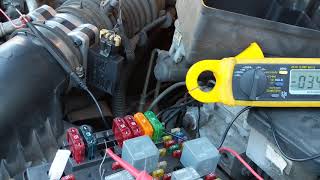
- Faulty Fuel Pump Relay (Very Common) — The fuel pump relay is a small electro-mechanical switch controlling power to the fuel pump. It fails from age, heat, or internal corrosion, making it the most frequent cause for this code on 🎬 Watch: A quick guide on how to check a fuel pump relay. BMW, Mini, Jaguar, and Land Rover models.
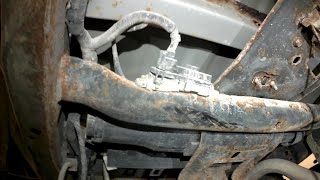
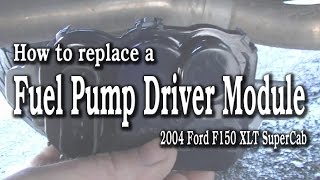
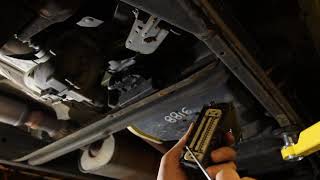
- Failed Fuel Pump Driver Module (FPDM) (Very Common) — Common on Ford and GM vehicles, this module controls fuel pump speed. It mounts to the frame and suffers severe galvanic corrosion from weather exposure, which destroys the internal electronics and interrupts power to the pump.
- Damaged Wiring or Connectors (Common) — Wires leading to the fuel pump, relay, or driver module corrode, fray, or short to ground. Connectors exposed to the elements under the vehicle are primary suspects in many P1230 cases.
- Poor Ground Connection (Common) — The fuel pump circuit requires a solid ground to function. A corroded, loose, or broken ground wire at the pump, FPDM, or chassis causes high resistance or an open circuit, directly triggering a P1230 fault.
- Blown Fuel Pump Fuse (Common) — A fuse protects the fuel pump circuit. If the pump or wiring draws excessive current, the fuse blows, cutting power and triggering the code.
- Defective Fuel Pump (Less Common) — The fuel pump motor itself fails internally. A shorted or worn-out pump draws excessive current, blowing a fuse or damaging the control module, leading to code P1230.
- Clogged Fuel Filter (Uncommon) — A severely clogged fuel filter overworks the fuel pump, forcing it to draw excessive power. This high current draw melts the fuse, relay, or control module.
- Faulty Inertia Switch (if equipped) (Uncommon) — Found on many Ford and Jaguar vehicles, the inertia switch cuts power to the fuel pump in a collision. It trips from a sharp jolt (like a pothole) or fails internally, creating an open circuit.
- Defective Fuel Pressure Sensor (Rare) — An erroneous signal from the fuel pressure sensor causes the PCM to command the fuel pump incorrectly, creating a fault condition recognized as P1230.
- Failed Powertrain Control Module (PCM/ECU) (Very Rare) — The driver circuit within the main engine computer that controls the fuel pump relay or FPDM fails. This is only diagnosed after ruling out all other components.
Symptoms
- Engine cranks but will not start — The starter turns the engine over, but it never fires up because zero fuel is delivered. This is the primary symptom.
- Engine stalls unexpectedly — The vehicle starts and runs briefly before the fuel supply cuts off, causing the engine to die instantly, often while driving.
- No sound from the fuel pump at key-on — Turning the key to the 'on' position (without starting) normally produces a faint 2-second hum from the fuel tank. Silence means the pump is receiving no power.
- Loss of power during acceleration — The engine struggles, misfires, or hesitates under throttle because the failing pump circuit cannot supply enough fuel to meet demand.
- Audible whining or buzzing from the fuel tank — An unusually loud whining sound from the rear indicates the fuel pump is failing internally, struggling against a restriction, or receiving incorrect voltage.
Diagnostic Flowchart
Tap your situation to follow the diagnostic path that matches what you're seeing on this code.
Common Fixes & Costs
- Replace Fuel Pump Relay — Parts: $10-$40, Labor: $20-$60, ~0.5 hr book time (DIY)
- Replace Fuel Pump Driver Module (FPDM/FPCM) — Parts: $65-$550, Labor: $125-$300, ~1 hr book time (Intermediate)
- Replace Blown Fuse — Parts: $1-$5, Labor: $0, ~0.1 hr book time (DIY)
- Repair Damaged Wiring or Connectors — Parts: $5-$50, Labor: $100-$400, ~2 hr book time (Intermediate)
- Replace Fuel Pump Assembly — Parts: $150-$920, Labor: $250-$700, ~3 hr book time (Professional)
DIY vs Professional
- Replace Blown Fuse / Fuel Pump Relay — Beginner: Yes
Tools: Fuse puller or pliers. - Replace Fuel Pump Driver Module (FPDM) — Beginner: Yes, on most vehicles (especially Ford trucks).
Tools: Socket set (typically 8mm or 10mm sockets), flashlight, wire brush. - Repair Damaged Wiring or Connectors — Beginner: No. Recommended for intermediate to advanced DIYers.
Tools: Multimeter, wire strippers, wire cutters, soldering iron or quality crimp tool, heat-shrink tubing. - Replace Fuel Pump Assembly — Beginner: No. Recommended for advanced DIYers or professionals only.
Tools: Full socket set, floor jack and jack stands, fuel line disconnect tools, potentially a transmission jack to support the tank.
Used vs. New Parts: Buying Guide
When a used part is worth it: For a fuel pump relay, a used part from a salvage yard is a low-risk diagnostic option. For a Fuel Pump Driver Module (FPDM), buying used is strictly prohibited, as they suffer high failure rates from environmental exposure.
Donor-vehicle mileage cap: roughly under 100000 miles for the part to have meaningful remaining life.
Donor quality checklist:
- For relays, match the part number and color exactly.
- For FPDMs, avoid parts from the 'rust belt' entirely.
- Verify the part number exactly; superseded part numbers require cross-referencing.
Decision logic:
- If The failed part is a fuel pump relay. → A used relay is acceptable for testing, but a new aftermarket relay is inexpensive and more reliable.
- If The failed part is a Ford FPDM. → Buy new (OEM or quality aftermarket). Ensure the new part includes rubber standoffs to prevent repeat corrosion.
- If The failed part is a GM FPCM that requires programming. → Buy new from a dealer or a pre-programmed unit from a specialty vendor. A used module will not work without VIN reprogramming.
Warranty tradeoff: Used parts carry a 30-90 day warranty covering only the part. New aftermarket parts offer 1-year to lifetime warranties. New OEM parts carry a 1-2 year warranty.
Worst-case if a used part fails: $200-$500 if a used electronic module fails prematurely, requiring repeat labor costs.
What Happens If You Wait — Timeline
- Immediate: Code sets, MIL illuminates. Vehicle cranks but does not start, or starts and stalls immediately. Vehicle is unsafe to drive. (MPG impact: N/A (vehicle is not driveable)% · Added cost: $100-$300 (Towing costs))
- 1-4 weeks (with an intermittent fault): Intermittent stalling and hesitation occur. The lack of fuel pressure creates a lean air-fuel mixture, increasing combustion temperatures. (MPG impact: 5-10%% · Added cost: $50-$100 in wasted fuel)
- 1-3 months: Continued lean conditions cause extreme heat in the combustion chambers. This burns exhaust valves, damages spark plugs, and overheats the catalytic converter. (MPG impact: 10-20%% · Added cost: $200-$500 (Spark plugs, ignition coils, initial catalyst degradation))
- 3+ months: Catastrophic failure of the catalytic converter. The internal substrate melts from the sustained extreme heat of the lean mixture, causing a total exhaust blockage. (MPG impact: 20-50% (or engine won't run due to exhaust blockage)% · Added cost: $1200-$3500 (Catalytic converter replacement))
Cost of Not Fixing It
- Immediate: Vehicle is unreliable and stalls unpredictably, creating a severe safety hazard. (Added cost: Towing costs ($100-$300))
- 1-3 months: Continued operation with a weak fuel pump creates a lean fuel mixture. This significantly increases combustion temperatures, damaging spark plugs. (Added cost: $50-$200 (Spark Plugs, Diagnostics))
- 3+ months: Sustained high temperatures from a lean condition melt the catalytic converter's internal substrate, destroying it completely. (Added cost: $1200-$3500 (Catalytic Converter Replacement))
Diagnosis Steps

- Listen for the Fuel Pump
Have a helper turn the ignition key to the 'ON' position (not 'START') while you listen near the fuel tank. You should hear a distinct humming sound for two seconds. Silence means the pump is not turning on. A loud, angry whine means the pump is failing.
Tools: A quiet environment, a helper (Beginner) - Check the Fuel Pump Fuse
Locate the fuse box using your owner's manual. Find the fuse labeled for the fuel pump ('FP' or similar), pull it out, and visually inspect it. If the metal strip inside is broken, replace it. If it blows again immediately, you have a short circuit.
Tools: Fuse puller or needle-nose pliers (Beginner) - Swap the Fuel Pump Relay
In the fuse box, locate the fuel pump relay. Find an identical relay (often for the horn or A/C) and swap them. If the car starts, the original relay was bad. This is a free, 60-second diagnostic trick.
Tools: None (Beginner) - Inspect the Fuel Pump Driver Module (FPDM)
On Ford and GM vehicles, this module mounts to the frame rail near the spare tire. Visually inspect it for heavy corrosion, cracks in the aluminum housing, or loose connectors. These fail frequently due to weather exposure.
Tools: Flashlight, socket set (Intermediate) - Test for Power and Resistance at the Relay Socket
Remove the fuel pump relay. Use a multimeter to verify battery voltage at the power feed terminal in the socket. Check the resistance of the relay's coil; a reading of 'OL' means the coil is open and the relay is dead.
Tools: Multimeter, vehicle wiring diagram (Intermediate) - Test for Power at the Fuel Pump Connector
Access the electrical connector on top of the fuel pump assembly. With a helper cycling the key, use a multimeter to check for voltage at the connector for the first two seconds. If voltage is present but the pump doesn't run, the pump is dead. If there's no voltage, the problem is upstream.
Tools: Multimeter, socket set, vehicle-specific instructions (Advanced) - Pro Tip: Perform a Voltage Drop Test
Connect a sealed-beam headlamp to the fuel pump's power and ground wires at the tank connector. Command the pump on. Connect the red multimeter lead to the battery positive and the black lead to the pump's power wire. A reading above 0.5V indicates excessive resistance. Repeat for the ground side (reading over 0.2V is a failure). This finds hidden corrosion.
Tools: Multimeter, sealed-beam headlamp, jumper wires, wiring diagram (Advanced) - Pro Tip: Test the FPDM Duty Cycle Signal (Ford/GM)
Back-probe the Fuel Pump Command signal wire at the FPDM connector. Set your multimeter to Duty Cycle (%). Have a helper crank the engine. You should see approximately 50% during cranking. A 0% reading suggests a dead PCM or broken communication wire.
Tools: Multimeter with Duty Cycle (%), back-probe kit, wiring diagram (Advanced) - Advanced: Check Fuel Pressure Specs
Connect a mechanical fuel pressure gauge to the fuel rail's test port. For a 2004-2008 Ford F-150, expect 35-45 PSI at idle. If pressure is zero, the pump is not running. Compare mechanical gauge readings to scan tool data to verify the electronic fuel pressure sensor's accuracy.
Tools: Mechanical fuel pressure gauge, scan tool, vehicle-specific service manual (Advanced) - Advanced: Analyze Scan Tool Live Data (PIDs)
Use a bidirectional scan tool to monitor 'Fuel Pump Duty Cycle (%)' and 'Fuel Rail Pressure'. If the commanded duty cycle is 100% but pressure remains low, it proves a weak pump or a major leak.
Tools: Advanced bidirectional scan tool (Advanced)
When This Code Triggers (Freeze-Frame Conditions)
- Fault Trigger: Key-On or Cranking (The code sets immediately when the key turns to 'ON' if the PCM detects an open circuit, or during cranking if the pump fails to build pressure.)
- Engine RPM: 0, 700-1200 (Stalling), or 1500-3000 (Cruising) (Triggers during a no-start (0 RPM), immediately after starting as the engine stalls, or while driving under steady load.)
- Engine Load: 20-50% (Occurs under light to moderate load when a change in fuel demand exposes a weakness in the circuit.)
- Vehicle Speed: Any (The fault is not speed-dependent and occurs at any speed, posing a significant safety risk.)
Related Codes
- P0230 — This is the generic OBD-II code for 'Fuel Pump Primary Circuit Malfunction.' P1230 is the manufacturer-specific version. Diagnostic steps are identical, but P1230 points to a more specific component based on the manufacturer.
- P0231 — Indicates 'Fuel Pump Secondary Circuit Low.' Having P0231 alongside P1230 proves the problem is after the relay (bad relay contacts, corroded wiring to the pump, or a failing pump).
- U0109 — Means 'Lost Communication With Fuel Pump Control Module.' Seeing U0109 with P1230 indicates a total failure of the module or a break in its communication wiring.
- P0191 — Indicates 'Fuel Rail Pressure Sensor Circuit Range/Performance'. Appears with P1230 if the fuel pump circuit failure causes erratic fuel pressure, confirming the electrical fault is starving the engine.
- P1668 — On Land Rover models, this anti-theft code appears alongside P1230 due to voltage drops. If the car starts and dies immediately, it points to an immobilizer issue, but P1230 remains the primary fault.
Climate & Environmental Factors
- Humidity and Road Salt: On Ford trucks, the FPDM's aluminum body mounts directly to the steel frame, causing severe galvanic corrosion in 'salt belt' regions. This cracks the module's housing, allowing moisture to destroy the internal electronics.
- Extreme Cold: Relays and fuel pumps fail intermittently in extreme cold. A hairline crack in a wire's insulation contracts and creates an open circuit, leading to a no-start condition that disappears as temperatures rise.
- Water Intrusion: Connectors for the FPDM or fuel pump sit under the vehicle and suffer water intrusion from deep puddles or pressure washing. This corrodes pins and causes permanent circuit failures.
How to Talk to a Mechanic About This Code
Say this: "I have a crank/no-start condition and my scanner shows code P1230. I've checked the fuse and swapped the relay with no change. Please check for power and ground at the fuel pump driver module and the pump itself before quoting a fuel pump replacement."
This signals you know the cause is electrical, not mechanical. It directs the technician to perform a logical diagnosis instead of jumping to the most expensive conclusion, saving you from paying for a misdiagnosis.
Avoid saying:
- 'My car won't start, I think it's the fuel pump.'
- 'Just fix the P1230 code.'
- 'My check engine light is on, can you look at it?'
Questions to ask before authorizing the repair:
- Did you find voltage at the fuel pump connector when commanding the pump on?
- What was the voltage drop on the power and ground sides of the circuit?
- Can you show me the corroded module or damaged wiring that you found?
- What is the warranty on the recommended part and the labor?
Where to Take It: Dealer vs Independent vs Chain
- Dealer:
Necessary for GM module programming or warranty work. Otherwise, an independent shop is more cost-effective.
Best for: Vehicles still under powertrain warranty., Complex manufacturer-specific issues (e.g., Saab throttle body fault for P1230)., Repairs requiring VIN-specific programming, like a GM Fuel Pump Control Module (FPCM).
Downsides: Highest labor rates., Defaults to replacing full assemblies instead of smaller components. (Typical cost: +50% vs. baseline) - Independent Shop:
Best overall fit. A good independent shop efficiently diagnoses the circuit and is more flexible than a dealer.
Best for: Most out-of-warranty P1230 repairs., Electrical diagnostics like tracing wiring faults or testing modules., Vehicles with well-known issues, like the Ford F-150 FPDM.
Downsides: Quality varies; look for shops with ASE-certified technicians and positive reviews for electrical work. (Typical cost: +0% vs. baseline) - Chain Shop:
High risk. Avoid for initial diagnosis. Their business model is not optimized for detailed electrical troubleshooting.
Best for: Simple, clear-cut parts replacement like a visible, easy-to-access relay.
Downsides: Technicians lack the in-depth electrical diagnostic experience needed for complex circuit faults., High pressure to upsell leads to recommending expensive fuel pump replacements without proper diagnosis. (Typical cost: -10% vs. baseline)
When to Walk Away From the Repair
If the estimated repair cost exceeds 50% of your car's private-party value, seriously consider selling or trading it in instead of repairing it.
- Car worth $3000, fix is $1600: Walk away. The repair cost is over half the car's value. It's not a sound financial decision.
- Car worth $10000, fix is $800: Fix it. The repair cost is well under the 50% threshold and restores a valuable asset.
- Car worth $5000, fix is $2500: Borderline. This is exactly at the 50% mark. Get a second opinion and consider the car's overall condition before deciding.
What Scan Tool You Need for This Code
Minimum: A scanner that reads manufacturer-specific codes and views live data PIDs, specifically Fuel Rail Pressure (FRP), Fuel Pump Command Duty Cycle (FP_COMM), and system voltage.
A $20 basic code reader only shows the P1230 code. It cannot show the live data needed to determine *why* the circuit is failing, leading to expensive guesswork.
Budget: BlueDriver Pro (~$100) — Pairs with your smartphone to read the specific P1230 definition for your car, view freeze-frame data, and graph live data for fuel pressure and pump commands.
Mid-range: Foxwell NT510 Elite / Autel MaxiCOM MK808 (~$150) — Offers bidirectional controls. This allows you to directly command the fuel pump on and off from the scan tool to test the circuit, relay, and pump functionality.
Professional: Autel MaxiSys MS906Pro / Launch X431 Series (~$600-1500) — Provides full bidirectional control, OEM-level diagnostics, and advanced functions like FPCM programming for GM vehicles. Offers the deepest analysis for complex module failures.
Rent vs buy: AutoZone's Loan-A-Tool program allows you to borrow a basic OBD-II scanner for free. However, these loaner tools lack the live data and bidirectional features needed for a proper P1230 diagnosis. Buying a mid-range scanner is a worthwhile investment.
How to Clear the Code After You Fix It
- Perform the repair with the battery disconnected to prevent electrical damage.
- Reconnect the battery.
- Use an OBD-II scan tool to perform a 'Clear Codes' or 'Erase DTCs' function.
- Perform the specific drive cycle for your vehicle to allow the onboard computer to verify the fix.
Drive cycle (~30 minutes): A general OBD-II drive cycle includes: a cold start (vehicle sat for 8+ hours), 2-3 minutes of idling, 10-15 minutes of mixed city/highway driving including steady-state cruising (e.g., 55 mph for 3-5 minutes), and several smooth accelerations. The fuel tank must be between 1/4 and 3/4 full.
Readiness monitors affected: Fuel System Monitor, Catalyst Monitor, Evaporative System Monitor
Before emissions retest: drive at least 100 miles to fully set monitors.
Watch out for:
- Disconnecting the battery clears the check engine light but resets all readiness monitors to 'Not Ready', causing an automatic emissions test failure.
- If the root cause is not fixed, the code returns immediately during the drive cycle.
- For vehicles 2010 and newer, a 'Permanent DTC' stores in the computer and only clears itself after verifying the repair over several drive cycles.
Will This Fail Emissions / State Inspection?
Yes — this code typically fails an OBD-II emissions inspection.
- California: An illuminated Check Engine Light is an automatic failure. After repair, the vehicle must complete a drive cycle to set readiness monitors to 'Ready'. A 'Permanent DTC' blocks a passing result until the computer clears it.
- New York: Any active Check Engine Light results in an automatic failure. Clearing the code just before the test results in a failure due to 'Not Ready' monitors.
- Texas: In emissions counties, an illuminated Check Engine Light is an automatic fail. The OBD-II system scan detects the fault and prevents passing.
Most Commonly Affected Vehicles
- Ford F-150, Expedition (2004-2008) — Extremely common failure of the Fuel Pump Driver Module (FPDM) due to galvanic corrosion. The replacement part includes rubber standoffs to prevent recurrence.
- Ford Focus, Fiesta, Mondeo, Escort (1995-2018) — Prone to fuel pump relay and general fuel pump circuit failures, often due to faulty wiring.
- Subaru Impreza WRX (2002-2007) — The Fuel Pump Control (FPC) unit fails frequently. Upgrading to a high-flow aftermarket fuel pump without upgrading the controller wiring destroys the stock FPC.
- Land Rover Discovery II (1999-2004) — This code points to a faulty fuel pump relay or an open power circuit. The correct fuel pump relay (yellow, R6l2) is not interchangeable with other relays, leading to misdiagnosis.
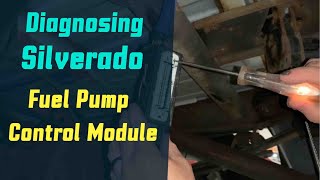
- GM (Chevrolet, GMC) Silverado, Sierra, Tahoe, Yukon (2004-2014) — These trucks use a Fuel Pump Control Module (FPCM) that fails often. After replacement, the new module must be programmed to the vehicle's VIN with a capable scan tool.
- BMW / Mini Various Models (E46, E90, R56, etc.) (2002-2015) — P1230 specifically indicates a fault in the 'Fuel Pump Relay Activation' circuit, pointing directly to the relay (often green, behind the glove compartment) or its wiring.
- Hyundai / Kia i20, K5, Optima (2011-2016) — Code P1230 relates to a faulty fuel pump relay or a failing pump making audible noises. On LPI models, it stems from a cracked hose inside the tank assembly.
- Jaguar / Mazda / Volvo X-Type, S-Type / Tribute, 626 / S60, V70 (1995-2015) — For these makes, P1230 points to a fuel pump relay malfunction or an open power circuit to the fuel pump itself.
Manufacturer-Specific Notes
- Ford: The definitive cause is the Fuel Pump Driver Module (FPDM). The original part mounted flat against the steel frame, causing galvanic corrosion. The official replacement part includes rubber standoffs to create an air gap.
- Saab: On Saab 9-3 and 9-5 models, P1230 refers to 'Throttle Position Sensor 1 and 2 Circuit Sum Out of Range', NOT the fuel pump. This requires diagnosing the electronic throttle body and checking for ECU software updates.
- GM: The Fuel Pump Control Module (FPCM) requires programming to the vehicle's VIN after replacement. A new module from the dealer will not function until programmed.
- Volkswagen/Audi: For some VW and Audi engines, P1230 indicates a short to ground in the circuit for a specific fuel injector (e.g., cylinder 6), completely unrelated to the fuel pump.
- Toyota: On certain Toyota models, P1230 refers to a 'Venturi Position Sensor Malfunction' within the supercharger system, unrelated to the main fuel pump circuit.
- Subaru: Subaru issued a warranty extension (Bulletin 09-129-24) for the low-pressure fuel pump impeller on 2017-2020 models. A failing impeller destroys the pump, triggering P1230.
Real Owner Stories
2008 Ford F-150 with 115K miles - Crank No-Start
Truck cranked normally but refused to start after a week of intermittent stalling. The truck lived in a 'rust belt' state.
What they tried:
- Checked the fuel pump fuse (#8), which was intact.
- Swapped the fuel pump relay with the horn relay; the horn still worked, confirming the relay was good.
- Lowered the spare tire to inspect the Fuel Pump Driver Module (FPDM) mounted on the frame crossmember.
Outcome: The aluminum FPDM corroded completely through, cracking the housing and destroying the electronics. The owner installed a Dorman 590-001 replacement unit featuring rubber standoffs to prevent frame contact. The $70 part and 30 minutes of DIY labor fixed the truck immediately.
Lesson: On 2004-2008 Ford trucks, the FPDM is the definitive cause of P1230. Always inspect it for corrosion before assuming the expensive fuel pump failed.
2002 Subaru WRX - Intermittent Power Loss & Stalling
Car randomly lost all power while driving. After waiting a few minutes, it restarted. The owner had recently installed an aftermarket high-flow fuel pump.
What they tried:
- Pulled code P1230 'Fuel Pump Control Unit Malfunction'.
- Replaced the fuel filter and the fuel pump controller, but the stalling persisted.
Outcome: The upgraded fuel pump drew too much current for the factory wiring, causing the stock wires to overheat and the Fuel Pump Control (FPC) unit to shut down under load. The owner rewired the FPC pigtail with heavier gauge wire to handle the increased electrical load, resolving the issue.
Lesson: On Subarus, P1230 points directly to the FPC unit or its wiring. Upgrading a fuel pump requires upgrading the controller wiring to handle the increased amperage.
2003 Saab 9-5 - Limp Mode and Check Engine Light
The car suddenly entered 'limp home mode' with severely reduced power, triggering code P1230.
What they tried:
- Cleared the code, but the car stumbled and died shortly after.
- Replaced the throttle body assembly based on forum advice, but the problem immediately returned.
Outcome: On Saab vehicles, P1230 indicates a fault with the electronic throttle body, not the fuel pump. However, the root cause was overly sensitive engine control module (ECU) software, not the hardware. A Saab specialist updated the ECU software using a Tech II scanner, permanently fixing the false trigger.
Lesson: P1230 definitions are manufacturer-specific. For Saabs, ignore the fuel system entirely. Focus on the throttle body and verify if a software update is required before replacing parts.
How to Prevent This Code From Triggering
- Keep the fuel tank at least 1/4 full (Always) — The fuel pump relies on surrounding gasoline to cool and lubricate its electric motor. Consistently running on a low tank overheats the pump, causing premature failure.
- Replace the fuel filter at the manufacturer's recommended interval (Per owner's manual (typically every 30,000 miles)) — A clogged fuel filter restricts flow, forcing the pump to work harder. This increased current draw shortens the pump's life and melts the relay or control module.
- For 2004-2008 Ford F-150 owners: Proactively inspect the FPDM (Once, or every few years in salt-belt states) — The original FPDM design guarantees corrosion and failure. Proactively replacing it with an updated $70 part featuring rubber standoffs prevents a future breakdown.
- Check and clean electrical ground connections (During other under-vehicle maintenance) — The fuel pump circuit requires a solid ground. A corroded ground connection causes high resistance, leading to intermittent operation and eventual module failure.
Frequently Asked Questions
Can I just replace the fuse and keep driving?
Replacing a blown fuse only works if it was a one-time surge. If it blows again immediately, you have a dead short or a failing component drawing excessive current. You must find and fix the root cause to make the vehicle reliable.
Is P1230 an expensive code to fix?
Repair costs range from $10 for a DIY fuse or relay to over $1,000 for a shop-installed fuel pump assembly. Replacing a Fuel Pump Driver Module typically costs $200 to $400. Proper electrical diagnosis prevents wasting money on unneeded parts.
What is the difference between a fuel pump relay and a fuel pump driver module?
A relay is a basic on/off switch that sends full power to the pump. A driver module (FPDM/FPCM) is a mini-computer that varies the voltage to the pump. This allows the pump to run at different speeds to match engine demand and improve efficiency.
What is the most common misdiagnosis for P1230?
The most expensive mistake is replacing the entire fuel pump assembly when the actual problem is a $20 relay or a corroded wire. Many owners replace the pump only to find the car still won't start. Always verify power and ground at the pump connector before condemning the pump itself.
Could a bad ground wire cause code P1230?
Yes. The fuel pump circuit requires a solid ground to function. A corroded or loose ground wire causes high resistance and voltage drops, directly triggering a P1230 fault.
Can a bad gas cap cause code P1230?
No. A loose gas cap triggers an evaporative emissions code like P0455. P1230 strictly indicates an electrical fault in the fuel pump's power circuit.
My car starts and then dies after a few seconds. Is that P1230?
Yes, this is a classic P1230 symptom. The pump primes for two seconds at key-on, providing enough fuel for the initial start. If the control circuit fails to keep the pump running, the engine immediately stalls from fuel starvation.
What does P1230 mean on a Saab?
On Saab 9-3 and 9-5 models, P1230 indicates a fault with the electronic throttle body, not the fuel pump. The diagnostic approach focuses entirely on the throttle position sensors and ECU software. Do not replace fuel system components for this code on a Saab.
Can a bad battery cause P1230?
Not directly, as P1230 points to a specific circuit failure. However, a weak battery causes unpredictable electronic glitches and misleading test results. Always ensure your battery is fully charged before diagnosing electrical codes.
Why is the P1230 code still on after replacing the fuel pump?
This means the pump was not the root cause. The actual fault lies upstream in the fuel pump relay, driver module, or wiring harness. You must trace the electrical circuit to find the break or high resistance.
Key Takeaways
- Do not drive with a P1230 code, as the electrical fault in the fuel pump circuit causes unpredictable engine stalling at any speed.
- Inspect the $20 fuel pump relay and the frame-mounted Fuel Pump Driver Module before spending $500+ replacing the fuel pump assembly.
- Swap the fuel pump relay with an identical relay in the fuse box (like the horn relay) for a free, 60-second diagnostic test.
- Verify your manufacturer's specific definition for P1230, as it means 'Throttle Body Malfunction' on Saabs but points to the Fuel Pump Driver Module on 2004-2008 Ford trucks.
Helpful Videos


The information in this article is provided for general reference and educational purposes only. Vehicle specifications, procedures, and part compatibility can vary by production date, trim level, and region. Always consult your vehicle's factory service manual and verify part numbers before purchasing or performing repairs. Safety-critical components such as airbags, seat belts, and braking systems should be installed by a qualified professional.
- 🎬 Helpful Videos
- What Does P1230 Mean?
- Can I Drive With P1230?
- Common Causes
- Symptoms
- Diagnostic Flowchart
- Common Fixes & Costs
- DIY vs Professional
- Used vs. New Parts: Buying Guide
- What Happens If You Wait — Timeline
- Cost of Not Fixing It
- Diagnosis Steps
- When This Code Triggers (Freeze-Frame Conditions)
- Related Codes
- Climate & Environmental Factors
- How to Talk to a Mechanic About This Code
- Where to Take It: Dealer vs Independent vs Chain
- When to Walk Away From the Repair
- What Scan Tool You Need for This Code
- How to Clear the Code After You Fix It
- Will This Fail Emissions / State Inspection?
- Most Commonly Affected Vehicles
- Manufacturer-Specific Notes
- Real Owner Stories
- 2008 Ford F-150 with 115K miles - Crank No-Start
- 2002 Subaru WRX - Intermittent Power Loss & Stalling
- 2003 Saab 9-5 - Limp Mode and Check Engine Light
- How to Prevent This Code From Triggering
- Frequently Asked Questions
- Can I just replace the fuse and keep driving?
- Is P1230 an expensive code to fix?
- What is the difference between a fuel pump relay and a fuel pump driver module?
- What is the most common misdiagnosis for P1230?
- Could a bad ground wire cause code P1230?
- Can a bad gas cap cause code P1230?
- My car starts and then dies after a few seconds. Is that P1230?
- What does P1230 mean on a Saab?
- Can a bad battery cause P1230?
- Why is the P1230 code still on after replacing the fuel pump?
- Key Takeaways
- 🎟️ Get 5% Off