

P0223 on 2011-2014 Hyundai Sonata: Throttle Position Sensor Circuit High Fixes
This code means the throttle position sensor is sending a high voltage signal. On the 2011-2014 Sonata, the sensor is part of the throttle body. The most common fix is replacing the entire throttle body assembly, which costs around $400-$800 at a shop, or $90-$200 for a DIY replacement part.
- P0223 on a 2011-2014 Sonata points to a high voltage signal from the secondary throttle position sensor.
- The sensor is built into the throttle body; you cannot buy it separately. The most common fix is to replace the entire throttle body assembly.
- Before replacing the part, check the wiring connector for damage and consider cleaning the throttle body if it's dirty.
- After cleaning or replacing the throttle body, a simple key-on/key-off relearn procedure is necessary and can often be done at home.
- Driving with this code is unsafe as the car can stall or have no power to accelerate.
- Ensure you order the correct throttle body for your specific engine (2.4L or 2.0T), as they are different parts.
What's Unique About the 2011-2014 Hyundai Sonata
For the 2011-2014 Hyundai Sonata (YF generation) with either the 2.4L or 2.0T Theta II engine, the dual throttle position sensors (TPS) are integrated into the electronic throttle body assembly. This means you cannot replace just the faulty sensor; the entire throttle body unit must be replaced. While wiring issues can cause this code, a failure of the internal sensor is very common, making throttle body replacement the most frequent and confirmed solution for P0223 on this specific vehicle and its platform mates.
Symptoms You May Notice
- Check Engine Light is on
- Vehicle enters 'limp mode' with drastically reduced engine power and acceleration.
- Electronic Stability Control (ESC) light may also illuminate.
- Little to no acceleration or throttle response.
- Engine stalling, especially when coming to a stop or at idle.
- Hesitation or stumbling during acceleration.
- Engine may be hard to start or fail to start at all.
- Cruise control will not engage
- Replacing the accelerator pedal position sensor (APPS). While the APPS is part of the same system, P0223 specifically points to the sensor at the throttle body, not the one connected to the gas pedal.
- Replacing only the throttle position sensor. On this vehicle, the sensor is not sold separately from the throttle body assembly.
- Immediately replacing the throttle body without checking the wiring. A simple wiring short can mimic a failed sensor, so electrical diagnosis is a critical first step.
Most Likely Causes
- Faulty Throttle Body Assembly 🔴 High Probability The integrated throttle position sensor (TPS) is a well-documented, common failure point on the Theta II engines. The internal electronics of the sensor fail, causing a permanent high voltage signal.
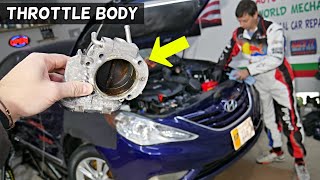
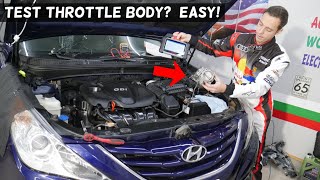
How to confirm: With a diagnostic scan tool, observe the live data for TPS sensor 2 (or B). If the voltage is stuck high (e.g., above 4.7V) and doesn't change as the throttle is manually opened and closed (with engine off, ignition on), the sensor inside the throttle body has failed. This is the most definitive test. 🎬 Watch: How to test the throttle body and position sensor.
Typical fix: Replace the entire throttle body assembly. After replacement, a throttle relearn procedure must be performed.
Est. part cost: $90-$250 - Damaged Wiring or Poor Connection 🟡 Medium Probability The wiring harness connector at the throttle body is exposed to engine heat and vibration, which can lead to frayed wires, loose pins, or corrosion over time. A short-to-power on the signal wire is a specific cause for a 'high input' code.
How to confirm: Visually inspect the wiring harness and connector going to the throttle body for any signs of damage, corrosion, or loose pins. Use a multimeter to check for 5V reference and good ground at the connector. Then, test the signal wire for a short to power by checking for voltage with the sensor disconnected. A 'wiggle test' on the harness while watching live data can also reveal intermittent connection issues.
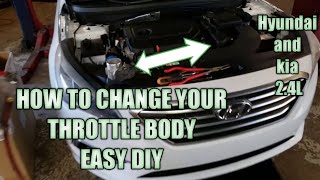
Typical fix: Repair the damaged section of the 🎬 See this walkthrough for replacing the throttle body on 2.4L engines. wiring harness or replace the connector pigtail.
Est. part cost: $15-$50 - Excessive Carbon Buildup in Throttle Body ⚪ Low Probability Direct injection (GDI) engines, like the Theta II, are prone to carbon buildup on intake components since fuel doesn't wash over the valves. While less likely to cause a 'high circuit' code, severe buildup could cause the throttle plate to stick slightly open, leading to an incorrect sensor reading at idle.
How to confirm: Remove the air intake hose from the throttle body and inspect the throttle plate and bore for heavy black carbon deposits.
Typical fix: Clean the throttle body thoroughly with a dedicated throttle body cleaner and a soft brush. A throttle relearn procedure should be performed after cleaning.
Est. part cost: $10-$20
Rare But Worth Checking
- Faulty Powertrain Control Module (PCM): This is extremely rare. The PCM should only be considered after all other possibilities, including the throttle body and wiring, have been exhaustively tested and ruled out.
Diagnosis Steps
- Scan for codes. Confirm P0223 is present and check for any other related codes like P0123, P2106, or P2110.
- Visually inspect the wiring harness and connector at the throttle body. Look for any obvious signs of damage, corrosion, or loose connections.
- Using a scan tool, view the live data for Throttle Position Sensor 2 (or B). The voltage should be around 0.5V at idle and sweep smoothly up to around 4.5V at wide-open throttle. P0223 will likely show a voltage stuck high (>4.7V).
- Perform a 'wiggle test' on the harness while monitoring the live data to check for intermittent connections.
- If voltage is stuck high, disconnect the throttle body connector. Check for 5V reference and good ground at the appropriate pins on the harness side. If those are good, the wiring is likely okay and the throttle body has failed.
- If the problem persists after replacing the throttle body, thoroughly test the signal wire between the throttle body and the PCM for a short to a power source.
- As a preliminary step, you can try cleaning the throttle body if it appears dirty with carbon buildup. After cleaning, perform the throttle relearn procedure.
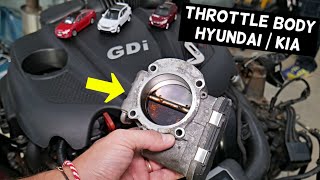
- If cleaning does not resolve the issue, replace the throttle body assembly. 🎬 Watch: Step-by-step throttle body replacement for Sonata and Optima.
- Perform the throttle position relearn procedure after replacement. A common manual method involves: Turn ignition 'ON' (engine off) for 10-15 seconds, then 'OFF' for 10-15 seconds. Repeat 4-5 times. Then start the engine and let it idle for 5-10 minutes. Some vehicles may require a scan tool for this procedure.
Parts You'll Likely Need
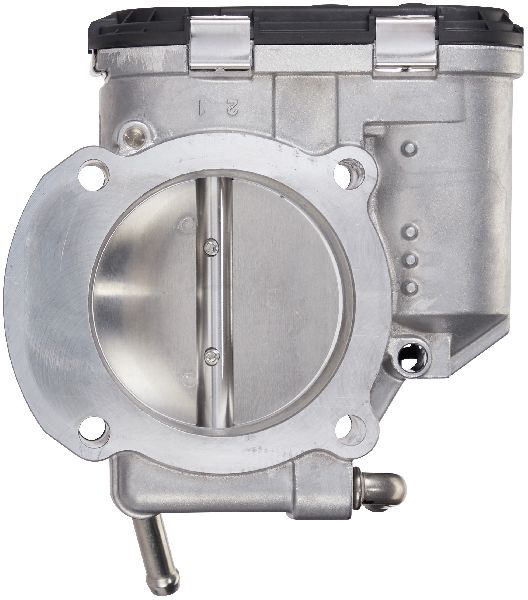
- Throttle Body Assembly (2.4L GDI Engine)
(OEM #35100-2G700)— This is the most common cause of the P0223 code on this vehicle because the non-serviceable Throttle Position Sensor (TPS) is integrated into this part.
Trusted brands: Hyundai (OEM), Bosch, Hitachi, Autopart Premium
OEM price range: $350-$450
Aftermarket price range: $90-$250 - Throttle Body Assembly (2.0T GDI Engine)
(OEM #35100-2G710)— The 2.0L Turbo engine uses a different throttle body than the 2.4L. It is critical to order the part specific to your engine.
Trusted brands: Hyundai (OEM), A1 Cardone, Standard Motor Products
OEM price range: $400-$620
Aftermarket price range: $95-$260
Related Codes That Often Appear With This One
- P0123 — This code is for 'Throttle Position Sensor A Circuit High'. Seeing both P0123 and P0223 together strongly indicates a failure within the throttle body assembly, as both redundant sensors are reporting a high voltage fault simultaneously.
- P2106 — This code means 'Throttle Actuator Control System - Forced Limited Power'. It is an informational code that is often set alongside P0223 to indicate that the ECM has put the vehicle into 'limp mode' as a direct result of the throttle sensor fault.
- P2110 — This code means 'Throttle Actuator Control System - Forced Limited RPM'. Similar to P2106, this indicates the computer is actively limiting engine RPM due to the detected throttle system failure.
Technical Service Bulletins (TSBs) & Recalls
- TSB 21-EM-009H: While not directly for P0223, this bulletin supersedes an older TSB (12-EM-003) and provides diagnostic guidelines for the turbocharger's electronic wastegate actuator on 2.0T models, which is part of the complex engine control system.
- Campaign T3G / TSB 21-01-002H: This relates to the warranty extension for the engine long block due to connecting rod bearing issues and the related Knock Sensor Detection System (KSDS) software update. It does not cover the P0223 fault but is critical information for any owner of a Theta II equipped vehicle.
Platform-Specific Known Issues
- Theta II Engine Issues: The 2.4L and 2.0T Theta II GDI engines in this generation of Sonata are known for several issues, including connecting rod bearing failure and oil consumption. While not directly related to the electronic throttle body, it's part of a broader context of potential engine problems for this vehicle. A class-action lawsuit resulted in extended warranties for some engine components, but this does not cover the throttle body.
Mechanic-Grade Diagnostic Values
- Throttle Position Sensor (TPS) 2 Voltage — expected: Approx. 0.5V at closed throttle, sweeping smoothly to approx. 4.5V at wide-open throttle.. Failure: Voltage is stuck high, above 4.75V, and does not change with throttle plate movement.
- Throttle Position Sensor (TPS) Internal Resistance — expected: 2.7 - 4.1 KΩ (kilo-ohms) between specified terminals on the sensor side of the connector.. Failure: Resistance is outside the specified range, indicating an internal sensor fault.
- Throttle Position Angle (Live Scan Tool Data) — expected: Around 5° at closed throttle, increasing to approximately 88-90° at wide-open throttle.. Failure: The angle does not correspond to the physical position of the throttle plate or is stuck at a high value.
- Throttle Body Connector Pin Voltages (Harness Side, KOEO) — expected: Pin 1: 5V (Sensor Reference), Pin 2: TPS 1 Signal, Pin 3: Ground, Pin 4: TPS 2 Signal, Pin 5: 5V (Sensor Reference), Pin 6: Motor Control.. Failure: Missing 5V reference or ground on the respective pins indicates a wiring or PCM issue, not a throttle body failure.
Scan Tool Commands That Help
- Hyundai GDS (Global Diagnostic System): Active Test: ETC Motor — This bidirectional command allows a technician to force the electronic throttle control (ETC) motor to open and close. It's used to verify if the throttle motor and gears are functioning mechanically, independent of sensor inputs. If the motor actuates correctly but the code persists, it further isolates the fault to the sensor circuit.
- Hyundai GDS (Global Diagnostic System): Resetting Adaptive Values — After replacing the throttle body or cleaning it, this function in the GDS resets the learned values in the Engine Control Module. This forces the ECU to relearn the new baseline closed and open positions of the throttle plate, which is more reliable than a manual relearn procedure.
Wiring & Ground Locations
- GE01 — Left front of the engine compartment.. This is a primary engine compartment ground point. A loose or corroded connection here can cause a floating ground, leading to incorrect voltage readings from various sensors, including the throttle position sensor.
- Ghg01 / Ghg02 — Located on the engine itself, likely on the cylinder head or block.. These are direct engine ground points. The PCM and its sensors rely on a solid ground path through the engine block. A faulty ground strap or connection at these points can introduce electrical noise and voltage offsets, potentially triggering a high circuit code.
- Throttle Body Connector — Directly on the electronic throttle body, where the engine wiring harness connects.. This 6-pin connector is the single point of failure for all signals to and from the throttle body. Pins can become loose, corroded, or wires can fray at the back of the connector due to engine vibration and heat, causing intermittent or permanent high/low circuit faults.
Real Owner Repair Stories
- YouTube Channel 'Heartland Mechanic' (Hyundai Sonata (Year not specified, but YF generation)) — Car would not accelerate, stuck in limp mode.
❌ Tried (didn't work) The video focuses directly on the successful repair.
✅ What actually fixed it The mechanic identified a broken wire inside the insulation at the throttle body connector. The wire appeared intact externally but was broken internally. Splicing in a new section of wire and repairing the connection at the pigtail resolved all symptoms without replacing the throttle body.
Documented NHTSA Reports
While the Sonata is the primary focus, cross-manufacturer records for the same engine family provide additional insight. NHTSA ODI #10845644 describes a situation where a vehicle with the same manufacturer's engine family presented with active codes P0223, P0445, and P2106; diagnostic tests revealed low compression in multiple cylinders, suggesting that in extreme cases, these electronic codes may coincide with significant internal engine wear.
Diagnostic Flowchart
Used vs. New Parts: Buying Guide for This Vehicle
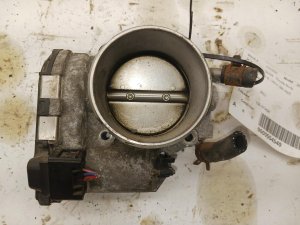
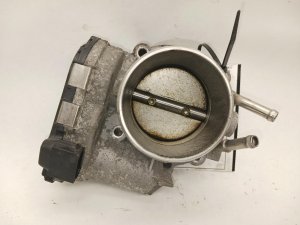
When a used part is the smart pick: A used OEM throttle body from a reputable salvage yard is a very sensible and cost-effective option for this repair. The failure is electronic, not typically mechanical wear, so a used part from a lower-mileage donor vehicle often has significant life remaining. Given the high cost of a new OEM part (over $400), a used part for under $150 is a common and successful repair strategy.
Donor-vehicle mileage cap: roughly under 80000 miles for the part to have meaningful remaining life.
What to inspect on the donor part:
- Verify the 6-pin electrical connector is free of corrosion, cracks, or bent pins.
- Ensure the part number (e.g., 35100-2G700 for 2.4L) exactly matches the original part.
- Check for any signs of physical damage to the aluminum housing or throttle plate.
- Ask for the donor vehicle's VIN or mileage if possible to gauge its history.
Aftermarket brands forum-validated for this vehicle:
- Bosch (Often an OEM supplier)
- Hitachi
- Dorman (Specifically their OE FIX models which claim to have improved internal components like Hall effect sensors).
Brands owners have reported issues with on this vehicle:
- Unbranded, no-name parts from online marketplaces without warranties or reviews should be avoided, as quality control can be inconsistent.
Real Owner Stories
Aggregated from forums and TSBs cited above. Mileages and costs reflect what owners reported in those sources.
2011 Hyundai Sonata Limited 2.4L
Symptoms: Sudden loss of power with the Check Engine Light (CEL) and ESC lights illuminating, causing the vehicle to enter limp mode.
What fixed it: Replacing the entire throttle body assembly resolved the limp mode and cleared the warning lights.
Source hint: hyundai-forums.com: Multiple threads confirm that P0223, often paired with P2106 and the ESC light, is a classic symptom of throttle body failure on the YF Sonata. Owners report that replacing the throttle body assembly resolves the limp mode and check engine light. URL: https://www.hyundai-forums.com/threads/2011-sonata-limited-2-4l-sudden-loss-of-power-and-cel-esc-lights.671325/
2012 Hyundai Sonata
Symptoms: The car would go into intermittent limp mode, accompanied by the ESC and check engine lights coming on.
What fixed it: The community consensus pointed towards a failing throttle position sensor, which is integrated into the throttle body, requiring replacement of the assembly.
Source hint: reddit.com/r/autorepair: A user with a 2012 Sonata described intermittent limp mode with ESC and check engine lights, a common scenario for this failure. The community consensus pointed towards a failing throttle position sensor within the throttle body. URL: https://www.reddit.com/r/autorepair/comment
Related OBD-II Codes
Frequently Asked Questions
My 2011 Sonata is in limp mode with the Check Engine and ESC lights on. Is this the throttle body?
Does the engine warranty extension (Campaign T3G) for my Sonata cover the P0223 throttle body issue?
Can I just clean the throttle body on my Sonata to fix code P0223?
After replacing the throttle body on my 2012 Sonata, do I need a special scan tool for the relearn procedure?
I have a 2013 Kia Optima with the same P0223 code. Is the problem the same as on the Sonata?
Is it a good idea to buy a used throttle body from a salvage yard to fix my Sonata?
Helpful Videos
Used OEM Parts in Stock

New Aftermarket Parts Available



The information in this article is provided for general reference and educational purposes only. Vehicle specifications, procedures, and part compatibility can vary by production date, trim level, and region. Always consult your vehicle's factory service manual and verify part numbers before purchasing or performing repairs. Safety-critical components such as airbags, seat belts, and braking systems should be installed by a qualified professional.
- Hyundai Sonata:
- 🎬 Helpful Videos
- 🛍️ Shop This Part
- What's Unique About the 2011-2014 Hyundai Sonata
- Symptoms You May Notice
- Most Likely Causes
- Rare But Worth Checking
- Diagnosis Steps
- Parts You'll Likely Need
- Related Codes That Often Appear With This One
- Technical Service Bulletins (TSBs) & Recalls
- Platform-Specific Known Issues
- Mechanic-Grade Diagnostic Values
- Scan Tool Commands That Help
- Wiring & Ground Locations
- Real Owner Repair Stories
- Documented NHTSA Reports
- Diagnostic Flowchart
- Used vs. New Parts: Buying Guide for This Vehicle
- Real Owner Stories
- 2011 Hyundai Sonata Limited 2.4L
- 2012 Hyundai Sonata
- Related OBD-II Codes
- Frequently Asked Questions
- 🎟️ Get 5% Off