

P0222 on 2010-2015 Kia Optima: Throttle Position Sensor Causes and Fixes
P0222 on a 2010-2015 Kia Optima most often means the electronic throttle body has failed internally. This part contains the non-serviceable throttle position sensor. Replacement of the entire throttle body assembly is the most common fix, costing between $200-$350 for the part. Limp mode symptoms can also be caused by a separate engine software update (KSDS), so proper diagnosis is key.
- P0222 on a 2010-2015 Optima points to a low voltage signal from the 'B' throttle position sensor.
- The most likely cause is an internal electronic failure of the complete throttle body assembly, which must be replaced as one unit.
- Before replacing parts, inspect the wiring connector for damage and clean the throttle plate of any carbon buildup.
- After replacing the throttle body, a 'relearn' procedure is necessary to calibrate the new part to the car's computer.
- Driving with this code is unsafe as the car can lose power suddenly and without warning.
What's Unique About the 2010-2015 Kia Optima
For the 2010-2015 (TF generation) Optima, the throttle position sensor (TPS) is integrated into the electronic throttle body assembly and is not sold as a separate component. Failures are frequently due to the internal electronics or plastic gears of the throttle body assembly itself, rather than just a dirty throttle plate. While these vehicles are also subject to major engine recalls (like SC147 for bearing wear), code P0222 is almost always an issue with the throttle control system specifically. However, a software update for the Knock Sensor Detection System (KSDS Campaign PI1802) can also put the car in a very similar limp mode, but will set a P1326 code, making it a common point of diagnostic confusion.
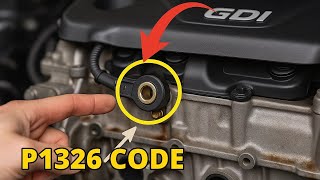
🎬 Watch: Understanding the P1326 code and engine bearing failure.Symptoms You May Notice
- Check Engine Light is illuminated
- Sudden and severe loss of engine power (Limp Mode)
- Hesitation, stumbling, or jerky acceleration
- Unresponsive or delayed throttle response
- Engine stalls, especially at low speeds or when stopping
- Rough or unstable idle
- Vehicle will not accelerate past a low speed or RPM limit (e.g., 2000 RPM).
- Replacing the accelerator pedal assembly when the fault is actually in the throttle body.
- Assuming a simple throttle body cleaning will fix the issue. While it can be the cause, internal electronic failure of the throttle body is more common for this code on these cars and cleaning will not fix it.
- Mistaking KSDS Limp Mode (DTC P1326) for a throttle body failure. The Knock Sensor Detection System update (Campaign PI1802) is designed to protect the engine by inducing a limp mode with very similar symptoms (reduced power, limited RPM). A proper scan is required to differentiate the codes.
Most Likely Causes
- Faulty Electronic Throttle Body Assembly 🔴 High Probability The internal electronics and plastic motor gears of the throttle body assembly are a known failure point on this platform, leading to sensor circuit faults. This is the most common resolution discussed by owners.
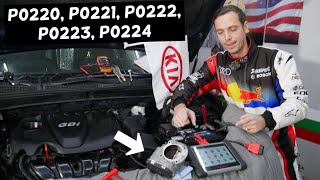
How to confirm: Using a scan tool, observe the live data for Throttle Position Sensor 'A' and 'B'. As you slowly press the accelerator pedal (with the engine off, key on), both voltage readings should increase smoothly and in tandem. A P0222 code suggests the 'B' sensor voltage is stuck low, erratic, or does not respond. If the wiring is confirmed to be good, the throttle body is faulty. 🎬 Watch: How to fix P0222 and related throttle sensor codes.
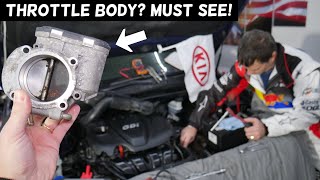
Typical fix: Replace the entire throttle body assembly. The sensor is not available separately. A throttle body relearn procedure is required after installation.
Est. part cost: $200-$350 - Dirty or Sticking Throttle Body 🟡 Medium Probability Gasoline Direct Injection (GDI) engines can be prone to carbon buildup, which can restrict the movement of the throttle plate and cause it to stick.
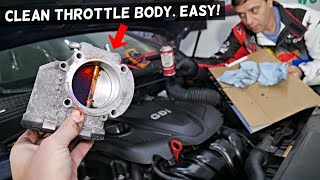
How to confirm: Visually inspect the throttle bore and plate for heavy carbon deposits that could prevent it from closing or opening smoothly. A YouTube video by 'World Mechanics' shows a comparison of a dirty vs. clean throttle body on an Optima with only 80,000 miles, highlighting significant buildup. 🎬 See this guide on how to clean your throttle body.
Typical fix: Clean the throttle body and plate thoroughly with a dedicated throttle body cleaner and a soft cloth. Be careful not to damage the electronic components or force the plate open by hand. While this can work, if the code returns, it often indicates an underlying electronic failure.
Est. part cost: $5-$15 - Damaged Wiring or Poor Connection ⚪ Low Probability The wiring harness to the throttle body is located near the front of the engine bay and can be exposed to heat, chafing from the radiator fan if clips are broken, or rodent damage.
How to confirm: Visually inspect the wiring harness and connector going to the throttle body for any signs of chafing, breaks, corrosion, or loose pins. Check for oil contamination from a leaking valve cover gasket. Perform a continuity test on the signal, power, and ground wires between the PCM and the throttle body connector.
Typical fix: Repair the damaged section of the wire harness or clean/replace the connector.
Est. part cost: $10-$100 - Faulty Accelerator Pedal Position (APP) Sensor ⚪ Low Probability Damage can occur from items in the driver's footwell, such as floor mats being pushed too far forward or from drivers kicking the wiring.
How to confirm: While the code points to the throttle body sensor ('B'), a fault in the accelerator pedal can sometimes trigger related codes. Use a scan tool to monitor live data from the APP sensor circuits to ensure they respond correctly and smoothly to pedal input.
Typical fix: Replace the accelerator pedal assembly.
Est. part cost: $70-$150
Rare But Worth Checking
- Faulty Powertrain Control Module (PCM): This is very rare. The PCM should only be considered after all other possibilities, including sensors and wiring, have been exhaustively tested and ruled out.
Diagnosis Steps
- Read all fault codes with an OBD-II scanner. Note any other codes that are present, especially P1326, P2135, or other TPS codes.
- Visually inspect the wiring harness and electrical connector at the electronic throttle body. Look for damage, corrosion, loose connections, or contamination from oil leaks.
- With the key on and engine off, use the scanner to monitor live data for TPS circuits 'A' and 'B'.
- Slowly press and release the accelerator pedal. Both voltage readings should rise and fall smoothly together. For P0222, you will likely see the 'B' circuit voltage stay low or respond erratically.
- If the sensor data is faulty, inspect and clean the throttle body bore and plate of any carbon buildup. Use dedicated throttle body cleaner and do not force the plate open manually.
- If the problem persists, test the power, ground, and signal wires at the throttle body connector with a multimeter to rule out a wiring issue.
- If wiring is confirmed to be good and the sensor signal is bad, the throttle body assembly has failed and must be replaced.
- After replacement, perform a throttle body relearn procedure. This can often be done by turning the key to the 'ON' position for 15 seconds, then off for 15 seconds, and repeating a few times before starting the engine. Some vehicles may require a scan tool for this step.
Parts You'll Likely Need
- Electronic Throttle Body Assembly
(OEM #35100-2G700 or 35100-2G710)— This is the most common failure for code P0222, as the internal throttle position sensor fails. The sensor is not sold separately. Part number 35100-2G700 is widely listed for the 2.4L engine, while 35100-2G710 is often associated with the 2.0L Turbo engine. Always verify the correct part number with your vehicle's VIN before ordering.
Trusted brands: Kia (Genuine OEM), Mando, Hitachi, Dorman, Standard Motor Products
OEM price range: $220-$350
Aftermarket price range: $150-$250
Related Codes That Often Appear With This One
- P0223 — This code means 'Throttle/Pedal Position Sensor/Switch 'B' Circuit High Input'. Seeing it with P0222 can indicate an intermittent wiring problem or a failing sensor that is fluctuating between high and low voltage faults.
- P0121, P0122, P0123 — These are similar codes but for the 'A' circuit of the throttle position sensor. Seeing them together strongly points to a problem with the throttle body assembly or its connector.
- P2135 — This code indicates 'Throttle/Pedal Position Sensor/Switch 'A'/'B' Voltage Correlation'. It means the PCM sees a disagreement between the two sensor circuits, which is a common result of one sensor failing and triggering a code like P0222.
- P1326 — This code is for the Knock Sensor Detection System (KSDS) and indicates the vehicle is in a protective limp mode due to detected engine vibrations. The symptoms are nearly identical to a P0222 failure, making it a critical code to check for.
Technical Service Bulletins (TSBs) & Recalls
- SC147 / NHTSA 17V224000: Safety recall for potential engine failure due to premature bearing wear in Theta II 2.4L GDI & 2.0L T-GDI engines.
- PI1802: Product Improvement Campaign to install/update the Knock Sensor Detection System (KSDS).
Platform-Specific Known Issues
- While not directly causing P0222, the 2.4L GDI and 2.0L Turbo engines in this Optima are subject to a major safety recall (NHTSA #17V224000, Kia Campaign SC147) for engine failure due to premature connecting rod bearing wear. This can cause engine seizure.
- A separate product improvement campaign (PI1802) involves a software update for the Knock Sensor Detection System (KSDS). This system is designed to detect bearing wear and place the vehicle into a protective limp mode (setting code P1326), which presents symptoms almost identical to a throttle body failure.
Mechanic-Grade Diagnostic Values
- TPS 'B' Circuit Voltage (Key On, Engine Off) — expected: Smoothly increase from ~0.5V (closed throttle) to ~4.5V (wide open throttle).. Failure: Voltage is stuck below 0.5V, does not change with pedal movement, or is erratic.
- TPS Reference Voltage at Connector — expected: ~5.0V. Failure: Voltage is significantly lower than 5.0V, indicating a problem with the PCM or wiring.
- TPS Sensor Resistance (older models) — expected: 3.5–6.5 kOhm between power and ground terminals.. Failure: Resistance is outside this range.
Scan Tool Commands That Help
- Kia GDS (Global Diagnostic System): Actuation Test > ETC Motor — To manually command the throttle body motor to open and close with the engine off. This verifies if the motor and gears are physically capable of moving, helping to isolate a sensor or wiring fault from a mechanical failure.
- Kia GDS (or compatible high-level scanner): Vehicle S/W Management > Resetting adaptive values — This is the factory-level command required after replacing the throttle body to erase old calibration data and force the ECM to relearn the new sensor's positions. Failure to do this can result in codes P0638 or P2110.
Wiring & Ground Locations
- Throttle Body Connector (6-Pin) — On the electronic throttle body, at the front of the engine, connected to the air intake hose.. This is the primary connection point for all tests. A document for a similar Hyundai/Kia system identifies the pin functions: Pin 4 is TPS 2 Signal (likely circuit 'B'), Pin 5 is TPS Supply (5V reference), Pin 6 is TPS 1 Signal (circuit 'A'), and Pin 3 is TPS Ground. Pins 1 and 2 are for the ETC motor.
- Engine Ground (GGG04) — Typically bolted to the engine block or cylinder head near the starter or intake manifold area.. A poor engine ground can cause a host of erratic sensor readings, including a low voltage fault on the TPS circuit. While the TPS has a dedicated sensor ground wire back to the PCM, the main engine ground's integrity is crucial for overall system stability.
Real Owner Repair Stories
- Reddit user Holiday_Recording_74 on r/kia (Kia Optima (year not specified, but symptoms match TF generation)) — Car went into limp mode, flashing check engine light, unable to accelerate past 2000 RPM. Symptoms were identical to the well-known KSDS/engine failure recall (P1326).
❌ Tried (didn't work) Initially diagnosed as a potential engine failure under the extended warranty/recall.
✅ What actually fixed it The dealership diagnosed and replaced the entire throttle body assembly. The final cost was around $700, and the repair took 8 days.
OEM Part Supersession History
35100-2G700→35100-2G700 (current)— No official supersession found, but Hyundai and Kia use the same part number interchangeably. The part may come in a red Kia box, a blue Hyundai box, or a brown co-branded box, but the component is identical.
Heads up: While no supersession exists, it is critical to distinguish between the 2.4L (35100-2G700) and 2.0L Turbo (35100-2G710) parts. They are not interchangeable.
Model Year Variations Within This Range
- 2014-2015: The Kia Optima received a facelift for the 2014 model year, which included revised front and rear fascias, new tail lights, and an updated interior dashboard design. However, the core powertrain, including the 2.4L GDI engine and the electronic throttle body assembly (PN 35100-2G700), remained the same as the 2011-2013 models. Therefore, the causes and fixes for P0222 are identical across the entire 2011-2015 generation.
Diagnostic Flowchart
Other Known Issues on This Vehicle
Issues unrelated to this code that are worth knowing about as an owner of this generation:
- Premature Engine Failure (Theta II) 🔴 High — Widespread across 2.4L GDI and 2.0L Turbo engines. Can occur at various mileages, often without warning. (Ref: Recall SC147 / NHTSA 17V224000)
- Degrading MDPS Steering Coupler 🟠 Medium — Extremely common. Owners typically notice a clicking or clunking sound from the steering column when turning at low speeds, which worsens over time. (Ref: TSB CHA-072 / Program CS1604)
- Knock Sensor Detection System (KSDS) Limp Mode 🔴 High — Common for vehicles that have had the PI1802 software update. The system can be sensitive and place the car into limp mode (setting code P1326) even if the engine has no immediate catastrophic failure. (Ref: Campaign PI1802)
- Weak Alternator / Charging System Issues 🟠 Medium — Frequently reported by owners, leading to batteries that won't stay charged and no-start conditions, even after battery replacement.
Used vs. New Parts: Buying Guide for This Vehicle
When a used part is the smart pick: A used throttle body from a reputable salvage yard can be a cost-effective option, especially if the budget is tight. Since the failure is electronic and not purely a wear item, a part from a lower-mileage, rear-ended donor vehicle can be a good value.
Donor-vehicle mileage cap: roughly under 80000 miles for the part to have meaningful remaining life.
What to inspect on the donor part:
- Verify the part number (35100-2G700 for 2.4L) matches exactly.
- Inspect the electrical connector pins for any corrosion or damage.
- Look at the throttle plate; it should be relatively clean, suggesting the donor engine was in good health.
- Ask for the donor vehicle's VIN to check for accident history and mileage if possible.
Aftermarket brands forum-validated for this vehicle:
- Mando (often the Original Equipment Manufacturer for Hyundai/Kia)
- Hitachi
- Standard Motor Products (SMP)
Brands owners have reported issues with on this vehicle:
- Ultra-low-cost, unbranded units from online marketplaces. While tempting, these often have higher failure rates and may not calibrate correctly during the relearn procedure.
Real Owner Stories
Aggregated from forums and TSBs cited above. Mileages and costs reflect what owners reported in those sources.
2013 Kia Optima — 80000 miles
Symptoms: Check Engine Light on with significant carbon buildup inside the throttle body, causing the throttle plate to stick and trigger a P0222 fault.
What fixed it: Thoroughly cleaning the throttle body and plate with a dedicated cleaner and a soft cloth.
Source hint: YouTube (World Mechanics) - KIA OPTIMA CODE P0220 P0221 P0222 P0223 P0224 ENGINE LIGHT ON FIX
2010-2015 Kia Optima with 2.4L GDI or 2.0L Turbo
Symptoms: Vehicle suddenly entered a protective limp mode, severely limiting power and acceleration. The symptoms were identical to a throttle body failure, but the code stored was P1326.
What fixed it: A software update for the Knock Sensor Detection System (KSDS) was performed by the dealer.
Source hint: Product Improvement Campaign PI1802
2010-2015 Kia Optima with Theta II 2.4L GDI & 2.0L T-GDI
Symptoms: Sudden engine seizure while driving, caused by premature connecting rod bearing wear.
What fixed it: Engine replacement was required, covered under the manufacturer's safety recall.
Source hint: Recall SC147 / NHTSA 17V224000
Related OBD-II Codes
Frequently Asked Questions
My 2013 Optima went into limp mode, but the code is P1326, not P0222. Are these issues related?
Should I try cleaning the throttle body on my Optima before replacing it for a P0222 code?
Is the major engine recall (SC147) for my Kia Optima related to this P0222 throttle code?
Can I just buy and replace the throttle position sensor itself to fix P0222?
What is the 'throttle body relearn' procedure I need to do after replacing the part on my Optima?
My accelerator pedal feels fine. Could it still be the cause of my P0222 code?
I have a 2012 Hyundai Sonata with code P0222. Does this Kia Optima article apply to my car?
Helpful Videos
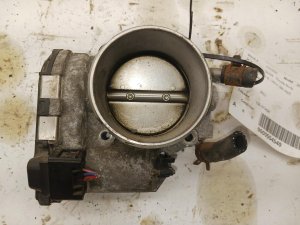
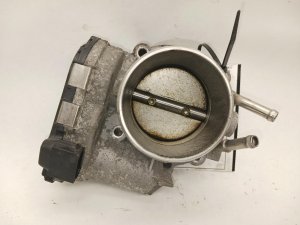
Used OEM Parts in Stock



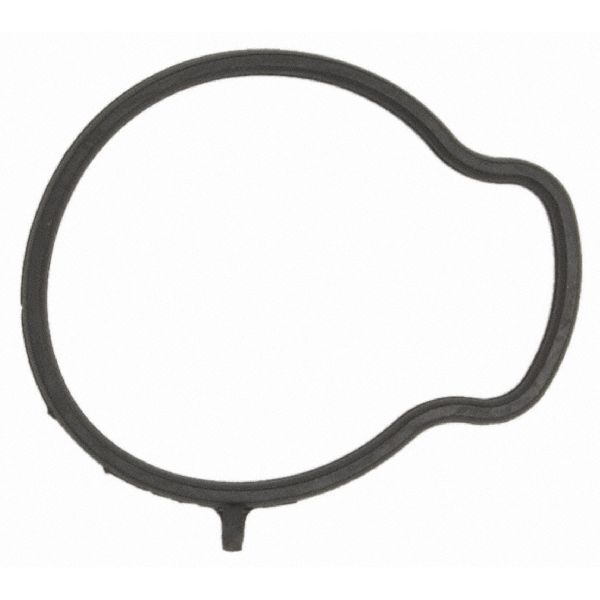
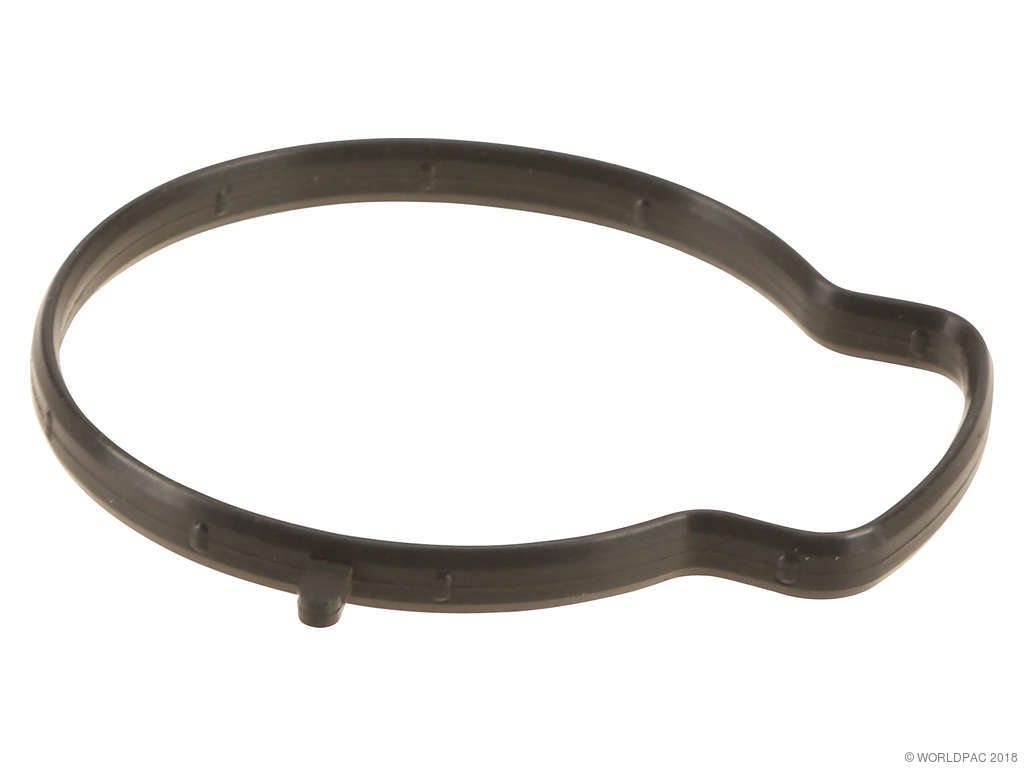
New Aftermarket Parts Available


The information in this article is provided for general reference and educational purposes only. Vehicle specifications, procedures, and part compatibility can vary by production date, trim level, and region. Always consult your vehicle's factory service manual and verify part numbers before purchasing or performing repairs. Safety-critical components such as airbags, seat belts, and braking systems should be installed by a qualified professional.
- Kia Optima:
- 🎬 Helpful Videos
- 🛍️ Shop This Part
- What's Unique About the 2010-2015 Kia Optima
- Symptoms You May Notice
- Most Likely Causes
- Rare But Worth Checking
- Diagnosis Steps
- Parts You'll Likely Need
- Related Codes That Often Appear With This One
- Technical Service Bulletins (TSBs) & Recalls
- Platform-Specific Known Issues
- Mechanic-Grade Diagnostic Values
- Scan Tool Commands That Help
- Wiring & Ground Locations
- Real Owner Repair Stories
- OEM Part Supersession History
- Model Year Variations Within This Range
- Diagnostic Flowchart
- Other Known Issues on This Vehicle
- Used vs. New Parts: Buying Guide for This Vehicle
- Real Owner Stories
- 2013 Kia Optima — 80000 miles
- 2010-2015 Kia Optima with 2.4L GDI or 2.0L Turbo
- 2010-2015 Kia Optima with Theta II 2.4L GDI & 2.0L T-GDI
- Related OBD-II Codes
- Frequently Asked Questions
- 🎟️ Get 5% Off