

P0217 on 2015-2024 Ford Mustang 2.3L EcoBoost: Engine Overheating Causes and Fixes
P0217 means your Mustang's engine is overheating. While this can be from a simple fix like a bad thermostat or low coolant, on the 2.3L EcoBoost it is a strong warning sign of a possible head gasket failure leading to coolant intrusion, a serious and expensive engine repair. This issue is well-documented and has led to class-action lawsuits.
- P0217 is a critical overheating code. Do not drive the vehicle.
- The most serious potential cause on a 2.3L EcoBoost Mustang is a failed head gasket allowing coolant to leak into the engine cylinders.
- Key signs of this serious issue are unexplained coolant loss, white exhaust smoke, and engine misfires.
- Always perform a cooling system pressure test to check for internal leaks before replacing parts like the thermostat or water pump.
- If the cause is internal, the only reliable fix is an expensive engine replacement, preferably with an engine that has an updated block design.
What's Unique About the 2015-2024 Ford Mustang

For most vehicles, P0217 points to standard cooling system parts. However, on the 2.3L EcoBoost engine, this code can be an early symptom of a much more serious, well-documented issue: head gasket failure allowing coolant to leak into the engine's cylinders. This problem, often called 'coolant intrusion,' is linked to the engine's open-deck block design, particularly in pre-2019 models, which provides less sealing surface for the head gasket. This can lead to catastrophic engine failure. It's also important to note that these engines use a Cylinder Head Temperature (CHT) sensor, which measures the metal temperature of the head, not the coolant directly. This allows the PCM to detect an overheat condition even if all coolant is lost. While you should always check for simple causes first, the high probability of this internal failure makes diagnosing P0217 on this specific platform uniquely urgent.
Generation note: This range covers the S550 generation (2015-2023) and the start of the S650 generation (2024+). The notorious 'coolant intrusion' issue due to the open-deck block design is primarily associated with earlier S550 models. Ford reportedly began using an updated head gasket (part number EJ7Z-6051-E) and block design for the 2020 model year, so these engines are considered less susceptible. However, a Ford Customer Satisfaction Program (23B42) was issued for some 2023 models (Ranger, Bronco, Explorer with the 2.3L) due to cracks in the engine block from a damaged casting tool, indicating that even later generations are not entirely immune to severe cooling-related defects.
Symptoms You May Notice

- Temperature gauge reading in the red or 'Hot'
- Engine overheating warning light on the dashboard
- Steam or smoke coming from the engine bay
- Noticeable loss of engine power as the PCM enters 'limp mode' to protect the engine
- Loud boiling or gurgling sounds from the engine area
- Unexplained loss of coolant in the reservoir tank with no visible external leaks
- White, sweet-smelling smoke from the exhaust, especially on cold startups (indicates coolant burning in cylinders)
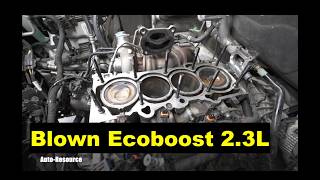
- Rough idle or engine misfires, especially on a cold start 🎬 See what a blown head gasket looks like on this engine. (indicates coolant in cylinders)
- Milky, frothy, or 'chocolate-milk' like appearance of the engine oil on the dipstick or oil cap
- Replacing the thermostat or water pump when the actual cause is an internal head gasket leak. It's critical to perform a cooling system pressure test and borescope inspection to rule out coolant intrusion before replacing other components.
Most Likely Causes

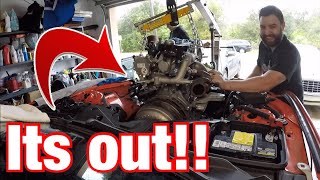
- Head Gasket Failure / Coolant Intrusion 🔴 High Probability A widely documented design issue in pre-2020 2.3L EcoBoost engines involves an 'open-deck' block that provides a weak sealing surface for the head gasket between cylinders, allowing coolant to leak into the combustion chamber. This has been the subject of class-action lawsuits. 🎬 Watch: Why these EcoBoost engines are prone to gulping coolant. The issue was so prevalent in other EcoBoost engines (1.5L, 2.0L) that Ford issued customer satisfaction programs for them.
How to confirm: Perform a cooling system pressure test; a loss of pressure with no external leaks points to an internal leak. Use a borescope to inspect cylinders for coolant (the piston top may look 'steam cleaned'). Check for white exhaust smoke, misfire codes (P0300-P0304, P0316), and milky, contaminated engine oil.
Typical fix: The only permanent fix is replacing the engine with a long block assembly that has the updated, semi-closed deck design. Simply replacing the head gasket on an early-style block is not considered a durable repair by many technicians. The updated OEM head gasket is part number EJ7Z-6051-E.
Est. part cost: $4000-$7000 for a new long block engine. A single head gasket is around $50-$100. - Faulty Thermostat 🟡 Medium Probability The thermostat housing on many modern Fords is made of plastic and can crack or warp over time, causing leaks or improper thermostat function.
How to confirm: After the engine has warmed up, feel the upper and lower radiator hoses. If the upper hose is hot and the lower hose is cold, coolant is not circulating, indicating the thermostat is likely stuck closed. An infrared thermometer can also be used to check for temperature differences.
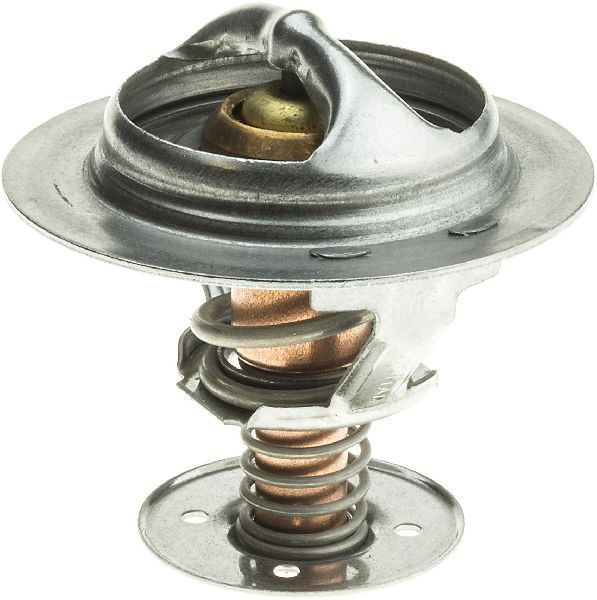
Typical fix: Replace the thermostat and housing assembly. It's recommended to use an OEM Motorcraft part. The Motorcraft thermostat assembly for the 2.3L EcoBoost is often part number RT-1233 or RT-1255.
Est. part cost: $50-$250 - Low Engine Coolant 🟡 Medium Probability Can be a symptom of the head gasket issue, but also caused by simple external leaks from components like the water pump, radiator hoses, or a cracked plastic thermostat housing.
How to confirm: Visually check the coolant level in the reservoir. If low, perform a cooling system pressure test to locate the source of the leak, which may be internal or external. Inspect all hoses, the radiator, and the water pump for visible signs of leaks (puddles, crusty orange or yellow residue).
Typical fix: Top off the system with Ford-specified Motorcraft VC-13-G (Yellow) coolant and repair any found leaks.
Est. part cost: $25-$100 depending on the leaking component (hose, clamp). - Failing Water Pump ⚪ Low Probability While not as common as head gasket failure, premature water pump failure can occur. As noted in NHTSA ODI #11639979 for a similar Ford platform, P0217 can be triggered by a coolant leak specifically at the water pump weep hole.
How to confirm: Listen for a high-pitched whining or grinding noise from the front of the engine that changes with RPM. Check for coolant leaking from the pump's weep hole (leaving crusty residue) or a wobbly pulley (with the engine off).
Typical fix: Replace the water pump and serpentine belt.
Est. part cost: $100-$250 - Cooling Fan Malfunction ⚪ Low Probability
How to confirm: With the engine warm and the A/C turned on, verify that the electric cooling fan(s) are spinning. If they are not, check the fan relay and fuse in the engine bay fuse box. A bidirectional scan tool can be used to command the fan on to test the circuit.
Typical fix: Replace the faulty cooling fan motor, relay, or fuse.
Est. part cost: $20-$300
Rare But Worth Checking
- Faulty Cylinder Head Temperature (CHT) Sensor: The 2.3L EcoBoost uses a CHT sensor, not a traditional ECT. This sensor can fail and send an incorrect high-temperature signal to the PCM, triggering code P0217 even if the engine is not actually overheating. This should be considered if no physical signs of overheating (steam, boiling) are present.
- Restricted Radiator: External debris (leaves, bags) blocking airflow or internal clogs from using incorrect coolant or sealant additives can reduce cooling efficiency and cause overheating.
Diagnosis Steps

- SAFE FIRST STEP: Pull over immediately and turn off the engine. Allow it to cool completely for several hours before proceeding.
- Check Coolant Level and Condition: Inspect the coolant reservoir (degas bottle). If it's low without any visible leaks, this is a major red flag for coolant intrusion. Note if the coolant appears milky or oily, which indicates contamination.
- Inspect for External Leaks: Carefully check all radiator hoses, the radiator itself, the thermostat housing, and the water pump for any signs of coolant leaks (puddles, crusty residue).
- Check Engine Oil: Remove the oil dipstick and check the oil cap. A milky, chocolate-milk-like consistency is a definitive sign of coolant mixing with the oil, indicating a blown head gasket or cracked block.
- Scan for Other Codes: Check for accompanying codes like P030x (misfires), P0316 (startup misfire), or P1299 (overtemperature protection), which strongly suggest an internal engine problem. NHTSA ODI #11650985 notes that P0217 often appears alongside P0302 and P0316 during engine failure events.
- Perform a Cooling System Pressure Test: This is the most critical diagnostic step. A pressure tester is attached to the coolant reservoir. Pressurize to the system's specified limit (e.g., 20 PSI) and monitor. Significant pressure loss with no external leaks points to an internal leak (head gasket/block). NHTSA ODI #11566450 describes a case where a cooling system was pressurized overnight, resulting in a loss of most pressure and confirmed coolant intrusion via borescope.
- Test Cooling Fan Operation: Start the cooled engine and turn on the air conditioning. The radiator fan should activate. If not, inspect the fan's fuse and relay. Use a scan tool with bidirectional controls to command the fan on for a definitive test.
- Inspect Thermostat Operation: Once the engine is warm, carefully feel the upper and lower radiator hoses. If one is hot and the other is cold, the thermostat is stuck closed.
- Borescope Inspection: If an internal leak is suspected, a mechanic will use a borescope through the spark plug hole to visually inspect for coolant inside the cylinders. A 'steam-cleaned' piston top is a tell-tale sign.
Parts You'll Likely Need
- Engine Long Block Assembly — This is the required fix for the most serious and common cause, coolant intrusion from a cracked or poorly sealed engine block.
- Engine Coolant Thermostat Assembly
(OEM #RT-1233 / RT-1255 (Motorcraft))— A common failure point in the cooling system that can get stuck closed, causing an overheat condition.
Related Codes That Often Appear With This One
- P0300, P0301, P0302, P0303, P0304 — These misfire codes are very common alongside P0217 when coolant intrusion is the cause. Coolant in the cylinder prevents proper combustion, leading to a misfire, especially on cold starts.
- P1299 — This Ford-specific code for 'Cylinder Head Overtemperature Protection Active' is often triggered with P0217 as the PCM takes drastic steps (like cutting fuel to injectors) to reduce engine temperature.
- P0316 — This code for 'Misfire Detected on Startup (First 1000 Revolutions)' is a strong indicator of coolant intrusion, as coolant that has seeped into a cylinder overnight will cause an immediate misfire upon starting the engine.
- P1285 — This code for Cylinder Head Over Temperature Condition is frequently stored in the PCM alongside P0217 and misfire codes when coolant intrusion occurs, as noted in NHTSA ODI #11609723.
Technical Service Bulletins (TSBs) & Recalls
- SSM 51754: Pertains to some 2023 Bronco, Ranger, and Explorer models with the 2.3L engine, built between March 27, 2023, and May 18, 2023. It warns of potential for a cracked engine block leading to coolant loss into the oil. The prescribed fix is a complete engine long block replacement.
- TSB 19-2346: While officially for the 2.0L EcoBoost in models like the Edge and Escape, this TSB is highly relevant as it describes the exact same failure mode (coolant intrusion) and lists P0217, P1299, and P030x as related codes. The official repair is a long block replacement, which mirrors the required fix for the 2.3L.
- TSB 22-2229: This bulletin acknowledges that codes P0217, P0300-P0304, P0316, P1285, and/or P1299 may be stored in the PCM due to coolant intrusion into the cylinder, as referenced in NHTSA ODI #11609723.
Platform-Specific Known Issues
- Owner Experience: Misfire to Engine Replacement: A 2018 Mustang EcoBoost owner on Reddit shared their experience of having an intermittent misfire. After a year of coolant levels dropping, they took the car to a dealer. The dealer tore down the engine and found a blown head gasket was leaking coolant into cylinder 3, which had been causing the misfire. Since the car was still under its powertrain warranty, the entire engine was replaced at no cost to the owner. This highlights the direct link between misfires, coolant loss, and the ultimate need for engine replacement for this issue.
Mechanic-Grade Diagnostic Values
- Cylinder Head Temperature (CHT) Sensor Resistance — expected: Approximately 2000-3000 Ω at 20°C (68°F) and 200-300 Ω at 90°C (194°F).. Failure: Resistance readings that are far outside the expected range for a given temperature, or an open/short circuit.
- Cylinder Head Temperature (CHT) Sensor Voltage (Signal Wire to Ground) — expected: Approximately 2.0V - 3.0V on a cold engine. Voltage should decrease smoothly to around 0.5V as the engine warms to operating temperature.. Failure: Voltage that is stuck high or low, or does not change with engine temperature. A reading of 5V indicates an open circuit or bad ground; 0V indicates a short to ground.
Scan Tool Commands That Help
- Ford IDS / FORScan / High-End Professional Scanner: Cooling Fan Control (On/Off/Variable Speed) — To definitively test the cooling fan motor and its control circuit. If the fan activates with the scan tool but not when the engine gets hot, the problem is more likely the CHT sensor or PCM logic, not the fan itself.
- Ford IDS / FORScan / High-End Professional Scanner: Live Data PID Monitoring (CHT, ECT_INFERRED) — To monitor the Cylinder Head Temperature (CHT) PID directly from the sensor and the inferred Engine Coolant Temperature (ECT) calculated by the PCM. This helps determine if the sensor is providing a plausible reading or if it's sending erratic data causing a false P0217.
Wiring & Ground Locations
- Cylinder Head Temperature (CHT) Sensor — On the 2.3L EcoBoost, the CHT sensor is typically located on the cylinder head, often near the coolant outlet housing above the turbocharger. On some variations, it may be on the back of the cylinder head on the driver's side.. The CHT sensor provides the primary temperature reading to the PCM for detecting an overheat condition. Damage to its wiring or a poor connection can cause a false P0217 code or fail to report a true overheat event.
- G105 — A common engine block ground point for various sensors. A TSB for a different EcoBoost engine mentions securing a harness containing ground G105, indicating its location on the engine itself.. A poor ground connection at G105 could potentially affect the CHT sensor's reference, leading to inaccurate temperature readings by the PCM.
Real Owner Repair Stories
- Reddit user in r/ecoboostmustang (2018 Ford Mustang EcoBoost, 42,000 miles) — Check engine light for cylinder 2 misfire, followed by a broken ceramic on a new spark plug, then a blown turbo. After replacing multiple parts, the car started sputtering and losing coolant internally with no external leaks.
❌ Tried (didn't work) Replacing spark plugs, Replacing ignition coil, Replacing fuel injector, Replacing turbocharger
✅ What actually fixed it The final diagnosis was 'ecoboom' - catastrophic internal engine failure due to coolant intrusion. The owner could not afford the ~$7500 repair cost for a new engine and installation and had to give the car back. - Reddit user in r/ecoboostmustang (2019 Ford Mustang EcoBoost, 37,500 miles) — Coolant leak, leading to engine failure diagnosis.
❌ Tried (didn't work) Initial diagnosis did not specify parts replaced before the final verdict.
✅ What actually fixed it Owner had to pay $10,700 to replace the engine after Ford denied the warranty claim. The owner joined a class-action lawsuit regarding the issue. - NHTSA ODI #11520798 — An owner reported being towed to a dealership after a local shop could not diagnose the issue. The dealer retrieved codes P0217, P0302, P0316, and P1285, and upon pulling the coil and plug, found coolant in Cylinder 2.
"I Checked Everything" — The Actual Cause
- In the context of P0217 on this engine, the equivalent scenario is a cooling system pressure test that passes, yet the engine still overheats. One user on a forum reported their dealer performed a pressure test which found no leaks, only for the engine to require replacement 1,000 miles later due to coolant intrusion. This can happen if the leak from the head gasket is very small and only opens up under specific temperature and pressure conditions (i.e., when the engine is running and hot), which are not replicated during a static, cold pressure test.
OEM Part Supersession History
EJ7Z-6051-B (or earlier)→EJ7Z-6051-E— The original head gasket design was prone to failure on the open-deck block, allowing coolant to leak into the cylinders. The updated 'E' revision is part of the fix for the coolant intrusion issue, intended for use with the revised engine block design.
Heads up: While the new gasket may physically fit an older block, many technicians report that simply replacing the gasket on a pre-2020 open-deck block is not a durable, long-term repair for coolant intrusion.
Model Year Variations Within This Range
- 2015-2019: These model years feature the original 'open-deck' engine block design, which is highly susceptible to head gasket failure and coolant intrusion between the cylinders.
- 2020-2024: Starting around the 2020 model year, Ford implemented a revised engine block with a 'semi-closed deck' design and an updated head gasket (EJ7Z-6051-E), significantly reducing the likelihood of the common coolant intrusion failure.
- 2023 (specific build dates): A batch of 2.3L engines built between March and May 2023 for Ranger, Bronco, and Explorer models were subject to Customer Satisfaction Program 23B42 due to engine block cracks caused by a damaged manufacturing tool. This required a full long block replacement.
Diagnostic Flowchart
Used vs. New Parts: Buying Guide for This Vehicle
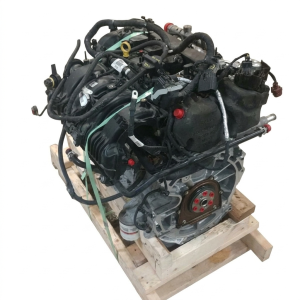
When a used part is the smart pick: For a P0217 caused by a failed cooling fan, water pump, or thermostat housing, a used part from a low-mileage donor vehicle can be a cost-effective option. However, for the primary failure mode (coolant intrusion requiring engine replacement), buying a used engine is a high-risk but potentially viable option if done carefully.
Donor-vehicle mileage cap: roughly under 50000 miles for the part to have meaningful remaining life.
What to inspect on the donor part:
- **For Engine Replacement:** CRITICAL: Verify the donor engine is from a 2020 or newer model to ensure it has the updated semi-closed deck block design. Ask for the VIN of the donor car to confirm its model year.
- Check for any signs of overheating on the used engine itself (discolored plastic, melted connectors).
- If possible, have a borescope inspection performed on the used engine's cylinders before purchase to check for signs of prior coolant intrusion.
- Look for maintenance records or a vehicle history report from the donor car.
- Inspect for external oil or coolant leaks, especially around the turbo, valve cover, and water pump.
OEM-only on this vehicle (don't cheap out):
- Engine Long Block: Due to the specific design flaw, replacing a failed engine with anything other than a new or remanufactured OEM long block with the updated design is extremely risky.
- Cylinder Head Temperature (CHT) Sensor: This is a critical sensor. While some premium aftermarket brands are reliable, the cost difference is often small enough that using an OEM Motorcraft sensor is the safest choice to avoid false readings.
Aftermarket brands forum-validated for this vehicle:
- Thermostat: Motorcraft (OEM), Gates, Stant
- Water Pump: Motorcraft (OEM), Gates, AISIN
Brands owners have reported issues with on this vehicle:
- Unbranded, 'white-box' electronic sensors (like CHT sensors) from online marketplaces should be avoided as their accuracy and longevity are questionable.
Real Owner Stories
Aggregated from forums and TSBs cited above. Mileages and costs reflect what owners reported in those sources.
2018 Mustang EcoBoost 2.3L
Symptoms: Owner experienced an intermittent misfire and noticed coolant levels dropping over the course of a year.
What fixed it: The dealer found a blown head gasket leaking coolant into cylinder 3. The entire engine was replaced under the powertrain warranty.
Source hint: Reddit r/Mustang/comments/v8j40d/2018_ford_mustang_ecoboost_23l_coolant_leak/
2015 Mustang
Symptoms: Owner reported coolant loss without any signs of overheating.
What fixed it: The issue was not resolved in the thread, but another user suggested checking the water pump, noting that early models (2015/2016) had issues with them failing intermittently, sometimes even after passing a pressure test.
Source hint: Mustang6G.com thread titled 'coolant loss'
Related OBD-II Codes
Frequently Asked Questions
Is head gasket failure a known issue on the 2.3L EcoBoost Mustang?
If my head gasket is blown, is just replacing the gasket a good enough fix?
What is the part number for the updated OEM head gasket?
What type of coolant should I use for my 2015-2024 Mustang EcoBoost?
I have a 2023 Mustang. Does TSB SSM 51754 about cracked engine blocks apply to my car?
Why is TSB 19-2346 for the 2.0L engine relevant to my 2.3L Mustang?
My engine oil looks like 'chocolate milk'. What does this mean for my Mustang?
Helpful Videos


Used OEM Parts in Stock
New Aftermarket Parts Available


The information in this article is provided for general reference and educational purposes only. Vehicle specifications, procedures, and part compatibility can vary by production date, trim level, and region. Always consult your vehicle's factory service manual and verify part numbers before purchasing or performing repairs. Safety-critical components such as airbags, seat belts, and braking systems should be installed by a qualified professional.
- Ford Mustang:
- 🎬 Helpful Videos
- 🛍️ Shop This Part
- What's Unique About the 2015-2024 Ford Mustang
- Symptoms You May Notice
- Most Likely Causes
- Rare But Worth Checking
- Diagnosis Steps
- Parts You'll Likely Need
- Related Codes That Often Appear With This One
- Technical Service Bulletins (TSBs) & Recalls
- Platform-Specific Known Issues
- Mechanic-Grade Diagnostic Values
- Scan Tool Commands That Help
- Wiring & Ground Locations
- Real Owner Repair Stories
- "I Checked Everything" — The Actual Cause
- OEM Part Supersession History
- Model Year Variations Within This Range
- Diagnostic Flowchart
- Used vs. New Parts: Buying Guide for This Vehicle
- Real Owner Stories
- 2018 Mustang EcoBoost 2.3L
- 2015 Mustang
- Related OBD-II Codes
- Frequently Asked Questions
- 🎟️ Get 5% Off