

P0217 on 2015-2020 Ford Edge: Engine Overtemperature Causes and Fixes
P0217 on a 2015-2018 Ford Edge with the 2.0L EcoBoost engine is a critical warning that often points to a known defect causing coolant to leak into the engine's cylinders. This is a severe issue, subject to multiple class-action lawsuits, that can require a full engine replacement. Do not drive the vehicle and seek professional diagnosis immediately. For 2019-2020 models, the cause may be a leaking EGR cooler.
- P0217 on a 2015-2018 Ford Edge 2.0L is a critical alert that requires you to stop driving immediately to prevent catastrophic engine failure.
- This code is strongly linked to a known Ford engine defect causing coolant to leak into the cylinders, a repair that often costs thousands of dollars for an engine replacement.
- Diagnosis must begin by testing for an internal coolant leak (combustion gases in coolant) before considering simpler fixes like a thermostat or sensor.
- Always reference Ford's Technical Service Bulletins, especially TSB 22-2229, when diagnosing this code on this specific vehicle.
- Do not simply clear the code and continue driving; the underlying problem is severe and will lead to further damage.
What's Unique About the 2015-2020 Ford EDGE

On the 2015-2018 Ford Edge with the 2.0L EcoBoost engine, P0217 is not just a generic overheat code; it's a well-documented symptom of a serious, inherent engine design flaw. This defect, which has led to multiple class-action lawsuits, involves a weakness in the engine block's open-deck design that allows coolant to seep past the head gasket into the combustion chamber. Multiple Ford Technical Service Bulletins (TSBs), culminating in TSB 22-2229, link this code directly to coolant intrusion and specify that a complete long block replacement is the only official fix.
Diagnostic Flowchart

Tap your situation to follow the diagnostic path that matches what you're seeing on this vehicle.
Symptoms You May Notice

- High reading on the engine temperature gauge
- "Engine Coolant Over Temperature" warning light on the dashboard
- Check Engine Light illuminated
- Noticeably low coolant level without visible external leaks
- White smoke coming from the tailpipe (from coolant burning in the engine)
- Sweet smell from the exhaust or engine bay
- Engine running rough or misfiring, especially on a cold start
- Reduced engine power as the vehicle enters a protective "limp mode"
- Boiling sounds from the engine bay
- Replacing the thermostat, water pump, or ECT sensor on a 2015-2018 model without first definitively ruling out the much more common and serious coolant intrusion issue. This wastes time and money while the root cause continues to damage the engine.
Most Likely Causes

- Coolant Intrusion into Cylinders (2.0L EcoBoost Engine Defect) 🔴 High Probability A known design flaw in the open-deck engine block of 2015-2018 models allows coolant to leak into the cylinders, particularly between cylinders 2 and 3. This is documented extensively in Ford TSBs like 22-2229 and its predecessors (19-2346, etc.) and is the subject of multiple class-action lawsuits.
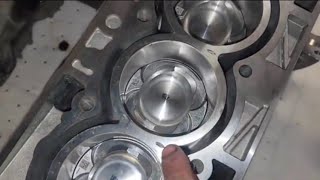
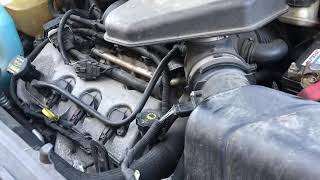
How to confirm: A technician will perform a cooling system pressure test. If it fails with no external leaks, a borescope is used to inspect the cylinders for coolant (appearing as an unusually clean or shiny piston top), as detailed in TSB 22-2229. 🎬 Watch: A dealer technician diagnoses coolant loss and a rough idle. A chemical block test can also detect exhaust gases in the coolant.
Typical fix: Replacement of the engine long block assembly is the official Ford-recommended repair. Ford updated the block design around 2020 to correct the flaw. 🎬 See this deep dive into the EcoBoost coolant intrusion design flaw.
Est. part cost: $3,400-$4,300 - Faulty Engine Coolant Temperature (ECT) Sensor or Wiring 🟡 Medium Probability TSB SSM 48991 specifically notes that issues with the ECT sensor or its wiring harness can cause false overheating warnings and trigger P0217. This is a common point of failure before suspecting more complex mechanical issues.
How to confirm: Monitor the live ECT data on a scan tool for erratic or illogical readings (e.g., jumping from cold to hot instantly). Test the sensor's resistance with a multimeter and inspect the wiring harness for damage, especially near the connector.
Typical fix: Replace the ECT sensor and/or repair the damaged wiring.
Est. part cost: $25-$75 - Stuck Thermostat ⚪ Low Probability
How to confirm: With the engine warming up, feel the upper radiator hose. If it doesn't get hot as the temperature gauge climbs, the thermostat is likely stuck closed, preventing coolant circulation.
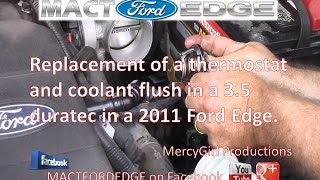
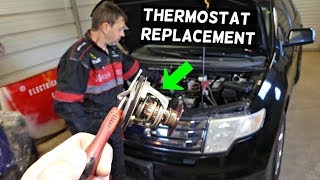
Typical fix: Replace the thermostat and gasket/housing. 🎬 Watch: How to locate and replace the thermostat on a Ford Edge.
Est. part cost: $40-$100 - Failing Water Pump ⚪ Low Probability While less common on the 2.0L than the coolant intrusion defect, a standard water pump failure can still occur. NHTSA complaint #11639979 for a 2017 Edge with P0217 was diagnosed as a leaking water pump.
How to confirm: Check for coolant leaks from the pump's weep hole or listen for grinding/whining noises from the pump bearing area. A loss of cooling performance can also indicate a failing impeller.
Typical fix: Replace the water pump and serpentine belt.
Est. part cost: $100-$300
Rare But Worth Checking
- Leaking EGR Cooler (2019-2020 Models): For 2019-2020 Edge models, TSB 20-2234 points to a leaking EGR cooler as a potential cause for P0217 and similar symptoms like low coolant and white smoke. This should be investigated before suspecting the engine block on these later model years.
- Clogged Radiator or Cooling Fan Failure: A standard cooling system failure, such as a radiator blocked by debris or a non-functioning electric cooling fan, can cause a genuine overheat condition. These should be checked as part of a basic diagnosis.
Diagnosis Steps
- STOP DRIVING. If the temperature gauge is high or a warning is displayed, turn off the engine immediately to prevent damage.
- Verify the overheat condition. Use an infrared thermometer to check the temperature of the cylinder head. If it's not actually hot (e.g., over ~230°F), suspect a faulty ECT sensor or wiring.
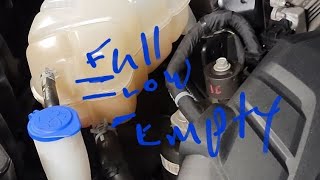
- Check the coolant level in the expansion tank. If it is low with no visible external leaks, this is a key symptom of internal coolant loss.
- Perform a cooling system pressure test. If the system loses pressure but there are no visible external leaks, an internal leak is highly likely.
- Perform a chemical block test (combustion leak test). This test will detect exhaust gases in the coolant, which confirms a breach between the combustion chamber and coolant passages.
- If an internal leak is confirmed on a 2015-2018 model, follow Ford's procedure in TSB 22-2229: remove spark plugs and use a borescope to visually inspect for coolant inside the cylinders. Look for an unusually clean piston top.
- If diagnosing a 2019-2020 model, inspect the EGR cooler for leaks per TSB 20-2234 before condemning the engine block.
- If no internal leak is found, diagnose other components: test the ECT sensor and its wiring, verify cooling fan operation, and check the thermostat and water pump function.
Parts You'll Likely Need

- Engine Long Block Assembly
(OEM #J2GZ-6006-E)— This is the official Ford-recommended fix for the common coolant intrusion issue on the 2015-2018 2.0L EcoBoost engine.
Trusted brands: Motorcraft (OEM)
OEM price range: $3400-$4500
Aftermarket price range: $4000+ - Engine Coolant Temperature (ECT) Sensor — If the overheat condition is not real, a faulty sensor is a likely cause, as noted in TSB SSM 48991.
Trusted brands: Motorcraft, Bosch, NTK
OEM price range: $40-$70
Aftermarket price range: $25-$50 - Thermostat Assembly
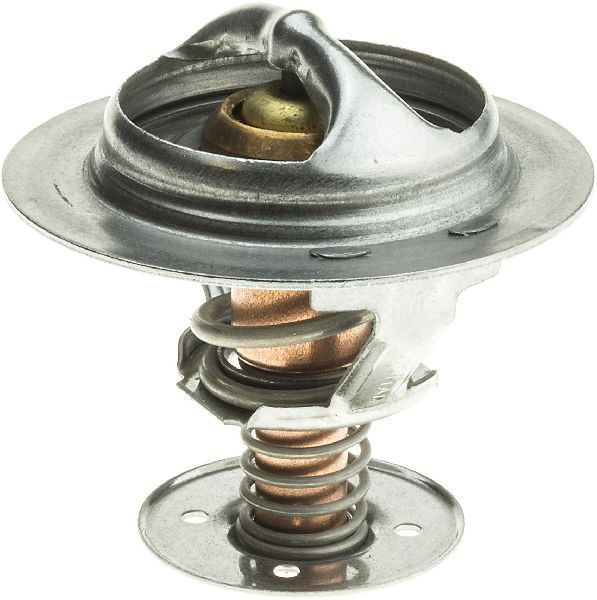
(OEM #FR3Z-8575-A / RT1233)— A stuck thermostat is a classic cause of engine overheating in any vehicle. It should be ruled out if no internal leak is found.
Trusted brands: Motorcraft
OEM price range: $60-$100
Aftermarket price range: $40-$80
Related Codes That Often Appear With This One
- P0300, P0301, P0302, P0303, P0304 — These are random and specific cylinder misfire codes that occur when coolant intrudes into the cylinders, fouling spark plugs and preventing proper combustion. They are hallmark codes of the engine defect.
- P1299 — This Ford-specific code for 'Cylinder Head Overtemperature Protection Active' is often stored alongside P0217 as the PCM tries to protect the engine by reducing power.
- P0316 — Misfire Detected on Startup (First 1000 Revolutions). This is frequently seen with coolant intrusion, as the coolant that has pooled in a cylinder overnight causes an immediate misfire upon starting.
- P0128 — 'Coolant Thermostat Rationality Check' can appear if the thermostat is stuck or if sensor readings are illogical due to air pockets or coolant loss from the primary failure.
Technical Service Bulletins (TSBs) & Recalls
- TSB 22-2229: Supersedes previous versions, details the coolant intrusion issue in 2015-2018 2.0L EcoBoost engines and confirms the fix is to replace the long block assembly.
- TSB 20-2234: Addresses P0217 and coolant loss on 2019-2020 Edge/Nautilus 2.0L models, pointing to a potentially faulty EGR cooler and/or a PCM software update as the cause, rather than the engine block flaw of earlier years.
- TSB 19-2346: An earlier version of the coolant intrusion bulletin, superseded by TSB 22-2229. It also identified the problem and recommended long block replacement for affected vehicles.
- SSM 48991: Special Service Message for various models including the Edge, noting that false overheating warnings (P0217, P1299) can be caused by the ECT sensor or knock sensor wiring harness.
- SSM 48345: Notes that a leaking EGR cooler can cause coolant consumption, white smoke, and overheating codes like P0217, providing an alternative diagnosis to the main engine block flaw.
Platform-Specific Known Issues
- Coolant Intrusion Defect (2015-2018 Models): 2015-2018 Edge models with the 2.0L EcoBoost are subject to multiple TSBs (including 22-2229, 20-2234, 19-2346) for a defect where coolant leaks into the cylinders. This is the most probable and serious cause of P0217 on these vehicles and typically requires a complete engine replacement.
Mechanic-Grade Diagnostic Values
- Engine Coolant Temperature (ECT/CHT) Sensor Resistance — expected: At 20°C (68°F), resistance should be 2000-3000Ω. At 90°C (194°F), resistance should be 200-300Ω. A service manual shows a value of ~302Ω at 182°F (83°C).. Failure: An open circuit (infinite resistance) or a short (zero resistance) indicates a failed sensor. Readings that do not change with temperature are also a sign of failure.
- Engine Coolant Temperature (ECT/CHT) Sensor Voltage — expected: With the key on and engine cold, the signal voltage should be between 2.0V and 3.0V. As the engine warms up, this voltage will decrease.. Failure: A voltage reading of 5.0V indicates an open circuit (unplugged sensor or broken wire). A reading of 0V indicates a short to ground.
Scan Tool Commands That Help
- Ford IDS (Integrated Diagnostic System): Self-Test: Key On Engine Off (KOEO) & Key On Engine Run (KOER) — This is a primary function to retrieve all continuous, on-demand, and pending DTCs from the PCM, including P0217 and related codes like P1299.
- Ford IDS (Integrated Diagnostic System): Datalogger / Live Data — To monitor the ECT or CHT sensor reading in real-time to check for erratic behavior or to confirm if the temperature reading matches the actual engine temperature measured with an external device. This helps differentiate a real overheat from a sensor fault.
- Aftermarket Bi-Directional Scanners (e.g., FOXWELL NT710): Active Test: Cooling Fan Activation / EVAP Test — Allows the technician to command the cooling fans to turn on, verifying the functionality of the fan motors, relays, and wiring, which helps rule them out as a cause of overheating.
Wiring & Ground Locations
- ECT/CHT Sensor Connector — The Cylinder Head Temperature (CHT) sensor, which Ford uses in place of a traditional ECT on this engine, is located on the cylinder head. The connector is a 2-wire pigtail.. TSBs SSM 48991 and SSM 47791 specifically call out a damaged wiring harness or a connector that is not fully seated as a potential cause for false overheat warnings and P0217.
- Main Engine/Chassis Grounds — There are two easily accessible ground points located on the front frame rails, visible after removing the front bumper cover. Another primary ground point connects the negative battery cable to the side of the engine block.. A poor ground connection for the engine sensors or the PCM can cause incorrect sensor readings, potentially leading to a false P0217 code.
Real Owner Repair Stories
- Reddit user in r/fordescape (2017 Ford Escape 2.0L EcoBoost, failure at ~59k miles) — Coolant seen in the oil.
❌ Tried (didn't work) Not specified; the user took it directly to Ford.
✅ What actually fixed it The dealership diagnosed faulty coolant channels consistent with the known TSBs and replaced the engine with a new long block that has the updated design. The user reported the vehicle ran perfectly for another ~58k miles after the replacement.
OEM Part Supersession History
J2GZ-6079-C→J2GZ-6079-D— Part number update for the Engine Installation Gasket Kit required for the long block replacement.
Heads up: J2GZ-6079-C is the kit specified in TSB 22-2229, but has been superseded by J2GZ-6079-D.JJ7Z-6006-B, JS7Z-6006-A, JS7Z-6006-C→J2GZ-6006-E— These are previous part numbers for the 2.0L long block assembly, which have been superseded by the updated design that corrects the coolant intrusion flaw.
Model Year Variations Within This Range
- 2015-2019: These model years use the second-generation 2.0L EcoBoost with an open-deck aluminum block design that has a coolant channel machined between the cylinders. This design is the root cause of the coolant intrusion defect.
- 2020: For the 2020 model year, Ford revised the 2.0L EcoBoost engine block, removing the coolant slit between the cylinders to resolve the head gasket sealing issue and prevent coolant intrusion. While generally more reliable, some forum users report failures even on post-2019 models, though it is less common.
Helpful Videos
Used OEM Parts in Stock


New Aftermarket Parts Available


The information in this article is provided for general reference and educational purposes only. Vehicle specifications, procedures, and part compatibility can vary by production date, trim level, and region. Always consult your vehicle's factory service manual and verify part numbers before purchasing or performing repairs. Safety-critical components such as airbags, seat belts, and braking systems should be installed by a qualified professional.
- Ford EDGE:
- 🎬 Helpful Videos
- 🛍️ Shop This Part
- What's Unique About the 2015-2020 Ford EDGE
- Diagnostic Flowchart
- Symptoms You May Notice
- Most Likely Causes
- Rare But Worth Checking
- Diagnosis Steps
- Parts You'll Likely Need
- Related Codes That Often Appear With This One
- Technical Service Bulletins (TSBs) & Recalls
- Platform-Specific Known Issues
- Mechanic-Grade Diagnostic Values
- Scan Tool Commands That Help
- Wiring & Ground Locations
- Real Owner Repair Stories
- OEM Part Supersession History
- Model Year Variations Within This Range
- 🎟️ Get 5% Off