

P0217 on 2019-2024 Chevrolet Silverado 6.2L V8: Engine Overheat Causes and Fixes
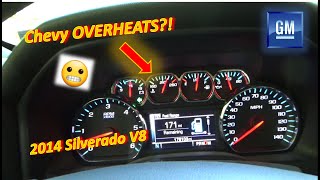
P0217 means your engine is overheating. Immediately stop driving to prevent severe damage. The most common causes are low coolant from a leak, a faulty thermostat, or a failing water pump, which has been subject to a specific customer satisfaction program on this platform.
- P0217 is a critical overheating code requiring immediate attention.
- Primary causes are low coolant, faulty thermostat, or failing water pump.
- A specific GM program (N202320510) addresses water pump failures on some 2020-2021 models.
- Do not drive the vehicle while it is overheating to avoid severe engine damage.
What's Unique About the 2019-2024 Chevrolet Silverado
For the 2019-2024 Silverado with the 6.2L V8 (L87), the cooling system is robust but has specific points of failure. While the core causes of overheating are universal, GM issued a Customer Satisfaction Program (N202320510) for some 2020-2021 models due to potential water pump failures from an incorrectly manufactured printed circuit board inside the pump. This specific failure mode can trigger a sequence of escalating warnings before a potential engine shutdown. Additionally, service bulletins point to unique potential issues like coolant leaks from cylinder head bosses (TSB 22-NA-047) and overheating caused by incorrectly installed head gaskets from prior repairs (TSB 22-NA-216). More broadly, 2021-2024 models with the 6.2L L87 are part of a recall (N252494001) for internal engine issues, which now mandates a permanent switch to 0W-40 oil instead of the original 0W-20 to improve lubrication and thermal stability.
Symptoms You May Notice
- Temperature gauge reading in the red or at maximum
- Check Engine Light is on
- Message on the driver information center indicating engine overheat or reduced power
- Steam or smoke coming from the engine bay
- Audible boiling or gurgling sounds from the engine
- Noticeable loss of engine power as the ECM tries to protect the engine
- A sweet smell of coolant from outside the vehicle
- A/C system blows warm air or is automatically disabled by the ECM
- Replacing the ECT sensor when the engine is actually overheating. The sensor is often doing its job correctly by reporting the high temperature.
- Replacing the radiator cap without testing. While a faulty cap can cause issues, it's less common than leaks, thermostat, or water pump failures on this platform.
Most Likely Causes
- Low Engine Coolant 🔴 High Probability Leaks can develop in hoses, the radiator, water pump seal, or thermostat housing. GM TSB 22-NA-047 specifically identifies a potential coolant leak from the outer head bolt boss area on the cylinder head for some GM trucks. Another TSB, N212326940, addressed leaking engine oil cooler lines on 2019 models, which can cause coolant loss if the systems are linked through the radiator.
How to confirm: With the engine completely cool, check the coolant level in the transparent reservoir. If it is below the 'MIN' line, you have a leak. A cooling system pressure test can pinpoint the source of the leak. Check for coolant residue near the cylinder head bolt bosses.
Typical fix: Top off the coolant and locate and repair the leak. This could involve replacing a hose, clamp, radiator, or addressing a specific TSB-identified leak point.
Est. part cost: $10 (hose clamp) - $400 (radiator) - Faulty Thermostat 🟡 Medium Probability Thermostats can fail by getting stuck in the closed position, which prevents coolant from flowing to the radiator. A thermostat stuck open would typically cause a P0128 code (engine running too cool), not P0217.
How to confirm: After starting a cold engine, feel the upper radiator hose. It should remain cool for several minutes and then get hot suddenly as the thermostat opens. If it stays cool or only warms slowly while the engine temperature gauge climbs into the red, the thermostat is likely stuck closed.
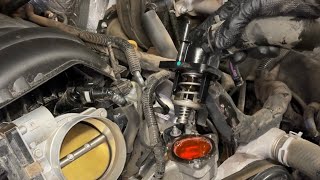
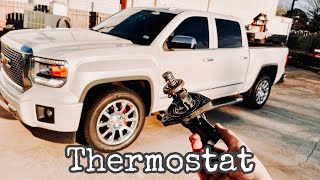
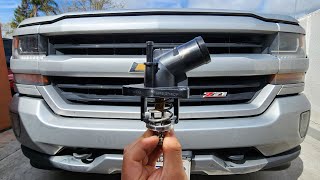
Typical fix: Replace the engine coolant thermostat and housing assembly. It is recommended to use an OEM part. An example OEM part number for the thermostat housing assembly for this generation is 12674639, which has been superseded by 19474058. 🎬 Watch: How to replace the thermostat assembly
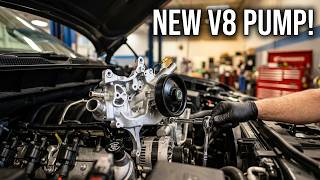
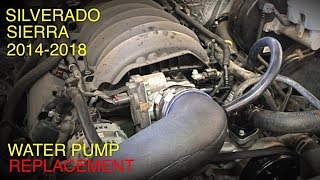
Est. part cost: $50-$150 - Failing Water Pump 🟡 Medium Probability The water pump circulates coolant. Customer Satisfaction Program N202320510 was issued for some 2020-2021 models due to a manufacturing defect in the water pump's internal printed circuit board that could cause failure. Beyond the TSB, standard failures like a leaking seal or a damaged impeller can also occur.
How to confirm: Look for coolant leaks from the 'weep hole' on the bottom of the water pump. Listen for grinding or whining noises from the front of the engine that change with RPM. With the engine off and belt removed, check the water pump pulley for excessive play. A scan tool may show code P2B85 in conjunction with P0217 if the failure is related to the electronic issue noted in TSB N202320510.
Typical fix: Replace the water pump assembly. OEM part numbers vary by year and specific build, but a common number is 12685257.
Est. part cost: $150-$400 - Cooling Fan Malfunction ⚪ Low Probability These trucks use electric cooling fans. A failure in the fan motor, control module, or associated wiring can cause overheating, especially in stop-and-go traffic or at idle.
How to confirm: With the engine getting warm (or by turning on the A/C), verify that the cooling fans are running. If they are not, check the fuses and relays first. A scan tool can often command the fans to turn on for testing.
Typical fix: Replace the faulty cooling fan assembly, relay, or repair the wiring.
Est. part cost: $20 (relay) - $500 (fan assembly) - Radiator Blockage ⚪ Low Probability Debris like leaves and plastic bags can block airflow through the front of the radiator, reducing its efficiency. Internal blockages from old or incorrect coolant can also occur, but are less common on newer vehicles. TSB 22-NA-240 notes that in rare cases, block porosity can cause oil to contaminate the cooling system, leading to blockages and overheating.
How to confirm: Visually inspect the front of the radiator and A/C condenser for debris. An infrared thermometer can be used to check for cool spots on the radiator surface, which would indicate an internal clog. Check coolant reservoir for signs of oil contamination.
Typical fix: Clean external debris from the radiator fins. An internal blockage may require a professional flush or radiator replacement. If oil is present, the root cause of the oil leak into the coolant must be addressed, which could be a major repair.
Est. part cost: $0 (cleaning) - $400 (radiator replacement)
Rare But Worth Checking
- Blown or Incorrectly Installed Head Gasket: This is a major engine issue. TSB 22-NA-216 warns that if a head gasket was replaced during a prior repair and installed backwards, it can restrict coolant flow and cause overheating. A standard failed head gasket can also allow hot exhaust gases into the cooling system, causing rapid overheating. This is usually accompanied by other symptoms like white smoke from the exhaust or coolant in the oil.
- Faulty Engine Coolant Temperature (ECT) Sensor: It is rare for the sensor itself to cause a true overheat condition, but a faulty sensor can incorrectly report a high temperature, triggering the P0217 code and limp mode. This should be verified by comparing the sensor reading on a scan tool to the actual engine temperature with an infrared thermometer.
Diagnosis Steps
- SAFETY FIRST: Do not open the coolant reservoir or radiator cap when the engine is hot. Allow the vehicle to cool down completely for several hours.
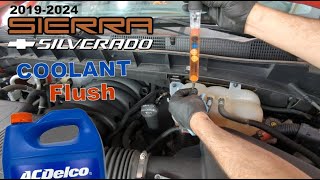
- Check Coolant Level and Condition: Inspect the coolant reservoir. If the level is low, you have a leak. The coolant should be pink/orange (Dex-Cool) and free of debris or an oily film. 🎬 See how to flush and exchange your coolant
- Scan for Codes: Use an OBD-II scanner to confirm P0217 and check for any other related codes, such as P2B85 or P0128.
- Visual Inspection: Look for obvious signs of coolant leaks (puddles, wet spots, white or colored residue) around hoses, the radiator, water pump, and thermostat housing. Pay special attention to the cylinder head area per TSB 22-NA-047.
- Check Cooling Fan Operation: Start the engine and turn on the air conditioning. Both cooling fans should activate. If not, investigate the fan circuit (fuses, relays, wiring).
- Perform a Cooling System Pressure Test: This tool pressurizes the system, making it much easier to find small leaks that may not be obvious.
- Test the Thermostat: With a cold engine, start it and monitor the temperature of the upper radiator hose. It should stay cool and then get hot quickly. If it heats up slowly or never gets hot as the engine overheats, the thermostat is likely stuck closed.
- Inspect Water Pump: Check for leaks from the weep hole and listen for any grinding or whining noises from the pump pulley area. Check for play in the pulley shaft (with the engine off).
- Check for Blockages: Ensure the front of the radiator is clear of debris.
- Check Head Gasket Installation (if applicable): If the engine has had prior major service, check the orientation of the head gasket locating tabs per TSB 22-NA-216 to ensure they are not installed backwards.
Parts You'll Likely Need
- Engine Coolant Thermostat and Housing
(OEM #12674639)— A stuck-closed thermostat is a common cause of overheating. This part is often replaced as a complete assembly. - Water Pump
(OEM #12685257)— The water pump is a known failure point, subject to a customer satisfaction program for electronic issues and also prone to standard mechanical failures like leaks or impeller problems. - Dex-Cool Engine Coolant — Any repair involving draining the cooling system will require replacement coolant.
Related Codes That Often Appear With This One
- P0128 — P0128 (Coolant Temperature Below Thermostat Regulating Temperature) can appear if the thermostat is stuck open, while P0217 occurs when it's stuck closed. Seeing one after the other might point to an intermittent thermostat issue.
- P2B85 — This code, 'Engine Coolant Water Pump Control Circuit High', is specifically mentioned in GM Customer Satisfaction Program N202320510 as a related DTC that will set in the ECM when the water pump fails due to an internal electronic defect.
Technical Service Bulletins (TSBs) & Recalls
- N202320510: Customer Satisfaction Program for potential water pump failure on 2020-2021 models.
- 22-NA-216: Information on overheating caused by incorrectly installed head gaskets.
- 22-NA-047: Information on coolant leaks due to cylinder head porosity.
- PI1513E: Older bulletin for 2014-2016 models regarding radiator leaks caused by excessive thermostat cycling. While for an older generation, it highlights the thermostat's importance in system longevity.
Platform-Specific Known Issues
- Backward Head Gasket Installation: Per TSB 22-NA-216, if the vehicle has had prior service requiring cylinder head removal, it's possible for a head gasket to be installed backward. This incorrect installation blocks coolant passages, restricting flow and directly causing an engine overheat condition (P0217).
- Cylinder Head Coolant Leak: TSB 22-NA-047 notes a specific condition where a coolant leak may develop at the outer head bolt boss on the cylinder head, leading to coolant loss that can cause an overheat situation.
- Water Pump Electronic Failure: Customer Satisfaction Program N202320510 was initiated for some 2020-2021 models because an internal printed circuit board (PCB) in the water pump could fail, stopping coolant circulation. This specific failure is often accompanied by DTC P2B85.
Mechanic-Grade Diagnostic Values
- Engine Coolant Temperature (ECT) Sensor Resistance — expected: Approximately 2200-2800 Ohms at 68°F (20°C) and 270-380 Ohms at 176°F (80°C).. Failure: A reading that is infinite (open circuit) or near zero (short circuit), or values that do not correspond with the actual coolant temperature.
- Engine Coolant Temperature (ECT) Sensor Signal Voltage — expected: Approximately 2.0V - 3.0V on a cold engine, dropping as the engine warms. The range is typically ~4.5V at very cold temperatures (e.g., 0°C) to ~0.5V at very hot temperatures (e.g., 150°C).. Failure: A static voltage that does not change as the engine warms up, or a voltage that is stuck at the high or low end of the range regardless of temperature.
- P0217 Trigger Threshold (Scan Tool Live Data) — expected: Normal operating temperature is around 190-215°F. The P0217 code typically sets when the ECM sees a temperature exceeding 240-260°F (115-127°C).. Failure: Confirming the temperature in the freeze frame data for the P0217 code is within this range validates a true overheat event occurred.
Scan Tool Commands That Help
- GDS2 (GM Dealer Tool): Cooling Fan Control — To diagnose a non-running cooling fan. A technician can use this bidirectional command to turn the fans on and off, bypassing the normal triggers. If the fans run with the command, the fan motors are good, and the problem lies in the control circuit (sensor, wiring, relay, or ECM).
- GDS2 (GM Dealer Tool): Data Display / Live Data Monitoring — To diagnose complex flow issues. A technician can monitor multiple temperature sensors simultaneously (e.g., ECT1, ECT2, heater core inlet/outlet temps). A large discrepancy between sensors can indicate a blockage, a stuck thermostat, or a failing water pump not circulating coolant effectively through the entire system.
Wiring & Ground Locations
- Engine Coolant Temperature (ECT) Sensor — Typically located on the top of the engine, near the thermostat housing on the 6.2L V8.. This sensor provides the primary temperature reading to the ECM. A corroded connector or damaged wiring at this location can cause false overheat signals or a loss of signal, leading to improper engine management.
- Engine Wiring Harness Chafe Points — General inspection area: Check where the main engine harness routes near the front corners of the cylinder heads and around accessory drive brackets.. Vibrations can cause the wiring harness to rub against sharp metal edges, potentially shorting out the ECT sensor circuit or other critical wiring. While specific TSBs may point to other engines, this is a common failure pattern on modern, tightly-packaged V8s.
- Main Engine Grounds — Key grounds are typically located on the rear or side of the cylinder heads and from the engine block to the firewall or frame.. A poor ground connection for the ECT sensor circuit can cause incorrect voltage readings, leading the ECM to misinterpret the engine's actual temperature. Ensuring all engine-to-chassis ground straps are clean and tight is a critical step in diagnosing elusive electrical issues.
"I Checked Everything" — The Actual Cause
- In a cooling system, the equivalent is a 'pressure test holds, but it still overheats'. This happens when the issue isn't a leak but a flow restriction. TSB 22-NA-216 is a prime example: a head gasket installed backwards during a previous repair will pass a pressure test but will block critical coolant passages, causing an overheat under load. Similarly, a failing water pump with a slipping impeller might not leak but won't circulate coolant effectively, a condition a static pressure test cannot detect.
OEM Part Supersession History
12674639 (Thermostat Housing Assembly)→19474058— Standard part revision and improvement by the manufacturer.
Heads up: The new part number is the correct service replacement for the original. It replaces several older numbers including 12666569, 12671393, and 12657137.12681258, 12674640, 12671394 (Water Pump)→12685257— Consolidation of previous part numbers into a revised service part.
Heads up: 12685257 is the current OEM replacement for several previous iterations used on the L87 engine platform.
Model Year Variations Within This Range
- 2021-2024: Models within these years equipped with the 6.2L L87 V8 are subject to recall N252494001 for potential connecting rod and crankshaft defects. The official GM remedy, if the engine passes inspection, includes a mandatory and permanent change of the specified engine oil from Dexos 0W-20 to a thicker Dexos R 0W-40 synthetic oil to increase lubrication film strength and thermal stability. An updated oil cap is also installed.
Diagnostic Flowchart
Other Known Issues on This Vehicle
Issues unrelated to this code that are worth knowing about as an owner of this generation:
- AFM/DFM Lifter Failure 🔴 High — Widespread issue affecting 2019+ 5.3L and 6.2L engines. Failures can occur at low mileage (under 10,000 miles) or later. Ticking noise on startup is a common early symptom. (Ref: Multiple TSBs exist, including PIP5606E and its successors, detailing diagnostic and repair procedures.)
- Transmission Shudder and Hard Shifting 🟠 Medium — Common complaint on trucks with both 8-speed and 10-speed automatic transmissions. Owners report shuddering at certain speeds (feeling like rumble strips) and harsh shifts, particularly at low speeds. (Ref: Various TSBs recommend fluid flushes with a specific type of Mobil 1 fluid to address the shudder issue.)
- Connecting Rod / Crankshaft Bearing Failure 🔴 High — Less frequent than lifter issues, but a catastrophic failure. Affects 2021-2024 models with the 6.2L L87 engine, leading to sudden loss of power and potential engine seizure. (Ref: NHTSA Recall 24V-323 (GM Recall N252494000) was issued in April 2024 for nearly 600,000 vehicles. The remedy involves inspection and potential engine replacement.)
- Engine Oil Cooler Line Leaks 🟠 Medium — Primarily noted on 2019 models. Crimps on the oil cooler lines can fail, especially in cold weather, causing significant oil leaks and potential loss of propulsion if not addressed. (Ref: GM Customer Satisfaction Program N212326940 was issued to replace the engine oil cooler lines.)
Used vs. New Parts: Buying Guide for This Vehicle
When a used part is the smart pick: For non-electronic, durable components like the radiator, fan shroud, or coolant reservoir, a used part from a low-mileage, accident-free donor vehicle can be a cost-effective option.
Donor-vehicle mileage cap: roughly under 50000 miles for the part to have meaningful remaining life.
What to inspect on the donor part:
- For radiators, inspect fins to ensure they are straight and free of widespread damage or corrosion.
- For fan assemblies, spin the fan by hand to check for smooth bearing operation and ensure there are no cracks in the blades.
- For plastic parts like reservoirs, check for hairline cracks, brittleness, or signs of oil contamination inside.
OEM-only on this vehicle (don't cheap out):
- Water Pump: Due to the specific electronic failure mode addressed by a Customer Satisfaction Program, using a new OEM pump (like PN 12685257) is critical to ensure you have the latest revision.
- Thermostat: This is a low-cost, high-importance part. An OEM thermostat (like PN 19474058) is calibrated specifically for the L87's operating parameters, and failure can lead to major engine damage.
- Engine Coolant Temperature (ECT) Sensor: Given its critical role in engine management and relatively low cost, a new OEM sensor is the safest choice to avoid incorrect readings that could trigger limp mode or mask a real issue.
Real Owner Stories
Aggregated from forums and TSBs cited above. Mileages and costs reflect what owners reported in those sources.
2020-2021 Chevrolet Silverado 6.2L V8
Symptoms: The water pump failed due to an internal printed circuit board defect, leading to an engine overheat condition.
What fixed it: Replacement of the water pump assembly (OEM part 12685257) as part of Customer Satisfaction Program N202320510.
Source hint: Customer Satisfaction Program N202320510
2022 Chevrolet Silverado 6.2L V8
Symptoms: Engine overheating (P0217) following a major service that required cylinder head removal.
What fixed it: Correcting the orientation of the head gaskets; they had been installed backward, blocking coolant flow.
Source hint: TSB 22-NA-216
2022 Chevrolet Silverado 6.2L V8
Symptoms: Coolant loss leading to overheating; residue found near the outer head bolt boss.
What fixed it: Addressing cylinder head porosity leaks at the bolt boss area.
Source hint: TSB 22-NA-047
Related OBD-II Codes
Frequently Asked Questions
My 2020 Silverado 6.2L is overheating and showing code P2B85 along with P0217. Is there a known issue?
I see coolant leaking near the cylinder head bolt boss on my 6.2L V8. Is this a common problem?
Could a previous repair be causing my P0217 overheat code?
What is the recommended replacement part for a stuck thermostat on the 2019-2024 Silverado 6.2L?
My 2019 Silverado is leaking oil from the cooler lines and now it's overheating. Are they related?
Can a cooling fan failure cause the P0217 code on this truck?
Helpful Videos
Used OEM Parts in Stock
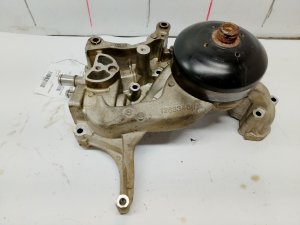
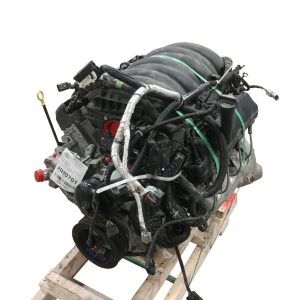


New Aftermarket Parts Available

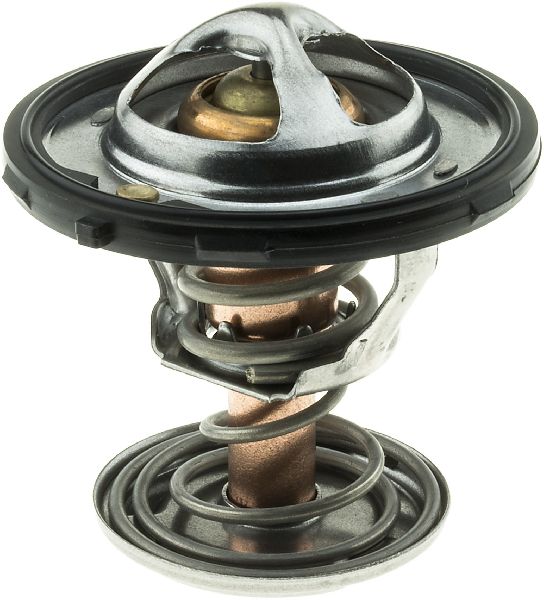
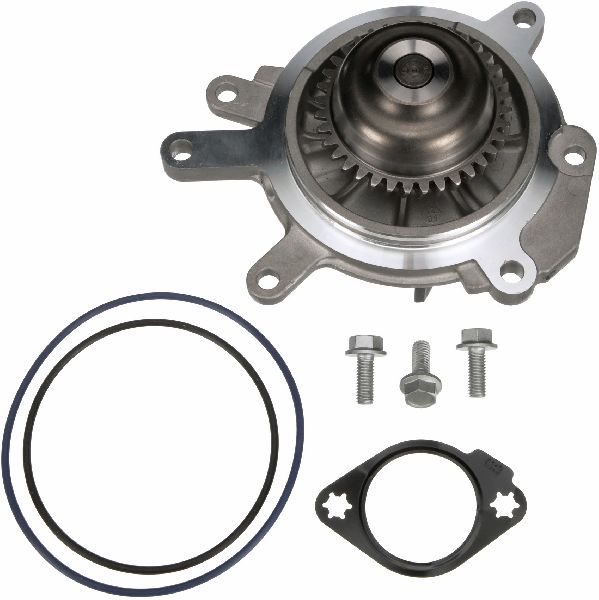

The information in this article is provided for general reference and educational purposes only. Vehicle specifications, procedures, and part compatibility can vary by production date, trim level, and region. Always consult your vehicle's factory service manual and verify part numbers before purchasing or performing repairs. Safety-critical components such as airbags, seat belts, and braking systems should be installed by a qualified professional.
- Chevrolet Silverado:
- 🎬 Helpful Videos
- 🛍️ Shop This Part
- What's Unique About the 2019-2024 Chevrolet Silverado
- Symptoms You May Notice
- Most Likely Causes
- Rare But Worth Checking
- Diagnosis Steps
- Parts You'll Likely Need
- Related Codes That Often Appear With This One
- Technical Service Bulletins (TSBs) & Recalls
- Platform-Specific Known Issues
- Mechanic-Grade Diagnostic Values
- Scan Tool Commands That Help
- Wiring & Ground Locations
- "I Checked Everything" — The Actual Cause
- OEM Part Supersession History
- Model Year Variations Within This Range
- Diagnostic Flowchart
- Other Known Issues on This Vehicle
- Used vs. New Parts: Buying Guide for This Vehicle
- Real Owner Stories
- 2020-2021 Chevrolet Silverado 6.2L V8
- 2022 Chevrolet Silverado 6.2L V8
- 2022 Chevrolet Silverado 6.2L V8
- Related OBD-II Codes
- Frequently Asked Questions
- 🎟️ Get 5% Off