

P0204 on 2013-2018 Ford C-Max: Injector Circuit Malfunction Causes and Fixes
P0204 on a Ford C-Max Hybrid most often means the cylinder 4 fuel injector has failed. It's a common issue on this engine. Expect to pay around $55 for an OEM Motorcraft injector and another $100-$200 in labor if you don't do it yourself. The DIY difficulty is 3/5 due to parts access.
- P0204 on a 2013-2018 Ford C-Max almost always points to a problem with the cylinder 4 fuel injector or its wiring.
- The most likely culprit is a failed fuel injector with an internal open circuit. Confirm this by measuring its resistance (should be around 12-13 ohms).
- Before replacing parts, carefully inspect the injector's electrical connector for a secure fit and for any signs of engine oil contamination, a known issue on this engine.
- A DIYer can diagnose this with a multimeter and basic tools. Swapping the injector to another cylinder is a definitive way to confirm if the injector is the problem.
- Do not ignore this code, as prolonged driving with a dead cylinder can damage the catalytic converter.
What's Unique About the 2013-2018 Ford C-Max
The 2.0L Atkinson-Cycle engine in the C-Max is shared with the Ford Fusion Hybrid and Lincoln MKZ Hybrid, and they all experience similar injector issues. A key vulnerability on this platform is the location of the fuel injectors; they are susceptible to contamination from engine oil spilled during oil changes. This oil can seep into the injector's electrical connector, causing a poor connection, misfires, and triggering codes like P0204. While the code points to a circuit issue, the injector itself is the most frequent point of failure due to internal coil windings breaking. Manufacturer service bulletins for other Ford models, such as TSB Bulletin #SSM 49759, confirm that P0204 is a recognized diagnostic trouble code that requires following specific pinpoint tests in the Powertrain Control/Emissions Diagnosis Manual.
Symptoms You May Notice
- Check Engine Light is on
- Rough or shaking idle
- Engine misfire, which may be more noticeable under load
- Hesitation or stumbling during acceleration
- Reduced engine power and performance
- Decreased fuel economy
- Engine may die and not restart in some cases
- Replacing the spark plug or ignition coil for cylinder 4. While these can cause a misfire (P0304), they will not cause an injector circuit code (P0204). The code P0204 specifically points to an electrical fault in the injector circuit, not a combustion or ignition fault.
Most Likely Causes
- Failed Cylinder 4 Fuel Injector 🔴 High Probability The fuel injectors on this 2.0L hybrid platform are a known failure point, often developing an internal open circuit over time. This is the most common resolution reported by owners and mechanics.
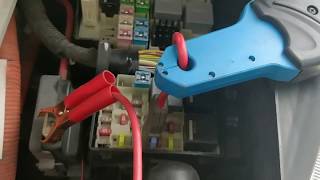
How to confirm: Disconnect the injector and measure its resistance with a multimeter. 🎬 Watch: How to test for injector circuit faults on hybrids. A good injector should measure around 12.4 to 12.8 ohms. An infinite resistance reading (OL) confirms an open circuit and a failed injector. Alternatively, swap the cylinder 4 injector with another cylinder (e.g., cylinder 3). Clear the codes and run the engine. If the code changes to P0203, the injector is definitively faulty.
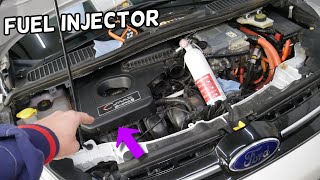
Typical fix: Replace the failed fuel injector. 🎬 See this walkthrough for fuel injector replacement and location. It is often recommended to replace all four injectors at once, especially on higher mileage vehicles, to prevent future failures and ensure balanced performance.
Est. part cost: $55-$70 - Wiring or Connector Issue 🟡 Medium Probability The injector connectors are located under the upper engine cover and can be contaminated by oil spilled during changes. Vibration can also cause wires to chafe or the connector's locking tab to break, causing a loose connection. TSB Bulletin #TSB 16-0163 notes that P0204 can be associated with various drivability issues and illuminated MILs across similar Ford engine platforms.
How to confirm: Visually inspect the wiring harness and electrical connector for cylinder 4. Check for a secure fit and look for corrosion or oil inside the connector. Use a noid light to confirm the PCM is sending a pulse signal to the connector; a flashing light means the PCM and wiring up to the connector are good.
Typical fix: If oil is present, clean the connector and injector terminals thoroughly with electrical contact cleaner. If the connector or wiring is damaged, repair the wire or replace the connector pigtail (Motorcraft P/N: WPT-1302).
Est. part cost: $10-$45
Rare But Worth Checking
- Powertrain Control Module (PCM) Failure: This is very rare. The PCM's internal injector driver for cylinder 4 could fail. This should only be considered after definitively ruling out both the injector and the wiring harness with 100% certainty.
Diagnosis Steps
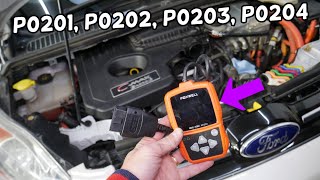
- Retrieve all stored DTCs with an OBD-II scanner. Note any other codes like P0304 or P219A.
- Locate cylinder 4, which is the cylinder on the far right (passenger side) of the engine.
- Visually inspect the wiring harness and electrical connector for the cylinder 4 fuel injector. Look for obvious damage, looseness, and especially for signs of oil contamination from past oil changes.
- If the connector looks good, disconnect it and use a noid light to test for a pulse signal from the PCM while cranking the engine. A steady flashing light indicates the PCM and wiring are likely okay.
- If there is no pulse, check for 12V power on one pin of the connector with the key on, engine off. If power is present, the issue is likely in the ground-side control wire back to the PCM. If no power is present, check the fuel injector fuse.
- If the wiring seems okay (noid light flashes), test the fuel injector itself. Disconnect the injector and measure its resistance using a multimeter. The reading should be between 12-13 ohms. An 'OL' or infinite reading means the injector is internally open and must be replaced.
- As a final confirmation, swap the cylinder 4 injector with an adjacent one (e.g., cylinder 3). Clear the codes and run the engine. If the code returns as P0203 ('Injector Circuit Malfunction - Cylinder 3'), the injector is confirmed bad. If P0204 returns, the fault is in the wiring or PCM.
- If the injector and wiring are confirmed good, the issue may be a rare failure of the PCM's injector driver circuit.
Parts You'll Likely Need
- Fuel Injector
(OEM #CM-5148)— This is the most common cause of a P0204 code on this specific engine, typically due to an internal open circuit failure.
Trusted brands: Motorcraft, Bosch, Standard Motor Products
OEM price range: $55-$70
Aftermarket price range: $30-$50 - Fuel Injector Connector Pigtail
(OEM #WPT-1302)— Needed if the original connector's locking tab is broken or if terminals are damaged by corrosion or oil contamination that cannot be cleaned.
Trusted brands: Motorcraft
OEM price range: $25-$45
Aftermarket price range: $10-$20
Related Codes That Often Appear With This One
- P0304 — P0304 is 'Cylinder 4 Misfire Detected'. Since the P0204 code means the injector isn't firing correctly, the cylinder will not combust properly, logging both codes. This is the most common companion code.
- P219A — P219A is 'Bank 1 Air-Fuel Ratio Imbalance'. A non-firing injector on one of four cylinders causes a major imbalance in the engine's air-fuel mixture, which is detected by the oxygen sensors and triggers this code.
Platform-Specific Known Issues
- The fuel injector connectors are prone to contamination from engine oil spilled during oil changes, which can cause a poor electrical connection and trigger this code. A video from 'Electrical Car Repair LIVE' on YouTube specifically shows oil inside the connectors on a C-Max.
- Accessing the fuel rail and injectors requires removing the upper engine cover and disconnecting numerous sensors and hoses, making the job more time-consuming than on simpler engine layouts.
Mechanic-Grade Diagnostic Values
- Fuel Injector Coil Resistance — expected: 12.4 to 12.8 ohms for a new, good injector. A known-good used injector on the vehicle measured ~15 ohms.. Failure: Infinite resistance (Open Loop / OL) indicates a failed injector coil.
- Injector Power Supply Voltage (Key On, Engine Off) — expected: ~12V (Battery Voltage) on the power feed wire at the injector connector.. Failure: No voltage suggests a blown fuse or a problem in the power supply circuit.
- Scan Tool Injector Fault PID — expected: A Ford-specific scan tool may show an 'Injector Fault' PID for each cylinder. The expected value is 'No Error'.. Failure: The PID for cylinder 4 will show 'Error' or 'Yes' when the fault is active.
Scan Tool Commands That Help
- Ford IDS (or equivalent high-level scanner): Injector Power Balance Test — This active test can help confirm which cylinder is not contributing power, which is useful when P0204 is accompanied by a random misfire code (P0300) instead of a specific cylinder misfire (P0304).
Wiring & Ground Locations
- Injector Power Source — Power is supplied to all fuel injectors via a shared circuit from the Power Hold Relay.. The injectors receive constant power with the key on, and the PCM controls the ground side to fire them. A wiring diagram shows this is via pin 15-RN3A (GN-BU wire) at a major connector like C90. If multiple injector codes are present, the relay or its fuse is a likely suspect.
- Injector Control Wire — A dedicated wire runs from the cylinder 4 injector connector back to a specific pin on the Powertrain Control Module (PCM).. This is the ground-side control wire. An open or short on this specific wire will cause P0204. A continuity test from the injector connector to the PCM connector is the definitive check for this wire.
- G104 — Located on the rear of the transmission.. This is a major powertrain ground point. While less likely to cause a single injector code, a loose or corroded main ground can cause a variety of strange electrical issues, and it's a known location to check for general powertrain problems.
- PCM Location — Located in the front of the left front wheel well.. Knowing the PCM's location is critical if you need to perform continuity checks on the injector wiring harness between the injector and the PCM.
Real Owner Repair Stories
- YouTube channel 'J Wilkers' (2013 Ford C-Max Hybrid SEL) — Running very poorly, multiple codes including P0204.
❌ Tried (didn't work) The mechanic immediately suspected the injector based on the specific code and platform knowledge.
✅ What actually fixed it The cylinder 4 fuel injector was tested and found to have infinite resistance (open circuit). Replacing the single fuel injector resolved all symptoms and codes. The new injector measured 12.4-12.8 ohms before installation. - NHTSA ODI #10405277 — An owner of a related Ford platform reported that while driving, the vehicle experienced a sudden failure with codes P0201, P0202, P0203, and P0204. The dealer checked the electrical connections and reassembled the components, though the issue recurred shortly after.
Diagnostic Flowchart
Other Known Issues on This Vehicle
Issues unrelated to this code that are worth knowing about as an owner of this generation:
- HF35 eCVT Transmission Failure 🔴 High — Can occur anywhere from 60,000 to 180,000+ miles. Failures are commonly reported on owner forums, often starting with a whining or grinding noise.
- Parasitic 12V Battery Drain 🟠 Medium — A well-documented issue, especially on 2013-2014 models, where a software glitch or a module fails to go to sleep, draining the 12V battery overnight or after a few days of sitting. (Ref: Unofficial fixes include pulling a specific fuse to reset modules or getting a software update at the dealer.)
- Shift Cable Bushing Failure (Recall) 🔴 High — Widespread enough to trigger a major recall (NHTSA Campaign Number: 22V433). The bushing can degrade, causing the shifter to detach from the transmission, potentially allowing the vehicle to roll away. (Ref: Ford Recall 22S43)
- Sticking VCT Solenoids 🟡 Low — Common on many Ford engines of this era. Debris in the oil can cause Variable Camshaft Timing (VCT) solenoids to stick, triggering codes like P0012 or P0014. Usually occurs with extended oil change intervals. (Ref: Multiple TSBs exist, such as SSM 48423, which advise an oil change and cycling the solenoid before replacement.)
Used vs. New Parts: Buying Guide for This Vehicle
When a used part is the smart pick: A used wiring harness or connector pigtail from a junkyard is a very sensible choice if the original is damaged, as these are not high-wear items. A used fuel injector is risky due to unknown history and potential for clogging, but can be used for temporary diagnosis (like swapping to see if the code follows the part).
Donor-vehicle mileage cap: roughly under 80000 miles for the part to have meaningful remaining life.
What to inspect on the donor part:
- For a wiring harness/pigtail: Check for intact locking tabs, no visible corrosion on pins, and flexible (not brittle) wires.
- For a fuel injector: Ensure the electrical connector pins are clean and straight. Look for a clean nozzle end without heavy carbon buildup, although this is hard to verify.
OEM-only on this vehicle (don't cheap out):
- Fuel Injector: For long-term reliability and balanced fuel delivery, using an OEM Motorcraft injector is strongly recommended by mechanics for this platform. Aftermarket injectors can have different flow rates or spray patterns, potentially causing performance issues even if they don't set a code.
Aftermarket brands forum-validated for this vehicle:
- Bosch (often the OEM supplier)
- Standard Motor Products (SMP)
Brands owners have reported issues with on this vehicle:
- Unbranded, no-name injectors from online marketplaces should be avoided as their quality control, flow rates, and longevity are highly questionable.
Real Owner Stories
Aggregated from forums and TSBs cited above. Mileages and costs reflect what owners reported in those sources.
2013 Ford C-Max (2.0L Hybrid)
Symptoms: Check Engine Light with codes P0201, P0202, P0203, P0204.
What fixed it: Cleaning spilled engine oil out of the fuel injector electrical connectors and ensuring a secure connection.
Source hint: YouTube video by 'Electrical Car Repair LIVE' titled something like 'ENGINE LIGHT CODE P0201 P0202 P0203 P0204 FUEL INJECTOR FORD C-MAX FORD FUSION LINCOLN'
2013-2018 Ford C-Max 2.0L I4 Atkinson-Cycle
Symptoms: Engine misfire and Check Engine Light; owners consistently report an open circuit confirmed with a multimeter.
What fixed it: Replacing the cylinder 4 injector.
Source hint: fordcmaxhybridforum.com threads discussing P0204 and related misfire codes
Related OBD-II Codes
Frequently Asked Questions
Is there a recall for the fuel injector failure on my 2013-2018 Ford C-Max?
I have P0204 on my C-Max; what is the most likely part I need to buy?
Where is cylinder 4 located on the 2.0L Atkinson-Cycle engine?
Can a messy oil change cause the P0204 code on my Ford C-Max?
What should the resistance be for a healthy fuel injector on this platform?
My C-Max has a P0204 and a whining noise from the transmission; are they related?
Helpful Videos


Used OEM Parts in Stock

New Aftermarket Parts Available


The information in this article is provided for general reference and educational purposes only. Vehicle specifications, procedures, and part compatibility can vary by production date, trim level, and region. Always consult your vehicle's factory service manual and verify part numbers before purchasing or performing repairs. Safety-critical components such as airbags, seat belts, and braking systems should be installed by a qualified professional.
- Ford C-Max:
- 🎬 Helpful Videos
- 🛍️ Shop This Part
- What's Unique About the 2013-2018 Ford C-Max
- Symptoms You May Notice
- Most Likely Causes
- Rare But Worth Checking
- Diagnosis Steps
- Parts You'll Likely Need
- Related Codes That Often Appear With This One
- Platform-Specific Known Issues
- Mechanic-Grade Diagnostic Values
- Scan Tool Commands That Help
- Wiring & Ground Locations
- Real Owner Repair Stories
- Diagnostic Flowchart
- Other Known Issues on This Vehicle
- Used vs. New Parts: Buying Guide for This Vehicle
- Real Owner Stories
- 2013 Ford C-Max (2.0L Hybrid)
- 2013-2018 Ford C-Max 2.0L I4 Atkinson-Cycle
- Related OBD-II Codes
- Frequently Asked Questions
- 🎟️ Get 5% Off