

P0203 on 2011-2020 Dodge Grand Caravan 3.6L: Injector Circuit Malfunction Causes and Fixes
P0203 on a 3.6L Grand Caravan almost always means the fuel injector for cylinder #3 has failed. Cylinder #3 is on the rear bank against the firewall, requiring the intake manifold to be removed for access. Due to the high labor involved, it's wise to replace all three rear injectors (cylinders 1, 3, 5) and the intake gaskets at the same time to prevent repeat repairs.
- P0203 on your Grand Caravan points to an electrical problem with the #3 fuel injector, which is the middle cylinder on the rear bank against the firewall.
- The most likely cause is a failed fuel injector, which will also trigger a P0303 misfire code.
- The repair is labor-intensive (DIY Difficulty 4/5) because the upper intake manifold must be removed for access.
- Due to the high labor cost, it is strongly recommended to replace all three rear injectors (or all six) and the intake gaskets at the same time.
- Before buying parts, confirm the diagnosis by testing the injector circuit with a noid light and testing the injector's resistance with a multimeter (should be ~12-14 ohms).
What's Unique About the 2011-2020 Dodge Grand Caravan

On the 3.6L Pentastar engine in the Grand Caravan, the primary challenge with a P0203 code is physical access. Cylinder #3 is the middle cylinder on the rear bank (1-3-5), tucked against the firewall under the upper and lower intake manifolds. This makes what would be a simple repair on some engines a much more labor-intensive job. Because of the significant labor required to remove the intake, most technicians and experienced DIYers strongly recommend replacing all three rear injectors (1, 3, 5) or even all six at once to prevent future failures and repeated labor costs.
Symptoms You May Notice
- Check Engine Light is on
- Engine running rough or shaking, especially at idle
- Noticeable loss of power and poor acceleration
- Engine misfire (often accompanied by code P0303)
- Reduced fuel economy
- Gasoline smell from the engine bay or exhaust
- Replacing the spark plug and ignition coil for cylinder #3. While these parts can cause a misfire code (P0303), they will not cause an injector circuit code (P0203). The P0203 code specifically points to an electrical fault in the fuel injector's control circuit, not the ignition system.
Most Likely Causes

- Failed Cylinder #3 Fuel Injector 🔴 High Probability Injectors are a common failure item on the 3.6L Pentastar engine across many Chrysler, Dodge, and Jeep platforms due to heat cycles and internal coil failure. Given the high mileage on many of these vans, injector failure is the most likely cause for a P0203.
How to confirm: After gaining access, swap the cylinder #3 injector with an adjacent one (e.g., cylinder #1). Clear codes and run the engine. If the code changes to P0201, the injector is bad. Alternatively, test the injector's resistance with a multimeter; a healthy injector on a 3.6L Pentastar should read around 12-14 ohms. A reading of 'OL' (Open Line/infinite resistance) or zero indicates a failed internal coil.
Typical fix: Replace the fuel injector. It is highly recommended to replace all three rear injectors (cylinders 1, 3, 5) and the upper and lower intake manifold gaskets at the same time.
Est. part cost: $40-$150 per injector - Damaged Wiring or Connector 🟡 Medium Probability The wiring harness is routed in a hot, tight space under the intake manifold. Over time, the plastic connector and locking clip can become brittle and break from heat, or wires can chafe against the fuel rail or other components, leading to a poor connection or an open circuit.
How to confirm: Visually inspect the connector for cylinder #3 for cracks, corrosion, or broken locking tabs. Wiggle the connector with the engine running to see if it affects the misfire. Use a noid light in the connector; it should flash consistently when the engine is cranked, indicating the PCM is sending a signal. If the noid light does not flash, the problem is in the wiring or PCM.
Typical fix: If the connector is damaged, splice in a new pigtail connector (e.g., Mopar pigtail kit). If a wire is broken, repair the wire with a butt connector and heat shrink tubing. Ensure the harness is properly secured away from sharp edges or heat sources upon reassembly.
Est. part cost: $10-$30 for a pigtail connector
Rare But Worth Checking
- Faulty Powertrain Control Module (PCM): This is very rare. The PCM's internal driver for the injector circuit can fail, but this should only be considered after definitively ruling out the injector and wiring. A noid light test that shows no signal from the PCM points towards this, but the wiring must be confirmed as good via a continuity test from the injector connector all the way to the PCM connector pin. In some cases, a remanufactured PCM is required to fix the issue.
- Faulty Totally Integrated Power Module (TIPM): While less likely to cause a single injector code, TIPM failures are a known issue on this platform and can cause a wide range of electrical problems, including fuel delivery issues. The TIPM houses the Auto Shutdown (ASD) relay which supplies power to the injectors. Symptoms are often more widespread, like a no-start condition, fuel pump not engaging, or other random electrical glitches. This is an unlikely cause for an isolated P0203 but worth noting if other electrical problems are present.
Technical Service Bulletins (TSBs) & Recalls
- TSB Bulletin #9002688: A manufacturer service bulletin notes that before replacing injectors for Diagnostic Trouble Codes including P0203, technicians should make sure that the wiring loom and/or connector in the valve cover gasket is not the root cause of the concern.
Diagnosis Steps

- Verify the presence of P0203 with an OBD-II scanner. Note any other codes, such as P0303.
- Locate cylinder #3. On the 3.6L Grand Caravan, the engine is transverse-mounted. The rear bank against the firewall contains cylinders 1, 3, and 5 (passenger to driver side). Cylinder #3 is the middle cylinder on the rear bank.
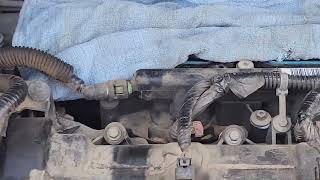
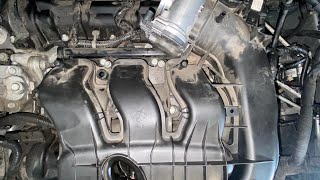
- To access the injector, you must remove the upper and lower intake manifolds. This involves disconnecting the air intake tube, throttle body, various sensors, and vacuum lines before unbolting the manifolds themselves. 🎬 Watch: Step-by-step guide to removing the Pentastar intake manifold.
- Once the intake is removed, inspect the injector wiring harness and the connector for cylinder #3 for any visible damage, melting, chafing, or corrosion.
- Disconnect the connector for injector #3. Plug a 'noid light' into the connector. Have a helper crank the engine and observe the light. A steady flashing indicates the wiring and PCM are likely good. No flashing suggests a wiring or PCM issue.
- If the noid light flashes, the injector is the prime suspect. Test its resistance with a multimeter set to Ohms. A good injector will read approximately 12-14 Ohms (specifically around 12.5 Ohms is commonly cited for the 3.6L). An 'OL' (open) or zero reading confirms failure. 🎬 See how to test injector resistance with a multimeter.
- A definitive test is to swap the suspect injector from cylinder #3 with an easier-to-access injector on the front bank, like cylinder #2. Reassemble enough to run the engine. If the code changes to P0202, the injector is confirmed to be faulty.
- If the noid light does not flash, check for continuity on the control wire (ground pulse wire) between the injector connector and the corresponding pin at the PCM connector. Also, check for 12V power on the other wire with the key in the 'On' position.
Parts You'll Likely Need

- Fuel Injector
(OEM #5184085AD)— This is the most common failure part for a P0203 code on this engine. The part number 5184085AD supersedes 5184085AC.
Trusted brands: Mopar, Bosch, Standard Motor Products (SMP)
OEM price range: $140-$225
Aftermarket price range: $40-$90 - Upper and Lower Intake Manifold Gaskets
(OEM #Upper: 5184562AC, Lower: 5184331AC)— These are single-use gaskets that must be replaced anytime the intake manifold is removed to prevent vacuum leaks. Aftermarket kits like Fel-Pro MS 97204 are also widely available.
Trusted brands: Mopar, Fel-Pro, Mahle
OEM price range: $30-$50
Aftermarket price range: $15-$30
Related Codes That Often Appear With This One
- P0303 — P0303 means 'Cylinder 3 Misfire Detected.' Since P0203 indicates the fuel injector for cylinder 3 is not working electrically, the cylinder cannot receive fuel to combust properly. This directly causes a misfire. P0203 is the root electrical cause, and P0303 is the resulting mechanical effect.
Platform-Specific Known Issues
- Due to the difficulty in accessing the rear bank of injectors, it is standard practice to replace all three rear injectors (1, 3, 5) and their O-rings if one fails. This saves significant future labor costs if another injector on that bank fails later. 🎬 Watch this walkthrough of the full fuel injector replacement.
- The 3.6L Pentastar engine can be sensitive to the flow rates of aftermarket injectors. Using low-quality aftermarket parts may resolve the P0203 but can sometimes introduce new fuel trim codes (like P0172/P0175). Using OEM Mopar or reputable aftermarket brands like Bosch is the safest option.
- When removing the intake manifold, it is a good time to inspect the valley for signs of oil or coolant leaks from the oil filter/cooler housing, which is another extremely common failure point on this engine.
Mechanic-Grade Diagnostic Values
- Fuel Injector Coil Resistance — expected: 12.0 - 14.0 Ohms. A common reading is ~12.5 Ohms.. Failure: A reading of 'OL' (infinite resistance) indicates an open coil, which is the most common failure. A reading near zero indicates a shorted coil.
- Injector Pulse Width (Scan Tool Live Data at hot idle) — expected: 1.0 - 5.0 milliseconds (ms).. Failure: A value of 0 ms for cylinder 3 while other cylinders show normal readings suggests the PCM has shut down the driver for that circuit, likely due to detecting the open/short.
- Injector Power Supply Wire Voltage (Key On, Engine Off) — expected: Approximately 12V+ (Battery Voltage).. Failure: 0V indicates a problem with the power supply from the Auto Shutdown (ASD) relay, its fuse, or the TIPM.
- Injector Circuit Voltage Spike (Oscilloscope) — expected: A sharp inductive voltage spike of approximately 50-60 volts when the PCM releases the ground, indicating the injector coil's magnetic field is collapsing correctly.. Failure: The absence of this spike confirms an open in the circuit (bad injector coil or wiring) and is what the PCM is looking for when it sets the code.
Scan Tool Commands That Help
- wiTECH (or advanced aftermarket scanner): Injector Actuator Test / Injector Kill — This bidirectional command allows a technician to individually disable the cylinder 3 fuel injector while the engine is running. If disabling the injector causes no change in the engine's idle quality or RPM, it confirms that cylinder 3 was not contributing power, which strongly supports the P0203 diagnosis.
Wiring & Ground Locations

- Cylinder 3 Injector Control Wire — Runs from the injector connector for cylinder #3 (rear bank, middle cylinder) to the C1 connector at the Powertrain Control Module (PCM).. The PCM sends a pulsed ground signal through this wire to fire the injector. An open or short in this specific wire will cause P0203. The wire color is typically Dark Blue/Dark Green on this platform. A continuity test from the injector connector to the corresponding PCM pin is the definitive wiring test.
- Injector Power Supply Wire — Runs from the Auto Shutdown (ASD) Relay (located in the TIPM/fuse box) to all six fuel injectors.. This wire provides the 12V+ power to all injectors. While a failure here would typically cause multiple injector codes (P0201, P0202, etc.), a localized short or break near the #3 injector could potentially cause an isolated P0203. The wire color is typically Dark Green/Gray.
- Engine Ground Strap — A braided strap that connects the engine block (often near the accessory drive/engine mount) to the vehicle's chassis/frame.. These straps are known to corrode and break. While a bad ground typically causes multiple, bizarre electrical issues, a poor or intermittent engine ground can create voltage differentials that may contribute to setting sensitive circuit codes. It's a quick and important check for any electrical diagnosis.
Real Owner Repair Stories
- Forum post on ScannerDanner (2016 Chrysler Town & Country 3.6L (mechanically identical to Grand Caravan)) — P0302 (Cylinder 2 Misfire), but diagnostic principle is identical for P0303.
❌ Tried (didn't work) Initial scan confirmed misfire counts on cylinder 2.
✅ What actually fixed it A technician noted that on this engine, a quick directional test is to view individual injector pulse widths at hot idle. The misfiring cylinder's pulse width is often 100-200 microseconds shorter than the others. This pointed towards an issue with the injector itself, which was confirmed by resistance testing and then replaced.
OEM Part Supersession History
5184085AC→5184085AD— Standard part revision by the manufacturer, likely for improved reliability or a minor design change.
Heads up: The AD revision is fully compatible and is the correct service replacement for the AC part. Be cautious of counterfeit parts on online marketplaces, as they are a common issue.Original 4-hole injectors (e.g., 5184085AD)→Upgraded 8-hole injectors (e.g., Mopar 05281427AA)— The newer Pentastar PUG (Pentastar Upgrade) engine introduced in 2016 uses injectors with an 8-hole nozzle for better fuel atomization.
Heads up: These 8-hole injectors are reported by enthusiasts to be a direct-fit, drop-in upgrade for the earlier 2011-2015 engines. They may improve throttle response and fuel economy, but are not required to fix the P0203 code.
Model Year Variations Within This Range
- 2016-2020: Starting in 2016, a majorly upgraded version of the 3.6L Pentastar (codename PUG) was introduced in some Chrysler platforms (like the Pacifica), but the Grand Caravan continued to use the original version. However, some parts may have been updated across the lineup. The upgraded engine featured new fuel injectors, a higher compression ratio, and a two-stage variable valve lift (VVL) system. For the Grand Caravan, the core diagnosis for P0203 remains the same, but it's important to verify part numbers for your specific VIN, especially for late-model years.
Diagnostic Flowchart
Other Known Issues on This Vehicle
Issues unrelated to this code that are worth knowing about as an owner of this generation:
- Cracked Oil Filter/Cooler Housing 🔴 High — Very common, especially on models over 60,000 miles. The plastic housing becomes brittle from heat cycles and can leak both oil and coolant into the engine valley. (Ref: While no specific recall exists for the Grand Caravan, TSB 09-003-25 addresses unnecessary replacement on newer models, confirming it's a known issue.)
- Rocker Arm / Lifter Failure ('Pentastar Tick') 🔴 High — Common across the entire 3.6L Pentastar family. Worn rocker arm bearings cause a distinct ticking/tapping noise, eventually leading to misfires (e.g., P030x codes). (Ref: No recall, but updated rocker arm parts (e.g., 5184296AH) have been released to address the issue.)
- Cooling System Failures (Water Pump, Thermostat) 🟠 Medium — The water pump and thermostat housing are known weak points that can fail and lead to overheating conditions (P0217).
- Totally Integrated Power Module (TIPM) Failure 🟠 Medium — Affects many Chrysler/Dodge/Jeep vehicles from this era. Can cause a wide array of bizarre electrical issues, including intermittent no-start, fuel pump issues, and accessories acting on their own. (Ref: A class-action lawsuit was filed regarding TIPM issues, but no formal recall was issued for the Grand Caravan specifically.)
- Left Cylinder Head Failure (Early Models) 🔴 High — Primarily affected 2011-2013 models. A design flaw could lead to excessive valve seat wear on the left cylinder head (cylinders 2, 4, 6), causing misfires and requiring cylinder head replacement. Chrysler extended the warranty on the left head for some vehicles. (Ref: Warranty Extension X45 (Not a recall))
Used vs. New Parts: Buying Guide for This Vehicle
When a used part is the smart pick: A used wiring pigtail from a junkyard is a perfectly acceptable repair if the original connector is broken, as long as the donor part is not brittle or heat-damaged. A complete used engine wiring harness could also be an option if the damage is extensive, but it carries the risk of having similar age-related issues.
Donor-vehicle mileage cap: roughly under 80000 miles for the part to have meaningful remaining life.
What to inspect on the donor part:
- For a wiring connector/pigtail, check that the plastic is not brittle and the locking tab clicks securely.
- Inspect wires for any signs of cracking, melting, or previous repairs.
- Avoid parts from vehicles that show signs of engine fire or extreme overheating.
OEM-only on this vehicle (don't cheap out):
- Fuel Injector: While not strictly 'OEM-only', the Pentastar PCM is sensitive to injector flow rates. Using a high-quality OEM (Mopar) or OEM-supplier (Bosch) injector is strongly recommended to prevent future fuel trim codes (P0172/P0175) or performance issues.
Aftermarket brands forum-validated for this vehicle:
- Bosch (Often the original OEM supplier)
- Standard Motor Products (SMP)
- Fel-Pro (for intake gaskets)
Brands owners have reported issues with on this vehicle:
- Unnamed 'white box' or suspiciously cheap injector sets from online marketplaces like eBay or Amazon. Forum users and mechanics frequently report these causing immediate running problems due to inconsistent flow rates.
Real Owner Stories
Aggregated from forums and TSBs cited above. Mileages and costs reflect what owners reported in those sources.
2011-2020 Dodge Grand Caravan 3.6L V6
Symptoms: Check engine light on with codes P0203 and P0303; owner emphasized that chasing the circuit code (P0203) is the correct path.
What fixed it: Used a noid light to confirm the signal before replacing the faulty injector.
Source hint: DodgeForum.com thread titled 'P0203 and p0303 codes'
2012-2018 Jeep Wrangler (JK) 3.6L V6
Symptoms: P0203 code present; testing showed a good injector at 12.3 ohms while the failed one showed different resistance.
What fixed it: Tested injector resistance with a multimeter and replaced the failed fuel injector.
Source hint: YouTube video on a Jeep Wrangler with the same 3.6L engine and P0203 code
2006 Chrysler Town & Country (Related Platform)
Symptoms: Frustrating repair involving P0203 'Cylinder 3 Injector Circuit Open'.
What fixed it: After replacing the injector and the wiring harness, the problem was ultimately resolved by replacing the ECU (PCM).
Source hint: Chrysler Forum thread '2006 T&C P0203 Cylinder 3 Injector Circuit Open'
Related OBD-II Codes
Frequently Asked Questions
Where is cylinder #3 located on my 2011-2020 Dodge Grand Caravan 3.6L?
What is the correct resistance for a fuel injector on the 3.6L Pentastar engine?
Should I replace just the cylinder #3 injector or all of them?
Can I use any aftermarket injector to fix the P0203 code?
Are there other common issues I should check while the intake manifold is off?
What does it mean if my noid light doesn't flash during testing?
Helpful Videos

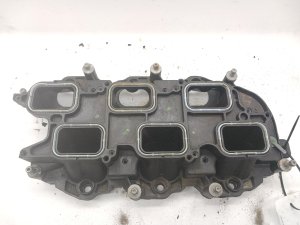
Used OEM Parts in Stock

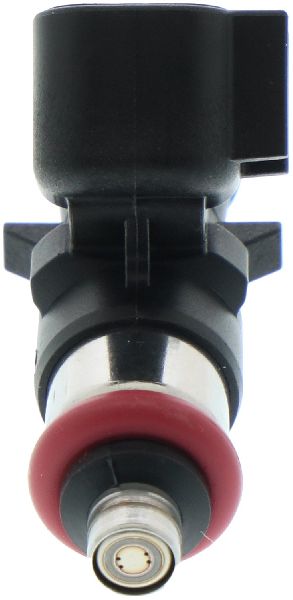
New Aftermarket Parts Available


The information in this article is provided for general reference and educational purposes only. Vehicle specifications, procedures, and part compatibility can vary by production date, trim level, and region. Always consult your vehicle's factory service manual and verify part numbers before purchasing or performing repairs. Safety-critical components such as airbags, seat belts, and braking systems should be installed by a qualified professional.
- Dodge Grand Caravan:
- 🎬 Helpful Videos
- 🛍️ Shop This Part
- What's Unique About the 2011-2020 Dodge Grand Caravan
- Symptoms You May Notice
- Most Likely Causes
- Rare But Worth Checking
- Technical Service Bulletins (TSBs) & Recalls
- Diagnosis Steps
- Parts You'll Likely Need
- Related Codes That Often Appear With This One
- Platform-Specific Known Issues
- Mechanic-Grade Diagnostic Values
- Scan Tool Commands That Help
- Wiring & Ground Locations
- Real Owner Repair Stories
- OEM Part Supersession History
- Model Year Variations Within This Range
- Diagnostic Flowchart
- Other Known Issues on This Vehicle
- Used vs. New Parts: Buying Guide for This Vehicle
- Real Owner Stories
- 2011-2020 Dodge Grand Caravan 3.6L V6
- 2012-2018 Jeep Wrangler (JK) 3.6L V6
- 2006 Chrysler Town & Country (Related Platform)
- Related OBD-II Codes
- Frequently Asked Questions
- 🎟️ Get 5% Off