

P0202 on 2011-2016 Chrysler Town & Country 3.6L: Injector Circuit Malfunction Causes and Fixes
P0202 on a 3.6L Pentastar engine most commonly indicates a failed fuel injector for cylinder #2. The fix involves replacing the injector, which requires removing the upper intake manifold. Expect to pay around $40-$90 for an aftermarket injector or $100-$150 for an OEM Mopar part. It is highly recommended to use OEM or high-quality aftermarket injectors like Bosch to avoid performance issues.
- P0202 points specifically to an electrical problem with the cylinder #2 fuel injector circuit, not a spark or compression issue.
- The most likely cause is a failed fuel injector.
- Accessing the #2 injector on the 3.6L V6 requires removing the upper intake manifold, which adds time and complexity to the repair.
- While you can replace just the one failed injector, it's best practice to replace all six at once to ensure balanced engine performance.
- Always replace the intake manifold gaskets during this job to prevent future vacuum leaks.
What's Unique About the 2011-2016 Chrysler Town & Country
On the 3.6L Pentastar V6 used in the Town & Country, the engine is mounted transversely (sideways). Cylinder #2 is on the front bank (Bank 2), which is closer to the radiator. This bank includes cylinders 2, 4, and 6. Unlike the rear bank injectors (1, 3, 5) which are against the firewall, reaching cylinder #2 requires removing the entire upper intake manifold, making the job more involved for a DIY repair. Some owners have noted that water intrusion can affect the front bank, particularly cylinder #2, leading to corrosion and misfires, though this is more commonly associated with ignition system faults.
Symptoms You May Notice
- Check Engine Light is on
- Rough or shaky idle
- Engine misfire, sometimes felt as a shudder or pop
- Poor acceleration and loss of power
- Decreased fuel economy
- Smell of unburnt gasoline from the exhaust
- Replacing the spark plug or ignition coil for cylinder #2. While these can cause a misfire code (P0302), they will not cause an injector circuit code like P0202. The P0202 code specifically points to an electrical fault in the injector's control circuit.
Most Likely Causes
- Failed Cylinder 2 Fuel Injector 🔴 High Probability Fuel injectors are a common failure item on many modern engines, including the Pentastar. The internal coil winding can fail, creating an open or short circuit. Some owners report heat-related failures, where an injector tests fine when cold but fails with an open circuit or high resistance once the engine reaches operating temperature.
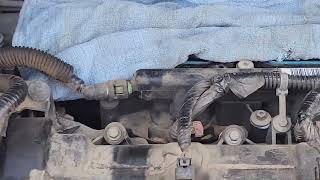
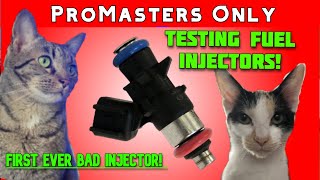
How to confirm: Swap the cylinder #2 injector with an adjacent one on the same bank (e.g., cylinder #4). Clear the codes and run the engine. If the code changes to P0204, the injector is bad. Alternatively, measure the injector's resistance with a multimeter; it should be around 12-14 ohms when cold. 🎬 See how to test Pentastar fuel injectors with a multimeter. An infinite reading (OL) means it's open, a near-zero reading means it's shorted, and a reading that is significantly higher (e.g., over 20 ohms) when hot indicates a heat-related failure.
Typical fix: Replace the failed fuel injector. 🎬 Watch: This step-by-step guide shows how to replace the injector. It is highly recommended to replace all six injectors as a flow-matched set to ensure balanced engine performance. Using cheap, no-name aftermarket injectors is strongly discouraged, as many owners report they can cause rich running conditions (P0172/P0175) and persistent performance issues. Stick with OEM Mopar or a quality brand like Bosch. The upper and lower intake manifold gaskets must also be replaced.
Est. part cost: $80-$160 for one OEM/Bosch injector. - Wiring Harness or Connector Issue 🟡 Medium Probability The wiring harness sits on top of a hot, vibrating engine. The section of the harness for the front bank of injectors (2, 4, 6) runs underneath the upper intake manifold, where it is susceptible to heat damage, chafing, and rodent damage. The plastic connector itself can also become brittle and fail.
How to confirm: Visually inspect the wiring going to the #2 injector for any signs of melting, chafing, or corrosion at the connector. Use a noid light to test for a pulse signal from the PCM at the injector connector; if the light flashes, the wiring and PCM are likely good. If the noid light does not flash, check for continuity on the two wires between the injector connector and the PCM.
Typical fix: Repair the damaged section of wire or replace the injector pigtail connector. In some cases, a section of the engine wiring harness may need to be repaired or replaced.
Est. part cost: $10-$30 for a pigtail connector
Rare But Worth Checking
- Powertrain Control Module (PCM) Failure: This is the least likely cause. The internal driver circuit for a single injector can fail. This should only be considered after definitively ruling out the injector and wiring. A PCM failure would typically be confirmed by a professional after all other possibilities are exhausted.
- Totally Integrated Power Module (TIPM) Failure: While less common for a single injector code, the TIPM is a known weak point on these vehicles and can cause a wide range of bizarre electrical issues, including fuel system problems. Symptoms often include a no-start condition, fuel pump issues, or multiple unrelated electrical components acting erratically. A P0202 code would be an unusual but not impossible symptom of a failing TIPM.
Diagnosis Steps
- Confirm the presence of code P0202 with an OBD-II scanner. Note any other codes, especially P0302.
- Locate cylinder #2. On the transversely mounted 3.6L Pentastar, it is the front-most cylinder on the driver's side (part of the bank closer to the radiator).
- Visually inspect the fuel injector connector and nearby wiring for obvious damage, such as melted plastic, frayed wires, or rodent damage.
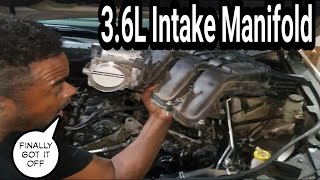
- To definitively test the injector, swap it with another cylinder's injector on the same bank (e.g., cylinder #4). This requires removing the upper intake manifold. 🎬 Watch: A helpful walkthrough for removing the upper intake manifold. Clear the codes and run the engine. If the code returns as P0204, the injector is confirmed to be faulty.
- If the code remains P0202 after the swap, the problem is in the wiring or PCM. Perform a noid light test on the cylinder #2 injector connector. A flashing light indicates the PCM is sending a signal, and the wiring is likely intact.
- If the noid light does not flash, check for continuity and shorts on the two wires between the injector connector and the PCM. The injector control circuit is ground-switched by the PCM.
- If the wiring is confirmed to be good but there is no pulse signal, the PCM's injector driver has likely failed. This is rare and should be the last diagnostic step.
Parts You'll Likely Need
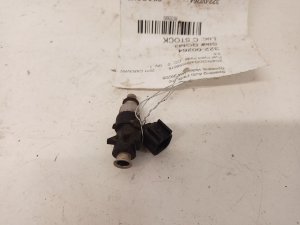
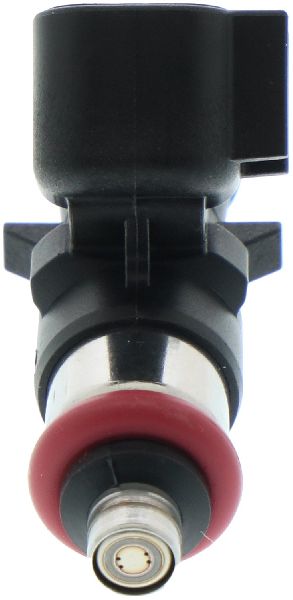
- Fuel Injector
(OEM #5184085AD (supersedes 5184085AC))— This is the most common cause of a P0202 code. The internal coil fails, causing an electrical fault. It is critical to use an OEM or high-quality equivalent like Bosch (part #0280158233) to avoid performance issues.
Trusted brands: Mopar, Bosch
OEM price range: $100-$160
Aftermarket price range: $50-$90 - Upper and Lower Intake Manifold Gaskets — These must be replaced when the intake manifold is removed to access the fuel injectors. Reusing old gaskets will cause vacuum leaks.
Trusted brands: Mopar, Fel-Pro (Part #MS 97204), Mahle
OEM price range: $30-$50
Aftermarket price range: $15-$30
Related Codes That Often Appear With This One
- P0302 — P0302 means 'Cylinder 2 Misfire Detected'. Since P0202 indicates the injector for cylinder 2 isn't working correctly, the cylinder can't combust fuel properly, which directly causes a misfire.
- P0300 — This code for 'Random/Multiple Cylinder Misfire' can appear if the P0202 fault is intermittent or if other injectors are also beginning to fail.
- P0204, P0206 — Codes for other injectors on the same bank (cylinders 4 and 6) can appear if the wiring harness that serves all three injectors is damaged. A P0204 code will also appear as a confirmation step if you swap a bad injector from cylinder #2 to cylinder #4 for diagnosis.
Technical Service Bulletins (TSBs) & Recalls
- TSB 09-002-14 Rev. B: While not for P0202 specifically, this TSB and the associated X56 extended warranty (10 years/150,000 miles) address a known defect in the left cylinder head on 2011-2013 models that causes misfires on cylinders 2, 4, and 6 (P0302, P0304, P0306). This issue is due to premature valve guide and seat wear. It's an important related problem for owners to be aware of.
Platform-Specific Known Issues
- A class-action lawsuit was filed concerning alleged valve train defects in 2014-2020 3.6L Pentastar engines, which can cause ticking noises and misfires, though this is typically associated with different codes.
Mechanic-Grade Diagnostic Values
- Fuel Injector Coil Resistance — expected: 12.0 - 14.0 Ohms at room temperature.. Failure: A reading of OL (Open Line/infinite resistance), near zero ohms (short circuit), or a value that climbs significantly when hot (e.g., >20 Ohms) indicates a failed injector.
- Injector Pulse Width (Scan Tool, Hot Idle) — expected: 2.5 - 4.0 milliseconds (ms).. Failure: A value of 0 ms on cylinder 2 would be expected with a P0202, as the PCM has likely shut down the injector driver for that circuit.
- Fuel Pressure (Key On, Engine Off) — expected: ~58 psi (400 kPa).. Failure: While low fuel pressure would typically cause multiple/random misfires (P0300) rather than a specific P0202, it's a baseline health check. A P0202 is an electrical circuit code, not a fuel delivery code.
Scan Tool Commands That Help
- wiTECH (OEM), Autel, Snap-on: Fuel Injector Actuator Test / Injector Kill — This bidirectional control allows the technician to command a single injector to fire (or to disable it) while the engine is running. This helps to confirm if the PCM driver and wiring are capable of controlling the injector. If you can 'kill' cylinder #2 and the engine idle changes, but then returns to a rough state, it suggests the circuit has intermittent integrity. If killing the injector causes no change, it confirms that cylinder is already dead.
- wiTECH (OEM), Autel, Snap-on: Power Balance Test — This function graphically displays the contribution of each cylinder to engine speed. For a P0202, the graph should show cylinder #2 contributing significantly less than the others, confirming the misfire's location without needing to physically disconnect components.
Wiring & Ground Locations
- Injector Harness Connector — The main connector for the fuel injector harness is located on the driver's side of the engine, near the rear of the intake manifold.. This is a critical point to check for corrosion or pushed-out pins if multiple injector codes (P0202, P0204, P0206) are present, as it supplies the entire bank.
- Harness Chafe Point — The injector wiring harness runs under the upper intake manifold. It is known to chafe against the engine block or brackets, especially near the back of the engine.. An intermittent short-to-ground can occur here, causing a P0202 that is difficult to diagnose as it may only happen with engine vibration. The insulation can melt or rub through, exposing bare wire.
- Engine Ground Strap — A primary engine-to-chassis ground strap is located on the upper engine mount on the passenger side.. While a bad main ground usually causes multiple, widespread electrical issues, a loose or corroded strap can create transient voltage problems that can, in rare cases, affect sensitive circuits. It's a known failure point and easy to inspect.
- PCM Connector C2, Pin 17 — At the Powertrain Control Module (PCM).. This is the specific pin for the Cylinder 2 Injector Control wire (often White/Dark Blue). A continuity test should be performed from this pin to the corresponding pin at the injector connector if a wiring break is suspected.
Real Owner Repair Stories
- YouTube video by a professional mechanic (2015 Jeep Wrangler 3.6L Pentastar) — Severe misfire, Check Engine Light with codes P0306 and P0206 (Cylinder 6, but same diagnostic principle).
❌ Tried (didn't work) N/A - went straight to advanced diagnostics.
✅ What actually fixed it The technician used a lab scope to perform a current ramp test on the injector circuit without removing the intake manifold. The scope showed an open circuit for injector #6. After removing the intake, the injector was confirmed to be the failed part and was replaced, which solved the problem. - Forum post (Dodge Grand Caravan 3.6L Pentastar) — Intermittent P0202 and rough running.
❌ Tried (didn't work) Replacing the fuel injector for cylinder #2 did not solve the problem.
✅ What actually fixed it After the code returned, a closer inspection of the wiring harness that runs under the intake manifold revealed a spot where the loom had rubbed through, and the injector control wire was chafed and making intermittent contact with the engine block (shorting to ground). Repairing the wire and protecting the harness with new loom fixed the issue permanently. - YouTube video by 'KIP on a TRiP' (Chrysler/Dodge/Ram with 3.6L Pentastar) — Check Engine Light with P0204 (Cylinder 4) and misfire codes.
❌ Tried (didn't work) N/A
✅ What actually fixed it The technician demonstrated testing injector resistance with a multimeter after removing the upper intake. A good injector measured ~12 ohms, while the failed injector measured ~24 ohms, double the expected resistance. Replacing the out-of-spec injector resolved the code.
OEM Part Supersession History
5184085AC→5184085AD— Standard part revision and improvement by the manufacturer.
Heads up: The parts are interchangeable. However, be cautious of counterfeit parts on online marketplaces. A Reddit user reported buying injectors advertised as 'AC' revision from eBay which caused rich running conditions on both banks, suggesting they were likely fake or improperly manufactured parts.
Model Year Variations Within This Range
- 2011-2016: The core 3.6L Pentastar engine and fuel system remained consistent throughout this period for the Town & Country. A major engine update occurred in 2016 for some Chrysler models, but the Town & Country retained the first-generation Pentastar for its entire run. Therefore, the diagnostic procedure for P0202 is identical for all 2011-2016 model years.
Diagnostic Flowchart
Other Known Issues on This Vehicle
Issues unrelated to this code that are worth knowing about as an owner of this generation:
- Rocker Arm / Lifter Failure ('Pentastar Tick') 🔴 High — Common across all 3.6L Pentastar applications, often appearing after 60,000 miles. It presents as a distinct ticking/tapping sound from the upper engine. (Ref: A class-action lawsuit was filed regarding this issue, alleging defective needle bearings in the rocker arms.)
- Cracked Oil Filter / Cooler Housing 🔴 High — Extremely common. The plastic housing, located in the engine valley, becomes brittle and cracks, leading to significant oil and/or coolant leaks. Often requires replacement between 80,000-120,000 miles. (Ref: No recall, but it's a widely documented failure. Aftermarket aluminum housings are a popular and more durable replacement.)
- Left Cylinder Head Defect (2011-2013 models) 🔴 High — Affected a percentage of early Pentastar engines built before mid-2012, causing misfires on Bank 2 (cylinders 2, 4, 6). (Ref: Chrysler issued TSB 09-002-14 and extended warranty X56 (10 years/150,000 miles) to cover cylinder head replacement.)
- Totally Integrated Power Module (TIPM) Failure 🟠 Medium — Common across many Chrysler/Dodge/Jeep vehicles from this era. Can cause a wide array of random electrical problems, including crank-no-start, fuel pump failure, wipers/horn activating randomly, and battery drain. (Ref: Subject of multiple investigations and lawsuits, but recalls were limited to specific models/issues (e.g., fuel pump relay).)
Used vs. New Parts: Buying Guide for This Vehicle
When a used part is the smart pick: A used engine wiring harness from a junkyard can be a cost-effective solution if the original is confirmed to be damaged by chafing or rodents. A used upper intake manifold is also a safe part to source used.
Donor-vehicle mileage cap: roughly under 100000 miles for the part to have meaningful remaining life.
What to inspect on the donor part:
- For a wiring harness, inspect for any brittleness in the plastic conduit, previous repairs (electrical tape, butt connectors), or damage to connector locking tabs.
- Ensure the donor vehicle was not in a front-end collision that could have stressed the harness.
- Look for a vehicle from a dry climate to minimize the chance of corrosion on connectors and pins.
OEM-only on this vehicle (don't cheap out):
- Fuel Injectors: The labor to access the injectors is significant. The risk of a used injector being clogged, having a poor spray pattern, or failing shortly after installation is too high. The cost savings do not justify the risk of having to do the job twice.
- Powertrain Control Module (PCM): While a used PCM can be an option, it must be reprogrammed to the vehicle's VIN and security information, which requires specialized tools. It's often simpler to use a reputable remanufacturing service that programs the unit for you.
Aftermarket brands forum-validated for this vehicle:
- Bosch (for Fuel Injectors - they are the OEM supplier)
- Fel-Pro (for Intake Gaskets)
Brands owners have reported issues with on this vehicle:
- Unbranded, low-cost fuel injector sets from online marketplaces like Amazon or eBay. Forum and Reddit posts frequently cite these as causing immediate rich/lean codes or failing within a short period.
Real Owner Stories
Aggregated from forums and TSBs cited above. Mileages and costs reflect what owners reported in those sources.
2014 Chrysler Town & Country 3.6L — 109000 miles
Symptoms: Rough idle and a misfire code.
What fixed it: Replacement of the fuel injectors. The owner noted that a dealer quoted $1,035 for six Bosch injectors.
Cost: $1,035
Source hint: Reddit r/MechanicAdvice
Related OBD-II Codes
Frequently Asked Questions
Does TSB 09-002-14 apply to my 2012 Chrysler Town & Country if I have a P0202 code?
Can I replace just the cylinder #2 injector, or should I do all six?
Where is the cylinder #2 injector located on the 3.6L Pentastar V6?
Is there a common wiring issue that causes P0202 on this van?
What other parts do I need to buy if I'm replacing the injector myself?
Could a leaking oil filter housing cause issues while I'm fixing the P0202 code?
Helpful Videos

Used OEM Parts in Stock
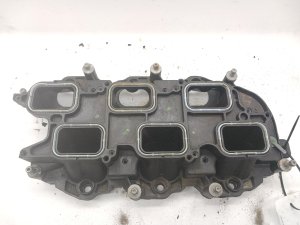

New Aftermarket Parts Available


The information in this article is provided for general reference and educational purposes only. Vehicle specifications, procedures, and part compatibility can vary by production date, trim level, and region. Always consult your vehicle's factory service manual and verify part numbers before purchasing or performing repairs. Safety-critical components such as airbags, seat belts, and braking systems should be installed by a qualified professional.
- Chrysler Town & Country:
- 🎬 Helpful Videos
- 🛍️ Shop This Part
- What's Unique About the 2011-2016 Chrysler Town & Country
- Symptoms You May Notice
- Most Likely Causes
- Rare But Worth Checking
- Diagnosis Steps
- Parts You'll Likely Need
- Related Codes That Often Appear With This One
- Technical Service Bulletins (TSBs) & Recalls
- Platform-Specific Known Issues
- Mechanic-Grade Diagnostic Values
- Scan Tool Commands That Help
- Wiring & Ground Locations
- Real Owner Repair Stories
- OEM Part Supersession History
- Model Year Variations Within This Range
- Diagnostic Flowchart
- Other Known Issues on This Vehicle
- Used vs. New Parts: Buying Guide for This Vehicle
- Real Owner Stories
- 2014 Chrysler Town & Country 3.6L — 109000 miles
- Related OBD-II Codes
- Frequently Asked Questions
- 🎟️ Get 5% Off