

P0196 on 2017-2024 Chrysler Pacifica 3.6L: Engine Oil Temperature Sensor Guide
P0196 on a Pacifica most often means the Engine Oil Temperature (EOT) sensor has failed. This sensor is located under the intake manifold, making replacement a labor-intensive job. Expect a shop repair to cost between $450 and $800, with the part itself being relatively inexpensive. While the sensor is the primary culprit, the entire oil cooler/filter housing assembly it screws into is a known failure point on this engine and is often replaced at the same time.
- P0196 points directly to a problem with the engine oil temperature sensor or its circuit, but the root cause is often a leaking oil cooler housing contaminating the sensor's connector.
- The repair is labor-intensive, requiring removal of the upper and lower intake manifolds.
- It is highly recommended to replace the entire oil cooler/filter housing assembly, not just the sensor, to prevent future leaks which are extremely common on the 3.6L Pentastar engine.
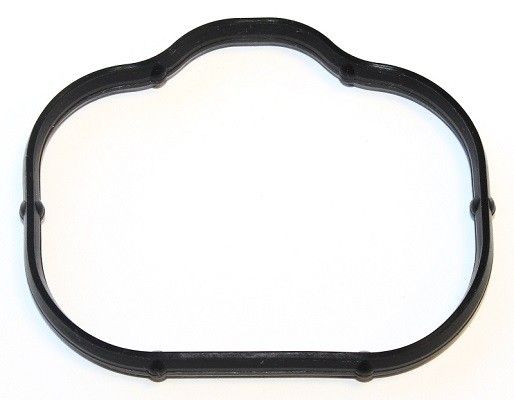
- Always replace the intake manifold gaskets during this repair to prevent vacuum leaks.
- This issue is not unique to the Pacifica; it affects a wide range of Chrysler, Dodge, and Jeep vehicles equipped with the 3.6L Pentastar V6.
What's Unique About the 2017-2024 Chrysler Pacifica
On the 3.6L Pentastar V6 engine, the issue isn't the sensor's reliability but its location. Unlike many engines where this sensor is easily accessible, Chrysler placed it deep in the engine valley on the oil cooler/filter housing assembly. This means replacing a relatively simple sensor requires the complete removal of the upper and lower intake manifolds, turning a small part replacement into a significant labor job. This procedure is identical across many Dodge, Jeep, and Chrysler vehicles that use the 3.6L Pentastar engine.
Symptoms You May Notice
- Check Engine Light is on
- Oil temperature gauge reads incorrectly, is stuck, or shows no reading
- Reduced fuel economy
- Engine may enter a reduced power "limp mode"
- Hesitation during acceleration
- Engine running rough or stalling intermittently
- Replacing the engine coolant temperature sensor. While the PCM compares the two sensors, the P0196 code specifically points to a fault in the engine oil temperature sensor circuit.
- Replacing only the EOT sensor when the entire oil cooler housing is leaking and contaminating the new sensor's connection.
Most Likely Causes
- Faulty Engine Oil Temperature (EOT) Sensor 🔴 High Probability The sensor itself is a common failure point for this code across all makes. It is a thermistor that can degrade over time from extreme heat cycles, causing its resistance readings to become inaccurate or fail completely.
How to confirm: Using a scan tool, monitor the Engine Oil Temperature reading from a cold start. It should be close to the ambient air and engine coolant temperature. As the engine warms up, the reading should increase smoothly. If it jumps erratically, stays at a fixed value (like -40°F), or doesn't change, the sensor is likely bad. The sensor can also be tested with a multimeter; its resistance should decrease smoothly as it is heated.
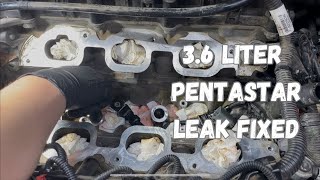
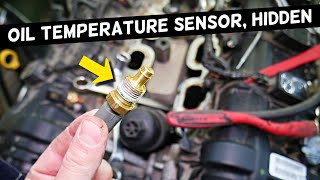
Typical fix: Replace the engine oil temperature sensor. 🎬 Watch this step-by-step 3.6L oil temperature sensor removal guide Since the intake manifolds must be removed, it is critical to also replace the upper and lower intake manifold gaskets to prevent future vacuum leaks. Many owners and mechanics elect to replace the entire oil cooler/filter housing assembly at the same time, as it is a very common source of oil and coolant leaks on this engine and you are already there.
Est. part cost: $20-$70 - Damaged Wiring or Connector 🟡 Medium Probability The sensor wiring is located in the high-heat engine valley, making it susceptible to becoming brittle and cracked over time. Oil and coolant leaks from the often-faulty oil cooler housing can also saturate and contaminate the connector, leading to poor signals.
How to confirm: After removing the intake manifolds to access the sensor, visually inspect the wiring harness and connector for any signs of melting, corrosion, or broken wires. With the sensor unplugged and ignition on, check for a 5-volt reference signal at the connector with a multimeter.
Typical fix: Repair the damaged section of the wiring harness or replace the connector pigtail. Clean any corrosion or oil from the connector pins with electronic cleaner.
Est. part cost: $10-$30 - Leaking Oil Cooler / Filter Housing Assembly 🟡 Medium Probability The plastic oil cooler housing that the EOT sensor screws into is a notoriously common failure point on the 3.6L Pentastar. It frequently develops cracks, leading to significant oil and/or coolant leaks into the engine valley. This can saturate the EOT and oil pressure sensor connectors, causing this code and others like P0520.
How to confirm: After removing the intake manifolds, look for pooled oil or coolant in the engine valley around the black plastic oil cooler assembly. The gaskets underneath the cooler are a frequent leak point.
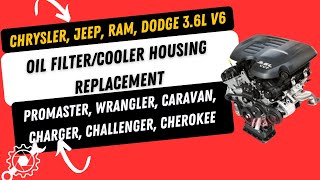
Typical fix: Replace the entire oil cooler/filter housing assembly. 🎬 See how to replace the Pentastar oil cooler housing While more expensive, it is highly recommended to do this when replacing the EOT sensor as a preventative measure, given the high failure rate and the labor involved to access it. Also replace the knock sensors located in the valley if they have been submerged in fluid.
Est. part cost: $150-$300 (for the complete housing assembly) - Low or Degraded Engine Oil ⚪ Low Probability
How to confirm: Check the engine oil level and condition. If the oil is extremely low or has turned to sludge, it can affect temperature readings, though this is less common for a range/performance code.
Typical fix: Perform an oil and filter change with the correct viscosity oil (0W-20 is specified for most of these years).
Est. part cost: $50-$100
Rare But Worth Checking
- Faulty Powertrain Control Module (PCM): This is very rare. Before condemning the PCM, all other possibilities, especially the sensor and its wiring, must be exhaustively ruled out. A PCM failure might also be accompanied by other unrelated trouble codes. Sometimes a PCM software update from the dealer can resolve logic-related issues.
Diagnosis Steps
- Connect an OBD-II scanner and confirm P0196 is the primary code. Note any other codes present, especially P0197, P0198, or P0520.
- Use the scanner's live data function to view the Engine Oil Temperature (EOT) and Engine Coolant Temperature (ECT) readings with the engine cold. They should be within a few degrees of each other and the ambient air temperature.
- Start the engine and monitor the EOT. It should rise steadily as the engine warms up. If it remains static, jumps erratically, or reads an illogical value (e.g., -40°F), the sensor or wiring is faulty.
- If the live data is inconclusive, proceed with the physical inspection. This requires removing the upper and lower intake manifolds to access the engine valley. It is critical to cover the intake ports with rags to prevent debris from falling into the engine.
- Once accessible, inspect the engine valley for pooled oil or coolant, which indicates a failed oil cooler housing. Inspect the EOT sensor's connector and wiring for damage, corrosion, or oil contamination.
- If wiring looks good, disconnect the sensor. With a multimeter, you can test the old sensor's resistance. It should change smoothly when gently heated with a heat gun or hair dryer. If it doesn't, the sensor is bad.
- To confirm the wiring is good, check for a 5-volt reference signal at the harness connector with the key on, engine off. Check the ground circuit for continuity back to the PCM.
- If the sensor and wiring test good, and there are no leaks, the fault may lie with the PCM, but this is extremely unlikely. Check for available PCM software updates before considering replacement.
Parts You'll Likely Need
- Engine Oil Temperature Sensor
(OEM #5149077AB (Superseded by 68596519AA))— This is the most common failure point for the P0196 code.
Trusted brands: Mopar, Standard Motor Products, NTK
OEM price range: $50-$70
Aftermarket price range: $20-$40 - Upper and Lower Intake Manifold Gasket Set
(OEM #Fel-Pro MS 97204 (aftermarket example))— These gaskets must be replaced any time the intake manifolds are removed. Reusing old gaskets will almost certainly cause a vacuum leak.
Trusted brands: Mopar, Fel-Pro, Mahle
OEM price range: $40-$60
Aftermarket price range: $25-$45 - Oil Cooler / Filter Housing Assembly
(OEM #Mopar 68105583AF (or later revisions))— Highly recommended preventative replacement. This part is a very common source of oil/coolant leaks on the 3.6L Pentastar. Since the labor to access it is already done, replacing it avoids a near-certain future repair.
Trusted brands: Mopar, Dorman
OEM price range: $200-$250
Aftermarket price range: $120-$180
Related Codes That Often Appear With This One
- P0197 — This code indicates 'Engine Oil Temperature Sensor Circuit Low', pointing to a short in the circuit, which can be caused by the same faulty sensor or wiring.
- P0198 — This code indicates 'Engine Oil Temperature Sensor Circuit High', pointing to an open circuit, often from a failed sensor or a broken wire.
- P0520 — This code is for the 'Engine Oil Pressure Sensor Circuit'. Since the oil pressure and oil temperature sensors are located next to each other on the oil cooler housing, a problem affecting this area (like an oil leak contaminating connectors) could trigger codes for both. This is a very common code pairing for this issue.
Technical Service Bulletins (TSBs) & Recalls
- While no TSB is specific to P0196 on the Pacifica, TSB S1809000007 addresses customer complaints of engine oil leaks or consumption, which can be related to the failing oil cooler housing that causes the P0196 code.
- TSB 18-004-21 involves reprogramming the PCM with updated software, which can sometimes resolve logic-based diagnostic trouble codes.
Platform-Specific Known Issues
- Oil Cooler Housing Leaks: The oil cooler/filter housing, which holds both the oil temperature and oil pressure sensors, is made of plastic and sits in the hot engine valley. It is extremely common for this housing or its gaskets to crack and leak oil and/or coolant. This leak often triggers P0196 and P0520 codes by contaminating the sensor connectors. Because of the high labor cost to access this area, it is standard practice for many shops and experienced DIYers to replace the entire oil cooler assembly as a preventative measure when dealing with a P0196 code, rather than just the sensor itself.
Mechanic-Grade Diagnostic Values
- EOT Sensor Resistance — expected: Approximately 2.0 to 2.6 kΩ at around 50-70°F (10-21°C). Resistance should decrease smoothly as temperature increases.. Failure: An open circuit (infinite resistance), a short (near zero resistance), or a reading that does not change when heated.
- EOT Sensor Connector Voltage (Reference) — expected: Approximately 5.0 Volts DC on one of the pins with the key on, engine off (KOEO).. Failure: Significantly lower voltage or no voltage suggests a wiring or PCM issue.
- EOT Sensor Connector Ground — expected: Continuity to ground (less than 0.2 Ω) on the ground pin.. Failure: High resistance to ground indicates a bad ground wire or connection.
- Oil Cooler Housing Mounting Bolt Torque — expected: 106 inch-pounds (approximately 12 Nm).. Failure: N/A - This is an installation specification.
Wiring & Ground Locations
- EOT Sensor Connector — On top of the oil cooler/filter housing assembly, located in the engine valley underneath the upper and lower intake manifolds. It is the smaller of the two sensors, typically located towards the front of the housing.. This is the direct connection point for the sensor. It is highly susceptible to contamination from oil and coolant leaks from the housing itself, which can cause the P0196 code.
- EOT Sensor Connector Pinout — The EOT sensor has a 2-pin connector.. One pin is for the 5V reference signal from the PCM, and the other is the signal return/ground. Testing these two pins is the primary way to validate the integrity of the circuit.
- PCM Ground — The main PCM grounds for this vehicle platform are typically located on the chassis near the front of the engine compartment, often designated as G103 or G104.. A poor PCM ground can cause erratic behavior and incorrect readings across multiple sensors, including the EOT, potentially leading to a P0196 code.
Real Owner Repair Stories
- PacificaForums.com user 'Jabbernat' (Chrysler Pacifica (year not specified, but in the 2017+ generation)) — Not specified directly in the thread, but the repair was for the oil cooler assembly, which is the primary context for code P0196.
❌ Tried (didn't work) The user was concerned about the knock sensors being soaked in coolant/oil after removing the old oil cooler without draining the system first.
✅ What actually fixed it The user replaced the original plastic oil cooler with a Dorman aftermarket unit, sprayed the soaked knock sensors with electronic cleaner, and reassembled everything to proper torque specs. After the repair, the user reported "No codes yet" and the engine temperature was running correctly.
OEM Part Supersession History
5149077AB→68596519AA— Standard part lifecycle update. The part is listed under multiple names including 'Fluid Temperature Sensor' and 'Coolant Temperature Sensor' but is the correct part for the Engine Oil Temperature application on this housing.
Heads up: The original part number 5149077AB was also used for coolant temperature sensors in other applications, which can cause confusion. Always verify by application. The superseded part 5149096AB is also mentioned.68105583AA / AB / AC / AD / AE / AF→68105583AG, 68310865AF, 68596317AA, and finally 68596317AB— Multiple revisions to address the high failure rate (cracking and leaking) of the original plastic housing. Later versions, including many aftermarket options, use an aluminum housing for better durability.
Heads up: While most housings from 2014+ are physically interchangeable, some aftermarket kits may come with sensors intended for earlier model years which have different resistance curves. It is critical to either use the sensors from your original housing or purchase new, correct sensors for your specific model year if you are not buying a complete, year-specific OEM assembly.
Model Year Variations Within This Range
- 2017-2024: The core design of the 3.6L Pentastar engine, oil cooler location, and the P0196 fault logic have remained largely consistent throughout this vehicle's generation. However, the part number for the oil cooler housing assembly has undergone numerous revisions. While a housing from a 2017 model will fit a 2023 model, it is always best to use the latest available OEM revision (e.g., 68596317AB) or a quality aluminum aftermarket replacement to prevent future failure.
Diagnostic Flowchart
Other Known Issues on This Vehicle
Issues unrelated to this code that are worth knowing about as an owner of this generation:
- Uconnect Screen Delamination & Ghost Touches 🟠 Medium — Very common, often occurs after 3-5 years. Heat and sun exposure accelerate the failure. (Ref: NHTSA Communication S2108000130 documents the issue, but it is not a recall. Class action lawsuits have been filed regarding this defect.)
- Engine Stop-Start (ESS) System Failure 🟡 Low — Extremely common. Typically caused by the failure of the small, secondary auxiliary battery. The 'Service Stop/Start System' warning light is a frequent complaint. (Ref: TSB S1908000083 Rev. A is related to an inoperative Stop/Start function.)
- ZF 9-Speed Transmission Shudder/Harsh Shifts 🔴 High — Common on earlier models of this generation (2017-2020). Can manifest as shuddering, hesitation, or rough shifting. (Ref: Multiple software updates (TSBs) have been released to address shift quality. In some cases, requires torque converter or transmission replacement.)
- Pentastar Rocker Arm/Lifter Failure ('Pentastar Tick') 🔴 High — A known issue across the 3.6L Pentastar engine family, though less frequent on later 'upgrade' versions. Worn rocker arms or lifters cause a distinct ticking noise, usually from one cylinder head. (Ref: TSB 9100229 relates to deactivating hydraulic lifters.)
- Sliding Door and Power Liftgate Malfunctions 🟠 Medium — Common complaints involve doors not opening/closing with buttons, sticking, or issues with wiring harnesses in the door track causing battery drain.
Used vs. New Parts: Buying Guide for This Vehicle
When a used part is the smart pick: For this specific repair, buying used parts is strongly discouraged. The EOT sensor is an inexpensive electronic part that degrades with heat cycles, and a used one carries a high risk of premature failure. The primary failure part, the oil cooler housing, is known to crack and leak over time, so a used plastic assembly from a junkyard is likely near the end of its life.
Donor-vehicle mileage cap: roughly under 20000 miles for the part to have meaningful remaining life.
What to inspect on the donor part:
- If forced to consider a used oil cooler housing, look for one from a very low-mileage vehicle.
- Inspect for any hairline cracks, especially around the sensor ports and mounting bolt holes.
- Ensure the plastic is not brittle or discolored from excessive heat.
- Verify the included sensors match the part numbers for your vehicle year, as they may have been swapped.
OEM-only on this vehicle (don't cheap out):
- While not strictly OEM-only, using a Mopar-branded oil cooler housing (latest revision) is the safest bet for guaranteed fitment and correct sensor compatibility.
Aftermarket brands forum-validated for this vehicle:
- Dorman (especially their aluminum-housing versions)
- Fel-Pro (for intake gaskets)
- Mahle (for intake gaskets)
- NTK / Standard Motor Products (for the EOT sensor)
Brands owners have reported issues with on this vehicle:
- Unbranded, no-name oil cooler assemblies from online marketplaces are a significant gamble. They often come with incorrect sensors or use poor-quality plastic/seals that fail quickly. One forum user reported receiving an aftermarket cooler with sensors for an older model year, requiring them to be swapped.
Real Owner Stories
Aggregated from forums and TSBs cited above. Mileages and costs reflect what owners reported in those sources.
2017-2024 Chrysler Pacifica 3.6L Pentastar V6
Symptoms: A user on pacificaforums.com was performing an oil cooler replacement and noted the significant labor required to access the engine valley, leading to a discussion on whether to replace additional sensors while the area was exposed.
What fixed it: Replacing the knock sensors and oil cooler assembly while addressing the primary failure in the engine valley to avoid repeating the labor-intensive intake manifold removal.
Source hint: pacificaforums.com - Thread 'Should I replace these sensors?'
2013 Dodge Caravan 3.6L Pentastar
Symptoms: The vehicle exhibited a family of related codes including P0196, P0197, and P0198, which were linked to a specific wiring harness issue on the 3.6L engine platform.
What fixed it: Repairing the wiring harness fault that was affecting the oil temperature sensor circuit.
Source hint: dodgeforum.com - Thread '2013 Dodge Caravan P06DA Oil Pump Circuit'
Related OBD-II Codes
Frequently Asked Questions
Is there a TSB for the P0196 code on my Chrysler Pacifica?
Why is it recommended to replace the oil cooler housing when I only have a P0196 sensor code?
Can I just replace the EOT sensor without removing the intake manifolds?
What other parts should I replace at the same time as the EOT sensor to avoid future labor costs?
Could my P0196 code be caused by using the wrong oil during my last change?
How can I tell if the P0196 code is a sensor failure or a wiring issue caused by an oil leak?
Helpful Videos
![2017 Chrysler Pacifica Oil Cooler Replacement. [3.6L]](https://img.youtube.com/vi/z1rrYCyqCN0/mqdefault.jpg)
Used OEM Parts in Stock


New Aftermarket Parts Available


The information in this article is provided for general reference and educational purposes only. Vehicle specifications, procedures, and part compatibility can vary by production date, trim level, and region. Always consult your vehicle's factory service manual and verify part numbers before purchasing or performing repairs. Safety-critical components such as airbags, seat belts, and braking systems should be installed by a qualified professional.
- Chrysler Pacifica:
- 🎬 Helpful Videos
- 🛍️ Shop This Part
- What's Unique About the 2017-2024 Chrysler Pacifica
- Symptoms You May Notice
- Most Likely Causes
- Rare But Worth Checking
- Diagnosis Steps
- Parts You'll Likely Need
- Related Codes That Often Appear With This One
- Technical Service Bulletins (TSBs) & Recalls
- Platform-Specific Known Issues
- Mechanic-Grade Diagnostic Values
- Wiring & Ground Locations
- Real Owner Repair Stories
- OEM Part Supersession History
- Model Year Variations Within This Range
- Diagnostic Flowchart
- Other Known Issues on This Vehicle
- Used vs. New Parts: Buying Guide for This Vehicle
- Real Owner Stories
- 2017-2024 Chrysler Pacifica 3.6L Pentastar V6
- 2013 Dodge Caravan 3.6L Pentastar
- Related OBD-II Codes
- Frequently Asked Questions
- 🎟️ Get 5% Off