

P0193 on 2011-2024 Dodge Durango 3.6L: Fuel Rail Pressure Sensor Circuit High Fixes
The P0193 code on a 3.6L Durango most often points to a failed fuel rail pressure sensor. Replacing the sensor is a common and effective fix. Expect to pay between $30-$100 for an aftermarket sensor and $150-$250 for an OEM part. It's a moderately easy DIY job for those with basic tools.
- P0193 on your Durango means the fuel rail pressure sensor is sending a signal that's too high.
- The most probable cause is a faulty fuel rail pressure sensor itself.
- Before replacing the sensor, always inspect its wiring and connector for damage, as this is the second most likely cause.
- Symptoms often include hard starting, rough idling, hesitation, and potential stalling.
- This is a manageable DIY repair for someone with basic tools, but remember to relieve fuel system pressure before starting.
What's Unique About the 2011-2024 Dodge Durango
On the 3.6L Pentastar V6 engine used in the Durango, the fuel system is generally reliable, but like any electronic component, the fuel rail pressure sensor can fail with age and heat cycles. While there are no widespread, documented platform-wide issues that make the Durango uniquely prone to P0193, the root cause is almost always electrical in nature—either the sensor itself has failed internally or there's an issue in the wiring harness leading to it. Unlike some other vehicles, it's less common for this code to be triggered by a mechanical failure like a faulty fuel pump on the Durango.
Symptoms You May Notice
- Check Engine Light is on
- Engine hesitation or stumbling during acceleration
- Rough or unstable idle
- Difficulty starting the engine, requiring long crank times
- Engine may stall, especially at stops
- Reduced engine power and performance
- Decreased fuel economy
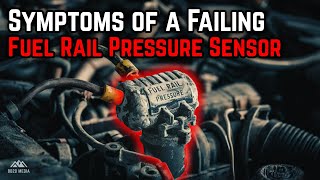
- A noticeable smell of gasoline from the exhaust in some cases 🎬 Watch: Learn the common signs of a failing sensor
- Replacing the fuel pump without verifying actual fuel pressure.
- Replacing fuel injectors when the issue is sensor-related.
- Replacing the Fuel Rail Pressure Sensor when the actual cause is a poor connection or chafed wiring.
Most Likely Causes
- Faulty Fuel Rail Pressure (FRP) Sensor 🔴 High Probability The sensor is an electronic component that operates in a high-heat engine bay environment, and internal failure over time is the most common reason for this code.
How to confirm: Using a scan tool, observe the Fuel Rail Pressure reading with the Key On, Engine Off (KOEO). If the reading is abnormally high or does not change, the sensor is likely faulty. You can also test the sensor's signal wire with a multimeter; a reading consistently above 4.5V points to a bad sensor. The sensor is located on the fuel rail.
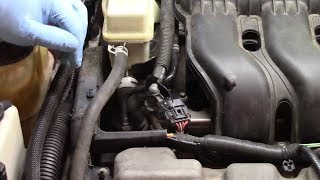
Typical fix: Replace the fuel rail pressure sensor. This involves depressurizing the fuel system before swapping the sensor. 🎬 See this step-by-step fuel rail pressure sensor replacement
Est. part cost: $30-$250 - Wiring or Connector Issue 🟡 Medium Probability The wiring harness near the engine can become brittle or damaged from heat and vibration, leading to a short to voltage on the signal wire.
How to confirm: Visually inspect the wiring harness and connector for the FRP sensor. Look for any signs of damage, corrosion, or loose pins. Perform a continuity test on the signal, reference, and ground wires between the sensor connector and the PCM.
Typical fix: Repair the damaged section of the wiring harness or replace the connector pigtail.
Est. part cost: $10-$50
Rare But Worth Checking
- Faulty Powertrain Control Module (PCM): This is very rare. The PCM should only be considered after all other possibilities, including the sensor and its entire circuit, have been thoroughly tested and ruled out.
- High Fuel Pressure from a Faulty Fuel Pump: While the code indicates a high *voltage*, it can in rare cases be triggered by genuinely excessive fuel pressure. This is uncommon on the Durango's returnless fuel system but worth considering if a new sensor and good wiring don't solve the issue. A mechanical fuel pressure gauge can be used to verify actual pressure.
Diagnosis Steps
- Scan for Codes: Connect an OBD-II scanner and confirm P0193 is the primary code. Note any other codes present and check freeze frame data.
- Check Freeze Frame Data: Review the freeze frame data to see the engine conditions (RPM, temperature, etc.) when the code was set.
- Live Data Analysis: With the Key On, Engine Off (KOEO), view the live data for the Fuel Rail Pressure (FRP) sensor. A normal reading should be low. If it reads an unusually high, fixed value (e.g., over 5V), the sensor or its circuit is likely at fault.
- Visual Inspection: Turn the vehicle off. Locate the FRP sensor on one of the engine's fuel rails. Carefully inspect the sensor's electrical connector and the surrounding wiring for any signs of damage, melting, corrosion, or loose connections.
- Circuit Voltage Test: Disconnect the sensor. With the key on, use a digital multimeter to check the reference voltage (should be around 5V) and ground at the connector. Then, check the signal wire. A short to voltage on the signal wire will cause a high reading.
- Test the Sensor (if possible): If the wiring checks out, the sensor itself is the most likely culprit.
- Verify with Mechanical Gauge (Optional): To definitively rule out a fuel pump issue, connect a mechanical fuel pressure gauge to the fuel rail and compare its reading to the scanner's live data. If the mechanical gauge shows normal pressure while the scanner shows high pressure, the sensor is confirmed to be faulty.
- Verify Repair: After replacing the sensor or repairing the wiring, clear the codes and perform a test drive to ensure the code does not return.
Parts You'll Likely Need
- Fuel Rail Pressure Sensor
(OEM #05149174AB)— This sensor is the most common failure point for the P0193 code due to internal electronic failure. Note: This part number is often listed as a MAP sensor, but serves as the fuel rail pressure sensor in this application. Always verify with VIN.
Trusted brands: Mopar, Bosch, Standard Motor Products, Crown Automotive
OEM price range: $150-$250
Aftermarket price range: $30-$100
Related Codes That Often Appear With This One
- P0192 — This code for 'Fuel Rail Pressure Sensor Circuit Low' can appear intermittently if there is a wiring issue causing the signal to fluctuate between open/short to ground and short to power.
- P0172 / P0175 — If the PCM receives a false high-pressure signal, it may command less fuel, but if the actual pressure is normal, this can lead to other fuel trim codes indicating a rich condition as the system tries to compensate.
Platform-Specific Known Issues
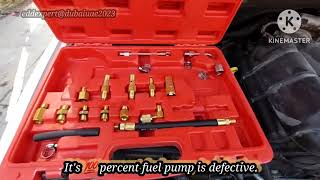
- Forum Confirmation of Sensor Failure: Multiple owners of vehicles with the 3.6L Pentastar engine have reported that replacing the fuel rail pressure sensor successfully resolved the P0193 code and associated symptoms like stalling and hard starting. 🎬 Watch: Diagnosing a Durango hard start and fuel pump issue This reinforces that sensor failure is the primary cause.
Diagnostic Flowchart
Other Known Issues on This Vehicle
Issues unrelated to this code that are worth knowing about as an owner of this generation:
- Cracked Oil Filter Housing / Cooler Assembly 🔴 High — Extremely common, often occurring between 60,000 and 120,000 miles. The plastic housing becomes brittle and cracks, causing major oil and/or coolant leaks into the engine valley. (Ref: TSB 09-008-15 provides diagnostic aid for oil loss in this area.)
- Rocker Arm / Lifter Failure ('Pentastar Tick') 🔴 High — Widespread and well-documented design flaw affecting all model years. Needle bearings in the rocker arms fail, causing a distinct ticking noise, misfires, and potential camshaft damage. (Ref: Subject of multiple class-action lawsuits.)
- Totally Integrated Power Module (TIPM) Failure 🔴 High — Common on 2011-2013 models especially. Can cause a wide range of bizarre electrical issues, including crank-no-start, stalling, fuel pump running continuously, or accessories activating randomly. (Ref: A recall was issued for some 2011 models for a TIPM-related fuel pump relay issue.)
- Left Cylinder Head Failure (Early Models) 🔴 High — Primarily affects 2011-2013 models. A manufacturing defect in the left cylinder head (Bank 2) could lead to valve seat issues, causing misfires (P0302, P0304, P0306) and requiring cylinder head replacement. (Ref: TSB 09-002-14 REV. B / Warranty Extension X56)
- Faulty Engine Oil Pressure Sensor (P0520) 🟠 Medium — A very common issue on 2013-2014 models, prompting a TSB. The sensor is located in the engine valley under the intake manifold, making replacement labor-intensive. (Ref: TSB 18-034-14 REV. A)
Real Owner Stories
Aggregated from forums and TSBs cited above. Mileages and costs reflect what owners reported in those sources.
2011-2024 Dodge Durango 3.6L Pentastar V6
Symptoms: Owners reported the vehicle experiencing stalling and hard starting issues alongside the P0193 code.
What fixed it: Replacing the fuel rail pressure sensor successfully resolved the code and the associated symptoms.
Source hint: Vehicle_specific_issues: Forum Confirmation of Sensor Failure
Related OBD-II Codes
Frequently Asked Questions
Is there a TSB for the oil leaks I'm seeing on my 3.6L Pentastar Durango?
My 2012 Durango has a misfire and the P0193 code; could this be related to the cylinder head warranty extension?
Could a faulty TIPM cause the fuel issues associated with P0193 on a 2011 Durango?
Where is the Fuel Rail Pressure sensor located on the 3.6L Pentastar V6?
I have a P0520 code along with my fuel issues; is this common for the Durango?
How much should I expect to pay for a new Fuel Rail Pressure sensor for my Durango?
Helpful Videos
We Have This Part in Stock


The information in this article is provided for general reference and educational purposes only. Vehicle specifications, procedures, and part compatibility can vary by production date, trim level, and region. Always consult your vehicle's factory service manual and verify part numbers before purchasing or performing repairs. Safety-critical components such as airbags, seat belts, and braking systems should be installed by a qualified professional.
- Dodge Durango:
- 🎬 Helpful Videos
- 🛍️ Shop This Part
- What's Unique About the 2011-2024 Dodge Durango
- Symptoms You May Notice
- Most Likely Causes
- Rare But Worth Checking
- Diagnosis Steps
- Parts You'll Likely Need
- Related Codes That Often Appear With This One
- Platform-Specific Known Issues
- Diagnostic Flowchart
- Other Known Issues on This Vehicle
- Real Owner Stories
- 2011-2024 Dodge Durango 3.6L Pentastar V6
- Related OBD-II Codes
- Frequently Asked Questions
- 🎟️ Get 5% Off