

P0191 on 2004-2011 Volvo S40: Fuel Rail Pressure Sensor Causes and Fixes
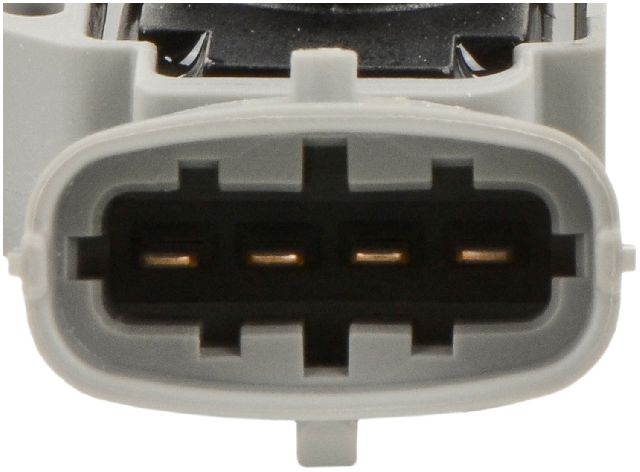
On a 2004-2011 Volvo S40, code P0191 almost always points to a failing Fuel Rail Pressure Sensor (FRPS). This is a common failure item on these 5-cylinder engines. Replacing the sensor is a straightforward DIY job and typically costs between $45 and $85 for an OEM-quality part. The sensor is made by Bosch and the OEM part number is 31272730.
- P0191 on a 2004-2011 S40 is most likely caused by a failed Fuel Rail Pressure Sensor.
- Symptoms often include sudden power loss, stalling, and a rough idle.
- This is a very DIY-friendly repair that can be done in under an hour with basic tools (T25, T30 Torx).
- Always relieve fuel system pressure via the Schrader valve before unscrewing the old sensor to prevent fuel spray.
- Using an OEM-quality sensor from Bosch (part #0261230110) is highly recommended and more affordable than the Genuine Volvo branded part.
What's Unique About the 2004-2011 Volvo S40
The second-generation Volvo S40 (P1 platform) with the 5-cylinder engine uses a fuel system with many components from Bosch. The Fuel Rail Pressure Sensor (FRPS) is a known failure point on these cars as they age. Owners often experience symptoms like sudden power loss or stalling, which can be alarming but are classic indicators of this specific sensor failing on this platform. The issue is so common that many owners and independent shops recommend replacing it preventatively if the car exhibits any related symptoms, even before the Check Engine Light is on.
Symptoms You May Notice
- Check Engine Light is on
- Sudden, momentary loss of engine power
- Engine stalling, sometimes while driving
- Hesitation or stumbling during acceleration
- Rough idle
- Reduced fuel economy
- Engine cranks but is hesitant to start
- Engine running rough or misfiring
- Replacing the fuel pump when the sensor is the actual problem.
- Replacing the Manifold Absolute Pressure (MAP) sensor, which is a different part located elsewhere on the engine.
- Assuming a lean code (like P0171) automatically means a weak fuel pump, when a faulty FRPS can provide incorrect data leading to multiple codes.
Most Likely Causes
- Failing Fuel Rail Pressure Sensor (FRPS) 🔴 High Probability The original Bosch sensors on these 5-cylinder engines are a common failure item due to age and heat cycles. Multiple owner forums and repair databases confirm this as the primary cause for P0191.
How to confirm: The most definitive test is to compare the fuel pressure reading from a scan tool with the reading from a mechanical fuel pressure gauge connected to the rail's Schrader valve. If the scan tool reading is erratic or significantly different from the mechanical gauge, the sensor is bad. Given the high failure rate and low cost of the part, many owners opt to replace it as the first step. A user on VolvoForums noted high pressure readings (50-60 psig) when testing, which pointed towards a faulty sensor rather than a weak pump.
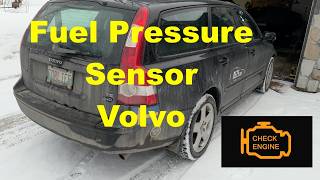
Typical fix: Replace the fuel rail pressure sensor. It is located on the end of the fuel rail and held by a single T25 Torx screw. 🎬 See this walkthrough on how to replace the sensor yourself. The job requires relieving fuel pressure first.
Est. part cost: $45 - $85 - Damaged Wiring or Connector 🟡 Medium Probability The engine bay environment can cause wiring insulation to become brittle and connectors to corrode over time. The wiring harness to the sensor can get chafed or damaged during other engine repairs.
How to confirm: Visually inspect the sensor's electrical connector and the nearby wiring for any signs of corrosion, pushed-out pins, or frayed wires. Wiggle the connector and wiring with the engine running to see if it causes the symptoms to appear or disappear. Check for continuity and voltage at the connector pins using a multimeter.
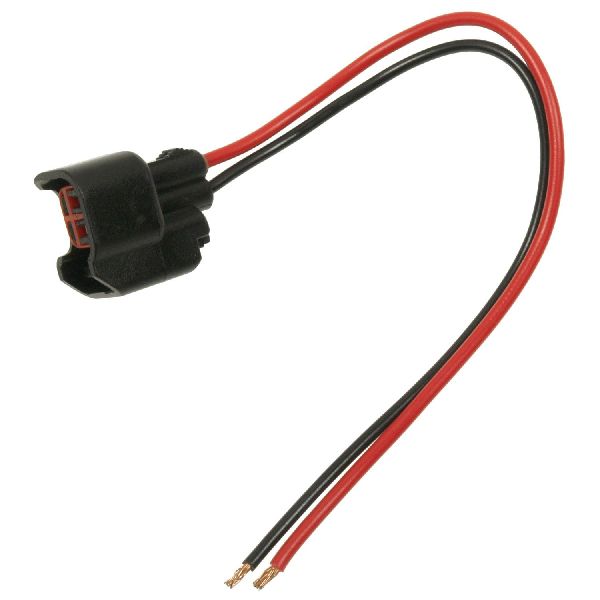
Typical fix: Clean the connector pins with electrical contact cleaner and apply dielectric grease. Repair or replace any damaged sections of the wiring harness. A replacement pigtail connector is available if the original is damaged beyond repair.
Est. part cost: $5 - $35
Rare But Worth Checking
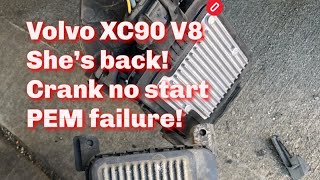
- Failing Fuel Pump Control Module (PEM): On early P1 models (approx. 2004.5-2006), the PEM was located in a vulnerable spot in the passenger side front wheel well, making it prone to water and salt corrosion. This can cause erratic fuel pump operation, leading to pressure fluctuations that trigger P0191. Volvo issued a recall to relocate this module to under the rear seat. 🎬 Check this video to see if your PEM is the problem. Symptoms include stalling, no-start, and lack of power.
- Failing Fuel Pump: While less common than the sensor, a weak fuel pump can cause the actual fuel pressure to be erratic, which the sensor will accurately report, triggering the P0191 code. This should be suspected if replacing the sensor does not fix the issue and the PEM has been checked or relocated.
- Clogged Fuel Filter: A severely clogged fuel filter can restrict fuel flow, causing pressure to drop under load and potentially triggering this code. This is more likely if the filter has not been changed per the maintenance schedule. On the P1 platform, the fuel filter is located near the right rear wheel.
- Faulty Engine Control Module (ECM): In very rare cases, the ECM itself can be the source of the problem, misinterpreting a correct signal from the sensor. This should only be considered after all other possibilities have been exhausted.
Diagnosis Steps
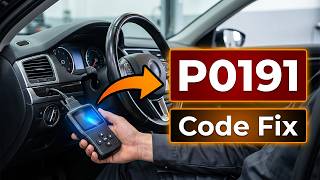
- Read the code with an OBD-II scanner and note any other codes present. 🎬 Watch this guide to understanding and fixing the P0191 code.
- Check Freeze Frame data to see the engine conditions (RPM, load, etc.) when the code was set.
- Safety First: Before working on the fuel system, relieve the fuel pressure. On the P1 platform, there is a Schrader valve on the fuel rail for this purpose. Use a rag to catch any fuel spray. Then, disconnect the negative battery terminal.
- Locate the fuel rail pressure sensor on the end of the fuel rail. You will need to remove the plastic engine cover (held by T30 Torx screws).
- Inspect the sensor's electrical connector and wiring for any visible damage, corrosion, or loose pins. Repair as needed.
- If the wiring looks good, the most likely culprit is the sensor itself. It is held in place by a single T25 Torx screw. Have the new sensor ready for a quick swap to minimize fuel spillage.
- (Advanced): To be certain, reconnect the battery. Use a scan tool to monitor live data for 'Fuel Rail Pressure.' Compare this reading to a mechanical fuel pressure gauge attached to the Schrader valve on the opposite end of the fuel rail. The readings should be very close. If the scan tool shows erratic or incorrect values compared to the gauge, the sensor is faulty.
- If both readings match but are below specification, investigate the Fuel Pump Control Module (PEM), especially on 2004.5-2006 models for corrosion or recall status. If the PEM is fine, then suspect the fuel pump or a clogged fuel filter.
Parts You'll Likely Need
- Fuel Rail Pressure Sensor
(OEM #31272730)— This sensor is the most common failure point for code P0191 on this specific Volvo platform. The Volvo part number 31272730 supersedes previous numbers 8699449 and 30756097. The equivalent and original manufacturer part is Bosch 0261230110.
Trusted brands: Bosch, Genuine Volvo
OEM price range: $175-$240
Aftermarket price range: $45-$85
Related Codes That Often Appear With This One
- P0190 — This code indicates a direct circuit malfunction (e.g., open or short) in the fuel rail pressure sensor circuit, while P0191 is for a performance/range issue. They can appear together if the sensor is failing intermittently.
- P0192 — This code specifically indicates 'Fuel Rail Pressure Sensor Circuit Low Input,' which can be triggered by the same failing sensor that causes P0191.
- P0089 — This code for 'Fuel Pressure Regulator Performance' can appear alongside P0191, as the ECM's ability to regulate pressure is compromised by an irrational signal from the FRPS. A user on the Volvo Owners Club Forum reported this combination on a C30 T5.
Platform-Specific Known Issues
- There was a safety recall (NHTSA ID: 07V-226) for faulty fuel pressure sensors on some 2003-2004 Volvo models, but it primarily affected the S60/V70. While the S40 was not the main focus, it indicates a history of premature sensor failures on related platforms around this time.
- Volvo issued Recall 190 for the Pump Electronic Module (PEM) on 2004.5-2006 S40 models due to its original placement in the wheel well, which led to corrosion and failure. A failed PEM can cause symptoms similar to a failed FRPS, including stalling and no-start conditions.
Technical Service Bulletins (TSBs) & Recalls
- TSB Bulletin #KC-281: While issued for the XC60, this bulletin highlights that P0191-64 can appear in different combinations and time stamps with other codes, potentially leading to a vehicle derate.
- TSB Bulletin #K33593604: This manufacturer bulletin notes that P0191-00 can occur alongside codes like P0069-64 and P240F-00, which may result in a possible vehicle derate condition.
Mechanic-Grade Diagnostic Values
- Fuel Rail Pressure Sensor Signal Wire Voltage (KOEO - Key On, Engine Off) — expected: ~0.5V to 1.8V. Failure: A reading stuck at 0V suggests a short to ground. A reading stuck at 5V indicates an open circuit, a bad ground, or an internally failed sensor.
- Fuel Rail Pressure Sensor Signal Wire Voltage (Engine at Idle) — expected: ~1.2V to 1.5V. Failure: Voltage that is erratic, unchanging, or significantly outside this range while the engine is idling smoothly indicates a sensor or wiring fault.
- Fuel Rail Pressure Sensor Signal Wire Voltage (Snap Acceleration) — expected: Should jump towards 3.5V - 3.8V. Failure: If the voltage does not respond to changes in engine load and RPM, the sensor is not reading pressure changes correctly.
Scan Tool Commands That Help
- Volvo VIDA or Vdash: Read Fault Codes & Live Data Monitoring — Essential for initial diagnosis. Use Vdash or VIDA with a compatible J2534 interface to read the specific Volvo fault codes and monitor live 'Fuel Rail Pressure' data to see what the ECM is seeing from the sensor. This helps differentiate between a sensor reporting incorrectly and an actual fuel pressure problem.
Wiring & Ground Locations
- Fuel Rail Pressure Sensor Connector — On the end of the fuel rail, accessible after removing the top plastic engine cover.. This is the primary point for electrical testing. The three wires are typically: Red (5V reference power from ECM), Green (Sensor Ground from ECM), and Orange (Signal wire back to ECM). Testing for 5V power and a good ground is the first step before condemning the sensor.
- Engine Bay Ground Points — General P1 platform ground points are located on the inner fenders near the headlights and on the chassis frame rails. A poor ground for the ECM can cause a variety of sensor reading issues.. A corroded or loose main engine or ECM ground can cause floating voltages and erratic sensor readings, including from the FRPS. While not a direct cause, it's a commonly overlooked check if direct sensor wiring tests are inconclusive.
Real Owner Repair Stories
- volvosweden on YouTube (Volvo V50 (P1 Platform Twin of S40)) — Sudden loss of power while driving, as if the power was cut off, followed by a Check Engine Light.
❌ Tried (didn't work) The user went straight to diagnosis rather than replacing parts randomly.
✅ What actually fixed it The user diagnosed the issue using Vdash software, which pointed to the fuel pressure sensor. They replaced the original sensor with a new Bosch sensor (part number 0261230110) and confirmed the issue was resolved. They recommended replacing it as preventative maintenance on higher-mileage cars.
OEM Part Supersession History
8699449, 30756097→31272730— Standard part revision and consolidation by Volvo.
Heads up: The original manufacturer for all these parts is Bosch. The direct Bosch equivalent is part number 0261230110. This part is identical to the Genuine Volvo part and can be used without issue, often at a lower cost.
Model Year Variations Within This Range
- 2004.5-2006: The Fuel Pump Electronic Module (PEM) was located in the passenger side front wheel well, making it highly susceptible to corrosion from water and road salt. This was a common cause of fuel delivery issues, including symptoms that could trigger P0191.
- 2007-2011: Following a recall and a design change, Volvo relocated the PEM to a protected location under the rear seat, significantly reducing its failure rate from corrosion. When diagnosing fuel issues, the PEM is a much lower probability cause on these later models.
Diagnostic Flowchart
Other Known Issues on This Vehicle
Issues unrelated to this code that are worth knowing about as an owner of this generation:
- Clogged Sunroof Drains Leading to Water Ingress 🔴 High — Very common across all P1 models. The drain tubes can clog or disconnect at the A-pillar, causing water to leak into the passenger footwell, potentially damaging the Central Electronic Module (CEM).
- PCV / Oil Trap System Clogging 🟠 Medium — Common on T5 engines around 60k-100k miles. A clogged PCV system leads to high crankcase pressure, causing a loud whistling noise, potential oil seal leaks, and poor idling. (Ref: Volvo issued an extended warranty (No. 205) for this issue on some models.)
- Alternator Failure 🟠 Medium — Common on higher mileage cars. Failure is often preceded by a loud whining or grinding noise that increases with engine RPM. May cause flickering lights and various electrical issues.
- Cracked Coolant Expansion Tank 🟡 Low — Common due to age and heat cycles. The plastic tank develops small cracks, especially around the seams, leading to coolant loss. It's an easy and relatively inexpensive DIY replacement.
- Worn Front Engine Mount / Torque Mount 🟡 Low — Frequently reported on cars over 80,000 miles. A worn upper engine mount or lower torque mount causes noticeable vibrations at idle and a 'clunk' during acceleration or shifting.
Used vs. New Parts: Buying Guide for This Vehicle
When a used part is the smart pick: A used Fuel Pump Control Module (PEM) can be a cost-effective option, especially if sourced from a 2007 or newer vehicle where the part was located inside the cabin, protected from the elements.
Donor-vehicle mileage cap: roughly under 150000 miles for the part to have meaningful remaining life.
What to inspect on the donor part:
- For a PEM, visually inspect the electrical connector pins for any signs of green or white corrosion.
- Confirm the donor vehicle is a 2007 or later model to get the relocated, less-corroded version.
- Avoid any modules with physical damage to the casing or signs of water intrusion.
OEM-only on this vehicle (don't cheap out):
- Fuel Rail Pressure Sensor (FRPS) - Given its high failure rate and the low cost of a new OEM Bosch unit, buying a used sensor is not recommended as it offers poor value and reliability.
Aftermarket brands forum-validated for this vehicle:
- Bosch (for the Fuel Rail Pressure Sensor - this is the original equipment manufacturer)
Brands owners have reported issues with on this vehicle:
- Unbranded, 'white-box' sensors from online marketplaces. While no specific brand is consistently cited as bad for this part, the consensus is to stick with the OEM Bosch sensor for reliability.
Real Owner Stories
Aggregated from forums and TSBs cited above. Mileages and costs reflect what owners reported in those sources.
2005 Volvo S40 T5
Symptoms: High fuel pressure readings of 50-60 psig measured at the rail, accompanied by codes P0026, P0191, and P0190.
What fixed it: Replacement of the fuel rail pressure sensor, as the abnormally high readings pointed toward a faulty sensor rather than a weak pump.
Source hint: VolvoForums - 'High fuel pressure + P0026 and P0191/0190'
2008 Volvo C30 T5
Symptoms: Engine Management Light illuminated with codes P0191 and P0089 appearing together.
What fixed it: Replacement of the fuel rail pressure sensor (FRPS).
Source hint: Volvo Owners Club Forum - 'C30 T5 Engine Management Light'
2004.5-2006 Volvo S40
Symptoms: Stalling and no-start conditions, similar to a failed fuel pressure sensor, caused by component corrosion.
What fixed it: Addressing the Pump Electronic Module (PEM) which was originally located in the wheel well.
Source hint: Recall 190 / vehicle_specific_issues
Related OBD-II Codes
Frequently Asked Questions
Is there a recall for the fuel pressure sensor on my 2004-2011 Volvo S40?
My 2005 S40 is stalling and has a P0191 code; could this be related to the fuel pump module recall?
Where is the Fuel Rail Pressure Sensor located on the 2.4L or T5 engine, and what tools do I need to change it?
How can I be sure the sensor is bad before spending $45-$85 on a new Bosch unit?
Could a whistling noise and rough idle be related to my P0191 code?
Does the P0191 issue affect the Volvo V50 or C30 as well?
Helpful Videos
We Have This Part in Stock


The information in this article is provided for general reference and educational purposes only. Vehicle specifications, procedures, and part compatibility can vary by production date, trim level, and region. Always consult your vehicle's factory service manual and verify part numbers before purchasing or performing repairs. Safety-critical components such as airbags, seat belts, and braking systems should be installed by a qualified professional.
- Volvo S40:
- 🎬 Helpful Videos
- 🛍️ Shop This Part
- What's Unique About the 2004-2011 Volvo S40
- Symptoms You May Notice
- Most Likely Causes
- Rare But Worth Checking
- Diagnosis Steps
- Parts You'll Likely Need
- Related Codes That Often Appear With This One
- Platform-Specific Known Issues
- Technical Service Bulletins (TSBs) & Recalls
- Mechanic-Grade Diagnostic Values
- Scan Tool Commands That Help
- Wiring & Ground Locations
- Real Owner Repair Stories
- OEM Part Supersession History
- Model Year Variations Within This Range
- Diagnostic Flowchart
- Other Known Issues on This Vehicle
- Used vs. New Parts: Buying Guide for This Vehicle
- Real Owner Stories
- 2005 Volvo S40 T5
- 2008 Volvo C30 T5
- 2004.5-2006 Volvo S40
- Related OBD-II Codes
- Frequently Asked Questions
- 🎟️ Get 5% Off