

OBD-II Code P0190: Fuel Rail Pressure Sensor Circuit Problem
The Ultimate Guide to What P0190 Means, Why It Triggers, and How to Fix It
- Code P0190 flags a critical electrical failure in the fuel rail pressure sensor circuit, causing immediate stalling and sudden power loss.
- Stop driving immediately; ignoring P0190 forces a rich fuel mixture that destroys a $1,500 catalytic converter within weeks.
- Replacing the $50-$200 sensor fixes the issue 70% of the time, but corroded wiring or a failing fuel pump driver module are frequent culprits.
- Never replace the sensor without comparing live OBD-II fuel pressure data against a mechanical gauge reading to rule out a dead fuel pump.
What Does P0190 Mean?

The Powertrain Control Module (PCM) detects an electrical circuit failure in the fuel rail pressure sensor. This sensor measures the exact fuel pressure supplied to the injectors. When the voltage signal is erratic, out of the specified range, or completely absent, the PCM cannot control fuel delivery, triggering the P0190 code.
Technical definition: SAE/OBD-II defines P0190 as "Fuel Rail Pressure Sensor 'A' Circuit Malfunction 🎬 Watch: A quick overview of P0190 causes and common fixes.". The PCM determined the voltage signal from the primary fuel rail pressure sensor (designated by 'A') fell outside the expected threshold for a calibrated period. This indicates a critical circuit failure, not just an out-of-range pressure reading.
Can I Drive With P0190?
No — Do Not Drive. Do not drive with a P0190 code. Your vehicle will stall without warning, experience significant power loss, or fail to start, creating a serious safety risk in traffic. Continuing to drive forces a rich fuel condition, sending unburnt fuel into the exhaust and melting the catalytic converter. This secondary damage adds $800-$2,500 to your repair bill.
Common Causes

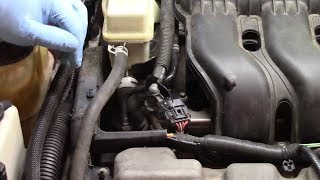
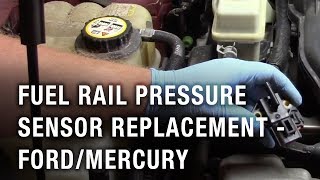
- Faulty Fuel Rail Pressure Sensor (Very Common) — The sensor itself is the most frequent culprit. 🎬 Watch this step-by-step guide to replacing a faulty sensor. Internal components wear out, develop electrical shorts, or suffer physical damage, causing incorrect or absent voltage signals to the PCM.
- Damaged Wiring or Connectors (Common) — The wiring harness leading to the sensor degrades from heat, vibration, and environmental exposure. Frayed wires, melted insulation, or corroded connector pins interrupt the signal.
- Faulty Fuel Pump Driver Module (FPDM) or Relay (Common) — The FPDM or relay controls power to the fuel pump. When it fails, it causes a sudden loss of fuel pressure that the sensor reports as a signal drop-off, leading the PCM to flag a circuit error. This is a widespread issue on Ford models.
- Weak Fuel Pump or Clogged Fuel Filter (Common) — While P0190 is an electrical code, severe mechanical issues trigger it. A failing fuel pump or severely clogged filter creates highly unstable fuel pressure, which the PCM interprets as an erratic sensor circuit fault.
- Faulty Fuel Pressure Regulator (Less Common) — A malfunctioning regulator causes excessively high or low pressure. In some systems, this extreme reading falls outside the expected electrical range, triggering a circuit code.
- Low or No Fuel (Rare) — Running out of fuel causes the pump to ingest air, leading to a rapid loss of fuel pressure. The sensor's voltage plummets, which the PCM logs as a circuit fault before logging a low-pressure code.
- Faulty Powertrain Control Module (PCM) (Very Rare) — An internal failure of the PCM's sensor input circuit or corrupted software prevents it from processing the signal from a perfectly good sensor.
Symptoms

- Check Engine Light is On — The PCM illuminates the light immediately upon detecting the circuit fault.
- Engine Stalling — The engine stalls unexpectedly while driving, at idle, or shortly after starting, creating a major safety hazard.
- Engine is Hard to Start or Won't Start — Without a reliable fuel pressure signal, the PCM cannot calculate fuel injection timing. The engine cranks excessively or fails to start entirely.
- Poor Engine Performance and 'Limp Mode' — Expect rough idling, hesitation during acceleration, and a general loss of power. Many vehicles enter a reduced-power 'limp mode' (often capped at 40 mph) to protect the engine.
- Black Smoke from Exhaust — A persistently rich fuel mixture causes black smoke from the tailpipe, indicating unburnt fuel entering the exhaust system.
- Decreased Fuel Economy — The PCM defaults to a rich fuel mixture as a failsafe, causing the vehicle to consume significantly more fuel.
Diagnostic Flowchart
Tap your situation to follow the diagnostic path that matches what you're seeing on this code.
Common Fixes & Costs
- Replace Fuel Rail Pressure Sensor — Parts: $50-$200, Labor: $75-$250, ~1.2 hr book time (DIY)
- Repair Wiring or Replace Connector — Parts: $10-$50, Labor: $100-$250, ~1.5 hr book time (Intermediate)
- Replace Fuel Pump Driver Module (FPDM) — Parts: $50-$150, Labor: $50-$100, ~0.5 hr book time (DIY)
- Replace Clogged Fuel Filter — Parts: $20-$80, Labor: $50-$150, ~0.8 hr book time (DIY)
- Replace Failing Fuel Pump — Parts: $200-$600, Labor: $300-$600, ~3.0 hr book time (Professional)
Used vs. New Parts: Buying Guide
When a used part is worth it: Buying a used fuel rail pressure sensor is not recommended. The savings are minimal compared to the risk of the used part failing soon after installation.
Donor-vehicle mileage cap: roughly under 50000 miles for the part to have meaningful remaining life.
Donor quality checklist:
- Verify the part number matches exactly.
- Inspect the electrical connector for corrosion, bent pins, or damage.
- Avoid parts from vehicles with high mileage or known fuel system issues.
Decision logic:
- If The vehicle is essential for daily use and reliability is paramount. → Buy a new OEM or high-quality aftermarket sensor. The peace of mind outweighs the small cost savings.
- If The budget is extremely tight and the vehicle is older. → A used part from a low-mileage, accident-damaged vehicle is a viable option, but accept the risk of a shorter lifespan.
- If The part is a simple mechanical component like a fuel rail (not the sensor itself). → A used part is acceptable as long as it is clean and undamaged.
Warranty tradeoff: Used salvage yard parts come with a 30-90 day warranty. New aftermarket parts carry a one-year to lifetime warranty. New OEM parts usually have a 1-year warranty.
Worst-case if a used part fails: $200-$500 if a used sensor fails after installation, accounting for repeat labor costs.
What Happens If You Wait — Timeline
- 0-2 weeks: Check Engine Light illuminates. Occasional hard starting or slight hesitation when accelerating. The issue is intermittent. (MPG impact: 0-5%% · Added cost: $0)
- 2 weeks - 3 months: Symptoms become consistent. Stalling at idle is frequent, and the engine runs rough. Fuel economy drops as the PCM defaults to a rich fuel mixture. (MPG impact: 5-15%% · Added cost: $50-150 in wasted fuel)
- 3-6 months: The rich fuel mixture overheats the catalytic converter. The internal ceramic honeycomb cracks or melts from unburnt fuel igniting within it. (MPG impact: 10-20%% · Added cost: $800-$2,500 (catalytic converter replacement needed))
- 6+ months: Catastrophic failure. The catalytic converter clogs completely, causing severe backpressure, extreme power loss, and potential internal engine damage. (MPG impact: 20-30%+% · Added cost: $1,500-$3,500+ (includes catalytic converter, O2 sensors, and engine repairs))
Cost of Not Fixing It
- 0-1 month: Noticeable drop in fuel economy (5-15%), hard starting, and stalling. High safety risk from unexpected engine shutdown in traffic. (Added cost: Negligible, besides increased fuel cost.)
- 1-6 months: Running a consistently rich fuel mixture overheats and destroys the catalytic converter, a critical emissions component. (Added cost: $800-$2,500)
- 6+ months: Sustained rich conditions foul spark plugs, damage oxygen sensors, and cause internal engine wear from fuel washing cylinder walls. (Added cost: $300-$1,000+)
Diagnosis Steps
- Check for Other Codes
Use an OBD-II scanner to read all stored codes. P0190 paired with P0087 (Low Pressure) or P0088 (High Pressure) provides critical diagnostic clues. Address codes in the manufacturer's recommended order.
Tools: OBD-II Scanner (Beginner) - Monitor Live Data with a Scan Tool
Observe the fuel rail pressure reading (PID: FRP) in real-time. Idle pressure for a gasoline engine is typically 35-65 PSI. A reading that is frozen, erratic, or unresponsive to RPM changes confirms a sensor or circuit issue.
Tools: OBD-II Scanner (with live data) (Intermediate) - Visually Inspect the System
Inspect the fuel rail pressure sensor, connector, and wiring harness. Look for melted plastic, frayed wires, or corrosion on the connector pins. A loose sensor connector is a frequent culprit.
Tools: Flashlight (Beginner) - Perform a 'Wiggle Test'
With the engine running and a scan tool displaying live data, carefully wiggle the wiring harness and connector for the sensor. If the pressure reading jumps or drops out, you have an intermittent loose connection or broken wire.
Tools: OBD-II Scanner (with live data) (Advanced) - Test Fuel Pressure with a Mechanical Gauge
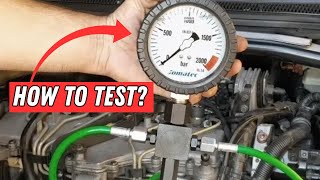
Compare the scan tool's reported pressure with a mechanical fuel pressure gauge connected to the fuel rail's test port. If the mechanical gauge shows steady pressure but the scan tool shows an error, the problem is electrical. If both readings are bad, the problem is mechanical.
Tools: Fuel Pressure Gauge, Repair Manual (Intermediate) - Test Sensor Voltage with a Multimeter
Disconnect the sensor and turn the ignition on (engine off). Test the connector for a 5-volt reference wire and a good ground (less than 0.5 Ω resistance). Reconnect the sensor and back-probe the signal wire; voltage should fluctuate between 0.5V and 4.5V with engine speed.
Tools: Digital Multimeter, Repair Manual (Advanced) - Test Sensor Resistance
With the sensor disconnected and ignition off, measure the resistance between the sensor's terminals. Compare readings to the service manual. An out-of-spec reading or open loop (infinite resistance) confirms a faulty sensor.
Tools: Digital Multimeter, Repair Manual (Advanced)
When This Code Triggers (Freeze-Frame Conditions)
- Engine Coolant Temp: 180-205°F (Fully warmed up)
- RPM: 1200-2800 (Light acceleration or steady cruise)
- Engine Load: 25-60% (Under moderate load, not at idle or full throttle)
- Vehicle Speed: 30-60 mph (City or highway driving)
Related Codes
- P0087 — Means "Fuel Rail/System Pressure - Too Low". Paired with P0190, it strongly suggests a mechanical problem like a failing fuel pump or clogged filter, not an electrical fault.
- P0088 — Means "Fuel Rail/System Pressure - Too High". Points to a faulty fuel pressure regulator or a sensor failing by sending an erroneously high signal.
- P0191, P0192, P0193, P0194 — Specific versions of P0190. P0192 (Circuit Low) points to a short to ground, while P0193 (Circuit High) suggests a short to voltage, narrowing down electrical testing.
- P0090 — Stands for "Fuel Pressure Regulator 1 Control Circuit/Open". Indicates the problem is with the regulator's control circuit or the regulator itself, not the pump or sensor.
Climate & Environmental Factors
- Cold Weather: Extreme cold makes plastic connectors and wiring insulation brittle, causing intermittent electrical breaks. Moisture freezes within connectors, causing shorts.
- High Humidity / Water Intrusion: High humidity accelerates corrosion on wiring connectors and sensor pins, degrading signal quality and triggering the code.
- High Altitude: High altitude alters the air-fuel mixture, exposing pre-existing, marginal fuel pressure problems, but it does not directly cause the electrical circuit code.
How to Talk to a Mechanic About This Code
Say this: "I have a P0190 code and need a diagnostic. Please check the sensor's live data against a mechanical fuel pressure gauge to confirm if the problem is the sensor, the wiring, or a mechanical fuel delivery issue before recommending parts."
This requests specific tests that differentiate between an electrical fault and an expensive mechanical failure (like a fuel pump), preventing the shop from jumping to the most expensive conclusion.
Avoid saying:
- 'My check engine light is on, can you look at it?'
- 'The car is stalling, I think it's the fuel pump.'
- 'Just fix whatever is wrong.'
Questions to ask before authorizing the repair:
- What were the live data readings from the fuel rail pressure sensor?
- What was the pressure on the mechanical gauge, and how did it compare to the scanner?
- Did you test the sensor's voltage, ground, and signal wires at the connector?
- Can you show me the damaged wiring or the failed part?
- What is the warranty on this specific repair, including both parts and labor?
Where to Take It: Dealer vs Independent vs Chain
- Dealer:
Best for: Vehicles still under a powertrain or emissions warranty, Complex, manufacturer-specific issues (e.g., Ford FPDM, VW timing chain faults), When diagnosis points to a faulty PCM
Downsides: Highest labor rates, typically 1.5-2x more than independent shops, May recommend replacing larger assemblies instead of repairing a smaller component (Typical cost: +50% vs. baseline) - Independent Shop:
Best overall fit. A reputable independent shop with strong electrical diagnostic skills handles a P0190 code efficiently and cost-effectively.
Best for: Out-of-warranty vehicles where cost is a factor, Diagnosing common electrical and fuel system faults
Downsides: Diagnostic skill varies greatly; vetting the shop's reputation and ASE certifications is crucial (Typical cost: +0% vs. baseline) - Chain Shop:
Use with caution. Acceptable if the diagnosis is confirmed to be a simple sensor swap, but AVOID for initial diagnosis of the P0190 code.
Best for: Simple, straightforward repairs like replacing an easily accessible sensor or fuel filter
Downsides: Technician skill varies dramatically, Lacks advanced diagnostic tools for intermittent wiring issues, leading to misdiagnosis (Typical cost: -10% vs. baseline)
When to Walk Away From the Repair
If the total estimated repair cost exceeds 50% of your car's current private-party value, seriously consider selling or trading it in.
- Car worth $5000, fix is $800: Fix it. This repair is well below the 50% threshold and is a reasonable investment.
- Car worth $3500, fix is $1800: Borderline. The repair cost is at the 50% threshold. Get a second opinion and consider the car's overall condition.
- Car worth $2000, fix is $1500: Walk away. The repair cost is 75% of the car's value. It is not a sound financial decision.
What Scan Tool You Need for This Code

Minimum: An OBD-II scanner that reads and graphs live data, specifically the 'Fuel Rail Pressure' (FRP) PID.
A basic $20 code reader only shows the P0190 code. It cannot show live fuel pressure data, which is essential to know if the reading is frozen, erratic, or incorrect. Without live data, you are guessing.
Budget: BlueDriver Pro Scan Tool (~$100) — Connects to your smartphone via Bluetooth to view and record live Fuel Rail Pressure data. This confirms if the sensor responds to engine RPM changes.
Mid-range: Foxwell NT510 Elite (~$180) — A handheld unit providing live data and graphing for fuel pressure. It offers manufacturer-specific codes to diagnose brand-specific quirks.
Professional: Autel MaxiCOM MK808S (~$450) — Offers full-system diagnostics, live data graphing, and bidirectional control. This allows you to actively command the fuel pump on or off to isolate the problem.
Rent vs buy: For a one-time diagnosis, auto parts stores offer Loan-A-Tool programs where you borrow a scanner for a refundable deposit. If you plan to do your own maintenance, buying a budget pick like BlueDriver is a worthwhile investment.
How to Clear the Code After You Fix It
- Fix the underlying mechanical or electrical fault
- Use an OBD-II scan tool to erase the diagnostic trouble codes
- Perform a complete OBD-II drive cycle to reset readiness monitors
Drive cycle (~30 minutes): Start with a cold engine. Idle for 2-3 minutes. Drive in stop-and-go traffic with several steady-state cruises. Perform 5-10 minutes of steady driving at highway speeds (55-60 mph). Allow the vehicle to cool down completely.
Readiness monitors affected: Fuel System Monitor, Comprehensive Component Monitor, Catalyst Monitor
Before emissions retest: drive at least 50 miles to fully set monitors.
Watch out for:
- Disconnecting the battery clears the code but resets all readiness monitors to 'Not Ready', guaranteeing an emissions test failure.
- The code returns immediately if the root cause of the fault is not repaired.
Will This Fail Emissions / State Inspection?
Yes — this code typically fails an OBD-II emissions inspection.
- California: An illuminated Check Engine Light results in an automatic smog check failure. After repairs, the vehicle must complete a drive cycle to set all readiness monitors to 'Ready'.
- New York: The NYS DMV inspection includes an OBD-II scan. An active P0190 code causes an automatic failure.
- Texas: In emissions-testing counties, an illuminated Check Engine Light is an automatic failure. After clearing the code, most vehicles (2001+) allow only one readiness monitor to be 'Not Ready'.
Most Commonly Affected Vehicles
- Ford F-Series, Focus, Transit, E-Series, Fiesta (2005-2018) — Extremely common on PowerStroke diesel engines (6.0L and 6.4L). On E-Series vans and trucks, failure of the Fuel Pump Driver Module (FPDM) is a frequent root cause.
- Chevrolet / GMC Silverado, Sierra (2004-2016) — Frequently seen on Duramax diesel engines, often due to sensor failure or wiring issues near the engine block.
- Volkswagen Jetta, Golf, Passat, Touran (2004-2017) — Common in TDI diesel models where high operating pressures lead to premature sensor wear.
- Hyundai / Kia Sonata, Tucson, Optima, Sorento, Sportage (2005-2022) — Widespread on GDI (Gasoline Direct Injection) engines. Problems isolate to the sensor itself or the wiring harness connector.
- BMW 3-Series, 5-Series, X3, X5 (2006-2016) — Appears frequently on high-pressure diesel engine variants.
- Mazda CX-7, CX-9 (2007-2015) — Common on models with gasoline direct injection (GDI) engines, where the sensor itself fails internally.
- Honda CR-V (2023-2024) — Appears as specific code P0190-17, indicating a 'Circuit High Voltage' condition, pointing directly to an electrical fault.
- Toyota RAV4, Tacoma (2016-2024) — Occurs on models with dual injection systems. Wiring issues near the intake manifold are the primary cause.
Manufacturer-Specific Notes

- Nissan: If P0190 is the only code present, the root cause is almost always the fuel rail pressure sensor itself, not the fuel pump.
- Ford: On E-Series vans and F-150s, always inspect the Fuel Pump Driver Module (FPDM) located on a frame crossmember. Its corrosion mimics fuel pressure codes perfectly.
- Hyundai: The fuel rail pressure sensor shares a 5V power supply circuit in the ECM with the throttle position sensor. A short in one sensor triggers codes for the other.
- Volkswagen/Audi: If you have P0190 and P0088 on 3.6L gasoline engines (2006-2009), the underlying cause is often a stretched timing chain affecting fuel pump timing.
Real Owner Stories
2006 Ford F-150 4.6L with stalling issues
Truck stalled at red lights, then progressed to stalling at 65mph. It idled for 5-10 minutes then died. Codes P0190, P0191, P2195, P2197 were present.
What they tried:
- Replaced the fuel rail pressure sensor, which worked for 700 miles before failing again.
- Replaced the Fuel Pump Driver Module (FPDM) and battery.
- Replaced the fuel filter and the entire fuel pump assembly.
Outcome: Despite replacing the sensor, FPDM, filter, and pump, the fuel pressure dropped after 10 minutes of idling. The issue was a bad ground for the FPDM, a common failure point on these trucks.
Lesson: On Ford trucks, inspect the Fuel Pump Driver Module (FPDM) and its ground connection before replacing the fuel pump. A corroded FPDM mimics fuel pump failure exactly.
2000 Ford Contour SVT with a no-start, then rough idle
Car died and wouldn't start. After replacing the fuel pump, it started but ran very rough, stalled frequently, and threw code P0190.
What they tried:
- Replaced the original fuel pump with a new aftermarket pump.
- Suspected the new pump was faulty after getting code P0190.
Outcome: The brand-new aftermarket fuel pump was bad, providing only 10 PSI of pressure. Replacing it with a proper OEM pump assembly resolved all issues and cleared the code.
Lesson: A 'new' part is not always a 'good' part. If a problem starts immediately after a repair, the new part is the primary suspect.
2012 VW Jetta TDI with intermittent stalling
The vehicle intermittently cut out and stalled at traffic lights, taking up to 15 minutes of cranking to restart.
What they tried:
- A garage misdiagnosed the issue as related to a non-existent start-stop system.
- Owner waited for the problem to become permanent for easier diagnosis.
Outcome: Using a personal OBD-II scanner, the owner pulled the P0190 code. Swapping the fuel rail pressure sensor completely fixed the intermittent stalling.
Lesson: For intermittent electrical issues, a simple sensor replacement is often the fix. A personal OBD-II scanner saves you from incorrect professional diagnoses.
How to Prevent This Code From Triggering
- Use high-quality, Top Tier gasoline (Every fill-up) — Fuel with robust detergent additives prevents contamination and buildup, which clogs filters and damages the sensor.
- Replace the fuel filter at recommended intervals (Per manufacturer's schedule (e.g., every 30,000 miles)) — A clean filter ensures the fuel pump doesn't overwork, preventing pressure fluctuations that stress the sensor.
- Periodically inspect sensor wiring (During regular oil changes) — Visually checking the wiring harness for corrosion or heat damage catches potential circuit failures before they leave you stranded.
- Keep the fuel tank at least 1/4 full (Daily habit) — Fuel cools the electric fuel pump. Running near empty overheats the pump, shortening its life and causing pressure issues.
- Use a fuel system cleaner additive (Once or twice a year) — Removes deposits from the fuel system, maintaining optimal pressure and reducing sensor-damaging contaminants.
Frequently Asked Questions
Can I drive my car with a P0190 code?
No, it is not safe. The engine stalls in traffic, loses all power, or fails to start. Driving with this code also leads to expensive catalytic converter damage.
What is the most common fix for P0190?
Replacing the fuel rail pressure sensor is the most common repair. However, damaged wiring is a frequent cause that is easily misdiagnosed as a bad sensor.
How much does it cost to fix a P0190 code?
Costs range from $130-$300 for a sensor replacement to $400-$1,000+ for a new fuel pump. Professional diagnosis runs $80-$150. Wiring repairs typically cost $100-$250.
What are the biggest mistakes when diagnosing P0190?
The biggest mistake is replacing the sensor without testing. Always verify wiring integrity and compare the sensor's reading to a mechanical gauge before buying parts.
Can a bad gas cap cause a P0190 code?
No. A loose gas cap triggers evaporative emissions (EVAP) codes like P0455. It has zero effect on fuel rail pressure.
What happens if you unplug a fuel rail pressure sensor?
The PCM loses its primary input for fuel control. It defaults to running the fuel pump at a fixed, high rate and puts the engine into a reduced power 'limp mode'.
Will the check engine light for P0190 clear itself?
No. P0190 is a 'hard code' related to critical engine management. You must repair the fault and manually clear the code using an OBD-II scan tool.
Is it hard to replace a fuel rail pressure sensor myself?
It depends on the vehicle. Some sensors are easily accessible on the fuel rail, while others sit under the intake manifold, requiring hours of labor. Always relieve fuel system pressure first.
Key Takeaways
- Code P0190 flags a critical electrical failure in the fuel rail pressure sensor circuit, causing immediate stalling and sudden power loss.
- Stop driving immediately; ignoring P0190 forces a rich fuel mixture that destroys a $1,500 catalytic converter within weeks.
- Replacing the $50-$200 sensor fixes the issue 70% of the time, but corroded wiring or a failing fuel pump driver module are frequent culprits.
- Never replace the sensor without comparing live OBD-II fuel pressure data against a mechanical gauge reading to rule out a dead fuel pump.
Helpful Videos


The information in this article is provided for general reference and educational purposes only. Vehicle specifications, procedures, and part compatibility can vary by production date, trim level, and region. Always consult your vehicle's factory service manual and verify part numbers before purchasing or performing repairs. Safety-critical components such as airbags, seat belts, and braking systems should be installed by a qualified professional.
- 🎬 Helpful Videos
- What Does P0190 Mean?
- Can I Drive With P0190?
- Common Causes
- Symptoms
- Diagnostic Flowchart
- Common Fixes & Costs
- Used vs. New Parts: Buying Guide
- What Happens If You Wait — Timeline
- Cost of Not Fixing It
- Diagnosis Steps
- When This Code Triggers (Freeze-Frame Conditions)
- Related Codes
- Climate & Environmental Factors
- How to Talk to a Mechanic About This Code
- Where to Take It: Dealer vs Independent vs Chain
- When to Walk Away From the Repair
- What Scan Tool You Need for This Code
- How to Clear the Code After You Fix It
- Will This Fail Emissions / State Inspection?
- Most Commonly Affected Vehicles
- Manufacturer-Specific Notes
- Real Owner Stories
- 2006 Ford F-150 4.6L with stalling issues
- 2000 Ford Contour SVT with a no-start, then rough idle
- 2012 VW Jetta TDI with intermittent stalling
- How to Prevent This Code From Triggering
- Frequently Asked Questions
- Can I drive my car with a P0190 code?
- What is the most common fix for P0190?
- How much does it cost to fix a P0190 code?
- What are the biggest mistakes when diagnosing P0190?
- Can a bad gas cap cause a P0190 code?
- What happens if you unplug a fuel rail pressure sensor?
- Will the check engine light for P0190 clear itself?
- Is it hard to replace a fuel rail pressure sensor myself?
- Key Takeaways
- 🎟️ Get 5% Off