

P0174 on 2016-2022 Honda Pilot 3.5L V6: Injector & Lean Code Fixes (TSB 21-010)
The P0174 code on a 2016-2022 Honda Pilot most often points to faulty or clogged fuel injectors, a known issue for this engine. Honda has issued Service Bulletins (e.g., 21-010) and a warranty extension (10 years/150,000 miles) for this problem on many VINs. Other causes include vacuum leaks from a cracked air intake hose or bad intake gaskets.
- P0174 on your 2016-2022 Pilot means Bank 2 (front bank) is running lean.
- The most likely cause is faulty fuel injectors, a known issue for this engine. Check with a Honda dealer for potential warranty coverage before paying for repairs.
- The second most likely cause is a vacuum leak, often from a cracked rubber air intake hose.
- Do not immediately replace the oxygen (A/F) sensor; it is usually just reporting the problem.
- If both P0174 and P0171 are present, the cause is likely a large vacuum leak or a fuel delivery issue affecting the entire engine.
What's Unique About the 2016-2022 Honda Pilot

For this generation of Honda's J35Y6 V6 engine, the most prominent cause for lean codes like P0174 is faulty fuel injectors. This became such a widespread issue that Honda issued Technical Service Bulletins (TSB 20-100, 21-010) and a warranty extension covering the injectors for 10 years or 150,000 miles. The TSBs explain that debris from the high-pressure fuel pump or the original injector manufacturing process can cause them to clog or fail. While vacuum leaks and sensor failures can still occur, the fuel injectors should be the primary focus of your diagnosis.
Symptoms You May Notice
- Check Engine Light is on
- Rough or unstable idle
- Hesitation or stumbling during acceleration
- Reduced engine power
- Decreased fuel economy
- Flashing check engine light (if misfires are severe)
- Replacing the oxygen sensor (A/F sensor) first. While the sensor reports the lean condition, it is often not the cause. The fuel injectors and potential vacuum leaks are much more common culprits on this specific vehicle, as documented by Honda's own service bulletins.
Most Likely Causes

- Clogged or Faulty Fuel Injectors 🔴 High Probability This is a well-documented issue on Honda's 3.5L V6 engines of this era. Honda TSBs 20-100 and 21-010 directly address this, stating debris can cause internal wear or clogging. A warranty extension to 10 years/150,000 miles was issued for many affected vehicles.
How to confirm: A technician can perform a fuel injector balance test. Another method is to monitor fuel trims with a scan tool; if Bank 2 fuel trims are very high (e.g., +20% or more) while Bank 1 trims are normal, it points to a Bank 2-specific issue. If accompanied by misfire codes on Bank 2 (P0302, P0304, P0306) or code P219B, the injectors are highly suspect per Honda's bulletins. The definitive confirmation is to have a Honda dealer check your VIN for eligibility under the warranty extension program.
Typical fix: All six fuel injectors and the fuel pipe should be replaced as a set using the updated parts kit. This is the repair recommended by Honda's service bulletins.
Est. part cost: $300-$600 for a set of OEM injectors (Part No. 16010-RLV-315). - Vacuum Leak 🟡 Medium Probability The rubber air intake hose between the air filter box and the throttle body can develop cracks over time, especially in the flexible, ribbed sections, allowing unmetered air to enter the engine. Intake manifold gaskets can also fail.
How to confirm: Visually inspect the entire air intake path for cracks, especially in the flexible, ribbed sections of the intake tube. For less obvious leaks, a smoke test is the most effective method. A mechanic will pump smoke into the intake system and look for where it escapes.
Typical fix: Replace the cracked hose or faulty gasket. The OEM air intake hose is part number 17228-RLV-A00 for some models in this generation.
Est. part cost: $40-$90 for an intake hose, $30-$60 for gaskets. - Faulty Air/Fuel Ratio Sensor (Bank 2, Sensor 1) ⚪ Low Probability
How to confirm: Use a capable OBD-II scanner to graph the sensor's voltage. A healthy sensor will fluctuate rapidly. A lazy or dead sensor will have slow or no voltage changes. Comparing its reading to the Bank 1 sensor can also reveal if it's reading incorrectly.
Typical fix: Replace the Bank 2, Sensor 1 Air/Fuel Ratio sensor. This is the upstream sensor located on the front exhaust manifold (radiator side) before the catalytic converter.
Est. part cost: $100-$200
Rare But Worth Checking
- Low Fuel Pressure: While possible, a weak fuel pump or clogged filter would typically affect both engine banks, causing both P0174 and P0171 to appear together.
- Dirty Mass Airflow (MAF) Sensor: A dirty MAF sensor usually causes issues on both banks, triggering both P0171 and P0174. It's less common for it to cause a single-bank lean code, but it's easy to clean as a preliminary step.
- Exhaust Leak: A crack or leak in the exhaust manifold before the upstream A/F sensor can pull in fresh air, making the sensor think the engine is running lean.
Diagnosis Steps

- Use an OBD-II scanner to check for any other pending or stored codes. Note the presence of P0171, any P030x misfire codes, or P219B, as these strongly point towards the known injector issue.
- View live data on the scanner, focusing on Short-Term Fuel Trim (STFT) and Long-Term Fuel Trim (LTFT) for both Bank 1 and Bank 2. High positive numbers on Bank 2 (combined total over +20-25%) confirm the lean condition.
- Contact a Honda dealer with your VIN. Ask them to check for eligibility under the fuel injector warranty extension related to TSBs 20-100 and 21-010. This is the most critical step and can save significant diagnostic time and money.
- If not covered by warranty, perform a thorough visual inspection of the air intake hose from the air filter housing to the throttle body for any cracks or loose connections. Pay close attention to the accordion-like sections.
- For a definitive vacuum leak test, have a smoke test performed to identify any hard-to-see leaks from gaskets or hoses.
- If no vacuum leaks are found, the fuel injectors on Bank 2 are the most likely cause. The official Honda repair is to replace all six injectors as a set (Part No. 16010-RLV-315).
- As a less likely cause, inspect the exhaust manifold for cracks or leaks before the Bank 2 A/F sensor.
- If all else fails, test the Bank 2 Air/Fuel Ratio sensor to ensure it is functioning correctly and not sending false lean readings.
Parts You'll Likely Need

- Fuel Injector Kit
(OEM #16010-RLV-315)— This is the most common failure point for this code on the J35Y6 engine, as documented by Honda TSBs 20-100 and 21-010. The kit includes all 6 injectors and required seals.
Trusted brands: Honda (OEM)
OEM price range: $400-$600 (set of 6)
Aftermarket price range: $200-$400 (set of 6) - Engine Air Intake Hose
(OEM #17228-RLV-A00)— The rubber hose is a common source of vacuum leaks as it cracks with age and heat, allowing unmetered air to enter the system.
Trusted brands: Honda (OEM)
OEM price range: $60-$90
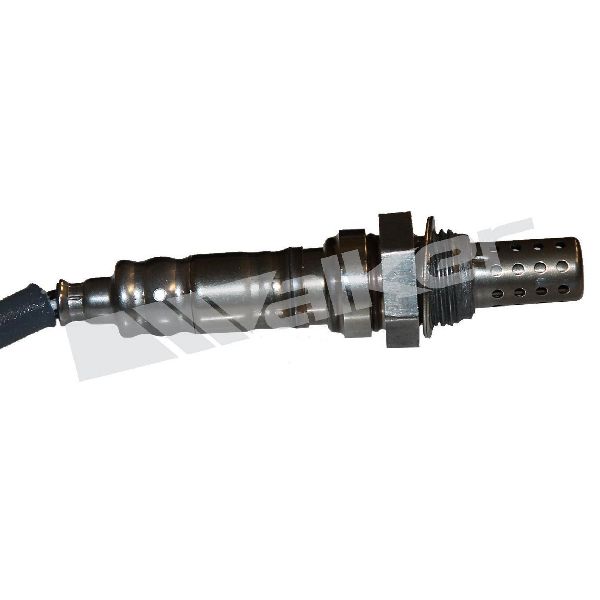
Aftermarket price range: $30-$50 - Air/Fuel Ratio Sensor (Bank 2, Sensor 1)
(OEM #36531-5J6-A01)— If the sensor itself fails, it can send false lean readings. It's a less common cause than injectors or vacuum leaks for this specific problem.
Trusted brands: Denso (OEM supplier), Bosch, NGK/NTK
OEM price range: $180-$250
Aftermarket price range: $90-$150
Related Codes That Often Appear With This One
- P0171 — System Too Lean (Bank 1). If both codes are present, it strongly suggests a problem common to both banks, like a major vacuum leak (e.g., intake manifold gasket), a dirty MAF sensor, or low fuel pressure.
- P0300-P0306 — Cylinder Misfire codes. A severe lean condition can lead to misfires. If misfires are isolated to Bank 2 cylinders (P0302, P0304, P0306), it further points to a Bank 2-specific issue like clogged injectors. These codes are specifically mentioned in the Honda TSBs for the injector issue.
- P219B — Air-Fuel Ratio Variation of Cylinder (Bank 2). This code is highly specific and, when present with P0174 and/or misfire codes, is a strong indicator of the fuel injector problem as described in Honda TSBs 20-100 and 21-010.
- P0430 — Catalyst System Efficiency Below Threshold (Bank 2). This code can be triggered as a consequence of the lean condition or misfires. The TSBs note that the PCM software may misinterpret sensor inputs, and a software update may be required in addition to injector replacement.
Technical Service Bulletins (TSBs) & Recalls
- TSB 21-010: 'Warranty Extension: MIL Comes On with DTC P0420/P0430, P030x, and/or P219A/B (Without Software Update)'. This bulletin covers 2017-2019 Pilot models, extending the warranty for faulty fuel injectors.
- TSB 20-100: 'Warranty Extension: MIL Comes on with DTC P0420 or P0430, with P0300-P0306, P219A, or P219B (with Software Update)'. This covers 2016-2017 Pilot models and addresses the same injector issue, sometimes requiring a software update as part of the fix.
- Acura TSB 22-013: While for Acura models, this TSB for the same J35Y6 engine confirms the root cause is often 'debris from the high-pressure fuel pump or original injector manufacturing process causing injectors to fail'.
Platform-Specific Known Issues
- A known issue with fuel injectors on 2016-2019 models may be covered under an extended warranty (10 years or 150,000 miles). This was announced via Honda Service Bulletins 20-100 and 21-010. Owners must check with a Honda dealer using their VIN to see if their specific vehicle is eligible for a no-cost repair.
Mechanic-Grade Diagnostic Values

- Air/Fuel Ratio Sensor Heater Circuit Resistance — expected: 2 to 4 Ohms at room temperature (approx. 70°F / 21°C).. Failure: No reading (open circuit) or an extremely high resistance reading indicates a failed heater element. The reading will be slightly higher in colder temperatures (e.g., 5-6 Ohms at 50°F).
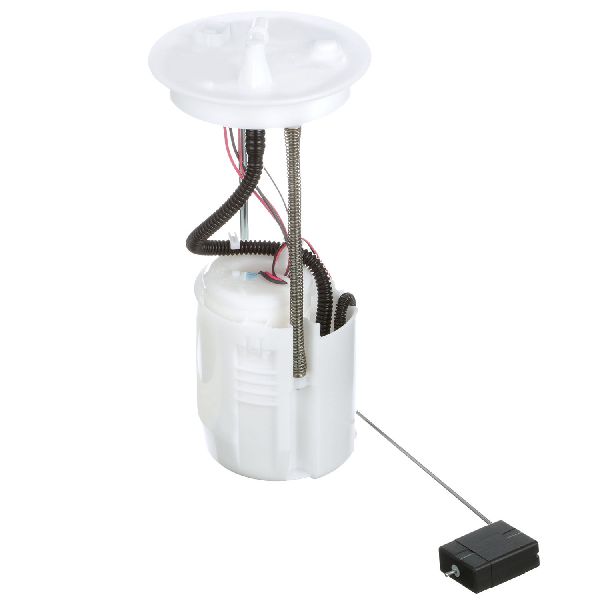
- Fuel Pump Current Draw — expected: Approximately 6-7 amps.. Failure: A significantly higher current draw, such as over 10 amps, can indicate a failing or internally restricted fuel pump that is working too hard.
- Mass Airflow (MAF) Sensor Reading at Idle — expected: Around 3.5-5.0 g/s for a 3.5L engine at normal operating temperature and idle speed (approx. 700 RPM).. Failure: A reading significantly lower than expected (e.g., below 3.5 g/s) can indicate a dirty sensor or an unmetered air leak downstream from the sensor.
Hidden / Shadow Codes Worth Checking
- P219B: Air-Fuel Ratio Variation of Cylinder (Bank 2). This is not a 'hidden' code, but a specific diagnostic trouble code that, when present with P0174, serves as a powerful confirmation of the fuel injector problem according to Honda's own service bulletins (21-010 and 20-100). (see via Standard OBD-II scanner capable of reading powertrain codes.)
Wiring & Ground Locations
- G201 / Main Engine Ground — Typically located on the right side of the engine compartment, bolted to the chassis or engine. On some Pilots, a key grounding strap is located low on the engine and can be difficult to see.. A corroded or loose engine ground can cause erratic voltage signals from critical sensors like the A/F sensor and injectors. This can lead the ECM to make incorrect fuel calculations, potentially causing a lean code. A common master tech tip is to remove the ground bolt, clean the contact surfaces on the terminal and chassis to bare metal, and reinstall with a star washer to ensure a solid connection.
Real Owner Repair Stories
- YouTube video from a 2012 Honda Pilot owner (2012 Honda Pilot with 90,000 miles (J35Z4 engine, similar architecture)) — Engine stumble/hesitation upon initial acceleration and a gradual drop in fuel economy.
❌ Tried (didn't work) The owner decided to target the PCV valve as a maintenance item before further diagnosis.
✅ What actually fixed it The owner replaced the PCV valve (Part No. 17130-RCA-A02). The reported result was a smoother idle and elimination of the stumbling symptom.
"I Checked Everything" — The Actual Cause
- A stuck-open or restricted PCV valve can act as an unmetered vacuum leak, causing a lean condition. This type of leak is often missed during a standard smoke test because the PCV system is a *controlled* leak by design, and technicians may focus primarily on the intake boot and manifold gaskets. If the valve is stuck partially open, it allows more air than the ECU expects at idle, raising fuel trims without an obvious external smoke leak.
OEM Part Supersession History
16010-RLV-305→16010-RLV-315— The original injectors were prone to clogging or internal failure due to debris from the high-pressure fuel pump or the original manufacturing process. The updated -315 part number is the revised set intended to resolve this issue, as addressed in Honda TSBs 20-100 and 21-010.
Model Year Variations Within This Range
- 2016-2022: The 2019 model year introduced a styling refresh and expanded availability of the 9-speed automatic transmission, but the 3.5L J35Y6 engine and its direct injection system remained fundamentally the same. The most critical variation for P0174 is the TSB coverage for the fuel injector warranty extension: TSB 20-100 covers 2016-2017 models and may also require a PCM software update, while TSB 21-010 covers 2017-2019 models for the injector replacement without a software update.
Diagnostic Flowchart
Real Owner Stories
Aggregated from forums and TSBs cited above. Mileages and costs reflect what owners reported in those sources.
2016 Honda Pilot
Symptoms: Rough idle, 'emissions system problem' message on dash, P0171 and P0174 codes, smell of fuel.
What fixed it: The dealer found and adjusted 3 valves that were too tight.
Source hint: reddit.com - r/hondapilot
2016 Honda Pilot EXL V6 — 230000 miles
Symptoms: Stuttering, P219A and P0174 codes, loud rumble at startup when shifting to Drive.
What fixed it: Replaced the main air intake hose which had a large crack at the throttle body, and also cleaned the MAF sensor and air box.
Source hint: reddit.com - r/hondapilot
Related OBD-II Codes
Frequently Asked Questions
Is there a warranty extension for the fuel injectors on my 2016-2022 Honda Pilot?
What parts are replaced if my Pilot has the known fuel injector issue?
Can a cracked air intake hose cause code P0174 on this 3.5L V6?
What other codes should I look for that point to the fuel injector failure?
Does the fuel injector issue affect other Honda models with the J35Y6 engine?
Why do the fuel injectors fail on the J35Y6 engine?
Used OEM Parts in Stock


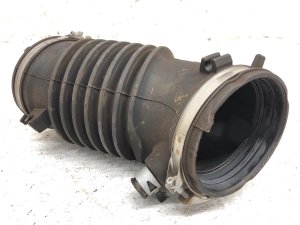
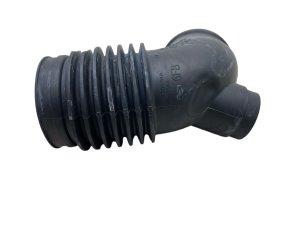
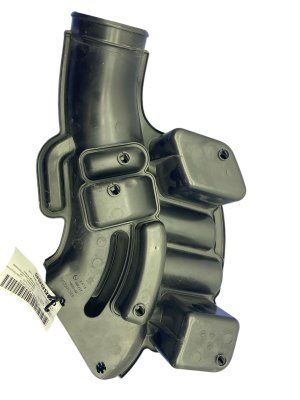

New Aftermarket Parts Available

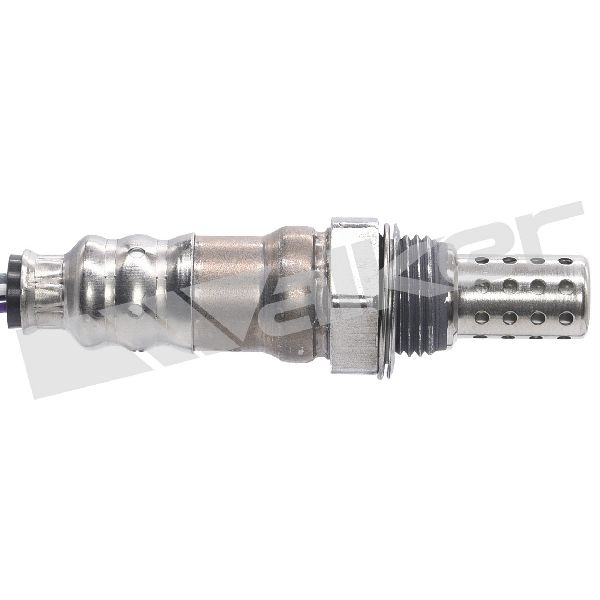


The information in this article is provided for general reference and educational purposes only. Vehicle specifications, procedures, and part compatibility can vary by production date, trim level, and region. Always consult your vehicle's factory service manual and verify part numbers before purchasing or performing repairs. Safety-critical components such as airbags, seat belts, and braking systems should be installed by a qualified professional.
- Honda Pilot:
- 🛍️ Shop This Part
- What's Unique About the 2016-2022 Honda Pilot
- Symptoms You May Notice
- Most Likely Causes
- Rare But Worth Checking
- Diagnosis Steps
- Parts You'll Likely Need
- Related Codes That Often Appear With This One
- Technical Service Bulletins (TSBs) & Recalls
- Platform-Specific Known Issues
- Mechanic-Grade Diagnostic Values
- Hidden / Shadow Codes Worth Checking
- Wiring & Ground Locations
- Real Owner Repair Stories
- "I Checked Everything" — The Actual Cause
- OEM Part Supersession History
- Model Year Variations Within This Range
- Diagnostic Flowchart
- Real Owner Stories
- 2016 Honda Pilot
- 2016 Honda Pilot EXL V6 — 230000 miles
- Related OBD-II Codes
- Frequently Asked Questions
- 🎟️ Get 5% Off