

P0171 on 1998-2008 Ford Ranger 3.0L V6: Lean Code Causes and Fixes
On a 1998-2008 Ranger with the 3.0L V6, P0171 is most often caused by a vacuum leak from a cracked PCV hose or intake manifold gasket. A dirty Mass Air Flow (MAF) sensor is the next likely culprit. If those check out, suspect a weak fuel pump, as these trucks have an in-tank regulator and require 55-65 PSI of fuel pressure.
- Start your diagnosis by checking for vacuum leaks; they are the most common cause for P0171 on the 3.0L Ranger.
- Cleaning the Mass Air Flow (MAF) sensor with a dedicated cleaner is an easy and inexpensive diagnostic step that often solves the problem.
- Do not replace the oxygen (O2) sensor first; it is usually just reporting the problem, not causing it.
- If fuel trims are high at all RPMs and the MAF is clean, test your fuel pressure. A weak pump is a likely culprit on these trucks.
What's Unique About the 1998-2008 Ford Ranger

The 3.0L 'Vulcan' V6 is a workhorse engine, but it's well-known in the Ranger community for developing vacuum leaks from aging plastic and rubber components, making it a top suspect for a P0171 code. The PCV valve elbow, located in a hard-to-see spot near the firewall, is a notoriously common failure point. Additionally, many Fords of this era are sensitive to dirty Mass Air Flow (MAF) sensors, which can under-report airflow and cause a lean mixture. A key detail for this year range is that Ford switched to a 'returnless' fuel system around 1998, meaning the fuel pressure regulator is located inside the gas tank as part of the fuel pump assembly, not on the engine's fuel rail. This changes the diagnostic approach for fuel pressure issues compared to older models and means a failed regulator requires replacing the entire pump assembly. Some later models in this range may use an electronic returnless system with a Fuel Pump Driver Module (FPDM), which further changes diagnostics from the earlier mechanical returnless setup.
Generation note: This range (1998-2008) covers the third generation of the Ford Ranger. The most significant change relevant to this code occurred in 1998 with the introduction of a returnless fuel system, which integrates the fuel pressure regulator with the in-tank fuel pump. Fuel pressure for these returnless systems should be around 55-65 PSI. There are also differences in fuel injectors between early (1998-2000) and later (2001-2008) models, as well as between gasoline and Flex Fuel (FFV) versions, making it critical to use the correct part.
Symptoms You May Notice
- Check Engine Light is on
- Rough or unstable idle
- Hesitation or stumbling during acceleration
- Reduced engine power, especially under load or going up hills
- Noticeably worse fuel economy
- Engine misfires, which may set additional codes like P030x
- Pinging or knocking sounds from the engine
- A hissing sound from the engine bay at idle, indicating a vacuum leak
- A rhythmic 'chirping' sound from the rear of the engine near the firewall may indicate a failing camshaft position synchronizer.
- Sudden stalling, as reported in NHTSA ODI #10395302 where a vehicle stalled in an intersection due to lean codes.
- Replacing the upstream O2 sensor. The P0171 code usually means the O2 sensor is working correctly and accurately reporting a lean condition. Replacing it without diagnosing the root cause will not fix the problem.
Most Likely Causes


- Vacuum Leak 🔴 High Probability Aging rubber and plastic hoses become brittle and crack. The intake manifold gaskets are also a common failure point. The PCV hose elbow near the firewall is a primary suspect. Another known issue is the intake manifold's isolator bolts, which have gaskets that can fail. NHTSA ODI #10219019 notes a case where P0171 and P0174 were resolved by replacing isolator bolts and port seals. Similarly, NHTSA ODI #10199477 describes a broken vacuum hose from the intake manifold to the brake booster causing these codes.
How to confirm: Visually inspect all vacuum lines, especially the PCV valve elbow and the hose running from the vapor canister purge valve to the intake. A definitive method is to perform a smoke test, which will force smoke into the intake system and reveal leaks wherever smoke escapes. Alternatively, monitor short-term fuel trims (STFT) at idle; if they are high (e.g., >15%) but decrease significantly when holding the engine at 2500 RPM, a vacuum leak is very likely.
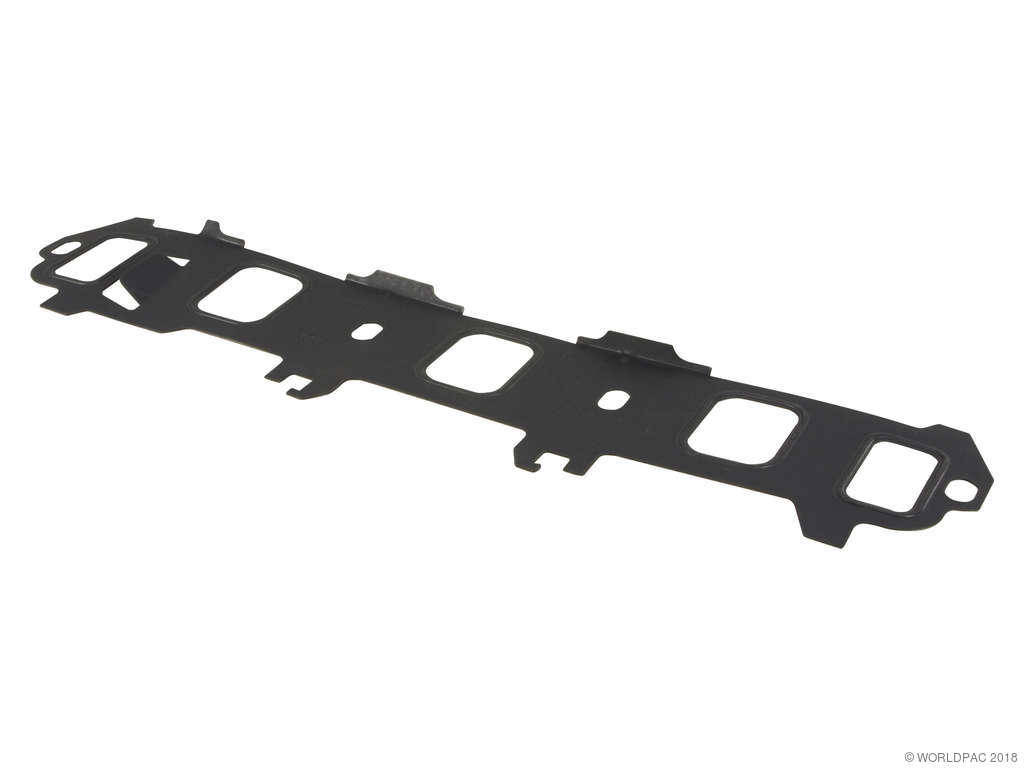
Typical fix: Replace the cracked hose(s) or leaking gasket(s). Common culprits are the PCV valve and its connecting hoses, and the upper and lower intake manifold gaskets. The Fel-Pro MS 95829 is a common 🎬 See this walkthrough for replacing injectors and intake gaskets. aftermarket part number for the intake gasket set.
Est. part cost: $10-$150 - Dirty or Faulty Mass Air Flow (MAF) Sensor 🔴 High Probability Oil vapors from the PCV system or fine dust that gets past the air filter can contaminate the sensor's hot wire, causing it to inaccurately measure the air entering the engine. This under-reporting of air causes the PCM to command less fuel than is actually needed. NHTSA ODI #10322944 highlights a similar lean condition where air leaks in the air hose assembly required replacement of the air tube assembly.
How to confirm: Remove the MAF sensor from the air intake tube (requires a Torx T20 bit). Visually inspect the small wires inside for contamination. Unplugging the sensor while the engine is running rough can be a quick test; if the idle smooths out, the sensor is likely faulty. A low BARO HZ reading on a scan tool can also indicate a dirty MAF sensor.
Typical fix: Clean the sensor wires carefully using only dedicated MAF sensor cleaner spray. 🎬 Watch: How a dirty MAF sensor causes lean codes. Do not touch the wires with anything. If cleaning doesn't resolve the issue, the sensor must be replaced. A common Motorcraft part number is 1L5Z-12B579-AA (or remanufactured 1L5Z-12B579-ARRM).
Est. part cost: $10 for cleaner, $60-$180 for a new sensor - Weak Fuel Pump or Clogged Fuel Filter 🟡 Medium Probability Fuel pumps wear out over time, reducing their ability to supply adequate pressure. The 1998+ models have the fuel pressure regulator in the tank with the pump, so a regulator failure requires replacing the entire assembly. Physical damage can also be a factor; NHTSA ODI #11566652 describes a P0171 code caused by a gash found in the top of the fuel tank.
How to confirm: Connect a fuel pressure gauge to the Schrader valve on the engine's fuel rail. With the engine running, the pressure should be steady at approximately 55-65 PSI. Shut the engine off; the pressure should hold steady and not drop more than 5 PSI in one minute. If it drops quickly, the check valve in the fuel pump assembly is bad.
Typical fix: Replace the fuel filter first, as it's inexpensive and can be clogged. If pressure is still low or bleeds down, the entire fuel pump assembly in the tank needs to be replaced. Using a quality Motorcraft pump is highly 🎬 Watch: Diagnosing and replacing a failing fuel pump. recommended by owners.
Est. part cost: $15-$30 for a fuel filter, $150-$300 for a fuel pump assembly - Clogged Fuel Injector on Bank 1 ⚪ Low Probability Injectors can become clogged with deposits over time, especially if the vehicle has sat for a long period. Using incorrect injectors (e.g., Flex Fuel injectors in a gasoline-only engine) can also cause issues.
How to confirm: Listen to the injectors on Bank 1 with a mechanic's stethoscope or a long screwdriver. They should all have a consistent, rhythmic clicking sound. An injector that is quiet or sounds different from the others may be clogged or failing. If only P0171 is present (and not P0174), a single bank issue like an injector becomes more likely.
Typical fix: The injector can be professionally cleaned or replaced. If one is clogged, others may be as well, so replacing them as a set can be a good preventative measure.
Est. part cost: $40-$90 per injector
Rare But Worth Checking
- Exhaust Leak Before the Upstream O2 Sensor: A crack in the exhaust manifold or a leaking flange gasket on Bank 1 can suck in fresh air, causing the O2 sensor to send a false lean signal to the PCM.
- Faulty Fuel Pump Ground: In a bizarre case documented on YouTube, a corroded ground connection shared by the fuel pump and rear lights caused low fuel pressure and lean codes, but only when the headlights were turned on.
- Failing Camshaft Position Synchronizer: A worn camshaft synchronizer can cause erratic ignition and injector timing, leading to lean codes. A common symptom is a persistent 'chirping' sound from the back of the engine, near the firewall.
- Inertia Switch Failure: As noted in NHTSA ODI #10395302, a faulty inertia switch was found to be the culprit in a case involving P0171 and P0174 codes.
Diagnosis Steps

- Read all fault codes with an OBD-II scanner. Note if P0174 is also present. If both are present, the cause is likely global (affecting both banks). If only P0171 is present, focus on Bank 1 specific components like an injector or exhaust leak.
- Perform a thorough visual inspection of the engine bay. Look for cracked, disconnected, or collapsed vacuum hoses, especially around the PCV valve (near the firewall) and intake manifold.
- With a scan tool, observe Short-Term Fuel Trim (STFT) and Long-Term Fuel Trim (LTFT) for Bank 1 at idle. High positive numbers (e.g., LTFT at +20% or higher) confirm the lean condition.
- Raise engine RPM to 2,500 and hold. If the STFT and LTFT numbers drop significantly towards 0, a vacuum leak is the most likely cause. If they remain high or increase, a fuel delivery issue or MAF sensor problem is more likely.
- Turn off the engine and allow it to cool. Remove and clean the MAF sensor using dedicated MAF sensor cleaner. Reinstall, clear codes, and re-test. This is a cheap and easy diagnostic step.
- If the problem persists, perform a smoke test to pinpoint any hard-to-see vacuum leaks. Pay close attention to the intake manifold gaskets and the isolator bolt gaskets.
- Test fuel pressure at the fuel rail. It should be 55-65 PSI while running. Shut off the engine and watch for pressure bleed-down. If pressure is low or bleeds down rapidly, suspect the fuel pump assembly.
- If all else fails, check for exhaust leaks before the Bank 1 O2 sensor, test the fuel injectors on Bank 1, and listen for a chirping sound that could indicate a faulty camshaft synchronizer.
Parts You'll Likely Need

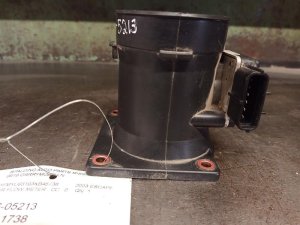
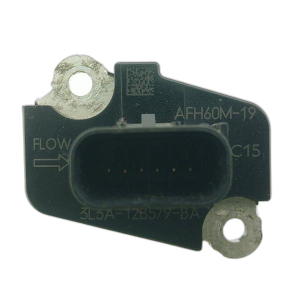
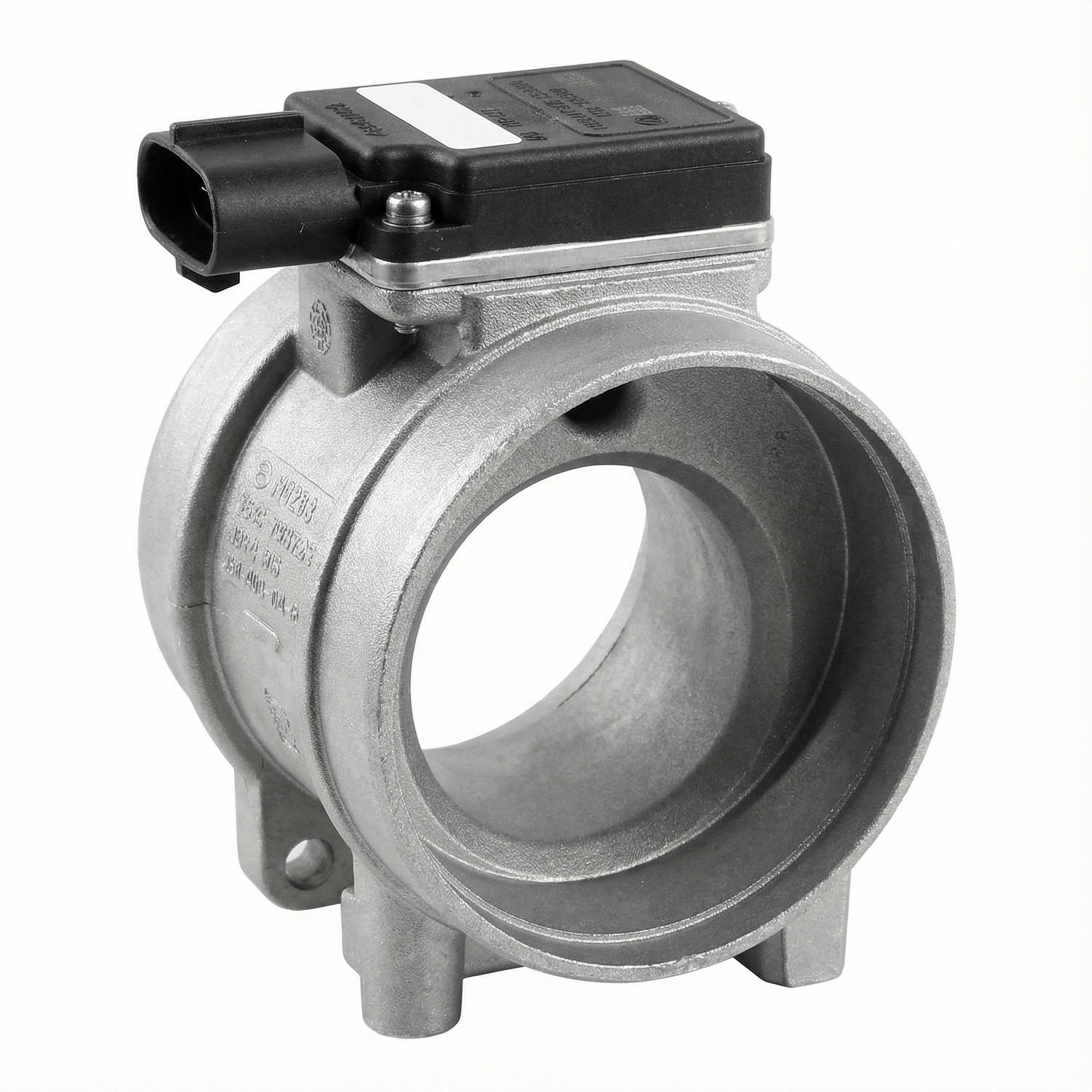
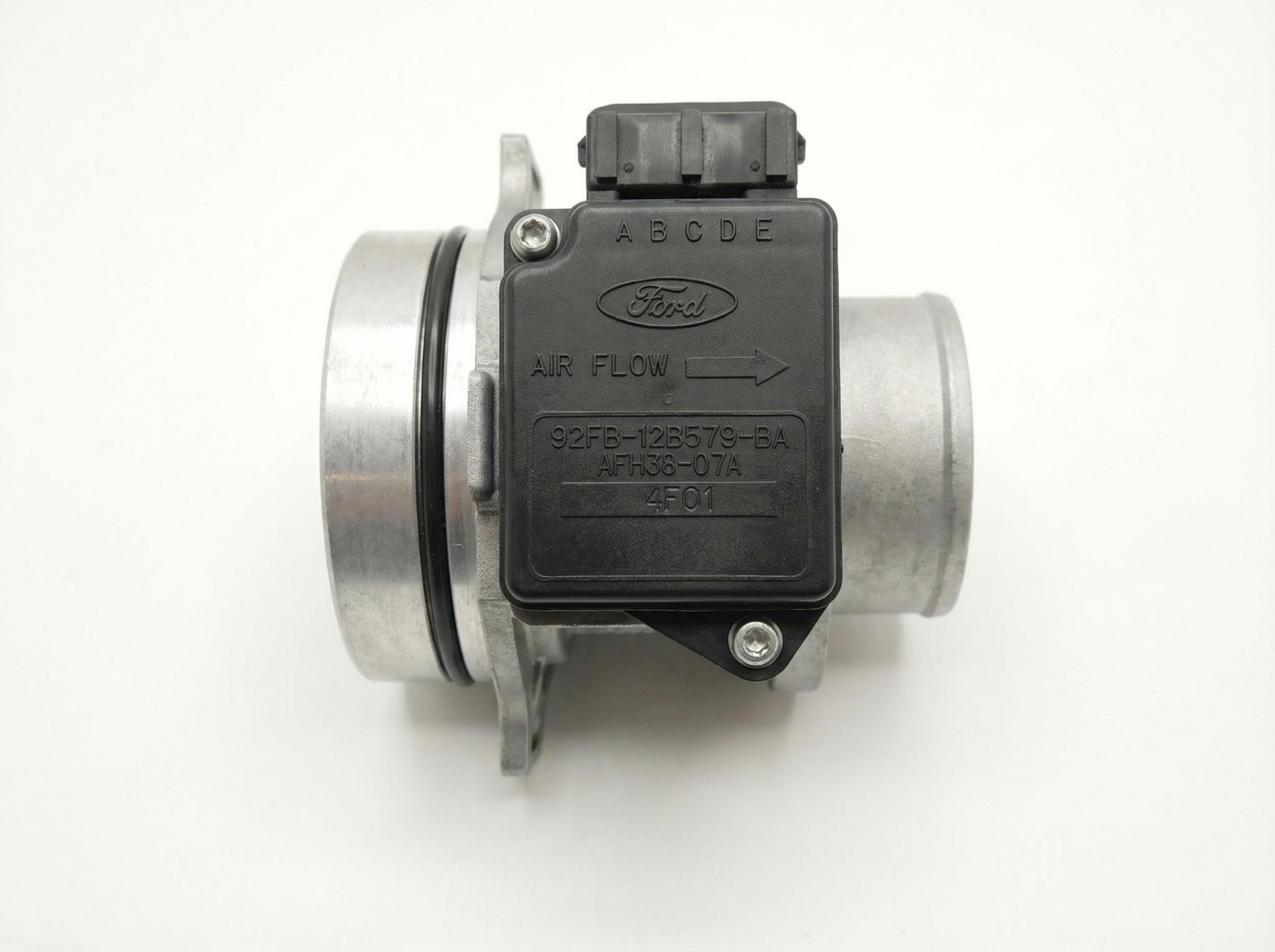
- Mass Air Flow (MAF) Sensor
(OEM #1L5Z-12B579-AA, 1L5Z-12B579-AARM (Remanufactured))— A dirty or failed MAF sensor is a very common cause of lean codes on this platform.
Trusted brands: Motorcraft, Hitachi, Bosch
OEM price range: $120-$180
Aftermarket price range: $60-$120 - PCV Valve and Hoses — The rubber elbows and hoses in the PCV system are notorious for cracking and causing vacuum leaks.
Trusted brands: Motorcraft, Gates
OEM price range: $20-$50
Aftermarket price range: $10-$30 - Intake Manifold Gasket Set — Leaking upper or lower intake manifold gaskets are a frequent source of hard-to-find vacuum leaks.
Related Codes That Often Appear With This One
- P0174 — P0174 is 'System Too Lean, Bank 2'. If both codes appear together, it strongly suggests a problem that affects both sides of the engine, such as a dirty MAF sensor, a major vacuum leak at the intake plenum, or low fuel pressure.
Technical Service Bulletins (TSBs) & Recalls
- TSB 03-16-1: While not exclusively for the Ranger, this TSB addresses lean codes P0171/P0174 on some Ford engines being caused by leaking intake manifold gaskets.
Mechanic-Grade Diagnostic Values
- Fuel Pressure (1998+ Returnless System) — expected: 55-65 PSI, key on, engine running. Should not drop more than 5 PSI in one minute after engine off.. Failure: Pressure below 55 PSI indicates a weak pump or clogged filter. Rapid pressure drop after shutoff indicates a bad check valve in the pump assembly.
- Fuel Injector Coil Resistance (1999-2000 3.0L V6) — expected: 14.2 - 14.4 Ohms. Failure: A reading significantly outside this range indicates a faulty injector coil.
- Fuel Injector Coil Resistance (2001-2008 3.0L V6, non-Flex Fuel) — expected: Approx. 14 Ohms. Failure: A reading significantly outside this range indicates a faulty injector coil.
- Fuel Injector Coil Resistance (2001-2004 3.0L V6, Flex Fuel) — expected: Approx. 12.4 Ohms (High Impedance). Failure: A reading significantly outside this range indicates a faulty injector coil.
- Long Term Fuel Trim (LTFT) at Idle — expected: Typically between -10% and +10%.. Failure: Sustained readings of +18% to +25% strongly indicate a lean condition that the PCM is trying to correct.
- Upstream O2 Sensor (B1S1) Voltage — expected: Fluctuating rapidly between approx. 0.1V and 0.9V.. Failure: A voltage that stays consistently low (e.g., below 0.2V) confirms the sensor is seeing a lean mixture.
Hidden / Shadow Codes Worth Checking
- P0171pd: This is a 'pending' code. It means the PCM has detected the lean condition on a recent drive cycle but has not yet met the full criteria (e.g., occurring on two consecutive trips) to illuminate the Check Engine Light. (see via Most consumer-grade OBD-II scanners can read pending codes in a dedicated menu.)
Scan Tool Commands That Help
- Ford IDS / FORScan / Capable Scanner: PCM Reset / Clear Keep Alive Memory (KAM) — After replacing components like fuel injectors or the MAF sensor, clearing the KAM forces the PCM to discard old learned fuel trim adjustments and start fresh. This can be done by disconnecting the battery for at least five minutes or using a dedicated scan tool function.
- Ford IDS / Capable Scanner: Cylinder Balance Test — To identify a weak or non-contributing cylinder. This can help determine if the P0171 is caused by a single clogged injector on Bank 1, as it would show that cylinder has less impact on engine speed when deactivated.
- Ford IDS / Capable Scanner: Unplug IAC Valve Connector (Manual Test) — As a quick test for large vacuum leaks. With the engine warm and idling, unplugging the Idle Air Control (IAC) valve should cause the idle to drop to 500 RPM or stall. If the idle remains high, it indicates unmetered air is entering the engine from a vacuum leak.
Wiring & Ground Locations
- Rear Frame Ground — On the frame rail at the rear of the truck, often near the spare tire.. This ground point is shared by the fuel pump and the rear lighting assembly (tail lights, turn signals). Corrosion here can create high resistance, causing a voltage drop to the fuel pump that reduces fuel pressure. This issue can be intermittent and may bizarrely only appear when an electrical load, like the headlights, is turned on.
Real Owner Repair Stories
- Reddit user Pitiful_Pirate2447 (2004 Ford Ranger 3.0L) — Persistent P0171 code, accompanied by a loud chirping noise from the back of the engine near the cab.
❌ Tried (didn't work) Not specified, but the user identified the final cause after other common checks were presumably made.
✅ What actually fixed it Replacing the Camshaft Position Synchronizer. The user noted the timing being off was causing the O2 sensors to detect excess oxygen. - YouTube channel 'Schrodinger's Box' (1999 Ford Ranger) — Low power, lean codes P0171 and P0174, but only when the headlights or turn signals were on. Turn signals also flashed rapidly.
❌ Tried (didn't work) Initial diagnosis was confusing due to the strange correlation with the lights.
✅ What actually fixed it Repairing a corroded main ground connection on the frame at the rear of the truck. The ground was shared by the fuel pump and the rear lights, and the increased load from the lights caused a voltage drop at the pump, lowering fuel pressure. - Reddit user _R3tr0grade_ (Ford Ranger (year/engine not specified)) — Persistent P0171 code.
❌ Tried (didn't work) Fixing vacuum leaks, replacing Bosch O2 sensors.
✅ What actually fixed it Replacing the Mass Air Flow (MAF) sensor, even though it appeared visually clean and undamaged. - NHTSA ODI #10395302 — An owner reported that their vehicle stalled in the middle of an intersection.
✅ What actually fixed it Technicians found lean codes P0171 and P0174 and resolved the issue by replacing the inertia switch.
"I Checked Everything" — The Actual Cause
- A well-documented case on a 1999 Ranger showed P0171/P0174 and low power were caused by a corroded rear ground point affecting the fuel pump. A smoke test would never identify this electrical issue.
- On a 2004 Ranger, a user passed two smoke tests but still had high fuel trims (LTFT 18-20%) and lean codes. The symptoms (trims improve under load, worsen at idle/coast) pointed away from a simple vacuum leak and towards a fuel delivery or sensor issue.
- A confirmed fix on a 2004 Ranger was a failing Camshaft Position Synchronizer. This is a mechanical/electrical timing component that affects when injectors fire and would not be found with a smoke test.
OEM Part Supersession History
1L5Z-12B579-AA→1L5Z-12B579-AARM (Remanufactured)— Original part discontinued by manufacturer.
Heads up: The part number 1L5Z-12B579-AB also appears to be replaced by the AARM version.
Model Year Variations Within This Range
- 1998-2008: In 1998, Ford switched from a 'return' style fuel system (35-40 PSI, regulator on fuel rail) to a 'returnless' system (55-65 PSI, regulator in tank). Early 1998 models could have either system, so visual confirmation of one vs. two fuel lines to the engine is necessary.
- 2001-2008 vs 1998-2000: Fuel injectors have different part numbers and specifications. For example, 1999-2000 non-flex models use part number XL5E-A2A (14.2-14.4 ohms), while 2001-2008 non-flex models use 1L5E-C4A (14 ohms). Flex Fuel models use different injectors entirely (e.g., 1F1E-D4B, 12.4 ohms). Using the wrong injector will cause fuel trim issues.
- Approx. 2002+: Some later models may have an Electronic Returnless Fuel System, which uses a Fuel Pump Driver Module (FPDM) and a fuel rail pressure sensor to modulate pump speed, instead of the purely Mechanical Returnless System used from 1998. This adds the FPDM and its wiring as potential failure points.
Diagnostic Flowchart
Real Owner Stories
Aggregated from forums and TSBs cited above. Mileages and costs reflect what owners reported in those sources.
Ford Ranger 3.0FFV (Flex Fuel)
Symptoms: Chasing lean codes P0171 and P0174. A smoke test revealed no vacuum leaks.
What fixed it: Discovered only 30 PSI of fuel pressure at the rail. Replaced the fuel pump assembly, noting the high failure rate of aftermarket pumps.
Source hint: Ranger-Forums.com - '3.0FFV Low Fuel Pressure/P0174(P0171) Code'
Ford Ranger 3.0L V6
Symptoms: Banks 1 and 2 too lean (P0171 and P0174).
What fixed it: Replaced the intake gaskets, which helped significantly but didn't fully resolve the codes. Further diagnosis using propane to find leaks pointed toward a bad MAF sensor.
Source hint: TheRangerStation.com - '3.0 Banks 1 and 2 too lean'
2002 Ford Ranger 3.0L V6
Symptoms: Check engine light on with P0171 and P0174 codes present.
What fixed it: Found a cracked 3/8" vacuum hose running from the vapor canister purge valve to the intake manifold. Replacing this hose solved the problem.
Cost: $5-$5
Source hint: Ranger-Forums.com - '2002 3.0 Vacuum Hose Question'
Related OBD-II Codes
Frequently Asked Questions
Does TSB 03-16-1 apply to my 3.0L Ranger for code P0171?
I hear a rhythmic chirping sound from the rear of my 3.0L engine along with the P0171 code. What does this mean?
What should the fuel pressure be on my 1998-2008 Ford Ranger 3.0L?
If I need to replace the MAF sensor, which part number should I use?
Why does my Ranger have both P0171 and P0174 codes?
Are aftermarket fuel pumps recommended for the 1998+ Ranger?
Helpful Videos
Used OEM Parts in Stock


New Aftermarket Parts Available

The information in this article is provided for general reference and educational purposes only. Vehicle specifications, procedures, and part compatibility can vary by production date, trim level, and region. Always consult your vehicle's factory service manual and verify part numbers before purchasing or performing repairs. Safety-critical components such as airbags, seat belts, and braking systems should be installed by a qualified professional.
- Ford Ranger:
- 🎬 Helpful Videos
- 🛍️ Shop This Part
- What's Unique About the 1998-2008 Ford Ranger
- Symptoms You May Notice
- Most Likely Causes
- Rare But Worth Checking
- Diagnosis Steps
- Parts You'll Likely Need
- Related Codes That Often Appear With This One
- Technical Service Bulletins (TSBs) & Recalls
- Mechanic-Grade Diagnostic Values
- Hidden / Shadow Codes Worth Checking
- Scan Tool Commands That Help
- Wiring & Ground Locations
- Real Owner Repair Stories
- "I Checked Everything" — The Actual Cause
- OEM Part Supersession History
- Model Year Variations Within This Range
- Diagnostic Flowchart
- Real Owner Stories
- Ford Ranger 3.0FFV (Flex Fuel)
- Ford Ranger 3.0L V6
- 2002 Ford Ranger 3.0L V6
- Related OBD-II Codes
- Frequently Asked Questions
- 🎟️ Get 5% Off