

P0148 on 2006-2013 Ford Transit 2.2L Duratorq: Fuel Delivery Error Causes and Fixes
P0148 on a Ford Transit 2.2L Duratorq most often points to a clogged fuel filter or a failing Suction Control Valve (SCV) on the high-pressure fuel pump. Start by replacing the fuel filter (~$20-$50). If the problem persists, the SCV is the next likely culprit. Use a genuine Denso part (e.g., 294009-0260), costing around $100-$200, as aftermarket versions are known to be unreliable.
- Always start diagnosis by replacing the fuel filter; it's cheap, easy, and a very common cause for P0148.
- The Suction Control Valve (SCV) and Pressure Relief Valve (PRV) are the next most likely culprits and are much cheaper to replace than the entire high-pressure pump.
- When replacing fuel system components like the SCV, it is strongly recommended to use genuine OEM parts (Denso or Motorcraft) to avoid calibration issues and premature failure.
- A diagnostic tool capable of reading live data (like Forscan) is invaluable for monitoring desired vs. actual fuel pressure to confirm the fault.
- After replacing components like the PRV or fuel pump, a 'pump learn' or counter reset procedure with a scan tool may be necessary.
What's Unique About the 2006-2013 Ford Transit

The 2.2L Duratorq 'Puma' engine in the Mk7 Transit uses a Denso common rail fuel system for Euro 4 models (approx. 2006-2011) and a Siemens system for Euro 5 models (approx. late 2011-2013). This guide focuses primarily on the more common Euro 4 Denso system. While robust, these systems are sensitive to fuel quality and maintenance. The most frequent triggers for P0148 are not catastrophic pump failure, but rather serviceable items like a clogged fuel filter or the failure of specific, replaceable valves on the high-pressure pump. The Suction Control Valve (SCV) and Pressure Relief Valve (PRV) are notorious failure points on the Denso system, and owners on forums frequently resolve P0148 by replacing just these components, avoiding the high cost of a full pump replacement.
Symptoms You May Notice

- Check Engine Light is on
- Reduced engine power ('limp mode'), often triggered by acceleration or driving uphill
- Hesitation or sputtering during acceleration
- Engine stalling, especially at low speeds or when coming to a stop
- Rough or fluctuating ('hunting') idle
- Difficulty starting the engine, sometimes requiring multiple attempts
- Noticeable increase in diesel 'knock' or engine rattle, especially under load
- Black smoke from the exhaust
- Replacing the entire high-pressure fuel pump when only the much cheaper and easier to replace Suction Control Valve (SCV) was faulty. This is the most common and costly misdiagnosis for this code on the Transit.
- Replacing fuel injectors without performing a leak-off test first to confirm they are the source of the pressure loss. 🎬 Watch: How to perform a DIY injector leak-off test.
- Replacing components without first checking the wiring harness for chafing, especially near the starter motor.
Most Likely Causes

- Clogged Fuel Filter 🔴 High Probability Diesel fuel systems are sensitive to contamination. The filter is designed to catch debris and water, and as it clogs, it restricts fuel flow to the high-pressure pump, causing pressure to drop under demand.
How to confirm: This is the first and cheapest step. If the filter's age is unknown or it's been over 15,000 miles, replace it. Many forum users report this as the fix. The code appearing right after a filter change suggests air is in the system.
Typical fix: Replace the fuel filter with a quality part. It is critical to bleed the system properly after replacement to avoid introducing air, which can cause similar symptoms and new codes.
Est. part cost: $20-$50 - Faulty Suction Control Valve (SCV) 🔴 High Probability The SCV is the most common component failure for P0148 on this engine. Located on the Denso high-pressure pump, this valve regulates fuel entry. It wears out or gets sticky from contamination, causing erratic fuel pressure, hunting idle, and stalling.
How to confirm: Symptoms like a hunting idle and diesel knock strongly point to the SCV. A diagnostic scan tool (like FORScan) can monitor requested vs. actual fuel rail pressure; a large discrepancy or inability to perform a 'pump learn' procedure indicates an SCV issue.
Typical fix: Replace the Suction Control Valve. It is highly recommended to use a genuine Denso part (Part numbers 294009-0260 or 294009-0120 are common). Aftermarket SCVs are widely reported on forums to fail quickly or not calibrate correctly. A pump relearn procedure with a diagnostic tool is required after replacement.
Est. part cost: $100-$200 - Faulty Pressure Relief Valve (PRV) 🟡 Medium Probability The PRV is a safety valve on the fuel rail of Euro 4 models. It can weaken over time or be forced open by a pressure spike (often from a faulty SCV) and then fail to reseal properly, causing a constant loss of rail pressure.
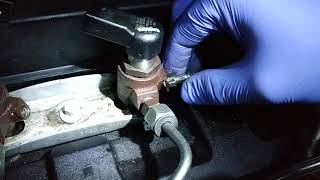
How to confirm: Perform a leak-off test on the PRV. Disconnect the small return hose from the valve on the end of the fuel rail. If any fuel leaks out at idle or while cranking the engine, the valve is faulty. A healthy PRV should remain completely sealed under normal operating pressures.
Typical fix: Replace the Pressure Relief Valve on the fuel rail. The PCM's learned values ('PRV counters') must be reset using a diagnostic tool like FORScan after replacement.
Est. part cost: $80-$150 - Leaking Fuel Injector(s) ⚪ Low Probability Injectors can wear internally, causing excessive fuel to be returned to the tank ('leaking off') instead of being sprayed into the cylinder. This lowers overall rail pressure. A severely over-fueling injector is also the primary cause of the infamous cracked piston issue on this engine.
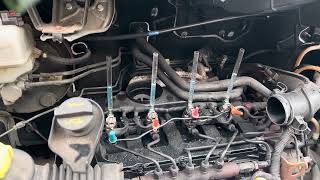
How to confirm: Perform an injector leak-off test. 🎬 See this step-by-step guide on testing injector fuel return. Connect small bottles to the return ports of each injector. Run the engine at idle for a timed period (e.g., 4 minutes) and compare the amount of fuel collected. An injector that returns significantly more fuel than the others (over 40ml in 4 mins) is faulty. 🎬 Watch: What a healthy injector leak-off test looks like.
Typical fix: Replace the faulty fuel injector(s). This is a more involved job that requires coding the new injector's 16-digit calibration code to the PCM using a diagnostic tool like FORScan.
Est. part cost: $150-$400 per injector - Failing High-Pressure Fuel Pump (HPFP) ⚪ Low Probability While the entire Denso pump can fail, it's far less common than the individual SCV or PRV valves failing. Internal wear from contamination or fuel starvation can lead to the pump being unable to generate the required pressure.
How to confirm: This is usually a diagnosis of exclusion after the filter, SCV, PRV, and injectors have been ruled out. A complete no-start condition or metallic rattling from the pump itself can be indicators.
Typical fix: Replace the high-pressure fuel pump. This is a significant, labor-intensive job that is often timed with timing chain service. A 'pump learn' procedure is required after installation.
Est. part cost: $400-$1000+
Rare But Worth Checking
- Damaged Wiring Harness: The wiring loom for the fuel pump and its sensors can rub through on other components, particularly around the starter motor, causing an intermittent short or open circuit. This can perfectly mimic a component failure and lead to misdiagnosis.
- Faulty Fuel Rail Pressure Sensor: Though generally reliable, the sensor itself can fail. A diagnostic tool showing erratic, stuck, or nonsensical pressure readings (e.g., high pressure when the engine is off) can point to a bad sensor rather than a true pressure problem.
- Air in Fuel System: If the code appears immediately after a fuel filter change or running the tank completely empty, it's highly likely that air was introduced into the system and not properly bled out. This causes stumbling, stalling, and fuel pressure errors.
Diagnosis Steps

- Read all fault codes with a capable OBD-II scanner (FORScan is highly recommended for Fords). Note any other codes that appear alongside P0148, especially P0087, P0149, or P1564.
- Check Maintenance History & Replace Fuel Filter: Start with the simplest fix. If the fuel filter hasn't been replaced in the last 15,000 miles, it is the prime suspect. This is the most common and cheapest fix. Bleed the system properly afterward.
- Live Data Analysis: Use a scan tool to monitor 'Fuel Rail Pressure' (FRP) and 'Desired Fuel Rail Pressure' (FRP_DSD). At idle on a warm Euro 4 engine, pressure should be around 230 bar (3335 PSI). Compare the two readings during a short test drive under load. If the actual pressure cannot keep up with the desired pressure, you have a confirmed fuel delivery shortfall.
- Visual Inspection: Check for any obvious diesel fuel leaks around the engine bay, along the fuel lines, at the filter housing, and near the high-pressure pump and fuel rail.
- Inspect Wiring: Carefully inspect the wiring harness going to the high-pressure pump, SCV, and rail pressure sensor. Pay close attention to the area where the loom passes the starter motor, as chafing is a known issue here.
- Check PRV (Euro 4 models): Perform a leak-off test on the Pressure Relief Valve (PRV) at the end of the fuel rail. If fuel is leaking from its return port at idle, it has failed.
- Check Injectors: Perform a full injector leak-off test to check if one or more injectors are returning excessive fuel. An injector returning significantly more than 25-40ml over 4 minutes at idle is faulty.
- Diagnose SCV (Euro 4 models): If the idle is hunting, the live data shows erratic pressure, and all other tests are inconclusive, the Suction Control Valve (SCV) is the most likely culprit. Given its high failure rate, replacing it with a genuine Denso part is often the final diagnostic step.
Parts You'll Likely Need

- Fuel Filter — This is the most common cause of fuel flow restriction leading to a P0148 code.
Trusted brands: Motorcraft, Bosch, Mahle, Mann-Filter
OEM price range: $30-$50
Aftermarket price range: $20-$40 - Suction Control Valve (SCV) — A very common failure point on the 2.2L Duratorq high-pressure pump that directly controls fuel pressure.
Trusted brands: Denso, Motorcraft
OEM price range: $150-$250
Aftermarket price range: $70-$120 - Pressure Relief Valve (PRV) — Commonly fails by sticking open, causing a constant loss of rail pressure.
Trusted brands: Denso, Bosch
OEM price range: $100-$180
Aftermarket price range: $60-$120 - High-Pressure Fuel Pump
(OEM #A2C59517045)— The ultimate source of fuel pressure. Replaced when all other related components are confirmed to be working correctly.
Trusted brands: Denso (OEM), Bosch
OEM price range: $800-$1200
Aftermarket price range: $400-$700
Related Codes That Often Appear With This One
- P0087 — P0087 ('Fuel Rail/System Pressure - Too Low') is a more specific version of P0148. Seeing both strongly confirms a lack of fuel pressure and points away from an intermittent sensor fault.
- P0149 — 'Fuel Timing Error'. This code often appears with P0148 and can point directly to a problem with the Fuel Injection Pump (FIP) or its timing control, often related to the SCV's function.
- P1564 — 'FIP requesting reduced fuelling mode'. This indicates the Fuel Injection Pump has detected a fault and has commanded the PCM to limit engine power, often appearing as a trio with P0148 and P0149.
Mechanic-Grade Diagnostic Values
- Injector Leak-Off Volume (Euro 4) — expected: 25-40 ml per injector over a 4-minute test at warm idle.. Failure: Any injector leaking significantly more than others, or exceeding 40ml. A variation of more than 10% between the highest and lowest reading is also a sign of a problem.
- Fuel Rail Pressure (FRP) at Idle (Euro 4) — expected: ~230 bar / 3335 PSI (+/- 15%) on a warm engine.. Failure: Pressure that significantly deviates from the target or fluctuates wildly ('hunts') in sync with an unstable idle.
- Fuel Rail Pressure Sensor Voltage (Signal Wire) — expected: Ignition on, engine off (plug connected): ~0.5V. Engine idling: ~1.8V to 2.1V.. Failure: A reading of 4.16V with the plug disconnected (ignition on) indicates an issue. Readings that are stuck or don't correlate with pressure changes are suspect.
- Pressure Relief Valve (PRV) Torque Spec (Euro 4) — expected: 175 Nm.. Failure: N/A - This is an installation specification.
- Suction Control Valve (SCV) Torque Spec (Euro 4) — expected: 10 Nm.. Failure: N/A - This is an installation specification.
Hidden / Shadow Codes Worth Checking
- P268B: 'Fuel Pump Calibration Not Learned'. This code can appear in FORScan immediately after running the 'Pump Learn' service procedure, even if it completed successfully. It can typically be cleared and will not return if the learn was successful. (see via FORScan diagnostic software after performing a pump learn.)
Scan Tool Commands That Help
- FORScan: Reset learned values for the fuel pressure relief valve (PRV) — This must be done after replacing the PRV on Euro 4 models, and before performing the pump learn. It resets the counter that tracks how many times the PRV has activated.
- FORScan: Fuel Injection Pump Learn — This calibrates the new Suction Control Valve (SCV) to the PCM. It should be performed after replacing the SCV or the high-pressure pump. The engine must be at operating temperature and have no other powertrain fault codes present.
- FORScan: Injector Pilot Correction Learn — This fine-tunes the injector timing and fuel delivery. It should be run after the pump learn is complete or after replacing injectors. This also requires the engine to be warm.
- FORScan: Injector programming — When replacing a fuel injector, the new injector's 16-digit calibration code must be entered into the PCM. This function allows you to write the new code for the corresponding cylinder.
Wiring & Ground Locations
- Suction Control Valve (SCV) Connector — On the back of the Denso high-pressure fuel pump on Euro 4 models.. The two wires to this connector control all fuel entering the pump. A forum post identifies the wires as orange and orange with a yellow trace, both leading to the rear ECU connector. Damage to this wiring can mimic a failed SCV.
- Main Engine Wiring Harness — Particularly where the harness routes past the starter motor.. This area is a known chafe point on the Mk7 Transit. The harness can rub through, causing intermittent shorts or open circuits for the fuel pump controls, rail pressure sensor, or SCV, leading to a P0148 code that is difficult to diagnose.
Real Owner Repair Stories
- Ford Transit Forum user (2009 Transit Mk7 2.2 FWD (Euro 4)) — Hunting on idle and cutting out when idling.
❌ Tried (didn't work) Initially, the user successfully completed the 'Pump Learn' and 'Pilot Injector Learn' with FORScan after replacing the SCV and PRV.
✅ What actually fixed it The story highlights a secondary problem: the 'Reset PRV counters' function failed with a 'Service procedure not supported' message. Forum wisdom suggests this can be due to outdated PCM firmware, requiring a dealer software update to fully complete the repair procedure. The van ran better but was not perfect without this final step. - Ford Owners Club user (Mk7 Transit 2.2 (Euro 4)) — Not specified, but performing learns after SCV and PRV replacement.
❌ Tried (didn't work) Resetting the PRV counter with FORScan was successful.
✅ What actually fixed it This is an unresolved diagnostic trap. The 'Pump Learn' procedure repeatedly failed at 46% with an error: 'intermittent problem with the fuel pressure sensor shorting to vbatt', despite having no stored fault codes and the sensor being known as reliable. Another user with the same issue confirmed the sensor and wiring were good, suggesting a bug or specific prerequisite issue within the FORScan procedure itself, leading to misdiagnosis. - Ford Transit Forum user (2013 Transit 2.2L 114kW (Euro 5)) — Non-start after 'water in fuel' message. FORScan showed actual rail pressure of 3,000kPa vs. desired 30,000kPa.
❌ Tried (didn't work) Changing the fuel filter.
✅ What actually fixed it The key finding was a model-year variation. The user learned their 2013 van was a Euro 5 model with a Siemens fuel system, which does not have the same user-serviceable PRV on the fuel rail as the Euro 4 Denso system. The diagnosis path for P0148 is different, focusing on the pump-mounted regulator and injectors specific to the Siemens system.
OEM Part Supersession History
Denso 294200-0160 (valve only)→Denso 294009-0260 (kit containing valve 294200-0360).— Revision of the Suction Control Valve.
Heads up: The kit 294009-0260 is the correct service part for many Ford Transit 2.2L/2.4L/3.2L applications from 2006 onwards.Denso 294200-0660→Denso 294009-0120.— Revision of the Suction Control Valve.
Heads up: 294009-0120 is often listed for Nissan/Mazda applications but also fits some Transit Denso HP3 pumps. It's crucial to verify the correct SCV based on the high-pressure pump part number.Ford 6C1Q-9H321-AB→Ford 1497165— Ford part number update for the Pressure Relief Valve (PRV).
Model Year Variations Within This Range
- 2006 - Mid-2011 (Euro 4): These models use a Denso common rail fuel system. Diagnosis for P0148 heavily focuses on the serviceable Suction Control Valve (SCV) on the pump and the Pressure Relief Valve (PRV) on the fuel rail.
- Late 2011 - 2013 (Euro 5): These facelift models use a Siemens common rail fuel system. They do not have the same serviceable PRV on the fuel rail as the Denso system. The diagnosis for P0148 is different and focuses on the pump-mounted fuel pressure regulator and Siemens-specific injectors.
Diagnostic Flowchart
Other Known Issues on This Vehicle
Issues unrelated to this code that are worth knowing about as an owner of this generation:
- Cracked Pistons 🔴 High — A widely-documented failure, particularly on the 130PS and 140PS models. Often attributed to over-fueling from faulty injectors. Can occur without warning and lead to catastrophic engine failure (runaway). (Ref: Recall mentioned by some owners and dealers for certain VIN ranges, often involving a PCM calibration update to prevent over-fueling.)
- Timing Chain Wear / Failure 🔴 High — The timing chain and/or tensioner can wear prematurely, especially on vehicles with over 60,000-100,000 miles or those with extended oil change intervals. Symptoms start with a rattling noise on startup and can lead to the chain snapping, causing severe engine damage.
- EGR Valve Clogging and Failure 🟠 Medium — Extremely common issue where the EGR valve becomes clogged with carbon and soot, causing it to stick open or closed. This leads to poor performance, black smoke, and hesitation.
- Oil Pump Failure / Wear 🔴 High — A known issue of premature wear within the oil pump led to a service campaign/recall for specific build ranges (approx. 2011-2013). Failure results in loss of oil pressure, which can destroy the turbocharger and seize the engine. (Ref: Ford Service Program / Recall (check by VIN).)
Used vs. New Parts: Buying Guide for This Vehicle
When a used part is the smart pick: Used parts are generally not recommended for the key electronic control components of this fuel system. A used wiring harness, fuel rail (without sensors), or fuel lines could be a cost-effective replacement if physically damaged.
Donor-vehicle mileage cap: roughly under 80000 miles for the part to have meaningful remaining life.
What to inspect on the donor part:
- For a wiring harness, inspect thoroughly for any signs of chafing, brittle insulation, or previous repairs.
- For mechanical parts like the fuel rail, ensure there is no corrosion, especially around fittings.
- Avoid parts from vehicles that show signs of a major engine failure or fire.
OEM-only on this vehicle (don't cheap out):
- Suction Control Valve (SCV): Aftermarket SCVs are widely reported on forums to fail calibration/learn procedures or have a very short service life.
- Pressure Relief Valve (PRV): Similar to the SCV, non-genuine PRVs are known to be unreliable and a common cause of failed repairs.
- Fuel Injectors: Used injectors are a major risk as they lack the 16-digit calibration codes required for the PCM to operate them correctly. Only new or professionally reconditioned injectors with new codes should be used.
Aftermarket brands forum-validated for this vehicle:
- Denso: For the SCV, PRV, and injectors on Euro 4 models, genuine Denso is the OEM supplier and the most recommended brand for replacement.
Brands owners have reported issues with on this vehicle:
- Unbranded/generic eBay or Amazon parts: Specifically for the SCV and PRV, numerous forum posts warn against using cheap, unbranded valves as they frequently do not work correctly.
Real Owner Stories
Aggregated from forums and TSBs cited above. Mileages and costs reflect what owners reported in those sources.
2006-2013 Ford Transit 2.2L Duratorq
Symptoms: P0148 appeared on a newly purchased van along with other error codes.
What fixed it: The first recommendation from multiple forum members was to change the fuel filter.
Source hint: fordtransit.org forum thread titled 'New van - loads of error codes!'
2006-2013 Ford Transit 2.2L Duratorq
Symptoms: The van went into limp mode and showed codes P0148, P0149, and P1564.
What fixed it: Forum discussion pointed to several potential causes, including a clogged fuel filter, a chafed wiring harness near the starter motor, or a faulty FIP timing solenoid.
Source hint: fordtransit.org forum thread titled 'Codes'
2006-2013 Ford Transit 2.2L Duratorq
Symptoms: Owner experienced a catastrophic engine runaway event caused by a cracked piston.
What fixed it: The failure was linked to an over-fueling injector, which is a known cause for both this catastrophic failure and fuel pressure codes like P0148.
Source hint: fordtransit.org forum thread titled 'Cracked Piston'
Related OBD-II Codes
Frequently Asked Questions
My Transit is hunting at idle and has a loud diesel knock with the P0148 code. What's the most likely cause?
I just changed my fuel filter and now my van has a P0148 code and is hard to start. What happened?
I need to replace the Suction Control Valve (SCV). Can I use a cheaper aftermarket part?
After replacing the SCV or Pressure Relief Valve (PRV), is there anything else I need to do?
My mechanic suspects a leaking injector. How can I confirm this on my Transit?
My van has P0148 and I'm worried about the 'cracked piston' issue I've read about. Are they related?
My wiring harness looks okay, but I've heard they can be a problem. Is there a specific spot to check?
Helpful Videos

We Have This Part in Stock


The information in this article is provided for general reference and educational purposes only. Vehicle specifications, procedures, and part compatibility can vary by production date, trim level, and region. Always consult your vehicle's factory service manual and verify part numbers before purchasing or performing repairs. Safety-critical components such as airbags, seat belts, and braking systems should be installed by a qualified professional.
- Ford Transit:
- 🎬 Helpful Videos
- 🛍️ Shop This Part
- What's Unique About the 2006-2013 Ford Transit
- Symptoms You May Notice
- Most Likely Causes
- Rare But Worth Checking
- Diagnosis Steps
- Parts You'll Likely Need
- Related Codes That Often Appear With This One
- Mechanic-Grade Diagnostic Values
- Hidden / Shadow Codes Worth Checking
- Scan Tool Commands That Help
- Wiring & Ground Locations
- Real Owner Repair Stories
- OEM Part Supersession History
- Model Year Variations Within This Range
- Diagnostic Flowchart
- Other Known Issues on This Vehicle
- Used vs. New Parts: Buying Guide for This Vehicle
- Real Owner Stories
- 2006-2013 Ford Transit 2.2L Duratorq
- 2006-2013 Ford Transit 2.2L Duratorq
- 2006-2013 Ford Transit 2.2L Duratorq
- Related OBD-II Codes
- Frequently Asked Questions
- 🎟️ Get 5% Off