

OBD-II Code P1564: A Comprehensive Guide for Cruise Control & Fuel System Faults
What P1564 means, why it triggers, and how to fix it on Nissan, Ford, VW, and more
- P1564 definitions vary strictly by brand: Nissan and Subaru indicate a failed cruise control switch or clock spring, while Ford and BMW diesels flag a failing fuel injection pump.
- On Japanese vehicles, the primary symptom is a completely unresponsive cruise control system that refuses to set or illuminate the dashboard indicator.
- Simultaneous failure of the horn, steering wheel radio buttons, and cruise control confirms a broken clock spring, which also disables the driver's airbag.
- Ignoring P1564 on a diesel engine leads to a $2,000+ catastrophic fuel pump failure and a no-start condition within 6 months.
What Does P1564 Mean?

P1564 is a manufacturer-specific code with entirely different definitions based on your car's brand. For Japanese brands like Nissan, Infiniti, and Subaru, it signals an electrical fault in the steering wheel's cruise control switch (ASCD) or clock spring. For Ford, VW, and BMW diesels, it indicates the fuel injection pump is requesting reduced fuel, forcing the engine into limp mode. For VW/Audi gasoline engines, it flags low voltage during a throttle body adaptation. In all cases, the powertrain control module (PCM) has detected an electrical signal that is out of range or missing.
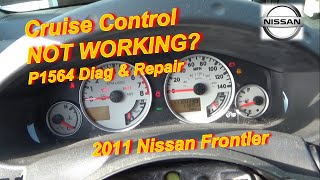
Technical definition: The SAE/OBD-II definition for P1564 varies by manufacturer. For Nissan/Infiniti: 'ASCD (Automatic Speed Control Device) Steering Switch Malfunction 🎬 Watch: How to diagnose and repair Nissan cruise control issues.'. For Ford diesels: 'Fuel Injection Pump - Reduced Fuel Mode Request'. For Audi/Volkswagen: 'Idle Speed Control Throttle Position Low Voltage During Adaptation' (VAG 17972). On older Nissan models with navigation: 'GPS Antenna Signal Missing'.
Can I Drive With P1564?
Yes, But With Caution. Yes, you can drive your car, but ignoring the code carries severe risks depending on your make. If the clock spring is the cause (common on Nissan/Subaru), your driver's airbag and horn are disabled, creating a major safety hazard. On diesel vehicles (Ford, VW, BMW), the engine enters limp mode with significantly reduced power, and ignoring it leads to a complete no-start condition.
Common Causes

- Faulty Cruise Control Switch (Nissan/Subaru) (Very Common) — The steering wheel buttons for setting, resuming, or canceling cruise control wear out internally, get stuck, or suffer from failed electrical contacts.
- Defective Clock Spring (Nissan/Subaru) (Common) — The clock spring is a coiled ribbon cable behind the steering wheel connecting the buttons, horn, and airbag to the car. When internal wires break, the cruise control buttons lose their connection to the PCM.
- Low Battery Voltage (VW/Audi) (Common) — A weak battery or faulty alternator causes system voltage to drop below 11.5V during key-on self-tests or throttle adaptation procedures, triggering a logic fault (VAG 17972).
- Faulty Fuel Injection Pump Control Module (Ford/BMW Diesels) (Common) — On diesel vehicles using Bosch VP30/VP44 pumps, the internal electronic control module (EDU/PSG) fails due to repeated heat cycles, causing the pump to request reduced engine power.
- Wiring or Connector Issues (Less Common) — Damaged wires, loose connections, or corrosion in the electrical connectors between the cruise control switches, clock spring, or fuel injection pump interrupt the signal.
- Blown Fuse (Uncommon) — A blown fuse in the cruise control, engine control module, or throttle body circuit disables the system and sets this code.
- Faulty Fuel Pump Timing Solenoid (Ford Diesel) (Rare) — Per Ford TSB 64/2004, when P1564 appears alongside P0149, a faulty fuel injection pump timing solenoid is the specific cause of reduced power.
- Faulty GPS Antenna (Specific Nissan Models) (Rare) — On older Nissan vehicles with factory navigation, the Road Traffic Information module (RTI) detects an open or short in the GPS antenna circuit.
- Faulty Powertrain Control Module (PCM) (Very Rare) — The vehicle's main computer fails and incorrectly sets this code. Consider this only after exhaustively ruling out all other components.
Symptoms

- Cruise Control Does Not Work — The cruise control system refuses to activate or deactivates unexpectedly while driving. The dashboard indicator light often blinks or fails to illuminate.
- Reduced Engine Power (Limp Mode) — On Ford, VW, Audi, and BMW diesels, the engine suffers severe power loss and poor acceleration to prevent injection pump damage.
- Other Steering Wheel Controls Fail — If the clock spring fails, the horn, radio control buttons, and driver's airbag stop working simultaneously. The airbag warning light illuminates.
- Check Engine Light is On — The Malfunction Indicator Lamp (MIL) illuminates on the dashboard.
Diagnostic Flowchart
Tap your situation to follow the diagnostic path that matches what you're seeing on this code.
Common Fixes & Costs
- Replace Cruise Control Switch
— Parts: $20-$180, Labor: $80-$150, ~1.2 hr book time
(Intermediate)
Nissan Altima (2005-2006): OEM 25550-ZB08B (Alt: Carquest Premium SLA1057) - Replace Clock Spring
— Parts: $60-$450, Labor: $120-$250, ~1.5 hr book time
(Professional)
Nissan Frontier / Xterra / Pathfinder (2005-2015): OEM B5567-9U00A (Alt: Dorman 525-140, Standard Motor Products CSP359) - Replace/Remanufacture Fuel Injection Pump Control Module (Ford)
— Parts: $1300-$2000, Labor: $450-$950, ~5.5 hr book time
(Professional)
Ford Transit 2.4L Diesel (2000-2006): OEM YC1Q9A543TE (Alt: Bosch (Reman) 0986444078) - Repair Wiring or Connectors — Parts: $5-$30, Labor: $100-$300, ~2.0 hr book time (Intermediate)
- Replace Fuel Pump Timing Solenoid (Ford Diesel) — Parts: $100-$250, Labor: $200-$400, ~3.0 hr book time (Advanced)
Used vs. New Parts: Buying Guide
When a used part is worth it: A used OEM cruise control switch from a low-mileage vehicle is a cost-effective alternative to aftermarket parts. Avoid used clock springs, as their remaining lifespan is unpredictable.
Donor-vehicle mileage cap: roughly under 80000 miles for the part to have meaningful remaining life.
Donor quality checklist:
- Verify the exact part number match.
- Avoid clock springs from vehicles with deployed airbags.
- Confirm the donor vehicle's mileage.
Decision logic:
- If The part is a safety-critical component like a clock spring → Buy a new OEM part for maximum reliability.
- If The part is a simple switch and the budget is tight → A used OEM or new aftermarket part is acceptable.
- If The vehicle is high-mileage (>150k miles) and you plan to sell it soon → An aftermarket part is a practical, budget-conscious choice.
Warranty tradeoff: Salvage yard parts offer 30-90 day warranties. New aftermarket parts offer 1-year to lifetime warranties. New OEM parts carry a 1-year/12,000-mile warranty.
Worst-case if a used part fails: $200-$400 if a cheap aftermarket clock spring fails, requiring repeat labor and a new part.
What Happens If You Wait — Timeline
- 0-1 month: Nissan/Subaru: Cruise control works intermittently. Ford/VW Diesel: Occasional, brief hesitation under load as the pump requests limp mode. (MPG impact: 0-5% (Diesel only)% · Added cost: $0)
- 1-3 months: Nissan/Subaru: Cruise control fails completely. Ford/VW Diesel: Limp mode becomes frequent, requiring an ignition cycle to reset. Hard starting when the engine is warm occurs due to heat-soaked electronics. (MPG impact: 5-10% (Diesel only)% · Added cost: $50-$150 in wasted fuel.)
- 3-6 months: Nissan/Subaru: Horn and airbag fail (if clock spring is the cause). Ford/VW Diesel: Engine is in constant limp mode, making acceleration dangerously slow. Vehicle stalls intermittently. (MPG impact: 10-20% (Diesel only)% · Added cost: $150-$300 in wasted fuel. High risk of being stranded.)
- 6+ months: Ford/VW Diesel: The fuel injection pump's internal electronics or mechanicals fail completely. The engine will not start. (MPG impact: N/A (Vehicle is inoperative)% · Added cost: $2,000-$4,000 for a tow and replacement of the fuel injection pump assembly.)
Cost of Not Fixing It
- Immediate: Loss of cruise control (Nissan/Subaru). Significant loss of engine power and limp mode (Ford/VW diesels). Disabled driver's airbag if the clock spring is broken. (Added cost: Negligible)
- 1-6 months: Diesel vehicles experience hard-starting or stalling issues that progress from intermittent to constant. (Added cost: $0)
- 6+ months: Complete and catastrophic failure of the VP44 injection pump on diesel vehicles, resulting in a no-start condition and stranding the driver. (Added cost: $2000-$3500)
Diagnosis Steps

- Verify the Code and Check for Other DTCs
Use an OBD-II scanner to confirm P1564. Check for other codes. Airbag codes or C1143 (Steering Angle Sensor) alongside P1564 confirm a bad clock spring. On Fords, P1664, P1665, or P0149 point directly to the injection pump.
Tools: OBD-II Scanner (Beginner) - Inspect Fuses and Battery Voltage
Check fuses related to the cruise control, engine control module, or throttle body. Use a multimeter to test battery voltage with the key on, engine off. It must be at least 11.5V, especially on VW/Audi vehicles.
Tools: Multimeter, fuse puller (Beginner) - [Pro Tip] Analyze Live Data from Cruise Switches
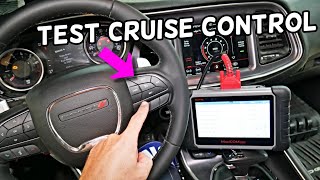
Use an advanced scanner to monitor the PIDs for the cruise control switches. Press each button and confirm the scanner shows the status change. If a button press doesn't register, the switch is faulty. If the signal cuts out while turning the steering wheel, the clock spring is bad.
Tools: Advanced OBD-II Scanner (Intermediate) - [Pro Tip] Perform a Bypass Test at the Clock Spring Connector
Access the electrical connector on the vehicle side of the clock spring. With the key on, use a jumper wire to briefly connect the cruise control signal pin to the ground pin. If the cruise control dash light illuminates, the wiring to the PCM is good, isolating the fault to the clock spring or switch.
Tools: Jumper wire, wiring diagram (Advanced) - Test the Cruise Control Switch Circuit with a Multimeter
Disconnect the switch connector and check resistance. The factory service manual provides specific values (e.g., 'COAST/SET' at 240-260 ohms). Infinite resistance (OL) when a button is pressed indicates a failed switch.
Tools: Multimeter, vehicle-specific repair manual (Advanced) - [VW/Audi Specific] Perform Throttle Body Adaptation
Connect a battery charger to maintain stable voltage above 12V. Use a VAG-compatible scan tool to navigate to Engine -> Basic Settings -> Group 060. Activate the procedure and wait for 'ADP OK'. Failure to maintain voltage causes this test to fail and triggers P1564.
Tools: VAG-compatible scan tool, battery charger (Advanced) - [Ford Diesel Specific] Check Lift Pump Fuel Pressure
Low fuel pressure from the lift pump causes the VP44 injection pump to overheat and trigger P1564. Connect a fuel pressure gauge. The lift pump must deliver a minimum of 5 PSI at the injection pump inlet under load.
Tools: Fuel pressure gauge, vehicle-specific adapters (Advanced) - Visually Inspect Wiring
Look for chafed, broken, or corroded wires in the steering column harnesses or fuel injection pump connectors. Pay close attention to the connector at the base of the clock spring.
Tools: Flashlight (Intermediate) - Test the Clock Spring
If the switch tests good but fails the live data or bypass test, perform a continuity test on the clock spring's pins. This requires removing the steering wheel and airbag following strict manufacturer safety protocols.
Tools: Multimeter, socket set, trim removal tools (Advanced)
When This Code Triggers (Freeze-Frame Conditions)
- Engine Coolant Temp: 170-210°F (77-99°C) (The engine is at full operating temperature when the fault is logged.)
- RPM: 1500-3000 RPM (Occurs at a steady highway cruising RPM (cruise faults) or under load during acceleration (fuel pump faults).)
- Vehicle Speed: 30-70 mph (48-112 kph) (Triggered at city or highway speeds when cruise control is engaged or the engine is under sustained load.)
- System Voltage: 11.0-14.5V (For VW/Audi, the code triggers specifically if voltage drops below 11.5V during a self-test.)
Related Codes
- P1664 — On Ford diesels, P1664 (Injection Pump Control Module Malfunction) confirms an internal electronic fault in the pump. Seeing P1564 and P1664 together guarantees the injection pump assembly requires repair or replacement.
- C1143 — A chassis code for 'Steering Angle Sensor Circuit Failure'. Seeing C1143 and P1564 together isolates the fault entirely to the clock spring, as both signals route through it.
- P0149 — On Ford diesels, this 'Fuel Timing Error' code alongside P1564 strongly suggests a mechanical timing issue within the injection pump, specifically the timing solenoid per Ford TSB 64/2004.
- P1665 — Indicates an 'Injection Pump Control Module Communication' problem on Fords. Suggests the issue is in the wiring or connectors between the pump and the main computer.
Climate & Environmental Factors
- Cold Weather: Low temperatures cause the clock spring's internal ribbon cable to become brittle, increasing the likelihood of cracking when the steering wheel is turned. Extreme cold also exacerbates hard-starting issues on failing VP44 diesel pumps.
- High Humidity / Moisture: Moisture and winter road salt accelerate corrosion on steering wheel switch contacts and connector pins, causing intermittent signals.
- Dusty Environments: Fine dust contaminates clock spring electrical contacts, causing a loss of connection for the airbag and steering controls.
How to Talk to a Mechanic About This Code
Say this: "{'nissan_infiniti_subaru': 'I have a P1564 code on my [Make, Model]. My cruise control is not working, and [mention if horn/airbag light are also on]. Please check the live data from the steering wheel switches to isolate the switch or clock spring.', 'ford_bmw_diesel': "I have a P1564 code on my [Make, Model] diesel, and it's in limp mode. I also have codes [mention P1664 or P0149 if present]. I need a diagnosis of the fuel injection pump and its control module.", 'vw_audi_gas': 'I have a P1564 code on my [Make, Model]. Please load test the battery and check the alternator output first. If the battery is good, perform a throttle body adaptation with a battery charger connected to ensure stable voltage.'}"
This language directs the mechanic to the correct system immediately, preventing wasted diagnostic time and protecting you from common misdiagnoses (e.g., replacing a VW throttle body for a battery issue).
Avoid saying:
- 'My check engine light is on, can you fix it?' (Too vague; invites costly, unfocused diagnostics.)
- 'My cruise control isn't working.' (On a diesel, this sends the mechanic down the wrong path.)
- 'Just replace the part for the code.' (Leads to replacing good parts when the issue is wiring or a fuse.)
Questions to ask before authorizing the repair:
- For Nissan: Did you test the switch and clock spring circuits independently to confirm which failed?
- For Ford Diesel: Is repairing the pump's electronic module an option, or does the whole unit need replacement?
- For VW/Audi: What was the battery voltage during the throttle body adaptation attempt?
- What is the warranty on the proposed parts and labor?
Where to Take It: Dealer vs Independent vs Chain
- Dealer:
Best for: Vehicles under warranty., Complex electronic diagnostics on VW/Audi requiring specialized ODIS tools., Repairs involving safety recalls (e.g., Nissan clock springs or Ford fuel pumps).
Downsides: Highest labor rates, typically 50% more than independent shops., Defaults to replacing large, expensive assemblies instead of smaller failed components. (Typical cost: +50% vs. baseline) - Independent Shop:
Best overall fit for the common Nissan/Subaru variant. For Ford diesel or VW/Audi issues, seek a specialized shop.
Best for: Out-of-warranty Nissan/Infiniti/Subaru repairs., Cost-conscious repairs on older, higher-mileage vehicles.
Downsides: May lack highly specialized tools for diesel injection pump repair or advanced VW/Audi diagnostics. (Typical cost: +0% vs. baseline) - Chain Shop:
AVOID for P1564 diagnosis and repair. The complexity and brand-specific nature of this code make it highly prone to misdiagnosis here.
Best for: Getting the code read for free.
Downsides: Technicians lack experience for nuanced electrical diagnostics., Highly likely to misdiagnose the root cause of P1564. (Typical cost: -10% vs. baseline)
When to Walk Away From the Repair
If the estimated repair cost exceeds 50% of the car's current private-party value, consider selling or trading in the vehicle.
- Car worth $8000, fix is $750: Fix it. A clock spring or cruise switch replacement is well below the threshold and restores important safety functionality.
- Car worth $4000, fix is $2500: Walk away. A $2,500 injection pump replacement on a $4,000 diesel truck exceeds the 50% threshold.
- Car worth $2000, fix is $1200: Borderline, likely walk away. Unless the car is otherwise in perfect condition, this is not a sound investment.
What Scan Tool You Need for This Code
Minimum: A scanner that reads manufacturer-specific codes and views live sensor data. A basic code reader cannot distinguish between a switch, clock spring, or wiring issue.
A $20 reader won't show the live data needed to test cruise control buttons, perform a VW Throttle Body Adaptation, or check critical Ford pump codes.
Budget: BlueDriver Pro (~$100) — Reads manufacturer-specific codes, provides freeze-frame data, displays live data from Nissan cruise control switches, and checks battery voltage.
Mid-range: Foxwell NT510 Elite (~$200) — Offers full-system diagnostics and bidirectional controls. Performs the critical VW Throttle Body Adaptation and accesses Nissan chassis modules to find related C1143 codes.
Professional: Autel MaxiCOM MK808 (~$500-1200) — Offers full bidirectional control, throttle adaptations, injector coding, and active tests on fuel pumps. Provides the deepest insight for professional diagnosis.
Rent vs buy: Auto parts stores read codes for free, but their basic tools lack live data. Buying a BlueDriver or Foxwell NT510 is a worthwhile investment for full diagnosis.
How to Clear the Code After You Fix It
- Use an OBD-II scan tool to clear the P1564 code from the PCM's memory.
- Perform a complete drive cycle to allow the vehicle's onboard diagnostics to run their self-tests.
- Rescan the vehicle to confirm no codes have returned and that readiness monitors are set.
Drive cycle (~30 minutes): A standard drive cycle includes a cold start, 3 minutes of idling, 15 minutes of steady highway driving (55 mph), and 10 minutes of stop-and-go city driving.
Readiness monitors affected: Comprehensive Component Monitor (CCM), Catalyst (CAT) Monitor, Oxygen (O2) Sensor Monitor, Evaporative (EVAP) System Monitor
Before emissions retest: drive at least 100 miles to fully set monitors.
Watch out for:
- Clearing the code resets all readiness monitors to 'Not Ready', resulting in an automatic emissions test failure.
- The code returns immediately if the underlying mechanical or electrical fault is not repaired.
- EVAP monitors require specific fuel levels (15%-85%) and ambient temperatures to run.
Will This Fail Emissions / State Inspection?
Yes — this code typically fails an OBD-II emissions inspection.
- California: An illuminated Check Engine Light is an automatic failure. A full drive cycle must be completed to set readiness monitors before a retest.
- New York: An active Check Engine Light fails the annual inspection. Clearing the code right before the test fails the vehicle due to 'Not Ready' monitors.
- Texas: An illuminated MIL causes the vehicle to fail the OBD-II portion of the inspection in required counties.
Most Commonly Affected Vehicles
- Nissan Altima (2002-2012) — Extremely common issue due to failures in the steering wheel cruise control switch assembly.
- Nissan Frontier / Xterra / Pathfinder (2005-2015) — Highly prone to clock spring and cruise control switch failures. The Suzuki Equator shares these parts and issues.
- Ford Transit / Focus / Mondeo (Diesel) (1998-2006) — P1564 points to a failing VP30/VP44 injection pump control module. TSB 64/2004 applies if P0149 is present.
- Volkswagen Jetta / Passat / Golf (2005-2016) — P1564 (VAG 17972) relates to low voltage during throttle body adaptation, usually caused by a weak battery, not a bad throttle body.
- Infiniti G35 / FX35 (2003-2008) — Shares cruise control components with Nissan, making it susceptible to identical switch and clock spring failures.
- Subaru Outback / Legacy / Forester (2005-2014) — Code typically points to a faulty cruise control switch or a failed clock spring.
- BMW 3-Series (E46) / 5-Series (E39) (Diesel) (1998-2005) — Indicates a reduced fueling request from a failing Bosch VP-series injection pump.
Manufacturer-Specific Notes
- Nissan / Infiniti: P1564 almost exclusively points to the ASCD (cruise control) switch or the clock spring. A voluntary recall (PG7BS) addressed a clock spring grounding issue that illuminated the airbag light and risked unintended deployment.
- Ford: On VP30/VP44 diesel engines, P1564 is a pump issue causing limp mode, never a cruise control problem. TSB 64/2004 addresses timing solenoid failures. Safety Recall 16S32 addressed fuel injection pumps causing engine stalls on 2015-2016 Transits.
- Audi / Volkswagen: P1564 (VAG 17972) is triggered by a weak battery or alternator dropping voltage below 11.5V during the throttle body self-test. Performing a Throttle Body Adaptation with a battery charger connected is the standard fix.
Real Owner Stories
2011 Suzuki Equator (Nissan Frontier) - Cruise Inoperative
Check Engine Light was on with code P1564. The steering wheel cruise control buttons were completely unresponsive.
What they tried:
- A scan tool confirmed P1564 and showed no response from any cruise control buttons in the live data stream.
- A bypass test was performed by grounding the cruise control signal wire at the clock spring connector. This manually activated the cruise control light on the dash, proving the wiring to the ECU was intact.
- The cruise control switch tested good, isolating the fault to a broken ribbon cable inside the clock spring.
Outcome: Replacing the clock spring fixed the issue. The steering angle sensor was recalibrated using a scan tool, and the cruise control became fully functional.
Lesson: Do not blindly replace the switch. A 5-minute bypass test grounding the signal wire at the clock spring connector definitively proves if the problem is in the steering wheel or further downstream.
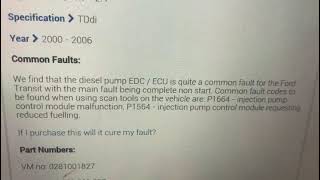
2005 Ford Transit 2.4L Diesel - Limp Mode & Multiple Codes
The van entered limp mode with significantly reduced power. A scan revealed codes P1564 (FIP requesting reduced fuelling) and P0149 (Fuel pump timing error).
What they tried:
- Cycling the ignition temporarily restored power before the code and limp mode returned.
- Research pointed to Ford TSB 64/2004, identifying a faulty fuel injection pump timing solenoid as the probable cause for this specific code combination.
Outcome: The owner replaced the specific faulty timing solenoid per the TSB, avoiding the cost of a full injection pump replacement.
Lesson: On a Ford diesel, P1564 is never a cruise control problem. Check TSBs first; a specific solenoid replacement is significantly cheaper than replacing the entire Bosch VP44 pump.
2014 VW Jetta - Code P1564 After Battery Issues
After a jump start, the car ran poorly and triggered P1564 (Throttle Actuator: Under-Voltage during Basic Setting).
What they tried:
- The owner attempted a throttle body adaptation with a scan tool, but the code immediately returned.
- Forum advice pointed to a weak battery, as the adaptation procedure requires a stable voltage of at least 11.5V to complete.
Outcome: The owner charged the battery fully and re-attempted the adaptation with a VAG-compatible scan tool. The procedure completed successfully, and the code cleared permanently.
Lesson: On VW/Audi vehicles, P1564 (VAG 17972) is a symptom of a weak battery or charging system issue. Always load test your battery before replacing the throttle body.
How to Prevent This Code From Triggering
- Install a fuel pressure gauge on diesel vehicles with VP30/VP44 pumps (One-time installation, check weekly) — Fuel starvation from a weak lift pump kills expensive Bosch VP44 injection pumps. Ensuring the lift pump supplies 5-10 PSI under load prevents the VP44 from overheating and failing.
- Use a quality diesel fuel additive with lubricity enhancers (Every fill-up) — Modern low-sulfur diesel lacks lubricity. Additives reduce wear on high-pressure mechanical components inside the injection pump, preventing seizure.
- Test battery and charging system annually (Once per year) — On VW/Audi models, a healthy battery prevents the P1564 'under-voltage' logic fault during electronic self-tests.
- Avoid turning the steering wheel when the car is off (Daily habit) — Turning the wheel without power steering assist puts excessive stress on the clock spring's internal ribbon cable, accelerating wear.
Frequently Asked Questions
Can I still use my cruise control with a P1564 code?
No. The car's computer disables the cruise control system as a safety precaution when this code is active.
Will clearing the code fix the problem?
No. The code returns as soon as the computer detects the fault again, usually the next time you attempt to use cruise control or cycle the key.
My horn and airbag light are also on. Is that related to P1564?
Yes. When multiple steering wheel functions fail simultaneously, the clock spring is broken, severing the wiring for all those components.
What are the most common misdiagnosis mistakes for P1564?
On a Nissan, replacing the switch when the clock spring is broken. On a Ford diesel, diagnosing the cruise control instead of the fuel injection pump. On a VW/Audi, replacing the throttle body instead of testing the battery.
Does the P1564 code affect engine power or fuel economy?
On gasoline cars like Nissan, no; the problem is isolated to cruise control. On diesel vehicles (Ford, BMW, VW), it causes a severe loss of power (limp mode) and reduces fuel economy.
Can a bad battery cause a P1564 code?
Yes. On VW and Audi vehicles, a weak battery dropping below 11.5V during the throttle body self-test is the primary cause of this code.
Is it safe to replace a clock spring myself?
This is a professional-level repair requiring steering wheel and airbag removal. Improper handling causes accidental airbag deployment and serious injury. Disconnect the battery and follow the manufacturer's service manual precisely, or leave this to a qualified mechanic.
Key Takeaways
- P1564 definitions vary strictly by brand: Nissan and Subaru indicate a failed cruise control switch or clock spring, while Ford and BMW diesels flag a failing fuel injection pump.
- On Japanese vehicles, the primary symptom is a completely unresponsive cruise control system that refuses to set or illuminate the dashboard indicator.
- Simultaneous failure of the horn, steering wheel radio buttons, and cruise control confirms a broken clock spring, which also disables the driver's airbag.
- Ignoring P1564 on a diesel engine leads to a $2,000+ catastrophic fuel pump failure and a no-start condition within 6 months.
Helpful Videos

The information in this article is provided for general reference and educational purposes only. Vehicle specifications, procedures, and part compatibility can vary by production date, trim level, and region. Always consult your vehicle's factory service manual and verify part numbers before purchasing or performing repairs. Safety-critical components such as airbags, seat belts, and braking systems should be installed by a qualified professional.
- 🎬 Helpful Videos
- What Does P1564 Mean?
- Can I Drive With P1564?
- Common Causes
- Symptoms
- Diagnostic Flowchart
- Common Fixes & Costs
- Used vs. New Parts: Buying Guide
- What Happens If You Wait — Timeline
- Cost of Not Fixing It
- Diagnosis Steps
- When This Code Triggers (Freeze-Frame Conditions)
- Related Codes
- Climate & Environmental Factors
- How to Talk to a Mechanic About This Code
- Where to Take It: Dealer vs Independent vs Chain
- When to Walk Away From the Repair
- What Scan Tool You Need for This Code
- How to Clear the Code After You Fix It
- Will This Fail Emissions / State Inspection?
- Most Commonly Affected Vehicles
- Manufacturer-Specific Notes
- Real Owner Stories
- 2011 Suzuki Equator (Nissan Frontier) - Cruise Inoperative
- 2005 Ford Transit 2.4L Diesel - Limp Mode & Multiple Codes
- 2014 VW Jetta - Code P1564 After Battery Issues
- How to Prevent This Code From Triggering
- Frequently Asked Questions
- Can I still use my cruise control with a P1564 code?
- Will clearing the code fix the problem?
- My horn and airbag light are also on. Is that related to P1564?
- What are the most common misdiagnosis mistakes for P1564?
- Does the P1564 code affect engine power or fuel economy?
- Can a bad battery cause a P1564 code?
- Is it safe to replace a clock spring myself?
- Key Takeaways
- 🎟️ Get 5% Off