

P0141 on 2005-2010 Scion tC: O2 Sensor Heater Fixes and Causes
This code almost always means the downstream oxygen sensor (Bank 1, Sensor 2) has failed. The internal heater element burns out, triggering the light. A new Denso or Bosch sensor is the typical fix, costing around $50-$100 for the part. It's a straightforward DIY replacement for many owners. Be aware of a part number change in mid-2006; ensure you have the correct sensor for your vehicle's production date.
- P0141 on a Scion tC points directly to the heater circuit in the downstream (post-catalytic converter) O2 sensor.
- The most probable cause is a failed O2 sensor, which is a standard wear item.
- Driving with this code is safe, but you should fix it to ensure you can pass an emissions test and maintain optimal fuel efficiency.
- Diagnosis is straightforward: check the 'A/F HEATER' or 'EFI' fuse, inspect the wiring for damage, and test the sensor's heater resistance with a multimeter (expect 11-16 ohms).
- Replacing the sensor is a DIY-friendly job for most, but be aware of a part number change in mid-2006 and verify you have the correct part for your car's production date.
What's Unique About the 2005-2010 Scion tC
The 2005-2010 Scion tC uses the reliable Toyota 2AZ-FE engine, which has a straightforward emissions control system. For the P0141 code, there are no widespread, unique platform-specific issues. The cause is almost always the same as on other Toyota vehicles of this era: the O2 sensor's internal heater simply wears out over time. The diagnosis is typically not complex. The downstream sensor is located in the S-pipe section of the exhaust, after the primary catalytic converter. A key detail for this platform is a mid-generation part change; the downstream O2 sensor for 2005-early 2006 models is different from the one used on mid-2006-2010 models.
Symptoms You May Notice
- Check Engine Light is on
- Failing a state emissions test.
- Slightly decreased fuel economy (often not noticeable by the driver).
- Engine may take longer to reach normal operating efficiency, especially in cold weather.
- Replacing the upstream Air/Fuel Ratio Sensor (Bank 1, Sensor 1). P0141 is specific to the downstream sensor (Sensor 2).
- Replacing the catalytic converter. A bad converter typically sets a P0420 code, not a P0141 heater circuit code.
Most Likely Causes
- Failed Downstream Oxygen (O2) Sensor 🔴 High Probability The internal heater element within the O2 sensor is a common failure point due to constant heat cycles over many years and miles. It's a normal wear-and-tear item.
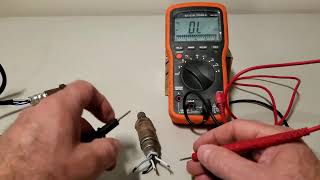
How to confirm: Unplug the sensor and use a multimeter to test the resistance between the two heater circuit pins 🎬 Watch: How to test the oxygen sensor heater element (usually the two same-colored wires, often black or white). A reading of infinite resistance (OL) means the circuit is open and the sensor is bad. A normal reading for a good heater element is typically between 11 and 16 ohms when cold at room temperature.
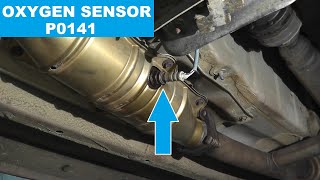
Typical fix: Replace the Bank 1, Sensor 2 oxygen sensor. 🎬 See this walkthrough on testing and replacing the sensor This sensor is located underneath the car, in the exhaust S-pipe after the catalytic converter.
Est. part cost: $50 - $120 - Blown Fuse ⚪ Low Probability While less common than sensor failure, a short in the wiring or the sensor itself can cause the related fuse to blow.
How to confirm: Check the fuses related to the emissions or fuel injection system. On many Toyotas, this fuse is labeled 'A/F HEATER' or 'EFI' in the under-hood fuse box. For the 2005-2010 tC, check the fuse panel on the driver's side under the dash.
Typical fix: Replace the blown fuse. If the fuse blows again immediately, it indicates a short circuit in the wiring or the sensor that must be diagnosed.
Est. part cost: $1 - $5 - Damaged Wiring or Connector ⚪ Low Probability The sensor's wiring is located under the vehicle and can be susceptible to damage from road debris, corrosion, or melting from proximity to the hot exhaust pipe.
How to confirm: Visually inspect the wiring harness and connector leading to the downstream O2 sensor for any signs of fraying, melting, corrosion, or loose pins. Catalytic converter theft can also lead to cut wires, which if repaired improperly, can cause this code. Ensure the connector is fully seated; it can sometimes feel clipped in when it is not.
Typical fix: Repair the damaged section of wiring or replace the connector pigtail.
Est. part cost: $10 - $40
Rare But Worth Checking
- Faulty Engine Control Module (ECM): This is extremely rare. Before suspecting the ECM, all other possibilities (sensor, wiring, fuses) must be exhaustively ruled out. An ECM fault for a heater circuit is unlikely but can happen, as documented in some Toyota forums where a replacement ECM was the final solution after multiple sensor replacements failed to resolve the code.
Diagnosis Steps
- Read the code with an OBD-II scanner to confirm P0141 is the only code present. Check for related codes like P0037 (Heater Circuit Low) or P0038 (Heater Circuit High).
- Locate the Bank 1, Sensor 2 (downstream) oxygen sensor. It is under the car, screwed into the S-pipe section of the exhaust, after the catalytic converter. It is labeled as component H5 in service diagrams.
- Inspect the sensor's electrical connector and wiring harness for any visible damage, melting, or corrosion. Physically tug on the connector to ensure it is fully seated.
- Check the fuse for the O2 sensor heater circuit. In many Toyotas, this is labeled as the 'A/F HEATER' or 'EFI' fuse in the under-hood or in-cabin fuse panel.
- If the fuse and wiring appear okay, disconnect the sensor. Use a multimeter set to ohms (Ω) to measure the resistance across the two heater pins on the sensor side of the connector (typically the two wires of the same color). A reading of 'OL' or infinite resistance indicates a burned-out heater element. A good sensor should read between 11-16 ohms at 20°C (68°F).
- If resistance is within spec, check for power at the harness. Connect a multimeter between the heater power wire at the connector and a known good ground. With the ignition on (engine off), you should see battery voltage (9-14V). This power is typically supplied by the EFI MAIN relay.
- If power is present and the sensor resistance is good, check the ground control signal from the ECM. A simple way is to use a test light. Connect the test light in place of the sensor's heater element on the harness-side connector. Start the engine. The light should illuminate or pulse, indicating the ECM's driver is attempting to control the circuit. If the light does not illuminate, and power has been verified, a wiring issue on the ground side or a faulty ECM driver is likely. The ground control wire for the heater is on ECM pin HT1B.
Parts You'll Likely Need
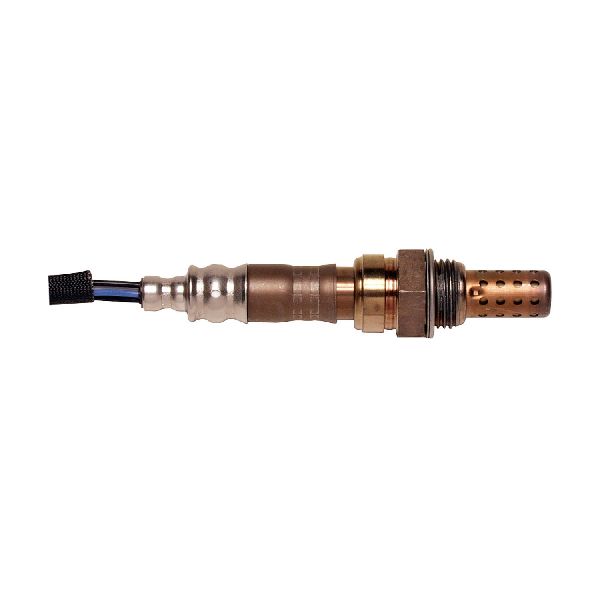
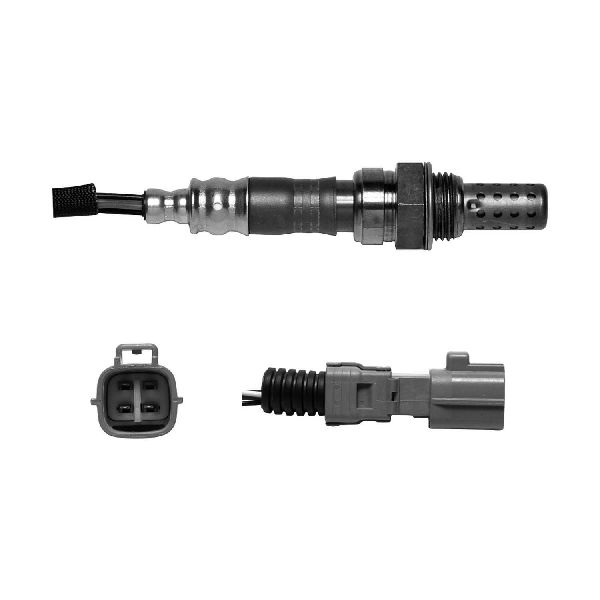
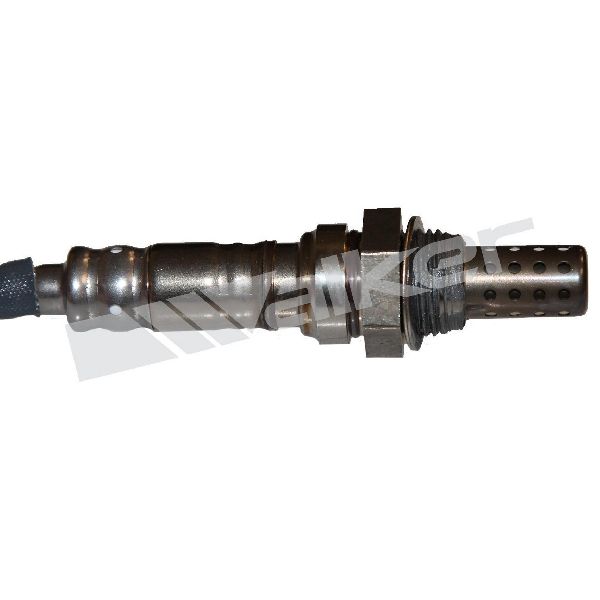
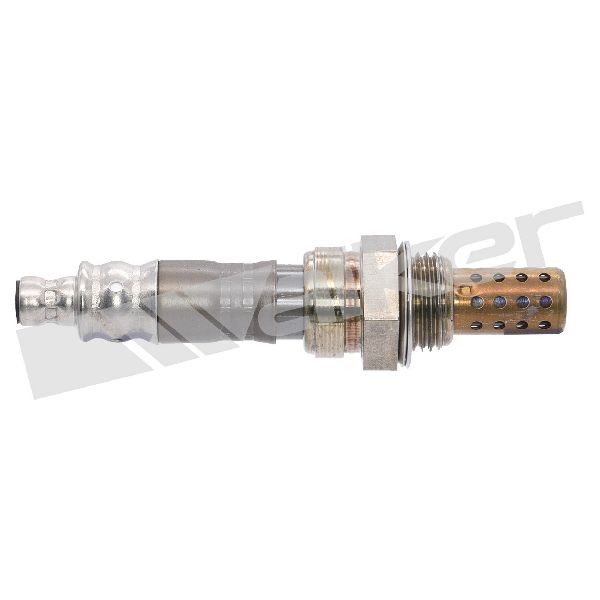
- Downstream Oxygen Sensor (Bank 1, Sensor 2)
(OEM #89465-21070)— This is the most common failure for a P0141 code, as the internal heater element burns out over time. Note the model year split: this part number is for vehicles produced from May 2006 onward.
Trusted brands: Denso (OEM supplier), Bosch, NGK
OEM price range: $100-$145
Aftermarket price range: $50-$100
Mechanic-Grade Diagnostic Values
- Downstream O2 Sensor (B1S2) Heater Resistance — expected: 11 - 16 Ω at 20°C (68°F). Failure: A reading of infinite resistance (OL) indicates an open circuit (bad sensor). A reading significantly outside the specified range also indicates a faulty sensor.
- Voltage at O2 Sensor Heater Power Wire — expected: 9 - 14 V (Battery Voltage). Failure: 0V indicates a blown fuse (e.g., EFI MAIN), a bad relay, or an open in the power wire.
Hidden / Shadow Codes Worth Checking
- P0037: Oxygen Sensor Heater Control Circuit Low (Bank 1 Sensor 2). This indicates the ECM has detected that the current in the heater circuit is too low (less than ~0.3A), suggesting an open circuit or high resistance. (see via Standard OBD-II scanner.)
- P0038: Oxygen Sensor Heater Control Circuit High (Bank 1 Sensor 2). This indicates the ECM has detected that the current in the heater circuit is too high (more than ~2.0A), suggesting a short circuit to ground. (see via Standard OBD-II scanner.)
Wiring & Ground Locations
- HT1B — Pin on the Engine Control Module (ECM) connector.. This is the specific pin on the ECM that provides the ground-side control for the Bank 1 Sensor 2 heater circuit. Testing for a pulsed ground signal at this wire's corresponding pin on the harness connector can confirm if the ECM driver is functioning.
- H5 — Engine compartment, on the exhaust S-pipe after the catalytic converter.. This is the official component identifier for the Heated Oxygen Sensor (Bank 1 Sensor 2) in the 2007 Scion tC wiring manual, helping to precisely locate the correct sensor.
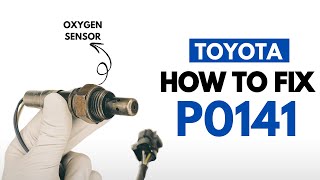
- EFI MAIN Fuse / Relay — Under-hood fuse and relay box.. The power supply for the O2 sensor heater circuit is typically routed through the EFI MAIN fuse and relay. 🎬 Watch: How to fix the P0141 code on a Toyota A failure of either component will cut power to the heater, causing a P0141 code.
Real Owner Repair Stories
- MiracleMAX YouTube Channel (Not specified, but a general diagnostic principle was demonstrated.) — Heater circuit fault code present.
❌ Tried (didn't work) The owner had already replaced the downstream oxygen sensor, but the code persisted.
✅ What actually fixed it Upon inspection, the technician found the 'new' oxygen sensor's electrical connector was not fully clipped into the vehicle's harness. It was loose enough that it fell off with a light touch. Properly seating the connector until it clicked resolved the fault.
OEM Part Supersession History
Unknown OEM, Denso Aftermarket is 234-4149→89465-21070, Denso Aftermarket is 234-4261— Mid-generation part update by the manufacturer.
Heads up: The early (2005-05/2006) and late (05/2006-2010) sensors are different and may have different harness lengths. Using the wrong sensor for the vehicle's production date will likely result in a persistent P0141 code or other issues. Verify the correct part for your specific VIN or production month/year.
Model Year Variations Within This Range
- 2005 - early 2006 (up to 05/2006 production): Uses a different downstream oxygen sensor than later models. The corresponding Denso aftermarket part is 234-4149.
- mid 2006 - 2010 (from 05/2006 production): Uses downstream oxygen sensor OEM P/N 89465-21070. The corresponding Denso aftermarket part is 234-4261.
Diagnostic Flowchart
Real Owner Stories
Aggregated from forums and TSBs cited above. Mileages and costs reflect what owners reported in those sources.
Scion tC
Symptoms: Experienced a persistent P0141 code that would not clear after the vehicle's catalytic converter was stolen and subsequently replaced.
What fixed it: Traced the issue to damaged and cut wires from the theft, highlighting the need to repair the wiring integrity.
Source hint: Reddit r/MechanicAdvice - P0141 after Cat Theft
Toyota Camry (2.4L 2AZ-FE)
Symptoms: Struggled with a persistent P0141 code that would not go away even after replacing the downstream oxygen sensor multiple times.
What fixed it: A specialty shop diagnosed the vehicle and found a faulty ECM was causing the persistent code.
Source hint: Camry Forums - P0141 Won't Go Away
Scion tC 1G
Symptoms: Had confusion over the location of the oxygen sensors while trying to diagnose exhaust and emissions codes.
What fixed it: Clarified that the primary sensor is in the header/exhaust manifold, and the secondary sensor (Sensor 2) causing the issue is located in the 'S-pipe' after the catalytic converter.
Source hint: ScionLife - O2 Sensor Issues
Scion tC
Symptoms: Vehicle triggered both P0138 (a voltage code) and P0141 simultaneously.
What fixed it: Replaced the downstream O2 sensor located under the car, which is a common fix discussed by owners for this combination of codes.
Source hint: ScionLife.com
Related OBD-II Codes
Frequently Asked Questions
Where exactly is the downstream O2 sensor located on my 2005-2010 Scion tC?
Which fuse should I check for a P0141 code on the tC?
How can I test if the O2 sensor heater is actually bad on my 2.4L 2AZ-FE?
My catalytic converter was recently stolen and replaced, and now I have a P0141 code. What happened?
I replaced the sensor and checked the fuses, but P0141 won't go away. Could it be the computer?
What voltage should I see at the O2 sensor harness to confirm it's getting power?
Helpful Videos
We Have This Part in Stock



The information in this article is provided for general reference and educational purposes only. Vehicle specifications, procedures, and part compatibility can vary by production date, trim level, and region. Always consult your vehicle's factory service manual and verify part numbers before purchasing or performing repairs. Safety-critical components such as airbags, seat belts, and braking systems should be installed by a qualified professional.
- Scion tC:
- 🎬 Helpful Videos
- 🛍️ Shop This Part
- What's Unique About the 2005-2010 Scion tC
- Symptoms You May Notice
- Most Likely Causes
- Rare But Worth Checking
- Diagnosis Steps
- Parts You'll Likely Need
- Mechanic-Grade Diagnostic Values
- Hidden / Shadow Codes Worth Checking
- Wiring & Ground Locations
- Real Owner Repair Stories
- OEM Part Supersession History
- Model Year Variations Within This Range
- Diagnostic Flowchart
- Real Owner Stories
- Scion tC
- Toyota Camry (2.4L 2AZ-FE)
- Scion tC 1G
- Scion tC
- Related OBD-II Codes
- Frequently Asked Questions
- 🎟️ Get 5% Off