

P0141 on 2011-2014 Ford F-150 3.5L EcoBoost: O2 Sensor Heater Fixes
This code points to a failure in the heater circuit of the downstream oxygen sensor on the passenger side (Bank 1, Sensor 2). The most common fix is replacing the sensor itself. Before replacing, it is critical to check fuse #76 (20A) in the under-hood fuse box and inspect the wiring harness for melting near the exhaust. Expect to pay $45-$90 for a quality aftermarket part, which is a common DIY repair.
- P0141 on your F-150 means the heater in the passenger-side, post-catalytic converter O2 sensor has failed.
- The most likely fix is to replace the Bank 1, Sensor 2 oxygen sensor. This is a manageable DIY job for most, requiring an O2 sensor socket.
- Before buying a new sensor, always check the 20A fuse (often F76 in the engine bay) and visually inspect the sensor's wiring for any signs of melting or damage, which is common on EcoBoost models.
- Use a quality replacement sensor from brands like Motorcraft, Denso, or Bosch to avoid repeat failures.
What's Unique About the 2011-2014 Ford F-150
While a failed O2 sensor is common on many vehicles, the 2011-2014 F-150 with the 3.5L EcoBoost engine has specific issues to consider. The wiring for the downstream O2 sensors is routed in an area exposed to high heat from the exhaust and turbochargers, making it highly susceptible to sagging, melting, or becoming brittle. This is a widely reported failure mode in owner forums. Additionally, Ford has issued several Technical Service Bulletins (TSBs) for other models in the same era, like TSB 15-0072 for the 2015 F-150, pointing to a pattern of premature oxygen sensor failures, sometimes due to water intrusion or faulty seals as noted in TSB 21-2090.
Symptoms You May Notice
- Check Engine Light is illuminated
- Failing an emissions/smog test
- Slightly decreased fuel economy (often not noticeable by the driver)
- Replacing the wrong oxygen sensor. P0141 specifically refers to Bank 1 (passenger side) and Sensor 2 (downstream, after the catalytic converter).
- Replacing the catalytic converter. A P0141 code is for the sensor's heater circuit, not the efficiency of the converter itself (which would be a P0420 code).
- Ignoring a blown fuse. If multiple heater codes are present, the fuse is the most likely cause, not multiple failed sensors.
Most Likely Causes
- Failed Oxygen Sensor (Bank 1, Sensor 2) 🔴 High Probability The internal heater element within the O2 sensor is a common failure point due to age and constant heat cycles. It simply burns out over time, creating an open circuit.
How to confirm: After checking the fuse and wiring, test the resistance of the heater circuit within the sensor using a multimeter. A good sensor will have low resistance (typically 2-10 ohms). An open circuit (infinite resistance or 'OL') confirms the heater has failed. Most DIYers skip this and replace the sensor as the most probable cause.
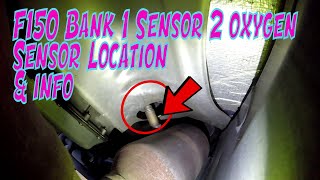
Typical fix: Replace the Bank 1, Sensor 2 oxygen sensor. This is the downstream sensor on the passenger side. An O2 sensor socket 🎬 Watch: Locate the Bank 1 Sensor 2 oxygen sensor on your truck. is often required.
Est. part cost: $45-$90 - Damaged Wiring or Connector 🟡 Medium Probability The wiring harness for the downstream O2 sensor on EcoBoost models is near the hot exhaust and turbo components. It can easily sag, melt, or become brittle and break, causing a short or open circuit. This is a very common point of failure discussed frequently by owners.
How to confirm: Perform a thorough visual inspection of the wiring harness from the sensor to the main connector. Look for any signs of melting, chafing, or corrosion. Check for 12V power at the harness connector with the key on.
Typical fix: Repair the damaged section of wire using heat-shrink butt connectors. Secure the harness away from hot exhaust pipes with high-temperature zip ties.
Est. part cost: $5-$20 - Blown Fuse ⚪ Low Probability A short circuit in the wiring (often from melting) or within any of the four O2 sensors can blow the shared fuse.
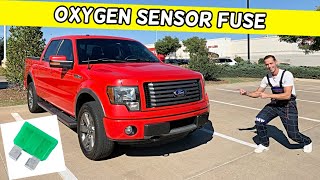
How to confirm: Check the fuse for the O2 sensor heater circuit. On the 2011-2014 F-150, this is fuse #76 (a 20A mini fuse) in the under-hood fuse box (Power Distribution Box). This is more likely if you have multiple O2 heater codes (P0135, P0155, P0161) at the same time.
Typical fix: Replace the blown fuse. If it blows again immediately, a short circuit exists that must be found and repaired. A shorted sensor is the most likely culprit.
Est. part cost: $1-$5
Rare But Worth Checking
- Water Intrusion in Sensor Connector: TSB 21-2090, while for a different model, highlights that water can get into HO2S connectors, causing a blown fuse or circuit issues. It's worth inspecting the connector for moisture or corrosion, especially if you've driven through high water.
- Faulty Powertrain Control Module (PCM): This is extremely rare. The PCM should only be considered after all other possibilities, including the sensor, wiring, and fuse, have been thoroughly tested and ruled out.
Diagnosis Steps
- Read the code with an OBD-II scanner 🎬 Watch: A breakdown of P0141 causes and how to fix them. to confirm P0141 is present.
- Check the O2 sensor heater fuse (Fuse F76, 20A in the engine bay fuse box for 2011-2014 F-150s). Replace if blown.
- Visually inspect the wiring harness and connector for the Bank 1, Sensor 2 O2 sensor (passenger side, after the catalytic converter). Look for any signs of melting, chafing, or corrosion, paying close attention to where it runs near the exhaust.
- If the wiring looks good, disconnect the sensor.
- With the ignition on (engine off), use a multimeter to check for 12-volt power at the heater circuit pins on the vehicle-side connector.
- Use the multimeter to test the resistance of the heater element on the sensor side. A good sensor will have low resistance (typically 2-10 ohms). An open circuit (infinite resistance) indicates a failed heater element.
- If the fuse, wiring, and power supply are good, but the sensor's heater circuit is open, replace the oxygen sensor.
- Clear the code with the scanner and perform a test drive to ensure the fix was successful.
Parts You'll Likely Need
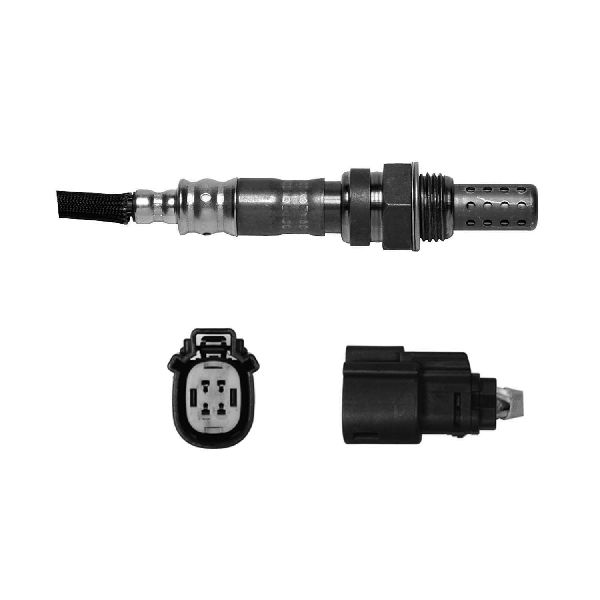
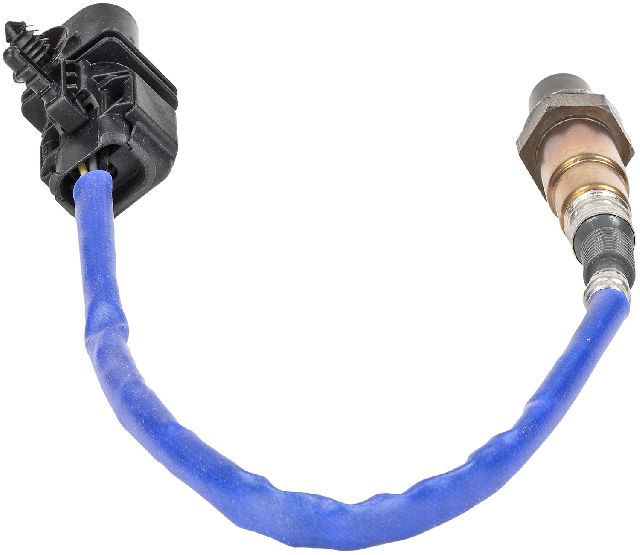
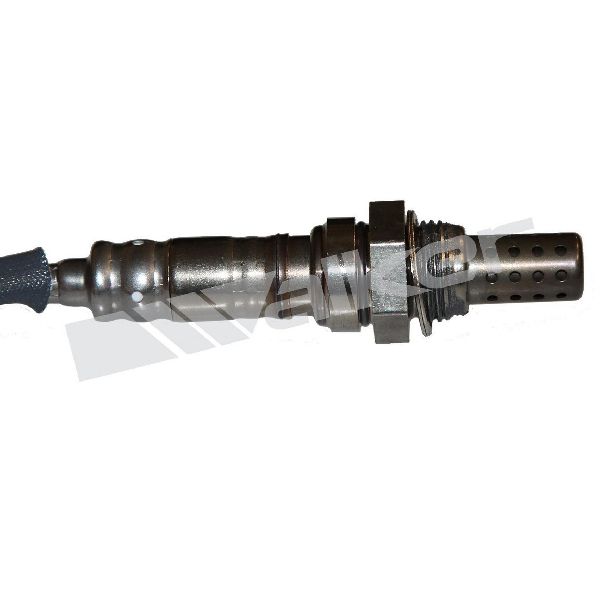
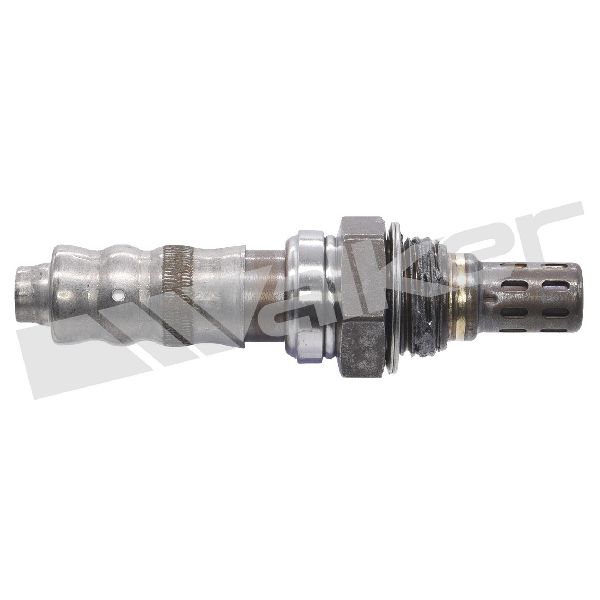
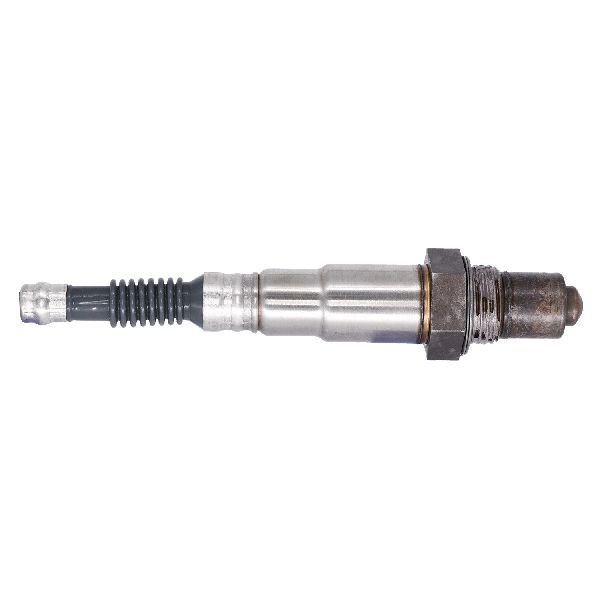
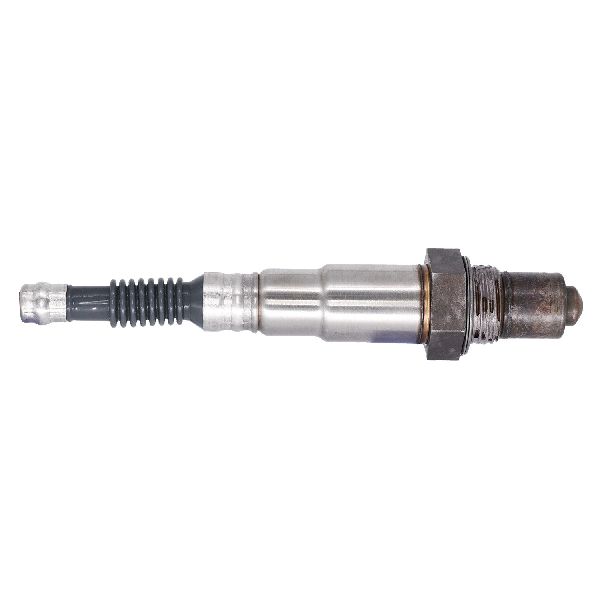
- Oxygen Sensor (Bank 1, Sensor 2)
(OEM #BL3Z-9G444-A)— The internal heater element fails from age and heat cycles, which is the most common cause of code P0141.
Trusted brands: Motorcraft, Denso, Bosch, NGK/NTK
OEM price range: $70-$100
Aftermarket price range: $45-$80
Related Codes That Often Appear With This One
- P0161 — This is the same heater circuit malfunction code but for Bank 2, Sensor 2 (driver's side downstream). If both appear together, it strongly suggests a common problem like a blown fuse.
- P0135 — Heater circuit malfunction for Bank 1, Sensor 1 (upstream). If seen with P0141, it could indicate a wiring issue or blown fuse affecting the entire Bank 1 sensor set.
- P0155 — Heater circuit malfunction for Bank 2, Sensor 1 (upstream). If all four heater codes (P0135, P0141, P0155, P0161) appear at once, the cause is almost certainly the shared fuse.
Technical Service Bulletins (TSBs) & Recalls
- 15-0072: For 2015 F-150s with 3.5L EcoBoost, notes that the MIL may illuminate with codes P0060, P0161, P0157, P0054, P0137, or P0141.
- TSB 21-2090: Mentions water intrusion into HO2S connectors on other Ford trucks, causing various O2 sensor codes including P0141.
- SSM 50230: Points to faulty oxygen sensor seals on Ford Edge models causing P0141, requiring an updated sensor.
- TSB 19-2005: Notes faulty catalyst monitor sensors and PCM software on Ford EcoSport causing P0141.
Platform-Specific Known Issues
- TSB 15-0072 was issued for 2015 F-150s with the 3.5L EcoBoost engine for multiple O2 sensor codes, including P0141, indicating a known issue with these sensors on this platform.
- Forum users frequently report that using cheaper, 'economy' brand oxygen sensors can lead to premature failure or other codes appearing shortly after replacement. One user on F150forum.com reported installing a budget Walker sensor which failed within 100 miles, throwing a P0036 code. The issue was resolved by installing a Bosch sensor. It is highly recommended to use OEM Motorcraft or reputable brands like Denso or Bosch.
Mechanic-Grade Diagnostic Values
- O2 Sensor Heater Element Resistance — expected: 2-10 Ohms. Failure: A reading of infinite resistance (OL) indicates a broken heater. A reading near zero Ohms indicates a short circuit.
- Heater Circuit Power Supply Voltage (KOEO) — expected: ~12V (Battery Voltage). Failure: 0V or significantly low voltage at the vehicle-side harness connector indicates a blown fuse (F76) or a break in the power wire.
- Heater Circuit Ground Control (Engine Running) — expected: A test light connected to battery positive should pulse when probing the ground control wire at the harness connector.. Failure: If the test light does not pulse, it indicates a break in the ground wire to the PCM or a faulty PCM driver (rare).
Scan Tool Commands That Help
- Ford IDS (Integrated Diagnostic System): Actuation Test: Heated Oxygen Sensor Heater (e.g., HO2S12 Heater) — This bidirectional command allows a technician to manually turn the O2 sensor heater on and off to verify the integrity of the control circuit and PCM driver, after checking the power feed and fuse.
- Ford IDS (Integrated Diagnostic System): Datalogger: HO2S12 Heater Fault — When viewing live data, the IDS can display a specific 'Heater Fault' PID which will change state (e.g., from 'No' to 'Yes') when the PCM detects the circuit malfunction, confirming the condition in real-time.
Wiring & Ground Locations
- G104 — On the passenger side of the engine block, near the front, below the cylinder head.. This is a primary engine ground point. While the O2 heater is ground-controlled by the PCM, a poor main engine ground can cause floating voltages and erratic behavior in all engine sensors, potentially leading to incorrect diagnostics. A user on a Reddit forum was searching for this ground to solve other electrical issues.
- HO2S12 Connector — On the passenger side of the vehicle, the connector for the downstream O2 sensor is typically clipped to the transmission crossmember or a nearby frame bracket.. This is the main point of failure for melted wiring. The harness can break loose from its retainer clip and fall onto the hot exhaust pipe or catalytic converter, melting the insulation and causing a short or open in the heater circuit.
- PCM Connector C175B, Pin 24 — At the Powertrain Control Module (PCM), which is typically located on the passenger-side firewall in the engine bay.. According to wiring diagrams for similar year models, this is the pin that the PCM uses to provide the ground control for the Bank 1 Sensor 2 heater circuit. A continuity test from this pin to the sensor connector can confirm if the control wire is intact.
Real Owner Repair Stories
- f150forum.com user 'gromitbeast' (2013 F-150 Platinum 6.2L (~125k miles)) — P0141 code present.
❌ Tried (didn't work) Replacing the Bank 1 Sensor 2 oxygen sensor.
✅ What actually fixed it The user discovered the transmission wiring harness, which carries the O2 sensor wires, had broken loose from its mount. It was resting on the exhaust manifold, causing the harness to melt through and create a short/open circuit. Repairing the melted wires resolved the code.
OEM Part Supersession History
BL3Z-9G444-A→No supersession found.— N/A
Heads up: This part number appears to be specific to V8 models (5.0L, 6.2L) according to several Ford parts sites, but is commonly cross-referenced for the 3.5L EcoBoost as well. The downstream sensors are often physically identical between engines, but it's critical to verify fitment with VIN.
Model Year Variations Within This Range
- 2011-2012: The first-generation 3.5L EcoBoost engines in 2011-2012 models used smaller turbochargers and a fuel system supplied by Hitachi. While not directly affecting the P0141 code, these early models had unique components compared to the 2013-2014 models.
- 2013: The 2013 model year is noted for having potential transmission downshift issues that led to recalls. While unrelated to the P0141 code itself, it means the main wiring harness in this area may have been disturbed or replaced during prior service, increasing the chance of routing errors or loose connectors.
Diagnostic Flowchart
Other Known Issues on This Vehicle
Issues unrelated to this code that are worth knowing about as an owner of this generation:
- Timing Chain Rattle / Stretch 🔴 High — Common on first-generation (2011-2014) engines, often presenting as a rattling noise on cold starts. Can occur before 100,000 miles. Associated with DTC P0016. (Ref: TSB 16-0027)
- Intercooler Condensation Buildup 🟠 Medium — Prevalent in 2011-2012 models, especially in humid climates. Causes stumbling, misfires, or loss of power during hard acceleration after highway cruising. (Ref: TSB 12-10-19, TSB 12-6-4)
- Electric Brake Vacuum Pump Failure (2011-2012) 🔴 High — Affects 2011-2012 models only. The electric pump fails due to moisture and corrosion, resulting in a hard brake pedal and increased stopping distance, especially on cold starts. (Ref: Customer Satisfaction Program 15N05 (extended warranty), Canada Safety Recall 17S13)
- Carbon Buildup on Intake Valves 🟠 Medium — A known issue for all direct-injection engines, including the 3.5L EcoBoost. Over time, it can lead to rough idle, loss of power, and poor fuel economy.
- Frequent Spark Plug Replacement 🟡 Low — The turbocharged nature of the engine leads to faster spark plug wear than in naturally aspirated engines. While the official interval is 100,000 miles, many owners and mechanics recommend replacement every 40,000-60,000 miles to maintain performance.
- Coolant Leaks 🟠 Medium — The 2011-2014 models are known for coolant leaks, particularly from the turbo coolant lines and heater hose fittings.
Used vs. New Parts: Buying Guide for This Vehicle
When a used part is the smart pick: For this repair, a used part is almost never a smart choice. The primary failure is the internal heater element burning out from age and heat cycles. A used sensor from a junkyard has unknown remaining life and is likely to fail soon, if it doesn't arrive already faulty.
Donor-vehicle mileage cap: roughly under 20000 miles for the part to have meaningful remaining life.
What to inspect on the donor part:
- If forced to use a used sensor, source it from a very low-mileage wreck.
- Inspect the sensor's metal shell for extreme rust or corrosion.
- Ensure the wiring and connector are completely intact with no signs of melting or brittleness.
Aftermarket brands forum-validated for this vehicle:
- Motorcraft (OEM)
- Bosch
- Denso
- NGK/NTK
Brands owners have reported issues with on this vehicle:
- Unnamed 'white box' or generic eBay/Amazon brands. Forum discussions frequently mention these failing quickly or being dead-on-arrival.
Real Owner Stories
Aggregated from forums and TSBs cited above. Mileages and costs reflect what owners reported in those sources.
2011-2014 Ford F-150 3.5L EcoBoost
Symptoms: Persistent P0141 code; owner initially tried to save money by installing a budget aftermarket sensor.
What fixed it: Replacing the budget Walker sensor with a Bosch unit resolved the issue.
Source hint: f150forum.com
Related OBD-II Codes
Frequently Asked Questions
Which fuse should I check for a P0141 code on my 2011-2014 Ford F-150?
Does TSB 15-0072 apply to my 2011-2014 F-150 EcoBoost?
Where is the Bank 1, Sensor 2 oxygen sensor located on the 3.5L EcoBoost F-150?
Can I use a budget aftermarket O2 sensor to fix this code?
Why is the wiring harness a common failure point on the EcoBoost models?
What should the resistance be for a healthy O2 sensor heater on this truck?
Helpful Videos

We Have This Part in Stock

The information in this article is provided for general reference and educational purposes only. Vehicle specifications, procedures, and part compatibility can vary by production date, trim level, and region. Always consult your vehicle's factory service manual and verify part numbers before purchasing or performing repairs. Safety-critical components such as airbags, seat belts, and braking systems should be installed by a qualified professional.
- Ford F-150:
- 🎬 Helpful Videos
- 🛍️ Shop This Part
- What's Unique About the 2011-2014 Ford F-150
- Symptoms You May Notice
- Most Likely Causes
- Rare But Worth Checking
- Diagnosis Steps
- Parts You'll Likely Need
- Related Codes That Often Appear With This One
- Technical Service Bulletins (TSBs) & Recalls
- Platform-Specific Known Issues
- Mechanic-Grade Diagnostic Values
- Scan Tool Commands That Help
- Wiring & Ground Locations
- Real Owner Repair Stories
- OEM Part Supersession History
- Model Year Variations Within This Range
- Diagnostic Flowchart
- Other Known Issues on This Vehicle
- Used vs. New Parts: Buying Guide for This Vehicle
- Real Owner Stories
- 2011-2014 Ford F-150 3.5L EcoBoost
- Related OBD-II Codes
- Frequently Asked Questions
- 🎟️ Get 5% Off