

P0140 on 2007-2011 Toyota Camry: O2 Sensor No Activity Causes and Fixes
This code means the rear oxygen sensor (Bank 1, Sensor 2) is not sending a signal. The most common fix is replacing the sensor itself. Expect to pay around $50-$100 for an aftermarket sensor (like Denso) and $150-$200 for an OEM part. It's a straightforward DIY job for many.
- P0140 on a 2007-2011 Camry means the rear oxygen sensor (Bank 1, Sensor 2) has failed, most likely due to an internal heater circuit failure.
- The car is safe to drive, but you will fail an emissions test and should get it fixed to restore proper emissions monitoring.
- The most common cause by far is a bad sensor. Check the 'A/F HTR' fuse and wiring first, but expect to replace the sensor.
- This is a DIY-friendly repair. You will need a special O2 sensor socket (22mm) and potentially some penetrating oil to loosen the old sensor.
- Use a quality replacement part from a brand like Denso to ensure longevity and proper function. The OEM part number is 89465-06150 (2.4L) or 89465-06120 (3.5L).
What's Unique About the 2007-2011 Toyota Camry
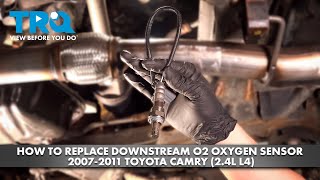
On the 2007-2011 Toyota Camry, this code is a very common and straightforward issue. Both the 4-cylinder (2AZ-FE) and V6 (2GR-FE) engines are known for the reliability of their core components, so P0140 rarely points to a catastrophic failure. It's almost always an issue with the sensor itself or its wiring. The Bank 1, Sensor 2 location is on the underside of the car, after the primary catalytic converter, making it reasonably accessible for replacement. 🎬 Watch: Step-by-step downstream sensor replacement for 2.4L engines. Videos demonstrate the replacement process, which involves unplugging a connector and using a 22mm wrench or a special O2 sensor socket.
Symptoms You May Notice
- Check Engine Light is on.
- Vehicle fails an emissions test.
- Slight decrease in fuel economy (though often not noticeable).
- Rough idle or hesitation on acceleration, particularly when the engine is cold, may occur in some cases.
- Replacing the wrong oxygen sensor. This code is for Bank 1, Sensor 2. On the 4-cylinder, there is only one bank. On the V6, Bank 1 is the cylinder bank closer to the firewall. Sensor 2 is always the one *after* the catalytic converter.
- Replacing the catalytic converter. P0140 indicates no activity from the sensor, not that the converter is inefficient (which would be a P0420 code). A dead sensor cannot report on the converter's status.
Most Likely Causes
- Failed Bank 1, Sensor 2 Oxygen Sensor 🔴 High Probability Oxygen sensors are wear-and-tear items that degrade over time due to extreme heat and exhaust contaminants. After 10+ years and over 100,000 miles, failure of the internal heating element or the sensing element itself is very common.
How to confirm: Use an OBD-II scanner with live data to monitor the B1S2 voltage. If the voltage is stuck (often around 0.45V) and does not fluctuate, the sensor is likely dead. You can also test the sensor's internal heater circuit with a multimeter. Disconnect the sensor and measure resistance between the two same-colored wires (often black). A healthy heater circuit should have a low resistance, typically between 3 and 15 ohms when cold. An open circuit (infinite resistance) confirms a failed heater, which will prevent the sensor from becoming active.
Typical fix: Replace the Bank 1, Sensor 2 oxygen sensor. Applying anti-seize compound to the threads of the new sensor is recommended.
Est. part cost: $50-$200 - Damaged Wiring or Connector 🟡 Medium Probability The sensor is located under the vehicle, where its wiring is exposed to road debris, moisture, and corrosion. The harness can be snagged, melted on the exhaust, or the connector pins can corrode, causing an open or short in the circuit.
How to confirm: Visually inspect the entire wiring harness from the sensor to where it enters the main loom. Check for breaks, chafing, or melted sections. Unplug the connector and check for green or white crust from corrosion, bent pins, or moisture.
Typical fix: Repair the damaged section of the wire or clean/replace the connector.
Est. part cost: $5-$50 - Blown Fuse for O2 Sensor Heater ⚪ Low Probability
How to confirm: The sensor needs to heat up to operate correctly, which is done by a heater circuit. This circuit is protected by a fuse. Check the vehicle's fuse boxes for a fuse labeled 'A/F HEATER', 'EFI MAIN', or similar. A blown fuse will cause the sensor to remain inactive and can trigger P0140 or a related heater circuit code like P0141.
Typical fix: Replace the blown fuse and investigate the cause of the short circuit (often a wiring issue).
Est. part cost: $1-$5
Rare But Worth Checking
- Exhaust Leak: An exhaust leak upstream of the sensor can introduce extra oxygen, causing strange readings. While this usually triggers other codes, a leak very near the sensor could potentially cause an issue. You would likely hear a ticking or hissing sound from the exhaust.
- Faulty Engine Control Module (ECM): This is extremely rare. The ECM's internal driver for the O2 sensor circuit could fail. This should only be considered after all other possibilities (sensor, wiring, fuses) have been exhaustively ruled out. If a new sensor and verified good wiring do not fix the code, the ECM may be the culprit.
Diagnosis Steps
- Connect an OBD-II scanner and confirm P0140 is present. Check for any other codes, especially heater circuit codes like P0141.
- Use the scanner's live data feature to observe the voltage for 'O2S B1S2'. A healthy post-catalyst sensor will show a relatively steady voltage (usually above 0.5V) on a warm engine. If the voltage is flat, stuck near 0.45V, or at 0V, it confirms no activity.
- Perform a visual inspection. Safely raise the vehicle. Locate the Bank 1, Sensor 2 oxygen sensor and its wiring harness, which is screwed into the exhaust pipe after the catalytic converter. Look for any physical damage, melting, corrosion, or loose connections.
- Check the fuse for the O2 sensor heater circuit in the engine bay fuse box. It may be labeled 'A/F HTR' or similar.
- Test the sensor's heater circuit. Disconnect the sensor's electrical connector. Identify the two wires for the heater (typically the same color). Use a multimeter set to Ohms to measure the resistance between these two pins on the sensor side. A reading between 3-15 Ohms is typical for a good sensor; infinite resistance (OL) indicates a broken heater.
- If the wiring and fuse are good, but the sensor's heater circuit is open, the sensor itself is faulty and must be replaced.
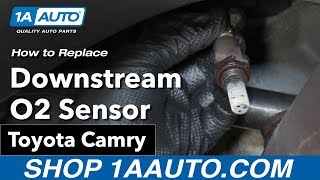
- For replacement, it may be necessary to spray the old sensor's threads with penetrating oil. Use a 22mm wrench or a specialized O2 sensor socket, which has a slot 🎬 Watch: How to replace the downstream sensor on your Camry. for the wire to pass through.
- If the sensor and wiring are confirmed to be good, the problem may lie with the ECM, but this is highly unlikely and should be the last resort.
Parts You'll Likely Need
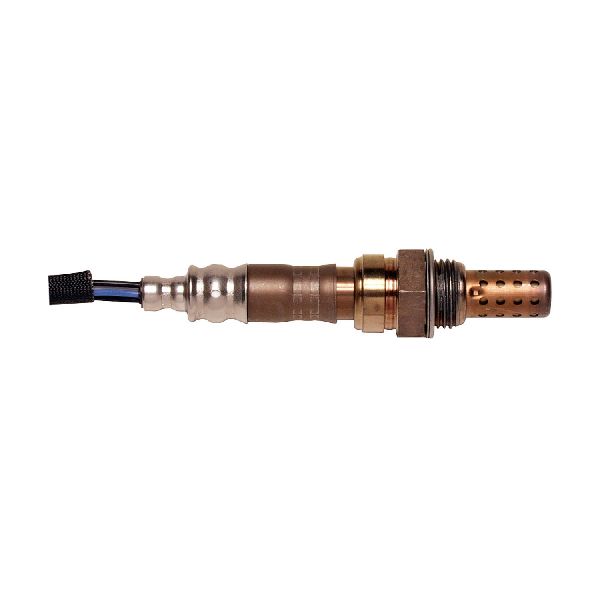
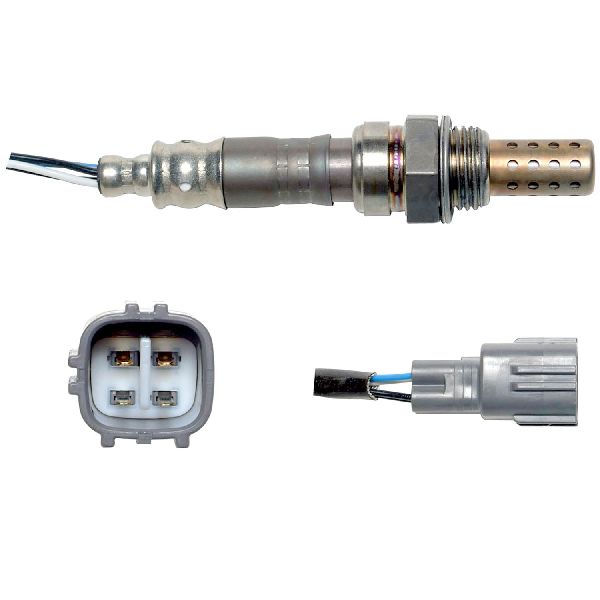
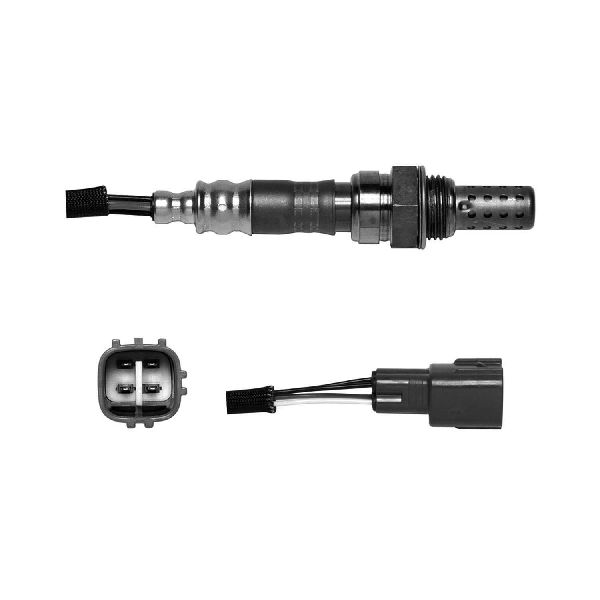
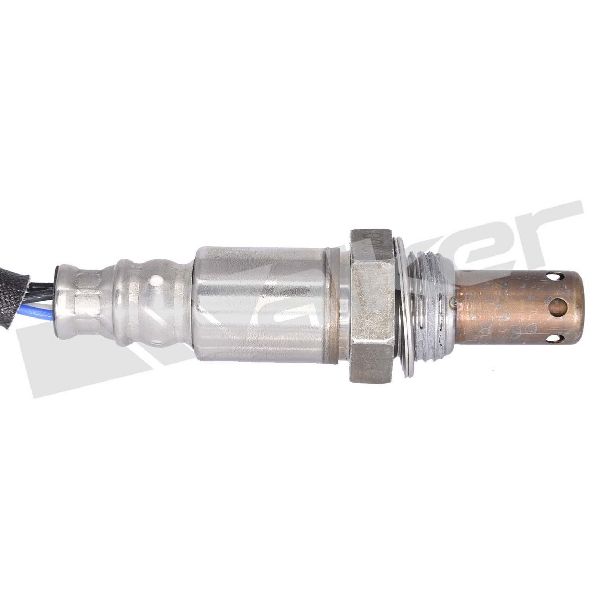
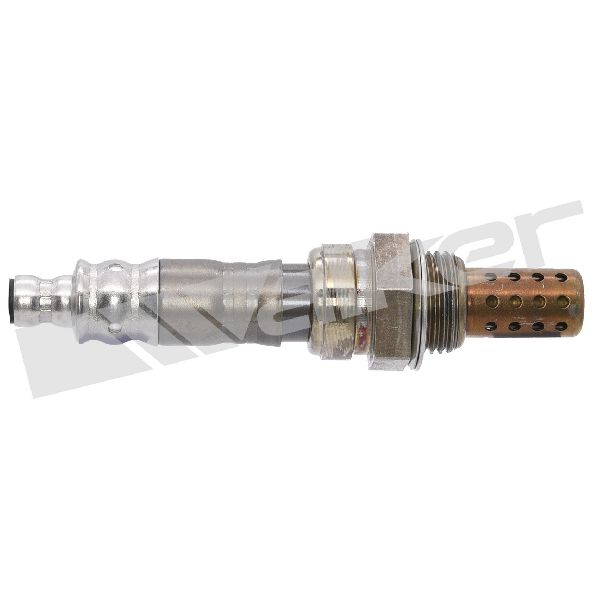
- Oxygen Sensor (Bank 1, Sensor 2)
(OEM #89465-06150 (for 2AZ-FE 2.4L), 89465-06120 (for 2GR-FE 3.5L - check VIN))— This is the component that has failed and is no longer sending a signal to the engine computer. It is a standard wear item.
Trusted brands: Denso (OEM supplier), NGK/NTK, Bosch, Walker
OEM price range: $150-$200
Aftermarket price range: $50-$100
Related Codes That Often Appear With This One
- P0141 (O2 Sensor Heater Circuit Malfunction Bank 1, Sensor 2): This code is very commonly seen with P0140, as a failure of the sensor's internal heater will prevent it from reaching operating temperature and thus showing activity.
Technical Service Bulletins (TSBs) & Recalls
- EG045-07 (Not P0140 Specific but Relevant): While not directly for P0140, Toyota issued TSB EG045-07 for some 2007-2008 models with the 2GR-FE V6 engine concerning MIL ON with O2 sensor heater circuit codes (P0037, P0038, P0057, P0058, P0141, P0161). This indicates that Toyota has acknowledged potential issues within the O2 sensor heater systems on this engine family, which is the most common root cause of a P0140 'no activity' code. The fix often involves sensor replacement.
Platform-Specific Known Issues
- Real-World Repair Story: A user on DSMtuners.com with a P0140 code described an intermittent Check Engine Light. The code would appear, disappear after a drive cycle or refueling, and then return. This intermittent behavior often points towards a wiring issue (a loose connection or a wire that is starting to break) or a sensor that is at the very end of its life, rather than a hard internal failure. The user also noted that two codes were stored (one pending, one active), which is common as the ECM confirms the fault over multiple drive cycles.
Mechanic-Grade Diagnostic Values
- Downstream O2 Sensor (B1S2) Voltage — expected: A healthy downstream sensor on a warm, running engine should show a relatively stable voltage, typically fluctuating slowly between 0.5V and 0.8V.. Failure: A voltage that is stuck flat (e.g., at 0.45V) or at 0V for an extended period (over 74 seconds) indicates no activity and will trigger P0140.
- O2 Sensor Heater Circuit Resistance — expected: Between 11 and 16 Ω at 68°F (20°C) for the 2GR-FE engine. For the 2AZ-FE, a typical range is 5.0 to 6.4 Ω at 68°F (20°C).. Failure: An ohmmeter reading of OL (Open Loop/infinite resistance) or 0 ohms (short circuit) across the two heater pins (usually same-colored wires) on the sensor connector indicates a failed heater element.
Scan Tool Commands That Help
- Toyota Techstream: Active Test: Control the Injection Volume for A/F Sensor — While this directly tests the upstream Air/Fuel sensor, it is crucial for diagnosing the downstream O2 sensor. By commanding the fuel mixture rich (+12.5% or +25%) or lean (-12.5%), a technician can observe if the downstream B1S2 sensor responds accordingly. If the upstream sensor reacts but the downstream sensor's voltage remains flat, it strongly confirms the downstream sensor or its circuit is dead and not just experiencing a lazy response.
Wiring & Ground Locations
- ECM Connector E12 (for 2GR-FE V6) — The Engine Control Module (ECM) is located behind the right side of the dashboard. Connector E12 is one of the main plugs into the ECM.. Pin E12-24 (Wire Color: P - Pink) is the signal wire (OX1B) for the Bank 1, Sensor 2 O2 sensor. Pin E12-25 (Wire Color: W-B - White with Black stripe) is the sensor ground (E2). A technician can back-probe these pins to check for voltage directly at the ECM, bypassing all vehicle wiring to determine if the fault is in the harness or the ECM itself.
- Ground Point EO1 and EO2 (2.4L 2AZ-FE) — These are primary engine ground points located on the engine block/cylinder head, typically near the intake manifold or transmission housing.. The O2 sensor circuit relies on a clean ground connection to provide an accurate signal. While the sensor has a dedicated ground wire back to the ECM, a poor engine ground can introduce electrical noise and voltage offsets that may affect sensor readings, although it's more likely to cause other codes first. Verifying these main grounds are clean and tight is a best practice during electrical diagnosis.
- O2 Sensor Connector (2GR-FE V6) — The connectors for both downstream (Sensor 2) O2 sensors are mounted together on a bracket on the subframe, visible from underneath the front of the car.. These connectors are notoriously difficult to release. The release tab must be fully depressed, which can be hard due to limited access and road grime. Technicians often use long-reach pliers or a modified tool to depress the tab. Knowing there is no secondary lock on the back of the connector saves diagnostic time.
Real Owner Repair Stories
- Toyota Nation Forum user (2007 Toyota Camry 2.4L (2AZ-FE)) — Check Engine Light with code P0140.
❌ Tried (didn't work) Replaced the Bank 1 Sensor 2 oxygen sensor with a new Denso part.
✅ What actually fixed it The wiring harness for the O2 sensor had been rubbing against a heat shield, causing an intermittent short. The user found a section of wire where the insulation was worn through. After repairing the damaged wire with heat shrink tubing and securing the harness away from the shield, the P0140 code was cleared and did not return.
OEM Part Supersession History
89465-33440→89465-06150— Standard part update/revision by Toyota.
Heads up: The new part number (89465-06150) is the correct and current replacement for the original. Using old stock of 89465-33440 is acceptable, but 89465-06150 should be preferred.
Model Year Variations Within This Range
- 2007-2009 (PZEV models): On 2.4L 2AZ-FE engines with California Partial Zero-Emission Vehicle (PZEV) specifications, the physical location of Bank 1 Sensor 2 is different. Instead of being under the car, it is located in the engine bay on the exhaust manifold, which is a much more accessible location than on federal emissions models. This can cause confusion, as it's in the typical location for a Sensor 1 on other vehicles. Always verify by following the exhaust path from the cylinder head; the first sensor is S1, the second is S2.
Diagnostic Flowchart
Real Owner Stories
Aggregated from forums and TSBs cited above. Mileages and costs reflect what owners reported in those sources.
Toyota Camry
Symptoms: Intermittent Check Engine Light that would appear, disappear after a drive cycle or refueling, and then return. Two codes were stored (one pending, one active).
What fixed it: Diagnosed as a wiring/ground problem or a sensor at the very end of its life, rather than a hard internal failure.
Source hint: DSMtuners.com: 'Recurring P0140 Code'
Toyota Camry
Symptoms: Received code P0140 and subsequently a P0420 (catalyst inefficiency) code after replacing the downstream O2 sensor for a previous P0139 code.
What fixed it: Replaced downstream O2 sensor (serves as a cautionary tale demonstrating the interplay between sensor codes and catalyst codes).
Source hint: Reddit r/autorepair: 'Got code P0140 after replacing downstream O2 sensor?'
Toyota Camry
Symptoms: Needed help locating Bank 1 Sensor 2 and figuring out how to remove it.
What fixed it: Replaced the sensor by applying penetrating oil to the old sensor's threads and using an anti-seize compound on the new one.
Source hint: Reddit r/AskMechanics: 'TOYOTA CAMRY BANK 1 Sensor 2??'
Related OBD-II Codes
Frequently Asked Questions
Does TSB EG045-07 apply to my 2007-2011 Camry for code P0140?
Where is Bank 1 Sensor 2 located on my Camry?
What aftermarket sensor is recommended for the 3.5L V6 engine?
My P0140 code is intermittent and goes away after refueling. Is the sensor completely dead?
Which fuse should I check for the O2 sensor heater on my Camry?
What tools do I need to replace the downstream O2 sensor on my Camry?
Helpful Videos
We Have This Part in Stock


The information in this article is provided for general reference and educational purposes only. Vehicle specifications, procedures, and part compatibility can vary by production date, trim level, and region. Always consult your vehicle's factory service manual and verify part numbers before purchasing or performing repairs. Safety-critical components such as airbags, seat belts, and braking systems should be installed by a qualified professional.
- Toyota Camry:
- 🎬 Helpful Videos
- 🛍️ Shop This Part
- What's Unique About the 2007-2011 Toyota Camry
- Symptoms You May Notice
- Most Likely Causes
- Rare But Worth Checking
- Diagnosis Steps
- Parts You'll Likely Need
- Related Codes That Often Appear With This One
- Technical Service Bulletins (TSBs) & Recalls
- Platform-Specific Known Issues
- Mechanic-Grade Diagnostic Values
- Scan Tool Commands That Help
- Wiring & Ground Locations
- Real Owner Repair Stories
- OEM Part Supersession History
- Model Year Variations Within This Range
- Diagnostic Flowchart
- Real Owner Stories
- Toyota Camry
- Toyota Camry
- Toyota Camry
- Related OBD-II Codes
- Frequently Asked Questions
- 🎟️ Get 5% Off