

P0139 on 2015-2024 Volvo XC90: O2 Sensor Slow Response Causes and Fixes
On a 2015-2024 Volvo XC90, code P0139 is most often caused by a faulty rear oxygen sensor. However, for 2022-2024 plug-in hybrid (PHEV) models, a Volvo technical service bulletin advises a mandatory software update before replacing any parts. A new sensor costs between $150 (aftermarket) and $250 (OEM).
- For 2022-2024 XC90 PHEV models, your first step should be to ask a dealer about software updates related to TSB TJ 36796.2.0 before buying any parts.
- For all other models, or if software is up-to-date, the most likely cause is a failed rear (downstream) oxygen sensor, which is a common wear item.
- Do not ignore secondary possibilities like exhaust leaks or wiring damage, as they can mimic the symptoms of a failed sensor.
What's Unique About the 2015-2024 Volvo XC90
For many cars, P0139 almost always means a bad oxygen sensor. While that is still a very common cause for the XC90, Volvo has issued a Technical Journal (TJ 36796.2.0) for 2022-2024 plug-in hybrid (PHEV) models with the BH6PHEV engine code. This document states that for P0139 and other related O2 sensor codes (P0136, P0140, P2096, etc.), dealers should perform a total vehicle software upgrade *before* replacing the oxygen sensor, as outdated software can falsely trigger the code. This makes checking for software updates a critical first step for these specific models, potentially saving you from an unnecessary repair. This issue is specific to certain chassis ranges built between late 2021 and mid-2023.
Generation note: The 2015-2024 model years all fall within the second generation of the Volvo XC90, which debuted in 2015 on the SPA platform. While there have been facelifts and powertrain updates (like the introduction of mild-hybrid and updated PHEV systems), the fundamental cause and diagnosis for this code remain similar. The most significant vehicle-specific variable is the software issue identified in TSB TJ 36796.2.0 for 2022-2024 PHEV models. Some 2023+ models with the Android Automotive OS may receive software updates Over-The-Air (OTA), while older models require a dealer visit.
Symptoms You May Notice
- Check Engine Light is on
- Failing an emissions test
- Slightly reduced fuel economy
- Rough idle or hesitation in rare cases
- Replacing the oxygen sensor on a 2022-2024 XC90 PHEV model without first checking if a software update is available and required per Volvo's Technical Journal TJ 36796.2.0.
- Replacing the O2 sensor when the actual problem is a small, hard-to-see exhaust leak just upstream of the sensor.
Most Likely Causes
- Outdated Engine Control Module (ECM) Software 🔴 High Probability Volvo issued Technical Journal 36796.2.0 specifically for 2022-2024 XC90 PHEV models (engine code BH6PHEV), stating this code can be falsely triggered by incorrect software logic. The prescribed fix is a software update, not sensor replacement. This applies to vehicles within specific chassis number ranges.
How to confirm: This must be confirmed by a Volvo dealer or a qualified independent shop with access to Volvo's diagnostic software (VIDA). They can check the current software version against available updates related to TJ 36796.2.0. The TSB explicitly says "Do not replace the oxygen sensor(s) in these cases."
Typical fix: Perform a "Total Upgrade" of the vehicle software as per TJ 31543. This is a dealer or specialist task. The cost can vary, with some dealers including it in regular service and others charging $130-$225 for the update. 🎬 Learn what to expect during a Volvo dealer software update.
Est. part cost: $0 - Faulty Rear (Downstream) Oxygen Sensor 🔴 High Probability Oxygen sensors are wear items with a finite lifespan, often degrading after 60,000-100,000 miles. Contamination from carbon, oil, and other exhaust byproducts can coat the sensing element, causing it to react slowly. This is the most common cause on non-PHEV models or when software is confirmed to be up-to-date.
How to confirm: A technician can use a scan tool to graph the sensor's voltage. A healthy downstream sensor shows slow, lazy voltage switching. If the sensor's voltage is flat, stuck, or responds too slowly to forced rich/lean conditions (like snapping the throttle), it has failed. Replacement requires a 22mm (or 7/8") offset oxygen sensor socket.
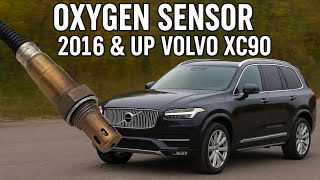
Typical fix: Replace the Bank 1 Sensor 2 oxygen sensor. 🎬 Watch: Step-by-step rear O2 sensor replacement for 2016-2019 models.
Est. part cost: $150-$250 - Exhaust System Leak 🟡 Medium Probability Leaks in the exhaust system, especially at gaskets or flex pipe connections before the sensor, can allow outside air to enter. This unmetered oxygen skews the sensor's readings, making it appear slow to respond. A ticking noise on a cold start that disappears as the engine warms up is a classic sign of an exhaust leak.
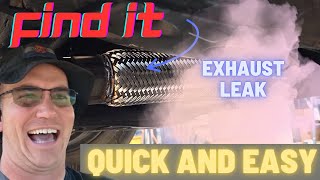
How to confirm: Perform a visual inspection of the exhaust system from the catalytic converter back, looking for black soot stains, cracks, or holes, particularly around flanges. A smoke test is the most effective way to pinpoint the exact location of a small leak. 🎬 See how to use a smoke machine to find leaks.
Typical fix: Repair or replace the leaking section of the exhaust pipe or replace the failed gasket.
Est. part cost: $20-$200 - Damaged Wiring or Connectors ⚪ Low Probability The sensor wiring runs under the car and is exposed to heat, moisture, and road debris. This can lead to corrosion in the connector pins, melted insulation from contact with the exhaust, or breaks in the wire. Increased resistance in the circuit can delay the signal, triggering the code.
How to confirm: Visually inspect the wiring harness from the sensor to its connection point. Check for corrosion in the connector pins and test for continuity and resistance with a multimeter. A high resistance reading (e.g., above 5 Ω) indicates a wiring problem.
Typical fix: Repair the damaged section of wiring or replace the connector pigtail.
Est. part cost: $15-$50
Rare But Worth Checking
- Leaking Fuel Injectors:
- Failing Catalytic Converter:
Diagnosis Steps
- Check for TSBs: For 2022-2024 XC90 PHEV models, the first step is to have a dealer or qualified shop with VIDA access check if software updates related to TSB TJ 36796.2.0 are available. If so, perform the update first.
- Scan for Codes: Use an OBD-II scanner to confirm P0139 is the primary code. If other codes like P0420 are present, understand that P0139 is often the root cause.
- Inspect Wiring: Perform a thorough visual inspection of the rear O2 sensor's wiring harness and connector. Look for any signs of melting, chafing, corrosion, or loose connections.
- Check for Exhaust Leaks: With the engine cold, start it and listen for any ticking or puffing sounds from the exhaust system that may quiet down as it warms up. A professional smoke test is the most effective way to find small leaks.
- Analyze Live Sensor Data: Use a scan tool capable of graphing live data. Observe the Bank 1 Sensor 2 voltage. At a steady 2,500 RPM, a healthy downstream sensor's voltage should be relatively stable, not switching rapidly like the upstream sensor. When you snap the throttle or force a fuel cut on deceleration, the voltage should respond. If it's stuck, flat, or very sluggish, the sensor is likely faulty.
- Replace the Sensor: If the software is up-to-date and all other checks pass, replace the rear (downstream) oxygen sensor. You will need a specialized 22mm (7/8") offset O2 sensor socket to do this.
Parts You'll Likely Need
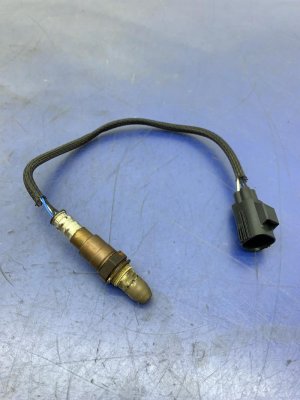
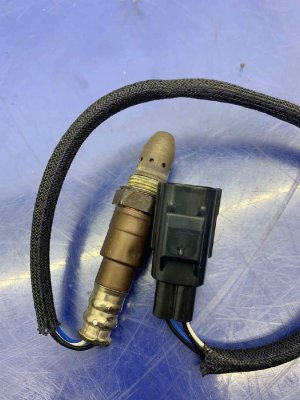
- Rear Oxygen Sensor (Bank 1, Sensor 2)
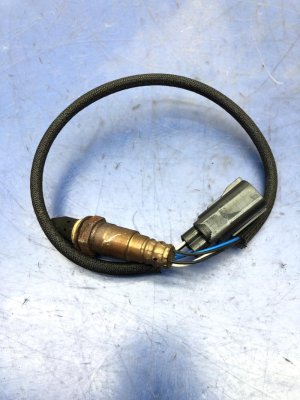
(OEM #31480395)— This is the most common hardware failure for this code after ruling out software issues. The sensor is a wear item that degrades over time.
Trusted brands: Bosch, Denso, Genuine Volvo
OEM price range: $200-$250
Aftermarket price range: $150-$200
Related Codes That Often Appear With This One
- P0420 — A slow or failing rear O2 sensor (P0139) can no longer accurately report on the catalytic converter's efficiency. The ECM may interpret the sensor's lazy signal as a sign that the converter itself is failing, leading it to incorrectly flag the converter as inefficient with a P0420 code.
Technical Service Bulletins (TSBs) & Recalls
- TJ 36796.2.0: Dated Feb 21, 2024, this TSB applies to 2022-2024 models with engine code BH6PHEV. It advises a total vehicle software upgrade to fix various oxygen sensor-related DTCs, including P0139, before replacing parts. It explicitly lists P013900 as a covered code.
Platform-Specific Known Issues
- A Volvo Technical Journal (TJ 36796.2.0) exists for 2022-2024 XC90 PHEV models, indicating that P0139 can be caused by outdated ECM software and that a software update should be performed before replacing the sensor.
- On some newer models (approx. 2023+), software updates may be available Over-The-Air (OTA), while older models require a visit to a dealer or specialist with VIDA software.
Mechanic-Grade Diagnostic Values
- Downstream O2 Sensor Heater Circuit Resistance — expected: 2–4 Ω (Ohms) at operating temperature. Failure: A reading outside this range, or an open circuit (infinite resistance), indicates a failed heater element within the sensor.
- O2 Sensor Circuit Resistance (from sensor connector to ECM) — expected: Less than 5 Ω (Ohms). Failure: Values above 5 Ω suggest corrosion in the connector or a damaged wire, which can delay the signal and trigger P0139.
- Downstream O2 Sensor Live Data Voltage (Steady Cruise) — expected: Relatively stable voltage, typically between 0.45V and 0.8V.. Failure: If the voltage is stuck, flat, or fluctuates rapidly like an upstream sensor, it indicates a problem with the sensor or catalytic converter.
- Downstream O2 Sensor Live Data Voltage (Deceleration Fuel Cut-Off) — expected: Voltage should drop below 0.2V.. Failure: If the voltage fails to drop below 0.2V for more than 7 seconds during fuel cut-off, the ECM will log code P0139.
Hidden / Shadow Codes Worth Checking
- Mode 6, Monitor ID (MID) for O2 Sensor: Mode 6 data provides results from the ECM's self-tests before a full-blown trouble code is set. A technician can view the test values for the O2 sensor monitor (e.g., Test ID $81 on some systems) to see if it is approaching the failure threshold, even if the Check Engine Light is not yet on. This can act as an early warning system. (see via A professional scan tool or an advanced DIY scanner (like BlueDriver or iCarsoft) that supports Mode 6 data is required.)
Scan Tool Commands That Help
- Volvo VIDA: Readout of signals, rear oxygen sensor — This function in the Volvo dealer software allows for detailed graphing and analysis of the sensor's signal, heater duty cycle, and response time, which is more precise than generic OBD-II data for confirming a slow sensor.
- Volvo VIDA: Resetting adaptation, oxygen sensor — After replacing an oxygen sensor, it is recommended to use this function to clear the old learned fuel trim and sensor response values from the Engine Control Module (ECM). This ensures the ECM adapts to the new sensor's characteristics immediately.
Wiring & Ground Locations
- Bank 1 Sensor 2 Connector — Under the plastic engine cover, on the passenger side of the engine. It is a grey connector, distinct from the black connector used for the front (upstream) sensor.. This is the primary connection point to test for voltage, resistance, and corrosion. A poor connection here can directly cause P0139. Unplugging the correct connector is critical for diagnosis.
- Engine Bay Ground Points — There are multiple key ground points on the strut towers in the engine bay. A main engine-to-chassis ground strap also connects to the passenger side strut tower area.. A corroded or loose ground can introduce electrical noise and resistance into the sensor circuits, potentially affecting the sensor's signal and causing various codes, including P0139.
OEM Part Supersession History
31422307→31480395— Standard part revision and update by Volvo.
Heads up: The parts are interchangeable for the specified model years; 31480395 is the current correct replacement part.
Model Year Variations Within This Range
- 2022-2024 (PHEV Models): These models are subject to Volvo Technical Journal TJ 36796.2.0, which requires a mandatory software check and potential update before replacing the O2 sensor for code P0139. This is not a required first step for earlier years or non-PHEV models.
- 2023+: Models from approximately 2023 onwards may feature the Android Automotive Operating System, which can receive some software updates Over-The-Air (OTA), potentially including the fix mentioned in the TSB. Older models with the Sensus system require a dealer visit for any software update.
Diagnostic Flowchart
Used vs. New Parts: Buying Guide for This Vehicle
When a used part is the smart pick: A used part is almost never a smart choice for this repair. The primary failure part is the oxygen sensor itself, which is a wear-and-tear item. Installing a used sensor with unknown mileage provides no guarantee of remaining life and is likely to fail soon. A used wiring connector pigtail could be considered if the original is physically damaged.
Donor-vehicle mileage cap: roughly under 10000 miles for the part to have meaningful remaining life.
What to inspect on the donor part:
- For a connector pigtail: ensure the locking tab is intact, there is no visible corrosion on the pins, and the wires are not brittle or cracked.
OEM-only on this vehicle (don't cheap out):
- While not strictly 'OEM-only', using a Genuine Volvo, Bosch, or Denso sensor is highly recommended. These are often the Original Equipment suppliers. Cheaper, unbranded 'universal' sensors often have incorrect heater resistances or response rates that can cause the code to return or fail to perform correctly on modern, sensitive European vehicles.
Aftermarket brands forum-validated for this vehicle:
- Bosch
- Denso
Brands owners have reported issues with on this vehicle:
- Unbranded 'universal' sensors that require splicing wires. These often lack the precise calibration needed for the Volvo engine management system.
Real Owner Stories
Aggregated from forums and TSBs cited above. Mileages and costs reflect what owners reported in those sources.
2024 Volvo XC40
Symptoms: A recurring Check Engine Light with code P0139, even after the dealer replaced the downstream O2 sensor under warranty.
What fixed it: Replacing the downstream O2 sensor did not resolve the issue, suggesting a more persistent problem, potentially related to software as seen in other modern Volvos.
Source hint: Reddit r/Volvo thread titled '2024 XC40, CEL OBD2 P0139'
2015-2024 Volvo XC90
Symptoms: Check Engine Light on due to an issue that required a software update to fix.
What fixed it: A dealer-performed vehicle software update.
Cost: $130-$225
Source hint: Reddit r/Volvo thread titled 'Anyone else tired of paying for software updates to fix issues?'
Related OBD-II Codes
Frequently Asked Questions
My 2023 Volvo XC90 PHEV has a P0139 code. Should I just replace the oxygen sensor?
What is Volvo TSB TJ 36796.2.0 and does it apply to my vehicle?
How much does the dealer charge for the software update to fix P0139?
I hear a ticking noise from my XC90 when it's cold that goes away after it warms up. Is this related to the P0139 code?
What special tool is needed to replace the rear O2 sensor on a Volvo XC90?
The software on my 2022 XC90 is up to date, but the P0139 code persists. What should I check next?
Does the P0139 software issue affect other Volvo models besides the XC90?
Helpful Videos


We Have This Part in Stock

The information in this article is provided for general reference and educational purposes only. Vehicle specifications, procedures, and part compatibility can vary by production date, trim level, and region. Always consult your vehicle's factory service manual and verify part numbers before purchasing or performing repairs. Safety-critical components such as airbags, seat belts, and braking systems should be installed by a qualified professional.
- Volvo XC90:
- 🎬 Helpful Videos
- 🛍️ Shop This Part
- What's Unique About the 2015-2024 Volvo XC90
- Symptoms You May Notice
- Most Likely Causes
- Rare But Worth Checking
- Diagnosis Steps
- Parts You'll Likely Need
- Related Codes That Often Appear With This One
- Technical Service Bulletins (TSBs) & Recalls
- Platform-Specific Known Issues
- Mechanic-Grade Diagnostic Values
- Hidden / Shadow Codes Worth Checking
- Scan Tool Commands That Help
- Wiring & Ground Locations
- OEM Part Supersession History
- Model Year Variations Within This Range
- Diagnostic Flowchart
- Used vs. New Parts: Buying Guide for This Vehicle
- Real Owner Stories
- 2024 Volvo XC40
- 2015-2024 Volvo XC90
- Related OBD-II Codes
- Frequently Asked Questions
- 🎟️ Get 5% Off