

OBD-II Code P0140: O2 Sensor Circuit No Activity Detected
What P0140 means, why it triggers, and how to fix it
- Code P0140 indicates a dead electrical circuit in the Bank 1 Sensor 2 downstream oxygen sensor, meaning the PCM receives zero voltage fluctuations.
- Always test the O2 sensor heater fuse and visually inspect the undercarriage wiring harness before spending $150+ on a replacement sensor.
- Driving with P0140 is safe for short distances, but your vehicle will automatically fail state emissions testing and experience a 5-10% drop in fuel economy.
- Do not replace the catalytic converter for this code; P0140 is strictly a sensor circuit fault, though fixing it sometimes reveals a hidden P0420 catalyst efficiency code.
What Does P0140 Mean?

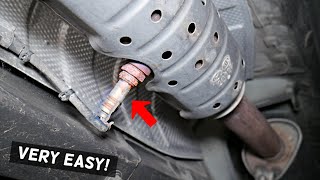
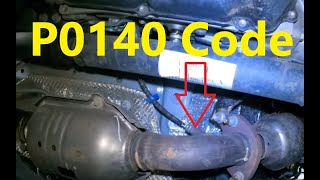
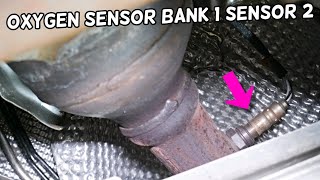
P0140 means your car's Powertrain Control Module (PCM) receives zero voltage signal from the 'Bank 1, Sensor 2' oxygen (O2) sensor. Located in the exhaust pipe after the catalytic converter, 🎬 Watch: How to find the Bank 1 Sensor 2 location. this sensor measures oxygen content to verify the converter is cleaning exhaust properly. When the PCM detects zero voltage fluctuation from this sensor for over a minute, it logs a circuit fault and illuminates the Check Engine Light.
Technical definition: O2 Sensor Circuit No Activity Detected (Bank 1, Sensor 2). The powertrain control module (PCM) detects that the downstream oxygen sensor's signal voltage remains inactive or stuck within a narrow range (e.g., 409-489 mV) for a predetermined period, failing to respond to fuel cut-off or enrichment events.
Can I Drive With P0140?
Yes, But With Caution. Driving with code P0140 is safe for short distances and does not affect immediate drivability. The primary role of this sensor is to monitor the catalytic converter's efficiency. However, your vehicle will release excess pollution and automatically fail an emissions test. Ignoring the code long-term is risky; a faulty sensor cannot report on the health of your catalytic converter. If an upstream sensor fails and causes the engine to run rich, it overheats and destroys the unmonitored catalytic converter, resulting in a $1,000 to $2,500 repair.
Common Causes

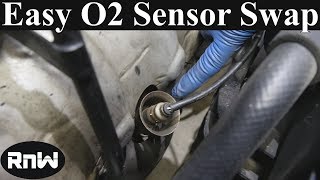
- Failed Bank 1, Sensor 2 Oxygen Sensor (Very Common) — The O2 sensor fails internally over time. The sensing element wears out or the internal heater breaks, permanently stopping voltage signal production. 🎬 Watch: Tips and tricks for replacing a dead O2 sensor.
- Damaged or Disconnected Wiring Harness (Very Common) — The undercarriage wiring harness and connector face road debris, heat, and moisture. Broken, corroded, shorted, or unplugged wires are a frequent cause of a dead circuit.
- Blown O2 Sensor Heater Fuse (Common) — The O2 sensor relies on a fused internal heater to reach its 600°F operating temperature quickly. A blown fuse prevents warmup, killing the signal output.
- Exhaust Leak Near the Sensor (Less Common) — A crack in the exhaust pipe near the sensor bung draws in fresh air. This pegs the sensor at a constant lean reading, which the computer flags as 'no activity'.
- Aftermarket Catalytic Converter or Test Pipe (Less Common) — High-flow catalytic converters or 'cat-delete' pipes alter exhaust flow so drastically that the downstream sensor reading flatlines, triggering the code.
- Fluid Contamination (Rare) — Severe engine oil or coolant leaks seep into the exhaust system and permanently foul the O2 sensor element, rendering it inactive.
- Faulty PCM or Outdated Software (Rare) — Rarely, the PCM's internal O2 sensor circuit fails, or the factory software requires a dealership update to recalibrate overly sensitive monitoring logic.
Symptoms
- Check Engine Light is on — The light illuminates steadily on the dashboard. This is often the only noticeable symptom.
- Hesitation or rough idle — The fail-safe fuel strategy causes minor engine hesitation or rough running, particularly on cold starts.
- Slight decrease in fuel economy (also visible on scanner) — The PCM defaults to a fail-safe richer fuel mixture, causing a 5-10% drop in MPG.
- Failed emissions test (scan-tool only — no driver-felt sign) — The vehicle automatically fails state smog inspections, and releases higher levels of unmonitored pollutants from the tailpipe.
Diagnostic Flowchart

Tap your situation to follow the diagnostic path that matches what you're seeing on this code.
Common Fixes & Costs
- Replacing the Bank 1, Sensor 2 Oxygen Sensor
— Parts: $50-$250, Labor: $80-$160, ~0.8 hr book time
(DIY)
Subaru Outback/Legacy (2017-2024): OEM
Honda Accord (4-Cyl, 2003-2007): OEM - Repairing Damaged Wiring or Connector — Parts: $10-$50, Labor: $100-$280, ~1.5 hr book time (Intermediate)
- Replacing a Blown Fuse — Parts: $1-$5, Labor: $0-$50, ~0.2 hr book time (DIY)
- Fixing an Exhaust Leak — Parts: $20-$200, Labor: $150-$400, ~1.5 hr book time (Intermediate)
- Updating or Replacing the PCM — Parts: $800-$1200, Labor: $200-$300, ~1.5 hr book time (Professional)
Used vs. New Parts: Buying Guide
When a used part is worth it: Never. O2 sensors are wear items with a 50k-100k mile lifespan. Used sensors risk premature failure and repeating the labor.
Donor-vehicle mileage cap: roughly under 20000 miles for the part to have meaningful remaining life.
Donor quality checklist:
- Verify the part is an exact OEM match.
- Avoid parts from rust-belt states due to corrosion.
- Ensure the electrical connector has no bent or corroded pins.
Decision logic:
- If The cost of a new OEM or high-quality aftermarket sensor (Denso, NTK, Bosch) is under $150 → Always buy new. The reliability and warranty are worth the cost.
- If The part is a 'universal' sensor requiring wire splicing → Avoid. Improper connections cause resistance issues and repeat codes.
Warranty tradeoff: Used parts offer a 30-90 day warranty. New aftermarket sensors have 1-year to limited lifetime warranties. New OEM sensors carry a 12-month/12,000-mile warranty.
Worst-case if a used part fails: $100-$200 if a used sensor fails shortly after installation, requiring repeat labor.
What Happens If You Wait — Timeline
- 0-2 weeks: Code P0140 is set and the Check Engine Light is on. The vehicle automatically fails an OBD-II emissions test. (MPG impact: 0-5%% · Added cost: $0)
- 1-3 months: A slight decrease in fuel economy becomes apparent. The car's ability to monitor catalytic converter health is completely disabled. (MPG impact: 5-10%% · Added cost: $25-$75 in wasted fuel)
- 3-12 months: An underlying issue, like a failing upstream sensor causing a rich condition, goes undetected and begins degrading the catalytic converter. (MPG impact: 5-10%% · Added cost: $0)
- 12+ months: Sustained overheating from an uncorrected rich condition causes a complete catalytic converter meltdown, requiring replacement. (MPG impact: 10-20%% · Added cost: $1500-$3000)
Cost of Not Fixing It
- 0-3 months: Automatic emissions failure and a 5-10% drop in fuel economy. (Added cost: $25-$75 in wasted fuel)
- 3-12 months: Masks a failing catalytic converter. You will not know the converter is degrading until it clogs. (Added cost: $0)
- 12+ months: Unmonitored rich fuel mixtures overheat and destroy the catalytic converter. (Added cost: $1200-$2800)
Diagnosis Steps

- Read Codes and Live Data
Confirm P0140 and check for heater codes (like P0141). View live data for Bank 1 Sensor 2; a dead sensor shows a flat 0V or 0.45V instead of fluctuating between 0.6V and 0.8V.
Tools: OBD-II Scanner (Beginner) - Visually Inspect Wiring and Connector
Raise the vehicle and trace the sensor wiring harness. Look for melted insulation from exhaust contact, chafing against the frame, or corrosion inside the connector.
Tools: Jack and jack stands, flashlight (Beginner) - Check the Heater Fuse
Locate the O2 sensor heater fuse (often labeled 'O2 HTR' or 'SENSOR'). Replace it if blown, as a cold sensor cannot generate a voltage signal.
Tools: Owner's manual, fuse puller or needle-nose pliers (Beginner) - Test Heater Circuit Resistance
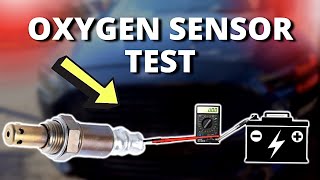
Disconnect the sensor. Measure resistance across the two heater wires on the sensor side. A healthy sensor reads 2-30 ohms; an 'O.L.' reading confirms a broken internal heater requiring replacement.
Tools: Multimeter (Intermediate) - Test Heater Power and Ground
Turn the key ON (engine off). Probe the harness-side connector for 12V power and ground. Missing voltage confirms a wiring or fuse issue, not a bad sensor.
Tools: Multimeter (Intermediate) - Test Sensor Bias Voltage
With the key ON and sensor unplugged, measure the signal wire on the harness side. It must read approximately 0.45V. A 0V reading indicates an open circuit to the PCM.
Tools: Multimeter, vehicle-specific wiring diagram (Advanced) - Check for Exhaust Leaks
With the engine running, listen for ticking sounds or feel for escaping air near the sensor bung. Leaks introduce oxygen, flatlining the sensor reading.
Tools: Mechanic's stethoscope or exhaust smoke machine (Intermediate) - Pro Tip: Scope Check
For definitive proof, back-probe the signal wire with an oscilloscope. A dead sensor shows a flat line, while a healthy one shows a slow-switching waveform above 0.5V.
Tools: Oscilloscope, back-probe connectors (Advanced)
When This Code Triggers (Freeze-Frame Conditions)
- Engine Coolant Temp: 170-220°F (Engine at full operating temperature)
- RPM: 1200-3000 (Steady cruise or light acceleration)
- Engine Load: 20-60% (Moderate load, not idling or at full throttle)
- Vehicle Speed: 40-65 mph (Steady highway or expressway driving)
Related Codes
- P0141 — Indicates a heater circuit malfunction. A failed heater prevents warmup, causing the 'No Activity' P0140. Fix P0141 first.
- P0136 — Indicates erratic or out-of-range signals. P0140 is a flatline; P0136 is a nonsensical fluctuation.
- P0420 — Catalyst Efficiency Below Threshold. A dead sensor (P0140) masks a failing catalytic converter. Fixing P0140 often reveals a hidden P0420.
- P0137 — Circuit Low Voltage. A short-to-ground often reads as a constant low voltage, triggering either P0137 or P0140 depending on PCM logic.
Climate & Environmental Factors
- Cold Climates / Road Salt: Road salt accelerates corrosion of the sensor body and connector pins. Water intrusion shorts the heater circuit, blowing the fuse and triggering P0140.
- Extreme Cold: Sub-zero temperatures demand maximum performance from the sensor's internal heater. A weak heater fails to reach the 600°F operating threshold, causing the PCM to register 'no activity'.
How to Talk to a Mechanic About This Code
Say this: "I have a P0140 code for the Bank 1 Sensor 2 oxygen sensor. Please test the sensor's heater circuit and check for signal activity on a scan tool before replacing any parts."
This directs the technician to test the cheapest failure points (wiring, fuse) before condemning the expensive sensor, and prevents a premature catalytic converter diagnosis.
Avoid saying:
- 'My check engine light is on, can you look at it?'
- 'I think I need a new catalytic converter.' (P0140 is a sensor circuit code, not a converter code).
- 'Just fix whatever is wrong.'
Questions to ask before authorizing the repair:
- Did you test the sensor's heater circuit for power, ground, and resistance?
- What did the sensor's voltage look like on the scan tool's live data?
- Did you inspect the wiring harness and connector for physical damage?
- If recommending a new sensor, what brand is it and does the repair come with a warranty?
Where to Take It: Dealer vs Independent vs Chain
- Dealer:
Recommended only if the vehicle is under warranty or has a known manufacturer-specific issue.
Best for: Vehicles under the 8-year/80,000-mile emissions warranty., Vehicles with known TSBs (e.g., Subarus)., Complex electrical issues requiring factory diagnostic tools.
Downsides: Highest labor rates., Defaults to expensive OEM parts when high-quality aftermarket options suffice. (Typical cost: +50% vs. baseline) - Independent Shop:
Best overall fit. A competent independent shop easily diagnoses wiring, fuse, and sensor issues at a lower cost than a dealer.
Best for: Most out-of-warranty vehicles., Straightforward diagnostic work for common codes like P0140.
Downsides: Quality varies; vetting the shop through reviews and ASE certifications is crucial. (Typical cost: +0% vs. baseline) - Chain Shop:
Use with caution. Acceptable for a straightforward sensor replacement if you diagnosed the issue yourself, but avoid for initial diagnosis.
Best for: Simple, high-volume jobs like oil changes and brakes.
Downsides: Technician skill is inconsistent., Business model incentivizes upselling unnecessary services., Lacks in-depth diagnostic experience for wiring issues. (Typical cost: -10% vs. baseline)
When to Walk Away From the Repair
If the estimated repair cost exceeds 40-50% of the car's private-party value, consider selling or trading it in.
- Car worth $4000, fix is $2200: Walk away. The repair cost is over 50% of the car's value.
- Car worth $12000, fix is $450: Fix it. A standard P0140 repair is well below the threshold and necessary to pass emissions.
- Car worth $2500, fix is $1800: Walk away. The repair cost is 72% of the car's value.
What Scan Tool You Need for This Code
Minimum: A scanner that reads codes, clears codes, and displays live sensor data. You must view the live voltage of the Bank 1 Sensor 2 O2 sensor to confirm it is inactive.
A basic $20 code reader only gives the P0140 code but cannot show live data proving the sensor is flat-lined. Without live data, you are guessing.
Budget: BlueDriver Pro (~$100) — Connects via Bluetooth to display live O2 sensor voltage data, graph it, and read freeze-frame data.
Mid-range: Innova 5610 (~$350) — Provides OEM-level live data and graphing. Its detailed live data distinguishes a sensor failure from a wiring issue.
Professional: Autel MaxiCOM MK808S (~$500) — Offers full bidirectional control to command modules and test circuits directly.
Rent vs buy: AutoZone offers a loaner tool program where you pay a fully refunded deposit. Renting is ideal for a one-time fix. Buying a tool like BlueDriver offers excellent long-term value.
How to Clear the Code After You Fix It
- Fix the underlying mechanical or electrical fault
- Use an OBD-II scan tool to clear the P0140 code
- Perform a complete OBD-II drive cycle to run the readiness monitors
Drive cycle (~20 minutes): Start with a cold engine. Idle for 2-3 minutes with electrical loads on (A/C, rear defrost). Accelerate to 55 mph and hold steady for 3-5 minutes. Decelerate to 20 mph without braking, then accelerate back to 55-60 mph, holding steady for 5 minutes. Let the vehicle cool down.
Readiness monitors affected: Catalyst monitor, O2 sensor monitor, O2 sensor heater monitor
Before emissions retest: drive at least 50 miles to fully set monitors.
Watch out for:
- Disconnecting the battery clears codes but resets all readiness monitors to 'Not Ready', guaranteeing an emissions test failure.
- The code returns immediately if the root cause (bad wiring, blown fuse, faulty sensor) is not fixed.
Will This Fail Emissions / State Inspection?
Yes — this code typically fails an OBD-II emissions inspection.
- California: Automatic failure. All monitors must be 'Ready' after repair.
- New York: Automatic failure. 2001+ vehicles allow only one 'Not Ready' monitor.
- Texas: Automatic failure. Drive cycle required after clearing codes.
Most Commonly Affected Vehicles
- Subaru Crosstrek, Forester, Impreza, Legacy, Outback (2017-2024) — TSB #09-115-24R addresses original rear O2 sensors prone to internal cracking. Redesigned part #22690AB08A is the mandatory fix.
- Honda Accord, CR-V, Odyssey (1999-2014) — Age-related sensor failure is common. Use Denso or NTK brand sensors to avoid PCM compatibility issues.
- Toyota Camry, RAV4, 4Runner (1998-2015) — Highly sensitive to aftermarket brands. OEM or Denso/NTK sensors are mandatory to prevent recurring codes.
- Hyundai/Kia Elantra, Sonata, Santa Fe, Optima (2002-2016) — Frequently caused by a blown 'SENSOR 1' fuse in the engine bay rather than a failed sensor.
- Ford F-150 (2004-2010) — The wiring harness rubs against the transmission crossmember, causing short circuits.
- Dodge Ram 1500 (2009-2014) — Connector corrosion from road salt is rampant. Clean the connector and apply dielectric grease.
- Volkswagen Jetta, Golf, Passat (2010-2015) — Engine vibration wears through the wiring harness where it clips to the vehicle body.
Manufacturer-Specific Notes
- Subaru: TSB #09-115-24R mandates replacing cracked factory sensors with an optimized-coating redesign.
- General Motors (GM): Requires a PCM software update to fix overly sensitive diagnostic parameters that falsely trigger P0140.
- Chrysler/Dodge/Jeep: Reject cheap aftermarket sensors due to strict resistance tolerances. NTK/NGK sensors are required.
- Ford: Harness routing near the transmission crossmember guarantees chafing. Always inspect wiring before replacing the sensor.
Real Owner Stories
2014 Mazda CX-5 with P013A, then P0140
Check Engine Light appeared. Initially coded P013A. Owner replaced the rear O2 sensor with an aftermarket Bosch part.
What they tried:
- Replaced rear O2 sensor with Bosch 18188 aftermarket part.
- Cleared code, but light returned after 3 days with new code P0140.
Outcome: The aftermarket Bosch sensor was incompatible. Replacing it with a Denso OEM-supplier sensor permanently fixed the code.
Lesson: Aftermarket sensor quality is inconsistent. Stick to OEM or reputable OEM-supplier brands like Denso or NTK to avoid compatibility issues.
2001 GMC Yukon - P0141 followed by P0140
Initially had a P0141 code (Heater Circuit Malfunction). Replaced the Bank 1 Sensor 2 O2 sensor.
What they tried:
- Replaced the B1S2 O2 sensor to fix the P0141 code.
Outcome: A week later, P0140 appeared. The issue was a damaged wire providing power to the sensor's heater circuit, not the sensor itself.
Lesson: When P0140 appears after fixing P0141, it strongly points to a wiring or power supply issue. Test the harness-side connector for 12V power before replacing the sensor again.
Yamaha MT-09 Motorcycle with Aftermarket Exhaust
Installed a cat-delete exhaust system and flashed the ECU. P0140 appeared after 30 miles.
What they tried:
- Installed exhaust with O2 sensor extenders.
- Flashed ECU to account for new exhaust.
Outcome: The ECU flash did not properly disable downstream O2 sensor monitoring. Without a catalytic converter, the sensor read out-of-range values, triggering the code.
Lesson: On vehicles with cat-deletes, P0140 is a software issue. The ECU must be reprogrammed to ignore downstream O2 sensor readings.
How to Prevent This Code From Triggering
- Replace aging upstream O2 sensors proactively (Every 80,000-100,000 miles) — Aging upstream sensors slow down, causing rich mixtures that overheat the catalytic converter and damage the downstream sensor.
- Use Top Tier certified gasoline (Every fill-up) — Top Tier fuels prevent carbon buildup on injectors, ensuring complete combustion and reducing contaminants that foul O2 sensors.
- Address engine oil and coolant leaks immediately (As they occur) — Burning oil or coolant creates byproducts that coat the O2 sensor's element, rendering it inactive.
- Fix engine misfires without delay (As they occur) — Misfires dump raw fuel into the exhaust, melting the catalytic converter and damaging the downstream O2 sensor.
- Inspect exhaust system for corrosion and damage (Annually or during oil changes) — Exhaust leaks near the downstream sensor draw in outside air, causing the sensor to send a flatline signal.
Frequently Asked Questions
What does 'Bank 1, Sensor 2' mean?
Bank 1 is the engine side containing cylinder #1. Sensor 2 is the downstream sensor located after the catalytic converter.
My mechanic replaced the O2 sensor, but the P0140 code came back. What's next?
The problem lies in the circuit. Check the wiring harness for damage, verify the heater fuse, and test the connector for 12V power and 0.45V bias voltage.
Can a vacuum leak or bad MAF sensor cause a P0140 code?
A massive vacuum leak or bad MAF sensor causes a lean condition that flatlines the downstream voltage. However, this typically triggers P0171 or P0101 first.
Can I clean the oxygen sensor instead of replacing it?
No. P0140 is an electrical failure (broken heater or cracked ceramic), not a carbon buildup issue. Cleaning does not fix dead circuits.
Will a P0140 code cause my car to fail an emissions test?
Yes. An illuminated Check Engine Light for an emissions code is an automatic failure in all jurisdictions.
Is it okay to just clear the code and keep driving?
Clearing the code only turns off the light temporarily. It returns as soon as the PCM runs its next diagnostic self-test.
What is the difference between P0140 and P0141?
P0140 means the sensor produces no signal. P0141 means the sensor's internal heater has an electrical fault. A bad heater prevents the sensor from warming up, triggering a P0140, making P0141 the root cause to fix first.
Can a new catalytic converter cause a P0140 code?
A new converter does not cause P0140. However, the sensor or wiring is frequently damaged during the converter installation process.
Key Takeaways
- Code P0140 indicates a dead electrical circuit in the Bank 1 Sensor 2 downstream oxygen sensor, meaning the PCM receives zero voltage fluctuations.
- Always test the O2 sensor heater fuse and visually inspect the undercarriage wiring harness before spending $150+ on a replacement sensor.
- Driving with P0140 is safe for short distances, but your vehicle will automatically fail state emissions testing and experience a 5-10% drop in fuel economy.
- Do not replace the catalytic converter for this code; P0140 is strictly a sensor circuit fault, though fixing it sometimes reveals a hidden P0420 catalyst efficiency code.
Helpful Videos

The information in this article is provided for general reference and educational purposes only. Vehicle specifications, procedures, and part compatibility can vary by production date, trim level, and region. Always consult your vehicle's factory service manual and verify part numbers before purchasing or performing repairs. Safety-critical components such as airbags, seat belts, and braking systems should be installed by a qualified professional.
- 🎬 Helpful Videos
- What Does P0140 Mean?
- Can I Drive With P0140?
- Common Causes
- Symptoms
- Diagnostic Flowchart
- Common Fixes & Costs
- Used vs. New Parts: Buying Guide
- What Happens If You Wait — Timeline
- Cost of Not Fixing It
- Diagnosis Steps
- When This Code Triggers (Freeze-Frame Conditions)
- Related Codes
- Climate & Environmental Factors
- How to Talk to a Mechanic About This Code
- Where to Take It: Dealer vs Independent vs Chain
- When to Walk Away From the Repair
- What Scan Tool You Need for This Code
- How to Clear the Code After You Fix It
- Will This Fail Emissions / State Inspection?
- Most Commonly Affected Vehicles
- Manufacturer-Specific Notes
- Real Owner Stories
- 2014 Mazda CX-5 with P013A, then P0140
- 2001 GMC Yukon - P0141 followed by P0140
- Yamaha MT-09 Motorcycle with Aftermarket Exhaust
- How to Prevent This Code From Triggering
- Frequently Asked Questions
- What does 'Bank 1, Sensor 2' mean?
- My mechanic replaced the O2 sensor, but the P0140 code came back. What's next?
- Can a vacuum leak or bad MAF sensor cause a P0140 code?
- Can I clean the oxygen sensor instead of replacing it?
- Will a P0140 code cause my car to fail an emissions test?
- Is it okay to just clear the code and keep driving?
- What is the difference between P0140 and P0141?
- Can a new catalytic converter cause a P0140 code?
- Key Takeaways
- 🎟️ Get 5% Off