

P0136 on 2017-2024 Volvo S90: O2 Sensor Circuit Malfunction Causes and Fixes
On a 2017-2024 Volvo S90, code P0136 almost always means the middle oxygen sensor (Bank 1, Sensor 2) has failed. This sensor monitors the primary catalytic converter's efficiency. Replacing the sensor is the most common fix, with a Genuine Volvo part costing around $150-$250 and quality aftermarket options from Denso or Bosch available for $100-$150.
- P0136 on your S90 points to the middle of the three oxygen sensors, which monitors the primary catalytic converter.
- The most likely cause is a failed sensor, which is a common wear-and-tear item that can even fail on new cars.
- Before buying parts, visually inspect the sensor's wiring for damage and check for exhaust leaks.
- This is a DIY-friendly repair for those with basic tools, including a special 22mm O2 sensor socket.
- Ignoring the code can lead to more expensive repairs down the line, particularly to the catalytic converter.
What's Unique About the 2017-2024 Volvo S90
The Volvo S90 of this generation, built on the SPA platform, uses a sophisticated exhaust system with three oxygen sensors, unlike the more common two-sensor setup. P0136 specifically points to the middle sensor of the three. These vehicles use modern 'generation 4' wideband oxygen sensors which are sensitive and crucial for the performance of the turbocharged, supercharged, and hybrid powertrains (T5, T6, T8). While the code's meaning is standard, the diagnosis must correctly identify the middle sensor as the culprit, not the front (air/fuel ratio) or rearmost (post-secondary catalyst) sensor.
Symptoms You May Notice
- Check Engine Light illuminated
- Failed emissions test
- Reduced fuel economy
- Rough or unstable idle
- Possible sulfur or 'rotten egg' smell from the exhaust
- Poor acceleration and loss of power
- Replacing the wrong oxygen sensor. These cars have three sensors; it's crucial to identify and replace Sensor 2 (the middle one), not the front (Sensor 1) or rear-most sensor (Sensor 3).
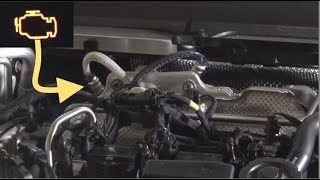
- Replacing the catalytic converter. While a failing converter can sometimes cause O2 sensor codes, P0136 points to a circuit/sensor issue, not converter efficiency (which is typically code P0420). 🎬 Watch this video on P0136 causes and fixes
Most Likely Causes
- Failed Bank 1, Sensor 2 Oxygen Sensor 🔴 High Probability Oxygen sensors are wear items that degrade over time due to intense heat and exhaust contaminants. The internal heater element is a common failure point, which can trigger this code and often P0037 simultaneously. A video of a nearly new 2023 S90 with only 1,200 miles showed this exact failure, indicating it can happen at any time. 🎬 Watch a real-world diagnostic of this exact failure
How to confirm: Use an OBD-II scanner with live data capability. A healthy downstream O2 sensor (Sensor 2) should show a relatively stable voltage, typically between 0.6-0.8V. If the voltage is stuck low (near 0.1V), stuck high (near 0.9V), erratic, or mirroring the rapid fluctuations of the upstream Sensor 1, the sensor is likely bad. A more definitive test is to measure the resistance of the sensor's heater circuit; a reading of infinite resistance (open circuit) confirms failure.
Typical fix: Replace the Bank 1, Sensor 2 oxygen sensor. This is the middle sensor in the exhaust system, located just after the first catalytic converter.
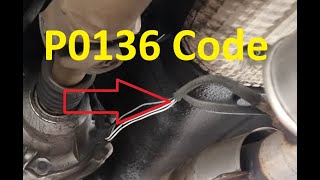
Est. part cost: $95-$250 - Damaged Wiring or Corroded Connector 🟡 Medium Probability The sensor wiring runs under the vehicle and is exposed to heat, moisture, and road debris. The plastic connector can become brittle and fail, or the wires can be damaged or melted by the hot exhaust components.
How to confirm: Visually inspect the entire wiring harness from the O2 sensor to its connection point. Look for melted or frayed wires, and check for corrosion, moisture, or pushed-out pins inside the connector. A multimeter can be used to check for continuity and proper voltage/ground at the connector to rule out a break in the circuit.
Typical fix: Repair the damaged section of wiring or clean the connector terminals. If the connector itself is damaged, it may need to be replaced with a pigtail connector.
Est. part cost: $10-$50 - Exhaust Leak ⚪ Low Probability Exhaust components can develop leaks at gaskets or welds due to rust and vibration. A leak located before the sensor can introduce outside air into the exhaust stream, which disrupts the sensor's ability to get an accurate reading and triggers the code.
How to confirm: Listen for hissing or ticking sounds from the exhaust, especially when the engine is cold. A mechanic can perform a smoke test to precisely locate any leaks. Soot trails around exhaust flanges are also a tell-tale sign of a leak.
Typical fix: Replace the leaking gasket or repair the leaking section of the exhaust pipe.
Est. part cost: $20-$200
Rare But Worth Checking
- Faulty Engine Control Module (ECM): This is very rare. Before considering ECM replacement, all other possibilities (sensor, wiring, exhaust leaks) must be exhaustively ruled out. The ECM is an expensive component and often requires programming by a dealer or specialist.
- ECM Software Glitch: Occasionally, Volvo releases software updates for the ECM to address various performance and emissions-related bugs. It is worth checking with a dealer if any updates are available for your vehicle, as this can sometimes resolve intermittent or unusual sensor codes.
- Blown Fuse: The heater circuit for the oxygen sensors is protected by a fuse. On the related XC90 platform, this is Fuse 14 (a 20A fuse) in the engine compartment fuse box. Check this fuse before replacing parts.
Diagnosis Steps
- Read Codes: Use an OBD-II scanner to confirm P0136 and check for any other related codes, like P0037 or P0140. Note if the scanner provides a sub-code (e.g., P0136-00).
- Check Fuses: Inspect the fuse for the oxygen sensor heater circuit. On the related XC90 platform, this is Fuse 14 (20A) in the engine compartment fuse box.
- Visual Inspection: Raise the vehicle safely. Inspect the Bank 1 Sensor 2 (middle) O2 sensor and its wiring for any obvious damage, such as frayed wires, melted insulation, or a damaged connector.
- Check for Exhaust Leaks: With the engine running, carefully check for any audible leaks in the exhaust system, particularly between the engine and the O2 sensor. Look for soot trails near flanges.
- Analyze Live Data: Using a capable scanner, monitor the live voltage data from Bank 1 Sensor 2. A healthy sensor should show a steady voltage (typically around 0.6-0.8V). If it's stuck low (near 0.1V), stuck high (near 0.9V), or shows no activity, the sensor is likely faulty.
- Test the Heater Circuit: Disconnect the sensor and use a multimeter set to Ohms to measure the resistance between the two heater wires on the sensor side. A healthy sensor on a similar platform shows 55-62 Ohms. An infinite resistance reading (OL) indicates a failed heater and a bad sensor.
- Test the Circuit: If the sensor tests good, use a multimeter to check for proper reference voltage and ground at the sensor's connector coming from the ECM. This will help rule out a wiring issue.
- Replace the Sensor: If the sensor is confirmed to be the fault, replace it. Use a 22mm (or 7/8") oxygen sensor socket. Be sure to apply anti-seize compound to the threads of the new sensor if not pre-applied. 🎬 See how to replace the rear oxygen sensor
Parts You'll Likely Need
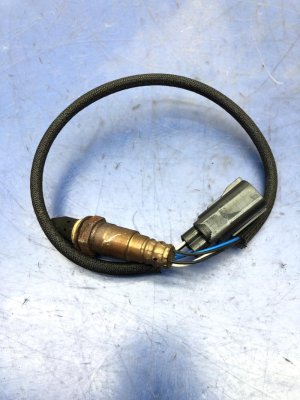
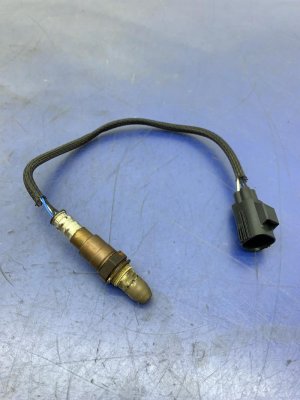
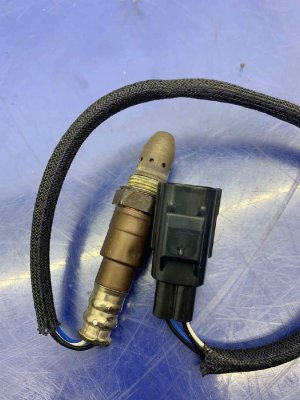
- Oxygen Sensor (Bank 1, Sensor 2)
(OEM #31439622)— This is the component that directly reports the data that triggers the P0136 code. Its internal heating element or sensing element failing is the most frequent cause.
Trusted brands: Genuine Volvo, Denso (OEM supplier, aftermarket part number DOX-0642 is a cross-reference), Bosch
OEM price range: $150-$250
Aftermarket price range: $95-$150
Related Codes That Often Appear With This One
- P0037 — This code indicates 'Heater Control Circuit Low (Bank 1 Sensor 2)'. Since the heater is part of the O2 sensor assembly, this code commonly appears with P0136 when the sensor's internal heater fails.
- P0140 — This code means 'O2 Sensor Circuit No Activity Detected (Bank 1 Sensor 2)'. It often points to a completely failed sensor or a total break in the wiring, and can be seen alongside P0136.
Platform-Specific Known Issues
- Correct Sensor Identification is Key: The SPA platform Volvos use a three-sensor exhaust layout. P0136 refers specifically to the middle sensor. Many DIYers and even some shops may mistakenly replace the rearmost sensor (Sensor 3) or the front sensor (Sensor 1), failing to resolve the code. It is critical to confirm you are replacing the correct sensor.
Mechanic-Grade Diagnostic Values
- O2 Sensor Heater Circuit Resistance (at the sensor connector) — expected: 55 - 62 Ohms. Failure: Infinite resistance (Open Loop / OL) indicates a failed heater element.
- Downstream O2 Sensor Voltage (Live Data, warm engine, steady RPM) — expected: Relatively stable voltage between 0.6V and 0.8V.. Failure: Voltage stuck low (~0.1V), stuck high (~0.9V), or fluctuating rapidly like the upstream sensor.
Hidden / Shadow Codes Worth Checking
- P0136-00: The '-00' is a sub-code often seen on Volvo-specific scanners like VIDA. While the exact definition for this specific code isn't available, it typically provides more granular detail about the fault condition (e.g., signal amplitude, frequency) than the generic P-code alone. (see via Volvo VIDA/DICE diagnostic tool or a high-end professional scan tool with manufacturer-specific software.)
Scan Tool Commands That Help
- Volvo VIDA: Fault Trace / Diagnostics — To read manufacturer-specific DTCs (including sub-codes) and follow guided diagnostic procedures for P0136.
- Volvo VIDA or equivalent professional scanner: Reset ECM Adaptive Values — After replacing an oxygen sensor or fixing a significant exhaust/intake leak, resetting adaptations can help the ECM learn the new parameters faster.
Wiring & Ground Locations
- Engine Compartment Fuse Box, Fuse 14 — Located in the main fuse box in the engine compartment.. On the closely related 2011 XC90 platform, this 20A fuse powers the heated oxygen sensors. A blown fuse will cause the heater circuit to fail, triggering codes like P0136 and P0037. This is a critical first check.
- Strut Tower Ground Points — On both the driver and passenger side strut towers in the engine bay, there are several ground wires bolted to the chassis.. While not specific to the O2 sensor circuit, poor chassis grounds can cause a wide range of difficult-to-diagnose electrical issues and sensor faults. Ensure these connections are clean and tight. One of the main engine-to-chassis grounds connects here.
Real Owner Repair Stories
- VolvoForums user 'gregorek' (2016 Volvo XC90 T6 (SPA Platform-mate)) — Check Engine Light with codes for an upstream O2 sensor.
❌ Tried (didn't work) Initial diagnosis was confusing due to sensor locations.
✅ What actually fixed it The user diagnosed a failed upstream O2 sensor by measuring the heater circuit resistance and finding it was an open circuit (infinite resistance), while a known-good sensor measured 55-62 ohms. The sensor was replaced by a mechanic for 1.5 hours of labor ($160 CAD), which resolved the Check Engine Light.
OEM Part Supersession History
31439622→May be part of a group of interchangeable or superseded numbers including 31439481, 31480731, 31670213, and 32264007.— Part revisions or consolidation by the manufacturer.
Heads up: Always verify the correct part number for your specific VIN with a dealer or reliable parts catalog, as there are multiple sensors on the vehicle that look similar. The Denso cross-reference is DOX-0642.
Diagnostic Flowchart
Other Known Issues on This Vehicle
Issues unrelated to this code that are worth knowing about as an owner of this generation:
- Excessive Oil Consumption (Piston Ring Defect) 🔴 High — Common on early 2.0L 'Drive-E' engines, particularly 2015-2016 model years, but can affect later years. Onset can be from 40k-80k miles. (Ref: Volvo TSB TJ 31233 covers this issue, which involves replacing the pistons and rings.)
- Brake Squeal / Judder / Vibration 🟠 Medium — A widely reported issue across the SPA platform. Owners report squealing during light braking or rattling/clunking noises over bumps. (Ref: Volvo has issued multiple Technical Journals (e.g., TJ 34246, TJ 36169) with diagnostic guidelines and fixes that may include replacing pads, rotors, or applying anti-squeal measures.)
- Rearview Camera / Sensus Screen Failure 🟡 Low — Widespread issue where the center infotainment screen fails to display the rearview camera image, or the screen goes blank entirely. (Ref: Volvo has issued recalls (e.g., NHTSA 25V282000, Volvo recall R10320) to address this with a software update.)
- Transmission Control Module (TCM) Software Glitches 🟠 Medium — Owners of 2017-2018 models in particular report transmission hesitation, rough shifting, or delayed gear engagement, especially at low speeds. (Ref: No specific TSB number found, but the issue is often attributed to software calibration, with dealer-performed updates reportedly improving the condition.)
- Burst PowerPulse Hose (Diesel Models) 🟠 Medium — Affects D5 diesel engines (less common in the US). A burst hose in the PowerPulse system, which uses compressed air to reduce turbo lag, causes a significant loss of low-end power.
Used vs. New Parts: Buying Guide for This Vehicle
When a used part is the smart pick: For this repair, a used part is never recommended. Oxygen sensors are wear items with a finite lifespan, and their performance degrades over time. A used sensor could fail shortly after installation or provide inaccurate readings, causing persistent issues.
What to inspect on the donor part:
- Not applicable as used sensors are not recommended.
OEM-only on this vehicle (don't cheap out):
- While not strictly 'OEM-only', using a Genuine Volvo sensor or one from the original equipment manufacturer (like Denso) is highly recommended to ensure compatibility and proper performance with the sensitive Volvo engine management system.
Aftermarket brands forum-validated for this vehicle:
- Denso (often the OEM supplier)
- Bosch
Brands owners have reported issues with on this vehicle:
- Unnamed or generic 'white-box' brands from online marketplaces. These often use lower-quality components that can fail quickly or not meet the specific voltage and resistance requirements of the Volvo ECM, leading to a repeat of the P0136 code.
Real Owner Stories
Aggregated from forums and TSBs cited above. Mileages and costs reflect what owners reported in those sources.
2023 Volvo S90 — 1200 miles
Symptoms: Check Engine Light illuminated with codes P0037, P0136, and P0140.
What fixed it: Replacement of the middle oxygen sensor (Bank 1, Sensor 2).
Source hint: YouTube - '2023 Volvo S90 Check Engine Light P0037 P0136 P0140'
2018 Volvo XC60 T6
Symptoms: Rear O2 sensor codes and required replacement.
What fixed it: Replacement of the rear O2 sensor.
Cost: $1000-$1100
Source hint: Reddit r/MechanicAdvice - 'Replace faulty O2 Sensor on 2018 Volvo XC60'
2016 Volvo XC90
Symptoms: Check engine light; heater circuit testing showed infinite resistance (open circuit).
What fixed it: Replacement of the oxygen sensor by a mechanic after confirming the heater circuit was bad (good sensor should be 55-62 ohms).
Source hint: VolvoForums - 'XC90 2016 o2 sensor - how much service ?'
Related OBD-II Codes
Frequently Asked Questions
Which oxygen sensor is responsible for the P0136 code on my Volvo S90?
Can a low-mileage 2023 S90 really have a failed O2 sensor already?
Is there a specific fuse I should check for the O2 sensor heater on the S90?
What should the resistance reading be for a healthy O2 sensor on this platform?
My S90 has a blank Sensus screen and a P0136 code; are they related?
Could my S90's oil consumption issue be causing the P0136 code?
Helpful Videos

We Have This Part in Stock

The information in this article is provided for general reference and educational purposes only. Vehicle specifications, procedures, and part compatibility can vary by production date, trim level, and region. Always consult your vehicle's factory service manual and verify part numbers before purchasing or performing repairs. Safety-critical components such as airbags, seat belts, and braking systems should be installed by a qualified professional.
- Volvo S90:
- 🎬 Helpful Videos
- 🛍️ Shop This Part
- What's Unique About the 2017-2024 Volvo S90
- Symptoms You May Notice
- Most Likely Causes
- Rare But Worth Checking
- Diagnosis Steps
- Parts You'll Likely Need
- Related Codes That Often Appear With This One
- Platform-Specific Known Issues
- Mechanic-Grade Diagnostic Values
- Hidden / Shadow Codes Worth Checking
- Scan Tool Commands That Help
- Wiring & Ground Locations
- Real Owner Repair Stories
- OEM Part Supersession History
- Diagnostic Flowchart
- Other Known Issues on This Vehicle
- Used vs. New Parts: Buying Guide for This Vehicle
- Real Owner Stories
- 2023 Volvo S90 — 1200 miles
- 2018 Volvo XC60 T6
- 2016 Volvo XC90
- Related OBD-II Codes
- Frequently Asked Questions
- 🎟️ Get 5% Off