

P0136 on 2005-2010 Ford Mustang 4.6L V8: O2 Sensor Circuit Malfunction Causes and Fixes
For the 2005-2010 Mustang GT, code P0136 almost always points to a bad downstream oxygen sensor on the passenger side (Bank 1, Sensor 2). A replacement Motorcraft or quality aftermarket sensor costs between $50 and $90 and is a straightforward DIY fix for most owners. Before replacing, a quick visual check of the under-car wiring for melting or damage is highly recommended.
- P0136 on your Mustang GT means the passenger-side, post-catalytic converter O2 sensor has a circuit problem.
- The most likely fix is to simply replace the oxygen sensor itself, a common wear item.
- Before buying parts, always perform a quick visual inspection of the sensor's wiring for obvious melting or damage, as this is a known weak point.
- If you have an aftermarket exhaust, the code may be caused by the high-flow cats and require a tune or sensor spacers, not a new sensor.
What's Unique About the 2005-2010 Ford Mustang
On the S197 Mustang with the 4.6L V8, this code is a very common and straightforward issue, typically related to sensor age or wiring damage. One notable issue is that owners who have installed aftermarket catted mid-pipes (like an X-pipe or H-pipe) may see this code because the high-flow catalysts don't operate at the same temperature or efficiency as the factory units, causing the sensor to report an issue. In these modified cases, a new sensor won't fix the problem; it requires a specific tune to adjust the sensor's expected parameters or the use of MIL eliminators (O2 sensor spacers or 'non-foulers').
Generation note: This guide covers the Ford Mustang S197 generation. While the 2010 model year received a significant body refresh, the 4.6L 3V V8 engine and its associated emissions systems are fundamentally the same as the 2005-2009 models regarding this fault code.
Symptoms You May Notice
- Check Engine Light is on
- Failure to pass an emissions inspection
- Potentially decreased fuel efficiency
- In rare cases, a rotten egg (sulfur) smell from the exhaust
- Rough or hesitant idling (uncommon for a downstream sensor failure)
- Replacing the catalytic converter. A P0136 code points to a sensor circuit fault, not converter efficiency. A bad converter typically triggers a P0420 code. Always fix sensor circuit codes first.
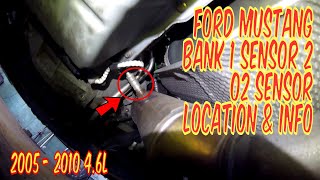
- Replacing the wrong O2 sensor. 🎬 Watch: Locate the Bank 1 Sensor 2 on your Mustang Ensure you are replacing Bank 1 (passenger side) Sensor 2 (downstream/post-cat). Bank 2 is the driver's side.
Most Likely Causes
- Faulty Bank 1, Sensor 2 Oxygen Sensor 🔴 High Probability Oxygen sensors are wear-and-tear items that degrade over time and with mileage. Given the age of this vehicle range (15+ years), sensor failure due to simple aging is the most probable cause.
How to confirm: Using an OBD-II scanner with live data, observe the B1S2 voltage with the engine fully warmed up and at a steady cruise (around 2000 RPM). A healthy downstream sensor will show a relatively stable voltage, typically between 0.5V and 0.8V. If the voltage is stuck low (under 0.2V), high (over 0.9V), inactive (flatline), or fluctuates rapidly like the upstream sensor, it has failed.
Typical fix: Replace the Bank 1, Sensor 2 (passenger side, downstream) oxygen sensor. An O2 sensor socket is highly recommended for removal. 🎬 See this walkthrough for replacing O2 sensors on 05-14 Mustangs
Est. part cost: $50-$90 - Damaged Wiring or Connector 🟡 Medium Probability The sensor and its wiring are located under the car and are exposed to road debris, water, and extreme exhaust heat. The harness can be routed close to the transmission and exhaust, and retaining clips can break, allowing wires to melt, fray, or chafe. The connector itself can also fill with moisture and corrode.
How to confirm: Visually inspect the entire wiring harness from the O2 sensor to where it connects to the main harness above the transmission. Look for melted plastic, chafed wires, or any signs of physical damage. Unplug the connector and check for corrosion, moisture, or bent pins.
Typical fix: Repair the damaged section of the wiring harness or replace the connector pigtail. Secure the harness away from the hot exhaust pipe using zip ties.
Est. part cost: $15-$40 - Exhaust Leak ⚪ Low Probability Exhaust manifold gaskets can fail, and clamps or pipe welds can crack over time, especially at the catalytic converter flanges. An exhaust leak upstream of the sensor can introduce outside air, causing an inaccurate reading.
How to confirm: Listen for a ticking or hissing sound from the exhaust, especially when the engine is cold. You can also use a smoke machine to feed smoke into the exhaust and watch for leaks between the engine and the downstream O2 sensor. A shop can perform this test if you don't have a smoke machine.
Typical fix: Tighten loose clamps or replace failed gaskets. A cracked pipe may need to be welded.
Est. part cost: $5-$50
Rare But Worth Checking
- Powertrain Control Module (PCM) Failure: This is extremely rare. The PCM should only be considered after all other possibilities, including the sensor, wiring, and exhaust system, have been thoroughly ruled out by a professional. A PCM reflash for other issues could potentially be related.
- Internal Engine Contamination: While rare for the Mustang, records for other Ford models such as NHTSA ODI #11539323 describe instances where P0136 was retrieved alongside other codes after a dealer determined that coolant had intruded into the engine block.
Diagnosis Steps
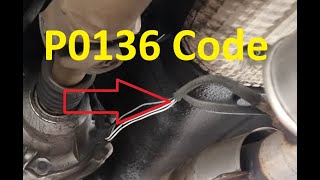
- Connect an OBD-II scanner and confirm P0136 is the active code. 🎬 Watch: A breakdown of P0136 causes and common fixes Note any other codes present, especially P0137, P0138, or P0141.
- Perform a thorough visual inspection of the Bank 1 Sensor 2 oxygen sensor (passenger side, after the catalytic converter). Check the wiring for any signs of melting, chafing, or physical damage. Ensure the harness is properly secured and not touching the exhaust or transmission.
- Inspect the electrical connector for the sensor. Unplug it and check for any corrosion, moisture, or damage to the pins. Clean with electrical contact cleaner if necessary.
- With the engine running, listen for any audible exhaust leaks (hissing or ticking sounds) between the engine and the sensor.
- Use a scan tool with live data to monitor the voltage of the Bank 1 Sensor 2 (B1S2). With the engine fully warmed up at a steady 2000 RPM, the voltage should be relatively stable between 0.5V and 0.8V. If it's stuck low (<0.2V), high (>0.9V), or inactive, the sensor is likely faulty.
- If the sensor and wiring appear good, test the heater circuit for proper resistance using a multimeter. An open circuit or very high resistance indicates a failed heater element within the sensor, warranting replacement.
- If an exhaust leak is suspected but not visible, a professional smoke test can definitively identify any hard-to-find leaks.
- If replacing the sensor, use a 22mm or 7/8" O2 sensor socket and apply anti-seize compound to the threads of the new sensor before installation.
Parts You'll Likely Need
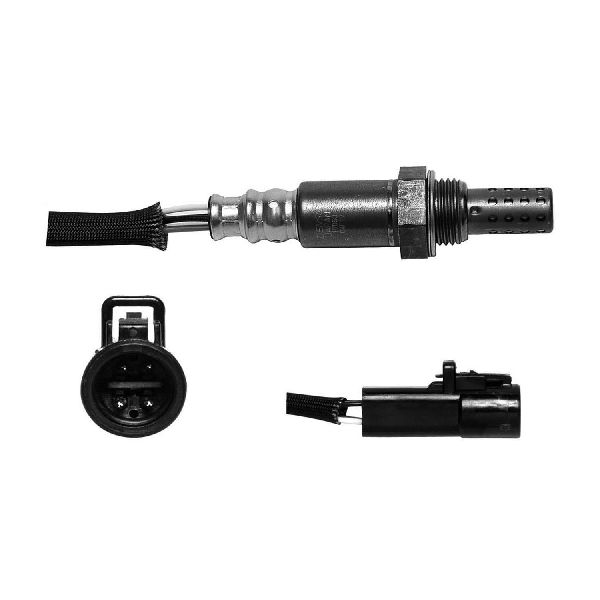
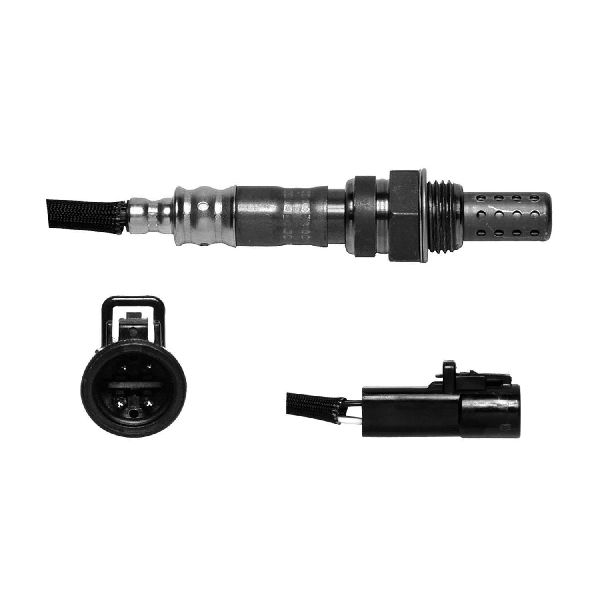
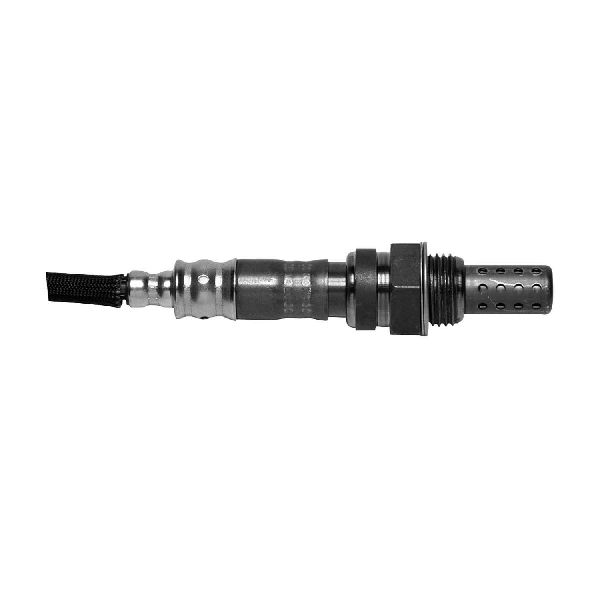
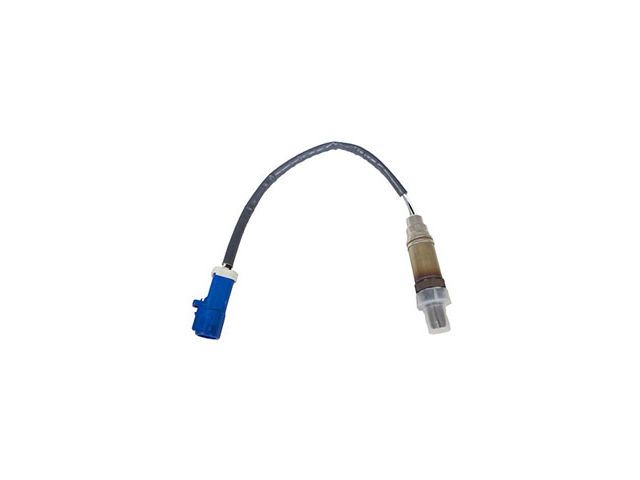
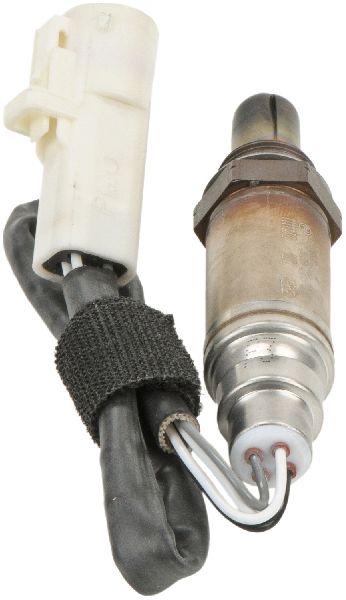
- Oxygen Sensor (Bank 1, Sensor 2)
(OEM #5L8Z-9F472-BA (Ford), DY-1401 (Motorcraft))— This is the component that has failed and triggered the code in the vast majority of cases. The original sensor has a finite lifespan.
Trusted brands: Motorcraft, NTK, Denso, Bosch
OEM price range: $65-$90
Aftermarket price range: $50-$75 - O2 Sensor Socket Set — A specialized socket with a slit for the wire makes removing and installing the O2 sensor much easier without damaging the wiring.
Trusted brands: Lisle, OEMTools, GearWrench
Aftermarket price range: $15-$30
Related Codes That Often Appear With This One
- P0137 — This code indicates O2 Sensor Circuit Low Voltage, which is a more specific version of the general P0136 circuit malfunction.
- P0138 — This code indicates O2 Sensor Circuit High Voltage, another specific fault that falls under the general P0136 malfunction.
- P0141 — This code indicates a fault in the sensor's internal heater circuit. Since the heater and sensor elements are part of the same component, a P0141 often appears with a P0136, confirming the sensor itself needs replacement.
Platform-Specific Known Issues
- Wiring Harness Chafing/Melting: On S197 Mustangs, the O2 sensor wiring harness runs over the top of the transmission bellhousing. The harness for Bank 1 Sensor 1 and Bank 2 Sensor 1 is particularly susceptible to breaking at the point where it is secured, due to engine and transmission movement. While P0136 is for Sensor 2, inspecting all O2 sensor wiring in this area is prudent as they are bundled together. A user on YouTube documented this exact failure mode on two separate V6 Mustangs, indicating a potential design flaw in harness routing and strain relief.
Mechanic-Grade Diagnostic Values
- O2 Sensor Heater Element Resistance — expected: 3 to 30 Ohms, with 5-10 Ohms being typical for a healthy sensor on this vehicle.. Failure: Infinite resistance (open circuit) or near-zero resistance (short circuit) indicates a failed heater element.
- Heater Circuit Power Supply (at harness connector) — expected: 10V to 12V+ (Battery Voltage) with Key On, Engine Off (KOEO) between the power and ground wires.. Failure: 0V indicates a blown fuse (check fuse #45 in the underhood fuse box), a bad relay, or an open in the power wire.
- PCM Reference Voltage (at harness connector) — expected: Approximately 0.45V on the signal return/reference wire with the sensor disconnected and Key On, Engine Off (KOEO).. Failure: Significantly higher or lower voltage points to a wiring issue or a problem with the PCM itself.
Hidden / Shadow Codes Worth Checking
- Mode $06, Test ID $05 (or $85), Component ID $12 (or similar): This refers to the On-Board Diagnostic Monitor Test Results for the O2 Sensor Monitor Bank 1 Sensor 2. It provides raw data from the PCM's self-test, showing if the sensor's response rate and voltage are within the manufacturer's specified MIN/MAX limits. (see via Requires an advanced OBD-II scan tool capable of displaying Mode $06 data. A test value outside the specified range can confirm a failing sensor even before a DTC is set.)
Scan Tool Commands That Help
- Ford IDS (Integrated Diagnostic System) or equivalent professional scanner: HO2S Heater Active Command — This bidirectional command allows a technician to manually turn the O2 sensor's heater circuit on and off. It is used to verify the integrity of the heater circuit wiring, relay, and the PCM's driver circuit, isolating the problem between the wiring and the sensor itself.
Wiring & Ground Locations
- B1S2 Signal Wires — In the 4-wire connector for the passenger-side downstream O2 sensor.. The specific wire colors for the Bank 1 Sensor 2 signal are White/Black and Red/Light Green. The other two wires, typically Red/Yellow (Heater Power) and Grey/Red (Heater Ground), are common across multiple sensors. Knowing the correct signal wires is crucial for accurate testing at the connector.
- G103 — On the passenger side of the radiator core support, near the hood prop.. This is a primary ground point for the O2 sensor circuits. Corrosion or a loose connection at G103 can introduce resistance into the ground path, causing erratic sensor readings and triggering circuit codes like P0136.
- G104 / G201 — G104 is on the driver's side fender apron behind the battery. G201 is in the passenger kick panel area, near the PCM.. These are main ground points for the Powertrain Control Module (PCM). A poor ground connection at either of these locations can cause a host of unpredictable electronic issues, including incorrect interpretation of sensor data, potentially leading to a P0136 code.
Real Owner Repair Stories
- StangNet Forums user report (2006 Mustang GT) — Car would bog or choke on acceleration, eventually setting a P2197 code (O2 Sensor Stuck Lean, Bank 2 Sensor 1).
❌ Tried (didn't work) Replaced intake boot, Cleaned throttle body, Replaced both upstream O2 sensors with new NTK units
✅ What actually fixed it After the new sensor didn't fix the issue, a continuity test on the wiring harness revealed an open circuit. The user found the wire for the sensor signal had melted to the top of the transmission case. Repairing the melted section of the wire by splicing in a new piece resolved the code and drivability issues. This highlights the importance of inspecting the harness over the transmission, as noted in Pass 2.
OEM Part Supersession History
3S4Z-9F472-BA→5L8Z-9F472-BA— Part has been updated by Ford. The new part is the current service replacement.
Heads up: The parts are interchangeable. 5L8Z-9F472-BA is the correct replacement for the earlier part number.
Model Year Variations Within This Range
- 2005-2010: No significant variations have been identified for the Bank 1, Sensor 2 oxygen sensor, its wiring, or the common causes of code P0136 within this model year range. The 4.6L 3V powertrain and emissions components remained consistent regarding this fault.
Diagnostic Flowchart
Other Known Issues on This Vehicle
Issues unrelated to this code that are worth knowing about as an owner of this generation:
- Two-Piece Spark Plug Breakage 🔴 High — Very common on engines built before mid-2008 when attempting the first spark plug change, typically around 60,000-100,000 miles. Carbon buildup on the extended plug tip causes it to seize in the head. (Ref: TSB 08-7-6 provides a specific removal procedure to minimize breakage.)
- Passenger Footwell Water Leak 🟠 Medium — Extremely common. Caused by clogged cowl drains under the passenger-side windshield wiper, allowing water to overflow into the cabin via the cabin air filter opening. Can damage the Smart Junction Box (SJB) located in the passenger kick panel. (Ref: TSB 08-26-7 details the diagnosis and repair for various water leak paths in the front floor area.)
- Plastic Thermostat Housing Leak 🟠 Medium — Common failure item, especially on higher mileage vehicles. The plastic housing can crack or the gasket can fail, causing a coolant leak often misdiagnosed as a water pump issue. The leak typically pools in the engine valley.
- Alternator Failure 🟠 Medium — A widely reported issue for this generation. The alternator can fail prematurely, sometimes due to its location and exposure to heat. Symptoms include a battery light, dimming headlights, and eventual no-start condition.
- TR3650 Manual Transmission Shift Feel 🟡 Low — Common complaint of a raspy feel or clash when shifting into 2nd and/or 3rd gear, particularly when cold. (Ref: TSB 09-09-06 addresses this issue.)
Used vs. New Parts: Buying Guide for This Vehicle
When a used part is the smart pick: A used part is almost never recommended for the oxygen sensor itself, as it is a wear item with a finite lifespan. However, sourcing a used wiring harness connector pigtail from a salvage yard is a smart and cost-effective choice if the original plastic connector is broken or the wires are damaged close to the plug.
Donor-vehicle mileage cap: roughly under 100000 miles for the part to have meaningful remaining life.
What to inspect on the donor part:
- For a wiring pigtail: ensure the plastic is not brittle or cracked.
- Check that the connector's locking tab is intact and functional.
- Inspect the pins inside the connector for any signs of green or white corrosion.
- Ensure there is at least 4-6 inches of wire attached to the pigtail for easier splicing.
OEM-only on this vehicle (don't cheap out):
- No parts for this specific repair are considered 'OEM-only'. Quality aftermarket sensors are widely accepted.
Aftermarket brands forum-validated for this vehicle:
- NTK (often the original OEM supplier)
- Denso
- Motorcraft (OEM)
- Bosch
Brands owners have reported issues with on this vehicle:
- Unbranded, 'white-box' sensors from online marketplaces like eBay or Amazon should be avoided due to high rates of premature failure and inaccurate readings.
Real Owner Stories
Aggregated from forums and TSBs cited above. Mileages and costs reflect what owners reported in those sources.
2006 Ford Mustang 4.6L V8
Symptoms: Check Engine Light on with codes P0135 and P0136.
What fixed it: Checked for an exhaust leak or a bad sensor, specifically inspecting the Bank 1 downstream sensor wiring harness for chafing.
Source hint: StangNet.com (July 6, 2006) thread titled 'Codes Read: PO135 and PO136 ring up...questions inside?'
2005-2010 Ford Mustang V6
Symptoms: O2 sensor wiring harness failure due to engine and transmission movement.
What fixed it: Repaired the wiring harness where it was secured over the top of the transmission bellhousing, as the harness was susceptible to breaking at that point.
Source hint: YouTube documentation cited in 'Wiring Harness Chafing/Melting' section
Documented NHTSA Reports
Ford Manufacturer Record
Symptoms: Check engine light illuminated with multiple DTCs including P0136, P0756, P1450, and P0102.
Findings: As described in NHTSA ODI #11539323, a dealer diagnosis determined that coolant had intruded into the engine block, necessitating an engine replacement.
Source hint: NHTSA ODI #11539323
Related OBD-II Codes
Frequently Asked Questions
Where is the Bank 1 Sensor 2 oxygen sensor located on my 2005-2010 Mustang 4.6L V8?
I have an aftermarket catted exhaust on my Mustang; could that be causing my P0136 code?
Is there a specific tool I should use to replace the O2 sensor on my 4.6L Mustang?
Could the common passenger footwell water leak on my S197 Mustang cause electrical codes like P0136?
Does TSB 08-7-6 relate to my O2 sensor failure?
My Mustang's O2 sensor wiring looks melted; is this a known issue?
Helpful Videos
We Have This Part in Stock


The information in this article is provided for general reference and educational purposes only. Vehicle specifications, procedures, and part compatibility can vary by production date, trim level, and region. Always consult your vehicle's factory service manual and verify part numbers before purchasing or performing repairs. Safety-critical components such as airbags, seat belts, and braking systems should be installed by a qualified professional.
- Ford Mustang:
- 🎬 Helpful Videos
- 🛍️ Shop This Part
- What's Unique About the 2005-2010 Ford Mustang
- Symptoms You May Notice
- Most Likely Causes
- Rare But Worth Checking
- Diagnosis Steps
- Parts You'll Likely Need
- Related Codes That Often Appear With This One
- Platform-Specific Known Issues
- Mechanic-Grade Diagnostic Values
- Hidden / Shadow Codes Worth Checking
- Scan Tool Commands That Help
- Wiring & Ground Locations
- Real Owner Repair Stories
- OEM Part Supersession History
- Model Year Variations Within This Range
- Diagnostic Flowchart
- Other Known Issues on This Vehicle
- Used vs. New Parts: Buying Guide for This Vehicle
- Real Owner Stories
- 2006 Ford Mustang 4.6L V8
- 2005-2010 Ford Mustang V6
- Documented NHTSA Reports
- Ford Manufacturer Record
- Related OBD-II Codes
- Frequently Asked Questions
- 🎟️ Get 5% Off