

P0135 on 1998-2012 Nissan Altima: O2 Sensor Heater Circuit Causes and Fixes
This code almost always means the front oxygen sensor (Bank 1, Sensor 1) has failed. The internal heater that warms it up has broken. Replacing the sensor is the usual fix. Before buying parts, check the A/F sensor fuse. Expect to pay $50-$120 for a quality aftermarket part (Denso, NTK) or $150-$250 for an OEM sensor. It's a DIY-friendly job on 4-cylinder engines, but very difficult on V6 models due to the sensor's location.
- P0135 points directly to a problem with the heater inside the front oxygen sensor (Bank 1, Sensor 1).
- The most likely fix is replacing the sensor itself, but always check the fuse first to save time and money.
- On V6 models, Bank 1 is the set of cylinders near the firewall, making the sensor harder to access.
- Driving with this code will hurt your fuel economy and could eventually damage your catalytic converter.
- You will need a special O2 sensor socket (a 22mm or 7/8" slotted socket) to perform the replacement.
What's Unique About the 1998-2012 Nissan Altima
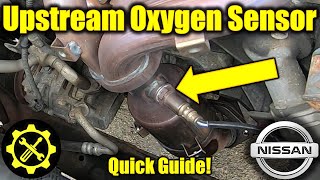
For the V6 engine (VQ35DE) found in the 2002-2012 Altima, Nissan designates 'Bank 1' as the cylinder bank located against the firewall, which is notoriously inaccessible. 🎬 See how to access and replace the hidden Bank 1 sensor. Replacing this sensor often requires removing the upper intake manifold for access, making it a much more involved job than on 4-cylinder models or other vehicles. For 4-cylinder models (KA24DE, QR25DE), there is only one bank, and the sensor is typically located on the front of the exhaust manifold, making identification and replacement straightforward.
Generation note: The 1998-2012 year range covers three Nissan Altima generations, each with different engines and sensor configurations: - Second Generation (L30, 1998-2001): Used a 2.4L 4-cylinder (KA24DE) engine. It has one bank, with Sensor 1 located on the exhaust manifold. - Third Generation (L31, 2002-2006): Offered a 2.5L 4-cylinder (QR25DE) and a 3.5L V6 (VQ35DE). The 2.5L has one bank. The 3.5L V6 has two banks; Bank 1 is the bank of cylinders closer to the firewall. Fuse #14 (15A) in the interior fuse panel is often the source for the heater circuit. - Fourth Generation (L32, 2007-2012): Also offered 2.5L 4-cylinder and 3.5L V6 engines with the same sensor layout as the third generation. 🎬 Watch: Step-by-step upstream O2 sensor replacement for 2.5L models. Fuse locations for the heater circuit may differ from the 3rd gen, often being in the under-hood IPDM, labeled as 'A/F HTR' or similar.
Symptoms You May Notice
- Check Engine Light is on.
- Reduced fuel economy.
- Rough idle or poor engine performance, especially when the engine is cold.
- Vehicle may fail an emissions test.
- Black or foul-smelling exhaust from an overly rich fuel mixture.
- Replacing the wrong oxygen sensor (e.g., replacing the downstream Sensor 2 instead of the upstream Sensor 1, or replacing the Bank 2 sensor on a V6).
- Replacing the sensor without first checking for a blown fuse, leading to the new sensor not working and the code returning immediately.
Most Likely Causes
- Failed Bank 1, Sensor 1 Oxygen Sensor 🔴 High Probability The internal heater element is a common failure point due to constant, extreme heat cycles and age. Using low-quality aftermarket sensors is also a frequent cause of repeat failures, as their heater resistance may not match OEM specifications.
How to confirm: Disconnect the sensor and measure the resistance across the two heater circuit wires (usually the two wires of the same color). A good heater will have low resistance, typically between 2.5 and 4 Ohms for this specific vehicle. A failed heater will show very high resistance or an open circuit (infinite resistance).
Typical fix: Replace the Bank 1, Sensor 1 oxygen sensor. Use a quality brand like Denso, NTK, or an OEM part. Apply anti-seize compound to the threads of the new sensor before installation. An O2 sensor socket is often required.
Est. part cost: $50-$250 - Blown Fuse for O2 Sensor Heater Circuit 🟡 Medium Probability A short in the sensor's heater element or its wiring harness (e.g., melting on the exhaust) can cause the corresponding fuse to blow as a protective measure.
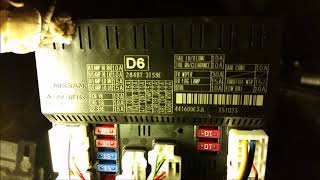
How to confirm: Locate and inspect the fuse for the A/F sensor heater. On 2002-2006 models, this is often a 15A fuse in the interior fuse panel (fuse #8 on a 2006 Altima, sometimes labeled FI SUB fuse #14). On 2007-2012 models, check the 15A fuse in the under-hood Intelligent Power Distribution Module (IPDM), often labeled 'A/F HTR'.
Typical fix: Replace the blown fuse with a new one of the same amperage. If the new fuse blows immediately, it indicates a persistent short circuit in the wiring or the sensor itself that must be found and repaired.
Est. part cost: $1-$5 - Damaged Wiring or Connector ⚪ Low Probability Wiring is exposed to high heat from the exhaust and can become brittle, melt, or chafe. The connector can also accumulate moisture or corrosion, leading to high resistance.
How to confirm: Visually inspect the wiring harness leading to the O2 sensor for any signs of melting, chafing, or breaks. Check the connector for corrosion, moisture, bent pins, or a loose connection.
Typical fix: Repair the damaged section of wire or clean/replace the connector. Ensure the wiring is properly secured away from hot exhaust components.
Est. part cost: $5-$50
Rare But Worth Checking
- Faulty Engine Control Module (ECM): This is extremely rare. The ECM's internal driver circuit for the O2 sensor heater can fail. This should only be considered after all other possibilities (sensor, fuse, wiring) have been definitively ruled out.
- Faulty Engine Coolant Temperature (ECT) Sensor: An incorrect reading from the ECT sensor can confuse the ECM, which uses coolant temperature as a parameter when testing the O2 heater circuit on a cold start.
- Low System Voltage / Weak Battery: Low battery voltage at startup can sometimes cause the ECM to incorrectly flag the heater circuit's performance. The ECM requires battery voltage to be at least 11V at idle to properly run the diagnostic test.
- Faulty IPDM E/R (Intelligent Power Distribution Module Engine Room): On 2007-2012 models, the IPDM contains the relay that supplies power to the A/F sensor heater circuit. An internal failure of this non-serviceable relay can cut power, causing P0135. This is a known issue on many Nissan platforms of this era.
Diagnosis Steps
- Read the code with an OBD-II scanner to confirm P0135 is present.
- Check for any other related trouble codes that may provide more diagnostic clues.
- Locate the fuse for the oxygen sensor heater circuit. For 2002-2006 models, check the interior fuse box. For 2007-2012, check the under-hood IPDM fuse box. Verify the fuse is not blown.
- Visually inspect the wiring and connector for Bank 1, Sensor 1. Look for any signs of melting, fraying, or corrosion.
- If the wiring and fuse are good, disconnect the sensor's electrical connector.
- Using a multimeter set to Ohms, measure the resistance between the two heater pins on the sensor side of the connector (these are typically the two wires of the same color). A reading of roughly 2.5-4.0 Ohms is expected for an OEM-spec sensor. An infinite reading or very high resistance indicates a failed heater element.
- If the sensor resistance is good, check for 12-volt power and a good ground at the vehicle-side connector with the ignition on. If either is missing, there is a wiring issue between the fuse box/ECM and the connector. A bad engine ground strap can also cause this issue.
- If the sensor's heater element has failed, replace the Bank 1, Sensor 1 oxygen sensor. Ensure you have the correct part for your vehicle's emissions system (Federal vs. California).
Parts You'll Likely Need
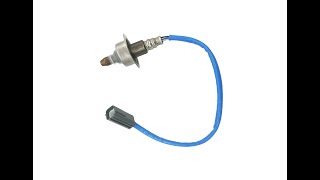
- Upstream Oxygen Sensor (Bank 1, Sensor 1 / Air/Fuel Ratio Sensor)
(OEM #22693-JA00B (for 2007-2008 2.5L QR25DE, Federal Emissions))— This is the most common failure point for code P0135, as the internal heater element burns out over time.
Trusted brands: Denso, Bosch, NGK/NTK
OEM price range: $150-$250
Aftermarket price range: $50-$120
Related Codes That Often Appear With This One
- P1148 — On some Nissan models, this is a manufacturer-specific code for 'Closed Loop Control Function, Bank 1'. It often appears with a heater circuit code because if the sensor can't warm up, the ECM cannot enter closed-loop fuel control for that bank.
- P0031 / P0032 — These codes are more specific versions of P0135, indicating 'A/F Sensor 1 Heater Control Circuit Low' and 'High' respectively. They point more directly to an electrical short or open in the heater circuit itself.
Technical Service Bulletins (TSBs) & Recalls
- TSB NTB16-117a: While this TSB for 2016-2017 Altimas addresses different DTCs (P014C, P014D) related to slow sensor response, it is relevant as it shows a known issue pattern on the platform where both an ECM reprogram and an A/F sensor replacement are required to fix certain sensor performance codes.
Platform-Specific Known Issues
- V6 (VQ35DE) Bank 1 Sensor Inaccessibility: On V6 models, the Bank 1 upstream sensor is located on the exhaust manifold against the firewall. Access is extremely limited. Most owners and mechanics report that the upper intake manifold must be removed to gain enough clearance to reach and replace the sensor. This turns a simple sensor swap into a multi-hour job.
- California vs. Federal Emissions Parts: Nissan produced Altimas that conform to two different emissions standards: Federal (FED) and California (CAL/PZEV). The A/F sensors for these two systems are not interchangeable. Using the wrong sensor will not fix the P0135 code. Owners must check the Vehicle Emission Control Information sticker in the engine bay (usually on the underside of the hood) to determine which system their car has before ordering a replacement part.
Mechanic-Grade Diagnostic Values
- A/F Sensor 1 Heater Element Resistance — expected: 2.5 - 4.0 Ω (Ohms). Failure: An open circuit (infinite resistance) or a reading far outside the specified range indicates a failed heater element.
- A/F Sensor 1 Heater Duty Cycle (Live Data) — expected: 4 - 100% when the engine is warmed up at idle.. Failure: A reading of 0% or one that is stuck and does not change could indicate a problem with the ECM's control of the circuit.
- Voltage at MAF sensor power supply wire (Brown wire) — expected: Within 0.5 volts of battery voltage with key on.. Failure: A significantly lower voltage (e.g., 5-6 volts) can indicate a failing ECU relay within the IPDM, which also powers the A/F sensor heater circuit.
Scan Tool Commands That Help
- Nissan CONSULT-II / CONSULT-III: Work Support > A/F SENSOR 1 HEATER — This function allows a technician to actively command the heater circuit on and off to test its functionality directly, verifying the integrity of the wiring, relay (in IPDM), and ECM driver without relying solely on resistance checks.
- Nissan IPDM E/R: Auto Active Test (Self-Test) — This built-in vehicle self-test can help diagnose a faulty IPDM on 2007+ models. By pressing the driver's door switch 10 times and cycling the ignition, the IPDM will cycle all its outputs (lights, wipers, fans, etc.). While it doesn't directly test the A/F heater circuit, if other components controlled by the IPDM fail to activate, it points towards a faulty IPDM module, which could be the root cause of P0135.
Wiring & Ground Locations
- Engine Ground (VQ35DE) — A ground strap runs from the engine timing cover to the chassis frame, located under/behind the power steering reservoir.. A poor engine-to-chassis ground can create a voltage differential, causing the ECM to misinterpret sensor readings and heater circuit performance. This is a critical check if a new sensor doesn't fix the code.
- Engine Ground (KA24DE/QR25DE) — A primary ground strap connects from the exhaust side of the cylinder head to the firewall. Another connects from the intake manifold area to the battery negative terminal/chassis.. The ECM relies on these grounds as a reference. Corrosion or a loose connection here can cause intermittent electrical issues, including heater circuit faults.
- A/F Sensor Connector (4-Cylinder) — Typically a grey or black 4-pin connector clipped to a bracket on the engine or firewall, near the top of the exhaust manifold.. This is the primary point for testing voltage, ground, and resistance. The two same-colored wires (often both black or both white) are for the heater circuit.
Real Owner Repair Stories
- YouTube Commenter (Nissan (model not specified, but behavior is universal)) — Persistent P0135 code even after replacing the oxygen sensor.
❌ Tried (didn't work) Replacing the O2 sensor
✅ What actually fixed it The problem was ultimately traced to a blown fuse and a bad relay for the heater circuit. The commenter had to check all related wiring and fuses/relays to finally resolve the issue. - ScannerDanner Forum User (2005 Nissan Altima 2.5L) — Scan tool showed reversed O2 sensor readings (B1S1 steady, B1S2 oscillating).
❌ Tried (didn't work) Replacing the catalytic converter.
✅ What actually fixed it The issue was identified as the vehicle having a California emissions package, which uses a wideband Air-Fuel Ratio (A/F) sensor for B1S1 (6-wire connector) and a traditional O2 sensor for B1S2 (4-wire connector). The scan tool was likely misinterpreting the A/F sensor's current-based signal as a steady voltage. This highlights the critical importance of identifying the vehicle's emission system correctly.
OEM Part Supersession History
284B7-CW29E (White ECM Relay for IPDM)→Updated Black Relay (Part number varies)— The original white-colored ECM relays used in some Nissan IPDMs were prone to failure, causing stalling and various electrical issues, including potential power loss to circuits like the A/F sensor heater.
Heads up: While Nissan officially discouraged replacing just the relay, it is a common field repair. Swapping the suspected bad ECU relay with the fog light relay of the same type within the IPDM can be a quick diagnostic test.
Model Year Variations Within This Range
- 2007-2012: The power source for the A/F sensor heater circuit shifted from a simple fuse in the interior panel (pre-2007) to a fuse and integrated relay within the IPDM E/R (Intelligent Power Distribution Module Engine Room). This makes diagnosis more complex as the relay itself is not separately replaceable.
- 2002-2006 vs 2007-2012: The physical location of the fuse box containing the relevant fuse changes. Pre-2007 models typically have it in the passenger compartment fuse box, while 2007 and later models house it in the under-hood IPDM.
Diagnostic Flowchart
Used vs. New Parts: Buying Guide for This Vehicle
When a used part is the smart pick: A used wiring harness pigtail is a smart choice if only the sensor connector is damaged. For 2007+ models, a used IPDM from a donor vehicle can be a cost-effective solution for a failed internal relay, as they are plug-and-play and do not require programming.
Donor-vehicle mileage cap: roughly under 120000 miles for the part to have meaningful remaining life.
What to inspect on the donor part:
- For a used IPDM, unplug the main connectors and inspect for ANY sign of white or green corrosion on the pins. Water intrusion is the #1 killer of these modules.
- Ensure the part number on the used IPDM EXACTLY matches the original. There are many variations based on trim and options.
- For a wiring pigtail, ensure the wires are flexible, not brittle, and have at least 6 inches of length to work with.
OEM-only on this vehicle (don't cheap out):
- Air/Fuel Ratio Sensor (Oxygen Sensor). Aftermarket sensors are a frequent cause of repeat failures or incorrect performance, especially on sensitive California Emissions models.
Aftermarket brands forum-validated for this vehicle:
- Denso
- NGK/NTK
- Bosch
Brands owners have reported issues with on this vehicle:
- Unbranded, 'no-name' sensors from online marketplaces.
Real Owner Stories
Aggregated from forums and TSBs cited above. Mileages and costs reflect what owners reported in those sources.
2006 Nissan Altima
Symptoms: Check Engine Light was on for the Bank 1 Sensor 1.
What fixed it: After replacing multiple parts without success, the actual cause was found to be a blown 15A fuse (#8 in the interior dash panel). Replacing the fuse resolved the code.
Source hint: 2CarPros.com - 'Giving Me the Code for the Sensor 1 Bank 1'
2008 Nissan Altima 3.5L V6
Symptoms: P0135 code was present. Upon removal, the old sensor tip had a 'fried' white appearance.
What fixed it: Replaced the Bank 1 Sensor 1, which was located in a very difficult-to-access position against the firewall.
Source hint: YouTube - '08 Nissan Altima 3.5 - Rear O2 Sensor swap (Bank 1 sensor 1)'
Nissan Altima (1998-2012)
Symptoms: The check engine light would not go away after installing a cheap oxygen sensor purchased from Amazon.
What fixed it: The issue was the low-quality sensor. The recommended fix is to use a trusted brand like Denso or NTK from a reputable seller to ensure the repair is successful.
Source hint: Reddit r/altima - 'Cheaper O2 sensors?'
Nissan Altima (1998-2012)
Symptoms: Vehicle presented with a P0135 trouble code.
What fixed it: The discussion emphasized the critical step of first checking the under-hood emissions sticker to determine if the car was Federal or California emissions, then ordering the specific Denso part number that corresponds to that system.
Source hint: Reddit r/altima - 'How much will this be to replace'
Related OBD-II Codes
Frequently Asked Questions
How do I know if I need a California or Federal emissions O2 sensor for my Altima?
Why is the Bank 1 oxygen sensor so hard to replace on my V6 Altima?
What fuse should I check for a P0135 code on my 2006 Altima?
Where is the O2 sensor heater fuse on a 2008 Altima?
What is the correct resistance for the O2 sensor heater on my Altima?
Are cheap aftermarket O2 sensors from Amazon or eBay okay to use?
Helpful Videos
We Have This Part in Stock


The information in this article is provided for general reference and educational purposes only. Vehicle specifications, procedures, and part compatibility can vary by production date, trim level, and region. Always consult your vehicle's factory service manual and verify part numbers before purchasing or performing repairs. Safety-critical components such as airbags, seat belts, and braking systems should be installed by a qualified professional.
- Nissan Altima:
- 🎬 Helpful Videos
- 🛍️ Shop This Part
- What's Unique About the 1998-2012 Nissan Altima
- Symptoms You May Notice
- Most Likely Causes
- Rare But Worth Checking
- Diagnosis Steps
- Parts You'll Likely Need
- Related Codes That Often Appear With This One
- Technical Service Bulletins (TSBs) & Recalls
- Platform-Specific Known Issues
- Mechanic-Grade Diagnostic Values
- Scan Tool Commands That Help
- Wiring & Ground Locations
- Real Owner Repair Stories
- OEM Part Supersession History
- Model Year Variations Within This Range
- Diagnostic Flowchart
- Used vs. New Parts: Buying Guide for This Vehicle
- Real Owner Stories
- 2006 Nissan Altima
- 2008 Nissan Altima 3.5L V6
- Nissan Altima (1998-2012)
- Nissan Altima (1998-2012)
- Related OBD-II Codes
- Frequently Asked Questions
- 🎟️ Get 5% Off