

P0135 on 1996-2004 Jeep Grand Cherokee 4.0L: O2 Sensor Heater Circuit Causes & Fixes
This code almost always means the internal heater in the upstream oxygen sensor (Bank 1, Sensor 1) has failed. Replacing the sensor is the typical fix. Expect to pay $30-$70 for a quality aftermarket sensor (like NTK or Denso) and about $100-$150 for an OEM Mopar part. It's a DIY-friendly job, taking less than an hour. Before replacing, check the O2 sensor fuse in the Power Distribution Center under the hood.
- P0135 points to a failure in the heater circuit of the upstream O2 sensor, not necessarily its ability to read oxygen.
- The most likely cause by far is a burned-out heater element inside the sensor itself.
- Before replacing the sensor, ALWAYS check the 15A O2 heater fuse in the Power Distribution Center under the hood.
- This is a simple and common DIY repair. Use an O2 sensor socket to make the job easier.
- For best results and to avoid compatibility issues, use an OEM (Mopar) or a quality OEM-equivalent sensor from brands like NTK or Denso. Avoid Bosch sensors for this application.
What's Unique About the 1996-2004 Jeep Grand Cherokee

On the Jeep 4.0L I6, this is a very common and straightforward code. The engine only has one cylinder bank, so 'Bank 1' is the only bank. 'Sensor 1' is the upstream sensor, located in the exhaust manifold or downpipe before the catalytic converter. The issue is almost always the sensor itself, as the wiring is robust and the 4.0L engine is not particularly prone to issues that would secondarily cause this code. Many experienced Jeep owners strongly recommend using NTK or Denso brand sensors, as they are often the original equipment manufacturer and some aftermarket brands, particularly Bosch, can cause compatibility issues on this platform. For some 1999-2003 models, a Technical Service Bulletin (TSB) exists for an erroneous P0135 code that can be fixed with a PCM software update.
Generation note: This range covers two Grand Cherokee generations: the ZJ (1996-1998) and the WJ (1999-2004). While the 4.0L engine is fundamentally the same, the exact location of the O2 sensor and its connector may vary slightly. Part numbers for the sensors are also different between the ZJ and WJ. Always verify the correct part for your specific year. Importantly, some WJ models (1999-2004) were built with California Emissions, which use four O2 sensors instead of the standard two (Federal Emissions). On these models, there are two upstream sensors (Bank 1 Sensor 1 and Bank 2 Sensor 1) in the two separate exhaust downpipes. P0135 refers to the front-most upstream sensor.
Symptoms You May Notice
- Check Engine Light is on
- Slightly decreased fuel economy
- Vehicle will fail an emissions/smog test
- In some rare cases, a rough idle or hesitation on a cold start
- Smell of gasoline from the exhaust due to running rich
- Replacing the downstream O2 sensor (Sensor 2). P0135 specifically refers to Sensor 1, the upstream sensor before the catalytic converter.
- Replacing the sensor without first checking the fuse in the Power Distribution Center (PDC).
- Using an incompatible brand of sensor (e.g., Bosch) which can cause persistent codes on this platform.
Most Likely Causes

- Failed O2 Sensor Heater Element 🔴 High Probability The internal heating element is a wear item that simply burns out over time due to thousands of heat cycles. This is the most common reason for P0135 on any vehicle, including this Jeep.
How to confirm: With a multimeter, disconnect the sensor and measure the resistance between the two heater circuit pins (usually the two wires of the same color). A reading of 'OL' (Open Line) or infinite resistance means the heater is burned out. A good heater should have a low resistance, typically between 5 and 7 ohms for this specific vehicle. Some sources give a wider acceptable range of 4-10 ohms.
Typical fix: Replace the Bank 1, Sensor 1 (upstream) oxygen sensor.
Est. part cost: $30-$70 - Blown Fuse ⚪ Low Probability A short circuit in the O2 sensor heater element or its wiring can cause the protective fuse to blow. This is a common check that is often overlooked before replacing parts.
How to confirm: The O2 sensor heater circuit is protected by a 15A fuse in the Power Distribution Center (PDC) under the hood. For a 1999 WJ, a user on CherokeeForum.com identified a blown 15A fuse as the cause for both P0135 and P0138. Check your owner's manual or the fuse box diagram for a fuse labeled 'O2 Heater,' 'O2S Relays,' or similar. Visually inspect the fuse or test for continuity with a multimeter. For a ZJ, the fuse is also in the PDC. For a WJ, the PDC is on the driver's side of the engine bay.
Typical fix: Replace the blown fuse. If it blows again immediately, this indicates a short circuit in the wiring or a shorted O2 sensor that must be found and repaired.
Est. part cost: $1-$5 - Damaged Wiring or Connector 🟡 Medium Probability The sensor wiring is located in a hot, harsh environment near the exhaust manifold and can be susceptible to melting, chafing, or corrosion at the connector. A case on a 2000 Grand Cherokee involved the harness being pinched under the valve cover after a recent gasket replacement.
How to confirm: Visually inspect the entire length of the sensor's wiring harness from the sensor to the main connector. Look for melted plastic, bare wires, or green/white corrosion inside the connector pins. Pay close attention to where the harness might rub against the engine block or other components.
Typical fix: Repair the damaged section of wiring or clean/replace the connector.
Est. part cost: $5-$25
Rare But Worth Checking
- Faulty Powertrain Control Module (PCM): This is extremely rare. The PCM is the last thing to suspect. All other possibilities, including the sensor, wiring, and fuses, must be exhaustively ruled out before considering a PCM failure.
- Erroneous Code Requiring PCM Update (WJ Only): TSB 18-031-03 was issued for some 1999-2003 WJ models with the 4.0L engine. It addresses an erroneous P0135 (and other heater codes) that can set during a cold start when the ambient temperature is below 41°F (5°C). The fix is to reprogram the PCM with updated software. This should be considered if the code only appears in cold weather and all hardware checks out.
Diagnosis Steps

- Verify the code is P0135 using an OBD-II scanner.
- Check the 15A fuse for the O2 sensor heater circuit in the Power Distribution Center (PDC) under the hood. This is a critical first step.
- Locate the Bank 1, Sensor 1 (upstream) O2 sensor. On the 4.0L, it's in the exhaust manifold or the pipe just after it, before the catalytic converter.
- Thoroughly inspect the sensor's wiring harness and connector for any signs of melting, chafing, or corrosion.
- If the wiring and fuse are good, disconnect the sensor's electrical connector.
- Using a multimeter set to Ohms (Ω), measure the resistance across the two heater pins on the sensor side of the connector (these are typically the two wires of the same color, often black). A good heater should measure between 5-7 ohms. An open circuit (infinite resistance) or a direct short (0 ohms) confirms a bad heater element.
- If resistance is within spec, check for power at the harness connector. With the key on (engine off), use a multimeter to check for 12V (battery voltage) at the corresponding heater circuit power wire on the vehicle side of the harness.
- If resistance is bad, replace the oxygen sensor. If resistance is good but there is no 12V power at the harness, the problem is in the vehicle's wiring or the fuse/relay circuit.
Parts You'll Likely Need

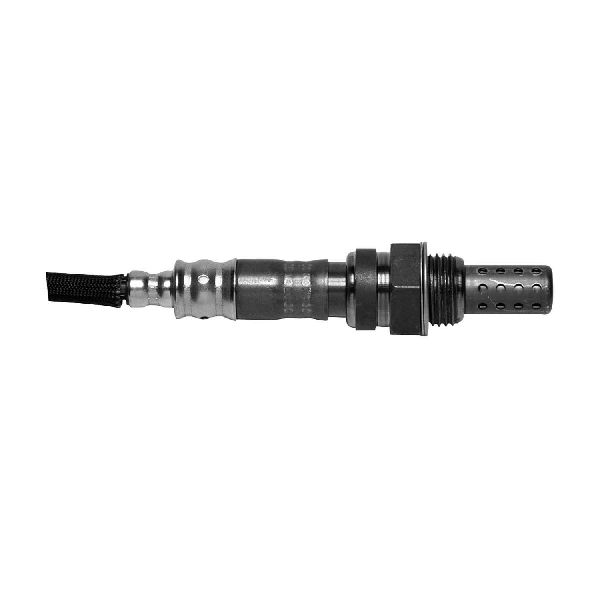
- Upstream Oxygen Sensor (Bank 1, Sensor 1)
(OEM #WJ (1999-2004): 56041213AG (Federal & CA Emissions, Front/Upstream). ZJ (1996-1998): 56028603 or 56041056.)— This is the part that contains the heater element that fails and triggers the P0135 code.
Trusted brands: NTK (OEM Supplier), Denso, Mopar
OEM price range: $100-$150
Aftermarket price range: $30-$70
Technical Service Bulletins (TSBs) & Recalls
- TSB 18-031-03: Applies to 1999-2003 Grand Cherokee (WJ) with 4.0L engine. Addresses erroneous O2 sensor heater DTCs (including P0135) that may set during cold starts below 41°F (5°C). The fix is to reprogram the PCM with new software.
Platform-Specific Known Issues
- California Emissions Models (WJ): Some 1999-2004 WJ models have a more complex California emissions system with four O2 sensors (two upstream, two downstream) due to dual mini-catalytic converters in the downpipes. P0135 still refers to the primary upstream sensor (Bank 1, Sensor 1), but it's important to be aware of which system your vehicle has before ordering parts.
- PCM Flash TSB (WJ): TSB 18-031-03 notes that on some 1999-2003 4.0L models, P0135 can be set erroneously during cold starts (below 41°F/5°C). The fix is a PCM reflash, not a sensor replacement. If the code only appears in winter, this is a strong possibility.
- Fuse First: Many owners on forums for the XJ, ZJ, and WJ (which share the 4.0L engine) have fixed P0135 and related heater codes simply by replacing a blown 15A fuse in the under-hood Power Distribution Center. This should always be the first check.
Mechanic-Grade Diagnostic Values
- O2 Sensor Heater Element Resistance — expected: 2.0 to 30.0 ohms at 70°F (21°C). Other sources cite a tighter range of 5-20 ohms.. Failure: A reading of 'OL' (infinite resistance) indicates an open circuit (burned out heater). A reading near zero ohms indicates a short circuit.
- Heater Circuit Power Supply Voltage — expected: 10-12 Volts (battery voltage) with Key On, Engine Off. Should rise to ~14 Volts with the engine running.. Failure: 0 Volts indicates a blown fuse, faulty ASD relay, or a break in the power wire.
- Scan Tool O2 Heater Test — expected: When the 'O2 Heater Test' is actuated with a compatible scan tool (like the DRB III), the O2 sensor signal voltage should remain above 4.5 volts.. Failure: Voltage dropping below 4.5 volts during the test suggests a problem in the heater circuit or sensor.
Scan Tool Commands That Help
- DRB III (Dealer Scan Tool): O2 Heater Test — This is a bidirectional test to actively command the O2 sensor heater on. It is used after verifying the fuse and wiring are intact to confirm if the PCM can control the heater and if the sensor responds correctly, helping to isolate a faulty PCM driver or sensor.
Wiring & Ground Locations

- G101 — On the engine block, at the ignition coil attachment bracket studs (for 1997 and newer 4.0L engines).. This is the primary engine ground point for the oxygen sensor circuits on ZJ and WJ models. A loose or corroded connection here can cause erratic sensor readings and heater circuit fault codes.
- O2 Heater Fuse (PDC) — In the Power Distribution Center (PDC) under the hood. For a '99 model, it's a 15A fuse often labeled 'O2S HEATER'. For a 2000 model, it may be fuse #17.. This fuse is the direct power supply for the heater element. It is a common failure point and the first electrical check to perform.
- Auto Shutdown (ASD) Relay — In the Power Distribution Center (PDC) under the hood.. The ASD relay supplies battery voltage to the O2 sensor heater circuit fuse when the ignition is on. A failure in the ASD relay will cut power to the heaters, though it will likely present with other codes or a no-start condition as it also powers the fuel pump and coil.
- Heater Control / Ground Wires — Within the 4-wire connector for the O2 sensor.. Service documents identify the heater control circuit from the PCM as (K99) and the heater ground circuit as (Z906). Knowing these circuit identifiers helps in tracing wires on a factory wiring diagram.
Real Owner Repair Stories
- Reddit user on r/MechanicAdvice (2004 Jeep Grand Cherokee) — Persistent P0135 code, fuel trim issues.
❌ Tried (didn't work) Replaced PCM, Replaced O2 sensor (multiple times), Replaced relays
✅ What actually fixed it Found and repaired melted wires in the harness leading to the oxygen sensor. The wiring damage was the root cause that persisted through multiple part replacements. - CherokeeForum user 'maxthrottle' (1999 Jeep XJ (shares drivetrain and wiring with Grand Cherokee)) — Check Engine Light with codes P0132, P0135, and P0138.
❌ Tried (didn't work) Initially told it was the O2 sensor.
✅ What actually fixed it Found and replaced a single blown 15A fuse in the Power Distribution Center. This cleared all three O2 sensor codes. The user noted that if the fuse blows again, it indicates an underlying short in the wiring or a sensor that needs to be found. - CherokeeForum user 'Sincereagape' (2000 Jeep Grand Cherokee 4.0L (California Emissions)) — Codes P0135, P0141, P0155, P0161 all appeared at once.
❌ Tried (didn't work) Considering replacing all four O2 sensors.
✅ What actually fixed it The confirmed diagnostic path was to first check components common to all four heater circuits. The issue was identified as a single point of failure in the shared power or ground circuit, not four simultaneously failed sensors. The fix is to check the single O2 heater fuse and the main O2 ground point (G101) before replacing any sensors.
When the Usual Fixes Don't Work
- In a case on a 2004 Grand Cherokee, the P0135 code persisted after replacing the O2 sensor, associated relays, and even the PCM based on a shop's diagnostic tool. The actual problem was discovered to be melted wires in the sensor's harness, which was likely missed during initial diagnosis. This highlights that even when the code points to a specific component, the root cause can still be a simple wiring fault that is overlooked.
OEM Part Supersession History
Varies by year→Varies by year— Standard part updates.
Heads up: Extreme caution is advised when ordering. The Mopar part 56041213AG is often incorrectly listed for the upstream sensor but is specified for the downstream (After Catalyst) position in many Mopar parts diagrams. For a 1999 WJ 4.0L, forum consensus suggests the correct upstream NTK part is 23506. Always verify part numbers against the vehicle's VIN to avoid installing the wrong sensor.
Model Year Variations Within This Range
- 1996 (and earlier) vs. 1997-2004: The main ground location for the O2 sensors changed. On pre-1997 models, it is located at the oil dipstick tube bracket stud. On 1997+ ZJ and all WJ models, the ground (G101) is located at the ignition coil mounting studs on the engine block.
- Approx. 2000-2004: Later models in this range (specifically 2000+) utilize O2 sensor heater relays in the PDC, in addition to fuses. The relay coils themselves are powered by a separate fuse in the interior Junction Block (fuse #10 on a 2000 model). This adds another potential point of failure (the relay or its control circuit fuse) that is not present on earlier models.
Diagnostic Flowchart
Real Owner Stories
Aggregated from forums and TSBs cited above. Mileages and costs reflect what owners reported in those sources.
2004 Jeep Grand Cherokee — 78000 miles
Symptoms: Check engine light with code P0135 on cold startups.
What fixed it: The mechanic found and replaced melted wires leading to the sensor, but the code returned. The owner also tried replacing the PCM, O2 sensors, relays, and throttle body sensors, but the final solution was not posted.
Source hint: Reddit r/MechanicAdvice
2004 Jeep Grand Cherokee 4WD 4.0L (WJ)
Symptoms: Intermittent check engine light with codes P0135 and P0155 depending on how cold the weather is.
What fixed it: The final fix was not provided, but the owner noted the vehicle has the California Emissions package with 4 O2 sensors, complicating the diagnosis.
Source hint: Reddit r/GrandCherokee
1999 Jeep Grand Cherokee (WJ)
Symptoms: Codes P0135 and P0138 present simultaneously.
What fixed it: Identified and replaced a blown 15A fuse in the Power Distribution Center (PDC).
Source hint: CherokeeForum.com
Jeep Cherokee 4.0L
Symptoms: Hesitation during cold starts accompanied by a P0135 code.
What fixed it: Addressed the P0135 code and checked the O2 heater fuse in the PDC based on a provided diagram.
Source hint: CherokeeForum.com - Thread 'code p0135 o2 sensor heater malfunction' (Oct 2012)
Related OBD-II Codes
Frequently Asked Questions
Does TSB 18-031-03 apply to my Jeep Grand Cherokee?
Where is the O2 sensor heater fuse located on the 4.0L Grand Cherokee?
I have a California Emissions model. Which sensor is Bank 1, Sensor 1?
What brand of oxygen sensor should I use for my 4.0L Jeep?
What is the correct resistance for a good O2 sensor heater on this Jeep?
Can a blown fuse cause code P0135 on my Grand Cherokee?
We Have This Part in Stock

The information in this article is provided for general reference and educational purposes only. Vehicle specifications, procedures, and part compatibility can vary by production date, trim level, and region. Always consult your vehicle's factory service manual and verify part numbers before purchasing or performing repairs. Safety-critical components such as airbags, seat belts, and braking systems should be installed by a qualified professional.
- Jeep Grand Cherokee:
- 🛍️ Shop This Part
- What's Unique About the 1996-2004 Jeep Grand Cherokee
- Symptoms You May Notice
- Most Likely Causes
- Rare But Worth Checking
- Diagnosis Steps
- Parts You'll Likely Need
- Technical Service Bulletins (TSBs) & Recalls
- Platform-Specific Known Issues
- Mechanic-Grade Diagnostic Values
- Scan Tool Commands That Help
- Wiring & Ground Locations
- Real Owner Repair Stories
- When the Usual Fixes Don't Work
- OEM Part Supersession History
- Model Year Variations Within This Range
- Diagnostic Flowchart
- Real Owner Stories
- 2004 Jeep Grand Cherokee — 78000 miles
- 2004 Jeep Grand Cherokee 4WD 4.0L (WJ)
- 1999 Jeep Grand Cherokee (WJ)
- Jeep Cherokee 4.0L
- Related OBD-II Codes
- Frequently Asked Questions
- 🎟️ Get 5% Off