

P0135 on 2008-2012 Ford Escape 2.5L: O2 Heater Circuit Causes and Fixes
This code almost always means the upstream oxygen sensor (Bank 1, Sensor 1) has failed. Replacing it is the most common fix. Expect to pay $40-$80 for an aftermarket sensor or $70-$120 for an OEM Motorcraft part. It's a DIY-friendly job with the right socket.
- P0135 on your Escape points directly to the heater in the upstream O2 sensor (the one before the catalytic converter).
- The most likely fix is to replace the sensor itself, which is a common wear item.
- Before replacing the sensor, always check for a blown fuse (F28 in the engine bay fuse box) and inspect the wiring for melting or corrosion, as these are known issues.
- Use the correct part number for your specific model year; for example, 2010-2011 models use Motorcraft DY-1141 for the upstream sensor.
What's Unique About the 2008-2012 Ford Escape
On the 2.5L inline-four engine, locating 'Bank 1' is simple as there's only one exhaust bank. Sensor 1 is the 'upstream' sensor, accessible from the top of the engine bay near the exhaust manifold. While no TSBs are specific to this exact model and year for P0135, Ford has issued bulletins for other models (like TSB 21-2090 and TSB 20-2380) citing water intrusion into O2 sensor connectors as a cause for this code. This suggests that checking the wiring and connector for moisture or corrosion is a particularly important diagnostic step on Ford vehicles. A YouTube video focusing on a 2009 Ford Escape with multiple electrical codes, including P0135, traced the root cause to a shorted wire in an O2 sensor harness that repeatedly blew a fuse.
Symptoms You May Notice
- Check Engine Light is on
- Decreased fuel economy
- Failing a vehicle emissions test
- Slightly rough idle or performance, especially when the engine is cold
- Engine hesitation or misfiring
- Black or foul-smelling exhaust
- Replacing the downstream (Sensor 2) oxygen sensor instead of the upstream (Sensor 1) sensor.
- Replacing the oxygen sensor without first checking the fuse or inspecting the wiring for damage.
Most Likely Causes
- Failed Oxygen Sensor 🔴 High Probability The internal heater element is a common failure point due to age and constant heat cycles. It's a standard wear-and-tear item, with an 85% likelihood of being the cause for this code.
How to confirm: Disconnect the sensor and measure the resistance between the two heater circuit wires (usually the two wires of the same color). An infinite resistance reading (open circuit) or a reading outside the typical 5-20 ohm range confirms the heater has burned out.
Typical fix: Replace the Bank 1, Sensor 1 (upstream) oxygen sensor. This often requires a special slotted 22mm (7/8 inch) socket to accommodate the sensor's wire.
Est. part cost: $40-$120 - Damaged Wiring or Connector 🟡 Medium Probability The wiring is exposed to high heat from the exhaust and potential road debris. Ford TSBs on other models point to a susceptibility to water intrusion in connectors, causing corrosion. A video of a 2009 Escape showed multiple codes, including P0135, were caused by a short in the O2 sensor wiring.
How to confirm: Visually inspect the wiring harness and connector for signs of melting, chafing, broken wires, or green/white corrosion on the pins. Trace the harness as far back as possible.
Typical fix: Repair the damaged section of the wiring harness or clean/replace the connector. In one documented case, repairing a shorted wire resolved the issue.
Est. part cost: $5-$50 - Blown Fuse ⚪ Low Probability A short circuit in the wiring or the sensor itself can cause the related fuse to blow. This is often a symptom of a larger electrical problem, like a shorted wire. On some Ford trucks, codes P0135 and P0155 appearing together strongly pointed to a single blown fuse for the heater circuits.
How to confirm: Locate the fuse for the O2 sensor heater circuit in the vehicle's fuse box. For a 2009 Escape, this may be fuse F28 (10A) in the engine compartment fuse box (Battery Junction Box), labeled for 'Vehicle power - fuel injector (2.5L engine)' but shared with other components. Check for continuity. If the fuse is blown, there is likely a short circuit in the harness.
Typical fix: Replace the blown fuse. If it blows again immediately, a short circuit is present that must be found and repaired.
Est. part cost: $1-$5
Rare But Worth Checking
- Powertrain Control Module (PCM) Fault: This is extremely rare. The PCM's driver circuit for the heater could fail, but all other possibilities must be exhaustively ruled out before condemning the PCM.
Diagnosis Steps
- Read the codes with an OBD-II scanner to confirm P0135 is present and check for any other codes. A multitude of codes could point to a blown fuse.
- Locate the Bank 1, Sensor 1 (upstream) O2 sensor. On the 2.5L engine, it is on the exhaust manifold, visible from the top of the engine bay.
- Thoroughly inspect the sensor's wiring harness and connector for any signs of melting, fraying, corrosion, or loose pins.
- Check the fuse for the O2 sensor heater circuit. For the 2009-2012 models, check fuse F28 (10A) in the Power Distribution Box (also called Battery Junction Box) in the engine compartment. If the fuse is blown, inspect the O2 sensor harness for shorts before replacing it.
- If the fuse and wiring are good, disconnect the sensor. Use a multimeter set to Ohms (Ω) to measure the resistance across the two heater pins on the sensor side of the connector (these are typically the two wires of the same color). A reading of 5-20 Ohms is typical; an open circuit (OL or infinite resistance) means the sensor's heater is bad and the sensor must be replaced.
- To confirm the vehicle's circuit is good, turn the ignition to 'ON' (engine off). Use a multimeter set to DC Volts to check for 12V power on one of the heater pins on the harness-side connector. Check for ground on the other heater pin. If power or ground is missing, there is a wiring issue between the fuse box/PCM and the sensor.
Parts You'll Likely Need
- Upstream Oxygen Sensor (Bank 1, Sensor 1)
(OEM #Motorcraft DY-1141 (Ford P/N: 9E5Z-9F472-E) for 2010-2011 models. Verify part number for 2009 and 2012 model years as variations exist.)— This is the most common cause of code P0135, as the internal heater element fails from age and heat cycles.
Trusted brands: Motorcraft, Bosch, Denso, NGK/NTK
OEM price range: $70-$120
Aftermarket price range: $40-$80
Related Codes That Often Appear With This One
- P0132 — This code indicates 'O2 Sensor Circuit High Voltage'. It can appear alongside P0135 if there are wiring shorts or internal sensor faults affecting both the heater and signal circuits. A 2013 Escape owner reported seeing both codes together.
- P0141 — This is the same heater circuit malfunction code but for Bank 1, Sensor 2 (the downstream sensor). If both appear, it may point to a shared power or ground issue, like a blown fuse that supplies both heaters. A 2009 Escape with a blown fuse F28 presented with P0141, P0155, and P0161 among others.
- P0155 — This is the heater circuit code for Bank 2, Sensor 1. On a 4-cylinder Escape, this code is irrelevant. However, on other Ford vehicles, seeing P0135 and P0155 together is a strong indicator of a blown fuse that powers both heater circuits.
- P0010, P0020, P0102, P0443, P0403 — A single blown fuse can cause a cascade of seemingly unrelated codes. A documented case on a 2009 Escape showed that a blown fuse (F28 in the engine bay fuse box) caused by a shorted O2 sensor wire also triggered codes for the Camshaft Position Actuator, MAF sensor, EVAP Purge Valve, and EGR Control Circuit.
Technical Service Bulletins (TSBs) & Recalls
- TSB 21-2090: Notes P0135 can be caused by water intrusion into the heated oxygen sensor connector on some Ford trucks.
- TSB 20-2380: Similar to the above, points to water intrusion as a cause for P0135 and other O2 sensor codes on certain Ford trucks.
- TSB-14-0129: Although for the 2013 model year, it shows that P0135 is a recognized issue on the Ford Escape platform.
Platform-Specific Known Issues
- While no recalls are specific to this issue, Ford has issued Technical Service Bulletins for other models (e.g., TSB 21-2090, TSB 20-2380) that link P0135 to water intrusion in the heated oxygen sensor connectors. This highlights the importance of checking for corrosion during diagnosis.
- A documented repair on a 2009 Escape showed that a short-to-ground in the O2 sensor harness can blow fuse F28 in the engine bay, leading to P0135 and a host of other seemingly unrelated trouble codes.
Mechanic-Grade Diagnostic Values
- O2 Sensor Heater Element Resistance — expected: 5-20 Ohms (general specification). Failure: Open circuit (OL/infinite resistance) or a reading far outside the expected range.
- O2 Sensor Installation Torque — expected: 35 ft-lb. Failure: Under-torquing can cause exhaust leaks; over-torquing can damage the sensor or threads.
- O2 Sensor Wrench/Socket Size — expected: 22mm or 7/8 inch. Failure: N/A
Wiring & Ground Locations
- Battery Junction Box (BJB) — Left front of the engine compartment.. This fuse box contains the fuse (likely F28) that provides power to the O2 sensor heater circuit. A short in the circuit will cause this fuse to blow.
- G100 / G101 — Engine compartment, providing essential return paths for electrical current.. A compromised ground connection at these points can lead to erratic behavior or failure of electrical components, including the O2 sensor heater circuit.
Real Owner Repair Stories
- Ford Truck Enthusiasts Forums (2000 Ford Excursion V10 (different model, but same Ford electrical logic)) — Check Engine Light with codes P0135 and P0155 (Heater circuit malfunction for both banks).
❌ Tried (didn't work) Resetting the codes (light came back immediately).
✅ What actually fixed it The community strongly suggested the cause was a single blown fuse (Fuse #19 in the BJB for that model) that powered both heater circuits, or that both sensors had failed due to high mileage (101k). The final resolution was not posted, but it highlights the pattern of a shared fuse being a common point of failure when multiple heater codes are present.
When the Usual Fixes Don't Work
- The initial Pass 2 data suggested Motorcraft DY-1176 as a possible upstream sensor. However, further investigation shows this part is listed as the downstream (after-catalyst) sensor for the 2.5L engine or a sensor for the V6 model. The correct upstream sensor for 2010-2011 2.5L models is Motorcraft DY-1141. Installing the wrong sensor can lead to persistent check engine lights and incorrect fuel mixture control.
OEM Part Supersession History
Varies by year→Motorcraft DY-1141 (Ford P/N: 9E5Z-9F472-E)— Standard part for specified model years.
Heads up: Crucially, do not confuse with Motorcraft DY-1176. For the 2.5L engine, DY-1176 is typically the DOWNSTREAM (post-catalyst) sensor. Using a downstream sensor in the upstream position will cause performance and fuel trim issues.
Model Year Variations Within This Range
- 2009-2012: The 2.5L Duratec I4 engine replaced the previous 2.3L engine starting in the 2009 model year. This guide is specific to the 2.5L engine.
- 2010-2011: The upstream oxygen sensor for these years is specified as Motorcraft DY-1141. Owners of 2009 and 2012 models should verify the specific part number for their vehicle, as it may differ.
Diagnostic Flowchart
Other Known Issues on This Vehicle
Issues unrelated to this code that are worth knowing about as an owner of this generation:
- 6F35 Transmission Failure/Erratic Shifting 🔴 High — Common, especially on 2009 and later models. Issues can arise before 100k miles, often manifesting as shuddering, delayed shifts, or complete failure. (Ref: Subject of a dismissed class-action lawsuit. Frequent fluid changes (every 30k miles) are recommended by owners to prolong life.)
- Rear Shock Tower Rust 🔴 High — Very common in regions that use road salt. The passenger side rear shock tower is particularly prone to rusting completely through, detaching the shock from the body. (Ref: No recall, but aftermarket repair panels are widely available due to the frequency of the issue.)
- Electronic Power Steering (EPAS) Failure 🔴 High — Widespread issue leading to a sudden loss of power assist, making steering very difficult at low speeds. (Ref: Ford Safety Recall 14S05 was issued to reprogram the PSCM and, in some cases, replace the torque sensor or steering column. However, many owners report failures even after the recall was performed.)
- Cracked ABS Tone Ring 🟠 Medium — A common failure where the front ABS tone ring cracks, causing the ABS and Traction Control lights to illuminate and the system to activate erratically at low speeds.
- Throttle Body Failure 🟠 Medium — A known issue that can cause the vehicle to enter 'limp mode' with reduced power. It was common enough that Ford offered a warranty extension for this part on many vehicles. (Ref: Customer Satisfaction Program 13N03 extended warranty coverage for the throttle body.)
Used vs. New Parts: Buying Guide for This Vehicle
When a used part is the smart pick: Never for the oxygen sensor itself. It is a wear-and-tear component with a limited lifespan. A used sensor may fail shortly after installation. A used wiring harness pigtail from a junkyard is a viable option if only the connector is damaged.
Donor-vehicle mileage cap: roughly under 100000 miles for the part to have meaningful remaining life.
What to inspect on the donor part:
- For a wiring pigtail: ensure the plastic is not brittle, the locking tab is intact, and there is no visible corrosion on the pins.
- Ensure there is enough wire length to splice it into the vehicle's harness properly.
OEM-only on this vehicle (don't cheap out):
- While not strictly 'OEM-only', it is highly recommended to use either the OEM Motorcraft sensor or a sensor from a reputable OE supplier. Cheap, unbranded sensors are known to have high failure rates.
Aftermarket brands forum-validated for this vehicle:
- Bosch
- Denso
- NTK / NGK
Brands owners have reported issues with on this vehicle:
- Unbranded 'white box' sensors from online marketplaces with no reputation or warranty.
Real Owner Stories
Aggregated from forums and TSBs cited above. Mileages and costs reflect what owners reported in those sources.
2009 Ford Escape 2.5L
Symptoms: The vehicle showed a multitude of codes including P0135, P0010, P0020, and P0102. The engine light was on and there were several running issues.
What fixed it: The technician found a short-to-ground in the O2 sensor wiring harness which had blown fuse F28 in the engine bay. Repairing the shorted wire and replacing the fuse resolved all codes.
Source hint: YouTube - 'Ford ESCAPE , CODE - P0010,P0020,P0102,P0135...'
2012 Ford Escape
Symptoms: Check Engine Light with code P0135; needed to confirm the exact location of the upstream sensor for replacement.
What fixed it: Replacement of the Bank 1 Sensor 1 oxygen sensor after confirming its location on the exhaust manifold.
Source hint: Reddit r/Ford
Related OBD-II Codes
Frequently Asked Questions
Where is the Bank 1, Sensor 1 oxygen sensor located on my 2008-2012 Ford Escape 2.5L?
Could a blown fuse be causing my P0135 code on a 2009 Ford Escape?
Does Ford have any Technical Service Bulletins for P0135 that apply to my vehicle?
What is the typical resistance for a healthy O2 sensor heater on this model?
Are there any other common mechanical issues I should watch for on my 2008-2012 Escape while fixing this?
Will a P0135 code cause my Ford Escape to fail an emissions test?
Helpful Videos
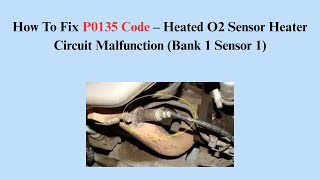
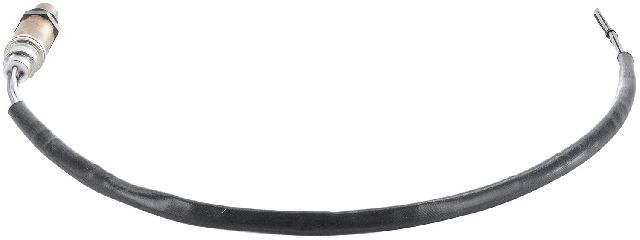
We Have This Part in Stock


The information in this article is provided for general reference and educational purposes only. Vehicle specifications, procedures, and part compatibility can vary by production date, trim level, and region. Always consult your vehicle's factory service manual and verify part numbers before purchasing or performing repairs. Safety-critical components such as airbags, seat belts, and braking systems should be installed by a qualified professional.
- Ford Escape:
- 🎬 Helpful Videos
- 🛍️ Shop This Part
- What's Unique About the 2008-2012 Ford Escape
- Symptoms You May Notice
- Most Likely Causes
- Rare But Worth Checking
- Diagnosis Steps
- Parts You'll Likely Need
- Related Codes That Often Appear With This One
- Technical Service Bulletins (TSBs) & Recalls
- Platform-Specific Known Issues
- Mechanic-Grade Diagnostic Values
- Wiring & Ground Locations
- Real Owner Repair Stories
- When the Usual Fixes Don't Work
- OEM Part Supersession History
- Model Year Variations Within This Range
- Diagnostic Flowchart
- Other Known Issues on This Vehicle
- Used vs. New Parts: Buying Guide for This Vehicle
- Real Owner Stories
- 2009 Ford Escape 2.5L
- 2012 Ford Escape
- Related OBD-II Codes
- Frequently Asked Questions
- 🎟️ Get 5% Off