

P0135 on 1994-2001 Dodge Ram 1500 5.2L: O2 Sensor Heater Causes and Fixes
This code means the heater inside the upstream oxygen sensor on the driver's side has failed. The most common fix is to replace the Bank 1, Sensor 1 O2 sensor. Expect to pay around $40-$80 for a quality aftermarket sensor and about $100-$180 for an OEM part. It's a DIY-friendly job for most. Many owners strongly recommend using OEM (Mopar) or NTK sensors, as these trucks can be sensitive to other brands.
- P0135 on your Dodge Ram almost always means you need a new upstream oxygen sensor on the driver's side.
- Before buying parts, perform a quick visual inspection of the sensor's wiring for obvious melting or damage.
- Also, check fuse #6 (30A) in the engine bay fuse box to ensure it isn't blown.
- Use a quality aftermarket brand like NTK, Bosch, or Denso for the best results. A special O2 sensor socket will make the replacement job much easier.
What's Unique About the 1994-2001 Dodge Ram 1500

On the second-generation Dodge Ram with the 5.2L Magnum V8, this is a very common and straightforward code. The OBD-II system, present from 1996-2001, is not overly complex. The issue is almost always the sensor itself or the wiring leading to it, which can become brittle or melt from age and proximity to the hot exhaust. Unlike some newer vehicles, there are no common PCM software glitches or complex wiring harness issues known to cause this specific code on this platform. However, these Chrysler platforms are known to be finicky about sensor brands, and using non-OEM or non-NTK sensors can sometimes lead to persistent codes.
Generation note: This guide covers the second-generation Dodge Ram (1994-2001). However, the P0xxx code format is specific to OBD-II systems, which were federally mandated starting in the 1996 model year. Therefore, this guide is most accurately applied to 1996-2001 models. 1994-1995 models were typically OBD-I and may display a different code (like code 21 on Jeeps with similar systems) for the same fault.
Symptoms You May Notice
- Check Engine Light is on
- Reduced fuel economy by 10-20%
- Rough idle, engine stutter, or hesitation, especially when the engine is cold.
- Failing a state emissions test
- Exhaust may smell rich (like gasoline)
- Replacing the downstream (post-catalytic converter) oxygen sensor. P0135 is specific to Sensor 1, which is the upstream sensor.
- Replacing the passenger side (Bank 2) oxygen sensor. P0135 is specific to Bank 1, which is the driver's side.
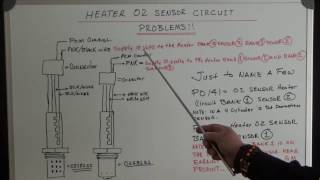
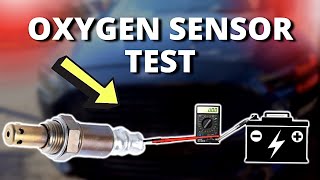
- Replacing the sensor when the true fault is a blown fuse or a damaged wire. Always test the circuit before replacing parts. 🎬 Watch: A simple guide to testing the O2 heater circuit.
Most Likely Causes

- Failed Upstream Oxygen Sensor (Bank 1, Sensor 1) 🔴 High Probability The internal heater element is a common failure point due to constant, rapid heating and cooling cycles over many years. It's a simple wear-and-tear item.
How to confirm: Disconnect the sensor and measure the resistance between the two heater circuit wires (usually the two wires of the same color, often both black or both white). A healthy sensor should have a resistance between 2 and 30 ohms when cool. An infinite reading (open circuit) or a dead short (zero ohms) confirms the heater has failed.
Typical fix: Replace the Bank 1, Sensor 1 oxygen sensor. This is the upstream sensor on the driver's side exhaust. It is highly recommended to use an OEM Mopar or NTK brand sensor.
Est. part cost: $40 - $80 - Damaged Wiring or Connector 🟡 Medium Probability The wiring harness for the O2 sensor is routed near the hot exhaust manifold and pipes. A common failure point is where the harness runs over the top of the transmission, where it can chafe or melt. The connector itself can also fill with moisture or corrode.
How to confirm: Visually inspect the wiring harness and connector leading to the O2 sensor for any signs of melting, chafing, or corrosion in the pins. Pay close attention to the harness section above the transmission bellhousing. Perform a continuity test on each wire from the sensor connector to the PCM if a visual fault isn't obvious.
Typical fix: Repair the damaged section of wire or replace the connector pigtail.
Est. part cost: $10 - $30 - Blown Fuse for Heater Circuit ⚪ Low Probability A short circuit in the O2 sensor's heater element or its wiring can cause the corresponding fuse to blow. The O2 sensor heaters receive power from the Auto Shutdown (ASD) relay, which is protected by a fuse.
How to confirm: Locate the Power Distribution Center (fuse box) in the engine bay near the battery. Check the fuse that powers the ASD relay. For 1998-2001 models, this is often a 20A fuse in position #9. For 1996-1997 models, check fuse #4. Verify if the fuse is blown.
Typical fix: Replace the blown fuse. If the fuse blows again immediately, it indicates a persistent short circuit in the wiring or the sensor itself that must be found and fixed.
Est. part cost: $1 - $5
Rare But Worth Checking
- Faulty Powertrain Control Module (PCM): This is extremely rare. The PCM's internal driver for the O2 heater circuit can fail. This should only be considered after all other possibilities (sensor, wiring, fuses, ASD relay) have been exhaustively tested and ruled out.
Diagnosis Steps

- Verify the code with an OBD-II scanner. Note any other codes present.
- Visually inspect the Bank 1, Sensor 1 (driver's side, upstream) O2 sensor's wiring and connector. Look for any signs of melting, chafing, or corrosion, especially where the harness passes over the transmission.
- Inspect the fuse for the O2 sensor heater circuit. In the engine bay fuse box, check the fuse for the ASD relay (e.g., Fuse #9, 20A for '98-'01 models). If it's blown, replace it and see if the code returns.
- If the fuse and wiring are good, test the sensor itself. Disconnect the sensor and use a multimeter to measure the resistance across the two heater wires (typically same color). A reading outside of the 2-30 ohm range indicates a bad heater element.
- With the key on and engine off, check for 12V power at the heater power wire in the vehicle-side connector. This power is supplied by the ASD relay. If there is no power, there is a wiring issue between the fuse box/ASD relay and the sensor. 🎬 Watch: How to test the heater circuit with a multimeter.
- If power is present and the sensor's heater element tests bad, replace the oxygen sensor. Use of an O2 sensor socket is highly recommended.
- If the sensor and wiring all test good, the fault may lie within the Powertrain Control Module (PCM), but this is highly unlikely.
Parts You'll Likely Need
- Upstream Oxygen Sensor (Bank 1, Sensor 1)
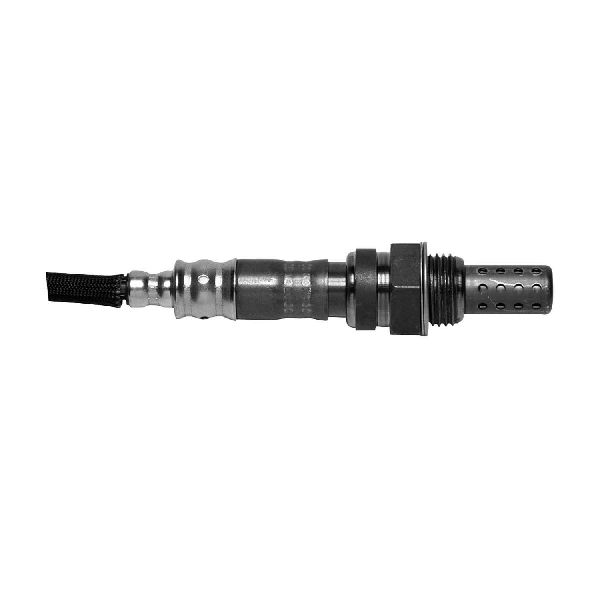
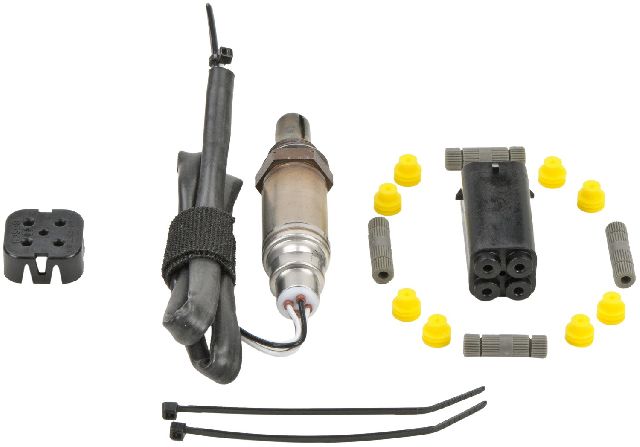
(OEM #Mopar 56041943AA (For 2001+ models, verify by VIN) or Mopar 56041944AA (Verify by VIN))— This is the component that contains the heater element reported as faulty by the P0135 code. Its failure is the most common cause.
Trusted brands: NTK (NGK) - Part #23138 is a commonly cited high-quality alternative., Denso, Bosch - (Note: Some owners report mixed results with Bosch on this platform), Mopar (OEM)
OEM price range: $100-$180
Aftermarket price range: $40-$80
Related Codes That Often Appear With This One
- P0132 — This code means 'O2 Sensor Circuit High Voltage (Bank 1, Sensor 1)'. It can appear with P0135 if there is a short circuit in the sensor or wiring that affects both the heater and signal circuits.
- P0171 — This code means 'System Too Lean (Bank 1)'. A slow-to-warm-up O2 sensor due to a failed heater can provide inaccurate readings, leading the PCM to miscalculate the fuel trim and set a lean code.
- P0138 — This code means 'O2 Sensor Circuit High Voltage (Bank 1, Sensor 2)'. While less common, wiring harness damage can sometimes affect multiple O2 sensor circuits simultaneously, causing codes for both upstream and downstream sensors.
Technical Service Bulletins (TSBs) & Recalls
- No specific TSBs were found for the P0135 code on the 1994-2001 Dodge Ram 1500 5.2L during the search. The issue is typically straightforward and does not require a special service bulletin.
- Manufacturer service bulletins for related heavy-duty models, such as TSB Bulletin #25-002-14, TSB Bulletin #25-003-13, and TSB Bulletin #25-004-12, explicitly define P0135 as "O2 Sensor 1/1 Heater Performance," confirming the diagnostic path for the heater circuit across the Ram platform.
Platform-Specific Known Issues
- These Chrysler/Dodge platforms of this era are notoriously 'finicky' about the brand of oxygen sensor used. Many owners in forums report that using brands other than OEM (Mopar) or NTK (who is often the original equipment manufacturer) can result in the code returning or other performance issues.
- A common point for the wiring harness to get damaged is where it lays across the top of the transmission bellhousing, an area subject to heat and vibration.
Mechanic-Grade Diagnostic Values
- O2 Sensor Heater Element Resistance — expected: 2.0 to 30.0 Ohms at room temperature (70°F / 21°C). Some sources cite a tighter range of 5-20 Ohms.. Failure: An infinite reading (open circuit) or near-zero reading (short circuit).
- O2 Sensor Heater Power Supply Voltage — expected: 10 to 12 Volts DC with Key On, Engine Off (KOEO).. Failure: Zero volts indicates a problem upstream of the sensor (blown fuse, bad ASD relay, or open wire).
- Heater Circuit Ground Wire Resistance — expected: Below 5.0 Ohms between the ground pin on the harness connector and a clean chassis ground.. Failure: High resistance indicates a poor ground connection, which is a common issue.
- PCM-Side Sensor Signal Reference Voltage — expected: Approximately 4.1V to 4.3V with sensor disconnected, key on, engine off.. Failure: Significantly lower or no voltage could indicate a PCM or wiring fault, though this is for the signal circuit, not the heater.
Wiring & Ground Locations

- B1S1 Connector Pin 1 (Vehicle Harness Side) — On the 4-pin O2 sensor connector, located above the transmission on the driver's side.. This pin carries the 12V power supply from the ASD relay. The wire is typically Dark Green with an Orange stripe (DK GRN/ORG). This is the first place to check for power.
- B1S1 Connector Pin 2 (Vehicle Harness Side) — On the 4-pin O2 sensor connector, located above the transmission on the driver's side.. This is the ground for the heater circuit, controlled by the PCM. A test here can determine if the ground path is intact.
- Engine to Chassis/Body Grounds — Key grounds are located on the back of the cylinder heads, from the engine block to the firewall, and from the negative battery terminal to the fender apron.. The O2 sensor heater circuit relies on a solid engine ground. A corroded or loose ground strap can cause high resistance in the circuit, triggering P0135 even with a good sensor and wiring.
- Harness Chafe Point — The wiring harness for the upstream O2 sensors is commonly routed over the top of the transmission bellhousing.. This area is exposed to significant heat and vibration, making it the most common location for wires to melt, chafe, and short out, causing the P0135 code.
Real Owner Repair Stories
- DodgeForum.com user 'latkelarry' (2000 Dodge Ram 1500 5.9L (CA emissions, 4 O2 sensors)) — P0132 (O2 Circuit High Voltage), P0135 (Heater Malfunction), and P0138 (Downstream High Voltage) codes appeared.
❌ Tried (didn't work) Initial continuity tests on the harness seemed okay.
✅ What actually fixed it The user swapped the Bank 1 (driver's side) sensors with the Bank 2 (passenger's side) sensors. The codes disappeared for about 40 miles before returning. This pointed away from a simple sensor failure and toward an intermittent wiring or PCM driver issue on the Bank 1 side, as the problem did not follow the sensor to the other bank.
Documented NHTSA Reports
- An owner reported in NHTSA ODI #10577984 that a P0135 code persisted even after replacing the O2 sensor, and noted that a manufacturer service bulletin suggested the repair was to flash the body controller for related electrical issues.
OEM Part Supersession History
Unknown→56041944AA— Standard part evolution and supplier changes.
Heads up: Part 56041944AA is listed for 2001-2004 5.2L/5.9L engines. While it may physically fit earlier models, connector types can differ. Pre-1996 models often used a round connector, while later models used a flat 4-pin connector. Always verify the connector style before purchasing.
Model Year Variations Within This Range
- 1994-1995: These models are typically OBD-I and may use a different code number for the same fault. They also more commonly feature a round-style O2 sensor connector, as opposed to the flat 4-pin connector on most 1996+ OBD-II models.
- 1996-1997 vs 1998-2001: The fuse location for the ASD relay, which powers the O2 heaters, may differ. For example, on 1998-2001 models, it is often Fuse #9 (20A) in the Power Distribution Center, while on earlier models, it may be in a different location like fuse #4. Always consult the owner's manual or fuse box lid for the specific year.
Diagnostic Flowchart
Used vs. New Parts: Buying Guide for This Vehicle
When a used part is the smart pick: For this repair, using a used part is generally not recommended for the oxygen sensor itself, as it is a wear item with a finite lifespan. However, sourcing a used wiring harness pigtail from a junkyard is a very smart choice if your connector is melted or damaged.
Donor-vehicle mileage cap: roughly under 100000 miles for the part to have meaningful remaining life.
What to inspect on the donor part:
- For a wiring pigtail, inspect for any signs of melting, brittleness, or cracked insulation.
- Ensure the connector's locking tab is intact and not broken.
- Check the terminals inside the connector for corrosion or signs of water intrusion (green or white powder).
OEM-only on this vehicle (don't cheap out):
- Oxygen Sensor - While not strictly 'OEM-only', the strong community consensus is that Mopar or NTK/NGK sensors are the only reliable options for this platform. Using other brands, especially Bosch, frequently leads to the code returning or other performance issues.
Aftermarket brands forum-validated for this vehicle:
- NTK (also known as NGK)
- Denso
Brands owners have reported issues with on this vehicle:
- Bosch (Many forum users report persistent codes or incompatibility with 2nd Gen Rams).
Real Owner Stories
Aggregated from forums and TSBs cited above. Mileages and costs reflect what owners reported in those sources.
2001 Dodge Ram 1500 5.2L
Symptoms: Truck ran like crap, had idling issues, and wanted to die when slowing down or stopped at a light. Also had terrible MPG and CEL codes P0135 and P0132.
What fixed it: Replacing the upstream O2 sensor with an OEM NTK part made the truck run 'AMAZING' for a short period, but the problems and codes returned, suggesting a deeper issue.
Source hint: RamForum.com thread titled 'Oxygen Sensor CEL codes P0132, P0135 | RamForum.com'
1998 Dodge Ram 1500 5.2L
Symptoms: Check Engine Light was on with code P0135, and the exhaust had a rich smell like gasoline.
What fixed it: The owner resolved the code by replacing the correct upstream (Bank 1, Sensor 1) oxygen sensor after initially replacing the rear sensor by mistake.
Source hint: BobIsTheOilGuy.com thread titled 'Code P0135 Dodge 1500 Ram?'
2000 Dodge Ram 5.9L
Symptoms: Check Engine Light on with multiple O2 sensor codes, including P0135.
What fixed it: The owner performed detailed diagnostics, including testing wiring continuity back to the PCM, to trace the fault before replacing parts.
Source hint: DodgeForum.com thread titled 'P0132, P0135, P0138 Codes'
Related OBD-II Codes
Frequently Asked Questions
What brand of oxygen sensor is best for my 1994-2001 Ram 5.2L?
Where is the Bank 1, Sensor 1 oxygen sensor located on my truck?
I replaced the O2 sensor but the code came back. What should I check next?
How can I test the old O2 sensor to confirm it was bad?
Which fuse do I check for the P0135 code on my 1999 Ram?
I have a 1998 Jeep Grand Cherokee with the 5.2L V8 and code P0135. Is this information relevant?
Are there any official recalls or TSBs for this P0135 issue?
Helpful Videos
We Have This Part in Stock

The information in this article is provided for general reference and educational purposes only. Vehicle specifications, procedures, and part compatibility can vary by production date, trim level, and region. Always consult your vehicle's factory service manual and verify part numbers before purchasing or performing repairs. Safety-critical components such as airbags, seat belts, and braking systems should be installed by a qualified professional.
- Dodge Ram 1500:
- 🎬 Helpful Videos
- 🛍️ Shop This Part
- What's Unique About the 1994-2001 Dodge Ram 1500
- Symptoms You May Notice
- Most Likely Causes
- Rare But Worth Checking
- Diagnosis Steps
- Parts You'll Likely Need
- Related Codes That Often Appear With This One
- Technical Service Bulletins (TSBs) & Recalls
- Platform-Specific Known Issues
- Mechanic-Grade Diagnostic Values
- Wiring & Ground Locations
- Real Owner Repair Stories
- Documented NHTSA Reports
- OEM Part Supersession History
- Model Year Variations Within This Range
- Diagnostic Flowchart
- Used vs. New Parts: Buying Guide for This Vehicle
- Real Owner Stories
- 2001 Dodge Ram 1500 5.2L
- 1998 Dodge Ram 1500 5.2L
- 2000 Dodge Ram 5.9L
- Related OBD-II Codes
- Frequently Asked Questions
- 🎟️ Get 5% Off