

P0134 on 2010-2018 Volvo V60 2.0L D4 Diesel: Causes and Fixes for No O2 Sensor Activity
P0134 on a Volvo V60 D4 almost always means the front (upstream) oxygen sensor has failed. This is a common wear item. Replacing the sensor, which costs between $100-$250 for an OEM-quality part, is the most frequent fix. Before replacing, check the sensor's fuse and wiring. Ignoring this fault will prevent DPF regeneration and lead to a much costlier DPF failure. DIY difficulty is 2/5 with the right tools.
- P0134 means the front (pre-catalytic converter) oxygen sensor is not working.
- The most likely cause by far is a failed sensor, which is a common wear item.
- Before buying a new sensor, always check its wiring and the associated fuse (likely in the engine bay fuse box) first to avoid a misdiagnosis.
- On this D4 diesel engine, ignoring this code WILL lead to clogging of the Diesel Particulate Filter (DPF), a much more expensive repair.
- Use a Genuine Volvo or OEM-supplier (Denso) sensor for the replacement; cheaper aftermarket parts are known to cause issues.
- Replacing the sensor is a DIY-friendly job with the correct 22mm (7/8") oxygen sensor socket.
What's Unique About the 2010-2018 Volvo V60
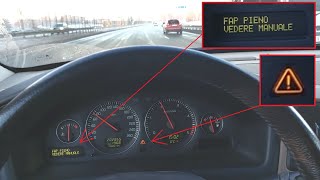
For the 2.0L D4 VEA diesel engine, the front oxygen sensor is a wideband type that provides precise feedback for managing the complex emissions system. Unlike in a gasoline engine where it primarily manages the air-fuel mixture for combustion, in this diesel application, its readings are a critical prerequisite for the health of the Diesel Particulate Filter (DPF). The ECM requires a valid signal from this sensor to confirm conditions are right to initiate an active DPF regeneration cycle. A faulty sensor with a P0134 code will block regeneration entirely, preventing the DPF from cleaning itself 🎬 Watch: How to manually regenerate and clean your Volvo DPF and inevitably leading to a 'Soot Filter Full' warning and potential DPF failure.
Generation note: The 2010-2018 V60 is the first generation (Y20). However, the engine specified, the 2.0L D4, is part of the VEA (Volvo Engine Architecture) family introduced around the 2014 model year. Earlier V60 diesels (approx. 2010-2013) used the older 5-cylinder diesel engines, which may have different sensor part numbers and locations. This guide focuses on the 4-cylinder 2.0L D4 VEA engine models.
Symptoms You May Notice
- Check Engine Light is on
- Reduced fuel economy
- Rough or unstable idle
- Noticeable black smoke from the exhaust during acceleration.
- Potential for DPF warning light to illuminate with a 'Soot Filter Full' message due to failed regeneration cycles.
- Engine running in open-loop fault mode (may show as 'OL-FAULT' on some scan tools).
- Hesitation during acceleration.
- Replacing the rear (downstream) O2 sensor. P0134 specifically refers to Sensor 1, which is the upstream sensor.
- Replacing the catalytic converter or DPF. While a bad sensor can lead to DPF issues, the sensor itself is the cause of this specific code, not the filter.
- Immediately replacing the O2 sensor without checking the wiring or fuse first. A forum user on volvoforum.pl with a 2016 V60 D4 replaced the sensor, but the P0134 code remained, indicating the actual problem was likely in the wiring.
Most Likely Causes
- Failed Front Oxygen Sensor 🔴 High Probability Oxygen sensors are wear-and-tear components operating in a harsh environment. The internal heating element is a common failure point, which prevents the sensor from reaching operating temperature and triggers a 'no activity' code. Contamination from soot, oil, or coolant can also degrade and kill the sensor.
How to confirm: Use an OBD-II scanner with live data. The voltage for Bank 1 Sensor 1 will be stuck at a fixed value (e.g., 0.45V) or show no reading, and will not fluctuate rapidly when the engine is warm. A healthy sensor fluctuates constantly between ~0.1V and ~0.9V. You can also test the resistance of the sensor's internal heater circuit with a multimeter (an open circuit means it's failed).
Typical fix: Replace the front (upstream) oxygen sensor. This requires a special slotted 22mm (7/8") oxygen sensor socket.
Est. part cost: $100-$250 - Damaged Wiring or Connector 🟡 Medium Probability The sensor's wiring harness is routed near the hot exhaust and can become brittle, melt, or chafe over time. The connector itself can also suffer from water ingress leading to corrosion, or pins can back out, causing an open circuit.
How to confirm: Visually inspect the entire length of the wiring from the sensor to the main harness. Look for melted plastic, chafing against the chassis, or green/white corrosion inside the connector plug. Use a multimeter to check for continuity on the signal wires and for 12V power and ground at the heater circuit pins with the key on.
Typical fix: Repair the damaged section of wire or replace the connector pigtail. Clean corroded terminals with electrical contact cleaner. Secure the harness away from heat sources.
Est. part cost: $10-$50 - Blown O2 Sensor Heater Fuse ⚪ Low Probability A short circuit in the sensor's heater element or its wiring can cause the associated fuse to blow. This cuts power to the heater, preventing the sensor from warming up and causing a 'no activity' fault.
How to confirm: Locate the fuse for the O2 sensor heater circuit. On this platform, it is typically in the fuse box in the engine compartment. It is often a 10A or 15A fuse. Visually inspect the fuse or test it for continuity with a multimeter.
Typical fix: Replace the blown fuse. If the new fuse blows immediately, it indicates a persistent short circuit in the wiring or the sensor itself that must be diagnosed and fixed first.
Est. part cost: $1-$5 - Exhaust Leak ⚪ Low Probability Gaskets at the exhaust manifold or turbo, and flex pipes can fail over time, creating leaks. While less likely to cause a 'no activity' code than a lean/rich code, a large leak right before the sensor can introduce so much fresh air that it makes the sensor's reading appear flat or nonsensical to the ECM.
How to confirm: Listen for a ticking or hissing sound from the engine bay that changes with engine RPM. You can also use a smoke machine to introduce smoke into the exhaust system (when cold) and look for where it escapes.
Typical fix: Replace the leaking exhaust gasket or repair the cracked pipe.
Est. part cost: $20-$100
Rare But Worth Checking
- Faulty Engine Control Module (ECM): This is extremely rare. The ECM should only be considered after all other possibilities, including the sensor, wiring, and fuses, have been exhaustively tested and ruled out.
- Faulty Related Sensor (e.g., MAF/IAT): In rare cases, a fault in another primary engine sensor like the Mass Airflow (MAF) or Intake Air Temp (IAT) sensor can cause the engine to enter an open-loop fault mode. In this state, the ECM may ignore the O2 sensor signal, leading to a secondary P0134 code. Always check for other DTCs.
Diagnosis Steps
- Read the codes with an OBD-II scanner to confirm P0134 is present. Check for any other codes (e.g., for MAF, IAT, or heater circuit faults) that could be the root cause.
- Visually inspect the front oxygen sensor's wiring harness for any signs of melting, chafing, or loose connections. Pay close attention to where it might contact the exhaust or engine block. Unplug the connector and check for corrosion.
- Locate and check the fuse for the oxygen sensor heater circuit in the engine bay fuse box. Replace if blown.
- Use a scan tool to observe live data for 'O2 Sensor Voltage Bank 1 Sensor 1'. When the engine is fully warmed up, the voltage should fluctuate rapidly. If the voltage is static (e.g., stuck at 0.45V), zero, or otherwise unresponsive as the engine is revved, it confirms a lack of activity.
- If the wiring and fuse are good, test the sensor itself. Disconnect the sensor and use a multimeter to measure the resistance across the two heater pins (usually the two same-colored wires). An infinite resistance reading (open circuit) means the internal heater has failed and the sensor must be replaced.
- Check for exhaust leaks between the cylinder head and the front O2 sensor.
- If the wiring, fuse, and exhaust are all confirmed to be good, the oxygen sensor itself is faulty and should be replaced. It is highly recommended to use a genuine or OEM-supplier part.
Parts You'll Likely Need
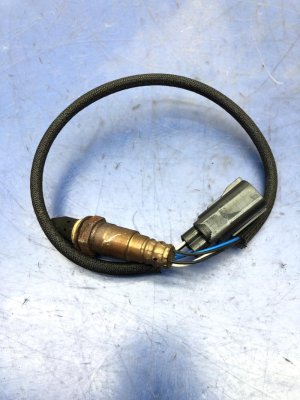
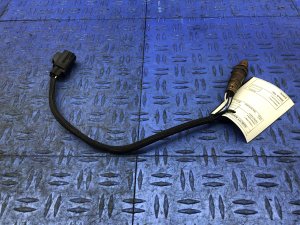
- Front (Upstream) Oxygen Sensor
(OEM #32253994 (current), supersedes 31422059, 31370666)— This is the component that has failed in the vast majority of P0134 cases. It is a standard maintenance part that wears out. It is highly recommended to use a Genuine Volvo or OEM supplier (Denso) part. Owners on forums frequently report that cheaper aftermarket sensors may not work correctly and can cause the code to return.
Trusted brands: Genuine Volvo, Denso
OEM price range: $200-$280
Aftermarket price range: $100-$180
Related Codes That Often Appear With This One
- P0131 (O2 Sensor Circuit Low Voltage) - This can sometimes appear with P0134 if there is an intermittent wiring problem.
Platform-Specific Known Issues
- A primary specific issue for the V60 D4 is the immediate impact on the DPF system. The P0134 fault will inhibit active DPF regeneration, quickly leading to the 'Soot Filter Full See Manual' message on the driver display. This is the car's final warning before the DPF clogs to the point of needing a forced regeneration at a dealer or, in worst cases, a full replacement.
Mechanic-Grade Diagnostic Values
- Front O2 Sensor Heater Circuit Resistance — expected: Approximately 2.4 Ohms ± 0.24 Ohms at 20°C (68°F). Some sources state a general good range is between 3-25 Ohms depending on the specific sensor.. Failure: An infinite resistance reading (Open Loop or 'OL' on a multimeter) indicates a burned-out heater element, requiring sensor replacement.
- Front O2 Sensor Signal Voltage (Live Data) — expected: On a wideband sensor for this diesel application, the voltage reading in VIDA or a capable scanner should not be static. While it won't fluctuate rapidly between 0.1V and 0.9V like a traditional narrowband sensor, it should show responsive changes to engine load.. Failure: A completely flat, unresponsive voltage reading (e.g., stuck at 0.45V or 0V) while the engine is running and warm confirms the 'No Activity' fault.
- Engine Ground Voltage Drop — expected: Less than 0.1 Volts (100mV).. Failure: A reading higher than 0.1V indicates high resistance in the ground circuit, which can cause erratic sensor behavior.
Hidden / Shadow Codes Worth Checking
- ECM-P013400: This is the Volvo-specific format for the generic P0134 code. It may be accompanied by a heater circuit-specific code like ECM-2810 (Front heated oxygen sensor (HO2S) heating). (see via Volvo's VIDA/DICE diagnostic software or a high-end professional scanner capable of reading manufacturer-specific codes.)
Scan Tool Commands That Help
- Volvo VIDA: Live Data Monitoring — Use this to graph the front O2 sensor's signal in real-time. A flat line confirms the 'no activity' fault. VIDA can monitor up to 10 parameters at once, allowing you to correlate the O2 sensor signal with other inputs like MAF and engine temperature.
- High-End Scanners (e.g., YOUCANIC, iCarsoft): Transmission Adaptation Reset — After replacing the O2 sensor and clearing the P0134 code, performing a transmission adaptation reset can be beneficial. The ECU may have stored incorrect fuel trim and shifting strategies while operating in the fault condition; this function resets the values to their factory defaults.
Wiring & Ground Locations
- Engine Block to Firewall Ground Strap — A braided metal strap typically running from the top or rear of the engine's valve cover to a bolt on the vehicle's firewall.. This is a primary ground path for the engine and its sensors. Corrosion or a loose connection here can create electrical noise and voltage drops, potentially causing the ECM to misinterpret the O2 sensor signal or lack thereof.
- Alternator Ground — The alternator case grounds to the engine block via its mounting bracket. There should also be a main ground cable from the engine block to the chassis/body.. A poor alternator or engine block ground can cause unstable voltage throughout the vehicle's electrical system, affecting the heater circuit and signal reference for the O2 sensor.
- Strut Tower Grounds — On the driver and passenger side strut towers in the engine bay, there are several ground points where multiple wires from the engine harness connect to the chassis.. The engine wiring harness, which includes the O2 sensor wiring, relies on these points for a clean ground. They are exposed to the elements and can become corroded.
Real Owner Repair Stories
- Volvo XC Forums user 'Thames' (1999 Volvo (ME7 engine management, similar diagnostic principles)) — P0134 O2 Sensor no activity, rough idle.
❌ Tried (didn't work) Clearing the code would make the car run fine for a few miles, but the CEL would always return.
✅ What actually fixed it A shop using VIDA found an O2 sensor heater fault. The plastic pin holding the two halves of the sensor's electrical connector together was snapped. They cleaned the connector and secured it with zip ties. Although the code returned for this user (suggesting the sensor itself was also faulty), a broken/loose connector is a confirmed mechanical cause for the P0134 code.
OEM Part Supersession History
31370666→31422059, then current part 32253994— Standard part revision and supplier updates over the vehicle's production life.
Heads up: The OEM supplier is Denso (part DOX-0535). While the physical connector may be the same, using non-OEM or incorrect aftermarket sensors is a common cause of repeat P0134 codes on this platform. The ECM is sensitive to the specific resistance and response characteristics of the OEM sensor.
Model Year Variations Within This Range
- 2010-2013: Pre-2014 V60 diesels primarily used the older 5-cylinder diesel engines (D3, D4, D5). While the function of the front O2 sensor is similar, the part numbers, wiring locations, and specific diagnostic values may differ from the 4-cylinder VEA engine covered here.
- 2014-2018: These models use the 2.0L 4-cylinder VEA engine (D4204T family). This guide is specifically tailored to this engine architecture, including the Denso wideband O2 sensor and its critical role in DPF regeneration.
Diagnostic Flowchart
Real Owner Stories
Aggregated from forums and TSBs cited above. Mileages and costs reflect what owners reported in those sources.
2016 Volvo V60 2.0 D4
Symptoms: Check engine light is on for a long time, with codes P0131 and P0134.
What fixed it: The owner had not found a fix at the time of posting. Replacing the first oxygen sensor (Bank 1 Sensor 1) did not solve the problem. A moderator suggested the problem was more likely related to electrical contacts or a short circuit rather than the sensor itself.
Source hint: Forum Volvo (volvoforum.pl) - Thread: '[V60,2.0 D4,2016r.] błąd sondy P0131 i P0134'
Related OBD-II Codes
Frequently Asked Questions
Will the P0134 code affect the DPF system on my V60 D4?
I replaced the front oxygen sensor on my 2016 V60 D4, but the P0134 code is still there. What else could it be?
Where is the oxygen sensor heater fuse located on the 2010-2018 V60?
Do I need any special tools to replace the front O2 sensor on the 2.0L D4 engine?
Is this P0134 issue common on other Volvos with the 2.0L D4 engine?
Should I use an aftermarket oxygen sensor to fix the P0134 code on my V60?
Helpful Videos
We Have This Part in Stock

The information in this article is provided for general reference and educational purposes only. Vehicle specifications, procedures, and part compatibility can vary by production date, trim level, and region. Always consult your vehicle's factory service manual and verify part numbers before purchasing or performing repairs. Safety-critical components such as airbags, seat belts, and braking systems should be installed by a qualified professional.
- Volvo V60:
- 🎬 Helpful Videos
- 🛍️ Shop This Part
- What's Unique About the 2010-2018 Volvo V60
- Symptoms You May Notice
- Most Likely Causes
- Rare But Worth Checking
- Diagnosis Steps
- Parts You'll Likely Need
- Related Codes That Often Appear With This One
- Platform-Specific Known Issues
- Mechanic-Grade Diagnostic Values
- Hidden / Shadow Codes Worth Checking
- Scan Tool Commands That Help
- Wiring & Ground Locations
- Real Owner Repair Stories
- OEM Part Supersession History
- Model Year Variations Within This Range
- Diagnostic Flowchart
- Real Owner Stories
- 2016 Volvo V60 2.0 D4
- Related OBD-II Codes
- Frequently Asked Questions
- 🎟️ Get 5% Off