

P0132 on 2009-2017 Audi Q5 2.0T: O2 Sensor High Voltage Causes and Fixes
On a 2009-2017 Audi Q5 2.0T, code P0132 is most often caused by a failed front oxygen sensor (Bank 1, Sensor 1). However, it can also indicate the engine is running rich due to other issues like a leaking fuel injector or a failed PCV valve. Expect to pay $80-$160 for a quality aftermarket sensor (Bosch is OEM supplier) and $180-$280 for a genuine Audi part. DIY difficulty is 2/5, requiring a 22mm O2 sensor socket.
- P0132 most often means you need a new front oxygen sensor (Bank 1, Sensor 1).
- Before buying a new sensor, use a scan tool to watch its live voltage and fuel trims. If voltage is stuck high but fuel trims are highly negative, the problem is NOT the sensor.
- If you also have a P0172 (System Too Rich) code, the problem is almost certainly a fuel delivery issue (leaking injector) or a vacuum leak (bad PCV valve).
- Always use a quality, direct-fit replacement sensor from a brand like Bosch (the OEM supplier) to avoid future issues.
- Continued driving with this code can ruin your catalytic converter, a much more expensive repair.
What's Unique About the 2009-2017 Audi Q5
For the Audi Q5's 2.0T TFSI engine (engine codes CAEB, CPMA), the P0132 code is a straightforward diagnostic trouble code. Unlike some other issues on this platform (like timing chain or oil consumption problems), this code typically points directly to the O2 sensor or a fundamental fuel mixture problem. The key is to determine if the sensor is faulty or if it's accurately reporting a rich condition caused by another component. Common culprits for a rich condition on this engine include a leaking fuel injector, a failed PCV valve creating a vacuum leak that the ECU overcompensates for, or a faulty high-pressure fuel pump (HPFP).
Generation note: The 2009-2017 model years cover the entire first generation of the Audi Q5 (Typ 8R). This generation had a significant facelift for the 2013 model year. While the causes and diagnostic principles for P0132 are the same, the exact oxygen sensor part number may differ between pre-facelift (2009-2012, primarily CAEB engine) and post-facelift (2013-2017, primarily CPMA engine) models. Always verify the part number with your vehicle's VIN. The OEM supplier for these sensors is typically Bosch.
Symptoms You May Notice
- Check Engine Light is on
- Decreased fuel economy
- Rough or uneven engine idle
- Engine hesitation during acceleration
- Black smoke from the exhaust, especially on startup
- Smell of gasoline or rotten eggs from the exhaust
- Immediately replacing the O2 sensor without checking fuel trims or for other codes. If another problem (like a leaky injector) is causing a rich condition, the new sensor will also read high voltage, and the P0132 code will return.
Most Likely Causes
- Failed Upstream Oxygen Sensor (Bank 1, Sensor 1) 🔴 High Probability Oxygen sensors are wear-and-tear items operating in a harsh exhaust environment. High mileage, oil consumption (a known issue on 2.0T engines), and carbon buildup can contaminate the sensor, causing it to fail. Failure is common on vehicles with over 80,000 miles.
How to confirm: Use a scan tool (like VCDS or OBDeleven) to monitor the live voltage data for Bank 1, Sensor 1. A healthy sensor will show voltage fluctuating rapidly between approximately 0.1V and 0.9V. If the voltage is stuck high (e.g., >0.9V) and does not fluctuate even when revving the engine, the sensor is almost certainly faulty.
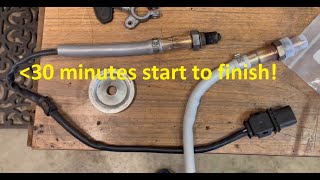
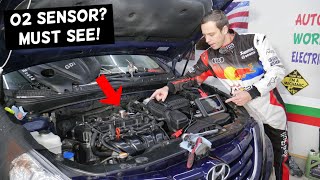
Typical fix: Replace the front (pre-catalytic converter) 🎬 Watch: A quick guide to locating the Bank 1 sensor. oxygen sensor. Use a 22mm offset oxygen sensor socket 🎬 Watch: This DIY guide shows how to replace the upstream sensor. for removal and installation. Applying penetrating oil beforehand is highly recommended as the sensor can be seized.
Est. part cost: $80-$280 - Engine Running Rich 🟡 Medium Probability Direct injection engines like the 2.0T TFSI can be prone to issues like leaking fuel injectors or a failed PCV valve. A torn PCV diaphragm creates a large vacuum leak, which the ECU tries to correct by adding more fuel, leading to a rich condition that the O2 sensor correctly reports.
How to confirm: Check for other diagnostic trouble codes, especially P0172 (System Too Rich). Monitor short-term and long-term fuel trims (STFT/LTFT). Consistently negative values (e.g., -10% or more) confirm the ECU is pulling fuel to compensate for a rich condition. A professional may need to test the fuel injectors for leaks.
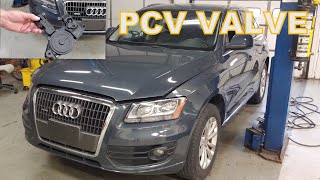
Typical fix: Diagnose and repair the underlying cause. This could be replacing a leaking fuel injector, replacing the PCV valve assembly, 🎬 See how to diagnose and change a failing PCV valve. or addressing a faulty fuel pressure regulator or Mass Airflow (MAF) sensor.
Est. part cost: $50-$600+ - Wiring or Connector Damage ⚪ Low Probability The wiring harness for the O2 sensor runs close to hot exhaust components and the firewall. Over time, the plastic conduit can become brittle and the wires can be damaged by heat or chafing, causing a short to voltage.
How to confirm: Visually inspect the entire wiring harness from the O2 sensor to its connection point on the firewall. Look for any signs of melting, chafing, corrosion, or loose pins in the connector. Use a multimeter to check for continuity and shorts in the wiring.
Typical fix: Repair the damaged section of the wiring harness or replace the connector pigtail.
Est. part cost: $20-$100
Rare But Worth Checking
- Exhaust Leak: An exhaust leak *before* the O2 sensor can draw in outside air, confusing the sensor and causing the ECU to enrich the fuel mixture to compensate. This can lead to a P0132 code. Check the exhaust manifold and downpipe flange for soot trails or audible leaks.
- Faulty Powertrain Control Module (PCM): In very rare cases, the engine computer itself can fail and misinterpret the sensor's signal. This should only be considered after all other possibilities, including wiring, have been exhaustively ruled out by a professional.
Diagnosis Steps
- Read the codes with an OBD-II scanner. Note any other codes present, especially P0172 or P0135.
- Use the scanner's live data function to observe the voltage of 'O2 Sensor Bank 1 Sensor 1'.
- If the voltage is stuck high (above 0.9V) and does not fluctuate, the sensor is likely bad or there is a severe rich condition.
- Check live data for Short Term Fuel Trim (STFT) and Long Term Fuel Trim (LTFT). If LTFT is highly negative (e.g., -10% or lower), the engine is running rich, and the O2 sensor is likely doing its job correctly. The problem lies elsewhere.
- Inspect the oxygen sensor's wiring harness and connector for any visible damage, melting, or corrosion.
- If fuel trims indicate a rich condition, investigate common causes. Check the PCV system for leaks (a whistling sound at idle is a common symptom). A professional diagnosis may be needed to check for leaking fuel injectors.
- Check for exhaust leaks between the engine and the front O2 sensor. A leak can often be heard as a ticking or puffing sound, especially when the engine is cold.
- If wiring is good, fuel trims are normal, and voltage is stuck high, the most likely cause is a failed oxygen sensor. Replace it with a quality OEM or equivalent part.
- After repair, clear the codes and perform a drive cycle to ensure the code does not return.
Parts You'll Likely Need
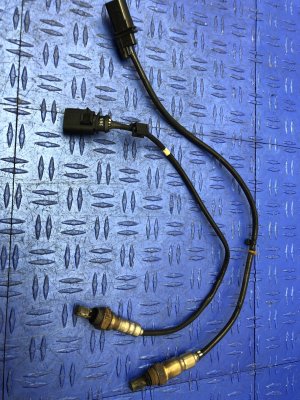
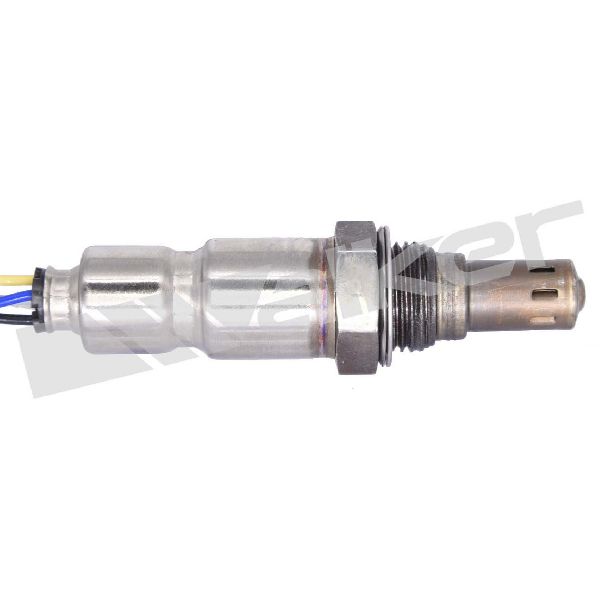
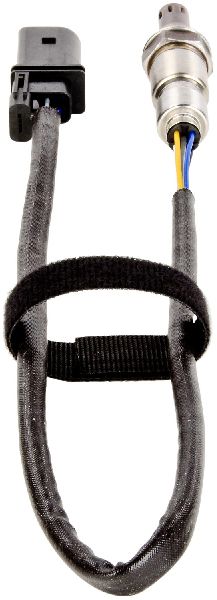
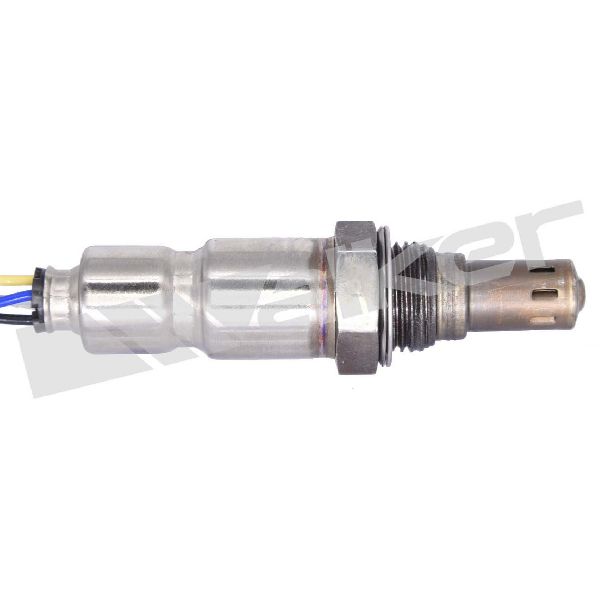
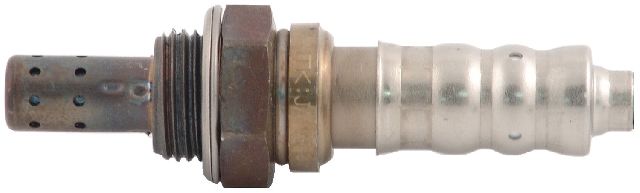
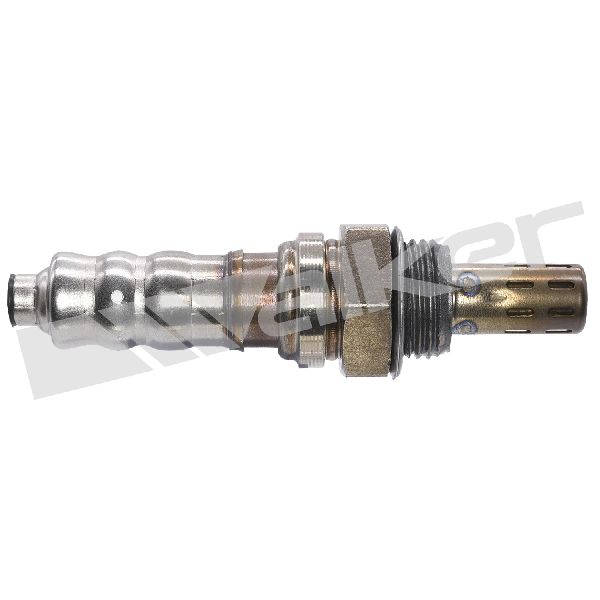
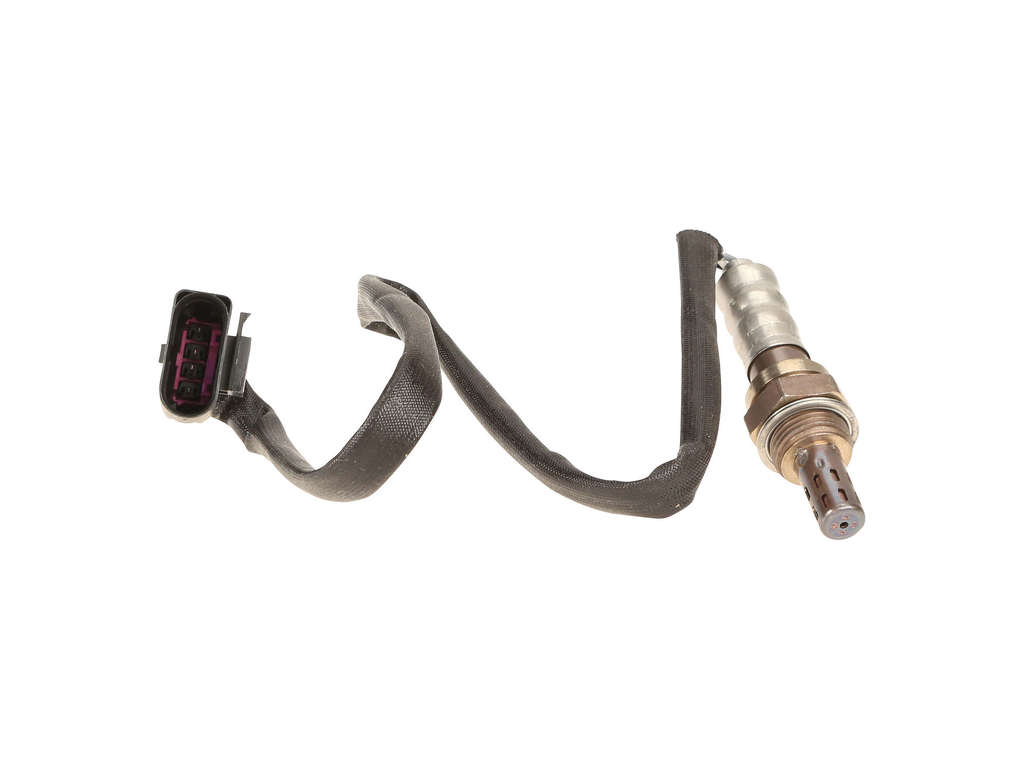
- Front Oxygen Sensor (Bank 1, Sensor 1)
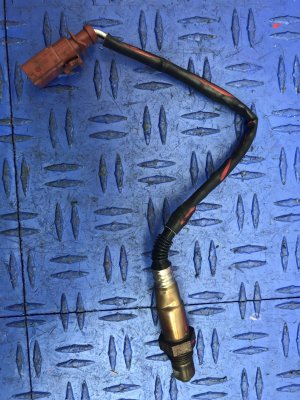
(OEM #06J906262AA)— This is the sensor that generates the signal monitored by the P0132 code. It is the most common failure point for this specific code.
Trusted brands: Bosch (OEM Supplier), Denso, NTK
OEM price range: $180-$280
Aftermarket price range: $80-$160
Related Codes That Often Appear With This One
- P0172 — P0172 means 'System Too Rich (Bank 1)'. If you see this code with P0132, it's a strong indication that the O2 sensor is correctly reporting a rich condition, and the root cause is likely a fuel delivery or vacuum issue (like a leaking injector or bad PCV) rather than a bad sensor.
- P0135 — P0135 indicates a fault in the 'O2 Sensor Heater Circuit (Bank 1, Sensor 1)'. The heater circuit warms the sensor to operating temperature quickly. Since the heater and signal circuits are part of the same physical component, seeing both codes together strongly suggests the O2 sensor itself has failed internally and needs replacement.
Technical Service Bulletins (TSBs) & Recalls
- tsb: TSB 2027732/04 - While not directly for P0132, this TSB addresses EVAP system incorrect flow (P0441) on some 2.0T models. EVAP system faults can sometimes contribute to improper fueling calculations that may indirectly lead to rich conditions and trigger O2 sensor codes.
Platform-Specific Known Issues
- Owner Experience: Rich Condition due to PCV Failure: An owner on an Audi forum described chasing a P0132 code that kept returning after sensor replacement. The root cause was a cracked PCV hose near the intake manifold, which created a vacuum leak. The ECU compensated by adding excess fuel, causing the O2 sensor to read a constant rich condition and trigger the code. Replacing the hose fixed everything.
- Owner Experience: Leaking Fuel Injector: On an AudiWorld thread, a B7 A4 2.0T owner with P0132 and P0172 codes replaced the O2 sensor, but the problem persisted. A professional diagnosis involving an injector leak-down test revealed one fuel injector was leaking fuel into the cylinder. Replacing the faulty injector resolved both codes and the rough idle.
Mechanic-Grade Diagnostic Values
- O2 Sensor Heater Circuit Resistance — expected: 4-20 Ohms when cold. Failure: An open circuit (infinite resistance) or very high resistance reading indicates a broken internal heater element.
- High-Pressure Fuel Rail Pressure at Idle — expected: ~40 bar (~580 PSI). Failure: Significantly lower pressure (e.g., 6-10 bar) at idle can indicate a failing High-Pressure Fuel Pump (HPFP). Spikes or erratic readings can also indicate a problem.
- Low-Pressure Fuel System Pressure — expected: 50-70 PSI. Failure: Pressure below this range points to a weak in-tank fuel pump, which will starve the HPFP.
- Audi-Specific DTC Threshold for P0132 — expected: Normal Nernst voltage < 4.40 V, Adjustment voltage < 7 V. Failure: The ECU will set code P0132 if the Nernst cell voltage exceeds 4.40V or the adjustment voltage exceeds 7V, indicating a persistent high voltage signal.
Scan Tool Commands That Help
- VCDS (VAG-COM): Measuring Value Block 140 — This block is used to monitor high-pressure fuel rail pressure. It displays both the specified (requested by ECU) and actual pressure. A large deviation between these two values under load is a key indicator of a fuel delivery problem (like a failing HPFP) that could cause a rich condition and P0132.
- VCDS (VAG-COM): Clear All DTCs — Beyond just clearing the code, performing this function on an Audi ECM also resets learned values like fuel trims to zero. This is a critical step after a repair to allow the ECU to re-adapt to the new or repaired components without fighting against old, incorrect learned adjustments.
Wiring & Ground Locations
- Engine to Chassis Ground Strap — A primary ground strap runs from the engine/transmission assembly to the chassis, often near a motor mount. On the Q5, one is located on the motor mount itself.. A corroded or loose main engine ground can create a floating ground, causing erratic voltage readings on various sensors, including the O2 sensor. The sensor's signal is a low-voltage reading relative to ground, so an unstable ground reference can cause the reading to appear artificially high to the ECU.
- Ground Connection 12 — Located in the engine compartment on the left side (driver's side in LHD models).. This is a major grounding point for many engine bay components. A poor connection here can introduce electrical noise and resistance into sensor circuits, potentially affecting the O2 sensor signal.
- O2 Sensor Connector (Bank 1, Sensor 1) — The connector for the upstream O2 sensor is a 4-pin plug, typically black, with part number 8K0973704. It connects the sensor to the main engine harness near the firewall.. Corrosion or damage specifically at this connector can cause a short or high resistance on the signal wire, leading directly to a P0132 code. The pins to test are the two heater wires (for resistance) and the signal/ground wires (for voltage).
Real Owner Repair Stories
- Reddit user, r/AskMechanics (2012 Audi Q5, 75k miles) — After hard acceleration, CEL and EPC lights came on, engine shuddered hard, strong gas smell, and smoke from exhaust. Extreme suction on oil cap.
❌ Tried (didn't work) Initially just replacing the PCV diaphragm.
✅ What actually fixed it The user discovered a PCV hose had become completely disconnected. Plugging the hose back in and replacing the diaphragm resolved the extreme crankcase vacuum, but the shudder and codes remained until the full PCV assembly and associated hoses were replaced with new OEM parts. - AudiWorld Forums user 'tcohrs93' (2012 Audi Q5 2.0T (CAEB engine), 112k miles) — Catastrophic engine failure due to oil consumption issues.
❌ Tried (didn't work) N/A - Engine was already destroyed.
✅ What actually fixed it The owner swapped the problematic CAEB engine with a lower-mileage CPMB engine from a 2016 A4. The swap required transferring the intake manifold, accessory mount (for the power steering pump), and the original crank position sensor (due to a different connector). The factory ECU and wiring harness were used, and the swap was successful with no check engine lights.
OEM Part Supersession History
06F906262R, 06F906262AC→06J906262AA— Part revision and consolidation by the manufacturer.
Heads up: 06J906262AA is the latest revision and is backward compatible with the previous part numbers for this application.
Model Year Variations Within This Range
- 2009-2012 (Pre-facelift) vs. 2013-2017 (Post-facelift): Pre-facelift models primarily use the CAEB engine. Post-facelift models use the updated CPMA (and later CPMB) flex-fuel capable engines. While mechanically similar, there are key differences if swapping engines. The CPMA/B engines may have a different crank position sensor connector, a different accessory mount (not set up for hydraulic power steering), and require using the original intake manifold and injectors if converting from a flex-fuel donor.
Diagnostic Flowchart
Other Known Issues on This Vehicle
Issues unrelated to this code that are worth knowing about as an owner of this generation:
- Excessive Oil Consumption 🔴 High — Very common on 2009-2014 2.0T (CAEB engine code) models, often starting around 50k-80k miles. Caused by faulty piston ring design. Less common on post-facelift 2015+ models but still possible. (Ref: Subject of a class-action lawsuit which led to an extended warranty and reimbursement program for piston/ring replacement.)
- Timing Chain Tensioner Failure 🔴 High — A critical issue for pre-2013 models with the original tensioner design. Failure can occur with little warning, often between 60k-100k miles, leading to catastrophic engine damage. The primary symptom is a metallic rattle for 1-3 seconds on a cold start. (Ref: VW/Audi updated the tensioner design (part # 06K109467K for a later generation). No recall, but it's a widely documented failure.)
- PCV Valve Failure 🟠 Medium — Common across all model years, typically failing every 60k-90k miles. A failed PCV diaphragm causes high crankcase vacuum, leading to a whistling/honking noise, rough idle, lean codes (P0171, P2187), and potential damage to engine seals. (Ref: P052E is a common fault code associated with this failure.)
- Water Pump & Thermostat Housing Leaks 🟠 Medium — The plastic water pump/thermostat housing is prone to cracking and leaking coolant, often noticed around 70k-100k miles. Symptoms include a sweet coolant smell, visible pink/purple residue, and low coolant warnings.
- Intake Valve Carbon Buildup 🟠 Medium — As a direct-injection engine, fuel doesn't wash over the intake valves. This leads to significant carbon buildup over 50k-80k miles, causing misfires, hesitation, and reduced performance. Walnut blasting is the standard cleaning procedure.
Used vs. New Parts: Buying Guide for This Vehicle
When a used part is the smart pick: For this repair, using used parts is generally not recommended for the sensors or PCV system. However, if the root cause is a damaged wiring harness connector pigtail, a used pigtail from a salvage yard is a perfectly acceptable and cost-effective repair.
Donor-vehicle mileage cap: roughly under 80000 miles for the part to have meaningful remaining life.
What to inspect on the donor part:
- For a connector pigtail, inspect for any signs of brittleness, cracking, or corrosion on the pins.
- Ensure the locking tab on the connector is intact and functional.
- Check that at least 6-8 inches of wire are attached to make splicing easy.
OEM-only on this vehicle (don't cheap out):
- PCV Valve / Oil Separator: Aftermarket PCV valves for the 2.0T are notoriously unreliable and can fail quickly, leading to a repeat of the original problem. Sourcing an OEM or OEM-supplier part is critical.
- Oxygen Sensor: While top-tier aftermarket brands are good, cheap, no-name online sensors are known to have high failure rates, incorrect voltage ranges, or slow response times, causing the code to return.
Aftermarket brands forum-validated for this vehicle:
- Bosch (OEM supplier for the oxygen sensor)
- NTK (for oxygen sensors)
- Denso (for oxygen sensors)
Brands owners have reported issues with on this vehicle:
- Unbranded or generic "white-box" oxygen sensors and PCV valves commonly found on marketplaces like Amazon or eBay.
Real Owner Stories
Aggregated from forums and TSBs cited above. Mileages and costs reflect what owners reported in those sources.
2009-2017 Audi Q5 2.0T
Symptoms: The P0132 code kept returning even after the oxygen sensor was replaced. The engine was experiencing a rich condition.
What fixed it: Replacing a cracked PCV hose near the intake manifold which had created a vacuum leak.
Source hint: vehicle_specific_issues: Owner Experience: Rich Condition due to PCV Failure
Audi B7 A4 2.0T
Symptoms: P0132 and P0172 codes were present along with a rough idle. Replacing the O2 sensor did not fix the problem.
What fixed it: Replacing a faulty fuel injector that was found to be leaking fuel into the cylinder during a leak-down test.
Source hint: vehicle_specific_issues: Owner Experience: Leaking Fuel Injector
2008-2016 Audi A4 (B8) 2.0T
Symptoms: P0132 and P0172 codes appeared together; the owner was investigating if the sensor itself was the root cause.
What fixed it: Repairing a vacuum leak at the suction jet pump.
Source hint: Audizine Forum Thread: 'P0132 and P0172 - My diagnostic journey'
Related OBD-II Codes
Frequently Asked Questions
Could my 2009-2017 Audi Q5's high oil consumption be causing my P0132 code?
Does TSB 2027732/04 relate to my O2 sensor code?
I hear a whistling sound at idle along with the P0132 code; what should I check?
What specific tool do I need to replace the Bank 1 Sensor 1 O2 sensor on my Q5?
Is there a specific part number for the updated timing chain tensioner mentioned in the context?
Helpful Videos

![How to Fix P0172 Engine Code in 2 Minutes [2 DIY Methods / Only $8.77]](https://img.youtube.com/vi/PpFuGHxnD0g/mqdefault.jpg)
Used OEM Parts in Stock

New Aftermarket Parts Available

The information in this article is provided for general reference and educational purposes only. Vehicle specifications, procedures, and part compatibility can vary by production date, trim level, and region. Always consult your vehicle's factory service manual and verify part numbers before purchasing or performing repairs. Safety-critical components such as airbags, seat belts, and braking systems should be installed by a qualified professional.
- Audi Q5:
- 🎬 Helpful Videos
- 🛍️ Shop This Part
- What's Unique About the 2009-2017 Audi Q5
- Symptoms You May Notice
- Most Likely Causes
- Rare But Worth Checking
- Diagnosis Steps
- Parts You'll Likely Need
- Related Codes That Often Appear With This One
- Technical Service Bulletins (TSBs) & Recalls
- Platform-Specific Known Issues
- Mechanic-Grade Diagnostic Values
- Scan Tool Commands That Help
- Wiring & Ground Locations
- Real Owner Repair Stories
- OEM Part Supersession History
- Model Year Variations Within This Range
- Diagnostic Flowchart
- Other Known Issues on This Vehicle
- Used vs. New Parts: Buying Guide for This Vehicle
- Real Owner Stories
- 2009-2017 Audi Q5 2.0T
- Audi B7 A4 2.0T
- 2008-2016 Audi A4 (B8) 2.0T
- Related OBD-II Codes
- Frequently Asked Questions
- 🎟️ Get 5% Off