

P0128 on 2015-2020 Ford Edge: Causes and Fixes for Coolant Temperature Fault
On a 2015-2020 Ford Edge, the P0128 code most often means the thermostat is stuck open and needs replacement. Other common causes include a faulty engine coolant temperature (ECT) sensor, its wiring, or low coolant. Expect to pay $150-$450 for a professional thermostat replacement, with costs varying by engine type.
- P0128 means your Ford Edge's engine is not warming up to the correct temperature quickly enough.
- The most common fix is replacing the engine thermostat, which is likely stuck open.
- Before replacing parts, always check the coolant level first. Low coolant can trigger this code and may indicate a leak.
- On 2.0L EcoBoost engines, be aware of TSBs pointing to a leaking EGR cooler or the need for a PCM software update.
- A faulty Engine Coolant Temperature (ECT) sensor or its wiring is another likely cause specific to this platform.
What's Unique About the 2015-2020 Ford EDGE
For the 2015-2020 Ford Edge, the cause of P0128 varies significantly by engine. On 2.0L EcoBoost models, TSB 20-2234 points to a potentially faulty EGR cooler causing coolant loss, while another TSB (19-2346, superseding 19-2208) addresses a known issue of coolant intrusion into the cylinders. For the 2.7L EcoBoost, SSM 48991 and SSM 47791 highlight issues with the ECT sensor or its wiring harness, a common enough problem that Ford later issued a sensor relocation kit for some applications. While a stuck thermostat is a prime suspect across all engines, these other vehicle-specific issues must be considered during diagnosis.
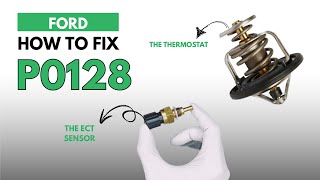
🎬 Watch: A breakdown of common P0128 causes and fixes.Diagnostic Flowchart
Tap your situation to follow the diagnostic path that matches what you're seeing on this vehicle.
Symptoms You May Notice
- Check Engine Light is on
- Engine temperature gauge reads lower than normal or drops on the highway
- Heater blows lukewarm air or doesn't get hot
- Decreased fuel economy
- Vehicle takes longer than usual to warm up
- In some cases, an engine overheat warning may appear if the cause is related to coolant loss (TSB 20-2234)
- Replacing the ECT sensor when the thermostat is stuck open.
- Replacing the thermostat when the actual issue is a slow coolant leak causing air pockets in the system.
- Replacing the thermostat with a cheap aftermarket part that fails quickly or has the wrong temperature rating, causing the code to return.
Most Likely Causes
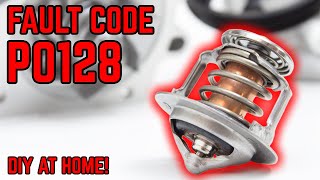
- Thermostat stuck open 🔴 High Probability Thermostats are a common wear item. The plastic housings used on many modern engines, including the Edge, can become brittle and fail, or the thermostat mechanism itself can fail in the open position.
How to confirm: Monitor the ECT sensor data on a scan tool. The temperature should rise slowly and may never reach the typical 195-215°F range, often dropping at highway speeds. The upper radiator hose will also warm up almost immediately after a cold start, rather than staying cool until the engine reaches operating temperature.
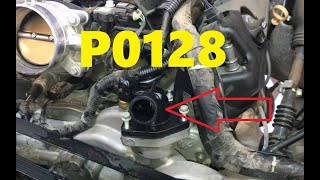
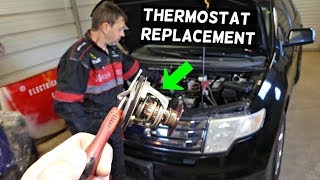
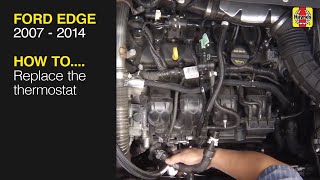
Typical fix: Replace the thermostat and housing assembly. It is highly recommended to replace the entire plastic housing, not just the thermostat insert, to prevent future leaks from the aging plastic. 🎬 See this walkthrough for replacing the V6 thermostat and housing. The coolant should be drained and replaced with Motorcraft Yellow VC-13-G.
Est. part cost: $50-$150 - Faulty Engine Coolant Temperature (ECT) Sensor 🟡 Medium Probability Ford issued TSB SSM 48991 which specifically mentions the ECT sensor or its wiring as a potential cause for P0128 on the 2.7L EcoBoost engine. Sensor failure or intermittent signals can trick the PCM into thinking the engine is cold.
How to confirm: With a cold engine, use a scan tool to compare the ECT reading to the Intake Air Temperature (IAT) reading. They should be within a few degrees of each other. If the ECT reading is irrational (e.g., -40°F) or doesn't change as the engine warms up, the sensor is likely faulty. A typical Ford ECT sensor should have a resistance between 2,000-3,000 Ohms at 68°F (20°C).
Typical fix: Replace the ECT sensor. On the 3.5L V6, the sensor is located under the intake manifold, making replacement labor-intensive. On 2.7L engines, its location in the engine valley also requires significant disassembly to access. Always inspect the connector for corrosion or damage.
Est. part cost: $20-$55 - Low Engine Coolant Level 🟡 Medium Probability For the 2.0L EcoBoost engine, TSB 20-2234 specifically links P0128 with low coolant levels, which may be due to a leaking EGR cooler. TSB 19-2346 also notes coolant loss from intrusion into the cylinders on 2015-2018 2.0L engines. A low level can cause air pockets, preventing the ECT sensor from getting an accurate reading.
How to confirm: Visually inspect the coolant reservoir. If the level is low, top it off and perform a cooling system pressure test to find the source of the leak. If no external leak is found on a 2.0L model, suspect an internal leak at the EGR cooler or a head gasket issue per the relevant TSBs.
Typical fix: Find and repair the coolant leak, then refill and bleed the cooling system. If the EGR cooler is leaking, it must be replaced (Part No. K2GZ-9F464-A). If coolant intrusion is diagnosed per TSB 19-2346, this may require engine long block replacement. 🎬 Watch: Understanding the Ford coolant intrusion issue and its symptoms.
Est. part cost: $20-$300+ (depending on the source of the leak) - ECT Sensor Wiring or Connector Issue ⚪ Low Probability TSB SSM 48991 and SSM 47791 both mention the wiring harness as a possible culprit, especially on the 2.7L EcoBoost. Wires can become damaged from heat, vibration, or chafing, causing an intermittent or lost signal.
How to confirm: Visually inspect the wiring leading to the ECT sensor for any breaks, chafing, or corrosion at the connector (often referred to as C1064). Wiggle the harness while monitoring the ECT data on a scan tool to see if the reading fluctuates erratically. TSBs for the 2.7L engine point to inspecting the wiring between inline connectors C1016 and C1168.
Typical fix: Repair the damaged section of wire or replace the connector pigtail. For the 2.7L, TSB SSM 48991 notes the ECT wiring is integrated with the knock sensor harness, which may need to be replaced as an assembly.
Est. part cost: $15-$50
Rare But Worth Checking
- PCM Software Issue: Ford TSB 19-2046 indicates that on some 2019 2.0L EcoBoost models, a PCM software update is required to resolve P0128 and other codes. TSB 20-2234 also lists a PCM update as part of the repair process for the EGR cooler issue.
- Cooling Fan Stuck On: If the radiator fan runs continuously at high speed, even when the engine is cold, it can over-cool the engine and prevent it from reaching operating temperature, triggering a P0128 code. This can be caused by a failed fan control module.
- Short-Trip Driving in Cold Weather: In very cold climates, frequent short trips may not allow the engine enough time to reach its target temperature, which can trigger a P0128 code. This is a "two-trip" fault, meaning if the engine successfully warms up on subsequent drives, the code may clear itself.
Diagnosis Steps
- Check for any other stored trouble codes to see if they are related (e.g., P0116, P1026).
- Visually inspect the engine coolant level in the reservoir. If it is low, top it off with the correct Ford-specified coolant (Motorcraft Yellow VC-13-G).
- Perform a cooling system pressure test to check for leaks, especially if the coolant was low. This is critical for the 2.0L EcoBoost due to known EGR cooler and coolant intrusion issues.
- Connect a scan tool and monitor the Engine Coolant Temperature (ECT) live data as the engine warms up from a cold start.
- The temperature should rise steadily to approximately 195-215°F and then stabilize. If it rises very slowly, never reaches full temperature, or drops significantly at highway speeds, the thermostat is the most likely cause.
- If the ECT reading is erratic, stuck at a very low/high temperature, or doesn't match the ambient air temperature on a cold engine, inspect the ECT sensor and its wiring harness for damage or loose connections before replacing the sensor.
- For 2.0L EcoBoost models, if coolant loss is present without an external leak, carefully inspect for signs of coolant intrusion into the cylinders as per TSB 19-2346.
- For 2.7L EcoBoost models, pay close attention to the ECT sensor wiring harness for chafing or damage between connectors C1016 and C1168 as outlined in TSB SSM 47791.
Parts You'll Likely Need
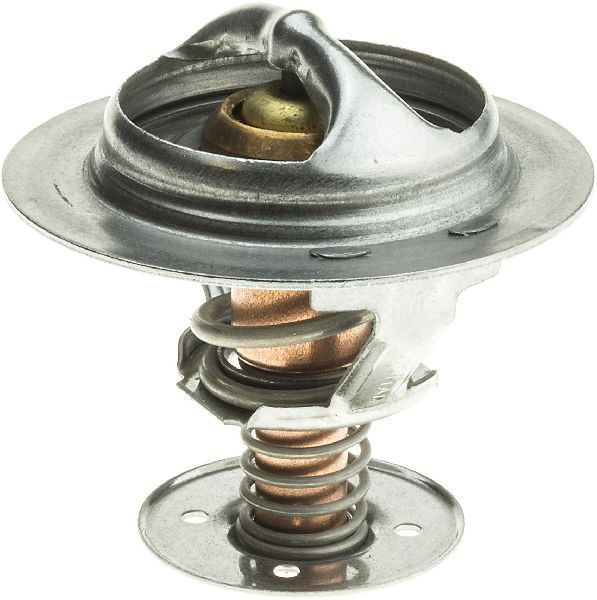
- Engine Coolant Thermostat Assembly
(OEM #K2GZ-8575-C (for 3.5L V6))— This is the most common cause of P0128. The thermostat fails in the open position, preventing the engine from warming up properly. Replacing the entire housing is recommended.
Trusted brands: Motorcraft, Gates, MotoRad
OEM price range: $70-$150
Aftermarket price range: $40-$90 - Engine Coolant Temperature (ECT) Sensor
(OEM #DY1145 (Motorcraft))— A faulty sensor can send incorrect temperature readings to the PCM, triggering the code. TSB SSM 48991 identifies this as a known issue on the 2.7L EcoBoost.
Trusted brands: Motorcraft, Bosch, NTK
OEM price range: $25-$55
Aftermarket price range: $15-$40
Related Codes That Often Appear With This One
- P1026 — This Ford-specific code indicates a discrepancy between the ECT and Cylinder Head Temperature (CHT) sensors, which can be caused by the same cooling system faults (like a bad EGR cooler on the 2.0L or wiring issues on the 2.7L) that trigger P0128.
- P0217 — This code indicates an engine over-temperature condition. It can appear with P0128 if the root cause is a significant coolant loss or a faulty ECT sensor sending erratic signals, as noted in TSB 20-2234 and SSM 48991.
- P0116 — This code indicates an issue with the ECT sensor's range or performance. It often appears alongside P0128 when the sensor itself or its circuit is failing, as mentioned in TSB SSM 48991.
- P1299 — Indicates 'Cylinder Head Overtemperature Protection Active'. This can be triggered alongside P0128 if the PCM receives erratic signals from a faulty ECT sensor or wiring, causing it to believe the engine is both too cold and too hot.
Technical Service Bulletins (TSBs) & Recalls
- TSB 20-2234
- SSM 48991
- TSB 19-2046
- TSB 19-2346
Platform-Specific Known Issues
- TSB 20-2234: Some 2019-2020 models with the 2.0L EcoBoost engine may exhibit P0128 along with low coolant, white smoke, or overheating due to a faulty EGR cooler or PCM software. The fix involves inspecting the cooler and potentially replacing it and updating the PCM.
- SSM 48991: On some 2015-2020 models with the 2.7L EcoBoost engine, P0128 can be caused by the engine coolant temperature (ECT) sensor or its wiring harness. The TSB advises replacing both the ECT sensor and the knock sensor harness.
- TSB 19-2046: For some 2019 models with the 2.0L EcoBoost built before 01/23/2019, P0128 may be caused by PCM software settings and require an update.
- TSB 19-2346 (supersedes 19-2208): For 2015-2018 Edge models with the 2.0L EcoBoost, this TSB addresses coolant intrusion into the cylinders, which can cause coolant loss and various codes, including overheating codes that may be associated with a P0128 investigation.
Mechanic-Grade Diagnostic Values
- ECT Sensor Resistance — expected: 2,000 - 3,000 Ohms at 68°F (20°C).. Failure: A reading significantly outside this range, or an open/infinite reading, indicates a faulty sensor.
- ECT Sensor Resistance at Operating Temp — expected: 200 - 300 Ohms at 194°F (90°C).. Failure: Resistance that does not drop as the engine warms indicates a faulty sensor.
- ECT Sensor Signal Voltage (Key On, Engine Off, Cold) — expected: Approximately 2.0V - 3.0V, should match IAT sensor reading.. Failure: Voltage stuck at 5.0V (open circuit/bad ground) or near 0V (short circuit).
- ECT Sensor Signal Voltage (Engine at Operating Temp) — expected: Approximately 0.5V.. Failure: Voltage does not decrease as the engine warms up.
Scan Tool Commands That Help
- Ford IDS (or equivalent high-end scanner): Parameter Reset (Keep Alive Memory Reset) — After replacing the ECT sensor or repairing its wiring, this function should be used to clear the PCM's learned adaptive values. This forces the computer to relearn sensor inputs immediately, preventing the old, faulty data from causing persistent issues.
- Ford IDS (or equivalent high-end scanner): Cooling Fan Control Bidirectional Test — To diagnose a 'Cooling Fan Stuck On' scenario. This command allows the technician to manually turn the cooling fans on and off at various speeds to verify the fan control module and fan motors are working correctly, ruling them out as the cause of over-cooling.
Wiring & Ground Locations
- C1064 — The 2-pin electrical connector that plugs directly into the Engine Coolant Temperature (ECT) sensor.. This is the primary connection point for the ECT sensor. TSBs SSM 47791 and 48991 identify this connector as a common failure point on 2.7L EcoBoost engines due to being improperly seated, having corroded pins, or damaged wires.
- C1016 / C1168 — These are inline harness connectors located in the engine wiring harness between the ECT sensor and the PCM on Edge models.. TSB SSM 47791 specifically calls out inspecting the wiring *between* these two connectors for chafing, breaks, or shorts as a key diagnostic step for ECT-related codes (including P0128) on the 2.7L EcoBoost engine.
- G108 — On the firewall on the driver's side, to the right of the battery (on Gen 2, 2015+ models).. This is a major chassis and engine harness ground point. A loose or corroded connection here can cause erratic voltage readings for multiple sensors that share the ground circuit, including the ECT sensor, potentially leading to a false P0128 code.
Real Owner Repair Stories
- Ford Edge Forum user (2016 Ford Edge Sport 2.7L EcoBoost) — Check Engine Light with code P0128.
❌ Tried (didn't work) Initial diagnosis was uncertain, considering both sensor and thermostat.
✅ What actually fixed it The owner replaced the thermostat, which resolved the P0128 code. The user noted the job was difficult due to the part's location.
OEM Part Supersession History
RT-1234→7L3Z-8575-E— Part number update/revision by Ford.
Heads up: RT-1234 is a 192°F thermostat used in many Ford applications. While it may physically fit, it's critical to use the exact temperature-rated thermostat specified for the vehicle's engine and year to avoid setting P0128. Using a lower-temp performance thermostat can trigger this code.N/A (Original Engine Block)→J2GZ-6006-E (example replacement long block)— To correct a design flaw causing coolant intrusion into the cylinders on 2.0L EcoBoost engines.
Heads up: Per TSB 19-2346, if a 2015-2018 Edge with a 2.0L EcoBoost is diagnosed with coolant intrusion, the fix is to replace the entire long block engine assembly with the updated part.
Model Year Variations Within This Range
- 2019-2020: A significant refresh for the 2019 model year introduced a new 8-speed automatic transmission (replacing the 6-speed) and gave the standard 2.0L EcoBoost engine a 5 horsepower increase. The 3.5L V6 was discontinued, and the 'Sport' trim was replaced by the 'ST' trim, which featured an uprated 335 hp 2.7L EcoBoost. These powertrain changes can affect diagnostic procedures and part numbers compared to 2015-2018 models.
- 2015-2018: Models with the 2.0L EcoBoost engine are specifically cited in TSB 19-2346 for potential coolant intrusion into the cylinders, a problem that was addressed with a revised engine block design in later model years.
Helpful Videos
![How to Fix FORD P0128 Engine Code in 3 Minutes [2 DIY Methods / Only $7.34]](https://img.youtube.com/vi/nUD6fDJpoV4/mqdefault.jpg)

Used OEM Parts in Stock


New Aftermarket Parts Available


The information in this article is provided for general reference and educational purposes only. Vehicle specifications, procedures, and part compatibility can vary by production date, trim level, and region. Always consult your vehicle's factory service manual and verify part numbers before purchasing or performing repairs. Safety-critical components such as airbags, seat belts, and braking systems should be installed by a qualified professional.
- Ford EDGE:
- 🎬 Helpful Videos
- 🛍️ Shop This Part
- What's Unique About the 2015-2020 Ford EDGE
- Diagnostic Flowchart
- Symptoms You May Notice
- Most Likely Causes
- Rare But Worth Checking
- Diagnosis Steps
- Parts You'll Likely Need
- Related Codes That Often Appear With This One
- Technical Service Bulletins (TSBs) & Recalls
- Platform-Specific Known Issues
- Mechanic-Grade Diagnostic Values
- Scan Tool Commands That Help
- Wiring & Ground Locations
- Real Owner Repair Stories
- OEM Part Supersession History
- Model Year Variations Within This Range
- 🎟️ Get 5% Off