

P0126 on 2002-2010 Saturn Vue: Insufficient Coolant Temp Causes and Fixes
For a 2002-2010 Saturn Vue, code P0126 almost always means the engine thermostat is stuck open and needs to be replaced. Expect to pay $20-$50 for an aftermarket part or $50-$100 for an OEM part. It's a straightforward DIY job on 4-cylinder models but significantly more difficult on V6 models where the thermostat is often under the intake manifold.
- P0126 on a Saturn Vue means the engine is running too cold, not overheating.
- The most likely culprit is a thermostat that has failed in the 'stuck open' position.
- Symptoms include a Check Engine Light, a low-reading temperature gauge, and poor heater performance.
- Before buying parts, confirm the coolant level is correct.
- Repair on a V6 model is significantly more labor-intensive than on a 4-cylinder due to the thermostat's location.
What's Unique About the 2002-2010 Saturn Vue
The 2002-2010 Saturn Vue spans two very different generations. The first generation (2002-2007) used GM Ecotec four-cylinder engines and a Honda-sourced V6. The second generation (2008-2010) was a rebadged Opel Antara with different GM engines. While the cause of P0126 is almost always a failed thermostat on all versions, the repair difficulty varies dramatically. On V6 models (both the 3.5L Honda and 3.6L GM), the thermostat is buried under the intake manifold, making replacement a much more involved and time-consuming job compared to the more accessible location on the four-cylinder engines.
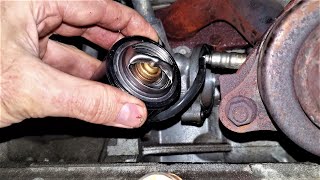
Generation note: The 2002-2010 range covers two generations: - First Generation (2002-2007): Offered with GM 2.2L L61 I4 and Honda 3.5L 🎬 Watch this step-by-step thermostat replacement for the 2.2L engine. L66 V6 engines. The V6 uses a timing belt. - Second Generation (2008-2010): A rebadged global platform offered with GM 2.4L I4 and 3.5L/3.6L V6 engines. The 2.4L and 3.6L engines use timing chains. The primary cause (thermostat) is the same across all, but the part numbers and labor for V6 models are significantly different and more complex due to the thermostat's location under the intake manifold.
Symptoms You May Notice
- Check Engine Light is illuminated
- Temperature gauge on the dashboard takes a very long time to rise or stays on cold
- Heater blows cool or only lukewarm air, especially on cold days
- Noticeable decrease in fuel economy
- Vehicle may fail an emissions test
- Engine running rough or hesitating
- Replacing the coolant temperature sensor when the thermostat is the actual problem. It's crucial to diagnose the thermostat's function (or lack thereof) by observing live temperature data before replacing sensors.
Most Likely Causes
- Engine Thermostat Stuck Open 🔴 High Probability Thermostats are wear-and-tear items. The internal spring or wax element weakens over time, causing it to fail in the open position, which prevents the engine from warming up properly. This is the most common cause for P0126/P0128 codes on these vehicles.
How to confirm: Monitor the temperature gauge during a drive. If it rises while idling in traffic but then drops significantly when driving at highway speeds, the thermostat is likely stuck open, allowing the radiator to over-cool the engine. An OBD-II scanner with live data can also show the coolant temperature struggling to reach and maintain the target (e.g., 180-195°F).
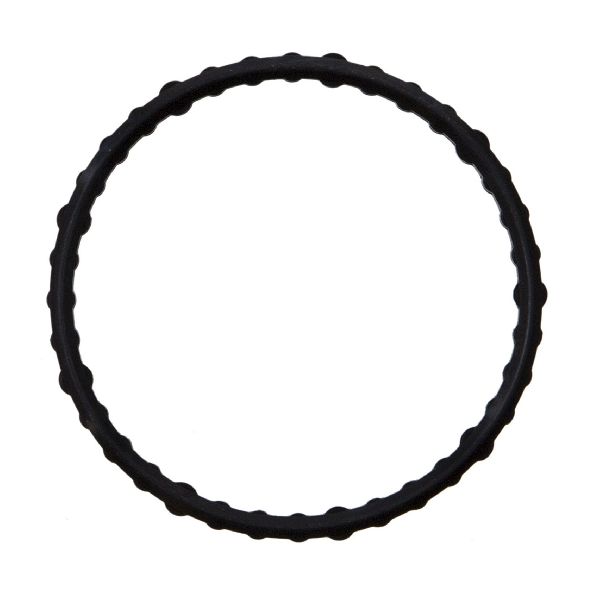
Typical fix: Replace the engine thermostat and gasket. It is often recommended to replace the entire thermostat housing assembly, especially on older vehicles where the plastic can become brittle and prone to leaking.
Est. part cost: $20-$70 - Low Engine Coolant Level 🟡 Medium Probability Coolant leaks can develop from aging hoses, the radiator, water pump, or thermostat housing, which is common on any vehicle of this age. A leaking valve cover gasket is also a widely reported issue on the Vue, which can sometimes be misidentified.
How to confirm: Visually inspect the coolant reservoir in the engine bay when the engine is cold. If the level is below the 'MIN' or 'COLD' line, it is low. Also, look for signs of green, orange, or pink fluid leaks under the vehicle. A low level can cause the temperature sensor to get an inaccurate reading.
Typical fix: Top off the coolant with the correct type (DEX-COOL for GM engines). If the level drops again, a cooling system pressure test is needed to find and repair the leak.
Est. part cost: $15-$30 - Faulty Engine Coolant Temperature (ECT) Sensor ⚪ Low Probability The sensor itself can fail electronically, sending incorrect (often colder than actual) temperature readings to the PCM, tricking it into setting a P0126 code.
How to confirm: Use an OBD-II scanner with live data capability. Compare the ECT sensor reading to the ambient air temperature on a cold engine (they should be very close). If the reading is erratic, nonsensical (e.g., -40°F), or never changes as the engine warms up, the sensor is likely bad.
Typical fix: Replace the engine coolant temperature sensor. It's an inexpensive part and often good preventative maintenance when replacing the thermostat. 🎬 See how to replace the coolant temperature sensor on a 2.4L.
Est. part cost: $15-$40
Rare But Worth Checking
- Air Pockets in Cooling System: This usually only occurs after the cooling system has been serviced (e.g., coolant flush, hose replacement) and was not properly bled. The trapped air can prevent proper coolant circulation and cause erratic temperature readings, potentially fooling the ECT sensor.
- Cooling Fan Stuck On: If the electric cooling fan runs constantly from the moment the car is started, it will over-cool the engine and prevent it from reaching operating temperature. This is usually caused by a failed fan relay, a short in the control circuit, or a faulty A/C pressure switch.
Diagnosis Steps
- Check for other codes: Use an OBD-II scanner to see if any other codes are present.
- Verify coolant level: With the engine cold, check the coolant level in the overflow reservoir and top off if necessary. Note the coolant color and condition (e.g., DEX-COOL orange/pink).
- Analyze live data: Use a scanner to monitor the Engine Coolant Temperature (ECT) sensor data. Start the cold engine and watch the temperature rise. It should climb steadily to around 180-205°F and then stabilize as the thermostat opens and closes.
- Test drive: If the temperature fails to reach the target range or drops significantly at highway speeds (e.g., from 190°F down to 150°F), the thermostat is almost certainly stuck open.
- Confirm ECT sensor accuracy: If the thermostat seems to be working but the code persists, check the ECT sensor. On a cold engine, its reading should be within a few degrees of the Intake Air Temperature (IAT) sensor reading. If not, the ECT sensor may be faulty.
- Inspect for leaks: If the coolant level was low, perform a cooling system pressure test to locate any leaks in hoses, the radiator, water pump, or thermostat housing.
- Check Cooling Fans: Ensure the radiator fans are not running constantly when the engine is cold. They should only activate at high temperatures or when the A/C is on.
Parts You'll Likely Need
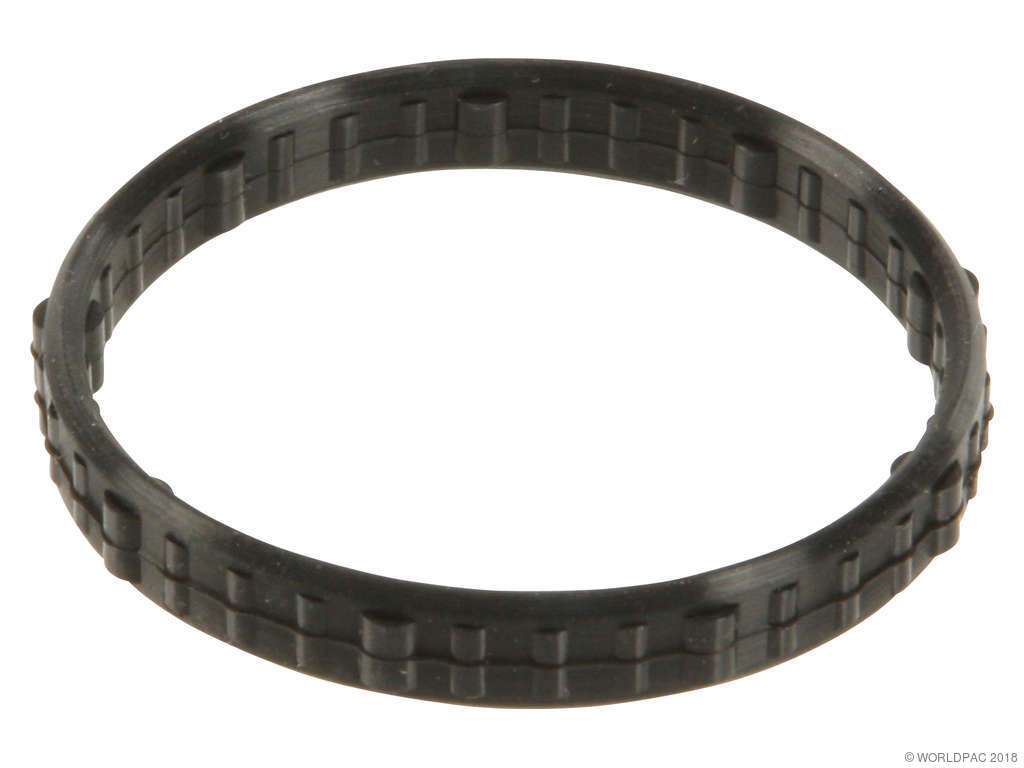
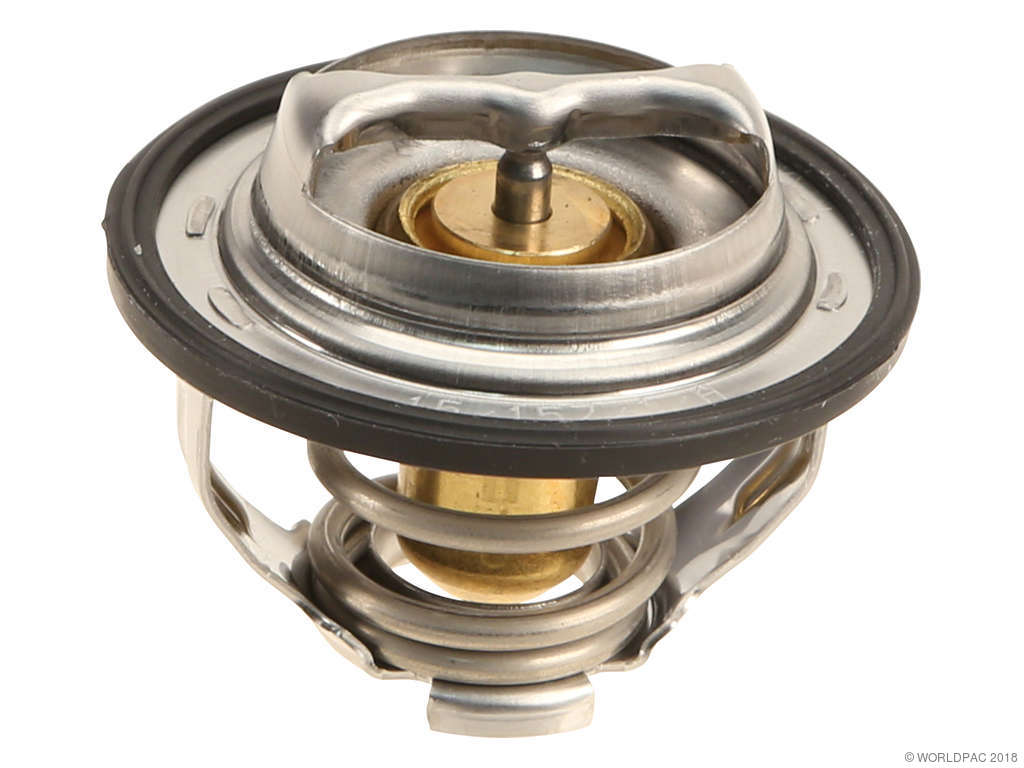
- Engine Coolant Thermostat (and Housing)
(OEM #ACDelco 131-158 (for 2.2L/2.4L Ecotec); ACDelco 15-81939 (for 3.6L V6))— This is the most common failure point for code P0126. It gets stuck open, preventing the engine from reaching operating temperature.
Trusted brands: ACDelco, Gates, Stant, Motorad
OEM price range: $50-$100
Aftermarket price range: $20-$70 - Engine Coolant / Antifreeze
(OEM #GM DEX-COOL (for GM engines))— You will lose coolant when replacing the thermostat and will need to refill and bleed the system. Always use the vehicle-specific type. The Honda 3.5L V6 may specify a different coolant type.
Trusted brands: ACDelco, Prestone, Zerex
OEM price range: $20-$30 per gallon
Aftermarket price range: $15-$25 per gallon
Related Codes That Often Appear With This One
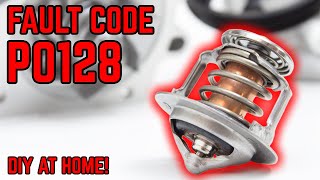
- P0128 — P0128 (Coolant Temperature Below Thermostat Regulating Temperature) is a very similar code. Both are triggered by the engine not warming up correctly and are almost always caused by a stuck-open thermostat. Some manufacturers use one code, some use the other, and some may use both depending on the exact failure criteria. 🎬 Watch a helpful diagnostic walkthrough for the P0128 fault code.
Technical Service Bulletins (TSBs) & Recalls
- No specific Technical Service Bulletins (TSBs) were found for the P0126 code itself. The issue is considered a standard wear-and-tear failure. However, numerous TSBs exist for related platform issues like timing chains and transmissions.
Platform-Specific Known Issues
- V6 Thermostat Location: On both the first-gen 3.5L Honda V6 and second-gen 3.6L GM V6, the thermostat is located under the intake manifold. This makes replacement a 3-5 hour job, requiring removal of the manifold, which is significantly more complex than the 1-hour job on the 4-cylinder engines.
Mechanic-Grade Diagnostic Values
- Engine Coolant Temperature (ECT) Sensor Resistance — expected: Approximately 2,200 - 3,000 Ω at 20°C (68°F) and 250 - 350 Ω at 80°C (176°F).. Failure: Resistance is infinite (open circuit), near zero (short circuit), or does not decrease smoothly as the engine warms.
- Engine Coolant Temperature (ECT) Sensor Signal Voltage — expected: Approximately 3.0 - 3.5V on a cold start (~20°C) and dropping to around 1.0 - 1.3V at normal operating temperature (~80°C).. Failure: Voltage is stuck high (e.g., near 5V) or low (near 0V), or does not change with engine temperature.
- Cooling Fan Control Voltage (at fan connector, 2.2L engine) — expected: Approximately 3.3V for low-speed command and ~14V (battery voltage) for high-speed command.. Failure: No voltage when commanded by a scan tool, or voltage present but fan does not run, indicating a bad fan motor.
Scan Tool Commands That Help
- Tech2 / Professional Scan Tool: Cooling Fan Relay Control (e.g., 'Fan Control 1', 'Fan Control 2') — To verify if the PCM can command the cooling fans on and off. This helps diagnose a 'cooling fan stuck on' condition, which is a rare cause of P0126.
- Tech2 / Professional Scan Tool: Gauge Sweep — To confirm that the instrument panel temperature gauge is physically capable of moving through its full range, ruling out a faulty gauge cluster as the source of a low reading.
Wiring & Ground Locations
- G103 / G105 (Gen 1 & 2) — G103 is on the left side of the engine compartment. G105 is at the left rear of the engine.. These are primary engine and ECM ground points. A poor connection due to corrosion or looseness can cause an unstable ground reference for the ECT sensor, leading to incorrect temperature readings and potentially triggering a false P0126.
- G107 (Gen 1 Ecotec) — On the back of the engine block, above the starter and under the #4 intake runner, secured by a 10mm bolt.. This specific ground point is frequently cited on Saturn forums as a cause for erratic sensor behavior on the 2.2L engine. Wires can corrode or suffer internal breaks, mimicking a failed sensor. Cleaning this ground is a critical diagnostic step if a new ECT sensor doesn't fix the issue.
- ECT Sensor Connector — On the thermostat housing, typically on the driver's side of the engine for 4-cylinder models.. This is the primary connection point to test for voltage, resistance, and signal integrity directly at the sensor. The two wires are typically a 5V reference/signal and a low reference (ground) from the PCM.
OEM Part Supersession History
GM 21018811, GM 12622410→ACDelco 131-158— Part consolidation and potential design updates over the production life of the Ecotec engine family.
Heads up: The ACDelco 131-158 is the widely accepted replacement for 2.2L and 2.4L Ecotec engines in the Vue. It is specified with a 180°F (82.2°C) opening temperature.
Model Year Variations Within This Range
- 2002-2007 vs 2008-2010: The specific locations of engine bay grounds (e.g., G101, G107 on Gen 1 vs. G106 on Gen 2) can vary slightly between the first and second generations due to the different chassis and engine configurations.
Diagnostic Flowchart
Other Known Issues on This Vehicle
Issues unrelated to this code that are worth knowing about as an owner of this generation:
- Automatic Transmission Failure (3-5-R Wave Plate) 🔴 High — Very common on 2008-2009 models with the 6T70/6T75 6-speed transmission, often occurring around 80,000-120,000 miles. (Ref: GM Special Coverage 14404 (Expired) extended the warranty for this specific failure.)
- Timing Chain Stretch (3.6L V6) 🔴 High — Widespread on 2008-2010 models with the 3.6L V6, often triggered by extended oil change intervals. Can occur as early as 70,000 miles, but more common around 100,000-120,000 miles. (Ref: GM Special Coverage Adjustment #11340C (Expired) extended the warranty to 10 years/120,000 miles.)
- Timing Chain Guide/Tensioner Failure (2.2L Ecotec) 🟠 Medium — Common on 2002-2007 models with the 2.2L engine, especially over 100,000 miles. A rattling noise on cold startup is the primary symptom. (Ref: TSB #03-06-01-017 acknowledged a design change for a better oiler nozzle.)
- Timing Belt Replacement (3.5L V6) 🟠 Medium — This is a required maintenance item, not a failure. The Honda-sourced 3.5L V6 uses a timing belt that must be replaced every 7 years or ~100,000 miles. Failure to do so will cause catastrophic engine damage.
- Leaking Valve Cover Gaskets 🟡 Low — Frequently reported across multiple model years, especially around 130,000 miles. Causes oil to leak onto the exhaust manifold, creating a burning smell.
- Faulty Gas Cap Causing Check Engine Light 🟡 Low — A very common and simple issue where a worn gas cap seal fails to hold pressure, triggering an EVAP-related Check Engine Light. Often occurs after 100,000 miles.
Used vs. New Parts: Buying Guide for This Vehicle
When a used part is the smart pick: For this repair, buying used parts is generally not recommended. The primary failure item, the thermostat, is a wear-and-tear part with a finite lifespan. A used ECT sensor from a very low-mileage donor vehicle could be considered, but the low cost of a new, quality aftermarket sensor makes it a better choice.
Donor-vehicle mileage cap: roughly under 30000 miles for the part to have meaningful remaining life.
What to inspect on the donor part:
- For an ECT sensor, ensure the connector pins are clean, straight, and free of corrosion.
- Check that the plastic housing of the sensor is not cracked or showing signs of extreme heat stress.
OEM-only on this vehicle (don't cheap out):
- Engine Coolant Thermostat: Forum consensus strongly recommends using an ACDelco (OEM) thermostat. Aftermarket units, particularly budget brands, have a reputation for incorrect temperature regulation or premature failure, which can cause the P0126/P0128 code to return.
Aftermarket brands forum-validated for this vehicle:
- Stant
- Gates
Brands owners have reported issues with on this vehicle:
- Duralast (Motorad): One detailed report showed a Duralast thermostat, despite being rated for 195°F, consistently opened early at 180°F, preventing the engine from reaching proper operating temperature and failing to resolve the underlying issue.
Real Owner Stories
Aggregated from forums and TSBs cited above. Mileages and costs reflect what owners reported in those sources.
Saturn Vue (unspecified model)
Symptoms: The temperature gauge was staying low.
What fixed it: The problem was diagnosed as a stuck-open thermostat which required replacement.
Source hint: Saturnfans.com Forum Discussion on P0126/P0128
Related OBD-II Codes
Frequently Asked Questions
Is replacing the thermostat for a P0126 code difficult on my V6 Saturn Vue?
What kind of coolant should I use when topping off or replacing it on my Saturn Vue?
I have a P0128 code, not P0126. Is the cause the same?
Are there any recalls or TSBs for the P0126 code on the 2002-2010 Saturn Vue?
My Vue has the 3.5L V6. Is there any other maintenance I should consider while fixing the P0126 code?
Could my P0126 code be related to the timing chain issues on the 3.6L V6?
Helpful Videos
We Have This Part in Stock


The information in this article is provided for general reference and educational purposes only. Vehicle specifications, procedures, and part compatibility can vary by production date, trim level, and region. Always consult your vehicle's factory service manual and verify part numbers before purchasing or performing repairs. Safety-critical components such as airbags, seat belts, and braking systems should be installed by a qualified professional.
- Saturn Vue:
- 🎬 Helpful Videos
- 🛍️ Shop This Part
- What's Unique About the 2002-2010 Saturn Vue
- Symptoms You May Notice
- Most Likely Causes
- Rare But Worth Checking
- Diagnosis Steps
- Parts You'll Likely Need
- Related Codes That Often Appear With This One
- Technical Service Bulletins (TSBs) & Recalls
- Platform-Specific Known Issues
- Mechanic-Grade Diagnostic Values
- Scan Tool Commands That Help
- Wiring & Ground Locations
- OEM Part Supersession History
- Model Year Variations Within This Range
- Diagnostic Flowchart
- Other Known Issues on This Vehicle
- Used vs. New Parts: Buying Guide for This Vehicle
- Real Owner Stories
- Saturn Vue (unspecified model)
- Related OBD-II Codes
- Frequently Asked Questions
- 🎟️ Get 5% Off