

P0126 on 2006-2015 Mazda MX-5 Miata: Insufficient Coolant Temperature Causes and Fixes
On a 2006-2015 (NC) Miata, code P0126 is almost always caused by a failed thermostat that is stuck open. The fix is to replace the entire thermostat and housing assembly. Expect to pay around $40-$70 for an aftermarket part or $90-$120 for the OEM part, with a DIY difficulty of 3/5.
- P0126 on a 2006-2015 Miata means the engine is running too cold, not too hot.
- The cause is almost certainly a thermostat that has failed in the 'stuck open' position.
- The fix is to replace the entire thermostat and housing assembly (Part # LF94-15-17Z).
- The job may require moving the throttle body for better access and requires properly bleeding the cooling system afterward.
- Always use Mazda FL22 coolant or a compatible equivalent when refilling the system.
- While you're working on the cooling system, inspect the plastic coolant expansion tank for yellowing or cracks, as it's another common failure point on this platform.
What's Unique About the 2006-2015 Mazda MX-5 Miata
The 2006-2015 MX-5 Miata, known as the NC generation, uses a traditional, self-contained mechanical thermostat integrated into a plastic housing. This is different from many newer Mazdas (like the CX-5 and Mazda3) which use a more complex and electronically controlled 'Coolant Control Valve' (CCV). That newer system is subject to numerous Technical Service Bulletins (TSBs) for the same P0126 code, but the fix is different. For the NC Miata, the problem is almost always a simple mechanical failure of the thermostat itself, making diagnosis straightforward.
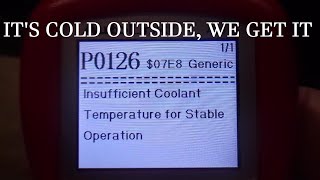
🎬 Watch: Diagnosing P0126 and replacing the NC Miata thermostatSymptoms You May Notice
- Check Engine Light is on
- Engine temperature gauge on the dashboard reads lower than normal, takes a very long time to reach the middle position, or may even drop from the middle during highway cruising.
- Poor or no heat from the cabin vents, especially in cold weather.
- Decreased fuel economy.
- In some cases, there are no noticeable symptoms other than the Check Engine Light, as the dashboard gauge can be buffered and may read 'normal' even when the actual coolant temperature is too low.
- Replacing the Engine Coolant Temperature (ECT) sensor without first verifying the thermostat's operation. While the sensor can fail, a stuck-open thermostat is the cause of P0126 in the vast majority of cases for this vehicle.
Most Likely Causes
- Engine Thermostat Stuck Open 🔴 High Probability This is a very common failure item on the NC Miata platform as it ages. The thermostat is designed to fail in the open position as a failsafe to prevent overheating, which directly causes the P0126 code.
How to confirm: Use an OBD-II scanner to monitor live coolant temperature data while driving. The temperature should rise steadily to the normal operating range (approx. 195-210°F or 90-99°C) and stabilize. If the temperature struggles to reach this range, rises very slowly, or drops significantly (e.g., to 160-170°F) during steady highway cruising, the thermostat is almost certainly stuck open. Checking the freeze frame data for the P0126 code may show a coolant temperature between 104-176°F (40-80°C), which strongly confirms the condition.
Typical fix: Replace the entire engine coolant thermostat and housing assembly. On the NC Miata, the thermostat is integrated into the plastic housing and is not sold separately as an OEM part.
Est. part cost: $40-$120 - Low Engine Coolant Level ⚪ Low Probability The NC Miata is known for its plastic coolant expansion tank becoming brittle and cracking over time, leading to coolant leaks. While this more often leads to overheating, a significant loss of coolant can also cause erratic temperature readings and potentially trigger a P0126 code before a major overheat occurs.
How to confirm: Visually inspect the coolant expansion tank (located on the passenger side of the engine bay) when the engine is cold. Look for yellowing, discoloration, or fine cracks in the plastic. If the level is below the 'MIN' or 'LOW' mark, the system is low on coolant. Also, check for any visible signs of coolant leaks (sweet-smelling green FL22 fluid) under the car or around engine hoses.
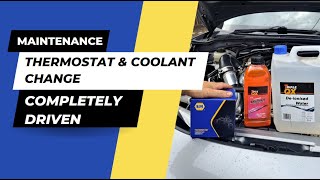
Typical fix: If the expansion tank is cracked or leaking, it must be replaced. Many owners opt for a more durable aluminum aftermarket tank. After repair, top off the coolant with Mazda-specified FL22 coolant and properly bleed any air from the system. 🎬 Watch: Step-by-step guide for thermostat and coolant maintenance
Est. part cost: $25-$35 for coolant, $80-$120 for an OEM plastic tank, or $200-$280 for an aftermarket aluminum tank. 🎬 See this easy DIY expansion tank replacement walkthrough
- Faulty Engine Coolant Temperature (ECT) Sensor ⚪ Low Probability
How to confirm: With a cold engine, use a scan tool to compare the ECT sensor reading to the ambient air temperature sensor reading. They should be within a few degrees of each other. If the ECT reading is illogical (e.g., reads 200°F on a cold engine, or a static -40°F), the sensor is faulty. You can also test the sensor's resistance; it should be approximately 2,200–3,000Ω at room temperature (20°C/68°F) and drop to 250–350Ω at operating temperature (80°C/176°F).
Typical fix: Replace the engine coolant temperature sensor. It is a relatively inexpensive and accessible part.
Est. part cost: $20-$50
Diagnosis Steps
- Check for other Diagnostic Trouble Codes (DTCs) with a scan tool.
- Visually inspect the coolant level in the overflow reservoir (when the engine is cold). Check the plastic tank itself for signs of aging like yellowing or cracks, a known failure point on NC Miatas. Top up with Mazda FL22 coolant if low.
- Use a scan tool to monitor the Engine Coolant Temperature (ECT) data in real-time.
- Start the engine from cold and go for a 15-20 minute drive that includes some steady highway cruising.
- The temperature should rise steadily to around 195-210°F (90-99°C) and stabilize. If it rises very slowly, fails to reach this range, or drops significantly during steady highway cruising, the thermostat is stuck open and must be replaced.
- If the temperature gauge on the scan tool behaves erratically, jumps between extreme values, or shows an impossible reading (e.g., -40°F), suspect a faulty ECT sensor or a wiring issue.
- If the coolant level was low and continues to drop after topping off, perform a cooling system pressure test to find the source of the leak. Pay close attention to the expansion tank.
Parts You'll Likely Need
- Engine Coolant Thermostat and Housing Assembly
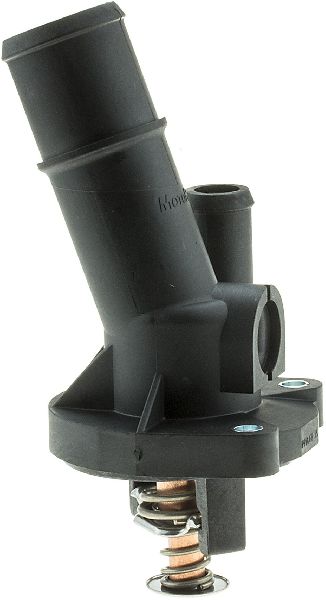
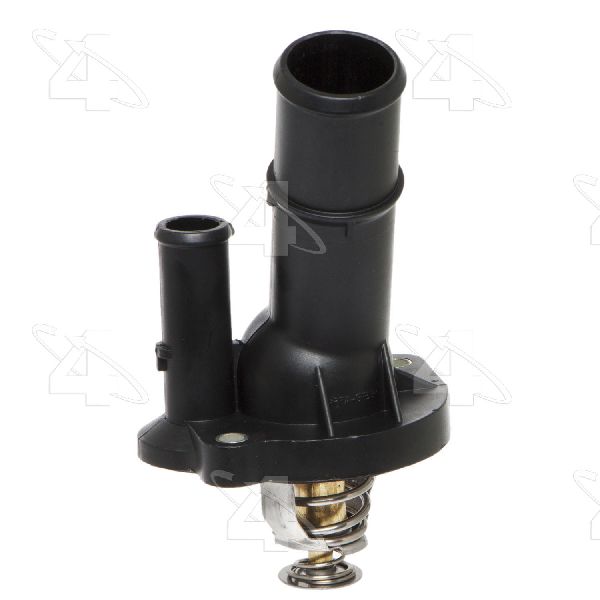
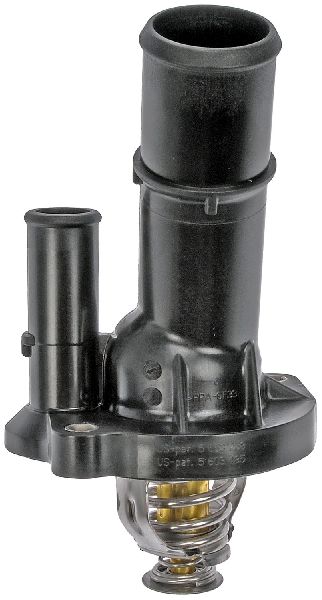
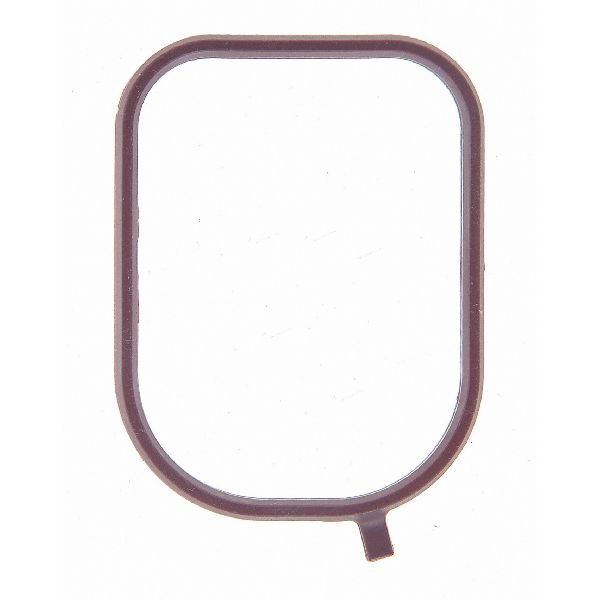
(OEM #LF94-15-17Z (replaces LF94-15-179A))— This is the primary cause of code P0126 on the NC Miata. The original thermostat fails and gets stuck in the open position, preventing the engine from warming up properly. The part is an integrated plastic housing with the thermostat inside.
Trusted brands: Mazda (OEM), Motorad (P/N: 902-690), Gates (P/N: TH45791G1), Stant (P/N: 14948), Mishimoto (P/N: MMTS-NC-06L, a lower temp 154°F racing thermostat)
OEM price range: $90-$120
Aftermarket price range: $40-$70 - Mazda Long Life Coolant (FL22)
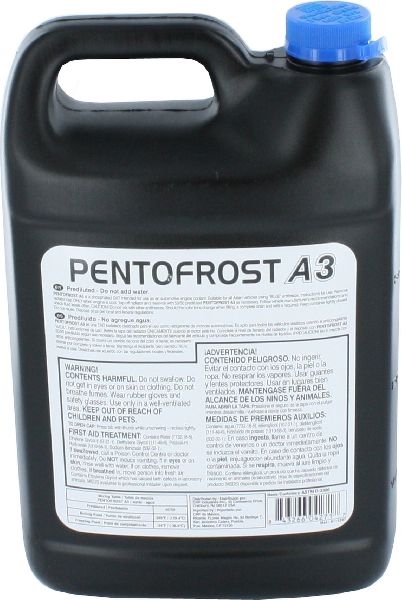
(OEM #0000-77-508F-20)— The cooling system must be partially drained to replace the thermostat. It is critical to refill the system with the correct Mazda FL22 (green) long-life coolant to prevent corrosion and ensure proper performance. Do not mix with other coolant types.
Trusted brands: Mazda (OEM), Ravenol HJC FL22, Peak OET Green
OEM price range: $25-$35 per gallon
Aftermarket price range: $20-$30 per gallon
Technical Service Bulletins (TSBs) & Recalls
- No specific Technical Service Bulletins (TSBs) are commonly cited for code P0126 on the 2006-2015 MX-5 Miata. The issue is treated as a standard mechanical failure of the thermostat. Note that TSBs for P0126 on newer Mazdas (e.g., SA-035/20 or 01-003-25) apply to the different Coolant Control Valve (CCV) system and are not relevant to the NC Miata.
Platform-Specific Known Issues
- The plastic coolant expansion tank is a notorious weak point on the NC Miata. It is part of the pressurized cooling system and is prone to yellowing and cracking with age and heat cycles, leading to coolant loss. While this often causes overheating, it can be a contributing factor if the coolant level drops low enough to affect sensor readings. Many owners proactively replace it with an OEM unit or a more durable aftermarket aluminum version.
Mechanic-Grade Diagnostic Values
- Engine Coolant Temperature (ECT) Sensor Resistance — expected: Approx. 2,200–3,000 Ω at 20°C (68°F), dropping to approx. 250–350 Ω at 80°C (176°F).. Failure: Readings significantly outside this range, or an open/shorted circuit reading.
- Engine Coolant Temperature (ECT) Sensor Voltage (Key On, Engine Off) — expected: Approx. 3.0-3.5V on a cold engine (~20°C / 68°F).. Failure: Voltage that is illogical, such as near 0V or 5V on a cold engine.
- Engine Coolant Temperature (ECT) Live Data at Operating Temp — expected: Stable between 195-210°F (90-99°C).. Failure: Temperature fails to reach this range, or drops significantly (e.g., to 160-170°F) at highway speeds.
- Freeze Frame Data for DTC P0126 — expected: The stored Engine Coolant Temperature value will likely be between 104°F and 176°F (40°C and 80°C).. Failure: N/A - a value in this range confirms the thermostat was stuck open when the code was set.
Wiring & Ground Locations
- Engine Coolant Temperature (ECT) Sensor — Located on the top rear of the engine.. This sensor provides the primary data for the P0126 code. Its wiring and connection must be intact for an accurate diagnosis.
- G1 Ground Point — Left rear corner of the engine compartment.. A primary engine bay ground. A poor connection here could potentially cause erratic sensor readings for various components, including the ECT.
- G11 Ground Point — Behind the right kick panel, inside the cabin.. A key chassis ground point. While less likely to be the sole cause, checking major grounds is good practice for any electrical diagnosis.
Real Owner Repair Stories
- YouTube channel 'Maintainers Garage' (2008 Mazda MX-5 Miata) — Check Engine Light with code P0126 came on during a cold day (25-30°F).
❌ Tried (didn't work) Initially suspected low coolant, topped it off, and reset the light. The code returned a few weeks later on another cold day.
✅ What actually fixed it The owner correctly deduced the thermostat was failing intermittently in cold weather and replaced the entire thermostat and housing assembly, which resolved the code. - Reddit user 'slowpokemd' on r/MiataNC (NC Miata (year not specified)) — User was helping another owner diagnose a P0126 code.
✅ What actually fixed it The user provided a critical mechanic's tip: there are two thermostat housing variants based on production date ('short hose outlet' and 'long one'). He advised that the 'long one' can be used in either application, preventing a parts mismatch. He also noted the replacement is difficult as it's under the throttle body and recommended removing the throttle body for access.
OEM Part Supersession History
LF94-15-179A→LF94-15-17Z— Standard part revision by Mazda.
Heads up: The housings may have a 'short' or 'long' hose outlet depending on the production date. The 'long' neck version is reported to be backward compatible and can be used in place of the 'short' neck version, making it a safer choice if unsure.
Model Year Variations Within This Range
- 2009-2015 (NC2/NC3) vs 2006-2008 (NC1): The NC2/3 models with manual transmissions received engine updates, including a forged crankshaft and other internal changes for durability and a higher redline. However, there are no documented changes to the core cooling system, thermostat design, or ECT sensor logic related to code P0126. The diagnosis and repair remain the same across all years of the NC generation.
Diagnostic Flowchart
Other Known Issues on This Vehicle
Issues unrelated to this code that are worth knowing about as an owner of this generation:
- Cracked Coolant Expansion Tank 🔴 High — Very common as the car ages. The OEM plastic yellows and becomes brittle, often failing between 60k-120k miles. Failure can cause rapid coolant loss and lead to engine overheating.
- Clogged Convertible Soft Top Drains 🟠 Medium — Extremely common if not cleaned regularly (annually). Debris clogs the drain tubes behind the seats, causing rainwater to overflow into the passenger cabin, soaking the carpets and electronics.
- Sticky or Notchy Steering 🟠 Medium — A noticeable issue for some owners where the steering requires extra effort to initiate a turn from center, making highway driving difficult. Causes are debated but point to issues within the electronic power steering rack, U-joint lubrication, or the rack's preload adjustment.
- Stiff Shifting into 2nd Gear When Cold 🟡 Low — Common characteristic of the 6-speed manual transmission. Shifting from 1st to 2nd can be difficult or notchy until the transmission fluid warms up. Usually not a sign of failure unless it persists when warm.
- Rod Bearing Failure (Early Models) 🔴 High — Affected a small number of early production engines from late 2005 to early 2008 (2006-2008 model years). Believed to be due to casting or material issues, leading to premature engine failure. Less common on later models.
Used vs. New Parts: Buying Guide for This Vehicle
When a used part is the smart pick: For this specific repair, a used thermostat assembly from a junkyard is NOT recommended. The part is a common failure item made of plastic and contains a mechanical wear component. The low cost of a new aftermarket part (around $40-$70) makes the risk and labor of installing a potentially faulty used part a poor economic choice.
What to inspect on the donor part:
- Not applicable, as a used part is not advised for this repair.
OEM-only on this vehicle (don't cheap out):
- While not strictly 'OEM-only', using the genuine Mazda thermostat housing (LF94-15-17Z) is the safest choice to guarantee perfect fitment and material quality, avoiding potential issues with aftermarket plastic housings.
- Mazda FL22 Coolant is strongly recommended to maintain cooling system integrity and prevent corrosion. Do not mix with conventional green coolants.
Aftermarket brands forum-validated for this vehicle:
- Gates
- Stant
- Motorad
Brands owners have reported issues with on this vehicle:
- Some users report that lower-temperature 'racing' thermostats (e.g., Mishimoto 154°F version) will prevent the engine from reaching the PCM's target temperature on a stock vehicle, which can cause a P0126 code. These are for track-focused cars, not daily drivers.
- General caution is advised for 'fail-safe' branded thermostats, as some owners have reported they can fail in the open position prematurely.
Real Owner Stories
Aggregated from forums and TSBs cited above. Mileages and costs reflect what owners reported in those sources.
2007 MX-5 NC
Symptoms: The Check Engine Light was on with code P0126. A ScanGauge showed the engine temperature was only at 159°F, confirming it was running too cool.
What fixed it: Forum users confirmed that the thermostat was the likely culprit for the low operating temperature.
Source hint: Miata.net Forum - Thread: '2007 MX5 NC error P0126 - what is normal water temp'
2007 NC Miata
Symptoms: Owner reported a P0126 code and observed a coolant temperature of 165°F while driving.
What fixed it: Commenters on the forum overwhelmingly pointed to the known thermostat failure as the cause and also recommended proactively replacing the coolant overflow tank.
Source hint: Reddit r/Miata - Thread: 'Stuck open thermostat?'
NC Miata (2006-2015)
Symptoms: Check Engine Light with code P0126.
What fixed it: Multiple owners in the discussion confirmed that the issue is '99% of the time' a bad thermostat that has failed in the open position. They described the replacement as a relatively cheap and easy fix.
Source hint: Reddit r/MiataNC - Thread: 'P0126'
Related OBD-II Codes
Frequently Asked Questions
My 2007 Miata has a P0126 code, but the temperature gauge on the dashboard looks normal. Is this possible?
What is the most reliable way to confirm the thermostat has failed on my MX-5 without just replacing it?
To fix P0126, can I just buy the thermostat element, or do I need the whole plastic housing for my NC Miata?
I'm getting a P0126 code. Should I also replace my coolant expansion tank at the same time?
I found a Mazda TSB for code P0126. Does it apply to my 2006-2015 MX-5?
What type of coolant should I use to refill my Miata's system after the repair?
Helpful Videos
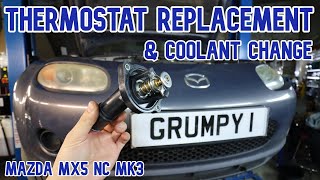
![NC Miata Expansion Tank Replacement [EASY DIY]](https://img.youtube.com/vi/nwqyP5d8Zug/mqdefault.jpg)
We Have This Part in Stock


The information in this article is provided for general reference and educational purposes only. Vehicle specifications, procedures, and part compatibility can vary by production date, trim level, and region. Always consult your vehicle's factory service manual and verify part numbers before purchasing or performing repairs. Safety-critical components such as airbags, seat belts, and braking systems should be installed by a qualified professional.
- Mazda MX-5 Miata:
- 🎬 Helpful Videos
- 🛍️ Shop This Part
- What's Unique About the 2006-2015 Mazda MX-5 Miata
- Symptoms You May Notice
- Most Likely Causes
- Diagnosis Steps
- Parts You'll Likely Need
- Technical Service Bulletins (TSBs) & Recalls
- Platform-Specific Known Issues
- Mechanic-Grade Diagnostic Values
- Wiring & Ground Locations
- Real Owner Repair Stories
- OEM Part Supersession History
- Model Year Variations Within This Range
- Diagnostic Flowchart
- Other Known Issues on This Vehicle
- Used vs. New Parts: Buying Guide for This Vehicle
- Real Owner Stories
- 2007 MX-5 NC
- 2007 NC Miata
- NC Miata (2006-2015)
- Related OBD-II Codes
- Frequently Asked Questions
- 🎟️ Get 5% Off