

P0126 on 2015-2020 Audi S3 2.0T: Causes and Fixes for Insufficient Coolant Temperature
On the 2015-2020 Audi S3, code P0126 is almost always caused by a failed thermostat, which is part of a larger water pump and thermostat housing assembly. The most reliable fix is to replace the entire assembly with the latest revised part (OEM P/N 06L121111P). Expect to pay $250-$500 for an OEM-quality part and 4-6 hours of labor if done by a professional.
- P0126 on your Audi S3 almost certainly means the thermostat has failed.
- The thermostat is part of a larger, known-to-fail assembly that also includes the water pump.
- The correct and most cost-effective long-term repair is to replace the entire water pump and thermostat assembly at once.
- This is not a simple DIY job; it requires removing the intake manifold and should likely be left to a professional mechanic.
- Always use the correct Audi-specific G13 (or compatible) coolant when refilling the system.
What's Unique About the 2015-2020 Audi S3
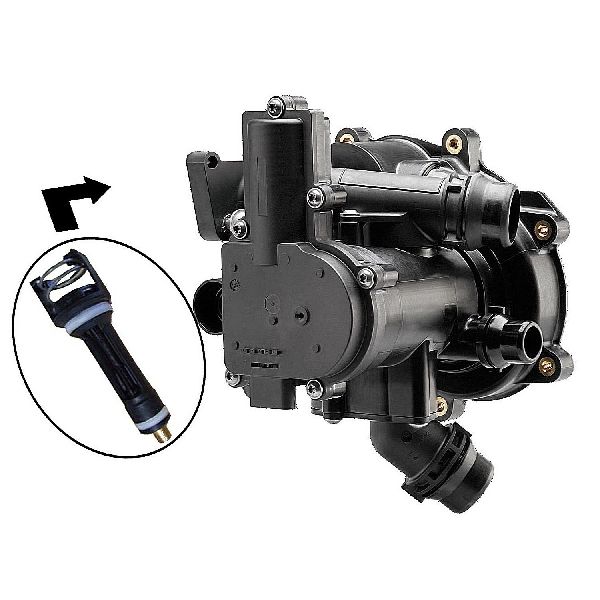
The 2.0T EA888 Gen 3 engine in the Audi S3 (8V generation) uses a complex, integrated water pump and thermostat housing assembly, often called a Thermal Management Module. This unit, particularly the plastic thermostat housing, is a well-documented, high-failure-rate item across the entire VW/Audi MQB platform. While P0126 can have several causes on other vehicles, on this specific platform it is most frequently triggered by the thermostat inside this assembly failing in the 'stuck open' position. Due to the integrated design and the high likelihood of a related failure in the water pump itself (leaks), the standard and recommended repair is to replace the entire water pump and thermostat unit together.
Symptoms You May Notice
- Check Engine Light is on
- Engine temperature gauge on the dashboard takes a very long time to reach the normal operating position (90°C) or never reaches it
- Temperature gauge fluctuates, dropping at highway speeds and rising in traffic
- Heater blows lukewarm or cold air, even after the engine has been running for a while.
- Noticeably worse fuel economy.
- Engine cooling fans may run at high speed constantly as a default fail-safe action.
- Rough or uneven idle, especially when the engine is cold.
- Replacing only the thermostat or only the water pump. Since these parts are integrated and labor is intensive, replacing only the single failed component often leads to a repeat repair when the other part fails shortly after.
- Assuming a faulty cooling fan is the cause. While fan issues can affect cooling, for P0126 the engine is running too cool, not too hot.
Most Likely Causes
- Failed Thermostat / Water Pump Assembly 🔴 High Probability The EA888 Gen 3 engine uses a plastic thermostat housing integrated with the water pump. This assembly is a widely known failure point, with the thermostat sticking open being the primary cause for P0126. The plastic can also become brittle and crack, causing coolant leaks. Failures are common anywhere from 40,000 to 100,000 miles.
How to confirm: Use an OBD-II scanner to monitor live coolant temperature data. Start the engine from cold. If the temperature rises extremely slowly and struggles to reach or maintain the target of ~90-105°C (~195-220°F) during a 15-20 minute drive, the thermostat is almost certainly stuck open. Also, visually inspect the assembly (located under the intake manifold) for signs of pink/dried G13 coolant, indicating a leak from the housing or the pump's weep hole.
Typical fix: Replace the entire water pump and thermostat housing assembly as a single unit. It is strongly recommended to replace both components at the same time, even if only one has failed, to avoid a repeat repair due to the high labor cost. Use the latest revised part number.
Est. part cost: $250-$500 - Low Engine Coolant Level 🟡 Medium Probability This is often a symptom of the primary cause—a leaking water pump/thermostat housing. If the level is low, it must be refilled, but the source of the leak must be found and fixed.
How to confirm: With the engine cold, check the coolant level in the expansion tank. If it is below the 'MIN' line, it is low. Look for signs of pink coolant residue around the water pump area, hoses, and radiator. A pressure test of the cooling system can pinpoint the leak's location.
Typical fix: Top off the system with the correct G12/G13/G12evo coolant and perform a cooling system pressure test to find the source of the leak. If the leak is from the water pump housing, it must be replaced.
Est. part cost: $20-$40 for coolant - Faulty Engine Coolant Temperature (ECT) Sensor ⚪ Low Probability
How to confirm: Using a scan tool, compare the ECT sensor reading to the ambient air temperature sensor reading on a cold engine; they should be nearly identical. If the ECT reading is illogical (e.g., -40°F or 250°F on a cold engine), the sensor is likely faulty. Note that the primary ECT sensor (G62) is integrated into the thermostat housing on this engine and is replaced with the assembly.
Typical fix: The main sensor is replaced along with the thermostat housing assembly. If a secondary sensor (e.g., radiator outlet sensor G83) is at fault, it can be replaced individually.
Est. part cost: $20-$50 for a standalone sensor
Diagnosis Steps
- Read the fault codes with an OBD-II scanner and confirm P0126 is present. Note any other cooling system codes like P2181 or P00B7.
- With the engine cold and off, check the coolant level in the expansion tank. If low, top it off with the appropriate Audi-spec coolant (G13 or G12evo).
- Visually inspect the area around and under the intake manifold for any signs of pink, crusty coolant residue, which would indicate a leak from the water pump/thermostat housing. A pressure test is the definitive way to find a leak.
- Start the engine from cold and use the scanner's live data function to monitor the Engine Coolant Temperature (ECT) parameter.
- Drive the vehicle for 10-15 minutes. Observe the ECT reading. The temperature should rise steadily to approximately 90-105°C (194-221°F) and stabilize. If it rises very slowly, gets stuck at a lower temperature (e.g., 70°C), or drops significantly at highway speeds, a stuck-open thermostat is the most likely cause.
- If the temperature gauge behaves as described in step 5, the water pump and thermostat assembly needs to be replaced. There is no separate thermostat to replace.
- If temperature readings are erratic or illogical from a cold start (e.g., reading hot when the engine is cold), suspect the ECT sensor, which is part of the thermostat housing.
Parts You'll Likely Need
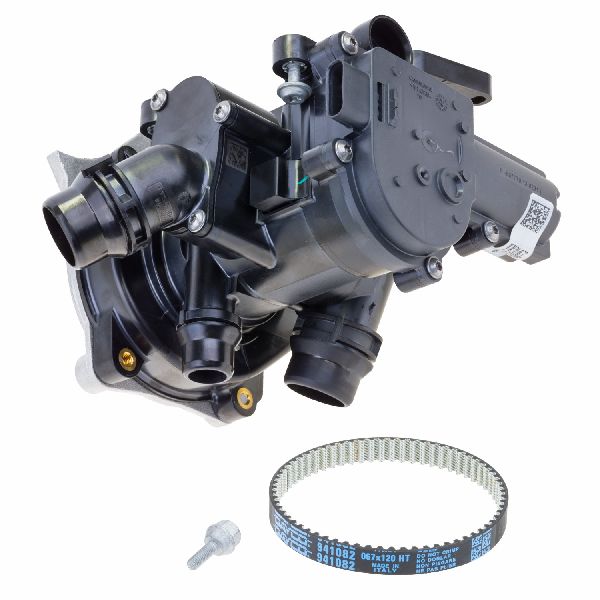
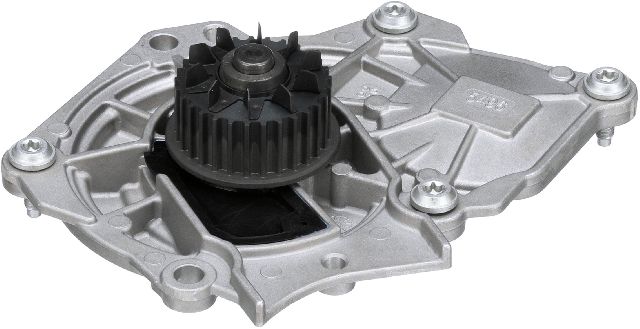
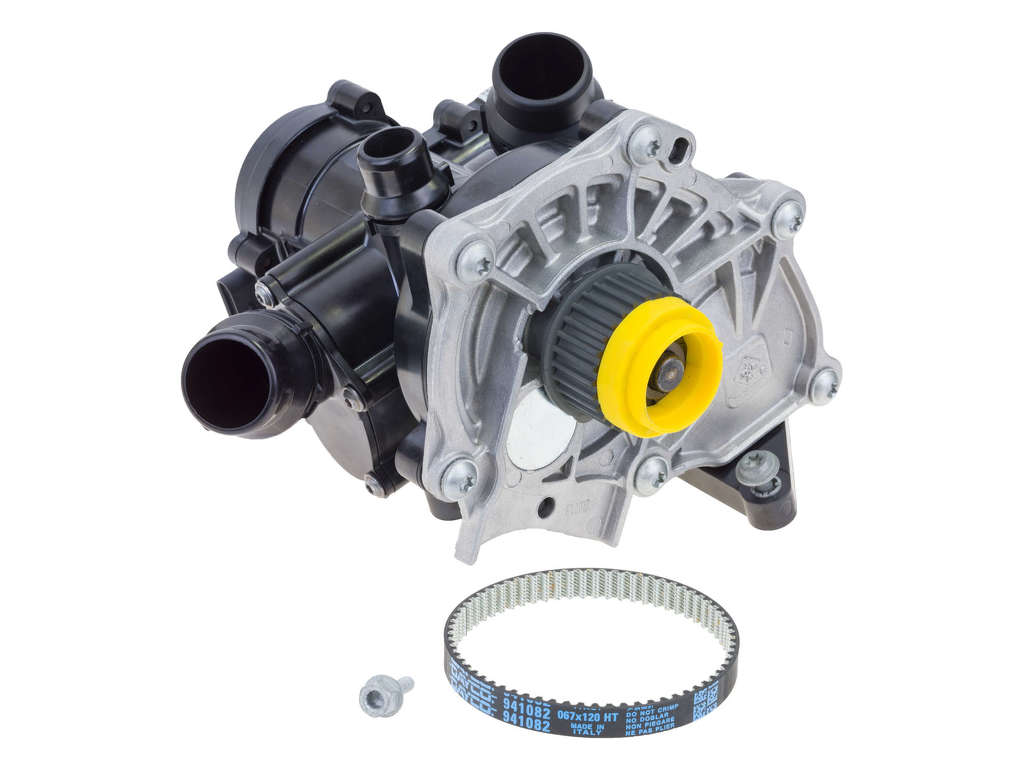
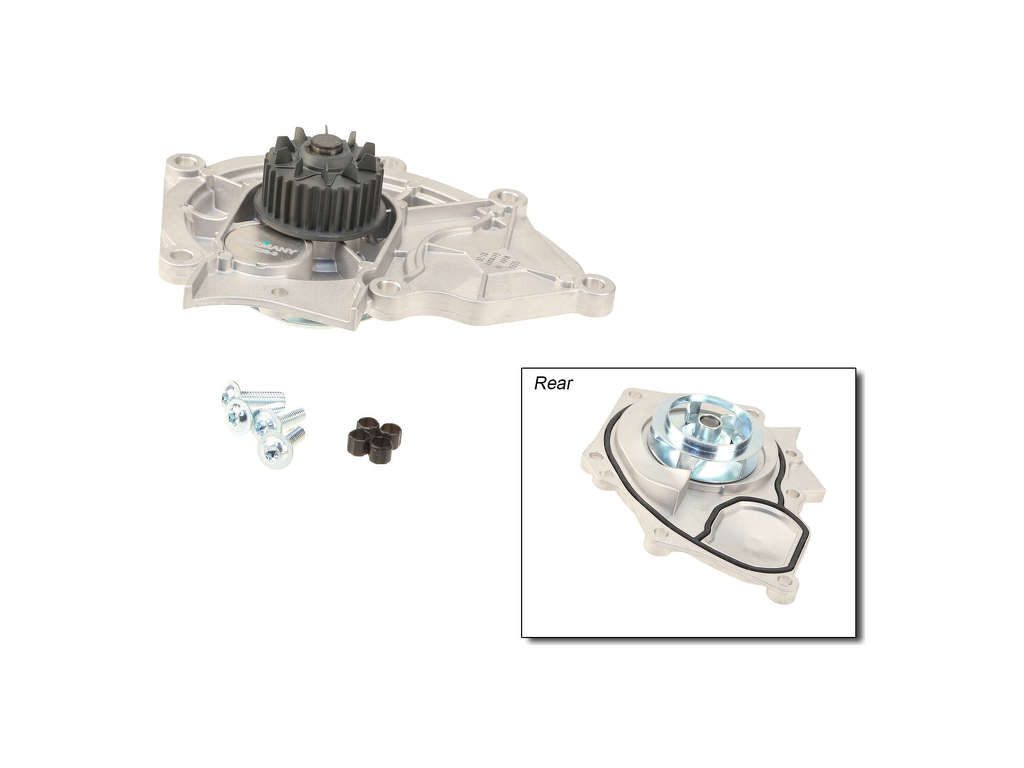
- Water Pump and Thermostat Housing Assembly Kit
(OEM #06L121111P)— This is the primary failure point for code P0126 on this engine. The thermostat fails internally. Part number 06L121111P is the latest revision, superseding older, more failure-prone versions like H, J, K, L, and M. It's critical to install the complete assembly.
Trusted brands: Genuine Audi/VW, INA, Continental, Mahle
OEM price range: $350-$500
Aftermarket price range: $250-$400 - Audi G13 or G12evo Engine Coolant
(OEM #G013A8J1G (G13), G12E050A3 (G12evo))— The cooling system must be drained and refilled during the repair. Using the correct phosphate-free, silicate-hybrid OAT coolant is critical for protecting the aluminum components. G12evo is the latest spec and is backward compatible.
Trusted brands: Genuine Audi, Pentosin Pentofrost E, HEPU
OEM price range: $30-$40 per gallon
Aftermarket price range: $25-$35 per gallon
Related Codes That Often Appear With This One
- P2181 — P2181 ('Cooling System Performance') is a closely related code that is often set for the same reason: the engine temperature is not within the expected range, typically due to a stuck thermostat.
- P00B7 — P00B7 ('Engine Coolant Flow Low/Performance') can also be triggered by a failing water pump or thermostat assembly on this engine, indicating insufficient coolant circulation.
- P2681 — P2681 ('Engine Coolant Bypass Valve Control Circuit/Open') can appear if the electronics controlling the thermostat within the housing assembly have failed.
Technical Service Bulletins (TSBs) & Recalls
- TSB 2052657/3 (October 16, 2019): This TSB discusses the repair procedure for leaks from the water pump or thermostat housing. Interestingly, it advises *not* to replace both components at the same time unless both are confirmed to be leaking. This contradicts the widely accepted best practice in the independent repair community, which recommends replacing both due to the high labor overlap and high likelihood of the second component failing soon after.
Platform-Specific Known Issues
- The EA888 Gen 3 2.0T engine's water pump/thermostat housing is a widely recognized weak point. The plastic construction is prone to becoming brittle and cracking from constant heat cycles, and the electronically controlled thermostat is also a common point of failure.
- Audi has released multiple revisions of the part (ending in F, G, H, J, K, L, M, and P) in an attempt to improve durability. 06L121111P is the most current and recommended version.
- A class-action lawsuit was filed concerning these water pumps on EA888 engines, alleging the manufacturer was aware of the defect.
Mechanic-Grade Diagnostic Values
- Engine Coolant Temperature (ECT) Sensor -G62- Resistance — expected: Approximately 2.5 kΩ at 20°C (68°F) and 275-375 Ω at 80°C (176°F).. Failure: Readings significantly outside the expected range for a given temperature indicate a faulty sensor. An open circuit (infinite resistance) or short circuit (zero resistance) also indicates failure.
- Engine Coolant Temperature (ECT) Sensor -G62- Voltage — expected: Approximately 3.0-3.5V on a cold start (~20°C) and dropping to around 1.0-1.3V at normal operating temperature (~80°C).. Failure: Voltage that is stuck high (e.g., >4.5V) or low (e.g., <0.5V) regardless of engine temperature points to a wiring issue or a failed sensor.
Scan Tool Commands That Help
- VCDS or OBD11: Live Data Monitoring (Measuring Blocks) — Essential for diagnosing P0126. Monitor coolant temperature readings from both the main ECT sensor (G62, at the engine outlet) and the radiator outlet sensor (G83). On a cold start, they should be similar. As the engine warms, G62 should rise steadily while G83 stays cool until the thermostat opens. If both rise together slowly, the thermostat is stuck open.
- ODIS (Official Dealer Software): Guided Fault Finding / Output Diagnostic Test Mode (DTM) — The dealer-level tool can run a specific test plan for P0126, which may include commanding the electronically controlled thermostat to cycle. This can help determine if the thermostat's internal motor is responding to ECU commands, isolating a mechanical jam from an electrical failure.
- VCDS or OBD11: Basic Settings - Adaptation of Coolant Circuit Components — After replacing the water pump/thermostat assembly, some documentation suggests running an adaptation procedure to ensure the ECU recognizes the new component and its operational range. While some newer parts may not require this, it is a good practice to perform if available in the tool's menu for the engine controller.
Wiring & Ground Locations
- Main Engine Ground — On the chassis rail near the driver's side (LHD) strut tower. It's a primary grounding point for the engine harness.. A poor or corroded main engine ground can introduce resistance and cause incorrect or fluctuating readings from various engine sensors, including the ECT sensor (G62), potentially leading to an erroneous P0126 code even if the sensor and thermostat are functional.
- ECT Sensor (G62) Connector — Integrated into the thermostat housing assembly, located under the intake manifold.. The connector is a critical point for testing. Technicians can back-probe the pins to check for the 5V reference signal from the ECU and the return signal voltage. Damage to this connector or its wiring during other repairs (like intake manifold removal) can cause P0126.
Real Owner Repair Stories
- ozAudi Forum User (Audi S3 8V (year not specified, but pre-facelift)) — Low coolant warning light came on. Coolant level was found to be below minimum. After topping up, it dropped again overnight.
❌ Tried (didn't work) Topping up coolant with water was a temporary measure but the level continued to drop, indicating a leak.
✅ What actually fixed it The dealer diagnosed a leaking thermostat. The final repair was the replacement of the entire water pump and thermostat assembly. This resolved both the coolant leak and prevented any future codes like P0126 from appearing due to the failure. - Audi-Sport.net Forum User (Audi A3 1.8 TFSI (mechanically similar setup to S3)) — Coolant leak, requiring topping up 3 times per year.
❌ Tried (didn't work) Initially just monitoring and topping up coolant.
✅ What actually fixed it The user identified the thermostat housing under the intake manifold as the source of the leak. The confirmed fix, discussed by other users in the thread, was the replacement of the entire water pump and thermostat assembly as a single unit.
OEM Part Supersession History
06L121111F, 06L121111G, 06L121111H→06L121111J, K, L, M, and finally 06L121111P— Continuous revisions by VW/Audi to address the high failure rate of the plastic housing (cracking) and the internal electronic thermostat. Each revision aimed to improve material durability and component reliability.
Heads up: While all revisions are physically interchangeable, it is critical to only use the latest available part number (currently 'P') to get the most durable design and avoid a premature failure. Some sources now list a superseding part 06L121111N, but 'P' is the most widely documented and trusted revision.
Model Year Variations Within This Range
- 2017-2020 (Facelift): The facelift S3 models (in some markets) received a 7-speed DQ381 DSG transmission, replacing the 6-speed DQ250 in the 2015-2016 models. While this does not directly affect the P0126 cause (the engine and cooling system are largely the same), it's a key differentiator in the driveline. The engine itself also received minor tweaks, but the water pump/thermostat assembly remained the same fundamental weak point.
Diagnostic Flowchart
Other Known Issues on This Vehicle
Issues unrelated to this code that are worth knowing about as an owner of this generation:
- Haldex AWD Pump Failure 🔴 High — Common, especially on cars over 40,000 miles or where fluid service is neglected. The pump's filter screen becomes clogged with debris, causing the pump to burn out.
- IS38 Turbocharger Failure 🔴 High — A known weakness, particularly on tuned vehicles but can also occur on stock cars. Failures are often due to shaft weakness or bearing issues, sometimes with little warning.
- Carbon Buildup on Intake Valves 🟠 Medium — Common to all direct-injection engines, including the EA888 Gen 3. Typically requires cleaning every 60,000-80,000 miles to prevent misfires and performance loss.
- PCV Valve Failure 🟠 Medium — The PCV (Positive Crankcase Ventilation) valve can fail, leading to excessive oil consumption, rough idle, and potential damage to seals from incorrect crankcase pressure.
Used vs. New Parts: Buying Guide for This Vehicle
When a used part is the smart pick: For this specific repair, using a used water pump and thermostat assembly is NEVER recommended. The part has an extremely high failure rate due to material degradation over heat cycles. A used part, regardless of mileage, is highly likely to fail soon after installation, wasting significant labor costs.
What to inspect on the donor part:
- Not applicable. Do not buy this part used.
OEM-only on this vehicle (don't cheap out):
- Water Pump and Thermostat Housing Assembly. While high-quality aftermarket options exist, Genuine VW/Audi (with the latest part number revision) is the safest choice to guarantee compatibility and durability.
Aftermarket brands forum-validated for this vehicle:
- INA (often the OEM supplier)
- Continental
- Mahle
- Pierburg
Brands owners have reported issues with on this vehicle:
- Unnamed, low-cost brands from online marketplaces. These often use inferior plastics and seals that fail even faster than the original OEM parts.
Real Owner Stories
Aggregated from forums and TSBs cited above. Mileages and costs reflect what owners reported in those sources.
2015-2020 Audi S3 2.0T — ~70000 miles
Symptoms: Slow warm-up times and the temperature gauge struggling to reach or maintain the target operating temperature.
What fixed it: Complete water pump/thermostat assembly replacement.
Source hint: audizine.com & audi-sport.net forum threads regarding 8V S3 cooling codes
Related OBD-II Codes
Frequently Asked Questions
Is there a specific revised part number I should use for the water pump on my 2015-2020 Audi S3?
Does TSB 2052657/3 recommend replacing both the water pump and thermostat at the same time?
At what mileage does the thermostat housing usually fail on the EA888 Gen 3 engine?
Is the P0126 code on my S3 related to the class-action lawsuit I heard about?
Can I just replace the thermostat sensor (G62) to fix P0126?
Why does my temperature gauge drop when I'm driving on the highway but rise in traffic?
Helpful Videos
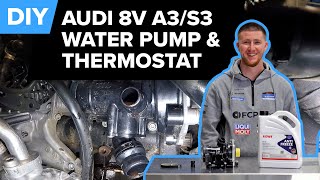
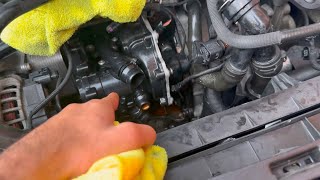
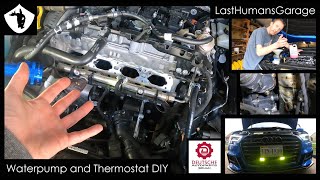
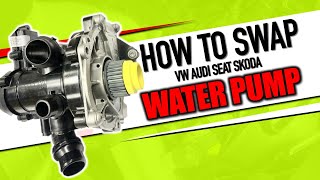
Used OEM Parts in Stock


New Aftermarket Parts Available

The information in this article is provided for general reference and educational purposes only. Vehicle specifications, procedures, and part compatibility can vary by production date, trim level, and region. Always consult your vehicle's factory service manual and verify part numbers before purchasing or performing repairs. Safety-critical components such as airbags, seat belts, and braking systems should be installed by a qualified professional.
- Audi S3:
- 🎬 Helpful Videos
- 🛍️ Shop This Part
- What's Unique About the 2015-2020 Audi S3
- Symptoms You May Notice
- Most Likely Causes
- Diagnosis Steps
- Parts You'll Likely Need
- Related Codes That Often Appear With This One
- Technical Service Bulletins (TSBs) & Recalls
- Platform-Specific Known Issues
- Mechanic-Grade Diagnostic Values
- Scan Tool Commands That Help
- Wiring & Ground Locations
- Real Owner Repair Stories
- OEM Part Supersession History
- Model Year Variations Within This Range
- Diagnostic Flowchart
- Other Known Issues on This Vehicle
- Used vs. New Parts: Buying Guide for This Vehicle
- Real Owner Stories
- 2015-2020 Audi S3 2.0T — ~70000 miles
- Related OBD-II Codes
- Frequently Asked Questions
- 🎟️ Get 5% Off