

OBD-II Code P2181: Cooling System Performance
What P2181 means, why it triggers, and how to fix it
- Code P2181 indicates the engine coolant temperature is outside the normal 180–220°F operating range, usually due to a stuck thermostat or low coolant.
- Check your vehicle's VIN for Technical Service Bulletins (TSBs) before buying parts; Chrysler, Dodge, and Kia models frequently trigger false P2181 codes requiring a $100–$200 software update.
- Never drive if the temperature gauge enters the red zone; overheating causes catastrophic engine damage like a blown head gasket, costing upwards of $2,000 to repair.
- Volkswagen and Audi owners face repair bills between $800 and $1,700 for this code, as the thermostat is integrated into a failure-prone plastic water pump assembly.
What Does P2181 Mean?

P2181 means the Powertrain Control Module (PCM) detects the engine coolant temperature is outside the correct operating range. The engine is either taking too long to warm up, running too hot, or running too cold. The code is general and indicates a cooling system performance failure rather than a specific broken part.
Technical definition: The formal OBD-II definition for P2181 is "Cooling System Performance." The Engine Control Module (ECM) triggers this when the engine coolant fails to reach the normal 180–220°F (82–104°C) operating range within a calculated timeframe after startup, or when the temperature fluctuates outside expected parameters.
Can I Drive With P2181?
Yes, But With Caution. Driving is possible but risky. A stuck-open thermostat causes poor fuel economy and forces a rich fuel mixture, which destroys the catalytic converter over time—a $1,200 to $2,800 repair. If the engine overheats, pull over immediately to prevent a blown head gasket.
Common Causes

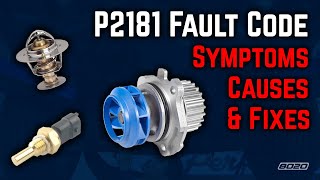
- Stuck or failing thermostat (Very Common) — The thermostat controls coolant flow. A stuck-open valve causes the engine to run too cool, while a stuck-closed valve causes overheating. Manufacturing debris can also lodge in the valve, preventing it from closing.
- Low engine coolant level or leaks (Very Common) — Leaks from hoses, the radiator, water pump, or a faulty radiator cap drop the coolant level. This prevents the system from pressurizing and circulating heat properly.
- Faulty Engine Coolant Temperature (ECT) sensor (Common) — The ECT sensor reports engine temperature to the PCM. A failed sensor or corroded wiring sends incorrect readings, tricking the computer into detecting a temperature problem.
- Powertrain Control Module (PCM) software issue (Common) — Chrysler, Dodge, Kia, and Volkswagen models frequently suffer from overly sensitive PCM software that triggers a false P2181. A dealership software update is the required fix. 🎬 Watch: Why you shouldn't replace parts before checking software updates.
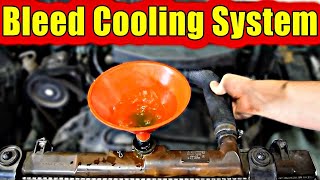
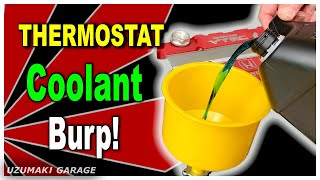
- Air in the cooling system (Less Common) — Air pockets trapped after a coolant flush block coolant flow. This prevents proper pressurization and causes erratic temperature sensor readings.
- Malfunctioning cooling fan assembly (Less Common) — The cooling fan pulls air through the radiator at low speeds. A failed fan motor or relay causes the engine to overheat in stop-and-go traffic.
- Failing water pump (Less Common) — The water pump circulates coolant. A worn impeller or slipping belt stops coolant movement, leading to rapid overheating.
Symptoms

- Engine temperature gauge reads too high or too low — The needle on the temperature gauge stays in the blue (cold), enters the red zone (hot), or moves erratically.
- Poor heater performance — If the engine runs too cool, the cabin heater only blows lukewarm or cold air.
- Engine overheating — Steam from under the hood, a sweet coolant odor, or a temperature warning light indicates severe overheating.
- Cooling fans running constantly — The ECM commands the cooling fans to run at full speed continuously as a fail-safe when it detects a cooling fault.
- Check Engine Light is on (also visible on scanner) — The PCM illuminates the Check Engine Light as soon as the cooling system fails to meet performance parameters.
- Reduced fuel economy (also visible on scanner) — An engine running below operating temperature forces the PCM to maintain a richer fuel mixture, burning excess gas.
Diagnostic Flowchart

Tap your situation to follow the diagnostic path that matches what you're seeing on this code.
Common Fixes & Costs
- Replacing the thermostat — Parts: $50-$150, Labor: $150-$450, ~1.8 hr book time (Intermediate)
- Topping off coolant and repairing a leak — Parts: $20-$300, Labor: $100-$500, ~1.0 hr book time (DIY)
- Replacing the Engine Coolant Temperature (ECT) sensor — Parts: $25-$75, Labor: $75-$150, ~0.8 hr book time (DIY)
- Updating the Powertrain Control Module (PCM) software — Parts: $0, Labor: $100-$200, ~1.0 hr book time (Professional)
- Replacing the water pump and thermostat assembly (VW/Audi) — Parts: $250-$600, Labor: $800-$1700, ~5.0 hr book time (Professional)
- Replacing Integrated Thermal Management (ITM) Module (Hyundai/Kia) — Parts: $300-$450, Labor: $200-$500, ~2.5 hr book time (Intermediate)
Used vs. New Parts: Buying Guide
When a used part is worth it: Buying a used mechanical thermostat is never recommended due to low part costs and high labor risks. For expensive integrated assemblies, a used part from a low-mileage donor is a budget option, but carries significant risk.
Donor-vehicle mileage cap: roughly under 60000 miles for the part to have meaningful remaining life.
Donor quality checklist:
- Verify the donor vehicle was not scrapped for engine or cooling system issues.
- Match the part number exactly; superseded parts contain critical updates.
- Avoid parts with any signs of corrosion, leaks, or physical damage.
Decision logic:
- If Part is a simple thermostat → Always buy new. The part cost is low and the labor to replace it is too high to risk a used part failing.
- If Part is an expensive integrated assembly (>$400) and vehicle is high mileage (>120k miles) → A low-mileage used part is a high-risk, budget-conscious option. Expect a significantly shorter lifespan.
- If Part has a known high failure rate (e.g., VW/Audi plastic water pump assembly) → Strongly favor a new OEM or high-quality aftermarket part, as even used parts are likely near failure.
Warranty tradeoff: Used parts typically offer a 30-90 day warranty. New aftermarket parts usually have a 1-year to limited lifetime warranty. New OEM parts carry a 1-2 year warranty.
Worst-case if a used part fails: $500-$1700 if a used integrated assembly fails, requiring repeat labor costs.
What Happens If You Wait — Timeline
- 0-1 month (Engine Running Too Cool): Check Engine Light on. Engine takes a long time to warm up, and heater performance is poor. The PCM keeps the fuel mixture rich. (MPG impact: 5-15%% · Added cost: $20-$60 in wasted fuel.)
- 1-6 months (Engine Running Too Cool): Sustained rich fuel mixture begins to contaminate engine oil and starts to overheat and foul the catalytic converter. (MPG impact: 10-20%% · Added cost: $50-$150 in wasted fuel plus early-stage catalytic converter stress.)
- 6+ months (Engine Running Too Cool): Catalytic converter substrate becomes permanently damaged from prolonged exposure to unburnt fuel, requiring replacement. (MPG impact: 10-20%% · Added cost: $1200-$2800 for catalytic converter replacement.)
- Immediate (Engine Overheating): If the cause is a stuck-closed thermostat, major leak, or failed water pump, the engine temperature spikes rapidly. Continued driving warps the cylinder head or blows a head gasket. (MPG impact: N/A% · Added cost: $2000-$5000+ for major engine repair.)
Cost of Not Fixing It
- 0-1 month: Reduced fuel economy by 5-15% as the engine runs a rich fuel mixture when it's too cool. (Added cost: $20-$60 per month in extra fuel costs.)
- 1-6 months: A rich fuel mixture from a cold engine overheats and damages the catalytic converter. (Added cost: $1200-$2800 for catalytic converter replacement.)
- 6+ months: If the cause is overheating, continued driving warps the cylinder head or blows the head gasket. (Added cost: $2000-$5000+ for major engine repair.)
Diagnosis Steps

- Check for TSBs and Scan for Codes
Check for Technical Service Bulletins (TSBs) using your VIN. Manufacturers like Chrysler and Kia issue software updates to fix erroneous P2181 codes. Use an OBD-II scanner to check for related codes like P0128 (thermostat) or P0117 (sensor).
Tools: OBD-II Scanner (Beginner) - Check Coolant Level and Inspect for Leaks
With a cold engine, verify the coolant reservoir is between 'MIN' and 'MAX' and the radiator is full. Inspect hoses, the water pump, and the radiator for wetness, crusty stains, or puddles. Use a pressure tester to locate hidden leaks.
Tools: Flashlight, Cooling System Pressure Tester (Beginner) - [PRO TIP] Analyze Live Sensor Data
Connect a scan tool with live data to a cold engine. The Engine Coolant Temperature (ECT) and Intake Air Temperature (IAT) must match the outside air temperature within 5 degrees. An irrational ECT reading (like -40°F) confirms a faulty sensor or circuit.
Tools: OBD-II Scanner with Live Data (Intermediate) - Test Thermostat Operation
Start the cold engine and monitor live ECT data. The temperature must rise steadily and plateau between 180–200°F as the thermostat opens. If the temperature stalls at 160°F or the upper radiator hose gets hot immediately after startup, the thermostat is stuck open.
Tools: OBD-II Scanner with Live Data, Infrared Thermometer (Intermediate) - Check Cooling Fan Operation
Let the engine reach operating temperature or turn the A/C on maximum. The electric cooling fans must turn on. If they fail to activate, test the fan motor, relay, and fuses.
Tools: None (Intermediate) - [ADVANCED] Test ECT Sensor and Circuit
Disconnect the ECT sensor. Using a multimeter, verify the connector receives a 5-volt reference signal and a solid ground from the PCM. Measure the sensor's resistance (Ohms); it must drop smoothly as the engine warms up. Infinite resistance means the sensor is dead.
Tools: Multimeter, Vehicle Service Manual (Advanced) - Perform a Chemical Block Test
If you lose coolant without visible external leaks, use a block tester kit. The chemical fluid changes color from blue to yellow if combustion gases are in the coolant, confirming a blown head gasket.
Tools: Block Tester Kit (Advanced)
When This Code Triggers (Freeze-Frame Conditions)
- Engine Coolant Temp: 140-170°F (Below target temperature after calculated warm-up time.)
- RPM: 1500-2500 (Cruise or steady throttle during the warm-up phase.)
- Engine Load: 20-50% (Light to moderate load, not idling or full throttle.)
- Vehicle Speed: 40-60 mph (Steady highway driving when the engine should have already reached operating temperature.)
Related Codes
- P0128 — Coolant Temperature Below Thermostat Regulating Temperature. P0128 is set specifically when the engine fails to reach operating temperature, almost always pointing to a thermostat stuck open. P2181 is more general.
- P0117 — Engine Coolant Temperature Sensor 1 Circuit Low. Indicates a specific electrical short in the ECT sensor circuit. While a faulty sensor causes P2181, P0117 points directly to the electrical fault.
- P0118 — Engine Coolant Temperature Sensor 1 Circuit High. Points to an open circuit in the ECT sensor's wiring or a break in the sensor itself.
- P0480 — Cooling Fan 1 Control Circuit Malfunction. Indicates a problem within the electrical circuit controlling the primary cooling fan, which causes overheating and triggers P2181.
Climate & Environmental Factors
- Cold Weather: Cold ambient temperatures frequently trigger P2181. If a thermostat is stuck partially open, the efficient radiator and freezing air prevent the engine from warming up within the PCM's allotted timeframe.
- High Altitude: At higher altitudes, less dense air reduces the cooling efficiency of the radiator. This causes an engine to run hotter than usual under load, potentially triggering an over-temperature P2181 code.
How to Talk to a Mechanic About This Code
Say this: "I have a P2181 code and I'd like to book a diagnostic. Could you please check for any relevant TSBs, inspect for coolant leaks, and analyze the live data from the ECT sensor during warm-up to confirm the thermostat is opening at the correct temperature? I want to confirm the exact point of failure before replacing parts."
This signals you understand the common causes of P2181 and want a data-driven diagnosis. It directs the technician to perform specific diagnostic steps and prevents them from guessing or upselling.
Avoid saying:
- 'My check engine light is on, can you just fix it?'
- 'I think it's the thermostat, can you just replace it?'
- 'My car is running weird, just do whatever you think is best.'
Questions to ask before authorizing the repair:
- If you're recommending a thermostat, can you show me the live data graph where it failed to open or regulate temperature correctly?
- If you're recommending an ECT sensor, did you confirm its readings were inaccurate compared to an infrared thermometer or the IAT sensor on a cold engine?
- If you found a leak, can you show me where it is?
- For my vehicle, did you check if this repair is covered by a warranty extension or a software update TSB?
- What is the warranty on the parts and labor for this specific repair?
Where to Take It: Dealer vs Independent vs Chain
- Dealer:
Best for: Vehicles under warranty or with known TSBs for software updates (Chrysler, Dodge, Kia)., Complex, integrated repairs on German brands (VW/Audi water pump/thermostat assembly) requiring special tools., Checking for coverage under warranty extensions for known high-failure parts.
Downsides: Highest labor rates, often 1.5-2x more than independent shops., May recommend expensive, wholesale assembly replacements when a smaller component is the sole issue. (Typical cost: +50% vs. baseline) - Independent Shop:
Best fit for most common P2181 causes on out-of-warranty vehicles. If you own a vehicle known for software-related P2181 issues, call the dealer first to check for TSBs.
Best for: Out-of-warranty vehicles with common failures like a standard thermostat, ECT sensor, or coolant leak., Getting a second opinion on a costly dealer estimate.
Downsides: Quality and expertise vary widely; vet shops based on reviews and ASE certifications., May not have access to the latest manufacturer software for required PCM updates. (Typical cost: +0% vs. baseline) - Chain Shop:
Acceptable for a simple, confirmed part replacement, but avoid for initial diagnosis. The risk of misdiagnosis is higher than at a specialized independent shop or dealer.
Best for: Simple, unambiguous repairs like replacing an easily accessible ECT sensor or a leaking radiator hose.
Downsides: Technician skill is inconsistent., High pressure to upsell services like coolant flushes., Less likely to correctly diagnose complex issues like an integrated VW thermostat or a software glitch. (Typical cost: -10% vs. baseline)
When to Walk Away From the Repair
If the estimated repair cost exceeds 40-50% of the car's private-party value, it's time to seriously consider selling or trading it in.
- Car worth $4000, fix is $1700: Walk away. The repair cost is nearly half the car's value. This is a classic scenario for a VW/Audi needing a water pump/thermostat assembly.
- Car worth $12000, fix is $450: Fix it. A standard thermostat replacement is well below the threshold and is a common maintenance item.
- Car worth $2500, fix is $200: Fix it. A simple ECT sensor replacement is an inexpensive repair that makes the car reliable and sellable.
What Scan Tool You Need for This Code
Minimum: An OBD-II reader that displays live data, specifically the Engine Coolant Temperature (ECT) PID.
A $20 code reader only shows the 'P2181' code, but cannot show live temperature data. Without live data, you cannot watch the engine warm up to see if the thermostat is stuck open or if the ECT sensor is giving illogical readings.
Budget: BlueDriver Pro Scan Tool (~$100) — Connects to your smartphone and provides detailed live data graphing for the ECT sensor to determine if the thermostat is opening at the correct temperature.
Mid-range: Foxwell NT510 Elite (~$180) — A handheld scanner that provides live data graphing and accesses manufacturer-specific codes. Offers bi-directional controls to test components like cooling fans directly.
Professional: Autel MaxiCOM MK808 (~$500) — Offers full-system diagnostics, extensive live data, and bi-directional controls to actively test cooling system components.
Rent vs buy: If this is a one-time diagnosis, AutoZone offers a Loan-A-Tool program where you can borrow a basic OBD-II scanner for free. Buy a tool like BlueDriver if you plan to do future DIY repairs.
How to Clear the Code After You Fix It
- Use an OBD-II scan tool to clear the P2181 code.
- Ensure the coolant level is correct and the system is bled of air.
- Perform a complete OBD-II drive cycle to run the system's self-tests.
Drive cycle (~20 minutes): Start with a cold engine. Idle for 2-3 minutes with A/C on. Drive at a steady 55 mph for 3-5 minutes. Decelerate to 20 mph without using the brake, then accelerate back to 55 mph. Hold steady for another 5 minutes. Let the vehicle cool down completely.
Readiness monitors affected: Catalyst monitor, Oxygen (O2) sensor monitor
Before emissions retest: drive at least 100 miles to fully set monitors.
Watch out for:
- Clearing the code without fixing the underlying problem guarantees it will return.
- Disconnecting the battery resets all readiness monitors, causing an automatic emissions test failure.
- Failing to let the engine cool down completely before starting the drive cycle prevents the thermostat monitor from running.
Will This Fail Emissions / State Inspection?
Yes — this code typically fails an OBD-II emissions inspection.
- California: An illuminated Check Engine Light is an automatic failure. A cooling system fault prevents the Catalyst and O2 sensor monitors from completing.
- New York: The NYVIP3 inspection includes an OBD-II scan. An active P2181 code causes an automatic test failure.
- Texas: In counties requiring emissions testing, an illuminated Check Engine Light is an automatic failure. You are allowed one 'Not Ready' monitor on vehicles 2001 and newer.
Most Commonly Affected Vehicles
- Volkswagen Jetta, Passat, GTI, Tiguan (2008-2018) — Extremely prone to P2181 caused by a failed thermostat. On 2.0T and 1.8T engines, the thermostat is integrated with the water pump in a plastic housing, making the repair complex and costly.
- Audi A3, A4, A5, Q5 (2008-2017) — Shares the 2.0T engine platform with Volkswagen, suffering from the same common failure of the integrated water pump/thermostat assembly.
- Chrysler Town & Country, Sebring, 300 (2008-2010) — These vehicles set a false P2181 code due to a software glitch. TSB #18-027-09 REV. A specifies a PCM software update as the fix, not parts replacement.
- Dodge Avenger, Grand Caravan, Journey (2007-2010) — Like their Chrysler counterparts, these models erroneously trigger a P2181 code requiring a powertrain control module software update.
- Hyundai Elantra, Kona, Santa Cruz, Sonata (2019-2023) — Newer models experience this code due to faulty electronic thermostat assemblies (Integrated Thermal Management module). TSB 20-EM-002H covers 2019 Elantras.
- Kia Soul, Seltos, Forte (2020-2022) — Often caused by overly sensitive ECM logic requiring a software update (TSB ENG227 Rev 1), or a faulty ITM module similar to Hyundai.
- Chevrolet Malibu, Cruze (2013-2016) — P2181 is often caused by plastic debris from manufacturing getting stuck in the thermostat housing, preventing it from closing fully.
- BMW 3 Series, 5 Series, X3, X5 (2006-2017) — Affected by P2181 due to failing electric water pumps or thermostats. BMW's electric pumps fail without warning, leading to rapid overheating.
Manufacturer-Specific Notes
- Volkswagen/Audi: On many 1.8T and 2.0T engines (2014-2021), the thermostat and water pump assembly is a known high-failure part. VW and Audi issued warranty extensions (VW: U55, Audi: U39) covering this part for 8 years/80,000 miles or 10 years/100,000 miles.
- Chrysler/Dodge: For several models from 2007-2010, a P2181 code triggers erroneously without any actual cooling system fault. The official fix is a dealership software update on the PCM per TSB #18-027-09 REV. A.
- General Motors (GM): On some GM vehicles, the dashboard temperature gauge is programmed to show 'normal' across a wide range of actual temperatures. You cannot trust the gauge to tell you if the engine is running slightly too cool.
- Hyundai/Kia: Newer models (2019+) use an 'Integrated Thermal Management' (ITM) module, an electronic thermostat assembly prone to failure. Some models require an ECU update, while others need a full thermostat replacement.
Real Owner Stories
2008 VW Jetta 2.5L at 140K miles
Check Engine Light came on during very cold weather in New York. The dashboard temperature gauge read a steady 190°F and the car was not overheating.
Outcome: Forum members advised it was a failing thermostat stuck partially open, preventing the engine from warming up quickly in the cold. The dash gauge is programmed to read 190°F across a wide range, masking the real issue. A new thermostat fixed the code.
Lesson: Don't trust your dashboard temperature gauge. On modern cars, it is 'dampened' and won't show a 'too cool' condition. Use a scan tool to read live coolant temperature data.
2021 Hyundai Elantra
The Check Engine Light for P2181 appeared. The dealer advised that as long as the car was not overheating and coolant levels were correct, it was safe to drive.
Outcome: The root cause was a bad electronic thermostat module (Integrated Thermal Management assembly). Once the part was replaced seven months later, the code resolved.
Lesson: On newer Hyundai and Kia vehicles, P2181 is frequently caused by a failure of the electronic thermostat assembly. Confirm with a dealer that the vehicle is safe to drive while waiting for parts.
Audi A4 after parts replacement
After proactively replacing the water pump, temperature sensor, and thermostat, the owner immediately got a P2181 code.
Outcome: The immediate appearance of the code after a coolant service strongly points to air in the system. An air pocket prevents proper coolant circulation and causes localized hot spots or incorrect sensor readings.
Lesson: If P2181 appears immediately after a coolant flush or thermostat replacement, the cause is an air pocket. Properly bleeding the cooling system with a spill-proof funnel is a critical final step.
How to Prevent This Code From Triggering
- Perform a cooling system flush and fill with the correct OEM-spec coolant (Every 5 years or 100,000 miles) — Old coolant loses its anti-corrosive properties, leading to rust and scale buildup that clogs the radiator and damages the water pump and thermostat.
- Replace the thermostat as a preventive item (Every 100,000 miles) — Thermostats are mechanical wear items. Replacing them proactively during major services prevents future P2181 codes and roadside breakdowns.
- Regularly inspect coolant hoses and the radiator cap (Every oil change) — Hoses become brittle and radiator cap seals fail, causing slow leaks. Catching small leaks prevents the system from running low and triggering a code.
- Use only OEM or high-quality OEM-supplier parts for critical components (During any repair) — Aftermarket quality is inconsistent. Cheap aftermarket thermostat housings fail under pressure, causing repeat failures.
Frequently Asked Questions
Can I drive my car with a P2181 code?
Limit driving if possible. A cool engine causes poor fuel economy and long-term catalytic converter damage. If the engine is overheating, stop driving immediately to avoid severe engine destruction.
Is P2181 a serious code?
The seriousness ranges from moderate to critical. A bad sensor or slightly cool engine is a moderate issue. However, overheating caused by a stuck thermostat or bad water pump is a critical issue that destroys engines.
How much does it cost to fix a P2181 code?
A simple ECT sensor replacement costs $100–$225, while a standard thermostat replacement ranges from $200 to $600. For vehicles like VW or Audi needing a full water pump assembly, costs easily exceed $1,500.
Can a bad radiator cap cause P2181?
Yes. A radiator cap that fails to hold pressure lowers the boiling point of the coolant, causing the engine to run hot or lose coolant.
Why did P2181 appear in cold weather?
If your thermostat is stuck slightly open, the engine struggles to warm up in freezing temperatures. The PCM sees this slow warm-up time as a performance failure and triggers the code.
What are common misdiagnosis mistakes with P2181?
A common mistake is replacing the thermostat without checking for Technical Service Bulletins (TSBs) first. On Chrysler and Kia models, the fix is often a simple software update, not a new part.
My temperature gauge looks normal, but I have a P2181 code. Why?
Manufacturers program dashboard gauges to point to the middle across a wide temperature range to avoid alarming drivers. The PCM monitors exact temperatures and sets a code if it falls outside precise parameters.
Can low oil cause P2181?
Severely low engine oil increases friction and raises engine temperatures. This indirect overheating can trigger a P2181 code.
Key Takeaways
- Code P2181 indicates the engine coolant temperature is outside the normal 180–220°F operating range, usually due to a stuck thermostat or low coolant.
- Check your vehicle's VIN for Technical Service Bulletins (TSBs) before buying parts; Chrysler, Dodge, and Kia models frequently trigger false P2181 codes requiring a $100–$200 software update.
- Never drive if the temperature gauge enters the red zone; overheating causes catastrophic engine damage like a blown head gasket, costing upwards of $2,000 to repair.
- Volkswagen and Audi owners face repair bills between $800 and $1,700 for this code, as the thermostat is integrated into a failure-prone plastic water pump assembly.
Helpful Videos


The information in this article is provided for general reference and educational purposes only. Vehicle specifications, procedures, and part compatibility can vary by production date, trim level, and region. Always consult your vehicle's factory service manual and verify part numbers before purchasing or performing repairs. Safety-critical components such as airbags, seat belts, and braking systems should be installed by a qualified professional.
- 🎬 Helpful Videos
- What Does P2181 Mean?
- Can I Drive With P2181?
- Common Causes
- Symptoms
- Diagnostic Flowchart
- Common Fixes & Costs
- Used vs. New Parts: Buying Guide
- What Happens If You Wait — Timeline
- Cost of Not Fixing It
- Diagnosis Steps
- When This Code Triggers (Freeze-Frame Conditions)
- Related Codes
- Climate & Environmental Factors
- How to Talk to a Mechanic About This Code
- Where to Take It: Dealer vs Independent vs Chain
- When to Walk Away From the Repair
- What Scan Tool You Need for This Code
- How to Clear the Code After You Fix It
- Will This Fail Emissions / State Inspection?
- Most Commonly Affected Vehicles
- Manufacturer-Specific Notes
- Real Owner Stories
- 2008 VW Jetta 2.5L at 140K miles
- 2021 Hyundai Elantra
- Audi A4 after parts replacement
- How to Prevent This Code From Triggering
- Frequently Asked Questions
- Can I drive my car with a P2181 code?
- Is P2181 a serious code?
- How much does it cost to fix a P2181 code?
- Can a bad radiator cap cause P2181?
- Why did P2181 appear in cold weather?
- What are common misdiagnosis mistakes with P2181?
- My temperature gauge looks normal, but I have a P2181 code. Why?
- Can low oil cause P2181?
- Key Takeaways
- 🎟️ Get 5% Off