

P0123 on 2011-2017 Honda Odyssey: Throttle Position Sensor Circuit High Causes and Fixes
P0123 on a 2011-2017 Odyssey usually means the Throttle Position Sensor (TPS) has failed. Since the sensor is integrated into the throttle body (Honda P/N: 16400-RN0-A01), the fix is replacing the entire assembly. An idle relearn procedure is mandatory after replacement. Expect to pay $450-$650 for a professional repair.
- P0123 on a 2011-2017 Odyssey indicates the throttle position sensor signal is too high.
- The most common cause is a failed sensor, which is integrated into the throttle body.
- The standard repair is to replace the entire throttle body assembly (P/N: 16400-RN0-A01).
- Always check the wiring for shorts or damage before replacing expensive parts.
- A specific idle relearn procedure is required after replacing the throttle body.
What's Unique About the 2011-2017 Honda Odyssey

For the fourth-generation Honda Odyssey (2011-2017), the Throttle Position Sensor (TPS) is designed as an integral part of the electronic throttle body assembly. Unlike older vehicles where the sensor could be unbolted and replaced separately, Honda does not sell the sensor by itself for this model. This design choice means that a failure of the TPS sensor almost always requires the replacement of the entire throttle body unit (OEM P/N 16400-RN0-A01), which is a more expensive part. This is a common source of confusion, as aftermarket suppliers may offer standalone sensors, but the factory-correct repair is a full assembly replacement.
Symptoms You May Notice
- Check Engine Light is on
- Flashing 'D' (Drive) indicator light on the dashboard
- Hesitation or stumbling during acceleration
- Poor engine performance and lack of power
- Engine idle is higher than normal or rough
- Vehicle may enter a reduced power "limp mode"
- Potential for engine stalling, especially when coming to a stop
- Replacing only the Accelerator Pedal Position (APP) sensor. While the APP and TPS work together, P0123 specifically points to the throttle body side of the system.
- Attempting to replace just the TPS sensor. On this Odyssey, the sensor is not a separate part from Honda. While some aftermarket sensors exist, they may not be reliable, and the issue is often the entire throttle body assembly.
Most Likely Causes

- Faulty Throttle Body Assembly (Integrated TPS) 🔴 High Probability The Throttle Position Sensor (TPS) is integrated into the throttle body and is not sold separately by Honda. Internal failure of the sensor's electronic traces due to heat and wear is the most common reason for this code. The correct OEM part is 16400-RN0-A01.
How to confirm: Using a scan tool, monitor the live data for 'TP' or 'TPS Voltage'. The voltage will be stuck high (e.g., >4.8V) regardless of accelerator pedal position. A healthy sensor shows a smooth sweep from ~0.5V (idle) to ~4.5V (wide-open throttle) as the pedal is pressed.
Typical fix: Replace the entire throttle body assembly. After installation, a mandatory throttle body 'idle relearn' procedure must be performed to calibrate the new part with the PCM. 🎬 Watch: How to perform a Honda idle learn procedure.
Est. part cost: $250-$550 - Wiring Harness or Connector Issue 🟡 Medium Probability The engine bay environment can cause wiring to become brittle or damaged. A wire in the TPS circuit could rub through its insulation and short to a power source, causing a constant high voltage signal. The connector itself can also accumulate corrosion.
How to confirm: Visually inspect the wiring harness leading to the throttle body for any signs of damage, chafing, or melting. Unplug the 6-pin connector and check for corrosion or bent pins. With the connector unplugged and ignition ON, use a multimeter to check for the correct 5V reference voltage at the appropriate pin to rule out a PCM or supply issue.
Typical fix: Repair the damaged section of the wiring harness. If the connector is damaged, it will need to be replaced with a pigtail connector.
Est. part cost: $10-$50 - Dirty or Sticking Throttle Body ⚪ Low Probability While less likely to cause a 'high circuit' code, which is electrical, severe carbon buildup can cause the throttle plate to not return to its home position correctly, leading to erratic sensor readings at idle.
How to confirm: Remove the air intake tube connected to the throttle body and visually inspect the throttle plate and bore for carbon deposits. Check if the plate moves smoothly by hand (with the engine off).
Typical fix: Clean the throttle body bore and plate with a dedicated throttle body cleaner and a soft brush. An idle relearn procedure is often required after cleaning.
Est. part cost: $5-$15
Rare But Worth Checking
- Faulty Powertrain Control Module (PCM): This is very rare. The PCM should only be considered after all other possibilities, including the throttle body and wiring, have been exhaustively tested and ruled out. A faulty PCM can incorrectly interpret sensor readings or fail to provide a stable 5V reference.
Diagnosis Steps

- Connect an OBD-II scanner and verify that P0123 is the active code. Note any other codes present, especially P0223.
- View the live data stream on the scanner. Observe the voltage for TPS 'A'. It will likely be stuck at a high value (above 4.5V, often 4.8V or higher).
- Slowly press and release the accelerator pedal while watching the TPS voltage. Confirm that the voltage does not change or does not sweep smoothly from ~0.5V to ~4.5V.
- Turn the ignition off. Disconnect the 6-pin electrical connector at the throttle body.
- Inspect the connector and pins for any corrosion, moisture, or damage. Clean and repair as needed.
- Inspect the wiring harness leading to the connector for any visible signs of chafing, melting, or breaks.
- If wiring and the connector look good, the fault is almost certainly within the throttle body assembly itself.
- Replace the throttle body assembly with a new unit (Honda P/N: 16400-RN0-A01).
- Perform the Idle Relearn Procedure (Mandatory): After replacement, the PCM must relearn the new throttle's idle position. There are two common methods:
- * Method 1 (No Scan Tool): 🎬 See this guide for performing an idle relearn without a scanner. 1. Make sure all electrical items (A/C, radio, lights) are OFF. 2. Start the engine and let it warm up completely (radiator fan cycles on at least once). 3. Turn the engine off. 4. Turn the ignition to ON (II) for 2 seconds. 5. Start the engine. Hold the engine speed at 3,000 RPM (in Park or Neutral) until the radiator fan comes on again. 6. Let the engine idle for about 5 minutes. The idle should stabilize.
- * Method 2 (Honda HDS Scan Tool): 1. Connect the HDS. 2. Go to the INSPECTION MENU and select ETCS TEST. 3. Select TP POSITION CHECK and use the tool to clear the throttle position learned value. 4. Follow the on-screen prompts to complete the relearn.
- Clear all trouble codes and perform a test drive to ensure the issue is resolved.
Parts You'll Likely Need
- Throttle Body Assembly
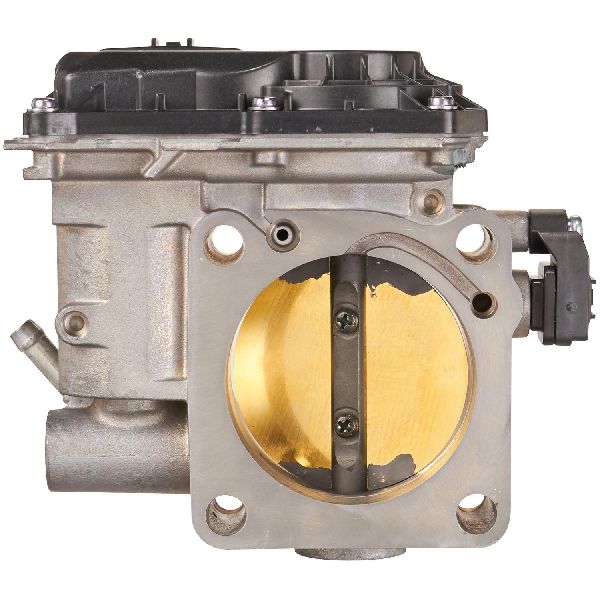
(OEM #16400-RN0-A01 (replaces 16400-RYE-A01))— This is the most common fix because the Throttle Position Sensor (TPS) that causes the P0123 code is integrated into this assembly and is not sold separately by Honda for this vehicle.
Trusted brands: Honda (Genuine OEM), Hitachi (Often the OEM supplier), Standard Motor Products
OEM price range: $250-$550
Aftermarket price range: $150-$350
Related Codes That Often Appear With This One
- P0223 — This code is for 'Throttle/Pedal Position Sensor/Switch 'B' Circuit High'. Honda uses dual sensors for redundancy. If both P0123 and P0223 appear together, it strongly points to a problem with the throttle body assembly or its shared power/ground wiring.
- P0507 — This code means 'Idle Control System RPM Higher Than Expected'. It can be triggered as a consequence of a faulty throttle body giving incorrect position data, or it may appear after a throttle body is cleaned or replaced without performing the idle relearn procedure. 🎬 Watch: A walkthrough of the Honda idle relearn procedure.
Platform-Specific Known Issues
- Context: J35Z Engine and Variable Cylinder Management (VCM): The J35Z8 engine in the 2011-2017 Odyssey is equipped with Honda's Variable Cylinder Management (VCM) system, which deactivates cylinders to save fuel. This system is a frequent topic of discussion in owner forums for causing issues like increased oil consumption, fouled spark plugs, and premature engine mount wear. While VCM does not directly cause the P0123 electrical fault, the associated drivability problems (like rough idle or misfires) can sometimes be confused with throttle body symptoms. Many owners choose to install a 'VCM muzzler' or 'VCM tuner' device to disable the system and prevent these long-term issues. This is important context for any owner diagnosing engine problems on this platform.
Mechanic-Grade Diagnostic Values
- TPS 'A' Signal Voltage (Live Data) — expected: ~0.5V at closed throttle, sweeping smoothly to ~4.5V at wide-open throttle.. Failure: Voltage is stuck above 4.8V regardless of pedal position.
- 5V Reference Voltage at Throttle Body Connector — expected: Approximately 5.0V.. Failure: Voltage is significantly lower than 5.0V or absent, indicating a PCM or wiring issue upstream of the sensor.
- Sensor Ground at Throttle Body Connector — expected: Near 0V, with good continuity to chassis ground.. Failure: Voltage is present on the ground wire, or high resistance to ground exists, indicating a bad ground (e.g., G101).
Scan Tool Commands That Help
- Honda HDS (or equivalent high-end scanner): ETCS (TAC) TEST -> TP POSITION CHECK — This function is used to clear the throttle position learned value from the PCM's memory. It is a mandatory step after replacing the throttle body or cleaning it, to force the PCM to relearn the new sensor's home position.
- Honda HDS (or equivalent): ETCS LEARN — This is the full learn procedure command that must be run after disconnecting the battery, replacing the PCM, or replacing the throttle body to make the ECM learn the new throttle body initialization.
Wiring & Ground Locations

- G101 — On the front of the right cylinder head, often near the thermostat housing.. This is a primary logic and power ground for the PCM. A corroded or loose G101 connection can cause unstable sensor readings, including the high voltage seen in a P0123 code, even if the sensor and its direct wiring are fine.
- DBW Fuse — In the under-hood fuse box, identified as a 15A fuse labeled 'DBW' (Drive-By-Wire).. This fuse supplies power to the electronic throttle control system. While a blown fuse would typically cause a no-response condition rather than a high voltage code, intermittent issues with the fuse holder or a partial short could theoretically cause voltage fluctuations.
- Throttle Body Connector — The 6-pin electrical connector plugged directly into the throttle body assembly.. This is the primary point of failure for wiring issues. Pins can corrode, and the harness can chafe nearby. Testing for 5V reference, ground, and signal voltage occurs at this connector.
Real Owner Repair Stories
- Odyclub.com forum user (2011-2017 Honda Odyssey (multiple users report same issue)) — Check engine light, flashing 'D' light, vehicle enters limp mode with no acceleration.
❌ Tried (didn't work) Cleaning the throttle body., Replacing the accelerator pedal position (APP) sensor., Searching for a standalone TPS sensor to purchase, which is not available from Honda for this model.
✅ What actually fixed it Complete replacement of the throttle body assembly (Part No. 16400-RN0-A01), followed by the idle relearn procedure. This was the consistent fix across multiple owner reports for a combined P0123 and P0223.
OEM Part Supersession History
16400-RYE-A01→16400-RN0-A01— Part revision/update by Honda.
Heads up: While physically similar and used on other J35 engines, it is critical to use the part number specified for the 2011-2017 Odyssey (16400-RN0-A01) to ensure correct electronic calibration and behavior with the Odyssey's PCM.
Diagnostic Flowchart
Used vs. New Parts: Buying Guide for This Vehicle
When a used part is the smart pick: A used throttle body from a reputable salvage yard can be a cost-effective option if the budget is tight. It is a viable choice because it is a complete OEM assembly, avoiding the pitfalls of questionable aftermarket-only sensors.
Donor-vehicle mileage cap: roughly under 80000 miles for the part to have meaningful remaining life.
What to inspect on the donor part:
- Verify the donor vehicle's mileage; lower is always better.
- Inspect the electrical connector pins for any signs of corrosion, moisture, or damage.
- Check the throttle plate and bore for excessive carbon buildup, which might indicate a poorly maintained engine.
- Ensure the throttle plate moves smoothly by hand without binding (engine off).
- Ask for a short warranty (e.g., 30-90 days) from the salvage yard.
OEM-only on this vehicle (don't cheap out):
- Throttle Body Assembly: While aftermarket assemblies exist, OEM (Honda or Hitachi) is strongly recommended for reliability and correct electronic calibration. A used OEM part is often considered a better choice than a new, unproven aftermarket brand.
Aftermarket brands forum-validated for this vehicle:
- Hitachi (Often the original equipment manufacturer for Honda)
Brands owners have reported issues with on this vehicle:
- Generic, no-name brands from online marketplaces are a significant gamble. Forum discussions often feature stories of these parts failing quickly or having incorrect calibration, leading to idle or performance issues even after a successful relearn procedure.
Real Owner Stories
Aggregated from forums and TSBs cited above. Mileages and costs reflect what owners reported in those sources.
2011-2017 Honda Odyssey (J35Z8)
Symptoms: The Check Engine Light and the flashing 'D' light came on. The van would hesitate and stumble when accelerating, and it went into a limp mode with very little power.
What fixed it: After confirming the TPS voltage was stuck high, the entire throttle body assembly was replaced. An idle relearn procedure was necessary after the new part was installed to get it to run correctly.
Source hint: Odyclub.com, DriveAccord.net, and Piloteers.org
Related OBD-II Codes
Frequently Asked Questions
My 2014 Odyssey has a P0123 code. Can I just replace the Throttle Position Sensor (TPS) or do I need the whole assembly?
Is there a special procedure required after replacing the throttle body on my Honda Odyssey?
What symptoms are common with a P0123 code on this van besides the Check Engine Light?
I'm checking live data on my scan tool. What voltage should a healthy TPS show versus a faulty one causing P0123?
My Odyssey has a rough idle. Could this be related to the Variable Cylinder Management (VCM) system instead of the throttle body?
Does this same throttle body failure happen on other Honda or Acura vehicles?
Helpful Videos

Used OEM Parts in Stock

New Aftermarket Parts Available


The information in this article is provided for general reference and educational purposes only. Vehicle specifications, procedures, and part compatibility can vary by production date, trim level, and region. Always consult your vehicle's factory service manual and verify part numbers before purchasing or performing repairs. Safety-critical components such as airbags, seat belts, and braking systems should be installed by a qualified professional.
- Honda Odyssey:
- 🎬 Helpful Videos
- 🛍️ Shop This Part
- What's Unique About the 2011-2017 Honda Odyssey
- Symptoms You May Notice
- Most Likely Causes
- Rare But Worth Checking
- Diagnosis Steps
- Parts You'll Likely Need
- Related Codes That Often Appear With This One
- Platform-Specific Known Issues
- Mechanic-Grade Diagnostic Values
- Scan Tool Commands That Help
- Wiring & Ground Locations
- Real Owner Repair Stories
- OEM Part Supersession History
- Diagnostic Flowchart
- Used vs. New Parts: Buying Guide for This Vehicle
- Real Owner Stories
- 2011-2017 Honda Odyssey (J35Z8)
- Related OBD-II Codes
- Frequently Asked Questions
- 🎟️ Get 5% Off