

P0122 on 2010-2015 Hyundai Tucson 2.4L: Causes and Throttle Body Fixes
On a 2010-2015 Tucson 2.4L, P0122 almost always means the entire electronic throttle body assembly has failed. The sensor is integrated and cannot be replaced separately. The fix is a new throttle body assembly (approx. $150-$350 for the part) followed by a throttle relearn procedure.
- P0122 on this Tucson almost certainly means you need a new electronic throttle body assembly.
- The Throttle Position Sensor (TPS) is built into the throttle body and cannot be replaced by itself.
- Symptoms are often severe, including 'limp mode,' making the vehicle unsafe for normal driving.
- After replacing the part (OEM # 35100-2G700), a throttle 'relearn' procedure is required to ensure proper idle and performance.
- Before buying parts, confirm the failure by checking the TPS1 voltage with a scan tool; it will likely be stuck below 0.2V.
What's Unique About the 2010-2015 Hyundai Tucson
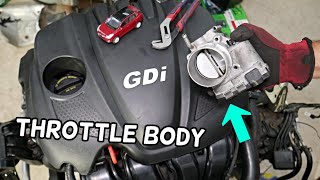
The key thing to know about the 2010-2015 Hyundai Tucson (second generation, LM) with the 2.4L Theta II engine is that the Throttle Position Sensor (TPS) is an integral, non-serviceable part of the electronic throttle body. Unlike many other vehicles where you can simply replace a small, inexpensive sensor, a P0122 code on this specific Tucson almost always requires replacing the entire throttle body assembly. This design and its common failure mode are shared with other Hyundai and Kia vehicles from the same era that use the Theta II engine, like the Sonata, Sportage, and Optima.
Symptoms You May Notice
- Check Engine Light is on
- Vehicle enters 'limp mode' (drastically reduced engine power)
- Poor or delayed throttle response and hesitation.
- Unstable, rough, or surging idle.
- Engine stalling, especially at low speeds or when stopping.
- ESC (Electronic Stability Control) light may also illuminate.
- Replacing only the Accelerator Pedal Position (APP) sensor. P0122 specifically refers to the sensor on the throttle body, not the one connected to the gas pedal. A faulty pedal sensor would typically set codes like P2122.
- Attempting to find and replace just the Throttle Position Sensor (TPS). On this vehicle, it is integrated into the throttle body and not sold separately.
Most Likely Causes
- Failed Electronic Throttle Body Assembly 🔴 High Probability The Throttle Position Sensor (TPS) is integrated into the assembly and is a common failure point. It cannot be replaced separately on this vehicle.
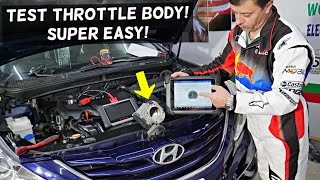
How to confirm: Use an OBD-II scanner to monitor live data for 'TPS1 Voltage' with the Key On, Engine Off. A reading that is stuck below 0.2V or does not increase smoothly from a normal closed range of ~0.2V-0.47V to ~4.7V as you slowly press the gas pedal confirms a failed sensor/assembly.
Typical fix: Replace the entire electronic throttle body assembly. A throttle body relearn procedure is required after installation.
Est. part cost: $150-$400 - Wiring Harness or Connector Issue ⚪ Low Probability Oil contamination from the PCV system or known engine oil consumption issues can sometimes foul the connector pins, causing a short.
How to confirm: Visually inspect the throttle body's 6-pin connector and wiring for damage, corrosion, or backed-out pins. Check for a short to ground on the signal wire (Pin 5, TPS1 Signal). Clean any oil found in the connector with electronics cleaner and re-test.
Typical fix: Repair the damaged wiring or clean/replace the connector.
Est. part cost: $5-$50
Rare But Worth Checking
- Poor Main Engine Ground: As seen in a complaint for another Hyundai model (ODI #11292479), a bad ground can cause multiple, seemingly unrelated sensor codes, including P0122. Check the main ground strap from the engine/transmission to the chassis for corrosion or looseness.
- Faulty Powertrain Control Module (PCM): This is extremely rare and should only be considered after all other possibilities, including the throttle body and wiring, have been definitively ruled out.
Diagnosis Steps
- Connect an OBD-II scanner and confirm P0122 is present. Check for other related codes like P2135 or P0222.
- Turn the ignition to 'ON' without starting the engine.
- Using the scanner's live data function, observe the voltage for 'TPS1 Voltage' or a similar parameter.
- The voltage should be stable, typically between 0.2V and 0.47V with the throttle closed.
- If the voltage is stuck below 0.14V, the throttle body has almost certainly failed.
- If voltage seems plausible, have a helper slowly press the accelerator pedal to the floor. The voltage should increase smoothly and linearly to over 4.2V. Any dead spots, jumps, or erratic readings indicate a faulty throttle body.
- If the live data test is inconclusive, perform a visual inspection of the throttle body connector and wiring for any signs of damage, corrosion, loose pins, or oil contamination.
- Using a multimeter, verify 5V reference and a good ground at the connector pins (Pin 6 and Pin 4, respectively). If power and ground are good but the signal on Pin 5 is incorrect, the throttle body is confirmed as the fault.
- If wiring and live data appear normal, the issue could be an intermittent failure. The most probable cause remains a failing throttle body.
Parts You'll Likely Need
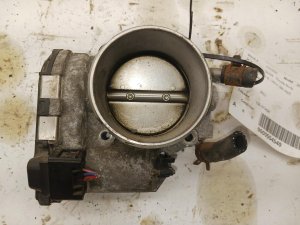
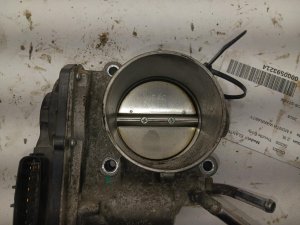
- Electronic Throttle Body Assembly
(OEM #35100-2G700)— This is the most common fix because the non-serviceable Throttle Position Sensor (TPS) that causes code P0122 is integrated into this assembly.
Trusted brands: Hyundai (Genuine OE), Bosch, Standard Motor Products (SMP), Dorman
OEM price range: $350-$500
Aftermarket price range: $150-$350 - Throttle Body Gasket
(OEM #35101-2G700)— A new gasket should always be used when replacing the throttle body to prevent vacuum leaks. Some new throttle bodies include one.
Trusted brands: Fel-Pro, Mahle, Hyundai (Genuine OE)
OEM price range: $10-$20
Aftermarket price range: $5-$15
Related Codes That Often Appear With This One
- P2135 — Indicates a voltage correlation error between the two throttle position sensors (TPS1 and TPS2) inside the same throttle body assembly. It's very common to see this with P0122 when the unit fails.
- P0222 — This is the 'Circuit Low' code for the secondary sensor (TPS2). If both sensors fail simultaneously, you may get both P0122 and P0222.
- P2110 — This code for 'Throttle Actuator Control System - Forced Limited RPM' is a result, not a cause. The PCM sets this when it detects the P0122 fault and forces the engine into limp mode as a safety measure.
Technical Service Bulletins (TSBs) & Recalls
- TSB 10-FL-018: While not directly for P0122, this TSB for related models discusses other throttle control codes that can arise from improper relearn procedures, reinforcing the importance of post-repair steps.
Platform-Specific Known Issues
- The Theta II 2.4L engine in this Tucson is known for an engine failure warranty extension related to connecting rod bearings (requiring a KSDS update), but this is separate from and unrelated to the throttle body failure that causes P0122.
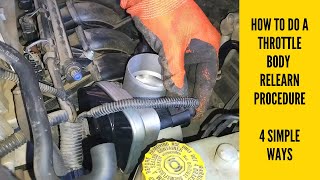
- After replacing the throttle body, a 'relearn' or 'reset' procedure is necessary. Some sources state the ECU will learn automatically after idling for a few minutes. Others provide a manual key-on/key-off procedure to force the relearn. Disconnecting the battery for 15 minutes is another commonly cited method to reset adaptations.
Mechanic-Grade Diagnostic Values
- TPS Resistance (Terminals 1 & 2) — expected: 0.71 - 1.38 kΩ at closed throttle, ~2.7 kΩ at wide open throttle. Failure: Resistance is outside this range, does not change smoothly, or shows infinite resistance (open).
- TPS 'A' (TPS1) Signal Voltage — expected: 0.20V - 0.47V at closed throttle; 4.2V - 4.7V at wide open throttle.. Failure: Voltage is stuck below 0.14V for more than 1 second, which triggers the code.
- Throttle Body Connector Pin Voltages (Key On, Engine Off) — expected: Pin 6: 5V Reference; Pin 4: Sensor Ground (near 0V); Pin 5: TPS1 Signal (0.2V - 4.7V); Pin 3: TPS2 Signal.. Failure: Missing 5V reference, bad ground, or a signal wire on Pin 5 that is stuck low (<0.2V) and does not respond to throttle plate movement.
Scan Tool Commands That Help
- Hyundai GDS (Global Diagnostic System): Resetting Adaptive Values — This function, found under 'Vehicle S/W Management' or 'Special Function', should be used after replacing the throttle body to force the ECU to relearn the new sensor's idle and range-of-motion values. It is the official dealer method for performing a throttle relearn.
- Hyundai GDS (Global Diagnostic System): Actuation Test - ETC Motor — This bidirectional test allows the technician to command the electronic throttle control motor to open and close. It's used to verify if the throttle plate is physically sticking or if the motor is responsive, helping to distinguish between a mechanical and an electrical failure within the throttle body assembly.
Wiring & Ground Locations
- Engine Ground Strap (91880-2S000) — Typically runs from the engine block or transmission housing to the chassis frame rail in the engine bay.. A corroded or loose main engine ground can cause erratic voltage readings on multiple sensors that use the block as a ground reference, including the throttle position sensor. This can mimic a sensor failure and throw codes like P0122. The OEM part number for the 2.4L engine ground wiring assembly is 91880-2S000.
- G101 — Located at the front of the engine, lower block area.. While schematics are generic, grounds in this location often serve the Engine Control Module and related sensors. A fault at G101 could disrupt the ground reference for the TPS circuit.
OEM Part Supersession History
35100-2G700→35100-2G700— No supersession found. The part number appears to be consistent for the specified vehicle range.
Heads up: This part is shared with other Hyundai/Kia models like the Sonata, Santa Fe, Optima, and Sportage with the 2.4L GDI engine, ensuring good availability. You may receive the part in either a Hyundai or Kia branded box, but the part itself is identical.
Model Year Variations Within This Range
- 2014-2015: The Hyundai Tucson received a facelift for the 2014 model year, which included the 2.4L GDI engine becoming standard on more trims. However, the throttle body assembly (35100-2G700) and the associated P0122 diagnostic procedure remained the same for the 2.4L engine across the 2010-2015 range.
Diagnostic Flowchart
Other Known Issues on This Vehicle
Issues unrelated to this code that are worth knowing about as an owner of this generation:
- Catastrophic Engine Failure (Rod Bearing Wear) 🔴 High — Extremely common across the Theta II 2.4L GDI engine family, leading to multiple class-action lawsuits. Failure can occur at various mileages. (Ref: Multiple recalls and a lifetime warranty extension were issued, contingent on receiving a Knock Sensor Detection System (KSDS) software update.)
- Excessive Oil Consumption 🔴 High — A widespread problem often linked to premature piston ring wear. Owners report needing to add oil between changes.
- Intake Valve Carbon Buildup 🟠 Medium — Common to all Gasoline Direct Injection (GDI) engines, including the Theta II. Typically requires cleaning every 40,000-60,000 miles to prevent performance loss and misfires.
- ABS Module Fire Risk 🔴 High — Subject to a major recall. The ABS module can leak brake fluid internally, causing an electrical short and potential fire, even when the vehicle is parked. (Ref: NHTSA Recall, affects 2010-2013 Tucson models among many others.)
- Timing Chain Tensioner Failure 🟠 Medium — The timing chain tensioner can fail, causing the chain to lose tension, which can lead to rattling noises and potentially severe engine damage if not addressed.
Used vs. New Parts: Buying Guide for This Vehicle
When a used part is the smart pick: A used throttle body is a significant gamble for this repair. Because the integrated electronic sensor is the primary failure point, a used part from a junkyard may have the same issue or fail shortly after installation. It should only be considered as a temporary, budget-constrained option.
Donor-vehicle mileage cap: roughly under 60000 miles for the part to have meaningful remaining life.
What to inspect on the donor part:
- Check the 6-pin electrical connector for any signs of corrosion, bent pins, or cracks.
- Look into the throttle bore. Heavy carbon buildup may suggest the part is from a poorly maintained engine.
- If possible, inquire about the donor vehicle's mileage. Lower mileage is always preferable for this part.
- Ensure it is the correct part number (35100-2G700), as visually similar parts from other engines may not be compatible.
Aftermarket brands forum-validated for this vehicle:
- Bosch (Often the Original Equipment Manufacturer)
- Standard Motor Products (SMP)
- Dorman OE FIX (This version often includes design improvements to address the original failure mode, such as better seals against moisture and oil).
Brands owners have reported issues with on this vehicle:
- Unbranded, no-name parts from online marketplaces. Forum discussions frequently mention that these cheaper alternatives can be poorly calibrated or fail quickly, leading to the code returning.
Real Owner Stories
Aggregated from forums and TSBs cited above. Mileages and costs reflect what owners reported in those sources.
2013 Hyundai Tucson 2.4L
Symptoms: The owner needed to know the specific relearn procedure after replacing the throttle body to ensure the ECU recognized the new part.
What fixed it: The ECU learned the new throttle position automatically within 20-30 seconds of idling, followed by wide-open throttle stabs to confirm.
Source hint: 2CarPros - 2013 Hyundai Tucson Throttle Body Relearn
2010-2015 Hyundai/Kia (Theta II models)
Symptoms: Jerky shifting and poor throttle response after a throttle body replacement.
What fixed it: A manual ECU relearn procedure involving cycling the ignition key from ON to OFF five times with specific wait periods.
Source hint: Reddit - SOLVED: Hyundai Throttle Position Sensor Relearn or Throttle Body Reset
Related OBD-II Codes
Frequently Asked Questions
Can I just replace the sensor on my 2010-2015 Tucson's throttle body to fix P0122?
Is there a specific TSB for the P0122 code on this vehicle?
Does the Theta II engine failure warranty extension cover my P0122 throttle body issue?
How do I perform the throttle relearn on my Tucson after replacing the part?
Could oil consumption issues be causing my P0122 code?
Why is my ESC light on at the same time as the Check Engine Light for P0122?
Helpful Videos
We Have This Part in Stock


The information in this article is provided for general reference and educational purposes only. Vehicle specifications, procedures, and part compatibility can vary by production date, trim level, and region. Always consult your vehicle's factory service manual and verify part numbers before purchasing or performing repairs. Safety-critical components such as airbags, seat belts, and braking systems should be installed by a qualified professional.
- Hyundai Tucson:
- 🎬 Helpful Videos
- 🛍️ Shop This Part
- What's Unique About the 2010-2015 Hyundai Tucson
- Symptoms You May Notice
- Most Likely Causes
- Rare But Worth Checking
- Diagnosis Steps
- Parts You'll Likely Need
- Related Codes That Often Appear With This One
- Technical Service Bulletins (TSBs) & Recalls
- Platform-Specific Known Issues
- Mechanic-Grade Diagnostic Values
- Scan Tool Commands That Help
- Wiring & Ground Locations
- OEM Part Supersession History
- Model Year Variations Within This Range
- Diagnostic Flowchart
- Other Known Issues on This Vehicle
- Used vs. New Parts: Buying Guide for This Vehicle
- Real Owner Stories
- 2013 Hyundai Tucson 2.4L
- 2010-2015 Hyundai/Kia (Theta II models)
- Related OBD-II Codes
- Frequently Asked Questions
- 🎟️ Get 5% Off