

P0122 on 2012-2017 Hyundai Accent: Throttle Position Sensor Causes and Fixes
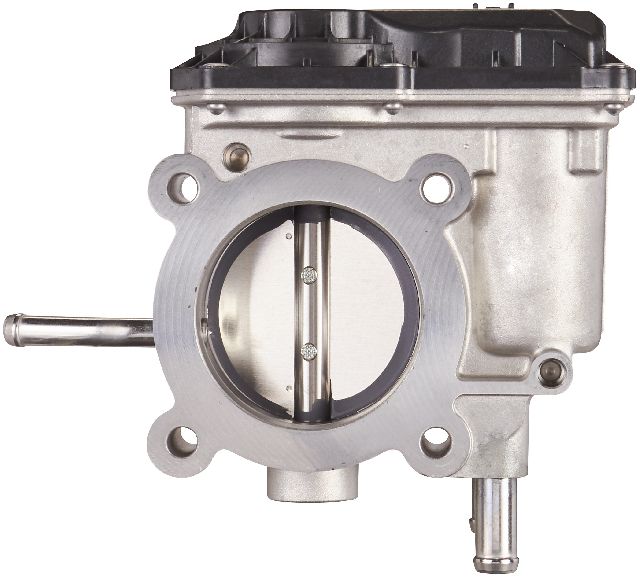
On a 2012-2017 Hyundai Accent, code P0122 is almost always caused by a failed throttle position sensor (TPS). Because the sensor is integrated into the throttle body, the entire assembly must be replaced. The most common OEM part number is 35100-2B300, which may be superseded by 35100-2B340. Expect to pay $150-$250 for an OEM part. After replacement, a throttle relearn procedure is required.
- P0122 on the 2012-2017 Accent points directly to the throttle position sensor.
- The sensor is part of the throttle body; you must replace the entire assembly. The correct OEM part number is 35100-2B300 or the updated 35100-2B340.
- Always check the wiring and connector first, especially the harness routing near the transmission bracket, to avoid replacing a good part.
- After replacing the throttle body, a relearn procedure is necessary to ensure proper idle and performance, which can often be done without a special scan tool.
What's Unique About the 2012-2017 Hyundai Accent
For the 2012-2017 Hyundai Accent with the 1.6L Gamma GDI engine, the throttle position sensor (TPS) is not sold as a separate, replaceable part. It is permanently integrated into the electronic throttle body assembly. This is a critical distinction, as it means a confirmed TPS failure requires the replacement of the entire throttle body, not just a small sensor. This design is common on many modern vehicles to simplify assembly but increases the cost of repair for this specific fault.
Symptoms You May Notice
- Check Engine Light is on
- Poor, hesitant, or sluggish acceleration
- Engine goes into 'limp mode' (reduced power, won't rev past ~3000 RPM)
- Rough or unstable idle
- Engine stalling, especially when coming to a stop or at idle
- Harsh or erratic automatic transmission shifting
- Engine surges or randomly slows down and accelerates
- Replacing the accelerator pedal position sensor. P0122 specifically refers to the 'A' circuit, which is on the throttle body, not the pedal sensor.
- Cleaning a dirty throttle body. While a dirty throttle body can cause idle and performance issues, it is unlikely to cause a persistent 'circuit low' electrical fault code like P0122. Cleaning will not fix a failed internal sensor.
- Replacing the oxygen sensor. The O2 sensor may report issues due to the incorrect air/fuel mixture caused by the TPS fault, but it is not the root cause.
Most Likely Causes
- Failing Throttle Body Assembly (Integrated TPS) 🔴 High Probability The internal electronic components of the throttle position sensor wear out over time, leading to erratic or low voltage signals. Since it is integrated into the throttle body on this model, the entire unit is the most common point of failure for code P0122. 🎬 Watch: A detailed breakdown of P0122 causes and symptoms.
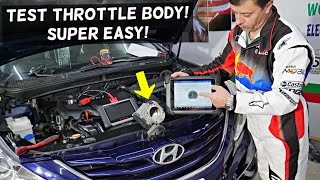
How to confirm: Use a scan tool to monitor the live data for 'TPS Voltage' (or TPS1). With the key on and engine off, the voltage should increase smoothly from ~0.5V to ~4.5V as you slowly press the gas pedal. If the voltage is stuck low (e.g., under 0.2V), drops out, or the reading is erratic and jumpy, the sensor has failed. A lab scope can also be used to visualize the signal and confirm dropouts.
Typical fix: Replace the entire throttle body assembly. After replacement, a throttle relearn procedure is required to calibrate the new part with the ECM.
Est. part cost: $150-$250 - Wiring or Connector Issue 🟡 Medium Probability The wiring harness to the throttle body is subject to engine bay heat and vibration. A common issue on this platform is the harness rubbing against a transmission bracket, which can wear through the insulation and cause a short to ground. Corrosion or loose pins in the connector can also cause a low input signal.
How to confirm: Visually inspect the wiring harness and the 6-pin connector going to the throttle body. Pay close attention to the area where the harness is secured to a bracket near the transmission. Use a multimeter with the key on to check for a 5V reference wire, a good ground, and a signal wire at the connector. Wiggle the harness while monitoring TPS voltage on a scan tool to see if the reading fluctuates.
Typical fix: Repair the damaged section of the wiring harness or clean/replace the connector. Secure the harness away from any sharp edges to prevent future damage.
Est. part cost: $5-$50
Rare But Worth Checking
- Faulty Powertrain Control Module (ECM): This is extremely rare and should only be considered after the throttle body and all related wiring have been definitively ruled out. An ECM failure is the least likely cause.
Diagnosis Steps
- Read the trouble codes with an OBD-II scanner. Confirm P0122 is present and note any other codes like P0123, P0222, or P2135, which strongly suggest a throttle body failure.
- Use the scanner's live data function to observe the Throttle Position Sensor 'A' (TPS1) voltage. With the Key On, Engine Off (KOEO), the reading should be around 0.5V at closed throttle and sweep smoothly up to about 4.5V at wide-open throttle.
- If the voltage is stuck below ~0.2V, is erratic, or does not change with pedal input, the sensor or its circuit is faulty.
- Perform a thorough visual inspection of the throttle body connector and its wiring harness. Look for any chafed wires, loose pins, or signs of corrosion, especially where the harness is bracketed to the transmission.
- If the wiring appears okay, disconnect the connector and use a multimeter to test the circuit at the harness plug (Key On, Engine Off). You should find a 5-volt reference wire, a ground wire (check for continuity to battery negative), and the signal wire.
- If the 5V reference and ground are present at the connector, the issue is almost certainly the throttle body assembly itself.
- If reference voltage or ground is missing, the wiring fault must be traced back toward the ECM and repaired.
- After replacing the throttle body, perform a throttle relearn procedure.
Parts You'll Likely Need
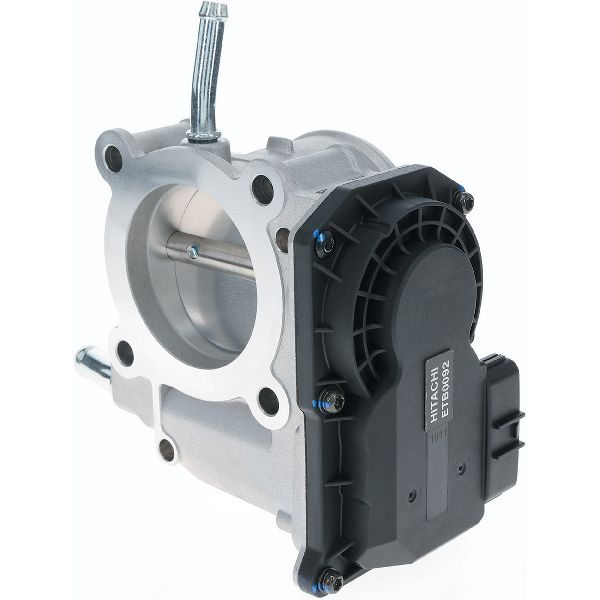
- Electronic Throttle Body Assembly
(OEM #35100-2B300, superseded by 35100-2B340)— This is the most common cause of code P0122 on this vehicle, as the throttle position sensor (TPS) that fails is integrated into this assembly and not sold separately.
Trusted brands: Hyundai (OEM), Bosch, Cardone (Remanufactured), Mando
OEM price range: $180-$250
Aftermarket price range: $120-$200
Related Codes That Often Appear With This One
- P0123 — Throttle Position Sensor 'A' Circuit High Input. If the sensor is failing erratically, it might send signals that are both too high and too low, causing both codes to appear.
- P2135 — Throttle/Pedal Position Sensor/Switch 'A'/'B' Voltage Correlation. This code appears when the ECM detects a disagreement between the two internal TPS circuits (TPS1 and TPS2), which is a very common result of a failing sensor assembly.
- P0222 — Throttle Position Sensor 'B' Circuit Low Input. This indicates the secondary TPS circuit is also reading low, further pointing to a failure of the complete throttle body unit.
Platform-Specific Known Issues
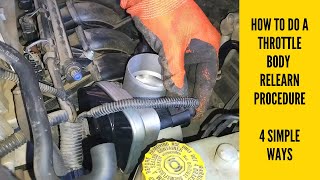
- A throttle body replacement on a Hyundai/Kia requires a 'throttle relearn' procedure. This can often be done without a scan tool. A common DIY method is to turn the ignition to 'ON' (without starting the engine) for 10-15 seconds, then turn it 'OFF' for 10-15 seconds, and repeat this cycle 3-5 times. You may hear the throttle body motor cycling. Alternatively, disconnecting the battery for 30 minutes can reset the ECM, which will then relearn the new throttle body parameters during the first few minutes of idling and driving. 🎬 Watch: Four ways to perform a throttle body relearn.
- The engine wiring harness has a known chafe point where it is secured by a bracket on the transmission. Over time, vibrations can cause the bracket to rub through the wire loom and short out the TPS signal wire, causing P0122.
Mechanic-Grade Diagnostic Values
- TPS1 Signal Voltage (KOEO) — expected: Approx. 0.5V at closed throttle, sweeping smoothly to approx. 4.5V at wide-open throttle.. Failure: Voltage is stuck below 0.176V for more than 0.14 seconds.
- ECM Fault-Setting Threshold — expected: TPS1 voltage > 0.176V. Failure: If TPS1 voltage < 0.176V for 0.14 seconds, the ECM will log DTC P0122.
- Throttle Body Connector Pin 6 (5V Reference) — expected: Approx. 5.0V with key on, engine off.. Failure: Voltage significantly lower than 5.0V or 0V indicates a wiring or ECM issue.
- Throttle Body Connector Pin 4 (Sensor Ground) — expected: Near 0V, with good continuity to chassis ground.. Failure: Voltage present or high resistance to ground indicates a bad ground connection.
Scan Tool Commands That Help
- Hyundai GDS (or equivalent advanced scan tool): Throttle Position Sensor Adaptation / Reset Adaptive Values — This function should be used after replacing the throttle body assembly. It forces the ECM to erase its learned throttle plate values and recalibrate to the new sensor's closed and wide-open positions, ensuring proper idle and throttle response.
Wiring & Ground Locations
- Throttle Body Connector (6-Pin) — On the electronic throttle body assembly, located between the air intake hose and the intake manifold.. This connector provides all power, ground, and signal lines for the integrated TPS. P0122 is caused by a low signal on Pin 5. The pinout is: Pin 1 (Motor +), Pin 2 (Motor -), Pin 3 (TPS2 Signal), Pin 4 (Sensor Ground), Pin 5 (TPS1 Signal), Pin 6 (5V Reference).
- GGG04 / GGG05 — On the right rear of the engine compartment, near the ECM.. These are primary engine compartment ground points. A loose or corroded connection at these locations can create a floating ground, causing erratic voltage readings for multiple sensors controlled by the ECM, including the TPS. This can mimic a sensor failure.
- Primary Engine Ground — A large ground cable or braided strap connecting the engine block/cylinder head to the chassis or firewall. On many Hyundais, the main battery ground cable attaches to the transmission case, which serves as the primary engine ground.. This is the main return path for the entire engine's electrical system. A compromised primary ground can cause widespread, intermittent electrical issues and incorrect sensor readings, including a P0122 code.
Real Owner Repair Stories
- Hyundai-Forums user (2013 Hyundai Accent 1.6L) — Check engine light with code P0122, car going into limp mode with poor acceleration.
❌ Tried (didn't work) Replacing the throttle body assembly with a new OEM part did not fix the issue.
✅ What actually fixed it The user traced the wiring harness from the throttle body and found a spot where it was rubbing against a metal bracket for the transmission. The insulation on the signal wire had worn through, causing it to short to ground. Repairing the wire and securing the harness away from the bracket permanently resolved the code. - NHTSA ODI #11292479 — While involving a different Hyundai model, an owner reported that even after painting ground points, the problem persisted with a cascade of codes including P0122, P0222, and P0123, eventually requiring the vehicle to be limped to a shop.
OEM Part Supersession History
35100-2B300→35100-2B340— Likely an internal revision for improved reliability or manufacturing process change.
Heads up: The parts are generally interchangeable for the 2012-2017 Accent. No software updates are typically required for this specific supersession.
Diagnostic Flowchart
Other Known Issues on This Vehicle
Issues unrelated to this code that are worth knowing about as an owner of this generation:
- Wiring Harness Chafing 🟠 Medium — Commonly reported. A wiring harness near the brake master cylinder can rub against a transmission bracket, wearing through insulation and causing shorts for ignition coils or other sensors.
- Faulty Canister Purge Valve (CPV) 🟡 Low — A frequent failure item. The valve sticks open, causing a rough idle, difficulty starting after refueling, and EVAP-related check engine lights. It's a relatively cheap and easy part to replace.
- Failing VVT Solenoids 🟠 Medium — Can fail due to age or infrequent oil changes, leading to rough running, poor acceleration, stalling, and timing-related codes.
- High-Pressure Fuel Pump (HPFP) Failure 🔴 High — A known weakness on the 1.6L GDI engine. The pump can leak fuel internally into the crankcase, diluting the engine oil and causing rich running conditions (like code P2188) and potential for engine damage.
- Engine Bearing Wear / Engine Failure 🔴 High — While more prominent on the larger Theta II engines, the 1.6L Gamma GDI can also suffer from premature connecting rod bearing wear, leading to knocking noises and eventual engine seizure. This was part of a larger series of Hyundai/Kia engine issues. (Ref: Related to Hyundai Service Campaign T6G (TSB 22-01-023H-2))
Used vs. New Parts: Buying Guide for This Vehicle
When a used part is the smart pick: A used throttle body is generally NOT recommended for this repair. The failure is due to electronic wear on the internal TPS tracks. A used part from a junkyard has unknown mileage and wear, and may fail shortly after installation, wasting time and money.
Donor-vehicle mileage cap: roughly under 40000 miles for the part to have meaningful remaining life.
What to inspect on the donor part:
- Verify the part number (35100-2B300 or 35100-2B340) matches exactly.
- Inspect the 6-pin connector for any bent, corroded, or broken pins.
- Check the throttle plate for excessive carbon buildup, which might indicate a high-mileage or poorly maintained donor vehicle.
- Avoid parts with any visible cracks or damage to the plastic housing.
OEM-only on this vehicle (don't cheap out):
- While not strictly 'OEM-only', using a new OEM (Hyundai) or OEM-supplier (e.g., Mando, Bosch) throttle body provides the highest probability of a long-lasting repair.
Aftermarket brands forum-validated for this vehicle:
- Bosch
- Hitachi
- Standard Motor Products (SMP)
Brands owners have reported issues with on this vehicle:
- Remanufactured units from brands like Cardone can be a gamble; while they may function, some mechanics report a higher failure rate compared to new units. Unbranded, low-cost options from online marketplaces are also a significant risk.
Real Owner Stories
Aggregated from forums and TSBs cited above. Mileages and costs reflect what owners reported in those sources.
2013 Hyundai Accent 1.6L GDI
Symptoms: The car randomly slows down to a crawling speed until you pull over, shut it off, and restart it. After restarting, it runs fine for a day or a week before happening again.
What fixed it: The issue was identified as a throttle position sensor problem where the computer needed to be reset/repaired (TPS is integrated into the throttle body).
Source hint: Quora - 2013 Hyundai Accent randomly slows down...
2012-2017 Hyundai Accent 1.6L
Symptoms: Poor acceleration and the engine won't rev past 3000 RPM (limp mode).
What fixed it: Replacing the entire throttle body assembly and performing a throttle relearn procedure by cycling the ignition.
Source hint: Reddit (r/MechanicAdvice) - Solved: Hyundai Throttle Position Sensor Relearn
Related OBD-II Codes
Frequently Asked Questions
Can I fix the P0122 code on my 2012-2017 Hyundai Accent without replacing the whole throttle body?
Is there a specific TSB for engine failure on the 1.6L Gamma GDI engine?
Do I need a professional scan tool to perform the throttle relearn after a repair?
Where is the common wiring failure point for the TPS signal on this vehicle?
My Accent is stuck in 'limp mode' and won't rev past 3000 RPM; is this related to P0122?
Could a bad fuel pump cause symptoms similar to a P0122 throttle issue?
Helpful Videos
![[Hyundai Accent] How to test Throttle position sensor- Electronic Throttle Valve](https://img.youtube.com/vi/jRCc9ZzkYf0/mqdefault.jpg)

Used OEM Parts in Stock
New Aftermarket Parts Available




The information in this article is provided for general reference and educational purposes only. Vehicle specifications, procedures, and part compatibility can vary by production date, trim level, and region. Always consult your vehicle's factory service manual and verify part numbers before purchasing or performing repairs. Safety-critical components such as airbags, seat belts, and braking systems should be installed by a qualified professional.
- Hyundai Accent:
- 🎬 Helpful Videos
- 🛍️ Shop This Part
- What's Unique About the 2012-2017 Hyundai Accent
- Symptoms You May Notice
- Most Likely Causes
- Rare But Worth Checking
- Diagnosis Steps
- Parts You'll Likely Need
- Related Codes That Often Appear With This One
- Platform-Specific Known Issues
- Mechanic-Grade Diagnostic Values
- Scan Tool Commands That Help
- Wiring & Ground Locations
- Real Owner Repair Stories
- OEM Part Supersession History
- Diagnostic Flowchart
- Other Known Issues on This Vehicle
- Used vs. New Parts: Buying Guide for This Vehicle
- Real Owner Stories
- 2013 Hyundai Accent 1.6L GDI
- 2012-2017 Hyundai Accent 1.6L
- Related OBD-II Codes
- Frequently Asked Questions
- 🎟️ Get 5% Off