

P0121 on 2007-2009 Saturn Aura 3.6L: Throttle Position Sensor Causes and Fixes
On a 2007-2009 Saturn Aura with the 3.6L V6, code P0121 is most often caused by a failing electronic throttle body assembly. Cleaning the throttle body of carbon buildup may solve it, but replacement is the common fix. A throttle relearn procedure is mandatory after replacement. Expect to pay $150-$300 for a new throttle body.
- P0121 on your Aura almost always points to a problem with the electronic throttle body.
- Before replacing anything, try cleaning the throttle body bore and plate of any carbon buildup, as this is a common and inexpensive potential fix.
- The Throttle Position Sensor (TPS) is part of the throttle body; you cannot buy it separately. If the sensor has failed, the entire assembly must be replaced.
- After cleaning or replacing the throttle body, you MUST perform a 'throttle relearn' procedure to ensure a correct and stable idle.
What's Unique About the 2007-2009 Saturn Aura
The Saturn Aura uses a 'drive-by-wire' system where the throttle position sensor (TPS) is integrated into the electronic throttle body assembly and is not sold as a separate part. The 3.6L LY7 V6 engine in this vehicle is known to be sensitive to carbon and oil buildup inside the throttle body, which can restrict the movement of the throttle plate and cause this code. While cleaning is a valid first step, complete failure of the throttle body's internal electronics is a very common issue on this GM platform. GM even acknowledged this with a Special Coverage Adjustment (No. 11273) that extended the warranty on this part for 10 years/120,000 miles, though it has now expired.
Symptoms You May Notice
- Check Engine Light is on
- "Reduced Engine Power" or "Engine Power is Reduced" message on the dash
- Hesitation or stumbling during acceleration
- Rough or unstable idle
- Engine stalling, especially at low speeds
- Poor or delayed throttle response
- Engine surging at various speeds
- Replacing only the Accelerator Pedal Position (APP) sensor without confirming its failure with a scan tool. While it can be the cause, the throttle body is more common for this specific code on this vehicle.
- Replacing the Mass Airflow (MAF) sensor. While P0121 involves airflow calculations, the MAF sensor is rarely the root cause unless a specific MAF sensor code is also present.
Most Likely Causes
- Failing Electronic Throttle Body Assembly 🔴 High Probability The internal throttle position sensors (TPS) are a known weak point on this generation of GM vehicles and are not sold separately. GM issued Special Coverage Adjustment #11273 and #14582A for this part on the Aura and similar vehicles, demonstrating the known high failure rate of this component family.
How to confirm: Using a scan tool, monitor the TPS1 and TPS2 voltage readings while slowly pressing the accelerator pedal with the key on, engine off. The voltage should change smoothly with no dropouts or spikes. If the signal is erratic, the throttle body has failed internally. Often, this failure is accompanied by code P2135.
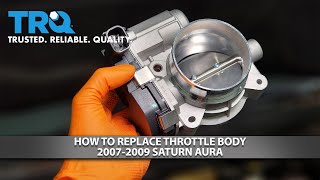
Typical fix: Replace the entire throttle body assembly. 🎬 See this walkthrough on how to replace the throttle body. A throttle relearn procedure must be performed after replacement. The torque for the throttle body bolts is 89 inch-pounds.
Est. part cost: $150-$300 - Dirty or Carbon-Clogged Throttle Body 🟡 Medium Probability The PCV (Positive Crankcase Ventilation) system can route oil vapors into the intake, which bake into hard carbon deposits around the throttle plate, restricting its movement and causing the plate's actual position to mismatch the ECM's expectation.
How to confirm: Remove the air intake duct from the throttle body and visually inspect for a thick, black ring of carbon buildup around the throttle plate and bore.
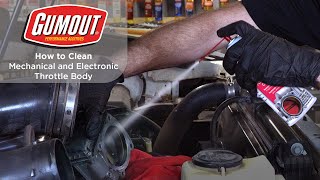
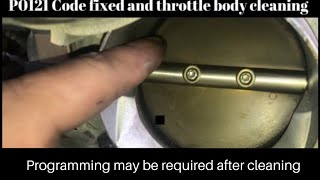
Typical fix: Thoroughly clean the throttle body bore and plate with a dedicated throttle body cleaner and a soft cloth or brush. 🎬 Watch this guide on how to properly clean your throttle body. Do not spray cleaner directly into the electrical connector. A throttle relearn procedure is required after cleaning to prevent a high or unstable idle.
Est. part cost: $5-$15 - Wiring or Connector Issue ⚪ Low Probability
How to confirm: Inspect the wiring harness and connector going to the throttle body for any signs of damage, corrosion, or loose pins. On some GM vehicles, the fan clutch harness can chafe and cause shorts that affect the throttle body circuit. While monitoring TPS voltage on a scan tool, wiggle the harness to see if the signal cuts out.
Typical fix: Repair the damaged section of wire or replace the connector pigtail.
Est. part cost: $10-$40
Rare But Worth Checking
- Faulty Accelerator Pedal Position (APP) Sensor: The APP sensor tells the ECM your throttle demand. If its signal is erratic, it can conflict with the TPS signal. This is less common for P0121 but is a known failure point in the system. It often sets other codes like P2138 simultaneously. On forums, some users mistakenly replace the APP sensor when P0121 is actually caused by the throttle body.
- Faulty Powertrain Control Module (PCM): This is extremely rare. The PCM should only be considered after all other possibilities, including the throttle body and wiring, have been definitively ruled out. Before condemning the PCM, check for any available software updates from the manufacturer.
Diagnosis Steps
- Read all fault codes with an OBD-II scanner. Note any other codes that are present, especially P0068 or P2135.
- Visually inspect the air intake tube between the air filter and the throttle body for cracks or loose connections.
- Remove the intake tube from the throttle body. Inspect the throttle bore and plate for heavy carbon buildup.
- If significant carbon is present, clean it thoroughly using throttle body cleaner and a soft rag. Do not spray harsh chemicals directly onto the electrical components. Reassemble and perform a throttle relearn procedure.
- If the code returns or the throttle body was clean, inspect the throttle body electrical connector and harness for damage, corrosion, or loose pins. Wiggle the harness while observing live data.
- Using a scan tool with live data capability, monitor the 'Throttle Position Sensor 1' and 'Throttle Position Sensor 2' PIDs. With the key on and engine off, slowly press and release the gas pedal. The voltage readings should be smooth and linear, with no glitches or dropouts. One should sweep from low to high (~0.5V to 4.5V) and the other from high to low.
- If the voltage readings are erratic or jump, the throttle body assembly has failed and must be replaced.
- If the throttle body tests good, perform the same live data test on the Accelerator Pedal Position (APP) sensors to rule them out.
- If all components and wiring test good, the issue may be a rare PCM fault, which requires professional diagnosis.
Parts You'll Likely Need
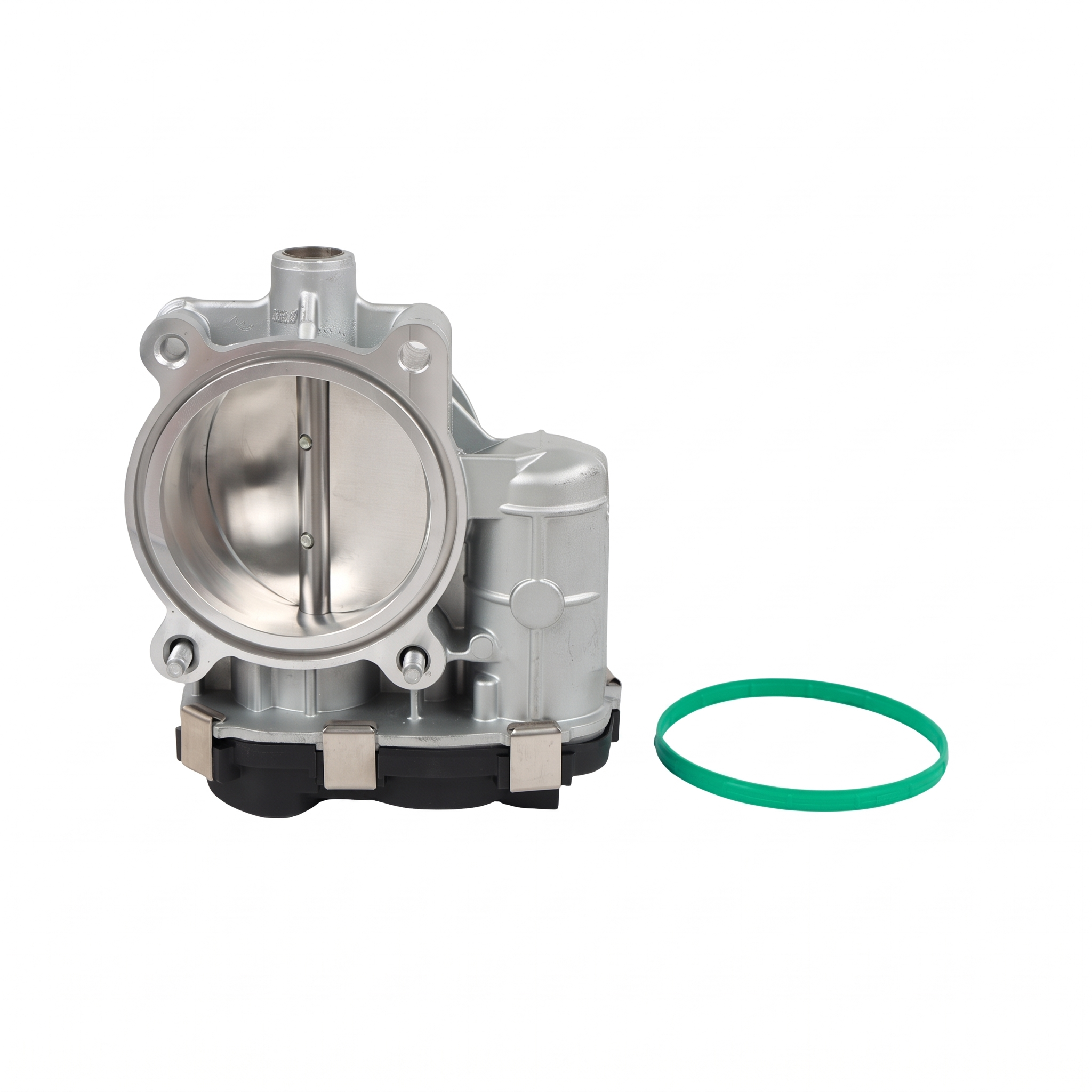
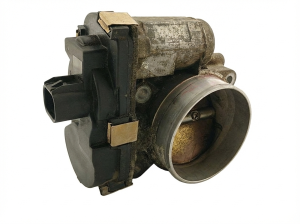
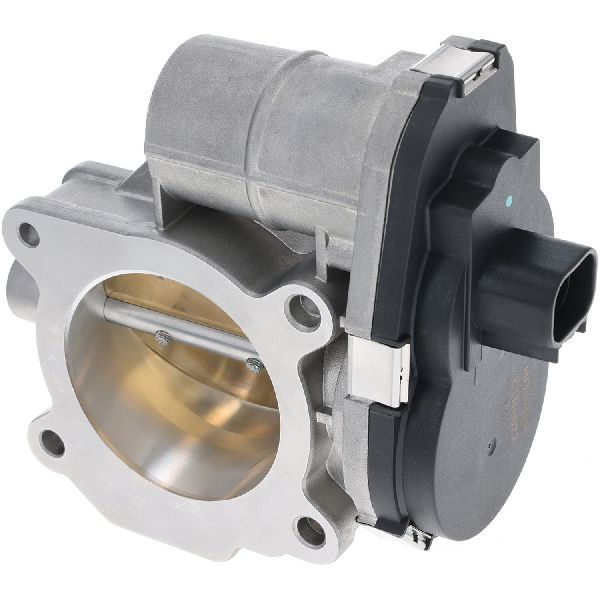
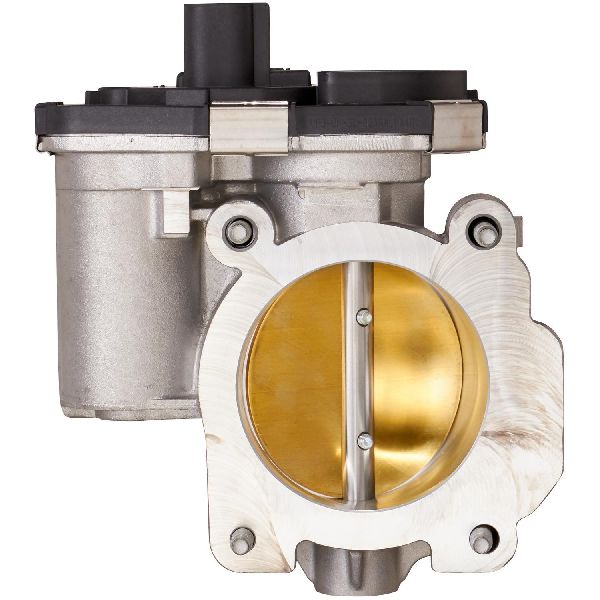
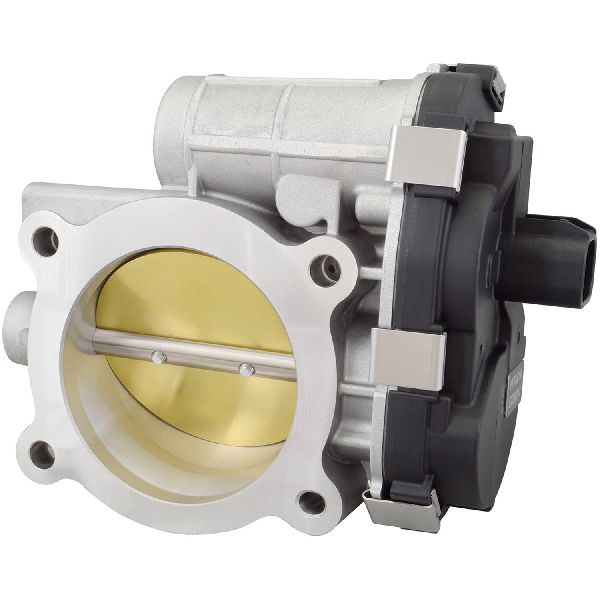
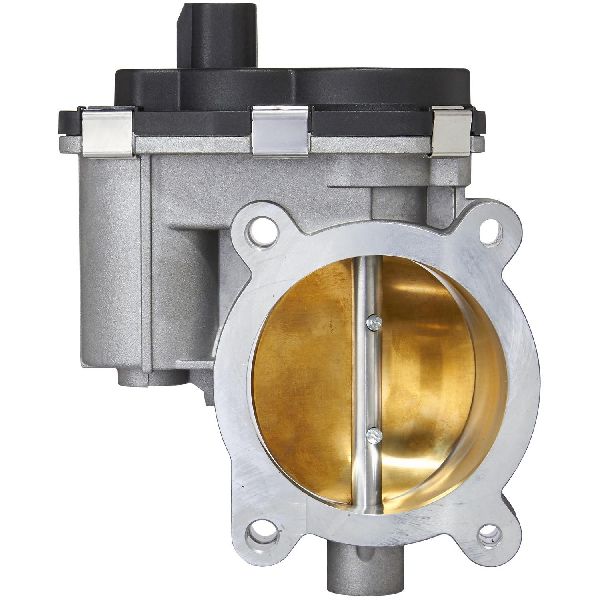
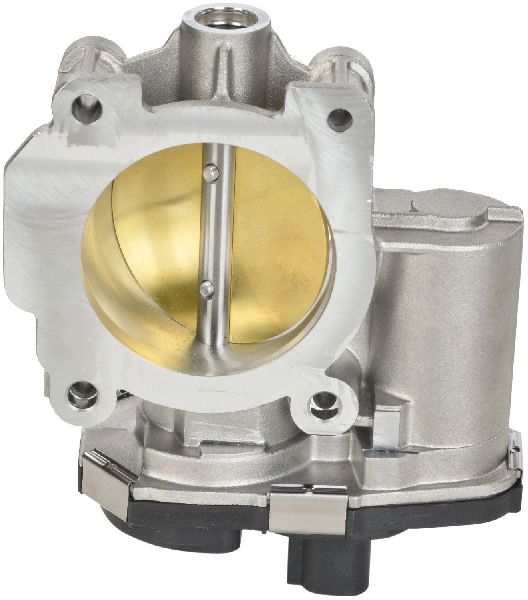
- Electronic Throttle Body Assembly
(OEM #12607204 (Verify with VIN, this is for the 2007 LY7). Later models may use different parts.)— This is the most common failure for code P0121 on this platform. The internal, non-serviceable sensors wear out, requiring replacement of the entire unit. GM acknowledged this with warranty extensions.
Trusted brands: ACDelco (GM Genuine), Hitachi, Standard Motor Products (SMP), Cardone
OEM price range: $200-$300
Aftermarket price range: $150-$250
Related Codes That Often Appear With This One
- P0068 — This code indicates a direct conflict between the MAP sensor, MAF sensor, and throttle position. It often appears with P0121 because the core issue is the ECM not trusting the throttle's reported position relative to airflow.
- P2135 — This code means the two internal throttle position sensors within the throttle body assembly do not agree with each other. It's a definitive sign that the throttle body has failed electronically and is a very common companion code to P0121.
Technical Service Bulletins (TSBs) & Recalls
- PIP4578B: While not for P0121 specifically, this GM TSB discusses issues like idle surge after throttle body cleaning on high-mileage vehicles (including the LY7 engine), highlighting the need for an idle learn reset.
- 14582A: This was a GM Special Coverage Adjustment (extended warranty) for failing throttle bodies on many 2008-2011 vehicles with similar engines, which caused codes like P2101 and P2135. While the Aura may not have been explicitly covered, it demonstrates the known high failure rate of this component family.
- 11273: This was a GM Special Coverage Adjustment specifically for the throttle position sensor on the Saturn Aura, extending the warranty to 10 years/120,000 miles due to the defect causing 'Reduced Engine Power' mode. This confirms it is a known factory defect.
Platform-Specific Known Issues
- A mandatory 'Throttle Relearn' procedure is required after cleaning or replacing the throttle body. Failure to do so can result in an incorrect or unstable idle speed. This can often be done without a scan tool by idling the engine for 3 minutes, turning the key off for 60 seconds, and then idling for another 3 minutes. A short drive cycle may be needed to finalize the process.
- The wiring harness for the fuel injectors is known to chafe on the engine, which can cause various electrical issues, including, in rare cases, codes that might be confused with a throttle body problem. TSB #PIP4924D addresses this.
Mechanic-Grade Diagnostic Values
- TPS 5-Volt Reference at Connector — expected: 4.8V - 5.2V (Key On, Engine Off). Failure: Voltage below 4.8V or above 5.2V points to a wiring or ECM issue, not a sensor failure.
- TPS Low Reference (Ground) at Connector — expected: Less than 100 Ohms of resistance to chassis ground.. Failure: High or infinite resistance indicates a broken or corroded ground wire.
- TPS 1 Signal Voltage — expected: Smoothly sweeps from ~0.5V at closed throttle to ~4.5V at wide-open throttle (WOT).. Failure: Any voltage spikes, dropouts, or non-linear movement during a slow pedal press indicates internal sensor failure.
- TPS 2 Signal Voltage — expected: Smoothly sweeps from ~4.5V at closed throttle to ~0.5V at wide-open throttle (WOT).. Failure: Signal does not mirror TPS 1 or has spikes/dropouts, often triggering P2135.
- Throttle Body Connector Pinout (Typical 6-Pin) — expected: Pin D: TPS 1 Signal, Pin E: 5V Reference, Pin C: Low Reference (Ground), Pin F: TPS 2 Signal, Pins A & B: Throttle Actuator Control (TAC) Motor.. Failure: Incorrect voltages when back-probing these specific pins during testing.
Scan Tool Commands That Help
- GM Tech2 / GDS2: Idle Learn Reset / Throttle/Idle Learn — This function is mandatory after cleaning or replacing the throttle body. It is found under 'Module Setup' or 'Special Functions' and erases the old learned idle values from the ECM, forcing it to recalibrate to the new, clean throttle plate position to prevent high idle or stalling.
Wiring & Ground Locations
- G105 (3.6L) — Center rear of the engine.. This is a primary engine ground. A poor connection here can cause erratic behavior from various engine sensors, including those used to cross-check throttle position, leading to correlation codes like P0121 or P0068.
- G113 (3.6L) — On the center of the left side cylinder head.. This is another critical engine ground point for the 3.6L LY7. A loose or corroded connection at G113 can introduce electrical noise and voltage discrepancies in the sensor circuits controlled by the ECM.
- Throttle Body Connector — Directly on the electronic throttle body assembly at the engine's air intake.. This 6-pin connector is the single point of failure for all throttle body electrical signals, including the dual TPS sensors and the motor. Corrosion or backed-out pins here are a common cause of intermittent P0121 codes.
OEM Part Supersession History
12607204→12694871, 217-3150 (ACDelco Service PN)— Standard part lifecycle update. Later revisions may include improved internal electronics or seals to address the known failure patterns.
Heads up: While later part numbers supersede the original, always verify fitment with the vehicle's VIN as minor changes could exist. The ACDelco part 217-3150 is the GM Genuine direct replacement.
Diagnostic Flowchart
Other Known Issues on This Vehicle
Issues unrelated to this code that are worth knowing about as an owner of this generation:
- Premature Timing Chain Stretch 🔴 High — Very common, typically between 70,000 and 120,000 miles. Triggers codes like P0008, P0009, P0017. (Ref: TSB #12-06-01-009F; Special Coverage #11340C (now expired).)
- 6T70 Transmission 3-5-R Wave Plate Failure 🔴 High — Common failure leading to loss of Reverse, 3rd, and 5th gears. Often requires a full transmission rebuild. (Ref: Special Coverage #14404B (now expired).)
- Excessive Oil Consumption 🟠 Medium — Some LY7 engines were prone to oil consumption issues, partly addressed by PCV system updates. (Ref: TSB #10-06-01-008 addresses oil consumption on some GM engines, recommending a revised valve cover.)
- Failing Transmission Control Module (TCM) 🟠 Medium — The TCM, particularly the T42 module used with the 6T70 transmission, is a common failure point leading to harsh shifting and codes like P0601. (Ref: TSB #PIP4653E)
- Electric Power Steering (EPS) Failures 🔴 High — Complaints of sudden loss of power steering assist are common for the Epsilon platform. (Ref: NHTSA has numerous complaints, but a specific TSB is not consistently cited.)
Used vs. New Parts: Buying Guide for This Vehicle
When a used part is the smart pick: Given the extremely high failure rate of the original electronic throttle body, purchasing a used OEM part is NOT recommended. The internal electronics are a known wear item, and a used part is likely to have the same defect or fail shortly after installation. An aftermarket part with an improved design is a smarter choice than a used OEM part.
Donor-vehicle mileage cap: roughly under 30000 miles for the part to have meaningful remaining life.
What to inspect on the donor part:
- Verify the part is from a low-mileage, collision-damaged vehicle, not a high-mileage vehicle that was junked for engine problems.
- Inspect the electrical connector pins for any signs of corrosion, moisture, or damage.
- Check for a clean throttle bore; excessive carbon may indicate a worn-out engine and a hard life for the part.
- Ask for a warranty, even if it's only 30-90 days, to protect against immediate failure.
Aftermarket brands forum-validated for this vehicle:
- ACDelco (GM Genuine)
- Hitachi (Often the original equipment manufacturer)
- Standard Motor Products (SMP)
- Dorman OE FIX (Specifically advertises an improved non-contact Hall effect sensor to prevent the original failure mode)
Brands owners have reported issues with on this vehicle:
- Unbranded, no-name parts from online marketplaces without warranties or seller reputation should be avoided, as quality control can be poor.
Real Owner Stories
Aggregated from forums and TSBs cited above. Mileages and costs reflect what owners reported in those sources.
2008 Saturn Aura 3.6L V6
Symptoms: Experienced 'Reduced Engine Power' message with codes P0641, P0106, P0107, and P0452.
What fixed it: The issue was traced back to the throttle body or related wiring issues as discussed in the SaturnFans community.
Source hint: Saturn Forum - saturnfans.com
2007-2012 Pontiac G6 3.6L LY7 V6
Symptoms: P0121 code, 'Reduced Engine Power' mode, and high idle issues.
What fixed it: Cleaning or replacement of the throttle body followed by a mandatory idle relearn procedure.
Source hint: Platform mate: 2007-2012 Pontiac G6 (3.6L LY7 V6)
Related OBD-II Codes
Frequently Asked Questions
Is there a special warranty for the throttle body on my Saturn Aura?
Can I just replace the Throttle Position Sensor (TPS) instead of the whole assembly?
Why does my Aura idle roughly after I cleaned the throttle body?
How do I perform a throttle relearn on my 2008 Aura without a scan tool?
What is the correct torque for the throttle body bolts on the 3.6L engine?
Could my P0121 code be related to the fuel injector wiring?
Helpful Videos
Used OEM Parts in Stock

New Aftermarket Parts Available


The information in this article is provided for general reference and educational purposes only. Vehicle specifications, procedures, and part compatibility can vary by production date, trim level, and region. Always consult your vehicle's factory service manual and verify part numbers before purchasing or performing repairs. Safety-critical components such as airbags, seat belts, and braking systems should be installed by a qualified professional.
- Saturn Aura:
- 🎬 Helpful Videos
- 🛍️ Shop This Part
- What's Unique About the 2007-2009 Saturn Aura
- Symptoms You May Notice
- Most Likely Causes
- Rare But Worth Checking
- Diagnosis Steps
- Parts You'll Likely Need
- Related Codes That Often Appear With This One
- Technical Service Bulletins (TSBs) & Recalls
- Platform-Specific Known Issues
- Mechanic-Grade Diagnostic Values
- Scan Tool Commands That Help
- Wiring & Ground Locations
- OEM Part Supersession History
- Diagnostic Flowchart
- Other Known Issues on This Vehicle
- Used vs. New Parts: Buying Guide for This Vehicle
- Real Owner Stories
- 2008 Saturn Aura 3.6L V6
- 2007-2012 Pontiac G6 3.6L LY7 V6
- Related OBD-II Codes
- Frequently Asked Questions
- 🎟️ Get 5% Off