

P0118 on 2018-2023 Kia Rio: Engine Coolant Temperature Sensor Causes and Fixes
Code P0118 on a 2018-2023 Kia Rio most often means the Engine Coolant Temperature (ECT) sensor has failed. This is a simple and affordable repair, with a new sensor costing between $20 and $50. The code indicates the sensor circuit has a high voltage reading, which the car's computer interprets as an impossibly cold engine temperature.
- P0118 on your Kia Rio means the computer thinks the engine is freezing cold due to a circuit fault.
- The most likely cause is a bad Engine Coolant Temperature (ECT) sensor, which is an inexpensive and relatively easy part to replace.
- Symptoms include hard starting, bad gas mileage, black smoke, and the engine cooling fans running all the time.
- Before replacing parts, check the sensor's wiring and connector for obvious damage, as this can also cause the code.
- Do not ignore this code, as continued driving can lead to poor performance, fouled spark plugs, and put unnecessary strain on your cooling system.
What's Unique About the 2018-2023 Kia Rio
For the fourth-generation Kia Rio with the 1.6L Gamma II engine, the P0118 code is a straightforward electrical fault. The causes are almost always a failed sensor or a wiring issue. The ECT sensor is located on the thermostat housing on the side of the cylinder head. There is a specific owner report of this code appearing on a 2023 Rio in Alberta, Canada, during a -30° cold snap when using a block heater. A dealer attempted a software update before ultimately replacing the sensor, which suggests the sensor itself was the root cause despite the environmental conditions. Aside from this niche scenario, the issue is a common component failure.
Symptoms You May Notice
- Check Engine Light is on
- Difficulty starting the engine, especially when cold
- Poor fuel economy
- Engine running rough, hesitating, or stalling
- Black smoke from the exhaust
- Cooling fans run continuously, even when the engine is cold
- Temperature gauge on the dashboard may not work or reads completely cold
- High idle speed
- Replacing the thermostat. A bad thermostat typically causes a P0128 code (Coolant Temperature Below Thermostat Regulating Temperature), not a P0118 circuit code. A P0118 code indicates an electrical fault, not a mechanical cooling system problem.
Most Likely Causes
- Failed Engine Coolant Temperature (ECT) Sensor 🔴 High Probability The ECT sensor is a common failure point on many modern vehicles due to constant exposure to heat cycles and vibrations. The Gamma II engine is no exception.
How to confirm: With a scan tool, check live data. If the ECT reading is stuck at an extremely low value (like -40°F or -40°C) even when the engine is warm, the sensor has failed internally. You can also test the sensor's internal resistance with a multimeter; an open circuit (infinite resistance) confirms failure. The sensor is located on the thermostat housing on the side of the engine.
Typical fix: Replace the ECT sensor. This involves partially draining the coolant, unscrewing the old sensor, installing the new one, and topping off the coolant.
Est. part cost: $20-$50 - Damaged Wiring or Connector 🟡 Medium Probability Engine bay heat can make wires and plastic connectors brittle over time. Rodents can also chew on wiring harnesses, causing an open circuit.
How to confirm: Visually inspect the wiring harness and connector for the ECT sensor. Look for breaks, corrosion, pushed-out pins, or signs of rodent damage. Wiggle the wiring while watching live data on a scan tool to see if the temperature reading fluctuates, which would indicate an intermittent connection.
Typical fix: Repair the broken wire or replace the damaged connector pigtail.
Est. part cost: $5-$25
Rare But Worth Checking
- Faulty Powertrain Control Module (PCM): This is very rare and should only be considered after the sensor and wiring have been definitively ruled out. A diagnostic check showing no 5-volt reference signal from the PCM to the sensor connector (with the key on, sensor unplugged) would point to a potential PCM issue.
Diagnosis Steps
- Connect an OBD-II scanner and confirm the P0118 code is present. 🎬 Watch a video overview of diagnosing the P0118 code Note any other codes.
- View live data on the scanner. Check the Engine Coolant Temperature (ECT) reading. A P0118 code will almost always show a reading of -40°F or a similarly low, illogical value.
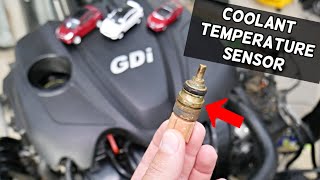
- Turn the engine off and let it cool. Locate the ECT sensor on the engine 🎬 Watch this guide to locate and replace a Hyundai/Kia coolant temperature sensor, which is on the thermostat housing on the side of the cylinder head.
- Inspect the sensor's electrical connector and nearby wiring for any signs of damage, corrosion, or loose connections.
- Disconnect the sensor. The reading on the scanner should not change. This is expected for an open circuit fault.
- Use a small jumper wire to connect the two terminals in the electrical connector pigtail (not the sensor itself). Turn the ignition to the 'On' position without starting the engine.
- Observe the ECT reading on the scan tool. It should now jump to a very high value (e.g., 250°F / 120°C or higher). If it does, this confirms the wiring and PCM are functioning correctly. The ECT sensor itself is faulty and must be replaced.
- If the reading does not change in step 7, there is an open circuit in the wiring between the connector and the PCM, or a faulty PCM (which is rare). Further wiring diagnostics are needed.
Parts You'll Likely Need
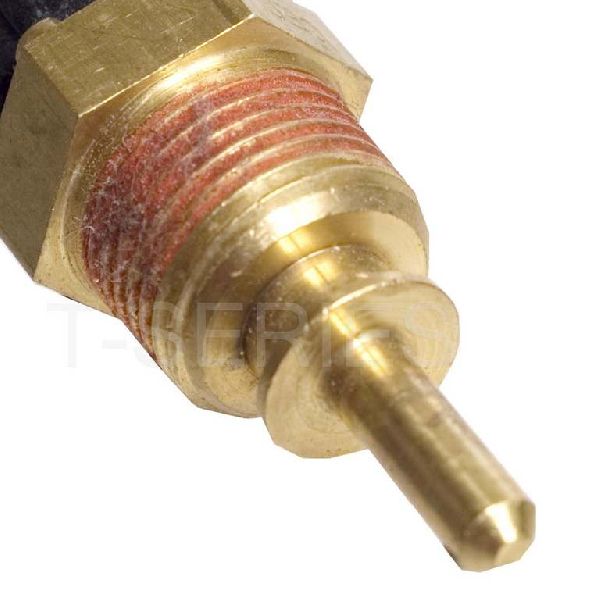
- Engine Coolant Temperature Sensor
(OEM #39220-2M417)— This sensor fails internally, creating an open circuit that triggers the P0118 code. It is the most common solution to this problem.
Trusted brands: Genuine Kia/Hyundai, NTK, Standard Motor Products (TX159), Beck/Arnley
OEM price range: $30-$50
Aftermarket price range: $15-$35
Platform-Specific Known Issues
- There is at least one owner report of a 2023 Kia Rio triggering code P0118 in extremely cold weather (-30°C) after using a block heater. A dealer performed a software update to try and resolve it, though the owner reported the issue continued and the sensor was ultimately replaced, pointing back to a likely faulty sensor exacerbated by extreme temperatures.
Mechanic-Grade Diagnostic Values
- ECT Sensor Resistance vs. Temperature — expected: At 0°C (32°F): 5.0 - 6.5 kΩ. At 50°C (122°F): 750 - 950 Ω. At 90°C (194°F): 225 - 300 Ω.. Failure: Infinite resistance (open circuit), zero resistance (short circuit), or readings that are significantly outside the expected range for a given temperature indicates a faulty sensor.
- ECT Sensor Connector Voltage (Key On, Engine Off, Sensor Unplugged) — expected: One pin should have a 5-volt reference signal from the PCM. The other pin is the sensor ground, which will read 0 volts when measured against chassis ground.. Failure: Absence of the 5V reference signal points to a wiring issue or a problem with the PCM itself.
Scan Tool Commands That Help
- Kia GDS (Global Diagnostic System): Current Data (Live Data) — This is the primary function used to diagnose P0118. The technician would select 'Engine' and monitor the 'Engine Coolant Temperature' parameter to confirm it is showing an illogical, static low value (e.g., -40°F).
- Kia GDS (Global Diagnostic System): Vehicle S/W Management -> Resetting adaptive values — After replacing the ECT sensor and clearing the P0118 code, it is good practice to reset the engine's adaptive memory. This clears any long-term fuel trim adjustments the PCM learned while operating in failsafe mode with a rich fuel mixture, allowing for a faster return to normal operation.
Wiring & Ground Locations
- ECT Sensor Circuit Ground — The ECT sensor ground is not a chassis ground. It is a dedicated sensor ground wire that runs directly back to a specific pin on the Powertrain Control Module (PCM).. A P0118 code is caused by an open circuit. This open can be in the 5V reference wire OR the sensor ground wire between the sensor and the PCM. A break in this ground wire will cause the voltage to float high, triggering the code.
- Engine Block / Cylinder Head Grounds — Main engine ground straps are typically located from the engine block or cylinder head to the chassis frame rail or firewall.. While the ECT sensor has a dedicated ground return to the PCM, a poor main engine ground can cause voltage offsets and electrical noise throughout the system. This would typically cause multiple, erratic sensor-related codes, not just an isolated P0118, but it is a foundational check for any electrical issue.
OEM Part Supersession History
39220-2M417→N/A— This part number appears to be current for the entire 2018-2023 model year range.
Heads up: Be cautious of part number 39220-2M425. While similar, it is often listed for a 'Lower' position, potentially for a radiator outlet temperature sensor on some models, and may not be the correct part for a P0118 code which relates to the primary sensor on the cylinder head.
Model Year Variations Within This Range
- 2018-2019 vs. 2020-2023: For the 2020 model year, Kia updated the powertrain. The 2018-2019 models use a 130 hp direct-injection (GDI) 1.6L engine with a 6-speed automatic. The 2020-2023 models use a 120 hp multi-port injection (MPI) 1.6L 'Smartstream' engine with a CVT. While the ECT sensor part number (39220-2M417) appears to be the same for both, the PCM and wiring harnesses may have slight differences. Diagnosis remains the same.
Diagnostic Flowchart
Other Known Issues on This Vehicle
Issues unrelated to this code that are worth knowing about as an owner of this generation:
- Theft Vulnerability (key-start models) 🔴 High — Extremely widespread on models with a physical key ignition, leading to a social media trend. Less of an issue on 2022+ models with standard immobilizers. (Ref: Kia offers a free anti-theft software update (Service Campaign 976) and steering wheel locks for affected owners.)
- Premature Engine Failure / Oil Consumption 🔴 High — While the 1.6L Gamma II is generally more reliable than the 2.0L/2.4L Theta II engines, some owners report engine seizure or high oil consumption at relatively low mileage (60k-80k miles). This is not as widespread as on other Kia/Hyundai models but is a documented concern.
- CVT Transmission Reliability Concerns 🟠 Medium — Some owners and general mechanic consensus suggest Kia's CVT (IVT) may have a shorter lifespan than traditional automatics, with potential failures around 100,000 miles. Regular fluid changes (every 30k miles) are recommended to improve longevity.
- Carbon Buildup on Intake Valves 🟡 Low — As a Gasoline Direct Injection (GDI) engine, the 1.6L Gamma II is prone to carbon buildup on the back of the intake valves over time (typically after 100k miles), which can lead to reduced performance and misfires.
- Trunk Latch Failure 🟡 Low — Affects 2018-2019 models. The trunk latch can be damaged, preventing it from being opened from the inside. (Ref: NHTSA Recall 21V879000)
Used vs. New Parts: Buying Guide for This Vehicle
When a used part is the smart pick: Almost never for the sensor itself. An ECT sensor is an inexpensive electronic component with a finite lifespan. The small cost savings of a used sensor are not worth the risk of premature failure. A used connector pigtail from a salvage yard is a perfectly acceptable repair for a damaged connector.
Donor-vehicle mileage cap: roughly under 15000 miles for the part to have meaningful remaining life.
What to inspect on the donor part:
- For a connector pigtail: ensure the plastic is not brittle or cracked.
- Check that the locking tab is intact.
- Inspect the wire insulation for flexibility and ensure it's not cracked or hardened.
- Look at the metal pins inside the connector for any signs of green or white corrosion.
OEM-only on this vehicle (don't cheap out):
- While not strictly 'OEM-only', it is highly recommended to use either a genuine Kia/Hyundai sensor or a top-tier aftermarket brand known to be an OEM supplier. Cheap, unbranded sensors are notorious for having incorrect resistance curves, which can cause poor engine performance and incorrect fan operation even if they don't set a code.
Aftermarket brands forum-validated for this vehicle:
- NTK (NGK)
- Denso
- Standard Motor Products (SMP)
Brands owners have reported issues with on this vehicle:
- Unbranded 'white-box' sensors from online marketplaces.
- Beck/Arnley has received mixed reviews in forums, with some users reporting a decline in quality from being a reliable OEM re-boxer to sourcing from cheaper manufacturers.
Real Owner Stories
Aggregated from forums and TSBs cited above. Mileages and costs reflect what owners reported in those sources.
2023 Rio EX premium — 13670 miles
Symptoms: Temperature gauge reading at H indicating it's overheating with the block heater plugged in, check engine light with code P0118. Later symptoms included the car turning off twice on the highway, barely starting, rough acceleration, blowing cold air from the heat, and a weird chemical smell from the climate control.
What fixed it: The technician replaced the coolant temp sensor under warranty after a software update failed to resolve the issue.
Source hint: Reddit r/kia thread 'Kia Rio and K5 with block heater and temp sensor or gauge issues?'
Related OBD-II Codes
Frequently Asked Questions
Where is the ECT sensor located on the 2018-2023 Kia Rio Gamma II engine?
Can extreme cold weather in Canada trigger a P0118 on my 2023 Kia Rio?
Is there a software update for the coolant temperature issues on the newer Rio models?
Should I use a used ECT sensor from a salvage yard to fix my P0118 code?
Does the 2018-2023 Kia Rio have any recalls related to the engine or cooling system?
Why are my cooling fans running constantly even though I just started my Rio?
Helpful Videos
Used OEM Parts in Stock

New Aftermarket Parts Available


The information in this article is provided for general reference and educational purposes only. Vehicle specifications, procedures, and part compatibility can vary by production date, trim level, and region. Always consult your vehicle's factory service manual and verify part numbers before purchasing or performing repairs. Safety-critical components such as airbags, seat belts, and braking systems should be installed by a qualified professional.
- Kia Rio:
- 🎬 Helpful Videos
- 🛍️ Shop This Part
- What's Unique About the 2018-2023 Kia Rio
- Symptoms You May Notice
- Most Likely Causes
- Rare But Worth Checking
- Diagnosis Steps
- Parts You'll Likely Need
- Platform-Specific Known Issues
- Mechanic-Grade Diagnostic Values
- Scan Tool Commands That Help
- Wiring & Ground Locations
- OEM Part Supersession History
- Model Year Variations Within This Range
- Diagnostic Flowchart
- Other Known Issues on This Vehicle
- Used vs. New Parts: Buying Guide for This Vehicle
- Real Owner Stories
- 2023 Rio EX premium — 13670 miles
- Related OBD-II Codes
- Frequently Asked Questions
- 🎟️ Get 5% Off