

P0118 on 2001-2005 Honda Civic: Engine Coolant Temperature Sensor Fixes
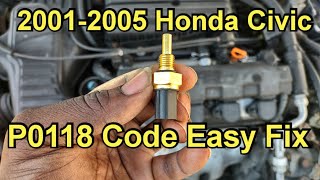
This code almost always means the Engine Coolant Temperature (ECT) sensor has failed. It's an inexpensive part and an easy DIY fix on the 2001-2005 Civic. Expect to pay around $20-$40 for an aftermarket sensor and about $50-$70 for an OEM part. A scan tool reading -40°F is a dead giveaway.
- P0118 on a 2001-2005 Civic is almost certainly a bad Engine Coolant Temperature (ECT) sensor or its wiring.
- A scan tool showing a live data reading of -40°F for the coolant temperature is the definitive sign of this fault.
- Symptoms include hard starting, poor fuel economy, black exhaust smoke, and cooling fans running constantly.
- This is a very easy and inexpensive DIY repair that requires basic tools and takes less than 30 minutes.
- The correct sensor (OEM P/N 37870-PLC-004) is on the engine's cylinder head, not the one on the radiator.
- Carefully inspect the connector for brittle plastic and broken wires right at the base, as this is a common failure point.
What's Unique About the 2001-2005 Honda Civic

For the 2001-2005 (7th generation) Honda Civic, the P0118 code is straightforward and almost always points to the primary ECT sensor located on the cylinder head, near the thermostat housing. Unlike some later generations which use a second sensor for the cooling fans, this generation's system is simpler. The failure is typically the sensor itself rather than complex wiring or software issues, making it a common and very DIY-friendly repair for this specific vehicle, as documented by many owners in forums.
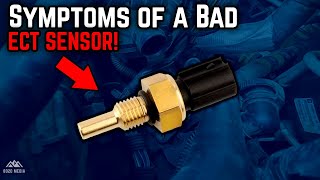
Symptoms You May Notice 🎬 Watch: A breakdown of bad ECT sensor symptoms
- Check Engine Light is on
- Difficulty starting the engine, especially when cold; may stall immediately after starting.
- Poor fuel economy
- Black smoke coming from the exhaust pipe
- Rough or erratic idle
- Cooling fans may run constantly, even when the engine is cold
- Inaccurate or non-functional temperature gauge on the dashboard (may stay on 'Cold' or behave erratically).
- Delayed or harsh automatic transmission shifting as the car's computer can't determine the correct operating temperature.
- Replacing the thermostat. A thermostat issue typically causes a P0128 code, not a P0118 circuit code.
- Replacing the cooling fan switch. On this Civic, there is a separate switch/sensor for the radiator fans, located at the bottom of the radiator. Replacing it will not fix a P0118 code, which refers to the sensor on the engine block that communicates with the ECU.
Most Likely Causes

- Failed Engine Coolant Temperature (ECT) Sensor 🔴 High Probability Sensors are a common wear item that fail over time due to constant thermal stress and age. It is the most frequent point of failure for this code on the D17 engine.
How to confirm: With a scan tool, check the live data for the ECT sensor. If it reads an illogical temperature like -40°F, the sensor is bad. You can also test the sensor's resistance with a multimeter. A good sensor should read approximately 2,000-3,000 ohms at 68°F (20°C) and around 200-400 ohms when the engine is at operating temperature (around 194°F/90°C).
Typical fix: Replace the ECT sensor. This is a simple process of partially draining the coolant, unplugging the connector, unscrewing the old sensor, and installing the new one.
Est. part cost: $20-$70 - Damaged Wiring or Connector 🟡 Medium Probability The connector can become brittle from years of engine heat cycles, and wires can fray or break right at the back of the connector. This is a known issue discussed in owner forums.
How to confirm: Visually inspect the ECT sensor's two-wire connector and the surrounding harness for cracks, corrosion, or broken wires. Wiggle the connector while monitoring live data on a scan tool to see if the temperature reading flickers or changes from -40°F.
Typical fix: Repair the damaged section of wire or, more reliably, replace the connector pigtail. Pigtail kits are readily available online.
Est. part cost: $10-$25 for a pigtail connector.
Rare But Worth Checking
- Faulty Engine Control Module (ECM): This is extremely rare. The ECM should only be considered after definitively ruling out the sensor and wiring. A user on Honda-Tech considered this only after all other tests passed.
- Low Engine Coolant: While low coolant can cause temperature-related codes, it's more likely to trigger a P0128 (Thermostat Rationality) or overheating, not a P0118 circuit code. However, it's a basic check that should always be performed.
- Poor Ground Connection: A corroded or loose ground connection on the thermostat housing can cause erratic sensor readings. This was suggested as a possible cause in a Honda-Tech forum thread for a 2002 Civic with P0118.
Diagnosis Steps

- Confirm the code with an OBD-II scanner. Check live data for the Engine Coolant Temperature (ECT). A reading of -40°F or a similarly low, fixed value strongly suggests a P0118 fault.
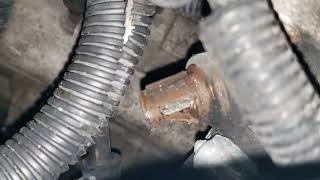
- Visually inspect the ECT sensor and its connector. The sensor is located on the cylinder head, near the upper radiator hose and thermostat housing. Look for obvious damage, corrosion, or broken wires, especially where the wires enter the connector.
- Perform a 'wiggle test'. With the key on and scan tool connected, wiggle the connector and harness. If the -40°F reading changes, you have a wiring or connection problem.
- Disconnect the sensor and inspect the terminals for green corrosion or damage. If the wiring looks good, the most probable cause is a failed sensor.
- To be certain, test the old sensor with a multimeter set to Ohms (Ω). At room temperature (around 68°F/20°C), the resistance between the two pins should be 2,000-3,000 ohms. When hot (near boiling), it should drop to 200-400 ohms. No reading (infinite resistance) means the sensor is open and faulty.
- Check the ground connection on the thermostat housing to ensure it is clean and tight, as a bad ground can cause this code.
- If the sensor and wiring test good, the final, though very unlikely, possibility is a fault in the Engine Control Module (ECM).
Parts You'll Likely Need
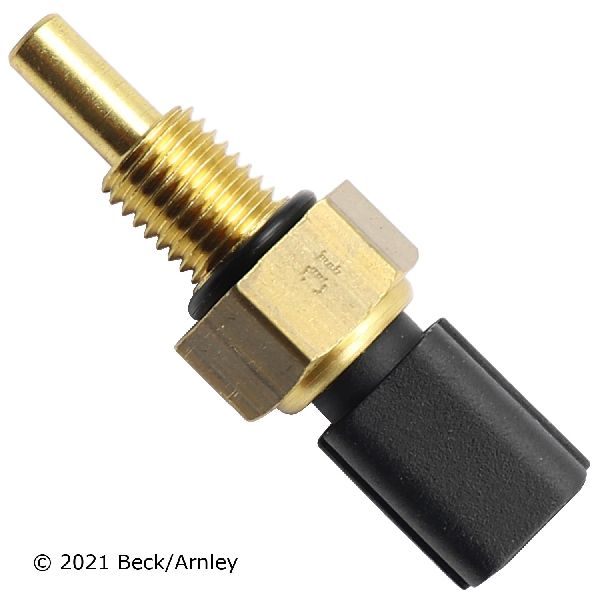
- Engine Coolant Temperature (ECT) Sensor
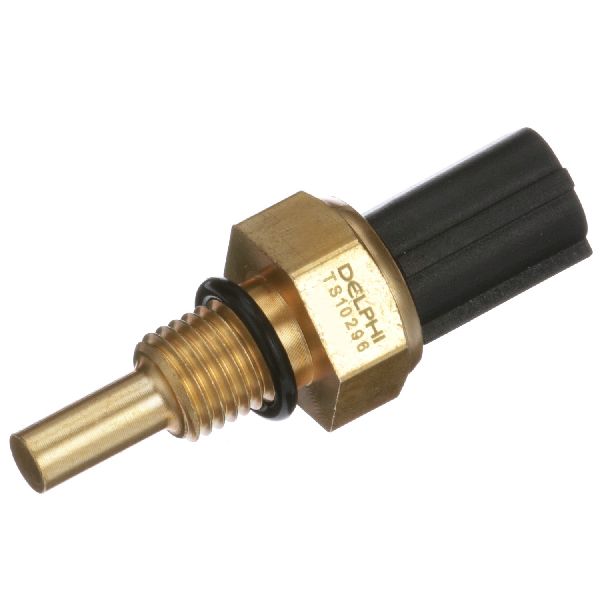
(OEM #37870-PLC-004)— This sensor is the primary cause of P0118. It fails internally, creating an open circuit that the ECM reads as a high voltage signal.
Trusted brands: Honda (OEM), Denso (often the OEM supplier, P/N 15100-2020), NTK (P/N EF0111), Standard Motor Products (P/N TX98)
OEM price range: $50-$75
Aftermarket price range: $20-$40 - ECT Sensor Connector Pigtail — Needed if the original connector or wires are broken, corroded, or brittle. A new pigtail ensures a solid connection.
Trusted brands: Dorman, Standard Motor Products, Various online sellers
OEM price range: N/A
Aftermarket price range: $10-$25
Related Codes That Often Appear With This One
- P1298 (Electric Load Detector Circuit High Input) has been reported alongside P0118 in some cases, potentially indicating a broader electrical or grounding issue.
Mechanic-Grade Diagnostic Values
- ECT Sensor Resistance (disconnected) — expected: Approximately 2.0-3.0 kΩ at 68°F (20°C); Approximately 0.2-0.4 kΩ at 176-212°F (80-100°C).. Failure: Infinite resistance (open circuit) or a value significantly outside the expected range for a given temperature.
- ECT Sensor Signal Wire Voltage (back-probed at connector, key on, engine off) — expected: Approximately 2.0V to 3.0V on a cold engine (e.g., 68°F / 20°C).. Failure: Voltage is at or near 5.0V. The P0118 code sets when voltage is ~4.9V or higher for more than two seconds.
- ECT Sensor Signal Wire Voltage (back-probed, engine at operating temperature) — expected: Should drop to approximately 0.5V - 1.0V.. Failure: Voltage remains high (e.g., above 2.0V) even when the engine is fully warmed up.
- ECT Connector Pin Test (connector unplugged, key on) — expected: Approximately 5.0V on one pin (reference voltage from ECM) and a good ground on the other pin (sensor ground).. Failure: Absence of 5.0V reference suggests a wiring issue back to the ECM. Poor ground indicates a break in the ground wire or a bad G101 ground point.
Scan Tool Commands That Help
- Honda Diagnostic System (HDS) or equivalent professional scan tool: Live Data Monitoring (ECT Sensor 1) — This is the primary step to confirm the fault. A P0118 will almost always show a static, illogical temperature like -40°F/-40°C, confirming the ECM is seeing a high voltage/open circuit.
- Honda Diagnostic System (HDS): Reset ECM/PCM — After replacing the sensor or repairing the wiring, this command should be used to clear the fault code and reset learned values. This ensures the check engine light does not remain on from the old fault.
Wiring & Ground Locations

- G101 — Bolted directly to the thermostat housing, on the side of the cylinder head. It is a collection of several ground wires consolidated into a single ring terminal.. This is the primary ground point for the ECU and multiple critical sensors, including the ECT sensor. A corroded or loose G101 connection will prevent the ECT sensor circuit from functioning correctly, causing a high voltage reading and a P0118 code, even if the sensor itself is good.
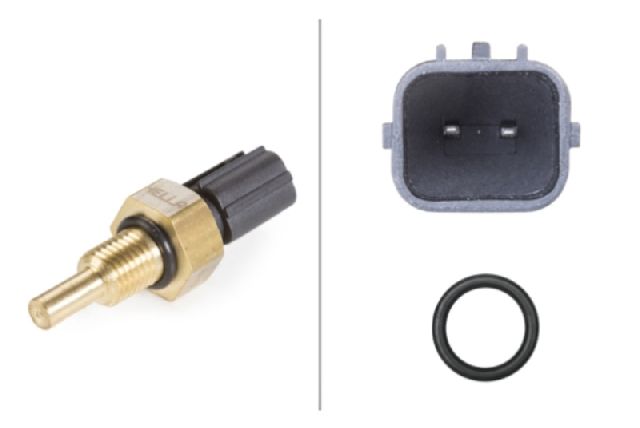
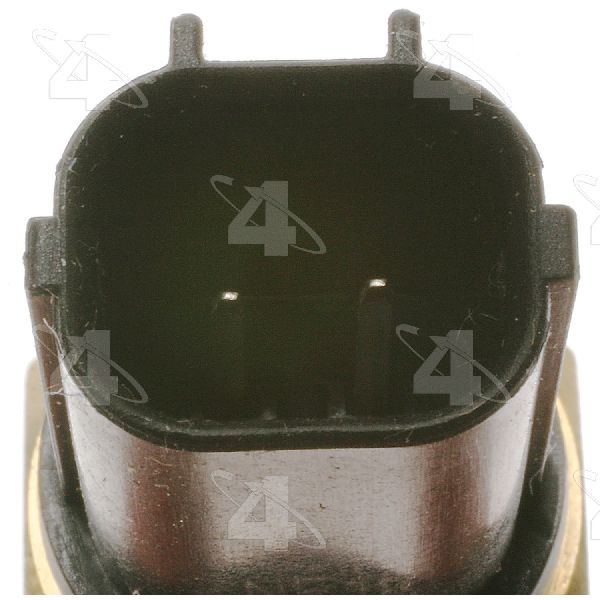
- ECT Sensor Connector — A two-wire connector plugging into the ECT sensor, which is threaded into the cylinder head near the thermostat housing.. The wires are typically Red/White (signal) and Green/Blue (sensor ground return to ECU). A break in either wire, or corrosion on the pins, will create an open circuit and trigger P0118.
- ECM Connector Pins — At the Engine Control Module (ECM), typically located behind the glove box or in the passenger footwell area.. For deep diagnostics, one can test for continuity from the ECT sensor connector to the ECM. The Red/White wire from the ECT sensor connects to the ECM, and the Green/Blue wire is the sensor ground provided by the ECM. This rules out a wiring break between the sensor and the computer.
Real Owner Repair Stories
- Honda-Tech forum user (2002 Honda Civic EX 1.7L) — Check engine light with P0118 and P1298. Temperature gauge went to Hot, then car would not start. After replacing ECT sensor, gauge stayed on Cold.
❌ Tried (didn't work) Replacing the ECT sensor initially seemed to change the symptom (gauge hot to gauge cold) but did not fix the root problem or clear the code.
✅ What actually fixed it The discussion concluded the likely cause was a poor ground connection at the thermostat housing (G101). Cleaning and tightening this ground point is the required next step to provide a stable reference for the new sensor. - CivicForums user 'eddie' (2001 Honda Civic) — P0118, temperature gauge stays on cold, cooling fans run constantly.
❌ Tried (didn't work) Replacing the thermostat., Replacing the ECT sensor.
✅ What actually fixed it The user found a broken wire inside the insulation right at the connector plug. The wire looked fine externally. After cutting back the insulation, repairing the broken wire, and reconnecting, the code was resolved and the gauge worked properly.
OEM Part Supersession History
37870-PLC-004→This is the current and most common part number for this application.— N/A
Heads up: This part number is also listed as a valid replacement for older parts like 37870-PNA-002 and 37870-PNA-003 on other Honda models, indicating it is a widely used and updated design. Ensure the physical connector (gray, two-pin) matches your vehicle's harness.
Model Year Variations Within This Range
- 2001-2005: There are no significant variations related to the ECT sensor circuit or the P0118 code for the D17 series engines (DX, LX, EX trims) across the 2001-2005 model years. A facelift occurred in 2004, but it did not alter the engine management system or sensor configuration for this fault.
Diagnostic Flowchart
Used vs. New Parts: Buying Guide for This Vehicle
When a used part is the smart pick: For the connector pigtail only. If your original connector is broken, a used pigtail from a junkyard vehicle with a clean, non-brittle harness is a cost-effective repair.
Donor-vehicle mileage cap: roughly under 150000 miles for the part to have meaningful remaining life.
What to inspect on the donor part:
- For a connector pigtail: Check that the plastic is not cracked or brittle.
- Ensure the locking tab clicks firmly.
- Inspect for any signs of green corrosion on the pins.
- Make sure there is at least 4-6 inches of wire to work with.
Aftermarket brands forum-validated for this vehicle:
- Denso (often the original OEM manufacturer for Honda)
- NTK
Brands owners have reported issues with on this vehicle:
- Unbranded, no-name sensors from online marketplaces. These often have poor quality control, leading to inaccurate readings or premature failure, causing the code to return.
Real Owner Stories
Aggregated from forums and TSBs cited above. Mileages and costs reflect what owners reported in those sources.
2002 Civic EX 1.7
Symptoms: The temperature gauge went straight to hot and the car would not start. After replacing the ECT sensor, the gauge stayed on cold and the car had a rough idle when cold.
What fixed it: The user did not report a final fix in the thread, but other users suggested checking the main grounding point for the engine computer and bleeding the cooling system for air.
Source hint: 2002 Civic EX 1.7 P0118/P1298 - Honda-Tech - Honda Forum Discussion
2001 Honda Civic
Symptoms: Engine troubles and sputtering, along with the Check Engine Light being on. Codes P0118 and P0128 were present.
What fixed it: The user did not report the fix, but was asking if a temperature sensor replacement was the likely solution.
Source hint: 2001 Honda Civic | OBD Codes: P0118, P0128 | Engine Coolant Temperature Stuff | What's the fix? : r/Cartalk
2002 Honda Civic
Symptoms: Flashing check engine light with codes P0118, P0128, and P0303 (misfire).
What fixed it: The final fix was not reported, but the owner was quoted by a shop for an ECT sensor and thermostat replacement.
Cost: $400
Source hint: Honda Civic ECT sensor and Engine Thermostat replacement : r/MechanicAdvice
Related OBD-II Codes
Frequently Asked Questions
Where is the Engine Coolant Temperature (ECT) sensor located on my 2001-2005 Civic's D17 engine?
My temperature gauge is stuck on 'Cold' even when the engine is fully warmed up. Is this a symptom of P0118?
The cooling fans on my Civic are running all the time, even right after a cold start. What could cause this?
What resistance reading should I get from a good ECT sensor on my Civic when testing it with a multimeter?
I replaced the ECT sensor on my Civic but still have a P0118 code. What should I check next?
My scan tool shows the coolant temperature as -40°F. Does this mean the ECT sensor is definitely bad?
Does the 2001-2005 Acura EL have the same P0118 sensor issue?
Helpful Videos

We Have This Part in Stock


The information in this article is provided for general reference and educational purposes only. Vehicle specifications, procedures, and part compatibility can vary by production date, trim level, and region. Always consult your vehicle's factory service manual and verify part numbers before purchasing or performing repairs. Safety-critical components such as airbags, seat belts, and braking systems should be installed by a qualified professional.
- Honda Civic:
- 🎬 Helpful Videos
- 🛍️ Shop This Part
- What's Unique About the 2001-2005 Honda Civic
- Symptoms You May Notice
- Most Likely Causes
- Rare But Worth Checking
- Diagnosis Steps
- Parts You'll Likely Need
- Related Codes That Often Appear With This One
- Mechanic-Grade Diagnostic Values
- Scan Tool Commands That Help
- Wiring & Ground Locations
- Real Owner Repair Stories
- OEM Part Supersession History
- Model Year Variations Within This Range
- Diagnostic Flowchart
- Used vs. New Parts: Buying Guide for This Vehicle
- Real Owner Stories
- 2002 Civic EX 1.7
- 2001 Honda Civic
- 2002 Honda Civic
- Related OBD-II Codes
- Frequently Asked Questions
- 🎟️ Get 5% Off